

P0101 on 2007-2009 Kia Sorento 3.3L V6: MAF Sensor Causes and Fixes
On the 2007-2009 Kia Sorento, code P0101 is most often caused by a dirty Mass Airflow (MAF) sensor. Cleaning the sensor with dedicated MAF cleaner for about $15 is the most likely fix. If that fails, check for cracked air intake hoses or a dirty air filter before replacing the sensor itself. This is a very common and straightforward issue for this vehicle.
- P0101 on this Sorento almost always points to an issue with the Mass Airflow sensor or unmetered air entering the engine.
- Start with the cheapest and easiest fix: buy a can of MAF sensor cleaner and clean the sensor. This resolves the issue in a majority of cases.
- Before buying a new sensor, thoroughly inspect the flexible air intake hose between the air filter and the engine for cracks or tears.
- Ensure the engine air filter is clean; a clogged filter can cause this code.
- The correct OEM part number for the MAF sensor is 28164-3C100.
What's Unique About the 2007-2009 Kia Sorento
For the 2007-2009 Kia Sorento with the 3.3L Lambda V6, the P0101 code is a very common but typically simple issue. The causes and fixes are standard for this type of code across many vehicles. The most frequent culprits are simple maintenance items: a dirty sensor element due to PCV vapors and dust, or a vacuum leak from an aging, cracked intake hose. Unlike some other vehicles where P0101 can point to complex software or electronic module failures, on this Sorento it almost always traces back to basic mechanical causes. While manufacturer service bulletins for other models, such as TSB Bulletin #TSB_FUE047, discuss electronic throttle control issues causing this code, on this specific Sorento generation, it remains largely a hardware-based diagnostic path.
Symptoms You May Notice
- Check Engine Light is on
- Rough or erratic idle
- Engine stalling, especially when coming to a stop
- Hesitation or lack of power during acceleration
- Reduced fuel economy
- Black smoke from the exhaust if the engine is running too rich
- Erratic automatic transmission shifting due to incorrect engine load calculation
- Replacing the oxygen sensors. While O2 sensors are part of the fuel control system, they measure the result of combustion. The P0101 code points specifically to a problem with measuring the air *entering* the engine.
Most Likely Causes
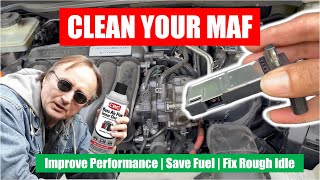
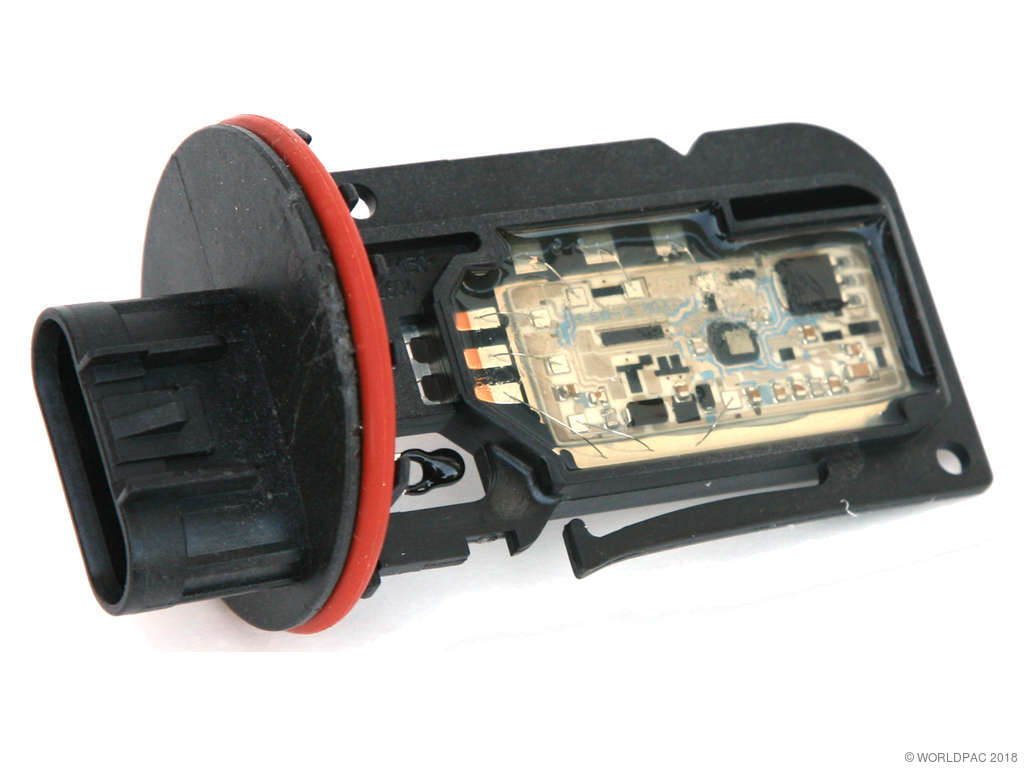
- Dirty or Contaminated Mass Airflow (MAF) Sensor 🔴 High Probability → Shop Fuel Injection Air Flow Meter Over time, oil vapors from the PCV system and fine dust particles can coat the sensor's delicate wires, insulating them and causing inaccurate readings. This is the most common fix reported by owners.
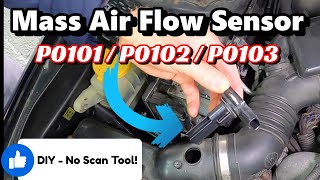
How to confirm: Visually inspect the MAF sensor elements. If they appear coated in grime, they need cleaning. The sensor is located on the air intake tube just after the air filter box.
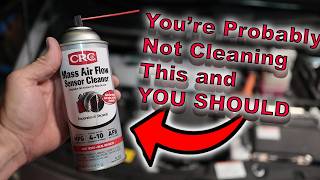
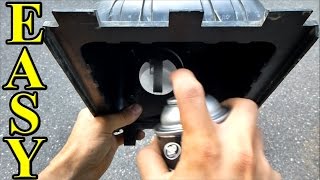
Typical fix: Carefully remove the sensor and spray the sensing elements with a dedicated Mass Airflow Sensor cleaner. Do not touch the elements and do not use any other type of cleaner 🎬 Watch: Detailed walkthrough on how to clean your MAF sensor. (e.g., brake cleaner). Let it air dry completely before reinstalling.
Est. part cost: $10-$20 for MAF sensor cleaner - Vacuum Leak (Cracked Air Intake Hose) 🟡 Medium Probability The flexible rubber air intake duct between the MAF sensor and the throttle body is known to become brittle and develop cracks with age and heat cycles, allowing unmetered air to enter the engine and causing a lean condition.
How to confirm: With the engine running, listen for hissing sounds around the intake area. Visually inspect the intake boot for cracks or loose clamps, paying close attention to the accordion-like flex sections. A smoke test is the most definitive way to find a leak.
Typical fix: Replace the cracked intake hose. The OEM part number is 28138-3C100.
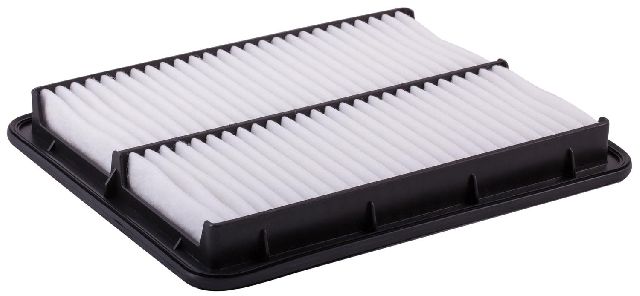
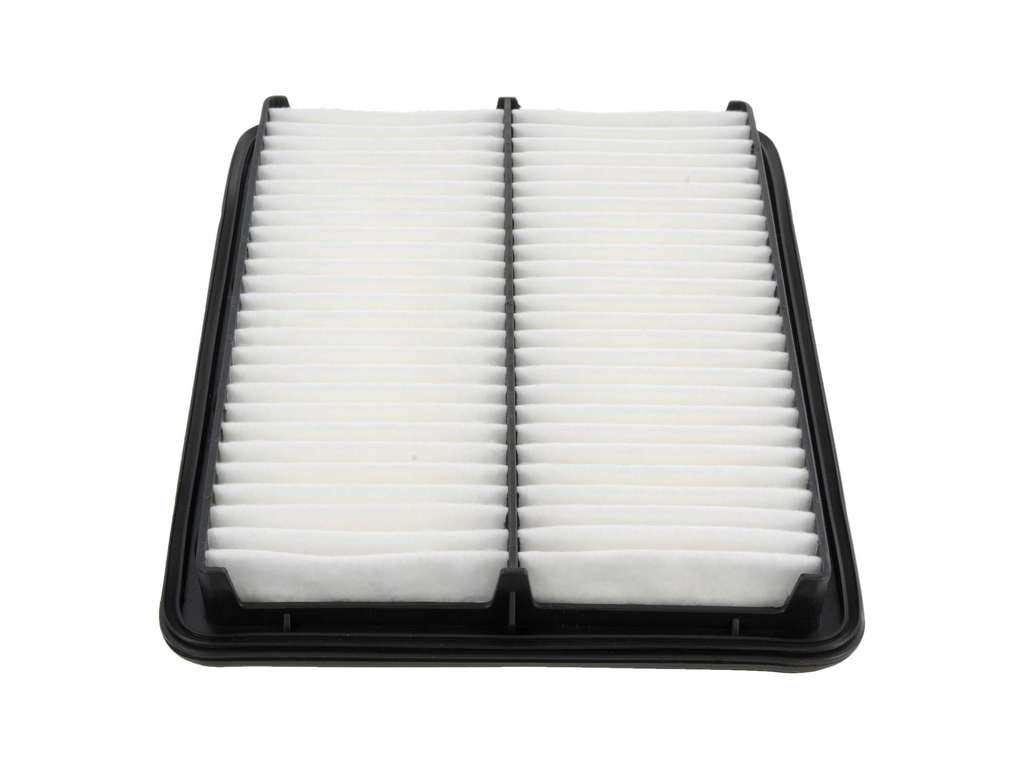
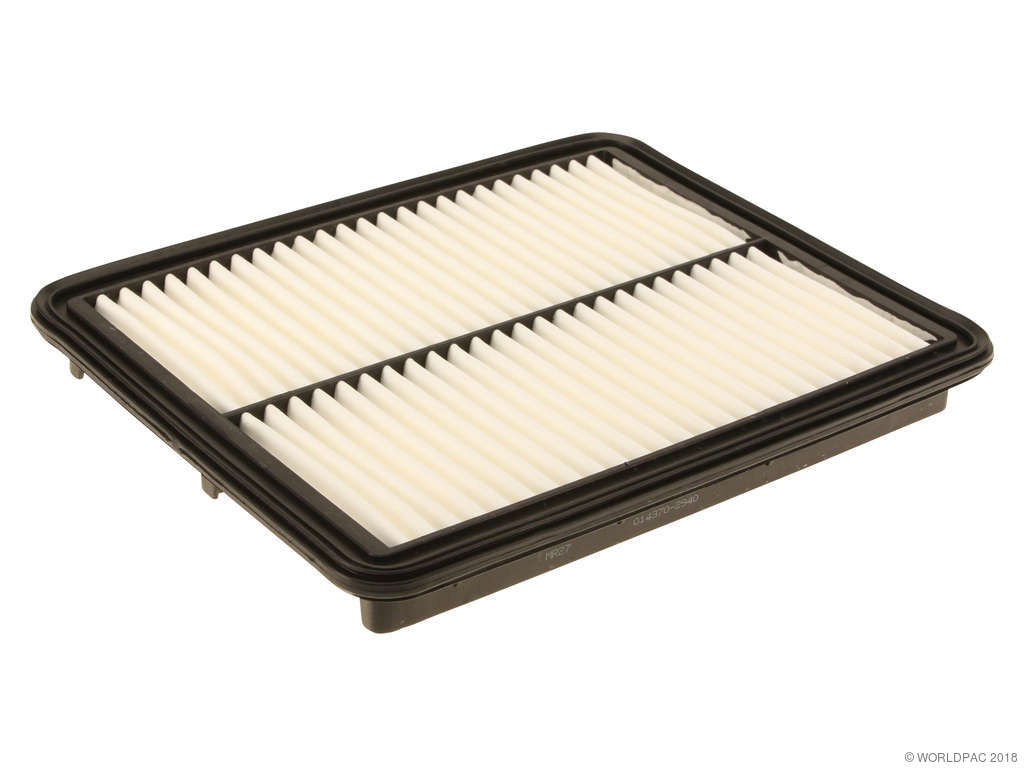
Est. part cost: $40-$90 for a new intake hose - Severely Clogged Engine Air Filter 🟡 Medium Probability → Shop Air Cleaner Assembly
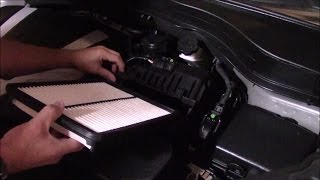
How to confirm: Remove the air filter from the airbox and inspect it. If it is visibly black, filled with debris, or you cannot see light through it, it is clogged and restricting airflow.
Typical fix: Replace the engine air filter. This is a basic maintenance item that should be checked regularly.
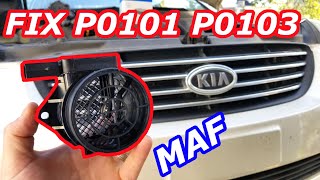
Est. part cost: $15-$30 - Faulty Mass Airflow (MAF) Sensor ⚪ Low Probability → Shop Fuel Injection Air Flow Meter
How to confirm: If cleaning the sensor and confirming there are no vacuum leaks does not resolve the code, the sensor itself may have failed. 🎬 See how to test and replace a faulty MAF sensor. This can be confirmed by monitoring the sensor's output in grams per second (g/s) with an OBD-II scan tool; the reading should be stable at idle (approx. 3.5-5.0 g/s for a 3.3L V6) and increase smoothly with RPM.
Typical fix: Replace the MAF sensor assembly.
Est. part cost: $70-$180
Rare But Worth Checking
- Clogged Catalytic Converter: A restricted exhaust can impede airflow through the engine, causing the MAF to read lower than expected. This is usually accompanied by other symptoms like a noticeable loss of high-RPM power, a sulfur smell, and potentially other exhaust-related codes.
- Wiring or Connector Issue: Damage to the MAF sensor's wiring harness or corrosion in the connector pins can disrupt the signal to the PCM. Check for a secure connection and look for any frayed or damaged wires. In NHTSA ODI #11019470, an owner reported a P0101 code alongside a burnt cooling fan relay and fuse box circuit issues, suggesting that broader electrical system damage can trigger this fault.
- PCV System Malfunction: A stuck-open PCV valve can create a vacuum leak and/or allow excessive oil vapor to be drawn into the intake, rapidly contaminating the MAF sensor.
Diagnosis Steps
- Read the code with an OBD-II scanner and note any other codes present. Freeze frame data can show engine conditions when the code was set.
- Visually inspect the entire air intake system from the air filter box to the throttle body. Carefully bend and check the flexible intake hose for hidden cracks. Ensure all clamps are tight.
- Inspect the engine air filter. If it is dirty, replace it before proceeding.
- Disconnect the MAF sensor electrical connector. Inspect for corrosion, bent pins, or loose wires.
- Remove the MAF sensor from the intake tube. It is typically held in by two Phillips head screws.
- Thoroughly spray the sensor's internal wires and elements with dedicated MAF sensor cleaner. Do not touch the elements. Let it air dry for at least 15-20 minutes before reinstalling.
- Reinstall the sensor, clear the trouble codes with the scanner, and perform a test drive covering various speeds to see if the code returns.
- If the code returns, the next step is to definitively check for vacuum leaks using a smoke machine. Pay close attention to the intake hose, PCV hoses, and intake manifold gaskets.
- If no vacuum leaks are found and the sensor has been cleaned, monitor the MAF sensor g/s reading on a scan tool. If the reading is erratic, does not increase smoothly with RPM, or is out of the expected range at idle (approx. 3.5-5.0 g/s), the sensor itself is likely faulty and should be replaced.
Parts You'll Likely Need
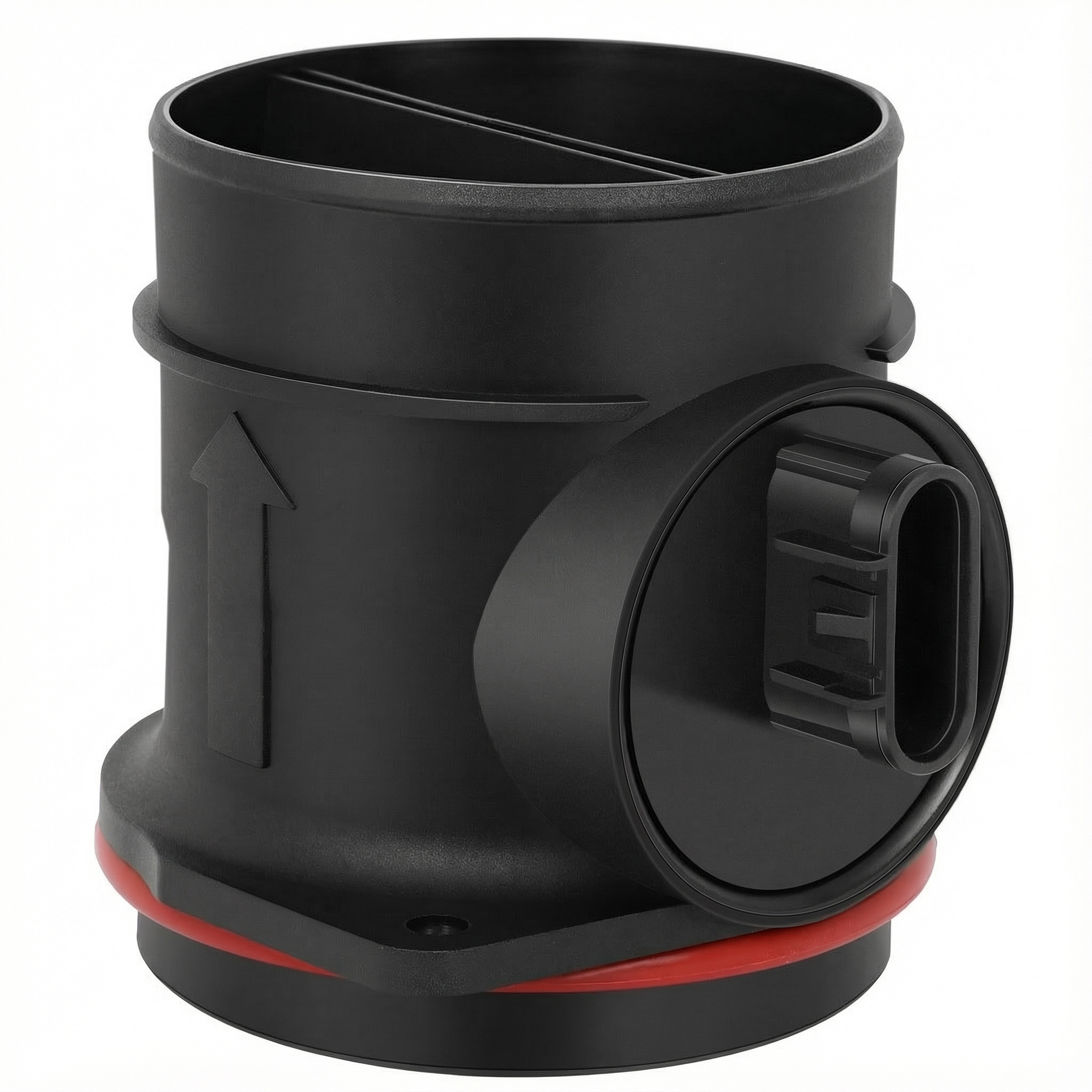
- Mass Airflow Sensor
(OEM #28164-3C100)— If cleaning the sensor and checking for vacuum leaks doesn't solve the problem, the sensor itself has likely failed and is the ultimate fix.
Trusted brands: Hyundai/Kia (Genuine), Bosch, Denso, Delphi, Duralast
OEM price range: $150-$250
Aftermarket price range: $70-$120 - Air Intake Hose
(OEM #28138-3C100)— This hose is a common failure point, developing cracks that cause unmetered air leaks and trigger P0101. It should be inspected carefully.
Trusted brands: Hyundai/Kia (Genuine), Dorman, Gates
OEM price range: $60-$90
Aftermarket price range: $40-$60 - Mass Airflow Sensor Cleaner — This is the most common and cheapest first step. Often, a dirty sensor is the only problem.
Trusted brands: CRC, Liqui Moly, WD-40 Specialist
Aftermarket price range: $10-$20 - Engine Air Filter
(OEM #28113-2F250 or 28113-3E500 (Verify by VIN))— A clogged filter can restrict airflow and trigger the code. It's an inexpensive and easy maintenance item to rule out.
Trusted brands: Wix, Fram, Purolator, K&N
OEM price range: $25-$40
Aftermarket price range: $15-$30
Related Codes That Often Appear With This One
- P0171 — System Too Lean (Bank 1). A vacuum leak or under-reporting MAF sensor causes the computer to see less air than is actually present, leading to a lean air-fuel mixture.
- P0174 — System Too Lean (Bank 2). Same reason as P0171, but for the second cylinder bank on the V6 engine.
- P0763 — Shift Solenoid C Electrical. As noted in NHTSA ODI #11019470, electrical faults can sometimes cause transmission shift solenoid codes to appear simultaneously with P0101.
Platform-Specific Known Issues
- On kia-forums.com, a user with a 2007 Sorento reported that after cleaning the MAF sensor and throttle body, the P0101 code was resolved. This points to contamination being a primary cause.
- Another owner on a Sorento forum described a scenario where cleaning the MAF sensor provided a temporary fix, but the code returned. The final solution was replacing the cracked air intake hose, which had a split on the underside that was not immediately visible.
- Cross-manufacturer data from NHTSA ODI #10316328 indicates that for similar Kia models, the "Mass Air Flow Circuit Range Performance Problem" is frequently corrected by a full sensor replacement when intermittent lights occur.
Mechanic-Grade Diagnostic Values
- MAF Sensor Reading (Live Data) — expected: 3.5 - 5.0 g/s at warm idle. Should rise smoothly and linearly with RPM, reaching approximately 15-25 g/s at 2500 RPM.. Failure: Reading is erratic, stuck, does not respond to RPM changes, or rises too slowly (indicating a dirty sensor or intake leak).
- Short-Term Fuel Trim (STFT) Bank 1 & 2 — expected: Fluctuating between -5% and +5% at idle.. Failure: Consistently high positive values (e.g., +10% or higher) suggest a vacuum leak or an under-reporting MAF sensor, which would trigger P0171/P0174.
- MAF Sensor Connector Voltage (Power Pin) — expected: Approximately 12V (battery voltage) with key on, engine off (KOEO).. Failure: No voltage or significantly low voltage indicates a wiring or fuse issue before the sensor.
- MAF Sensor Connector Voltage (Ground Pin) — expected: Good continuity to chassis ground (near zero Ohms resistance).. Failure: High resistance indicates a bad ground connection, which can cause erratic sensor readings.
Wiring & Ground Locations
- MAF Sensor Connector — On the MAF sensor itself, which is located in the air intake tube immediately after the air filter housing.. This 5-pin connector provides power, ground, and signal lines for both the MAF and integrated IAT sensor. Corrosion or damage here is a common point of failure. Testing for 12V power, ground, and 5V reference at this connector is a key diagnostic step.
- MAF Sensor Harness Chafe Point — The section of the wiring harness directly under and around the MAF sensor connector.. Engine vibration can cause the harness to rub against nearby components, potentially fraying wires over time and causing an intermittent signal that triggers P0101 even with a good sensor.
- Main Engine Ground — Typically a thick cable from the negative battery terminal to the engine block and/or chassis near the strut tower.. The MAF sensor circuit relies on a clean engine ground. A loose or corroded main ground can introduce electrical noise and cause issues with multiple sensors, including the MAF.
Real Owner Repair Stories
- kia-forums.com user (2007 Kia Sorento) — Check Engine Light with code P0101.
❌ Tried (didn't work) Initial diagnosis
✅ What actually fixed it Cleaning both the Mass Airflow Sensor and the throttle body resolved the code. - sorentonation.com user (Kia Sorento (generation unspecified, but symptoms match)) — P0101 code returned after cleaning MAF sensor.
❌ Tried (didn't work) Cleaning the MAF sensor (provided only a temporary fix).
✅ What actually fixed it Replacing the air intake hose, which had a crack on the underside that was not visible during a top-down inspection. - NHTSA ODI #10016560 report — An owner noted that after a vehicle was put on a diagnostics machine and showed the P0101 code, they were informed that Kia had a specific bulletin regarding the fix for this problem, which can be costly if not covered by warranty.
"I Checked Everything" — The Actual Cause
- A clogged catalytic converter can cause P0101. The resulting exhaust backpressure restricts airflow through the engine, causing the MAF sensor to read lower than the PCM expects for a given RPM and throttle position. This will not be found with an intake smoke test, and requires a separate exhaust backpressure test to diagnose.
OEM Part Supersession History
28164-3C100→No supersession found. This part number appears to be stable for the 2007-2009 Sorento 3.3L.— N/A
Heads up: Be aware that other MAF sensors for different Kia models or engines may look similar but are not compatible. Verify the part number for your specific vehicle.
Diagnostic Flowchart
Other Known Issues on This Vehicle
Issues unrelated to this code that are worth knowing about as an owner of this generation:
- Timing Chain Tensioner Failure 🔴 High — Commonly reported between 60,000 and 150,000 miles. A rattling or growling noise on cold startup for 2-3 seconds is the primary symptom. If ignored, it can lead to chain jump or failure, causing catastrophic engine damage. (Ref: No specific recall for the 2007-2009 Sorento, but it's a widely acknowledged issue across the Lambda engine family.)
- Leaking Oil Pressure Switch 🟠 Medium — A very common leak point. The switch is located in the engine valley under the intake manifold. Oil weeps from the switch, pools in the valley, and can drip onto the alternator, potentially causing alternator failure. A flashing oil light is a key symptom. (Ref: Kia extended the warranty for this part on later models (TSB ENG237), but not explicitly for the 2007-2009 generation. However, the failure is identical.)
- Crankshaft Position Sensor (CKP) Failure 🔴 High — Can fail without warning, causing the engine to stall while driving or a crank-no-start condition. It's a common failure item on many Kia/Hyundai models of this era. (Ref: No specific recall for the sensor itself, but a critical safety issue due to the risk of stalling. A recall (SC153) existed for improperly manufactured crankshafts on some 2017 models, which presents similar stalling symptoms.)
- ABS Module Electrical Short / Fire Risk 🔴 High — A small number of vehicles are affected, but the consequence is severe. Moisture can enter the ABS module (HECU), causing an electrical short and potential engine compartment fire, even when the vehicle is off. (Ref: Recall SC186 (NHTSA 20V088000). The fix involves dealers installing a relay to cut power to the module when the ignition is off.)
- Cracked/Brittle Intake Air Hose 🟡 Low — The flexible rubber hose between the air filter box and the throttle body becomes hard and brittle with age, leading to cracks that cause vacuum leaks. This is a direct cause of the P0101 code.
Used vs. New Parts: Buying Guide for This Vehicle
When a used part is the smart pick: For this specific repair, using used parts is generally not recommended. The primary failure components are a delicate electronic sensor and a rubber hose that degrades with age and heat. A used part from a salvage yard is likely to have similar wear or electronic fragility as the part being replaced.
Donor-vehicle mileage cap: roughly under 50000 miles for the part to have meaningful remaining life.
What to inspect on the donor part:
- For an intake hose: Must be perfectly clean, flexible, and show absolutely no signs of cracking, hardening, or oil saturation.
- For a MAF sensor: Visually inspect the connector pins for corrosion. There is no reliable way to visually inspect the internal electronics, making it a high-risk purchase.
OEM-only on this vehicle (don't cheap out):
- No parts for this repair are strictly 'OEM-only', but using a Genuine Hyundai/Kia MAF sensor (Part No. 28164-3C100) is the safest option to guarantee compatibility and correct calibration.
Aftermarket brands forum-validated for this vehicle:
- Bosch
- Denso
- Delphi
- NTK
Brands owners have reported issues with on this vehicle:
- No-name, unbranded sensors sold at a very low cost on online marketplaces should be avoided. They are frequently reported on forums to be poorly calibrated, failing quickly, or being dead-on-arrival.
Real Owner Stories
Aggregated from forums and TSBs cited above. Mileages and costs reflect what owners reported in those sources.
2007 Kia Sorento 3.3L V6
Symptoms: Check engine light was on with code P0101.
What fixed it: Cleaning the MAF sensor and the throttle body resolved the code.
Source hint: kia-forums.com thread titled '2007 Sorento check engine code P0101'
2007-2009 Kia Sorento 3.3L V6
Symptoms: Cleaning the MAF sensor provided only a temporary fix before the P0101 code returned.
What fixed it: Replacing the cracked air intake hose, which had a split on the underside that was not immediately visible.
Source hint: SorentoNation.com thread titled 'P0101 Mass Air Flow sensor problem'
Related OBD-II Codes
Frequently Asked Questions
Is there a specific part number for the intake hose on my 2007-2009 Sorento 3.3L?
Can I use any cleaner to fix the P0101 code on my Kia?
What is the normal MAF sensor reading for the 3.3L V6 engine at idle?
Does the ABS module recall SC186 apply to my 2007-2009 Sorento?
My Sorento has a rattling noise for 2-3 seconds on cold starts; is this related to P0101?
Could an oil leak cause my alternator to fail on this model?
Helpful Videos
Used OEM Parts in Stock
New Aftermarket Parts Available

The information in this article is provided for general reference and educational purposes only. Vehicle specifications, procedures, and part compatibility can vary by production date, trim level, and region. Always consult your vehicle's factory service manual and verify part numbers before purchasing or performing repairs. Safety-critical components such as airbags, seat belts, and braking systems should be installed by a qualified professional.
- Kia Sorento:
- 🧭 Diagnostic Flowchart
- 🎬 Helpful Videos
- 🛍️ Shop This Part
- What's Unique About the 2007-2009 Kia Sorento
- Symptoms You May Notice
- Most Likely Causes
- Rare But Worth Checking
- Diagnosis Steps
- Parts You'll Likely Need
- Related Codes That Often Appear With This One
- Platform-Specific Known Issues
- Mechanic-Grade Diagnostic Values
- Wiring & Ground Locations
- Real Owner Repair Stories
- "I Checked Everything" — The Actual Cause
- OEM Part Supersession History
- Other Known Issues on This Vehicle
- Used vs. New Parts: Buying Guide for This Vehicle
- Real Owner Stories
- 2007 Kia Sorento 3.3L V6
- 2007-2009 Kia Sorento 3.3L V6
- Related OBD-II Codes
- Frequently Asked Questions
- 🎟️ Get 5% Off