

P0101 on 2016-2020 Kia Sorento 3.3L V6: MAF Sensor Causes and Fixes
For the 2016-2020 Kia Sorento 3.3L, code P0101 is most often caused by a dirty Mass Airflow (MAF) sensor. Cleaning the sensor with a dedicated spray and checking the engine air filter is the most likely fix, a DIY job costing under $20. If cleaning doesn't work, a vacuum leak or a faulty sensor are the next most common culprits.
- Start with the cheapest and easiest fixes: inspect the engine air filter and clean the MAF sensor with dedicated cleaner.
- A P0101 code rarely means you need to replace the MAF sensor immediately. Cleaning it is a highly effective first step.
- If cleaning the sensor doesn't work, thoroughly check for vacuum leaks in the intake system (cracked hoses, loose clamps) before buying a new sensor.
- Always clear the code with a scanner after performing a repair and test drive the vehicle to ensure the light does not return.
What's Unique About the 2016-2020 Kia Sorento
For the 2016-2020 Kia Sorento with the 3.3L Lambda V6, the P0101 code is a standard and common issue without major platform-specific complexities. The causes and diagnostic steps are typical for most modern vehicles. There are no widespread, unique design flaws or recalls on this Sorento model that make it unusually prone to this code; the issue almost always follows the standard path of a dirty sensor, a clogged filter, or an air leak downstream of the sensor. The Lambda V6 engine itself is considered generally reliable, especially compared to the 4-cylinder Theta II engines used in other Kia models.
Symptoms You May Notice
- Check Engine Light is on
- Reduced engine power or sluggish acceleration
- Engine hesitation or stumbling, especially under load
- Rough or unstable idle
- Decreased fuel economy
- Black smoke from the exhaust in some cases
- Engine stalling, particularly shortly after starting or when coming to a stop
- Replacing the MAF sensor before cleaning it or checking for simpler issues like a dirty air filter or vacuum leaks.
- Replacing oxygen (O2) sensors, as a P0101 code can sometimes lead to lean or rich running conditions that might trigger secondary O2 sensor codes like P0171 or P0174.
Most Likely Causes
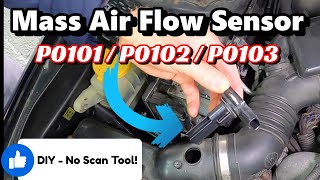
- Dirty or Contaminated Mass Airflow (MAF) Sensor 🔴 High Probability → Shop Fuel Injection Air Flow Meter Over time, dust, oil vapors from the PCV system, and other debris can coat the sensor's delicate hot wire or filament, insulating it and causing inaccurate readings. This is a common issue on all modern port-injected engines.
How to confirm: Visually inspect the MAF sensor's sensing wires/elements. They are located inside the sensor housing in the intake tube. If they are covered in dirt, grime, or oil residue, they require cleaning.
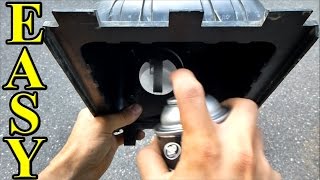
Typical fix: Remove the MAF sensor and clean it carefully using only a dedicated MAF sensor cleaner spray. 🎬 See this detailed guide on cleaning your MAF sensor safely Do not touch the delicate sensing elements. Allow it to dry completely before reinstalling.
Est. part cost: $10-$15 for MAF sensor cleaner spray - Clogged or Dirty Engine Air Filter 🟡 Medium Probability → Shop Air Cleaner Assembly
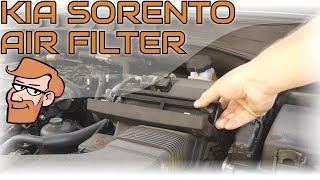
How to confirm: Remove and visually inspect the engine air filter. If it is visibly dirty, clogged with debris, or has not been replaced according to the maintenance schedule (typically every 12,000-15,000 miles) 🎬 Watch: How to replace the air filter on your Sorento, it is restricting airflow.
Typical fix: Replace the engine air filter. This is a basic, inexpensive maintenance item that should always be checked first when a P0101 code appears.
Est. part cost: $20-$40 - Vacuum Leak in the Intake System 🟡 Medium Probability Intake hoses can become brittle and crack over time due to heat and age. A common failure point is the flexible air intake hose between the MAF sensor and the throttle body.
How to confirm: Visually inspect all intake ducting, hoses, and vacuum lines between the MAF sensor and the engine for cracks, loose connections, or deterioration. A common method to find a leak is to use a smoke machine to feed smoke into the intake system and watch for where it escapes. A less precise method involves spraying carburetor cleaner near suspected leak points while the engine is idling; a change in engine RPM indicates a leak.
Typical fix: Repair the source of the leak. This usually involves replacing a cracked intake hose, tightening a loose clamp, or replacing a faulty gasket (like the intake manifold gasket).
Est. part cost: $20-$150 depending on the leaking component
Rare But Worth Checking
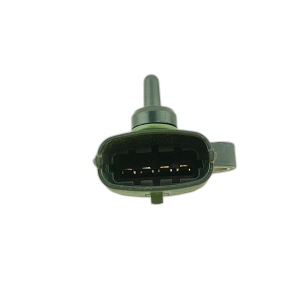
- Faulty MAF Sensor: → Shop Fuel Injection Air Flow Meter While cleaning often works, the sensor itself can fail electronically. If cleaning, a new filter, and checking for vacuum leaks don't resolve the code, the sensor itself is the next likely culprit.
- Wiring or Connector Issue: The wiring harness or connector to the MAF sensor can become damaged, corroded, or loose, causing an intermittent or incorrect signal. Check for a blown fuse in the MAF sensor circuit, often located in the engine compartment fuse box.
- Clogged Catalytic Converter: A severely restricted exhaust can cause backpressure that affects the MAF sensor's readings. This is rare and would typically be accompanied by other symptoms like a severe loss of power, a sulfur smell from the exhaust, and potentially other codes like P0420 or P0430.
Diagnosis Steps
- Read the code with an OBD-II scanner and confirm P0101 is present. Note any other codes.
- Inspect the engine air filter. If it's dirty, replace it before proceeding. This is a cheap and easy first step.
- Locate the MAF sensor in the air intake tube after the air filter box. Inspect the electrical connector and wiring for any visible damage, looseness, or corrosion.
- Remove the MAF sensor. Carefully clean it using only dedicated MAF sensor cleaner spray. Do not touch the internal wires. Let it dry completely.
- Reinstall the sensor, clear the codes with the scanner, and perform a test drive to see if the code returns.
- If the code comes back, the next step is to check for vacuum leaks. Visually inspect all intake hoses and vacuum lines between the MAF sensor and the engine. A smoke test is the most effective way to find hard-to-see leaks.
- If no vacuum leaks are found, you can test the MAF sensor's output signal using a scan tool that can display live data. At idle, a healthy 3.3L V6 should read approximately 3.3 to 4.5 grams/second (g/s). This value should increase smoothly with engine RPM. A sensor that doesn't respond to changes in engine RPM is likely faulty.
- If the sensor is confirmed to be faulty after ruling out all other possibilities, replace it with a new, quality part.
Parts You'll Likely Need
- Mass Airflow (MAF) Sensor Cleaner — This is the most common fix. The sensor's delicate elements get dirty over time, and a simple cleaning is often all that's needed to restore correct readings.
Trusted brands: CRC, Liqui Moly, WD-40 Specialist
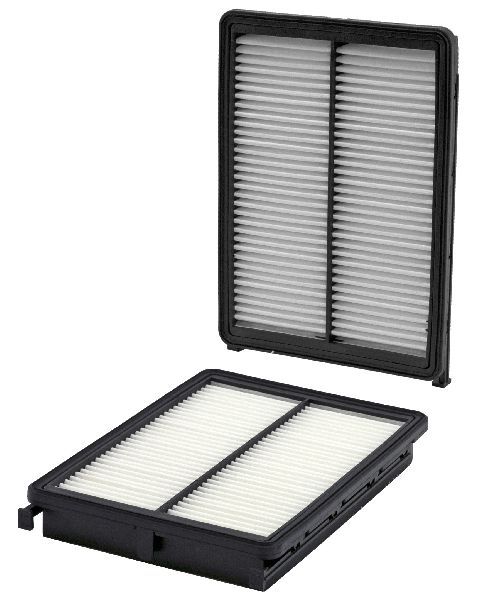
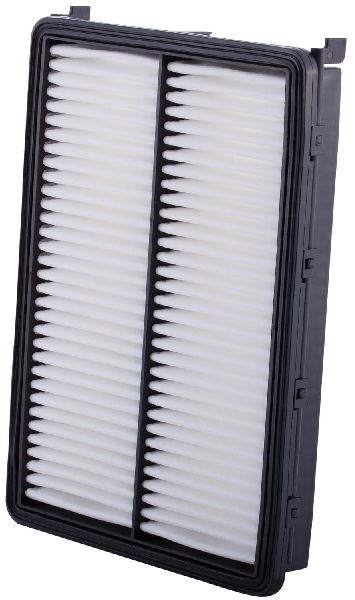
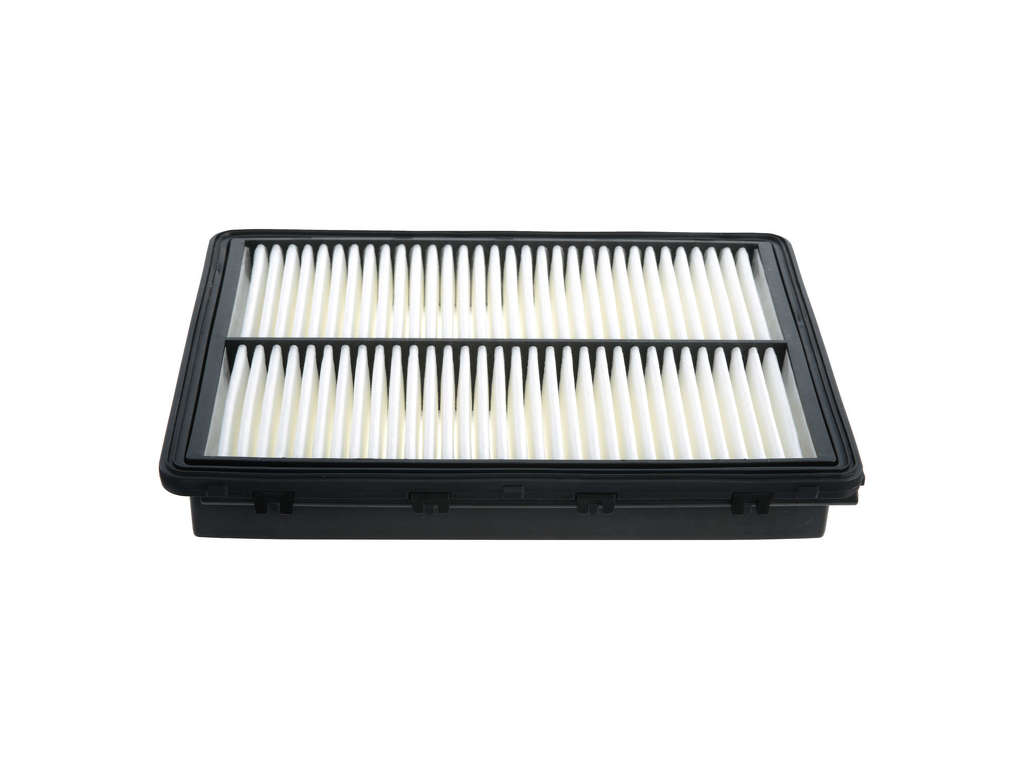
Aftermarket price range: $10-$15 - Engine Air Filter
(OEM #28113-A9100)— A clogged air filter restricts airflow, causing the MAF sensor to report lower-than-actual values, which can trigger a P0101.
Trusted brands: Kia (OEM), Wix, Purolator, Fram
OEM price range: $25-$40
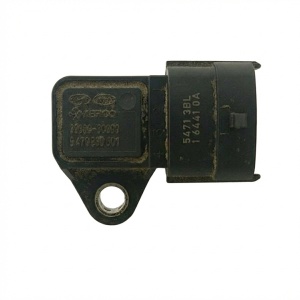
Aftermarket price range: $15-$30 - Mass Airflow (MAF) Sensor
(OEM #28164-3C100)— If cleaning the sensor and checking for other issues doesn't work, the sensor itself has likely failed electronically and needs to be replaced.
Trusted brands: Kia (OEM), Bosch, Delphi, Denso
OEM price range: $180-$250
Aftermarket price range: $70-$150
Related Codes That Often Appear With This One
- P0171 — System Too Lean (Bank 1) - An unmetered air leak after the MAF sensor can cause less air to be measured than is actually entering the engine, leading to a lean condition.
- P0174 — System Too Lean (Bank 2) - Same reason as P0171, but for the second cylinder bank on the V6 engine.
- P0102 — Mass or Volume Air Flow 'A' Circuit Low - If the issue is a failing sensor or a major restriction, the signal might drop low enough to trigger this more specific code.
Technical Service Bulletins (TSBs) & Recalls
- TSB Bulletin #TSB_FUE047: While issued for the Kia Forte, this bulletin notes that the Electronic Throttle Control (ETC) may exhibit a MIL with DTC P0101, P0106, and/or P0068, highlighting that throttle body issues can sometimes overlap with MAF performance codes in the Kia lineup.
Platform-Specific Known Issues
- Cracked Intake Hose: Some owners on forums like Kia-Forums.com have reported finding cracks in the flexible rubber intake hose located between the air filter box/MAF sensor and the throttle body. This unmetered air leak is a direct cause of the P0101 code and is often found after cleaning the MAF sensor doesn't solve the problem.
Mechanic-Grade Diagnostic Values
- MAF Sensor Live Data (g/s) at Idle — expected: Approximately 3.3 to 4.5 grams/second (g/s) for a 3.3L engine.. Failure: Readings that are significantly lower, higher, or erratic at a steady idle.
- MAF Sensor Live Data (g/s) at 2500 RPM — expected: Approximately 15 to 25 g/s.. Failure: A reading that does not increase smoothly and proportionally with RPM, or is significantly outside the expected range.
- MAF Sensor Signal Voltage at Idle — expected: Approximately 1.0 volt.. Failure: Voltage is unstable, does not increase with RPM, or is stuck at 0V or 5V.
- MAF Sensor Power Supply Voltage (Key On, Engine Off) — expected: 12 volts at the power supply pin on the connector.. Failure: No voltage or significantly low voltage, indicating a wiring or fuse issue.
Wiring & Ground Locations
- MAF Sensor Connector (C139 on similar models) — On the air intake tube, immediately following the air filter housing.. This 5-pin connector provides power, ground, and signal lines for the MAF sensor. Corrosion or damage to any of these pins (Power, Ground, Signal Out, Intake Air Temp Signal, Sensor Ground) will cause incorrect readings and trigger a P0101. A wiring diagram for a similar 3.3L/3.8L engine shows pin 1 as signal, pin 2 as sensor ground, pin 3 as power (12V), pin 4 as main ground, and pin 5 for the IAT sensor.
- Engine Ground Strap (91860-C6020) — Typically connects from the engine block or cylinder head to the chassis/frame rail in the engine bay.. A poor or corroded main engine ground can cause erratic behavior from various sensors, including the MAF, as they may not have a stable ground reference. While not a direct cause, it's a foundational check for any electrical-related DTC.
Model Year Variations Within This Range
- 2019-2020: For the 2019 model year refresh, Kia paired the 3.3L V6 with a new 8-speed automatic transmission, replacing the 6-speed used from 2016-2018. This change did not affect the MAF sensor, part number, or the common causes of a P0101 code.
Diagnostic Flowchart
Other Known Issues on This Vehicle
Issues unrelated to this code that are worth knowing about as an owner of this generation:
- Engine Failure / Excessive Oil Consumption 🔴 High — More prevalent in 2016-2017 models, but can affect all years. A class-action lawsuit has been filed concerning oil consumption in various Kia/Hyundai engines, including the Lambda family. Some owners report sudden onset of oil consumption after 60,000-80,000 miles. (Ref: While many recalls exist for the 4-cylinder engines, the 3.3L V6 had a specific recall for 2017 models due to improperly heat-treated crankshafts (NHTSA #17V224000). TSBs like SC209 and ENG133 address engine inspection procedures for knocking or failure, though often focused on other engines.)
- Oil Leaks from Oil Pressure Switch 🟠 Medium — A fairly common issue where the oil pressure switch/sender develops a leak, causing oil to drip down the engine. It can cause a flashing oil light and significant oil loss if not addressed.
- Steering Wheel 'Sticking' 🟠 Medium — Reported in 2016-2018 models, owners may feel the steering wheel 'stick' in the straight-ahead position, requiring extra effort to initiate a turn. (Ref: This issue may require replacement of the electric steering gear/column assembly.)
- Peeling or Bubbling Paint 🟡 Low — Particularly on white-painted models, numerous owners have reported issues with paint bubbling and peeling off in large sheets, often after a car wash or rain. This is a widespread complaint across many Kia models of this era. (Ref: Kia has not issued a formal recall for this issue, and warranty coverage varies.)
- Faulty Door Latch Actuators 🟡 Low — Some owners report failures of the door latch actuators, causing doors to not open from the outside handle. This can be a safety concern in an emergency.
Used vs. New Parts: Buying Guide for This Vehicle
When a used part is the smart pick: A used MAF sensor is generally not recommended. The delicate internal components can be damaged, and the calibration can be off due to age or contamination from the donor vehicle. The risk of getting a faulty part that causes the same or new issues is high. It is only a viable option as a last resort or for temporary testing if the part is known-good.
Donor-vehicle mileage cap: roughly under 40000 miles for the part to have meaningful remaining life.
What to inspect on the donor part:
- Check for a clean donor vehicle with no signs of front-end damage.
- Inspect the sensor's connector pins for corrosion or damage.
- Look inside the sensor for any visible dirt, oil, or physical damage to the sensing elements.
- If possible, check the donor vehicle's air filter; a clean filter suggests better maintenance and a cleaner sensor.
OEM-only on this vehicle (don't cheap out):
- While not strictly 'OEM-only', using a genuine Kia/Hyundai sensor or a reputable OEM-supplier brand (like Bosch or Denso) is highly recommended for the MAF sensor. Cheap, unbranded aftermarket sensors are notorious for poor calibration, leading to persistent codes and drivability issues.
Aftermarket brands forum-validated for this vehicle:
- Bosch
- Denso
- Delphi
- Spectra Premium
Brands owners have reported issues with on this vehicle:
- Unbranded, no-name sensors from online marketplaces should be avoided due to high failure rates and incorrect calibration.
Real Owner Stories
Aggregated from forums and TSBs cited above. Mileages and costs reflect what owners reported in those sources.
2016-2020 Kia Sorento 3.3L V6
Symptoms: P0101 code appeared after the evap monitors were set; owner noted it occurred after installing an aftermarket 'Cold Air' intake.
What fixed it: The context suggests the issue was related to the intake modification, though mechanics on the thread advised checking for vacuum leaks like cracked hoses or loose clamps.
Source hint: Reddit (r/MechanicAdvice)
2016-2020 Kia Sorento 3.3L V6
Symptoms: P0101 code persisted even after the owner attempted to clean the MAF sensor.
What fixed it: Finding and repairing a cracked flexible rubber intake hose located between the air filter box/MAF sensor and the throttle body.
Source hint: kiasorentoforums.com
Kia Sorento Owner Report
Symptoms: An owner reported that after a crankshaft pulley break ruined the original one, the vehicle would not crank and returned code P0101 along with P0763. The owner also noted a burned cooling fan relay and fuse box circuit.
Source hint: NHTSA ODI #11019470
Cross-Manufacturer Reference: Kia Rio
Symptoms: An owner reported the check engine light coming on intermittently with error P0101 detected.
What fixed it: The owner noted the "Mass Air Flow Circuit Range Performance Problem" can be corrected by replacing the Mass Air Flow sensor.
Source hint: NHTSA ODI #10316328
Cross-Manufacturer Reference: Kia Sportage
Symptoms: A diagnostic machine showed the P0101 code. The owner noted that Kia has a bulletin on how to fix this problem, though the repair was estimated at $500.
Source hint: NHTSA ODI #10016560
Related OBD-II Codes
Frequently Asked Questions
Is there a specific recall for the 3.3L V6 engine in my 2017 Kia Sorento related to engine failure?
I cleaned my MAF sensor but the P0101 code returned on my Sorento. What is the next vehicle-specific component I should check?
What should the MAF sensor live data readings look like for the 3.3L Lambda V6 at idle?
Does the 2016-2020 Kia Sorento 3.3L share this P0101 issue with any other models?
Could a high-mileage oil consumption issue be related to my P0101 code?
How often should I replace the air filter on my Sorento to prevent P0101 codes?
Helpful Videos
Used OEM Parts in Stock
New Aftermarket Parts Available

The information in this article is provided for general reference and educational purposes only. Vehicle specifications, procedures, and part compatibility can vary by production date, trim level, and region. Always consult your vehicle's factory service manual and verify part numbers before purchasing or performing repairs. Safety-critical components such as airbags, seat belts, and braking systems should be installed by a qualified professional.
- Kia Sorento:
- 🧭 Diagnostic Flowchart
- 🎬 Helpful Videos
- 🛍️ Shop This Part
- What's Unique About the 2016-2020 Kia Sorento
- Symptoms You May Notice
- Most Likely Causes
- Rare But Worth Checking
- Diagnosis Steps
- Parts You'll Likely Need
- Related Codes That Often Appear With This One
- Technical Service Bulletins (TSBs) & Recalls
- Platform-Specific Known Issues
- Mechanic-Grade Diagnostic Values
- Wiring & Ground Locations
- Model Year Variations Within This Range
- Other Known Issues on This Vehicle
- Used vs. New Parts: Buying Guide for This Vehicle
- Real Owner Stories
- 2016-2020 Kia Sorento 3.3L V6
- 2016-2020 Kia Sorento 3.3L V6
- Kia Sorento Owner Report
- Cross-Manufacturer Reference: Kia Rio
- Cross-Manufacturer Reference: Kia Sportage
- Related OBD-II Codes
- Frequently Asked Questions
- 🎟️ Get 5% Off