

P0101 on 2001-2005 Lexus IS300: MAF Sensor Causes and Fixes
For a 2001-2005 Lexus IS300, code P0101 is most often caused by a dirty Mass Airflow (MAF) sensor. Cleaning the sensor with a dedicated MAF sensor cleaner is the most likely fix and costs under $15. If cleaning doesn't work, a vacuum leak from a cracked intake boot or a faulty sensor are the next most common causes.
- P0101 on an IS300 almost always points to an issue with the Mass Airflow sensor or unmetered air.
- Before buying any parts, spend $15 on a can of MAF sensor cleaner and clean the sensor. This is the most common fix.
- Thoroughly inspect the rubber intake boot for cracks, as this is the second most likely cause.
- If you must replace the sensor, use a genuine Denso part to avoid issues with unreliable aftermarket sensors.
- Always check your air filter; a clogged filter can cause this code and is a simple fix.
What's Unique About the 2001-2005 Lexus IS300
On the Lexus IS300 with the 2JZ-GE engine, the MAF sensor is a common point of discussion among owners. The issue is rarely a catastrophic failure but more often a simple maintenance problem. Due to the sensor's design and location, it can become contaminated over time, especially if an aftermarket oiled air filter is used, which is a popular modification for this platform. Owners frequently report that a simple cleaning of the MAF sensor element resolves the P0101 code and associated drivability issues without needing to replace any parts. The ECU is sensitive, and even minor discrepancies in airflow readings can trigger the code.
Symptoms You May Notice
- Check Engine Light is on
- Engine hesitation or stumbling on acceleration
- Rough or unstable idle
- Reduced engine power or going into "limp mode"
- Poor fuel economy
- Stalling, especially at startup or idle
- A sudden drop in RPMs when coming to a stop
- Replacing the MAF sensor before cleaning it. Many sensors are replaced unnecessarily when a simple cleaning would have fixed the issue.
- Replacing oxygen sensors. While fuel trim issues can be related, P0101 points directly to the MAF circuit, which should be the primary focus. A bad MAF sensor will cause bad O2 sensor readings, but not the other way around.
Most Likely Causes
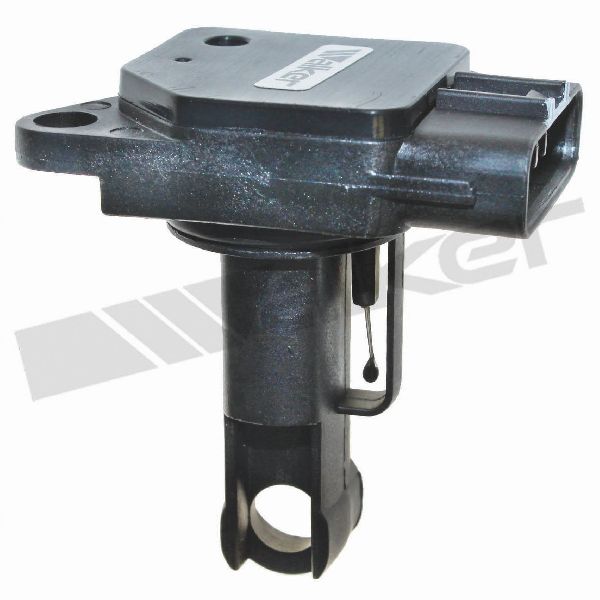
- Dirty Mass Airflow (MAF) Sensor 🔴 High Probability → Shop Fuel Injection Air Flow Meter The sensor's hot wire element can become contaminated with dirt, oil, or other debris that gets past the air filter, altering its readings. This is especially common with aftermarket oiled air filters, a frequent modification on the IS300.
How to confirm: Visually inspect the MAF sensor's internal wires. If they appear coated in grime or oil, they need cleaning. In many cases, the contamination is not visible to the naked eye, but cleaning is still the recommended first step due to its high success rate.
Typical fix: Remove the sensor and clean it using a dedicated MAF sensor cleaner spray. Do not touch the internal wires. Allow it to dry completely before reinstalling. This solves the problem in the vast majority of cases.
Est. part cost: $10-$20 for cleaner spray - Vacuum Leak 🟡 Medium Probability The factory rubber intake boot that connects the MAF sensor housing to the throttle body is known to develop cracks with age and heat exposure. These cracks allow unmetered air to enter the engine, causing the MAF reading to conflict with the O2 sensor readings, triggering P0101.
How to confirm: Visually inspect the accordion-style intake hose for cracks, especially in the folds. A smoke test is the most effective way to find hard-to-see leaks in the intake system.
Typical fix: Replace the cracked or torn intake hose. Tighten any loose clamps. Aftermarket silicone hoses are a popular and more durable upgrade.
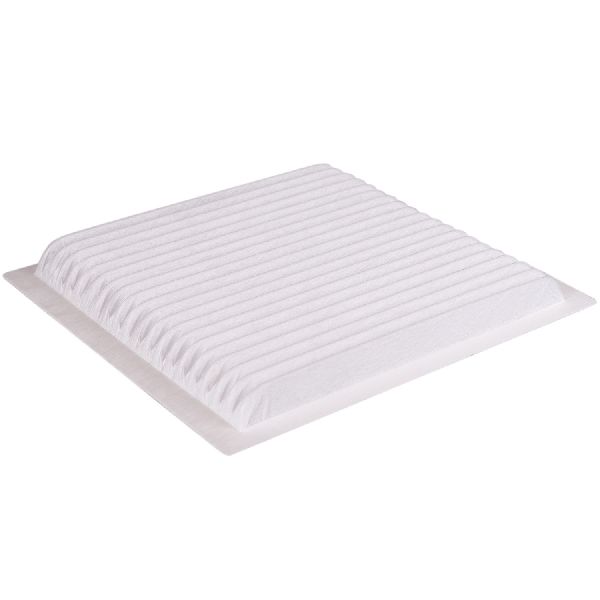
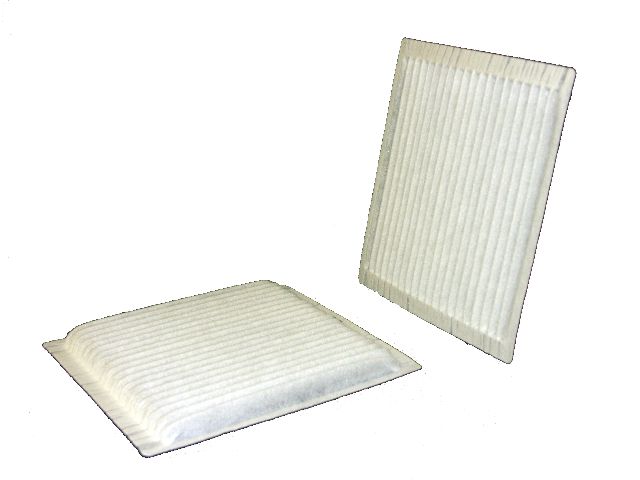
Est. part cost: $50-$150 for an OEM or quality aftermarket intake boot - Clogged or Dirty Air Filter 🟡 Medium Probability → Shop Air Cleaner Assembly
How to confirm: Remove and inspect the engine air filter. If it is visibly dirty, dark, or clogged with debris, it is restricting airflow.
Typical fix: Replace the engine air filter. This is a simple maintenance item that should be checked first.
Est. part cost: $20-$50 - Faulty MAF Sensor ⚪ Low Probability → Shop Fuel Injection Air Flow Meter
How to confirm: If cleaning the sensor, replacing the air filter, and confirming there are no vacuum leaks does not resolve the code, the sensor itself may have failed. This can be confirmed by monitoring its output (g/s) with an OBD-II scan tool to see if the readings are erratic or do not change with engine RPM.
Typical fix: Replace the MAF sensor. It is highly recommended to use an OEM Denso sensor, as aftermarket units are notoriously unreliable and can be faulty out of the box.
Est. part cost: $100-$200 for a genuine Denso sensor
Rare But Worth Checking
- Damaged MAF Sensor Wiring or Connector: → Shop Fuel Injection Air Flow Meter A hard impact, like hitting a pothole, can sometimes dislodge the connector or damage the wiring, leading to an instant P0101 code. Check that the connector is secure and inspect the wires for any signs of fraying or damage.
- Restricted Exhaust: A clogged catalytic converter can create excessive backpressure, throwing off the engine's airflow dynamics and triggering a P0101 code. This is usually accompanied by other codes and a significant loss of power.
- Incorrect MAF Sensor Installed: → Shop Fuel Injection Air Flow Meter Using a MAF sensor from a different Lexus model (e.g., an IS F) can trigger a P0101 code even if the connector fits. The sensors are calibrated differently for each engine's ECU.
Diagnosis Steps
- Read the code with an OBD-II scanner to confirm P0101 is present. Note any other codes.
- Inspect the engine air filter. If it's dirty, replace it.
- Visually inspect the air intake system between the air filter housing and the throttle body. Pay close attention to the accordion-style rubber boot for any cracks, tears, or loose clamps.
- Unplug and remove the MAF sensor. It is held in by two Phillips head screws. Handle it carefully.
- Inspect the sensor's internal elements (two small wires). If they look dirty, spray them thoroughly with a dedicated MAF sensor cleaner. Do not use brake cleaner or carburetor cleaner, and never touch the wires.
- Allow the sensor to air dry completely for at least 20-30 minutes before reinstalling.
- Before starting the car, disconnect the negative battery terminal for at least 15 minutes to reset the ECU's long-term fuel trims.
- Reconnect the battery, reinstall the sensor, clear the trouble code with the scanner, and perform a test drive. Let the car idle for several minutes before driving.
- If the code returns, check for vacuum leaks more thoroughly, preferably with a smoke machine.
- If no vacuum leaks are found and the sensor has been cleaned, monitor the MAF sensor readings (g/s) on a scan tool. At idle, a healthy IS300 should read between 2.5-4.5 g/s. The reading should increase smoothly and instantly with RPM. If the readings are stuck, erratic, or do not increase smoothly, the sensor is likely faulty and should be replaced with a Denso unit.
Parts You'll Likely Need
- Mass Airflow Sensor
(OEM #22204-22010)— This is the part that fails or gets dirty, causing the P0101 code. If cleaning doesn't work, replacement is the next step. Use OEM Denso only.
Trusted brands: Denso (OEM)
OEM price range: $140-$200
Aftermarket price range: $50-$120 - MAF Sensor Cleaner — This is the first and most common fix. A can of specialized cleaner is often all that is needed to resolve the issue.
Trusted brands: CRC, Liqui Moly, WD-40 Specialist
Aftermarket price range: $10-$20 - Engine Air Intake Hose
(OEM #17881-46140)— The original rubber hose is a common failure point for vacuum leaks due to cracking over time.
Trusted brands: Toyota (OEM), Mishimoto, HPS
OEM price range: $70-$120
Aftermarket price range: $100-$180 (for silicone upgrades) - Engine Air Filter
(OEM #17801-0D020)— A clogged air filter restricts airflow and can cause the P0101 code. It's a basic maintenance item that should be checked and replaced if dirty.
Trusted brands: Denso, WIX, Purolator
OEM price range: $25-$40
Aftermarket price range: $15-$30
Related Codes That Often Appear With This One
- P0171 — System Too Lean (Bank 1). A vacuum leak or a MAF sensor under-reporting airflow will cause the ECU to not add enough fuel, leading to a lean condition.
- P0172 — System Too Rich (Bank 1). A MAF sensor that is over-reporting airflow can cause the ECU to inject too much fuel, leading to a rich condition. This is a common pairing with a dirty MAF sensor.
- P0100 — Mass or Volume Air Flow Circuit Malfunction. This is a related code that often appears with P0101, indicating a general fault in the MAF circuit, possibly electrical.
- P0102 — Mass or Volume Air Flow Circuit Low Input. This code can appear alongside P0101, especially if there is an electrical issue like a damaged connector or wiring from an impact.
Technical Service Bulletins (TSBs) & Recalls
- While no TSB is directly for P0101, Lexus issued bulletins for early models regarding ECU updates to address transmission hesitation (e.g., EG004-03). This hesitation can sometimes be confused with MAF-related drivability issues, making it relevant context. A proper P0101 diagnosis should be performed first.
Platform-Specific Known Issues
- source — A user on ClubLexus with P0172 (System Too Rich) and P0101 was quoted $500 to replace the MAF sensor. Forum members advised to clean it first. After cleaning the sensor and resetting the ECU, the codes were resolved. This highlights the common misdiagnosis of needing a full replacement when a cleaning is sufficient.
- source — A 2004 IS300 owner reported that hitting a pothole immediately triggered P0101 and P0102 codes, accompanied by power loss and stalling. This points to a likely electrical issue, such as a dislodged connector or damaged wiring to the MAF sensor, rather than a dirty sensor or vacuum leak.
Mechanic-Grade Diagnostic Values
- MAF Sensor Resistance (Intake Air Temp circuit) — expected: 2.21 – 2.69 kΩ at 20°C (68°F), or 0.493 – 0.667 kΩ at 60°C (140°F).. Failure: Resistance is outside the specified range for the measured ambient temperature.
- MAF Sensor Live Data (g/s) — expected: 2.5 - 4.5 g/s at stable idle on a fully warmed engine.. Failure: Reading is stuck at 0.0 g/s, is erratic, or does not increase smoothly and immediately when the throttle is applied.
- MAF Sensor Signal Voltage (at ECU) — expected: Voltage fluctuates when air is blown into the meter with the key on.. Failure: Voltage does not change, indicating a dead sensor.
- Long Term Fuel Trim (LTFT) — expected: Should be close to 0%, ideally within +/- 10%.. Failure: A high negative value (e.g., -20% or more) indicates the ECU is trying to correct a rich condition, which can be caused by a faulty MAF over-reporting airflow, triggering P0101.
Wiring & Ground Locations
- MAF Sensor Connector (5-pin) — On the air intake tube, immediately after the air filter box.. This is the primary connection point. Check for corrosion, bent pins, or a loose connection, especially after an impact.
- ECU Pin C27 (VG) — On the Engine Control Unit (ECU), connector C. This is the MAF input signal wire.. This pin receives the airflow signal from the MAF sensor. A continuity test from this pin to the MAF connector can rule out a broken wire. The wire color is typically Green/Black.
- ECU Pin C26 (EVG) — On the Engine Control Unit (ECU), connector C. This is the MAF ground.. This is the ground reference for the MAF sensor. A bad ground here can cause erratic readings. The wire color is typically Blue/White.
- ECU Pin C32 (THA) — On the Engine Control Unit (ECU), connector C. This is the MAF temperature input.. This pin receives the signal from the integrated Intake Air Temperature sensor. A fault here can affect the MAF's calculations. The wire color is typically Blue/Black.
- Ground Point E9 — On the left side of the engine, as part of the engine harness.. This is a primary ground point for the engine control module and its sensors. A loose or corroded ground here can cause various sensor-related codes, including P0101.
Real Owner Repair Stories
- Reddit user in r/IS300 (2001 Lexus IS300) — Car in limp mode, stutters past 3000 RPM, codes P0100 and P0101.
❌ Tried (didn't work) Cleaning the original MAF sensor.
✅ What actually fixed it The user swapped the MAF sensor with a used one from a junkyard, which resolved the issues. This highlights that sometimes cleaning is not enough and the sensor has internally failed.
OEM Part Supersession History
22204-0D030→22204-22010— Standard part update/revision by the manufacturer.
Heads up: The newer part number 22204-22010 is the correct and current replacement for the original. No known incompatibility issues when using the superseded part.
Model Year Variations Within This Range
- 2001: The 2001 model year, being the first, is noted by owners to have more unique quirks. While the MAF sensor and P0101 diagnosis are consistent across the 2001-2005 range, some owners prefer 2002-2005 models due to minor bug fixes and interior updates (like the addition of a center armrest) that were implemented after the initial launch year.
Diagnostic Flowchart
Other Known Issues on This Vehicle
Issues unrelated to this code that are worth knowing about as an owner of this generation:
- Sticky / Melting Dashboard 🟠 Medium — Extremely common, especially in warmer climates. Caused by heat and humidity degrading the soft-touch plastic. (Ref: Lexus issued a Warranty Enhancement Program (ZE6/ZLZ) for this, but it has since expired for most vehicles. The only fix is to remove the dash, strip the sticky material, and repaint it.)
- Front Lower Ball Joint Failure 🔴 High — A well-documented failure point, typically occurring over 100,000 miles. Failure can be catastrophic, causing the wheel to detach. (Ref: No recall, but it is a widely recognized safety concern. Warning signs include creaking or popping noises from the front suspension when turning.)
- Oxygen (O2) Sensor Failure 🟠 Medium — O2 sensors are a frequent replacement item, often failing and causing Check Engine and TRAC OFF lights, poor fuel economy, and a rotten egg smell from the exhaust.
- VVTi Cam Gear Seal Leak / Solenoid Issues 🟡 Low — The variable valve timing (VVT) system can develop issues, including oil leaks from the cam gear seal or a malfunctioning solenoid, which can cause hesitation, rattling noises, and codes like P1349.
- Automatic Transmission Hesitation 🟡 Low — Some early models, particularly 2001-2002, exhibited hesitation or a delay in engagement from a stop or at very low speeds. (Ref: An ECU reflash was available from dealers under warranty to improve shift logic, but this may not completely resolve the feeling for all drivers.)
Used vs. New Parts: Buying Guide for This Vehicle
When a used part is the smart pick: A used OEM Denso MAF sensor from a junkyard or a reputable used parts seller can be a very smart and cost-effective choice. Since aftermarket sensors are known to be unreliable for this car, a used, known-good OEM part is often a better option than a new, non-Denso aftermarket part.
Donor-vehicle mileage cap: roughly under 150000 miles for the part to have meaningful remaining life.
What to inspect on the donor part:
- Ensure the donor vehicle was not in a front-end collision.
- Visually inspect the sensor's connector pins for corrosion or damage.
- Ask the seller if the part has been tested or comes with a short-term warranty.
- Try to source from a vehicle with similar or lower mileage than your own.
OEM-only on this vehicle (don't cheap out):
- Mass Airflow Sensor
Aftermarket brands forum-validated for this vehicle:
- Denso (OEM supplier)
Brands owners have reported issues with on this vehicle:
- Unbranded or 'white-box' sensors from online marketplaces are frequently reported as dead-on-arrival or failing shortly after installation.
Real Owner Stories
Aggregated from forums and TSBs cited above. Mileages and costs reflect what owners reported in those sources.
2006-2013 Lexus IS (2nd Gen)
Symptoms: Check engine light with codes P0172 (System Too Rich) and P0101. The owner was quoted $500 for a sensor replacement.
What fixed it: Cleaning the MAF sensor and resetting the ECU.
Source hint: ClubLexus.com thread titled 'p0172-p0175-p0101'
2004 Lexus IS300 3.0L I6
Symptoms: Immediately after hitting a pothole, the car triggered P0101 and P0102 codes, followed by power loss and stalling.
What fixed it: Investigation of an electrical issue, such as a dislodged connector or damaged wiring to the MAF sensor caused by the impact.
Source hint: Reddit r/MechanicAdvice thread 'p0101_and_p0102_04_lexus_is300'
Related OBD-II Codes
Frequently Asked Questions
Should I use an aftermarket MAF sensor for my 2001-2005 Lexus IS300?
Can I use brake cleaner to clean the MAF sensor on my 2JZ-GE engine?
Is there a TSB for the engine hesitation I'm feeling on my early model IS300?
Why is my IS300 prone to P0101 after installing an aftermarket air intake?
How can I tell if my IS300 intake boot is causing the P0101 code?
What are the normal MAF sensor readings for a healthy IS300 at idle?
How do I reset the fuel trims on my IS300 after cleaning the sensor?
Helpful Videos
![How to Fix LEXUS P0101 Engine Code in 2 Minutes [1 DIY Method / Only $9.74]](https://img.youtube.com/vi/DD4icCMGCek/mqdefault.jpg)


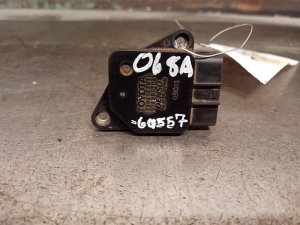
Used OEM Parts in Stock
New Aftermarket Parts Available


The information in this article is provided for general reference and educational purposes only. Vehicle specifications, procedures, and part compatibility can vary by production date, trim level, and region. Always consult your vehicle's factory service manual and verify part numbers before purchasing or performing repairs. Safety-critical components such as airbags, seat belts, and braking systems should be installed by a qualified professional.
- Lexus IS300:
- 🧭 Diagnostic Flowchart
- 🎬 Helpful Videos
- 🛍️ Shop This Part
- What's Unique About the 2001-2005 Lexus IS300
- Symptoms You May Notice
- Most Likely Causes
- Rare But Worth Checking
- Diagnosis Steps
- Parts You'll Likely Need
- Related Codes That Often Appear With This One
- Technical Service Bulletins (TSBs) & Recalls
- Platform-Specific Known Issues
- Mechanic-Grade Diagnostic Values
- Wiring & Ground Locations
- Real Owner Repair Stories
- OEM Part Supersession History
- Model Year Variations Within This Range
- Other Known Issues on This Vehicle
- Used vs. New Parts: Buying Guide for This Vehicle
- Real Owner Stories
- 2006-2013 Lexus IS (2nd Gen)
- 2004 Lexus IS300 3.0L I6
- Related OBD-II Codes
- Frequently Asked Questions
- 🎟️ Get 5% Off