

P0101 on 2007-2009 Lexus RX350: MAF Sensor Causes and Fixes
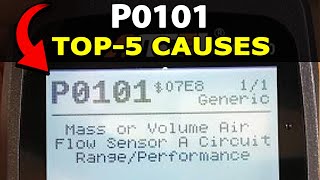
On a 2007-2009 Lexus RX350, code P0101 is most often caused by a dirty or faulty Mass Airflow (MAF) sensor. Cleaning the sensor with a dedicated cleaner is a common first step and may resolve the issue. If not, replacing the MAF sensor is the likely fix, costing around $70-$120 for an aftermarket part or $180-$220 for an OEM Denso part. Vacuum leaks are another common culprit.
- P0101 on your RX350 almost always points to the Mass Airflow (MAF) sensor.
- Before buying any parts, spend $10 on a can of MAF sensor cleaner and clean the sensor. This fixes the problem more than half the time.
- Always check the simple things first: ensure the engine air filter is clean and the intake hose has no cracks.
- If you must replace the sensor, using the OEM brand (Denso) is highly recommended for long-term reliability.
- This is a very DIY-friendly repair that requires minimal tools and can be completed in under 15 minutes.
What's Unique About the 2007-2009 Lexus RX350
For the 2GR-FE engine in this generation of RX350, the P0101 code is a straightforward issue almost always pointing to the MAF sensor itself or a vacuum leak. Unlike some other manufacturers that have complex software-related triggers or frequent wiring problems for this code, the Lexus/Toyota design is robust. The most common failure mode is simple contamination of the sensor's hot wire, often from a dirty air filter or an over-oiled aftermarket filter. Denso is the original equipment manufacturer (OEM) for this part, and sticking with this brand is highly recommended for reliability.
Symptoms You May Notice
- Check Engine Light is on
- Rough or shaky idle
- Hesitation or stumbling during acceleration
- Reduced fuel economy
- Engine stalling, especially at idle or low speeds
- Black smoke from the exhaust (in rare cases of a very rich fuel mixture)
- Car runs poorly for the first few minutes after a battery reset or MAF replacement, as the ECU relearns fuel trims.
- Replacing oxygen (O2) sensors. While a P0101 can sometimes be accompanied by lean or rich codes (like P0171/P0174), the root cause is the incorrect air measurement, not the O2 sensor itself. Always troubleshoot P0101 first when it appears with lean codes.
Most Likely Causes
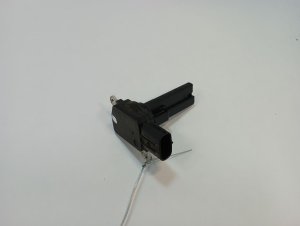
- Dirty Mass Airflow (MAF) Sensor 🔴 High Probability → Shop Fuel Injection Air Flow Meter The Denso hot-wire MAF sensor is sensitive and can become contaminated by dirt, dust, or oil mist from the PCV system or aftermarket oiled filters. This contamination insulates the wire, causing inaccurate readings.
How to confirm: Visually inspect the MAF sensor's internal wires, located in the intake tube right after the air filter box. If they appear coated in grime, they are dirty. The issue often appears after using an oiled aftermarket air filter.
Typical fix: Remove the sensor (held by two screws) and clean it carefully using only dedicated MAF sensor cleaner spray. Do not touch the internal wires. Allow it to dry completely before reinstalling.
Est. part cost: $8-$15 for MAF cleaner spray - Faulty Mass Airflow (MAF) Sensor 🟡 Medium Probability → Shop Fuel Injection Air Flow Meter
How to confirm: If cleaning the sensor does not resolve the code and there are no vacuum leaks, the sensor has likely failed electronically. A diagnostic scan tool can monitor the MAF sensor's data (in g/s) to see if it responds correctly to changes in engine RPM. If the reading is stuck, erratic, or does not change, the sensor is bad. With the engine off and ignition on, the MAF should read a very low value.
Typical fix: Replace the MAF sensor. It is a simple replacement, typically held in by two screws. Using an OEM Denso part is strongly recommended over cheaper aftermarket alternatives which can be improperly calibrated.
Est. part cost: $70-$120 for aftermarket, $180-$220 for OEM (Denso) - Vacuum Leak 🟡 Medium Probability Cracked or loose intake hoses (especially the main boot between the MAF and throttle body), a leaking intake manifold gasket, or a faulty PCV valve/hose can allow unmetered air to enter the engine after the MAF sensor. This causes the sensor's readings to conflict with what the oxygen sensors report, triggering P0101 often alongside lean codes P0171/P0174.
How to confirm: Visually inspect all air intake hoses for cracks. Check that the PCV hose is properly connected and not damaged. A common diagnostic method is to use a smoke machine to feed smoke into the intake system and watch for where it leaks out.
Typical fix: Replace the cracked hose or faulty gasket that is causing the leak.
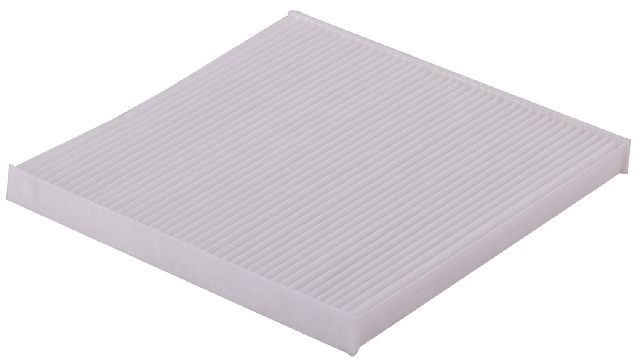
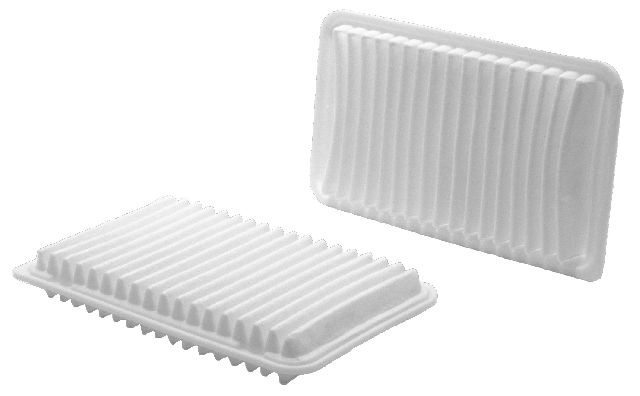
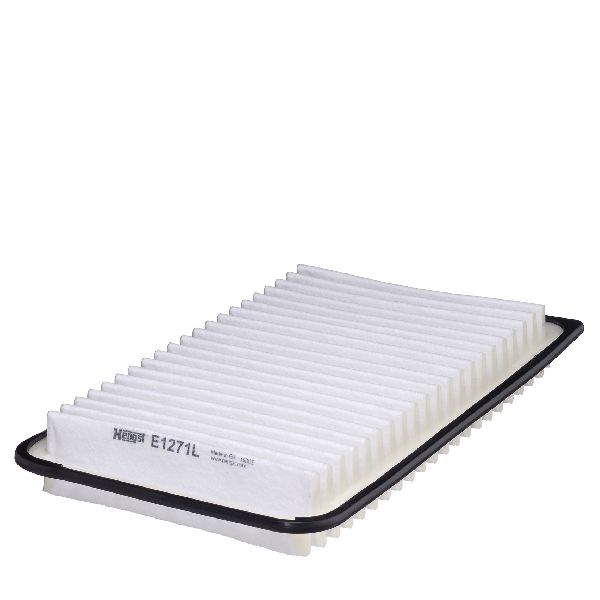
Est. part cost: $20-$150 depending on the leaking component - Dirty or Clogged Engine Air Filter ⚪ Low Probability → Shop Air Cleaner Assembly
How to confirm: Visually inspect the engine air filter. If it is visibly dirty, clogged with debris, or improperly seated in the airbox, it can restrict airflow or allow dirty air to bypass it.
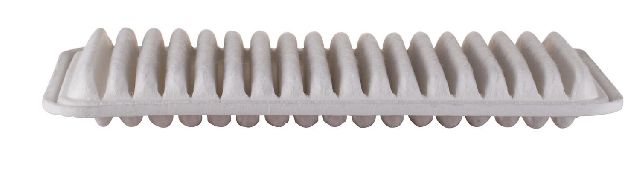
Typical fix: Replace the engine air filter and ensure the new one is seated correctly. This is a simple maintenance item.
Est. part cost: $20-$40
Rare But Worth Checking
- Clogged Catalytic Converter: A severely restricted exhaust can cause backpressure that affects the air measurement at the MAF sensor, potentially triggering a P0101 code. This is usually accompanied by other symptoms like a significant loss of power and a sulfur smell.
- MAF Sensor Wiring Issue: → Shop Fuel Injection Air Flow Meter While not common on this platform, a damaged wire or poor connection in the MAF sensor's electrical connector can cause the signal to be intermittent or out of range.
- ECU Adaptation Issue: After disconnecting the battery or replacing the MAF sensor, the ECU's learned fuel trims are reset. The car may run poorly (stall, rough idle) for a few drive cycles while it relearns. Some owners report needing to clear codes manually after a fix for the light to stay off.
Diagnosis Steps
- Read the Code: Use an OBD-II scanner to confirm P0101 is the primary code. Note any other codes present, especially P0171 and P0174. Troubleshoot P0101 first.
- Inspect the Air Filter: Check the engine air filter. If it's dirty, clogged, or improperly installed, replace it before proceeding.
- Inspect the Intake System: Visually inspect the air intake tube between the air filter box and the throttle body for any cracks, loose clamps, or disconnections. Ensure the airbox itself is properly sealed.
- Clean the MAF Sensor: Remove the MAF sensor. Spray the sensing element generously with a dedicated MAF sensor cleaner. Do not use brake or carb cleaner. Do not touch the wires. Let it air dry completely. Reinstall the sensor, clear the codes, and perform a test drive to see if the code returns.
- Check for Vacuum Leaks: If the code returns, check for vacuum leaks. A smoke test is the most effective method. Pay close attention to the intake manifold gaskets and all vacuum hoses, including the PCV hose and its connections.
- Test the MAF Sensor: If no vacuum leaks are found, the sensor itself is likely faulty. Using a scan tool with live data, monitor the MAF reading at idle (should be around 2-5 g/s for this engine when fully warm) and ensure it increases smoothly with engine RPM. If the reading is stuck, erratic, or does not change, the sensor is bad.
- Replace the MAF Sensor: If the sensor is confirmed to be faulty, replace it. It is highly recommended to use an OEM Denso part (Part No. 22204-31020 or Denso DMA-0110) to avoid calibration issues with aftermarket parts.
Parts You'll Likely Need
- Mass Air Flow (MAF) Sensor
(OEM #22204-31020 (Toyota), DMA-0110 (Denso))— This is the most common part to fail or become too contaminated to be saved by cleaning, directly causing the P0101 code.
Trusted brands: Denso (OEM), Delphi, Hitachi
OEM price range: $180-$220
Aftermarket price range: $70-$120 - Engine Air Filter
(OEM #17801-31120)— A clogged or poorly fitted air filter restricts airflow or allows contaminants to foul the MAF sensor. It's a basic maintenance item that should be checked first.
Trusted brands: Denso, WIX, Purolator
OEM price range: $25-$40
Aftermarket price range: $15-$30
Related Codes That Often Appear With This One
- P0171 — System Too Lean (Bank 1) - If there is a vacuum leak, unmetered air enters the engine, causing a lean condition that the MAF sensor reading doesn't account for.
- P0174 — System Too Lean (Bank 2) - Same as P0171, but for the second bank of cylinders on the V6 engine.
Technical Service Bulletins (TSBs) & Recalls
- While no TSB is directly for P0101 on this model, a critical related TSB is the Limited Service Campaign (LSC 90K) for the 2GR-FE VVT-i oil line. A massive oil leak from this line could potentially contaminate the intake and MAF sensor, though it typically causes catastrophic engine failure first.
Mechanic-Grade Diagnostic Values
- MAF Sensor Live Data (Scan Tool) — expected: 2 to 5 g/sec at idle (warmed up, A/C off); 8 to 19 g/sec at 2,500 rpm (no load). Failure: Value is stuck at 0.0 g/sec or 160.0 g/sec or more, or does not increase smoothly with RPM.
- MAF Sensor Signal Voltage (at ECM) — expected: Should vary with airflow. A service manual example shows a failure condition if voltage is > 2.2V or < 0.73V at idle.. Failure: Voltage is stuck high or low and does not correlate with engine RPM and load.
- MAF Sensor Power Supply Voltage (at connector) — expected: Battery voltage (approx. 12V) with ignition ON, engine OFF.. Failure: Low or no voltage indicates a wiring or fuse issue between the EFI relay and the sensor.
- MAF Sensor Ground Circuit Resistance — expected: Near 0 ohms between the ground pin on the connector and a known good chassis ground.. Failure: High resistance (OL) indicates an open in the ground wire.
Scan Tool Commands That Help
- Toyota Techstream: Data List Monitoring (Powertrain -> Engine and ECT -> Data List -> MAF) — To monitor live MAF g/s readings to check for expected values at idle and under load, and to see if the sensor responds correctly to throttle changes.
- Toyota Techstream: Active Test — While there isn't a specific 'test MAF' command, Techstream's Active Test menu allows technicians to control other components (like fuel injectors or VSVs) to see how the system reacts, which can help isolate the P0101 cause. For example, the 'Control the Injection Mode' test can help verify fuel system response.
- Toyota Techstream: Clear DTCs / Reset Memory — After performing a repair like cleaning or replacing the MAF sensor, it is crucial to clear the Diagnostic Trouble Codes. Some forum users report the light will not go out until manually cleared, and this also resets the fuel trim learning values.
Wiring & Ground Locations
- MAF Sensor Connector (M1) — On the air intake tube, immediately following the air filter housing.. This is the primary connection point for the sensor. A poor connection, corrosion, or damaged pins here will directly cause P0101. The 5-pin connector contains power, ground, and signal wires.
- ECM Connectors (E5, E7) — The Engine Control Module (ECM) is located in the engine bay. The specific connectors receive the MAF signal.. Verifying signal voltage at the ECM connector helps determine if a wiring issue exists between the sensor and the ECM.
- EFI No. 2 Fuse — Located in the engine room fuse/relay box (R/B).. This fuse supplies power to the MAF sensor circuit. If blown, the sensor will have no power, leading to a P0101 code.
Real Owner Repair Stories
- ClubLexus Forum User (2007 Lexus RX400h (Similar MAF system)) — P0101, P0171, P0174 codes present.
❌ Tried (didn't work) Replacing the MAF sensor with a new aftermarket part. This caused the vehicle to run even more poorly.
✅ What actually fixed it The owner reinstalled the original, OEM Denso MAF sensor after giving it a very thorough cleaning with MAF cleaner spray. After reinstalling the cleaned original sensor and manually clearing the codes, the issue was resolved. This highlights that a new aftermarket sensor can be faulty out of the box and that a deep cleaning of the original part is often the correct fix. - ClubLexus Forum User (Lexus IS250 (2GR engine family)) — Check Engine Light with codes P0101, P0172 (Rich), P0175 (Rich). Hesitation off the line.
❌ Tried (didn't work) Initial inspection showed no obvious vacuum leaks or connection issues.
✅ What actually fixed it The owner removed the MAF sensor and cleaned it with CRC MAF Sensor Cleaner. The forum post confirms that for modern Lexus vehicles (post-2000s), the sensors are typically hot-wire type and not the older Karman-Vortex type, making them safe to clean with standard MAF cleaner. This resolved the P0101 and the associated rich condition codes.
OEM Part Supersession History
22204-0H010, 22204-0P010, 22204-31010→22204-31020— Standard part consolidation and minor revisions by the manufacturer.
Heads up: The current part number 22204-31020 is the correct and backward-compatible replacement for the earlier numbers on this vehicle.
Diagnostic Flowchart
Other Known Issues on This Vehicle
Issues unrelated to this code that are worth knowing about as an owner of this generation:
- VVT-i Oil Line Rupture 🔴 High — Common on early 2GR-FE engines. A rubber section of the oil line degrades and can burst, leading to rapid oil loss and catastrophic engine failure. (Ref: Limited Service Campaign (LSC 90K) was issued, but expired March 31, 2013. The fix involves replacing the rubber/metal line with an all-metal line (Part No. 15772-31030).)
- Power Steering Rack Leaks 🟠 Medium — Frequently reported by owners, often before 100,000 miles. Leaks typically start at the rack and pinion seals, leading to fluid loss and whining noises.
- Cracked or Melting Dashboard 🟡 Low — Very common, especially in warmer climates. The dashboard material can become sticky, shiny, and develop deep cracks over time. A warranty enhancement program existed but has since expired.
- Water Pump Failure 🟠 Medium — A potential issue leading to coolant leaks and overheating. While not as common as the oil line, failure can cause significant engine damage if not addressed.
Used vs. New Parts: Buying Guide for This Vehicle
When a used part is the smart pick: A used OEM Denso MAF sensor from a low-mileage donor vehicle can be a cost-effective and reliable option, often preferable to a new, non-OEM aftermarket part. Given that the primary failure mode is contamination, a physically intact used sensor can often be cleaned to full functionality.
Donor-vehicle mileage cap: roughly under 80000 miles for the part to have meaningful remaining life.
What to inspect on the donor part:
- Check the donor vehicle's history for signs of front-end damage or fire.
- Inspect the sensor's connector pins for corrosion or damage.
- Look at the sensing wire/element through the bore; avoid any with visible physical damage, though dirt is expected and can be cleaned.
- Ensure the plastic housing is not cracked or broken.
OEM-only on this vehicle (don't cheap out):
- Mass Airflow (MAF) Sensor - While not strictly 'OEM-only', forum consensus strongly advises against cheap, unbranded aftermarket MAF sensors due to frequent calibration and quality control issues. A new OEM Denso or a used OEM Denso is the recommended path.
Aftermarket brands forum-validated for this vehicle:
- Denso (This is the OEM supplier, available in Denso packaging)
Brands owners have reported issues with on this vehicle:
- Unbranded or generic 'white-box' sensors from online marketplaces are frequently reported as faulty out of the box or failing shortly after installation.
Real Owner Stories
Aggregated from forums and TSBs cited above. Mileages and costs reflect what owners reported in those sources.
2007 Lexus RX400h
Symptoms: Owner had codes P0101, P0171, and P0174. After replacing the MAF sensor with a new one, the vehicle ran poorly.
What fixed it: The issue was resolved by reinstalling the original sensor after a thorough cleaning and manually clearing the codes, as the new aftermarket sensor was faulty.
Source hint: ClubLexus.com thread titled '2007 RX400h P0101'
2007-2009 Lexus RX350 2GR-FE
Symptoms: Intermittent P0101 code without noticeable driving issues.
What fixed it: Cleaning the MAF sensor and checking the air filter.
Source hint: ClubLexus.com thread titled 'Data from Engine Code P0101 - Mass Air Flow Problem'
Related OBD-II Codes
Frequently Asked Questions
Does the VVT-i oil line TSB (LSC 90K) apply to my 2007-2009 Lexus RX350?
I just replaced my MAF sensor and now my RX350 is running poorly. Is this normal?
Can I use any cleaner to fix the P0101 code on my Lexus?
Why did my RX350 trigger P0101 after I installed an aftermarket air filter?
What is the specific Denso part number I should use for a replacement MAF sensor?
Could a leak in the intake boot cause this code on my RX350?
Helpful Videos
![How to Fix LEXUS P0101 Engine Code in 2 Minutes [1 DIY Method / Only $9.74]](https://img.youtube.com/vi/DD4icCMGCek/mqdefault.jpg)

Used OEM Parts in Stock
New Aftermarket Parts Available

The information in this article is provided for general reference and educational purposes only. Vehicle specifications, procedures, and part compatibility can vary by production date, trim level, and region. Always consult your vehicle's factory service manual and verify part numbers before purchasing or performing repairs. Safety-critical components such as airbags, seat belts, and braking systems should be installed by a qualified professional.
- Lexus RX350:
- 🧭 Diagnostic Flowchart
- 🎬 Helpful Videos
- 🛍️ Shop This Part
- What's Unique About the 2007-2009 Lexus RX350
- Symptoms You May Notice
- Most Likely Causes
- Rare But Worth Checking
- Diagnosis Steps
- Parts You'll Likely Need
- Related Codes That Often Appear With This One
- Technical Service Bulletins (TSBs) & Recalls
- Mechanic-Grade Diagnostic Values
- Scan Tool Commands That Help
- Wiring & Ground Locations
- Real Owner Repair Stories
- OEM Part Supersession History
- Other Known Issues on This Vehicle
- Used vs. New Parts: Buying Guide for This Vehicle
- Real Owner Stories
- 2007 Lexus RX400h
- 2007-2009 Lexus RX350 2GR-FE
- Related OBD-II Codes
- Frequently Asked Questions
- 🎟️ Get 5% Off