

P0101 on 2010-2014 Lotus Evora: MAF Sensor Range/Performance Fault Guide
On a 2010-2014 Lotus Evora, code P0101 is most often caused by a non-approved aftermarket air filter or a dirty Mass Air Flow (MAF) sensor. Before buying parts, inspect the air filter to ensure it's an OEM-spec part and clean the MAF sensor with a dedicated cleaner. A loose electrical connector to the MAF is also a known simple fix.
- Always check the air filter first. Per a Lotus TSB, a non-approved aftermarket filter is a known cause of P0101 on the Evora.
- The second step should be to clean the MAF sensor with a dedicated cleaner, which is a cheap and often effective fix.
- Do not immediately replace the MAF sensor without checking for simpler issues like vacuum leaks or a dirty filter, as this can be a costly misdiagnosis.
- The P0101 code is often paired with P1109 on this vehicle, reinforcing that the issue is related to inconsistent airflow measurement.
What's Unique About the 2010-2014 Lotus EVORA
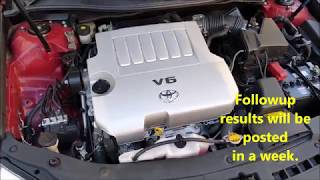
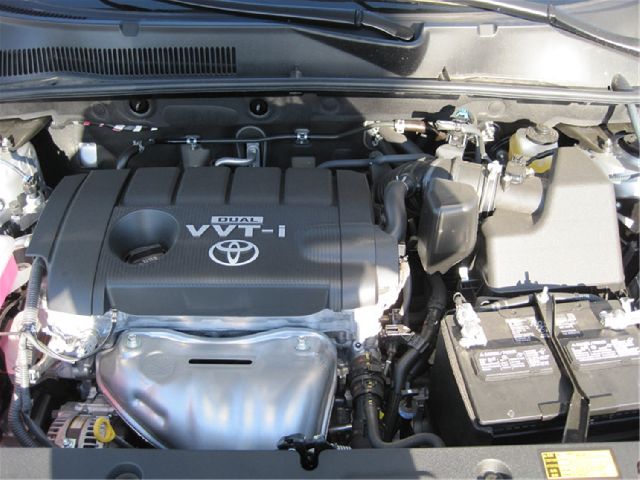
The Lotus Evora from this period uses a Toyota-sourced 3.5L 2GR-FE V6 engine. While this is a very reliable powertrain, Lotus's specific tuning and intake design make it sensitive to airflow changes. A Lotus Technical Service Bulletin (TSB) explicitly warns that using non-approved aftermarket air filters can cause the P0101 code, highlighting the system's sensitivity to modifications compared to a standard Toyota application. Forum discussions confirm that even reputable aftermarket filters, especially over-oiled ones, can trigger this code.
Diagnostic Flowchart
Tap your situation to follow the diagnostic path that matches what you're seeing on this vehicle.
Generation note: This range covers both the naturally aspirated Evora (276 hp) and the supercharged Evora S (launched in 2010). The fundamental cause of P0101 is the same for both, as they share the same base engine and MAF system architecture. However, the supercharged 'S' model may be even more sensitive to intake restrictions or leaks due to the forced induction system's higher airflow demands.
Symptoms You May Notice
- Check Engine Light is on
- Reduced engine power and sluggish acceleration
- Engine hesitation or stumbling, sometimes described as 'kangarooing'.
- Rough or unstable idle, sometimes dropping to 400 RPM before recovering.
- Decreased fuel economy
- Black smoke from the exhaust in some cases
- Car enters 'limp mode'.
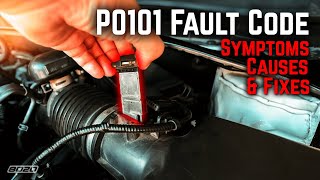
- Replacing oxygen (O2) sensors. While a bad air-fuel mixture can trigger O2 sensor codes (like P0171/P0174), the root cause for P0101 is the air measurement, not the exhaust measurement. 🎬 Watch: A breakdown of what P0101 really means and how to fix it.
Most Likely Causes
- Non-Approved Aftermarket Air Filter 🔴 High Probability → Shop Air Cleaner Assembly A specific Lotus TSB (sb_2020_01) directly links this code to the use of non-approved aftermarket air filters, which can alter airflow characteristics beyond what the factory calibration expects. Oiled filters (like some K&N models) are a frequent culprit if they are over-oiled, as the oil can contaminate the MAF sensor.
How to confirm: Visually inspect the engine air filter. If it is not a genuine Lotus part or a direct OEM-equivalent (dry paper type), it is the likely cause. Check for excessive oil on the filter media.
Typical fix: Replace the aftermarket filter with a genuine Lotus or OEM-quality air filter. Clean the MAF sensor while replacing the filter.
Est. part cost: $20-$70 - Dirty or Contaminated MAF Sensor 🔴 High Probability → Shop Fuel Injection Air Flow Meter Oiled air filters or fine dust bypassing a poorly sealed or low-quality filter can contaminate the MAF sensor's delicate hot wire, causing inaccurate readings. This is the most common first-step fix discussed in owner forums.
How to confirm: Remove the MAF sensor and visually inspect the sensing element for dirt, oil, or other residue.
Typical fix: Clean the sensor using only dedicated Mass Air Flow sensor cleaner. Do not touch the sensing element. Allow it to fully air dry before reinstalling. 🎬 See how to safely clean a Toyota-style MAF sensor.
Est. part cost: $10-$15 for cleaner - Vacuum Leak 🟡 Medium Probability Any unmetered air that enters the engine after the MAF sensor (e.g., through a cracked intake boot, loose clamp, or bad gasket) will cause the sensor's readings to be lower than the actual amount of air entering the cylinders.
How to confirm: Visually inspect all intake hoses and connections between the MAF sensor and the engine. A smoke test is the most effective way to find hard-to-see leaks.
Typical fix: Repair the source of the leak, which may involve tightening a clamp, replacing a hose, or changing a gasket.
Est. part cost: $5-$150 depending on the part - Faulty MAF Sensor ⚪ Low Probability → Shop Fuel Injection Air Flow Meter While not as common as a dirty sensor, the MAF sensor itself can fail electronically. One owner on Reddit reported that replacing the MAF sensor ultimately solved their recurring P0101 issue after cleaning it did not.
How to confirm: After confirming the sensor is clean, the air filter is correct, and there are no vacuum leaks, monitor the MAF sensor's output (in grams/second) with a scan tool. The reading should be steady at idle and increase smoothly with engine RPM. If it's erratic, stuck, or unresponsive, the sensor is likely bad.
Typical fix: Replace the Mass Air Flow sensor. The OEM part is made by Denso.
Est. part cost: $150-$300
Rare But Worth Checking
- Clogged Catalytic Converter: A restricted exhaust can impede airflow through the engine, causing the MAF sensor readings to be lower than expected for a given engine speed and load. This would typically be accompanied by a significant loss of power, especially at high RPM.
- MAF Sensor Circuit Issue: → Shop Fuel Injection Air Flow Meter Damaged wiring or a poor connection at the MAF sensor connector can interrupt the signal to the ECM, triggering a P0101 code. Inspect the harness for any visible damage.
- Loose MAF Sensor Connector: → Shop Fuel Injection Air Flow Meter A Reddit user reported that their recurring P0101 issue was resolved by ensuring the electrical connector to the MAF sensor was tightly connected. They recommended using a zip tie to ensure the connection remains secure, as vibrations can cause it to loosen over time.
Diagnosis Steps
- Read the code with an OBD-II scanner to confirm P0101 is present and note any other codes like P1109, P0171, or P0174.
- Inspect the engine air filter. Is it dirty, clogged, or a non-approved aftermarket type (especially an over-oiled one)? Replace if necessary with an OEM-spec filter.
- Inspect the intake tract between the air filter housing and the throttle body for any cracks, loose clamps, or disconnected hoses.
- Carefully remove the MAF sensor. Inspect its sensing wires for any dirt, debris, or oil film.
- If dirty, clean the sensor using only a dedicated MAF sensor cleaner spray. Allow it to dry completely before reinstalling.
- Check the MAF sensor's electrical connector for a tight fit. Some owners recommend securing it with a zip tie to prevent intermittent connection issues.
- Clear the codes and perform a test drive. If the code returns, the issue is not just a dirty sensor or loose connection.
- Use a scan tool to monitor the MAF sensor reading (g/s) in the live data stream. The value should be stable at idle (typically 2-5 g/s for a V6) and increase smoothly and proportionally as you increase engine RPM.
- If the reading is erratic, does not change, or is clearly incorrect, and you have ruled out vacuum leaks and filter issues, the MAF sensor is likely faulty and requires replacement.
Parts You'll Likely Need
- Mass Air Flow (MAF) Sensor
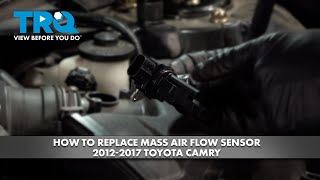
(OEM #Denso 197-6110 (Cross-references to Toyota 22204-31020, 22204-0P010))— If cleaning the sensor doesn't resolve the issue and no vacuum leaks are present, the sensor itself has likely failed. The original part is manufactured by Denso. 🎬 Watch this walkthrough on how to replace the MAF sensor.
Trusted brands: Denso (OEM), Hitachi, Bosch
OEM price range: $250-$350
Aftermarket price range: $100-$200 - Engine Air Filter
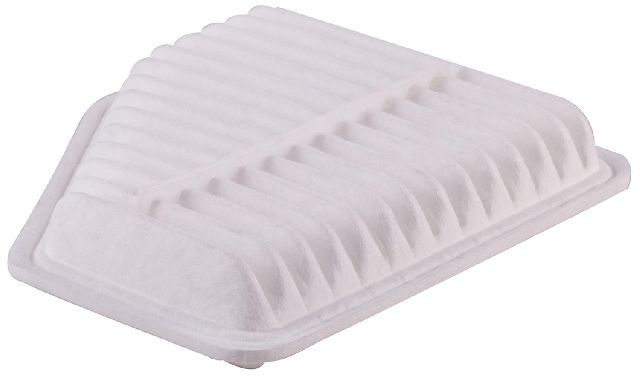
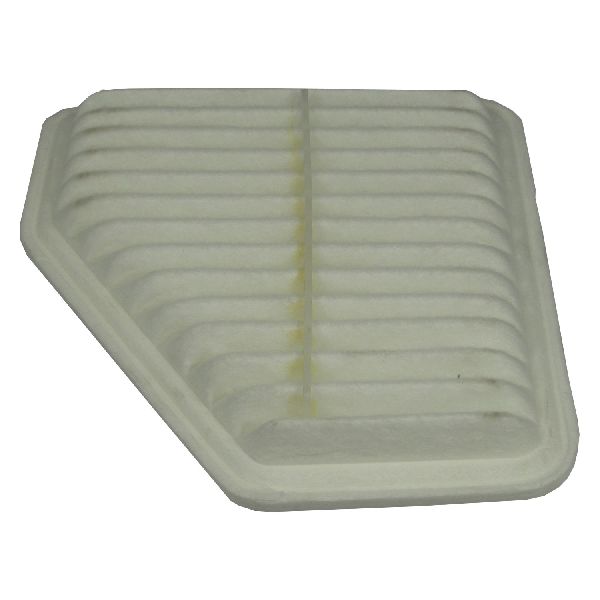
(OEM #Cross-references to Toyota 17801-31120)— A non-approved aftermarket or clogged air filter is a primary cause of this code on the Evora, as stated in a manufacturer TSB.
Trusted brands: Lotus (OEM), Bosch, WIX, Pronto 89913VVCS
OEM price range: $40-$70
Aftermarket price range: $20-$40 - Mass Air Flow Sensor Cleaner — This is a low-cost, high-success first step. A dirty sensor is a very common cause of P0101.
Trusted brands: CRC, Liqui Moly, WD-40 Specialist
Aftermarket price range: $10-$15
Related Codes That Often Appear With This One
- P1109 — This Lotus-specific code is explicitly mentioned alongside P0101 in TSB sb_2020_01. P1109 can relate to the Barometric (BARO) or Manifold Absolute Pressure (MAP) sensor performance, which the ECM cross-references with the MAF sensor signal to ensure accuracy. A problem affecting airflow can cause both to report conflicting data.
- P0171 / P0174 — These codes indicate 'System Too Lean' for Bank 1 and Bank 2, respectively. A P0101 fault where the MAF sensor under-reports airflow will cause the ECM to inject too little fuel, leading to a lean condition. An owner on a Lotus forum experienced these codes together.
Technical Service Bulletins (TSBs) & Recalls
- sb_2020_01: Warns that using non-approved aftermarket air filters is a direct cause for diagnostic trouble codes P0101 and P1109.
Platform-Specific Known Issues
- Lotus Technical Service Bulletin sb_2020_01 explicitly states that 'unauthorised modifications, including fitment of non-approved after-market air filter' can result in the generation of DTCs P0101 & P1109.
Mechanic-Grade Diagnostic Values
- MAF Sensor Live Data (g/s) at Idle — expected: 2 to 7 g/s (for a similar displacement V6 engine). The 2GR-FE engine's normal idle is ~650-660 RPM.. Failure: Readings are stuck, erratic, or significantly outside the expected range. A reading that rises too slowly on acceleration can indicate a dirty sensor or a vacuum leak.
- MAF Sensor Live Data (g/s) at 2500 RPM — expected: 15 to 25 g/s.. Failure: The reading should show a steady, linear rise from idle. A sensor out of calibration may rise too quickly or too slowly.
- MAF Sensor Signal Voltage at Idle (Warmed Up) — expected: 1.0V - 1.7V.. Failure: Voltage is greater than 2.2V.
- MAF Sensor Signal Voltage (Key On, Engine Off) — expected: Less than 1.0V, typically around 0.4V.. Failure: Voltage is less than 0.2V or greater than 4.9V for 3 seconds.
Scan Tool Commands That Help
- Intelligent Tester / Advanced Scan Tool: Live Data Path: DIAGNOSIS / ENHANCED OBD II / DATA LIST / PRIMARY / MAF — To monitor the real-time airflow rate in g/s to check if the sensor is responding correctly to changes in engine RPM.
- Scan Tool or Manual Procedure: Idle Air Volume Relearn / Throttle Body Relearn — This may be necessary if the throttle body was cleaned as part of the diagnosis. On some vehicles, a dirty throttle body can contribute to P0101. After cleaning, the idle position must be relearned. A manual method can sometimes be performed by letting the car idle for 20 minutes, followed by a 15-minute test drive.
Wiring & Ground Locations
- MAF Sensor Connector — On the intake tube, between the air filter box and the throttle body.. The connector itself or the wiring leading to it can become loose or damaged, causing intermittent signal loss. Wiggling the harness while monitoring live data can reveal a bad connection. One owner found securing the harness with a zip tie fixed the issue.
- Engine Bay Earth Points — Various points in the engine bay. One owner reported checking, cleaning, and retightening these as part of a comprehensive diagnostic effort for multiple electrical issues.. A poor ground for the ECU or sensor circuit can cause erratic sensor readings and trigger performance codes like P0101.
- MAF Sensor Power and Signal Pins — At the MAF sensor harness connector.. For manual testing with a multimeter, you need to identify the power, ground, and signal wires. Generic procedures suggest checking for continuity on the signal wire (e.g., between MAF pin 4 and ECM pin 51) and checking for battery voltage on the power supply pin (e.g., MAF pin 2).
Real Owner Repair Stories
- The Lotus Forums user 'Ahmad B' (2016 Evora 400) — Car would shut off frequently, both while driving and in park. High engine load at idle (30-40%).
❌ Tried (didn't work) Replacing the MAF sensor with a new one., Cleaning the MAF sensor., Cleaning the connector pins.
✅ What actually fixed it The owner noticed that wiggling the wires on the MAF sensor harness caused the engine load to fluctuate instantly. The final fix was adding an extra cable tie to hold the wires securely in a position where they did not cause a fault, indicating a problem in the wiring harness itself rather than the sensor.
"I Checked Everything" — The Actual Cause
- In cases where a smoke test reveals no vacuum leaks, the root cause can be purely electrical. An owner of an Evora 400 traced their P0101 and stalling issue to the wiring harness connected to the MAF sensor. Wiggling the harness would cause the fault to appear and disappear. Securing the harness to prevent movement resolved the code, proving the issue was a bad connection or internal wire break, which a smoke test would never find.
When the Usual Fixes Don't Work
- While replacing a faulty MAF sensor is a valid fix, it is not always the root cause. One owner replaced their sensor for a recurring P0101 issue to no effect. The problem was ultimately traced to a fault within the wiring harness leading to the sensor. The final, successful repair did not involve a new part, but rather securing the harness with a zip tie to prevent the intermittent connection from occurring. This highlights the need to test the circuit and wiring, not just swap the component.
OEM Part Supersession History
22204-0H010, 22204-0P010, 22204-31010→22204-31020— Standard part revision and consolidation by Toyota.
Helpful Videos

We Have This Part in Stock

The information in this article is provided for general reference and educational purposes only. Vehicle specifications, procedures, and part compatibility can vary by production date, trim level, and region. Always consult your vehicle's factory service manual and verify part numbers before purchasing or performing repairs. Safety-critical components such as airbags, seat belts, and braking systems should be installed by a qualified professional.
- Lotus EVORA:
- 🧭 Diagnostic Flowchart
- 🎬 Helpful Videos
- 🛍️ Shop This Part
- What's Unique About the 2010-2014 Lotus EVORA
- Symptoms You May Notice
- Most Likely Causes
- Rare But Worth Checking
- Diagnosis Steps
- Parts You'll Likely Need
- Related Codes That Often Appear With This One
- Technical Service Bulletins (TSBs) & Recalls
- Platform-Specific Known Issues
- Mechanic-Grade Diagnostic Values
- Scan Tool Commands That Help
- Wiring & Ground Locations
- Real Owner Repair Stories
- "I Checked Everything" — The Actual Cause
- When the Usual Fixes Don't Work
- OEM Part Supersession History
- 🎟️ Get 5% Off