

P0101 on 2015-2019 Lotus Evora: MAF Sensor Range/Performance Causes and Fixes
On a 2015-2019 Lotus Evora, code P0101 is most often caused by a dirty Mass Air Flow (MAF) sensor, the use of a non-approved aftermarket air filter, or a loose electrical connector at the sensor. Cleaning the MAF sensor with a dedicated cleaner and ensuring the connector is secure are common first steps that often resolve the issue.
- P0101 on the Evora is almost always an issue with the MAF sensor getting an incorrect reading.
- Before replacing any parts, clean the MAF sensor with a dedicated cleaner; this is a cheap and highly effective fix.
- Check your air filter. If it's an aftermarket oiled filter, it is a likely cause per a Lotus TSB. [sb_2020_01] Replace it with an OEM filter.
- If cleaning the sensor and replacing the filter doesn't work, check thoroughly for vacuum leaks before buying a new MAF sensor.
What's Unique About the 2015-2019 Lotus EVORA
The Lotus Evora uses a Toyota-sourced 2GR-FE 3.5L V6 engine, often supercharged in later models. A key factor for this code on the Evora is its sensitivity to intake modifications. A Lotus Technical Service Bulletin (TSB sb_2020_01) explicitly warns that using non-approved aftermarket air filters can cause the P0101 code, suggesting the factory engine calibration is tightly matched to the stock intake system's airflow characteristics. [sb_2020_01] Forum discussions confirm that owners who install aftermarket cold air intakes (CAI) or oiled filters sometimes encounter this code. Additionally, some owners report that the MAF sensor's electrical connector can become loose, causing intermittent signal issues that trigger the code.
Diagnostic Flowchart
Tap your situation to follow the diagnostic path that matches what you're seeing on this vehicle.
Symptoms You May Notice
- Check Engine Light (Malfunction Indicator Lamp) is on.
- Reduced engine power and acceleration, sometimes described as 'limp mode'.
- Rough or unstable idle, or engine revs dropping at junctions.
- Engine hesitation or stalling, especially at low speeds or when putting the car in gear.
- Black smoke from the exhaust, indicating a rich fuel mixture.
- Decreased fuel economy.
- Fluctuating engine load percentages when viewed on a scanner.
- Replacing the oxygen (O2) sensors. While a P0101 can affect fuel trim and might be seen with fuel-trim-related codes (like P0171/P0174), the root cause is the air measurement, not the exhaust gas measurement.
Most Likely Causes
- Dirty or Contaminated Mass Air Flow (MAF) Sensor 🔴 High Probability → Shop Fuel Injection Air Flow Meter Oiled aftermarket air filters can shed oil onto the sensor element, and even with stock filters, fine dust and debris can accumulate over time, skewing its readings. The sensor contains a delicate heated wire that must be clean to accurately measure airflow.
How to confirm: Visually inspect the MAF sensor's internal wires or film for dirt, oil, or debris. The sensor is located in the intake tube just after the air filter box.
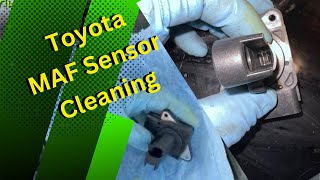
Typical fix: Remove the sensor and clean it carefully using a dedicated MAF sensor cleaner spray. 🎬 See how to safely clean a Toyota-style mass air flow sensor. Do not touch the delicate internal elements. Allow it to dry completely before reinstalling.
Est. part cost: $10-$20 for MAF cleaner spray. - Non-Approved Aftermarket Air Filter 🔴 High Probability → Shop Air Cleaner Assembly A manufacturer TSB (sb_2020_01) directly links P0101 to the use of non-approved aftermarket air filters, which can alter airflow characteristics beyond what the ECU is programmed to expect. [sb_2020_01] This is a very common cause discussed by owners.
How to confirm: Check if the vehicle is equipped with an aftermarket air filter, particularly an oiled-gauze type. If the code appeared after a new filter was installed, this is a strong indicator.
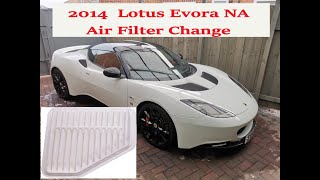
Typical fix: Replace the aftermarket filter with a genuine OEM Lotus or a high-quality 🎬 Watch this DIY guide on how to change your air filter. OEM-equivalent dry filter.
Est. part cost: $40-$80 for an OEM-style filter. - Loose or Faulty MAF Sensor Electrical Connector/Wiring 🟡 Medium Probability → Shop Fuel Injection Air Flow Meter Several Evora owners have traced P0101 issues to a poor connection at the MAF sensor harness. Wiggling the wires can cause engine load readings to fluctuate wildly, confirming a wiring issue. One owner reported that securing the connector with an extra zip tie resolved recurring problems.
How to confirm: With the engine running and a scanner connected to view live data (Engine Load or MAF g/s), carefully wiggle the MAF sensor connector and wiring. If the readings jump erratically or the engine stumbles, the connection is faulty.
Typical fix: Clean the connector pins with contact cleaner and ensure it is securely latched. Adding a zip tie to hold the connector tightly against the sensor is a common owner-suggested fix. In severe cases, the connector pigtail may need to be repinned or replaced by an auto electrician.
Est. part cost: $5 for contact cleaner/zip ties, up to $150+ for professional wiring repair. - Vacuum Leak in the Intake System 🟡 Medium Probability Any air that enters the engine after the MAF sensor is 'unmetered' and will cause the sensor's readings to conflict with what the oxygen sensors report, triggering the code. This can include leaks from the PCV hose or intake manifold gaskets.
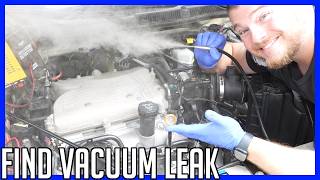
How to confirm: Inspect all intake ducting, vacuum hoses, and gaskets between the MAF sensor and the engine for cracks, loose connections, or damage. A smoke test is the most effective way to find hidden leaks. 🎬 Watch this easy walkthrough to find and fix vacuum leaks.
Typical fix: Repair the source of the leak, which may involve tightening a clamp or replacing a cracked hose or gasket.
Est. part cost: $5-$100 depending on the leaking component.
Rare But Worth Checking
- Faulty MAF Sensor: → Shop Fuel Injection Air Flow Meter While cleaning often works, the sensor itself can fail electronically. If cleaning, checking the connector, and verifying there are no leaks doesn't resolve the code, the sensor may need replacement. One owner on Reddit confirmed a new MAF sensor ultimately fixed their recurring P0101.
- Low or Faulty Battery: On a 2017 Evora, a failing battery was diagnosed by a dealer as the cause of multiple codes, including P0101 and P0174. Modern cars, especially those with sensitive electronics like the Evora, can exhibit strange electrical behavior with unstable voltage.
- Clogged Catalytic Converter: A severely restricted exhaust can back up pressure and affect the airflow readings at the MAF sensor, though this is less common and would likely be accompanied by other symptoms like a severe lack of power and potentially other exhaust-related codes.
Diagnosis Steps
- Read the trouble codes with an OBD-II scanner and note any other codes present, paying close attention to lean/rich codes (P017x) or other MAF-related codes.
- Inspect the engine air filter. If it is dirty, clogged, or a non-approved aftermarket type (especially oiled), replace it with an OEM filter as per TSB sb_2020_01. [sb_2020_01, 21]
- Inspect the MAF sensor electrical connector. Ensure it is fully seated and not damaged. Consider adding a zip tie to keep it secure, as this has helped other owners.
- Carefully remove the MAF sensor, which is located on the intake tube after the airbox.
- Thoroughly clean the MAF sensor's delicate wires and elements using a dedicated MAF sensor cleaner spray. Do not touch the sensor elements. Allow it to dry completely before reinstalling.
- Inspect the intake system between the MAF sensor and the engine for any cracks, loose clamps, or disconnected hoses that could cause a vacuum leak. A smoke test is the most definitive method.
- If possible, use a scanner to monitor live MAF data (g/s) and engine load (%) at idle and while driving to see if the readings are erratic or out of the expected range.
- Clear the trouble codes with the scanner and perform a test drive, including city and highway speeds, to see if the P0101 code returns.
- If the code returns after cleaning and confirming no leaks, the MAF sensor itself may be faulty and require replacement.
Parts You'll Likely Need
- Mass Air Flow Sensor Cleaner — This is the most common and least expensive first step, as a dirty sensor is the leading cause of P0101.
Trusted brands: CRC, Liqui Moly
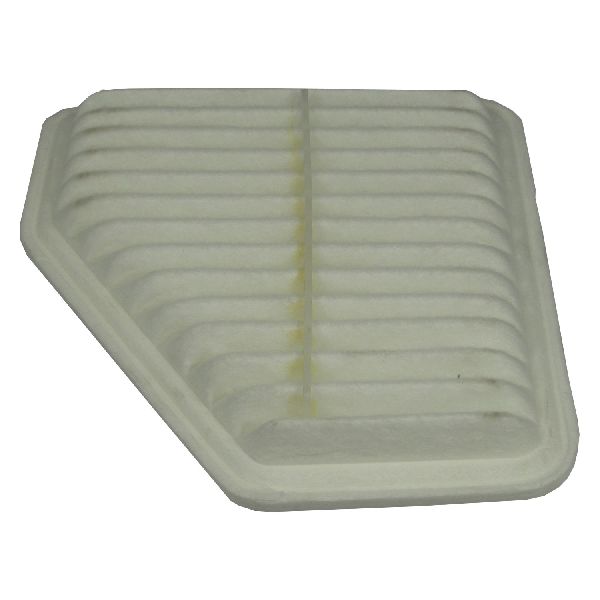
Aftermarket price range: $10-$20 - Engine Air Filter
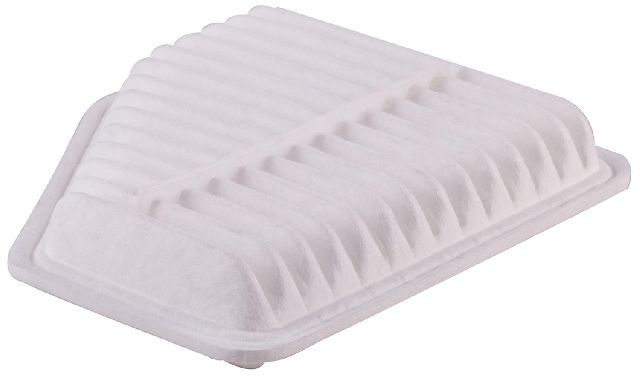
(OEM #1780131120)— A dirty or non-compliant aftermarket filter can directly cause this code. The Lotus TSB specifically calls out this issue. [sb_2020_01]
Trusted brands: Toyota (OEM), Denso
OEM price range: $40-$80
Aftermarket price range: $25-$60 - Mass Air Flow (MAF) Sensor
(OEM #22204-31020)— If cleaning the sensor and its connector does not resolve the code, and no vacuum leaks are present, the sensor itself has likely failed electronically and needs replacement.
Trusted brands: Denso (OEM)
OEM price range: $150-$250
Aftermarket price range: $70-$150
Related Codes That Often Appear With This One
- P1109 — This code is mentioned alongside P0101 in the Lotus TSB sb_2020_01, indicating they are often triggered together by issues like non-approved air filters. [sb_2020_01] A Reddit user with an Evora 400 also reported getting P1109 along with P0101.
- P0171 / P0174 — These codes indicate a 'System Too Lean' condition on Bank 1 and Bank 2. This can happen if there is a vacuum leak where unmetered air enters the engine after the MAF sensor, or if the MAF sensor is faulty and under-reporting airflow.
- P0172 / P0175 — These codes indicate a 'System Too Rich' condition on Bank 1 and Bank 2. If the MAF sensor over-reports airflow (or is dirty), the ECU may inject too much fuel, resulting in a rich mixture.
- P2173 — High Airflow / Vacuum Leak Detected (Instantaneous Accumulation). This code was reported by an Evora 400 owner along with P0101, strongly suggesting a vacuum leak or a significant issue with the MAF sensor readings.
Technical Service Bulletins (TSBs) & Recalls
- sb_2020_01: Warns that non-approved aftermarket air filters can cause diagnostic trouble codes P0101 & P1109.
Platform-Specific Known Issues
- A Technical Service Bulletin (sb_2020_01) was issued by Lotus for the 2015 Evora, explicitly stating that unauthorized modifications, particularly the use of non-approved aftermarket air filters, can lead to the generation of DTCs P0101 and P1109. [sb_2020_01]
- The electrical connector for the MAF sensor can become loose or have a poor connection, leading to intermittent P0101 codes. Owners have reported that wiggling the harness can replicate the fault, and securing the connector firmly (sometimes with a zip tie) can be a permanent fix.
Mechanic-Grade Diagnostic Values
- MAF Sensor Live Data (g/s) at normal idle (600-700 RPM, engine warm) — expected: 2.0 to 5.0 g/s. Failure: Readings are significantly higher, lower, or erratic. A reading near 0 g/s can indicate an open in the power or signal circuit.
- MAF Sensor Live Data (g/s) at 2,500 RPM (no load) — expected: 8.0 to 19.0 g/s. Failure: Readings do not increase smoothly with RPM or fall outside this range.
- MAF Sensor Live Data (g/s) with Key On, Engine Off (KOEO) — expected: Less than 0.70 g/s. Failure: A reading higher than this with the engine off indicates a sensor fault.
- MAF Sensor Signal Voltage at idle — expected: Approximately 0.5V to 1.5V. Failure: Voltage is outside this range or does not remain steady at a stable idle.
- MAF Sensor Signal Voltage during brief wide-open throttle (snap test) — expected: Should rise smoothly and quickly to above 3.0V, potentially as high as 4.5V.. Failure: Voltage response is slow, erratic, or does not reach the expected peak, indicating a lazy or failing sensor.
Scan Tool Commands That Help
- Lotus Techcentre: ECU/TCU Programming (.crp file installation) — To update the engine or transmission control unit software to a newer version provided by Lotus. This can resolve issues caused by software bugs, including the false setting of certain DTCs.
- Toyota Techstream: Live Data List (Powertrain -> Engine and ECT -> Data List -> MAF) — To monitor real-time MAF sensor readings (g/s). Because the Evora uses a Toyota powertrain, Techstream provides highly detailed, OEM-level data that is useful for diagnosing whether the sensor's output is within the expected range for the 2GR-FE engine.
Wiring & Ground Locations
- Engine Block Ground Strap — A thick braided wire or cable connecting the engine block (or cylinder head) directly to the vehicle's chassis or firewall.. The MAF sensor, like many other engine sensors, relies on a clean and solid ground connection back to the battery. A corroded, loose, or broken main engine ground strap can introduce electrical noise or voltage offsets, corrupting the sensitive low-voltage signal from the MAF sensor and causing erratic readings that trigger a P0101 code.
- MAF Sensor Connector Pins — The 5-pin connector on the MAF sensor body.. The connector typically includes pins for 12V power, power ground, signal ground, the MAF signal itself, and an integrated Intake Air Temperature (IAT) signal. A poor connection on any of these pins, especially the signal or ground pins, will directly cause the P0101 code.
When the Usual Fixes Don't Work
- While the most common fixes for P0101 (cleaning the sensor, replacing the air filter) are effective in many cases, they will not work if the sensor has failed electronically. In these instances, the sensor's output will be incorrect even when it is perfectly clean and has proper airflow. Furthermore, if all standard intake-side checks (sensor, filter, wiring, no vacuum leaks) pass, the root cause may lie in less obvious areas, such as an unstable voltage supply from a failing battery or an exhaust restriction from a clogged catalytic converter, which can skew airflow readings unexpectedly.
Model Year Variations Within This Range
- 2015-2019: While this range includes the Evora 400, Sport 410, and the introduction of the GT, there are no significant changes to the fundamental 2GR-FE engine, MAF sensor design, or intake system that would alter the primary causes or diagnostic procedures for code P0101. Differences are largely related to aero, minor power tunes, and interior appointments.
Helpful Videos

We Have This Part in Stock

The information in this article is provided for general reference and educational purposes only. Vehicle specifications, procedures, and part compatibility can vary by production date, trim level, and region. Always consult your vehicle's factory service manual and verify part numbers before purchasing or performing repairs. Safety-critical components such as airbags, seat belts, and braking systems should be installed by a qualified professional.
- Lotus EVORA:
- 🧭 Diagnostic Flowchart
- 🎬 Helpful Videos
- 🛍️ Shop This Part
- What's Unique About the 2015-2019 Lotus EVORA
- Symptoms You May Notice
- Most Likely Causes
- Rare But Worth Checking
- Diagnosis Steps
- Parts You'll Likely Need
- Related Codes That Often Appear With This One
- Technical Service Bulletins (TSBs) & Recalls
- Platform-Specific Known Issues
- Mechanic-Grade Diagnostic Values
- Scan Tool Commands That Help
- Wiring & Ground Locations
- When the Usual Fixes Don't Work
- Model Year Variations Within This Range
- 🎟️ Get 5% Off