

P0101 on 2012-2013 Mazda 3 Skyactiv-G: MAF Sensor Causes and Fixes
For a 2012-2013 Mazda 3 with the 2.0L Skyactiv-G engine, code P0101 is most often caused by a dirty Mass Airflow (MAF) sensor. Before replacing any parts, clean the sensor with dedicated MAF cleaner. If the code returns, or if the engine starts and immediately stalls, suspect a faulty MAF sensor. Only replace it with a genuine OEM (Mazda) or Denso part to avoid further issues.
- Always start by cleaning the MAF sensor with a dedicated cleaner; this is the cheapest and most common fix.
- If you must replace the MAF sensor, use only a genuine Mazda (OEM) or Denso part (PE01-13-215) to prevent compatibility issues.
- A scan tool that can read live data is extremely helpful. A good MAF sensor should read near 0 g/s with the engine off and around 2-3 g/s at idle.
- Check for other codes, especially P0171 (System Too Lean), as its presence can point towards a vacuum leak or a poorly calibrated aftermarket MAF sensor.
What's Unique About the 2012-2013 Mazda 3
The 2012-2013 Mazda 3 was one of the first models to feature the new Skyactiv-G engine, which has a sensitive engine management system. The PCM's software is programmed to closely cross-check MAF and MAP sensor readings for accuracy, making it quick to flag discrepancies. A very common issue on this platform is the MAF sensor's sensitivity to aftermarket replacements; owners and technicians strongly report that using non-OEM sensors often causes the P0101 code to return or be replaced by a P0171 (System Too Lean) code due to incorrect calibration.
Symptoms You May Notice
- Check Engine Light is on
- Engine hesitation or stumbling during acceleration
- Rough or unstable idle.
- Engine stalling, especially immediately after starting
- Reduced engine power and poor acceleration.
- Decreased fuel economy.
- Replacing the MAF sensor with a cheap aftermarket part. Many owners report that non-OEM sensors are not calibrated correctly for the Skyactiv engine and cause the P0101 or a new P0171 code to appear shortly after installation.
Most Likely Causes
- Dirty or Contaminated Mass Airflow (MAF) Sensor 🔴 High Probability → Shop Fuel Injection Air Flow Meter The MAF sensor's hot wire is delicate and can become coated with dust, oil, or other grime over time, insulating it and causing inaccurate readings. This is the most common and easiest-to-fix cause.
How to confirm: Remove the sensor (held by two screws) and visually inspect the small wires inside. If they appear dirty or coated, cleaning is warranted.
Typical fix: Spray the sensor's wires thoroughly with a dedicated MAF sensor cleaner. Do not use brake or carb cleaner, and do not touch the wires. Allow it to dry completely before reinstalling.
Est. part cost: $10-$20 for cleaner - Faulty Mass Airflow (MAF) Sensor 🟡 Medium Probability → Shop Fuel Injection Air Flow Meter While durable, the sensor can fail electronically. A common failure mode on this vehicle is the sensor reporting illogical airflow values, even when the engine is off, which often causes a start-and-stall condition. Manufacturer Bulletin #01-011-13-2766 for related Mazda models specifically identifies the P0101:00 code as a MAF sensor circuit range/performance problem.
How to confirm: Using a scan tool with live data, check the MAF reading (g/s) with the key on but the engine off (KOEO). A good sensor should read 0.0 g/s. A known failure mode for this sensor shows a fixed, non-zero value at KOEO; owner reports cite readings from 4-5 g/s to as high as 40-50 g/s on a failed sensor. At idle, a healthy 2.0L engine should read approximately 2.0-3.0 g/s.
Typical fix: Replace the MAF sensor. It is strongly recommended to use a genuine OEM Mazda part (part number PE01-13-215) or the Denso equivalent (DMA-0114) to avoid calibration issues with aftermarket parts.
Est. part cost: $200-$290 for OEM, $150-$200 for Denso - Vacuum Leak in Intake System ⚪ Low Probability A crack in the flexible intake boot (especially in the accordion ribs), a loose clamp, or a bad gasket can allow unmetered air to enter the engine after the MAF sensor, causing a mismatch in expected airflow.
How to confirm: Visually inspect the entire intake tract from the air filter box to the throttle body for cracks or loose connections. A smoke test is the most effective way to find hidden leaks.
Typical fix: Replace the cracked hose or tighten the loose clamp.
Est. part cost: $40-$100 for an intake hose - Dirty Throttle Body ⚪ Low Probability → Shop Fuel Injection Throttle Body Carbon and gunk can build up around the throttle plate, restricting airflow at idle and low speeds. This can cause the actual airflow to be different from what the PCM expects based on throttle position, triggering P0101.
How to confirm: Remove the intake hose from the throttle body and inspect the throttle plate and bore for black, sticky buildup.
Typical fix: Clean the throttle body bore and plate with throttle body cleaner and a soft cloth. An idle relearn procedure may be needed afterward by letting the car idle for 10-15 minutes after reconnecting the battery.
Est. part cost: $10-$15 for cleaner
Rare But Worth Checking
- MAF Sensor Wiring or Connector Issue: → Shop Fuel Injection Air Flow Meter Corrosion, a bent pin, or a loose wire in the MAF sensor's electrical connector can cause an intermittent or incorrect signal. Wiggling the connector while monitoring live data can sometimes reveal a bad connection.
- Oiled Aftermarket Air Filter: → Shop Air Cleaner Assembly Excess oil from some aftermarket 'high-performance' air filters can contaminate the MAF sensor element, causing incorrect readings. If you have one installed, try cleaning the MAF and replacing the filter with a standard paper filter.
Diagnosis Steps
- Read the fault codes with an OBD-II scanner and confirm P0101 is present. Note any other codes, especially P0171 or P061B.
- Inspect the engine air filter. A severely clogged filter can restrict airflow and should be replaced.
- Visually inspect the entire air intake system for obvious cracks, loose hoses, or disconnected components between the MAF sensor and the throttle body. Pay close attention to the ribbed section of the intake hose.
- Disconnect the MAF sensor and inspect the electrical connector for corrosion or damaged pins. Ensure it is securely plugged in.
- Remove the MAF sensor (two Phillips screws). Carefully spray the sensor's delicate wires with a dedicated MAF sensor cleaner. Do not touch the wires. Let it dry completely.
- Reinstall the sensor, clear the codes, and perform a test drive to see if the code returns.
- If the code returns, use a scan tool to monitor the MAF sensor's live data (g/s). With the Key On, Engine Off (KOEO), the reading should be 0.0 g/s. If it shows a fixed, non-zero value (e.g., 4-50 g/s), the sensor is faulty.
- If the KOEO reading is good, start the engine. At a stable warm idle, the reading should be around 2.0-3.0 g/s and increase smoothly with RPM. If the reading is erratic or incorrect, and the wiring appears intact, replace the MAF sensor.
- If replacing the sensor, use only a genuine Mazda (PE01-13-215) or Denso (DMA-0114) part. Clear codes and test drive again.
Parts You'll Likely Need
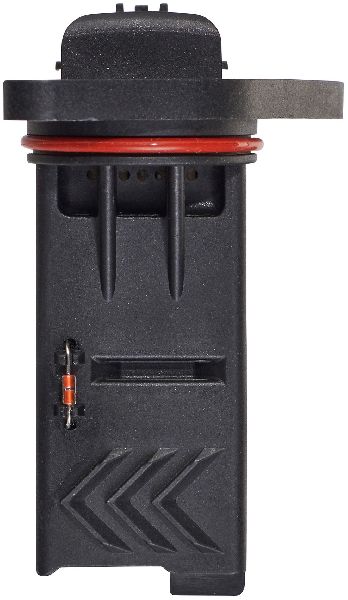
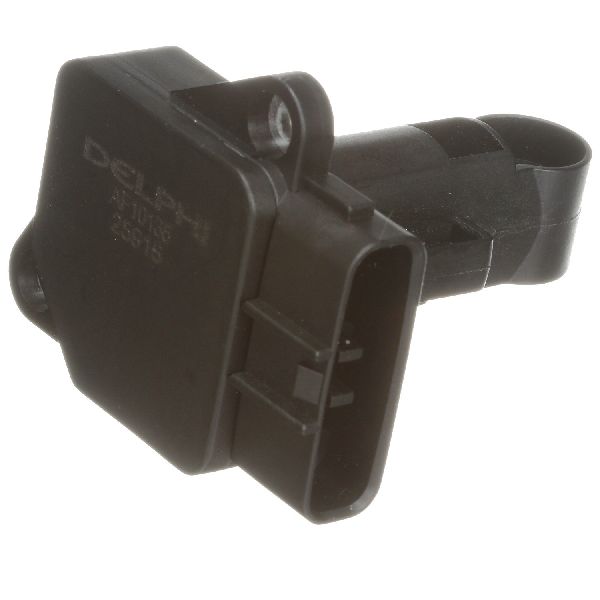
- Mass Airflow (MAF) Sensor
(OEM #PE01-13-215)— This is the most common part to fail if cleaning does not resolve the issue. The sensor's internal electronics can fail, providing incorrect data to the PCM, often resulting in a start-and-stall symptom.
Trusted brands: Mazda (OEM), Denso (DMA-0114)
OEM price range: $205-$290
Aftermarket price range: $80-$180 (Not Recommended) - MAF Sensor Cleaner — This is the first and most important diagnostic and repair step. A dirty sensor is the most frequent cause of P0101, and cleaning it is a cheap and easy fix.
Trusted brands: CRC, WD-40 Specialist
Aftermarket price range: $10-$20
Related Codes That Often Appear With This One
- P0171 — This code for 'System Too Lean' often appears with P0101. It can be caused by a vacuum leak allowing unmetered air in, or by a faulty/dirty MAF sensor that is under-reporting the amount of air entering the engine, causing the PCM to not inject enough fuel.
- P061B — This 'Internal Control Module Torque Calculation Performance' code is mentioned in a Mazda TSB for the related CX-5 as sometimes appearing with P0101 due to a PCM software glitch that can be resolved with a dealer reprogram.
Technical Service Bulletins (TSBs) & Recalls
- TSB 01-024/12 (MSP38): Addresses rough idle and stalling after long idle periods on 2012 models due to winter fuel blends, fixed with a PCM update.
- TSB 05-003/14 (and successors): Pertains to automatic transmission issues on early Skyactiv models, including the 2012-2013 Mazda 3, often requiring valve body replacement.
- TSB SA-060-17 (for CX-5, but relevant): Mentions P0101 appearing with P061B due to a PCM software glitch, fixed by cleaning the throttle body and a PCM reset/reprogram. This bulletin notes the issue may occur after reprogramming the PCM using certain IDS versions.
- Bulletin #SA386: Notes that the check engine light with DTCs P0101 and P061B may illuminate after PCM reprogramming due to a mislogic detection in the PCM calibration.
Platform-Specific Known Issues
- A Reddit user with a 2013 Skyactiv model reported that after getting a P0101 code and stalling, they found their faulty MAF sensor was reading 40-50 g/s with the engine off. A new, functioning OEM sensor read 4-5 g/s in the same condition (note: a perfectly good sensor should read 0), and replacing it fixed the problem.
- The same user noted that in Canada, many local auto parts stores had the wrong MAF sensor part number in their systems for the 2012-2013 Skyactiv models, highlighting the importance of verifying the correct OEM part number (PE01-13-215).
- Multiple owners across forums for the Mazda 3 and its platform-mate, the CX-5, confirm that using cheaper, non-OEM MAF sensors often fails to fix the P0101 code or introduces a new P0171 (lean) code, requiring an eventual switch to an OEM or Denso part.
Documented NHTSA Reports
- NHTSA ODI #10978705 describes a situation where a vehicle experienced bucking and the check engine light illuminated with codes P0101 and P061B; the issue persisted even after an inspection where the MAF sensor appeared fine.
- An owner report in NHTSA ODI #10378620 notes that while driving, the engine lost power and a check showed code P0101 for the mass air flow sensor.
Mechanic-Grade Diagnostic Values
- MAF Sensor Voltage (KOEO) — expected: < 0.69V. Failure: A voltage reading of 0.69V or higher with the Key On, Engine Off (after waiting 30 seconds) indicates a faulty sensor according to Mazda's diagnostic procedure.
- MAF Sensor Live Data (g/s) at Warm Idle — expected: Approximately 2.0 - 3.0 g/s for the 2.0L Skyactiv-G engine.. Failure: Readings that are stuck, erratic, or do not increase smoothly as engine RPM rises.
- Intake Air Temperature (IAT) Sensor Resistance — expected: 2.5 - 2.7 kΩ at 20°C (68°F) or 0.6 - 0.7 kΩ at 60°C (140°F).. Failure: Resistance readings significantly outside these ranges suggest a fault in the IAT portion of the MAF sensor assembly.
- MAF Sensor Live Data (g/s) at KOEO — expected: 0.0 g/s. Failure: Any non-zero reading. A known failure mode shows a fixed reading between 4 g/s and 50 g/s, which will cause a start-and-stall condition.
Hidden / Shadow Codes Worth Checking
- Pending P0101: Mazda's PCM will set a 'pending code' if the P0101 fault condition is detected on a single drive cycle. The Check Engine Light will only illuminate if the fault is detected on a second consecutive drive cycle. (see via A standard OBD-II scanner capable of reading pending codes.)
Scan Tool Commands That Help
- M-MDS (Mazda Modular Diagnostic System) or FORScan: PID/Data Monitor (MAF_V, MAF g/s, ECT, TP_RELAT) — Use to monitor live data from the MAF sensor to check for irrational readings. The official diagnostic procedure involves monitoring MAF voltage and g/s while revving the engine to check for smooth response. It's also used to verify engine coolant temp (ECT) is above 70°C (158°F) before performing certain tests.
- M-MDS or equivalent: Clear DTCs — Used after a repair (like cleaning or replacing the MAF) to erase the stored fault code from the PCM's memory before a test drive.
Wiring & Ground Locations
- G1 — Behind the left (driver's side) headlight.. This is a primary ground point for the front engine bay harness, which includes wiring for engine sensors. A corroded or loose connection here can cause various sensor-related issues.
- G4 — Right side of the engine compartment.. This ground point serves components on the right side of the engine bay. Ensuring it is clean and tight is part of a thorough electrical diagnosis for sensor codes.
- MAF Sensor Connector Pins — On the MAF sensor itself.. The 5-pin connector provides power, ground, and signal lines for both the MAF and IAT sensors. Pin A is battery voltage, and Pin C is the MAF signal wire. Checking for voltage at Pin A and a good ground is a key diagnostic step.
Real Owner Repair Stories
- Reddit user xtos2001 (2013 Mazda 3 2.0L Skyactiv) — Car starts and then immediately stalls. Check Engine Light with code P0101.
❌ Tried (didn't work) Cleaning the MAF sensor with dedicated cleaner., Resetting the ECU by disconnecting the battery.
✅ What actually fixed it Replacing the MAF sensor with a new OEM part. The faulty sensor was reading 40-50 g/s with the key on and engine off, while the new (working) sensor read 4-5 g/s in the same state. (Note: a perfect sensor should read 0.0 g/s, but this non-zero reading was still a vast improvement and solved the issue). - YouTube user on channel 'How to Replace' (2012 Mazda 3 Skyactiv) — Initially had code P0101. After replacing the MAF with an aftermarket Duralast part, the car worked for two weeks and then threw a P0171 (System Too Lean) code.
❌ Tried (didn't work) Replacing the original MAF with a new Duralast aftermarket sensor (part DL-3113).
✅ What actually fixed it Replacing the problematic aftermarket Duralast sensor with a genuine OEM Mazda sensor (part number PE01 / E5T62271) resolved the P0171 code and the lean running condition.
"I Checked Everything" — The Actual Cause
- A faulty EVAP Purge Control Solenoid Valve can cause a P0101 code. If the valve sticks open, it introduces unmetered fuel vapors into the intake manifold, which the PCM can misinterpret as a MAF sensor performance issue. This is an internal system leak and will not be found with a traditional smoke test on the main intake tract.
OEM Part Supersession History
PE01-13-215→PE01-13-215 (current)— No supersession found. This part number remains the standard for a wide range of Mazda vehicles from 2012 to as recent as 2025.
Heads up: This part is specific to Skyactiv-G engines and is not interchangeable with the MAF sensor used on non-Skyactiv MZR engines from the same period (e.g., ZL01-13-215).
Diagnostic Flowchart
Other Known Issues on This Vehicle
Issues unrelated to this code that are worth knowing about as an owner of this generation:
- Intake Valve Carbon Buildup 🟠 Medium — A characteristic of all early direct-injection (GDI) engines, including Skyactiv-G. Buildup can become noticeable after 60,000-80,000 miles, potentially causing rough idle or misfires (P030x codes) on cold starts. (Ref: While no specific TSB exists for preventative cleaning, Mazda has issued TSBs for related symptoms like misfires that can be caused by carbon.)
- Automatic Transmission Harsh Shifting / Internal Failure 🔴 High — Primarily affects early 2012-2013 models with the Skyactiv-Drive 6-speed automatic. Can manifest as harsh shifts, delayed engagement, or warning lights with codes like P0757 or P0780. (Ref: Mazda issued TSBs 05-003/14 and its successors (e.g., 05-002/15) which identify an internal valve body malfunction as the cause, often requiring valve body replacement on vehicles produced before September 2012.)
- Rough Idle / Stall After Long Idling (Winter Fuel) 🟡 Low — Specific to 2012 models produced from Sept 2011 to March 2012 when using certain winter-blend fuels. (Ref: Mazda Service Program (MSP38), covered by TSB 01-024/12, addresses this with a PCM software update to prevent fuel temperature issues in the high-pressure fuel pump.)
Used vs. New Parts: Buying Guide for This Vehicle
When a used part is the smart pick: A used OEM MAF sensor from a low-mileage (<60,000 miles) donor vehicle can be a cost-effective and more reliable alternative to a new, unbranded aftermarket sensor. A used intake air hose is also a good option if it is thoroughly inspected and still flexible.
Donor-vehicle mileage cap: roughly under 60000 miles for the part to have meaningful remaining life.
What to inspect on the donor part:
- For a MAF sensor, ensure the donor vehicle was not in a front-end collision.
- Check the connector pins on the used sensor for any green/white corrosion or physical damage.
- For an intake hose, firmly squeeze and flex the accordion rib sections to check for hidden cracks or brittleness.
- Verify the part number on the used sensor (PE01-13-215) exactly matches your original part.
OEM-only on this vehicle (don't cheap out):
- Mass Airflow (MAF) Sensor
Aftermarket brands forum-validated for this vehicle:
- Denso (often the original equipment manufacturer)
Brands owners have reported issues with on this vehicle:
- Unbranded 'white-box' sensors from online marketplaces.
- Duralast (part DL-3113 has been reported by an owner to cause a P0171 lean code shortly after installation).
Real Owner Stories
Aggregated from forums and TSBs cited above. Mileages and costs reflect what owners reported in those sources.
2013 Mazda 3 2.0L Skyactiv-G
Symptoms: The car would start and then immediately stall. A check engine light was present with code P0101. Using a scanner, the MAF sensor was found to be reading 40-50 g/s while the engine was completely off.
What fixed it: Replacing the faulty MAF sensor with a new genuine OEM sensor (which read 0-5 g/s in the same engine-off condition).
Source hint: Reddit r/mazda3: 2013 Mazda stalling with P0101 code
2013 Mazda 3 2.0L Skyactiv-G
Symptoms: The owner experienced what felt like an engine misfire and received a P0101 error code.
What fixed it: Cleaning both the MAF sensor and the throttle body as a combined maintenance step.
Source hint: Mazdas247 Forum: P0101 error code-time to clean MAF sensor and throttle body
2011 Mazda 3 MZR engine
Symptoms: P0101 code returned only one month after replacing the MAF sensor with an aftermarket unit.
What fixed it: Replacing the aftermarket sensor with a genuine OEM Mazda sensor fixed the problem permanently.
Source hint: Reddit r/mazda3: 2011 P0101 code - USE OE MAF
Related OBD-II Codes
Frequently Asked Questions
My 2012 Mazda 3 is stalling after long idle periods; does TSB 01-024/12 apply to my P0101 code?
What is the correct OEM part number for a replacement MAF sensor on a 2012-2013 Mazda 3 Skyactiv?
Can I use brake cleaner to clean the MAF sensor on my Skyactiv-G engine?
My scan tool shows 5 g/s with the engine off. Is my MAF sensor bad?
Is there a software glitch that causes P0101 on the Mazda 3?
Do I need to do anything special after cleaning the throttle body on my 2013 Mazda 3?
Helpful Videos
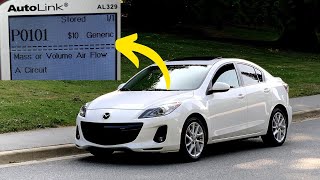

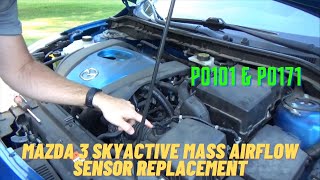
We Have This Part in Stock

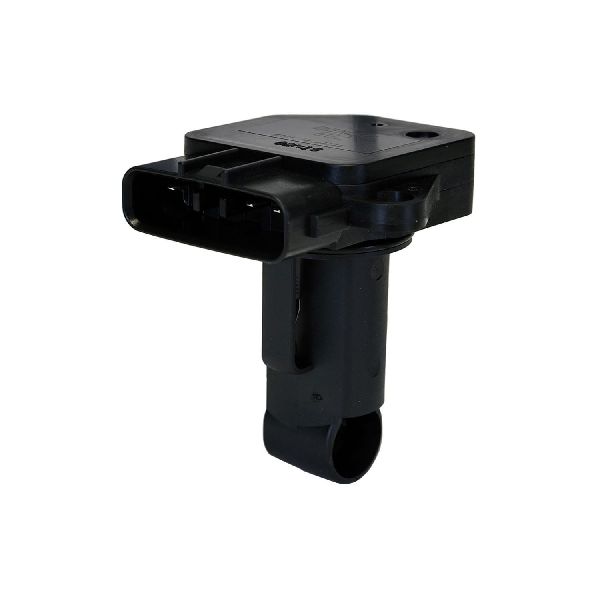


The information in this article is provided for general reference and educational purposes only. Vehicle specifications, procedures, and part compatibility can vary by production date, trim level, and region. Always consult your vehicle's factory service manual and verify part numbers before purchasing or performing repairs. Safety-critical components such as airbags, seat belts, and braking systems should be installed by a qualified professional.
- Mazda 3:
- 🧭 Diagnostic Flowchart
- 🎬 Helpful Videos
- 🛍️ Shop This Part
- What's Unique About the 2012-2013 Mazda 3
- Symptoms You May Notice
- Most Likely Causes
- Rare But Worth Checking
- Diagnosis Steps
- Parts You'll Likely Need
- Related Codes That Often Appear With This One
- Technical Service Bulletins (TSBs) & Recalls
- Platform-Specific Known Issues
- Documented NHTSA Reports
- Mechanic-Grade Diagnostic Values
- Hidden / Shadow Codes Worth Checking
- Scan Tool Commands That Help
- Wiring & Ground Locations
- Real Owner Repair Stories
- "I Checked Everything" — The Actual Cause
- OEM Part Supersession History
- Other Known Issues on This Vehicle
- Used vs. New Parts: Buying Guide for This Vehicle
- Real Owner Stories
- 2013 Mazda 3 2.0L Skyactiv-G
- 2013 Mazda 3 2.0L Skyactiv-G
- 2011 Mazda 3 MZR engine
- Related OBD-II Codes
- Frequently Asked Questions
- 🎟️ Get 5% Off