

P0101 on 2016-2023 Mazda CX-9 2.5L Turbo: Causes and Fixes
For the 2016-2023 Mazda CX-9, P0101 is most often caused by a dirty Mass Airflow (MAF) sensor. The quickest fix is to clean it with dedicated MAF sensor cleaner, a ~$15 DIY job. If the code returns, suspect a vacuum leak in the intake system (especially after recent service) before replacing the sensor itself. A faulty purge solenoid valve is another known, but less common, cause.
- Start with the simplest and cheapest fix: clean the MAF sensor with a dedicated cleaner. This resolves the P0101 code in a majority of cases for the CX-9.
- Before replacing the MAF sensor, thoroughly inspect the entire intake system for air leaks, especially after recent engine service. A loose clamp or cracked hose is a common cause.
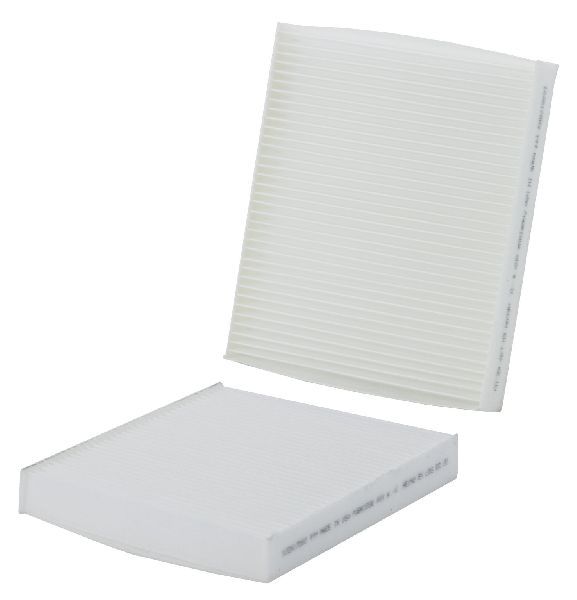
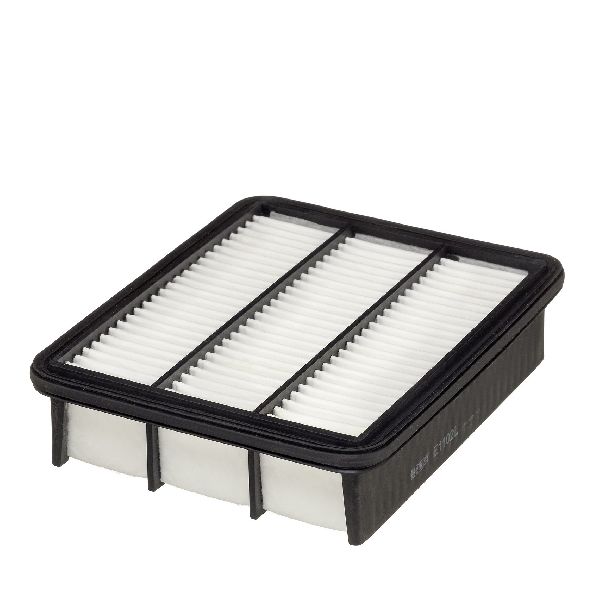
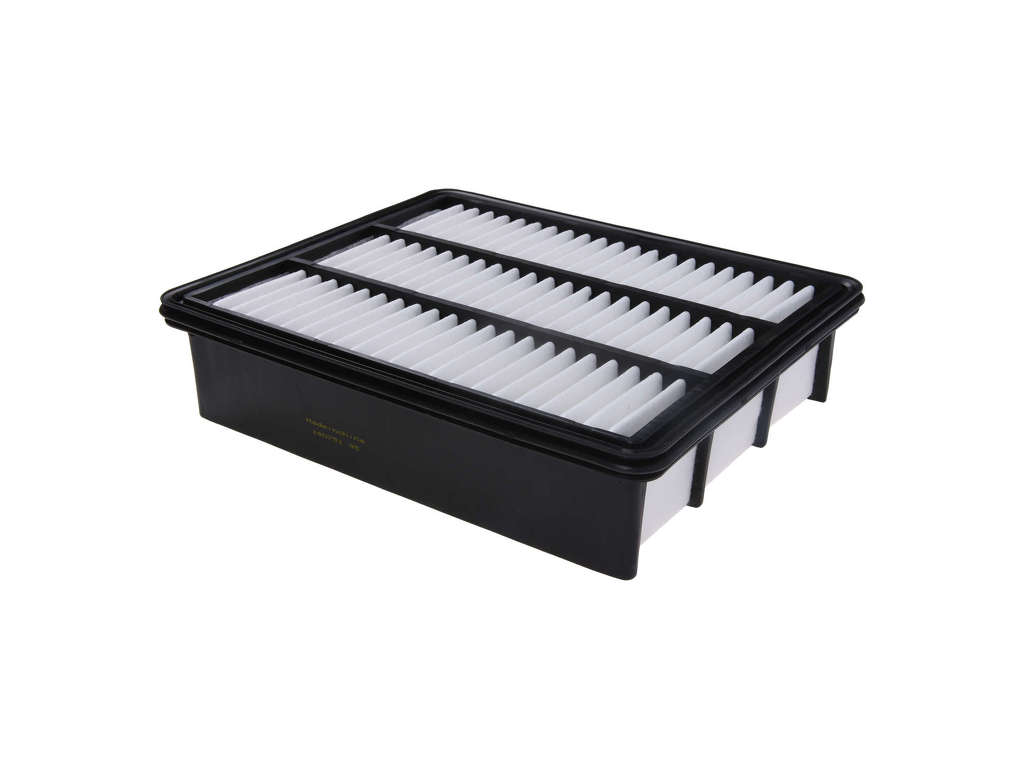
- Always check the engine air filter; a severely clogged filter can restrict airflow and trigger this code.
- If you must replace the MAF sensor, use an OEM or high-quality OEM-supplier part like Denso to ensure proper calibration and avoid recurring issues.
What's Unique About the 2016-2023 Mazda CX-9
On the Mazda CX-9 with the 2.5L Skyactiv-G Turbo engine, the P0101 code is a straightforward diagnostic issue with no major platform-specific defects causing it. The most common culprit is simple contamination of the MAF sensor element. However, because this is a turbocharged engine, any unmetered air leak that occurs after the MAF sensor but before the turbocharger can have a significant impact, making a thorough inspection of the intake tract for leaks crucial. A common scenario for this code is accidentally creating a vacuum leak (e.g., a loose hose clamp) while performing other maintenance, like changing spark plugs.
Symptoms You May Notice
- Check Engine Light is on
- Rough or unstable idle
- Hesitation or jerking during acceleration
- Loss of power
- Poor fuel economy
- Vehicle bucking or stalling in severe cases
- Black smoke from exhaust (if running excessively rich)
- Immediately replacing the MAF sensor without cleaning it first or checking for vacuum leaks. A vacuum leak is a very common cause and is often overlooked.
- Replacing other components like oxygen sensors or throttle bodies when the root cause is a simple and inexpensive fix like a dirty MAF or a loose intake clamp.
Most Likely Causes
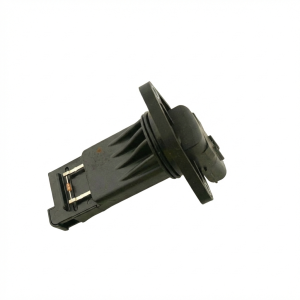
- Dirty or Contaminated Mass Airflow (MAF) Sensor 🔴 High Probability → Shop Fuel Injection Air Flow Meter The MAF sensor's sensing elements are delicate and exposed to the incoming air stream, making them susceptible to contamination from dust, oil, and other debris over time. Oiled air filters can also shed oil onto the sensor, causing contamination.
How to confirm: Remove the MAF sensor from the intake tube (located just after the air filter box) and visually inspect the small wires or elements inside for dirt or grime.
Typical fix: Clean the sensor using a dedicated Mass Airflow Sensor cleaner spray. Do not touch the internal elements and allow it to dry completely before reinstalling.
Est. part cost: $10-$20 for MAF cleaner spray. - Vacuum Leak / Unmetered Air Leak 🟡 Medium Probability The intake system uses rubber and plastic components that can crack, loosen, or become disconnected over time, especially after recent service like a spark plug or air filter change. On a turbo engine, these leaks allow air to enter the engine that hasn't been measured by the MAF sensor.
How to confirm: Visually inspect all intake hoses, clamps, and connections between the MAF sensor and the engine for cracks or looseness. A professional can perform a smoke test to pinpoint the exact location of a leak. Pay close attention to any hoses disturbed during prior maintenance.
Typical fix: Tighten loose clamps or replace the cracked or damaged intake hose/gasket.
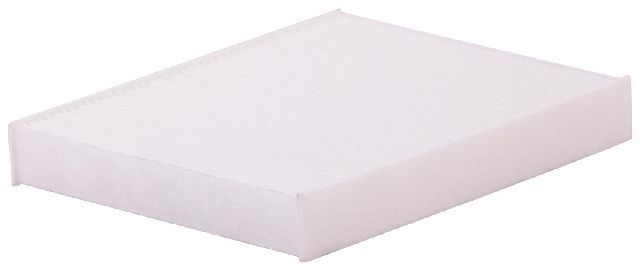
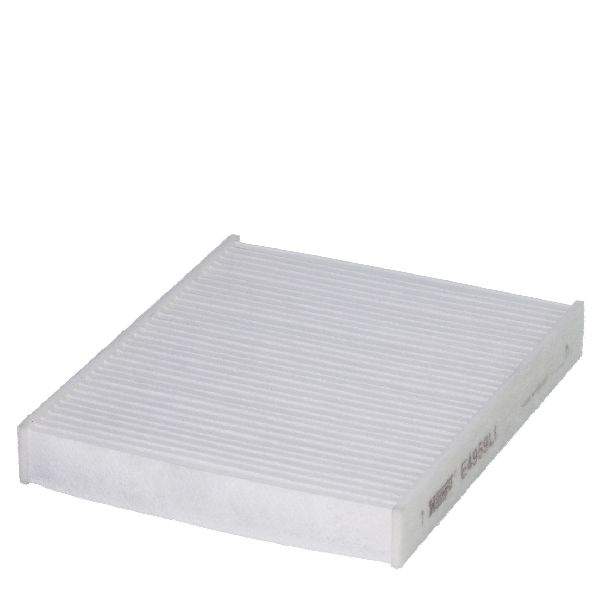
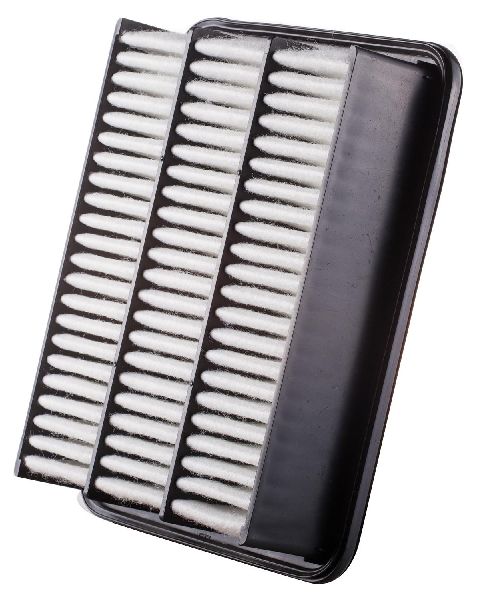
Est. part cost: $50-$250 for a new intake hose, depending on the specific part. - Clogged or Dirty Engine Air Filter ⚪ Low Probability → Shop Air Cleaner Assembly A neglected air filter can become so restrictive that it reduces the amount of air entering the engine, causing the MAF sensor's readings to be lower than the PCM expects for a given throttle position.
How to confirm: Remove and inspect the engine air filter. If it is visibly dirty, clogged with debris, or past its service interval, it needs replacement.
Typical fix: Replace the engine air filter.
Est. part cost: $20-$50 - Faulty Mass Airflow (MAF) Sensor ⚪ Low Probability → Shop Fuel Injection Air Flow Meter While cleaning often resolves the issue, the sensor's internal electronics can fail. This is less common than contamination but is the next logical step if cleaning and checking for leaks don't solve the problem. One owner reported trying three different OEM sensors without fixing the issue, highlighting the importance of diagnosing other causes first. A manufacturer service bulletin, TSB Bulletin #01-011-13-2766, specifically notes that some vehicles may exhibit MIL illumination with DTC P0101:00 stored in memory due to MAF sensor circuit range/performance problems.
How to confirm: After cleaning the sensor and confirming no vacuum leaks, if the P0101 code persists, the sensor is likely faulty. A scan tool can be used to monitor the MAF reading (g/s) in real-time; erratic or stuck values point to a bad sensor. A good sensor at idle on a warm engine should read approximately 2.5 - 4.5 g/s. A stable voltage reading at idle is also a key indicator of health.
Typical fix: Replace the MAF sensor. It is highly recommended to use an OEM or a reputable OEM-supplier part like Denso.
Est. part cost: $130-$250
Rare But Worth Checking
- Restricted Exhaust System: A clogged catalytic converter can reduce the engine's ability to breathe, affecting the volume of air drawn in and potentially causing the MAF sensor readings to be out of the expected range. This is more likely on higher-mileage vehicles.
- Wiring or Connector Issue: Damage to the MAF sensor's wiring harness or corrosion in its connector can cause an intermittent or complete loss of signal, triggering the P0101 code. Always inspect the connector and nearby wiring when servicing the sensor.
- Faulty Purge Solenoid Valve or PCV Valve: → Shop PCV Valve Mazda's official diagnostic procedure for P0101 includes checking for a malfunctioning Purge Solenoid Valve or PCV valve. A stuck-open valve can introduce unmetered air from the evaporative emissions system or crankcase, causing the MAF readings to deviate from the expected values.
- Failed Turbocharger: → Shop Turbocharger While rare, a failing or seized turbocharger can disrupt airflow through the intake system significantly, potentially causing a P0101 code as the MAF readings conflict with what the PCM expects.
- PCM Software Calibration: Manufacturer service bulletins TSB Bulletin #SA-060-17 and TSB Bulletin #SA386 indicate that some Mazda models may experience a Check Engine Light with DTC P0101 after PCM reprogramming due to mislogic detection in the PCM calibration or specific software versions.
Diagnosis Steps
- Read the code from the PCM using an OBD-II scanner and record the freeze frame data to see the engine conditions when the code was set.
- Inspect the engine air filter. If it's dirty or clogged, replace it and clear the code.
- Visually inspect the entire air intake system from the air filter box to the throttle body. Look for any cracks in hoses, loose clamps, or disconnected lines. Pay special attention to areas disturbed during recent repairs.
- Carefully remove the MAF sensor. Inspect it for any visible dirt, oil, or debris.
- Clean the MAF sensor using a dedicated MAF sensor cleaner spray. 🎬 Watch this video to see how to clean the sensor. Do not use brake cleaner or carburetor cleaner, as they can damage the sensor. Allow it to air dry completely.
- Reinstall the sensor, clear the code, and perform a test drive to see if the code returns. 🎬 Watch this guide for a step-by-step P0101 diagnostic walkthrough.
- If the code returns, use an OBD-II scanner with live data capability to monitor the MAF sensor reading in grams per second (g/s) at idle and while driving. The reading should increase smoothly with engine RPM. Compare these readings to specified values if available.
- If you suspect a vacuum leak that is not visually apparent, perform a smoke test on the intake system to find the source of the leak.
- Check the MAF sensor wiring and connector for any damage, corrosion, or loose pins.
- If the sensor has been cleaned, there are no vacuum leaks, and the live data is still erratic, stuck, or out of range, replace the MAF sensor with a quality part.
Parts You'll Likely Need
- Mass Airflow Sensor Cleaner — This is the most common and cost-effective first step, as a dirty sensor is the most frequent cause of P0101 on this vehicle.
Trusted brands: CRC, Liqui Moly, WD-40 Specialist
OEM price range: N/A
Aftermarket price range: $10-$20 - Mass Airflow (MAF) Sensor
(OEM #PY8W-13-215)— If cleaning the sensor and checking for vacuum leaks does not resolve the issue, the sensor itself has likely failed.
Trusted brands: Denso (OEM Manufacturer), Hitachi, Bosch, Mazda OE
OEM price range: $200-$250
Aftermarket price range: $80-$150 - Engine Air Filter
(OEM #PY8W-13-3A0)— A clogged air filter can restrict airflow and trigger this code. It should be checked as part of the initial diagnosis.
Trusted brands: Mazda OE, Denso, Wix, Fram
OEM price range: $30-$50
Aftermarket price range: $20-$35
Related Codes That Often Appear With This One
- P0171 — System Too Lean (Bank 1). This code often appears with P0101 when there is a vacuum leak. The leak allows unmetered air into the engine, causing a lean condition that the oxygen sensors detect.
- P061B — Internal Control Module Torque Calculation Performance. As noted in TSB Bulletin #SA386, this code may illuminate alongside P0101 following PCM reprogramming.
Platform-Specific Known Issues
- A Reddit user reported a persistent P0101 code after a spark plug change. This suggests that disturbing the intake components during other maintenance can easily induce a hard-to-find vacuum leak or wiring issue, even if a smoke test is negative.
Mechanic-Grade Diagnostic Values
- MAF Sensor Live Data (g/s) at warm idle — expected: 2.5 - 4.5 g/s. Failure: Reading is stuck, erratic, or does not increase smoothly with engine RPM.
- MAF Sensor Signal Voltage at warm idle — expected: ~1.12V ±0.05V. Failure: Voltage fluctuates wildly at a steady idle (e.g., between 0.8V and 1.9V), indicating an unstable sensor.
Scan Tool Commands That Help
- FORScan: Reset All Adaptations / Initialize EGR / Calibrate Injectors — After cleaning the intake manifold, throttle body, or replacing related sensors (MAF, MAP, O2). The PCM stores long-term fuel and air adaptations; if the physical system is cleaned, these old values can be incorrect for the new, improved airflow, causing a P0101 code to persist. Resetting adaptations forces the PCM to relearn values from a factory baseline.
- Mazda M-MDS (or equivalent): DTC Re-creation/Verification Procedure — To confirm if a fault is constant after an attempted repair. The procedure involves warming the engine (ECT > 158°F), then revving to ~5,000 RPM and returning to idle three times to see if the DTC resets.
Wiring & Ground Locations
- MAF Sensor Connector — On the air intake tube, immediately following the air filter box. It is a 5-pin connector that plugs directly into the MAF sensor.. This is the primary connection point for the MAF sensor. Any corrosion, damaged pins, or loose connection here will directly cause MAF circuit codes like P0101. It should be inspected every time the sensor is serviced.
- Main Engine Ground — While a specific diagram was not located, a primary ground strap connects the engine block/cylinder head to the chassis, typically near the driver's side strut tower or firewall.. A poor engine-to-chassis ground can introduce electrical noise and voltage discrepancies across all engine sensors, including the MAF. While not a common cause, verifying the main ground is clean and tight is a valid step in advanced diagnosis when direct sensor/wiring checks yield no results.
Real Owner Repair Stories
- Reddit user on r/MazdaCX9 (2016 Mazda CX-9) — Persistent P0101 code, slight shake in park, severe bucking in drive leading to stall.
❌ Tried (didn't work) Replacing the MAF sensor three times with OEM parts., Disconnecting the battery for 20 minutes., Smoke testing the intake system for vacuum leaks (none found).
✅ What actually fixed it The final resolution was not posted by the original user. However, the issue began the day after a spark plug change, strongly suggesting an induced fault such as a pinched wire, a cracked but hard-to-see vacuum line, or a disturbed connector that wasn't fully seated. - Reddit user on r/mazda (2015 Mazda 2.2L Skyactiv-D (Diesel)) — Persistent P0101 code for 1.5 years.
❌ Tried (didn't work) Cleaning the intake manifold., Replacing the vacuum pump., Replacing both the MAF and MAP sensors at a Mazda garage.
✅ What actually fixed it Using a basic OBD scanner with FORScan software, the owner performed the "initialize egr" and "calibrate injectors" functions. The P0101 code stopped appearing and the car ran smoothly. The likely reason is that this reset the PCM's learned airflow and fuel adaptations, which were incorrect after the previous repairs. - NHTSA ODI #10978705 — An owner reported that their vehicle experienced bucking and the check engine light came on with codes P0101 and P061B. Despite the MAF sensor appearing fine, the malfunction continued even after an oil change and inspection.
- NHTSA ODI #10378620 — While driving, the engine lost power and a handheld OBD-II check showed code P0101. The owner noted finding numerous similar complaints on online forums within a short period.
When the Usual Fixes Don't Work
- In one documented case on a 2016 CX-9, replacing the MAF sensor three times with new OEM parts and performing a smoke test did not resolve a severe bucking issue and P0101 code. This indicates that for this platform, simply replacing the sensor is not a guaranteed fix, and underlying issues like wiring damage or induced vacuum leaks from other maintenance (in this case, a spark plug change) must be thoroughly investigated.
OEM Part Supersession History
PY8W-13-215 (Incorrect)→PE01-13-215 (Correct)— Correction of part number. PY8W-13-215 is not a valid MAF sensor number; the correct OEM part number for the MAF sensor used across many Skyactiv models, including the CX-9, is PE01-13-215. The part number PY8W-13-3A0 belongs to the engine air filter.
Diagnostic Flowchart
Other Known Issues on This Vehicle
Issues unrelated to this code that are worth knowing about as an owner of this generation:
- Cracked Cylinder Head Coolant Leak 🔴 High — Affects 2016-2020 models most commonly. A known defect where cracks form near the exhaust manifold, causing coolant loss. Onset can be as early as 50k-75k miles. (Ref: TSB 01-002/23 (previously 01-007/22, 01-013/21). Subject of a class-action lawsuit. Mazda has extended warranty coverage for this issue.)
- Excessive Oil Consumption (Valve Stem Seals) 🔴 High — Primarily affects 2021 models built before Sept 2021. Faulty exhaust valve stem seals lead to oil burning, low oil levels, and potential for engine damage. (Ref: TSB 01-012/21 and 01-011/22. Subject of a class-action lawsuit and settlement.)
- Premature Water Pump Failure 🟠 Medium — Some owners report water pump failures at moderate mileage, which can lead to overheating if not addressed promptly.
- Carbon Buildup on Intake Valves 🟡 Low — Common to all direct-injection engines, including the PY-VPTS. Over time (typically 60k-100k miles), carbon deposits can build up on intake valves, leading to rough idle, misfires, and reduced performance.
- Sudden, Uncommanded Braking 🔴 High — A rare but serious issue where a fault in the Smart Brake Support (SBS) system can cause the vehicle to brake suddenly and unexpectedly. (Ref: May be related to various system faults; requires dealer diagnosis.)
Used vs. New Parts: Buying Guide for This Vehicle
When a used part is the smart pick: For this repair, sourcing used parts is generally not recommended for the MAF sensor itself due to its sensitivity and unknown history. However, a used part is a reasonable choice for related components like the plastic intake air ducting or the purge solenoid valve, provided they are visually inspected for cracks, damage, and proper operation before purchase.
Donor-vehicle mileage cap: roughly under 60000 miles for the part to have meaningful remaining life.
What to inspect on the donor part:
- For intake hoses: Check for any hairline cracks, especially at connection points and in ribbed/flexible sections. Ensure the rubber is still pliable and not brittle.
- For purge valves/solenoids: Ensure the connector is free of corrosion and the housing is not cracked. There is no reliable visual test for function; it's a risk.
- Check the VIN of the donor vehicle to ensure it falls within the 2016-2023 generation and has the same 2.5L Turbo engine.
OEM-only on this vehicle (don't cheap out):
- Mass Airflow (MAF) Sensor: While some aftermarket brands are reliable, cheap, unbranded sensors are notorious for being poorly calibrated and failing quickly. Sticking with Mazda OE or the OEM manufacturer (Denso) is the safest choice to avoid repeat failures.
Aftermarket brands forum-validated for this vehicle:
- Denso (often the OEM supplier)
- Hitachi
- Bosch
- Delphi
Brands owners have reported issues with on this vehicle:
- Unbranded, low-cost sensors found on sites like Amazon or eBay often have poor quality control and may be dead-on-arrival or fail prematurely.
Real Owner Stories
Aggregated from forums and TSBs cited above. Mileages and costs reflect what owners reported in those sources.
2016 Mazda CX-9 2.5L Turbo
Symptoms: The vehicle was bucking and stalling; the P0101 code persisted even after replacing the MAF sensor three times with OEM units.
What fixed it: The issue was traced back to a vacuum leak caused by a pinched or misrouted hose following a spark plug change.
Source hint: Reddit: 16 Mazda cx9. P0101 mass air flow
Related OBD-II Codes
Frequently Asked Questions
I just changed my spark plugs on my 2016 CX-9 and now I have a P0101 code. What happened?
What is the correct MAF sensor reading for a warm 2.5L Turbo engine at idle?
Can I use any cleaner to fix the MAF sensor on my CX-9?
Is there a specific brand of MAF sensor I should buy for the PY-VPTS engine?
Does my 2016-2020 CX-9 have any other major engine issues I should watch for while diagnosing this?
Could an oiled aftermarket air filter cause this code on my Mazda?
Helpful Videos

Used OEM Parts in Stock
New Aftermarket Parts Available

The information in this article is provided for general reference and educational purposes only. Vehicle specifications, procedures, and part compatibility can vary by production date, trim level, and region. Always consult your vehicle's factory service manual and verify part numbers before purchasing or performing repairs. Safety-critical components such as airbags, seat belts, and braking systems should be installed by a qualified professional.
- Mazda CX-9:
- 🧭 Diagnostic Flowchart
- 🎬 Helpful Videos
- 🛍️ Shop This Part
- What's Unique About the 2016-2023 Mazda CX-9
- Symptoms You May Notice
- Most Likely Causes
- Rare But Worth Checking
- Diagnosis Steps
- Parts You'll Likely Need
- Related Codes That Often Appear With This One
- Platform-Specific Known Issues
- Mechanic-Grade Diagnostic Values
- Scan Tool Commands That Help
- Wiring & Ground Locations
- Real Owner Repair Stories
- When the Usual Fixes Don't Work
- OEM Part Supersession History
- Other Known Issues on This Vehicle
- Used vs. New Parts: Buying Guide for This Vehicle
- Real Owner Stories
- 2016 Mazda CX-9 2.5L Turbo
- Related OBD-II Codes
- Frequently Asked Questions
- 🎟️ Get 5% Off