

P0101 on 2006-2015 Mazda MX-5: MAF Sensor Causes, Cleaning, and Fixes
On a 2006-2015 MX-5, code P0101 is almost always caused by a dirty Mass Airflow (MAF) sensor. The most likely fix is to clean it with a special spray, a 15-minute DIY job costing under $15. If that fails, check for a cracked intake hose before replacing the sensor. This issue is common across many Mazda models from this era using the MZR engine.
- Always clean the MAF sensor with dedicated cleaner as the first step; it's cheap and often the only fix needed.
- If cleaning the MAF doesn't work, thoroughly inspect the flexible air intake hose for cracks before buying any parts.
- Only use a quality OEM (Mazda) or Denso replacement MAF sensor if it proves to be faulty; cheap aftermarket versions are known to cause issues.
What's Unique About the 2006-2015 Mazda MX-5
For the NC generation MX-5, the P0101 code is a very common and straightforward issue. Unlike some other vehicles where this code can point to complex electrical or ECU problems, on the MZR 2.0L engine it almost always traces back to simple physical issues: a contaminated sensor or a physical leak in the intake. The MAF sensor is easily accessible right behind the air filter box, making diagnosis and cleaning a very popular and successful DIY repair for owners.
Generation note: The 2006-2015 year range covers the entire third generation (NC) of the Mazda MX-5, including the NC1 (2006-2008), NC2 (2009-2012), and NC3 (2013-2015) facelifts. The MZR 2.0L engine and the MAF sensor location and common issues are consistent across all versions within this generation. However, NC2/NC3 engines (2009+) in manual transmission cars received stronger internal components like a forged crankshaft, which are more durable but do not fundamentally change the cause of a P0101 code.
Symptoms You May Notice
- Check Engine Light is on
- Rough or unstable idle, sometimes surging
- Engine hesitation or stalling, especially at stops
- Reduced power and sluggish acceleration
- Poor fuel economy
- Black smoke from the exhaust in some cases, indicating a rich condition
- Replacing the MAF sensor without cleaning it first. Many sensors are replaced unnecessarily when a simple cleaning would have fixed the issue.
- Replacing oxygen (O2) sensors. While a bad air/fuel mixture can affect O2 sensor readings and trigger lean codes like P0171, the O2 sensors are usually not the root cause of a P0101 code.
Most Likely Causes
- Dirty Mass Airflow (MAF) Sensor 🔴 High Probability → Shop Fuel Injection Air Flow Meter The sensor's hot wire is delicate and can become contaminated over time by dirt, oil vapor, or even pollen, insulating it and causing inaccurate readings. This is the most frequent cause of P0101 across many Mazda models.
How to confirm: Visually inspect the small wires inside the sensor. If they appear coated, dull, or dirty, cleaning is necessary. The simplest and most common first step is to clean it as part of the diagnosis.
Typical fix: Remove the sensor (held by two Phillips screws) and clean it thoroughly with a dedicated Mass Airflow Sensor cleaner spray. Do not use brake or carb cleaner, and do not touch the wires. Let it air dry completely before reinstalling.
Est. part cost: $10-$15 for cleaner spray - Cracked or Loose Air Intake Hose 🟡 Medium Probability → Shop Engine Air Intake Resonator The flexible rubber intake hose between the MAF sensor and the throttle body can develop cracks from age and heat, or clamps can become loose. This allows 'unmetered' air to enter the engine, creating a discrepancy between the MAF sensor's readings and the actual air entering the cylinders, triggering the code.
How to confirm: With the engine running, listen for a hissing sound around the intake area. Visually inspect the entire intake boot for cracks, especially in the accordion-like sections. You can also spray short bursts of carb cleaner near suspected leaks; if the engine RPM changes, a leak is present.
Typical fix: Replace the cracked air intake hose and ensure all clamps are tight. This is a common failure point after cleaning the MAF doesn't solve the issue.
Est. part cost: $40-$90 - Dirty or Clogged Engine Air Filter ⚪ Low Probability → Shop Air Cleaner Assembly
How to confirm: Visually inspect the engine air filter. If it is visibly dirty, clogged with debris, or has not been changed per the maintenance schedule, it could be restricting airflow enough to cause the MAF readings to be out of the expected range.
Typical fix: Replace the engine air filter. This should be done as regular maintenance.
Est. part cost: $15-$30
Rare But Worth Checking
- Faulty MAF Sensor: → Shop Fuel Injection Air Flow Meter While less common than being dirty, the sensor itself can fail electronically. If cleaning the sensor and confirming there are no vacuum leaks does not resolve the code, the sensor itself is likely bad. It's recommended to use an OEM or Denso-branded replacement, as cheap aftermarket sensors are known to be unreliable.
- Damaged Wiring or Connector: Check the wiring harness and connector going to the MAF sensor for any signs of corrosion, damage, or loose pins. A bad connection will cause the same issue as a bad sensor.
- Vacuum Leak (other than intake hose): Air leaking in from other sources like a faulty PCV valve or leaking intake manifold gaskets can also trigger a P0101, although this is less common for this specific code on this platform.
Diagnosis Steps
- Read the code with an OBD-II scanner to confirm P0101 and check for any other codes.
- Visually inspect the engine air filter and replace it if it is dirty or clogged.
- Locate the MAF sensor on the air intake tube, just after the air filter box.
- Disconnect the electrical connector and inspect it for damage or corrosion. Re-seat it firmly.
- Remove the two Phillips head screws holding the MAF sensor in place and carefully pull it out.
- Thoroughly spray the sensor's internal wires and elements with a dedicated MAF Sensor Cleaner. Do not touch the wires. Let it air dry completely for at least 20 minutes.
- While the sensor is drying, carefully inspect the entire air intake path from the airbox to the engine for any cracks, especially in the flexible sections of the hose. Ensure all clamps are tight.
- Reinstall the clean, dry MAF sensor and reconnect the electrical plug.
- Clear the trouble codes with the scanner. Disconnecting the negative battery terminal for 20 minutes can also reset the ECU's Keep Alive Memory (KAM).
- Perform a test drive to see if the code returns.
- If the code returns, a vacuum leak is highly likely. Perform a more thorough test for leaks (e.g., smoke test).
- If there are absolutely no vacuum leaks and cleaning did not work, replace the MAF sensor with a quality OEM or Denso part.
Parts You'll Likely Need
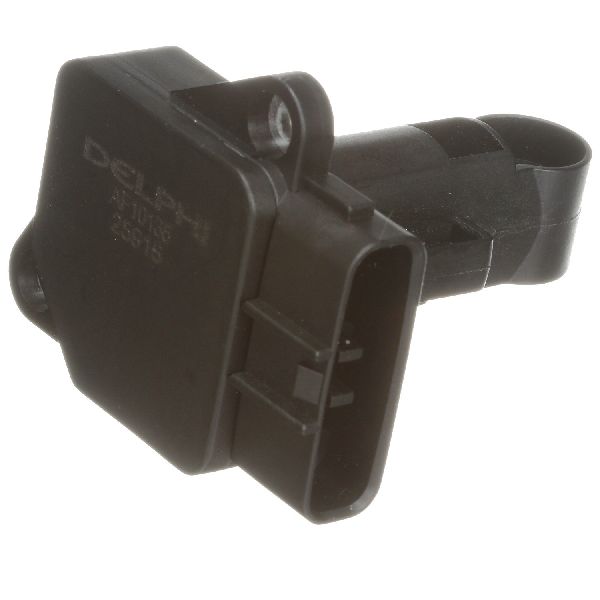
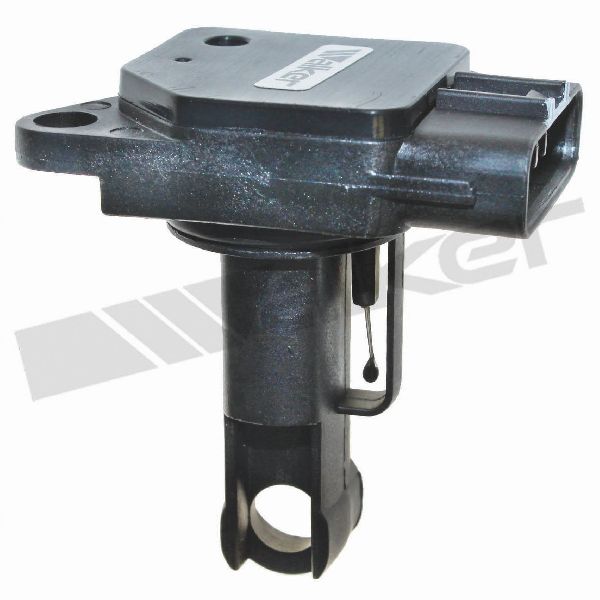
- Mass Airflow (MAF) Sensor
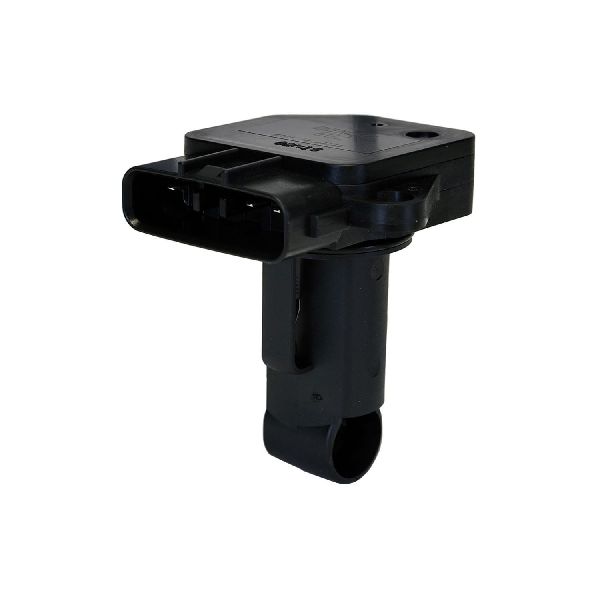
(OEM #L321-13-215)— This is the part that is replaced if cleaning fails and no vacuum leaks are found. The original part is often just dirty, but can fail electronically. This part number supersedes the older ZL01-13-215.
Trusted brands: Denso (OEM supplier), Mazda (Genuine), Walker
OEM price range: $250-$350
Aftermarket price range: $80-$150 - MAF Sensor Cleaner — This is the first and most common fix. A contaminated sensor is the leading cause of P0101, and this specialty cleaner is required to safely clean it.
Trusted brands: CRC, Liqui Moly, WD-40 Specialist
Aftermarket price range: $10-$15 - Air Intake Hose / Boot
(OEM #LF50-13-220D)— The second most common cause after a dirty MAF. The rubber hose cracks with age, causing a vacuum leak. If cleaning the MAF doesn't work, this is the next part to inspect and likely replace.
Trusted brands: Mazda (Genuine), Aftermarket equivalents
OEM price range: $60-$90
Aftermarket price range: $30-$50
Related Codes That Often Appear With This One
- P0171 — System Too Lean (Bank 1). If there is a vacuum leak after the MAF sensor, the engine is getting more air than the sensor is measuring. The ECU sees this extra oxygen via the O2 sensors and may set a lean code along with the P0101.
- P0102 — Mass or Volume Air Flow Circuit Low Input. This code can appear with P0101 and points more specifically to a low signal from the MAF, often caused by a dirty sensor, vacuum leak, or wiring issue.
Platform-Specific Known Issues
- Real-world forum experience: A thread on Mazdas247.com discusses how P0101 codes appeared on cars after installing aftermarket intakes, highlighting the sensitivity to vacuum leaks from loose clamps or disconnected breather hoses. This reinforces that any unmetered air after the MAF sensor is a primary trigger.
- Manufacturer Service Bulletins: Mazda has issued Bulletin #01-011-13-2766 for related models, noting that vehicles may exhibit MIL illumination with DTC P0101:00 stored in memory, specifically identifying a MAF sensor circuit range/performance problem.
Mechanic-Grade Diagnostic Values
- Mass Air Flow (MAF) Rate at Idle — expected: Approximately 1.2 to 1.7 grams/second (g/s) on a fully warmed-up engine with no accessories on.. Failure: A reading that is significantly higher or lower, or one that is erratic and jumps around without corresponding changes in engine RPM, suggests a faulty sensor or a vacuum leak.
- MAF Sensor Signal Voltage (Key On, Engine Off) — expected: Close to 0V.. Failure: Significant voltage reading with the engine off indicates a sensor or wiring fault.
- MAF Sensor Signal Voltage at Idle — expected: Approximately 0.6-1.0V.. Failure: Voltage significantly outside this range or not increasing smoothly with RPM points to a problem.
Scan Tool Commands That Help
- FORScan / Mazda IDS: KAM (Keep Alive Memory) Reset — After replacing or cleaning the MAF sensor, resetting the KAM clears the long-term fuel trims and other learned values. This forces the ECU to re-learn based on the new/clean sensor's readings, which can be crucial for resolving the code if the old adaptations were compensating for a faulty signal.
- FORScan / Mazda IDS: EGR Re-initialization / Injector Calibration — In a documented edge case on a Skyactiv-D engine (different but related Mazda technology), a persistent P0101 code that survived sensor replacement was resolved by re-calibrating the EGR valve and injectors. This suggests that on complex, modern engines, airflow-related codes can sometimes be triggered by incorrect adaptation values in related systems.
- PCM Reprogramming Note: According to Bulletin #SA-060-17 and Bulletin #SA386, some Mazda vehicles may experience a Check Engine Light with DTC P0101 due to mislogic detection in the PCM calibration after reprogramming using certain IDS versions.
Wiring & Ground Locations
- MAF Sensor Connector — On the air intake tube, immediately following the air filter box in the left front corner of the engine compartment.. This is the primary connection point for the sensor. Corrosion, bent pins, or a loose connection here will directly cause P0101, P0102, or P0103 codes.
- G1 — Main engine compartment ground point, located at the left rear corner of the engine compartment.. A poor ground connection at this primary point can cause unstable or incorrect readings from various engine sensors, including the MAF sensor.
- G2 — Located behind the left kick panel inside the cabin.. This ground serves various components controlled by the PCM. While less direct, a fault here could contribute to erratic electronic behavior.
Real Owner Repair Stories
- Mazda Forum user (2012 Mazda 6 (with similar MZR engine and P0101 issue)) — Persistent Check Engine Light with code P0101.
❌ Tried (didn't work) Cleaning the original MAF sensor., Replacing the MAF sensor with a new part., Clearing codes with a standard OBD-II scanner., Disconnecting the battery for several hours.
✅ What actually fixed it The issue persisted until the Keep Alive Memory (KAM) was properly reset. The user was attempting various methods, highlighting the importance of a full ECU memory clear after changing a critical sensor, which forces the system to discard old, incorrect learned fuel trim values. - NHTSA ODI #10978705 — An owner reported that their vehicle experienced bucking and the check engine light illuminated with codes P0101 and P061B. Despite the MAF sensor appearing fine, the issue continued after an oil change and inspection.
- NHTSA ODI #10378620 — An owner reported that while driving, the engine suddenly lost power. A subsequent computer check revealed code P0101, which the owner found to be a frequent complaint in online forums.
OEM Part Supersession History
ZL01-13-215→L321-13-215— Standard part number update and consolidation across multiple Mazda platforms using the MZR engine family.
Heads up: The Denso aftermarket equivalent is DMA-0114, which cross-references to the Mazda OEM number L3K913215 (used in turbo models) but is also listed as compatible with non-turbo MZR engines. Care should be taken to verify fitment, but Denso is the OEM supplier and generally reliable.
Model Year Variations Within This Range
- 2009-2015 (NC2/NC3 with Manual Transmission): The 2.0L MZR engine was updated with a forged steel crankshaft, forged connecting rods, and revised valve springs. While this makes the engine more robust, especially for performance modifications, it does not change the MAF sensor part number or the common causes and diagnosis for code P0101. Automatic transmission cars in this period retained the NC1 engine specifications.
Diagnostic Flowchart
Other Known Issues on This Vehicle
Issues unrelated to this code that are worth knowing about as an owner of this generation:
- Cracking Plastic Coolant Expansion Tank 🔴 High — Very common across all model years. The plastic becomes yellow/brown and brittle with age and heat cycles. Failure can occur at any mileage and lead to rapid coolant loss and potential engine overheating.
- Oil Consumption 🟠 Medium — More prevalent on the 1.8L MZR engine, but also reported on the 2.0L, especially when driven hard or with extended oil change intervals. Can start around 60,000-100,000 miles.
- Sticky Starter Motor / Solenoid 🟡 Low — Occasional issue, more common on higher-mileage cars or those in colder climates. Presents as a 'click, no crank' symptom.
- Seizing Brake Calipers 🟠 Medium — Common on cars that are not driven regularly, allowing moisture to cause corrosion in the caliper pistons or slide pins.
Used vs. New Parts: Buying Guide for This Vehicle
When a used part is the smart pick: A used OEM MAF sensor from a low-mileage donor car is often a smarter and more reliable choice than a cheap, new aftermarket sensor. The OEM Denso units are robust, and failure is less common than contamination. A used intake hose is also a viable option if it is thoroughly inspected for cracks.
Donor-vehicle mileage cap: roughly under 60000 miles for the part to have meaningful remaining life.
What to inspect on the donor part:
- For a MAF sensor, ensure the donor vehicle was not in a front-end collision.
- Check the connector pins for any signs of corrosion or damage.
- For an intake hose, squeeze and flex the rubber along its entire length, especially in the accordion sections, looking for any brittleness or fine cracks.
Aftermarket brands forum-validated for this vehicle:
- Denso (OEM supplier)
- Hitachi
- Spectra
- Walker Products
Brands owners have reported issues with on this vehicle:
- Unbranded, 'white-box' sensors from online marketplaces are frequently reported as dead-on-arrival or failing shortly after installation.
Real Owner Stories
Aggregated from forums and TSBs cited above. Mileages and costs reflect what owners reported in those sources.
2006-2015 Mazda MX-5 NC
Symptoms: P0101 codes appeared after installing an aftermarket intake.
What fixed it: Tightening loose clamps and checking for disconnected breather hoses to eliminate vacuum leaks.
Source hint: Mazdas247 Forum - 'Intake Installation and P0101 Code'
2006-2015 Mazda MX-5 NC
Symptoms: Check engine light with P0101 code.
What fixed it: Cleaning the MAF sensor and checking the intake boot for cracks.
Source hint: miata.net: General consensus across the forum
2006-2015 Mazda MX-5 NC
Symptoms: P0101 code accompanied by a P0171 lean code after intake work.
What fixed it: Fixing small leaks from loose clamps that allowed unmetered air into the system.
Source hint: Mazdas247 Forum - 'Intake Installation and P0101 Code'
Related OBD-II Codes
Frequently Asked Questions
Can I use any cleaner to fix the P0101 code on my MX-5's MAF sensor?
I just installed an aftermarket intake on my NC Miata and now I have a P0101 code. What happened?
Where is the MAF sensor located on the 2.0L MZR engine?
Is it true that a dirty air filter can cause a P0101 code on the MX-5?
How can I check for an intake leak on my MX-5 without special tools?
Will cleaning the MAF sensor always fix the P0101 code?
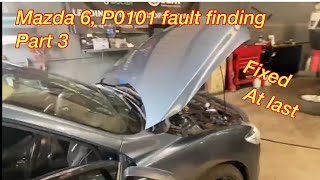
Helpful Videos



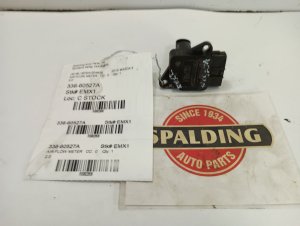
Used OEM Parts in Stock
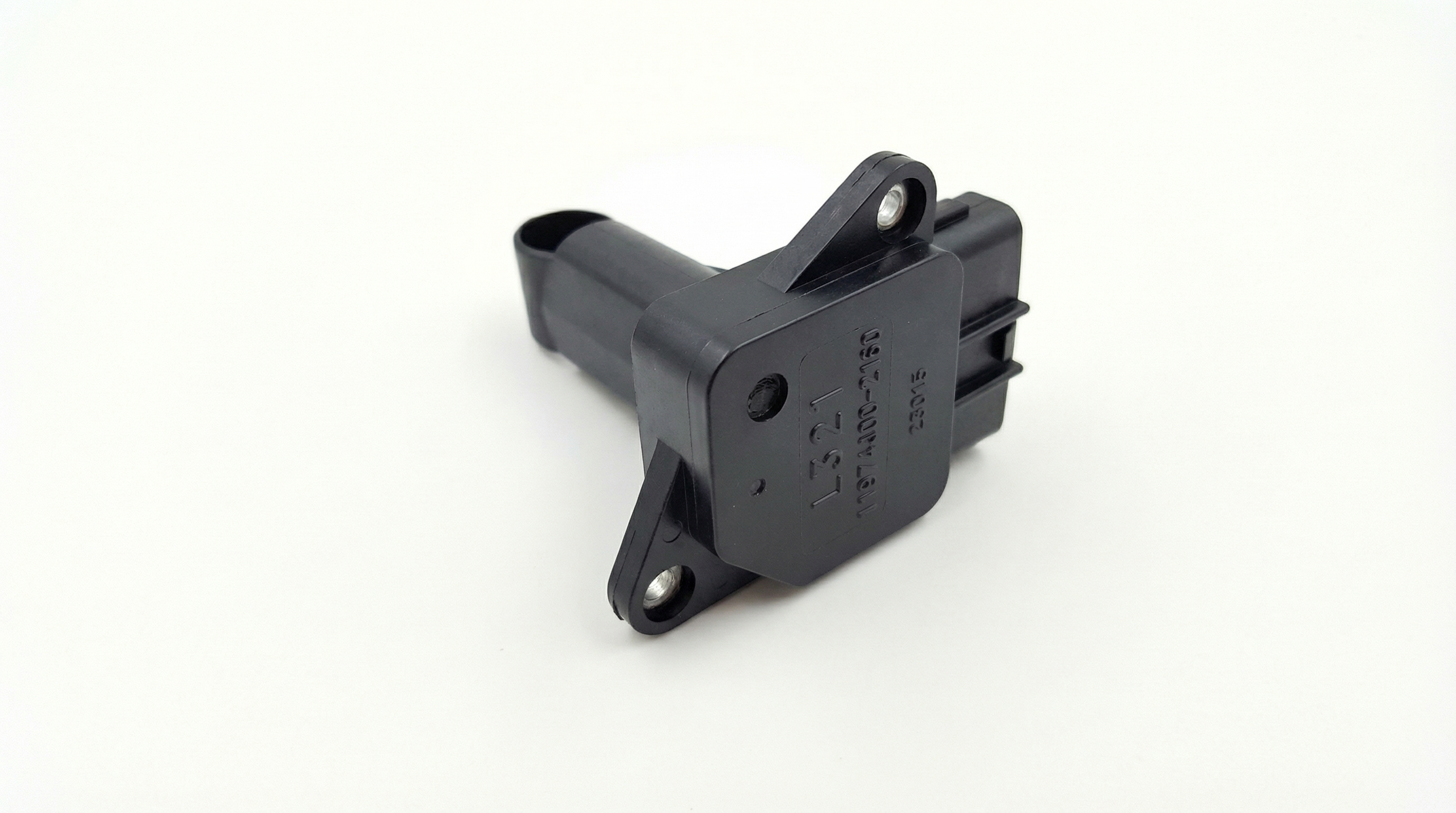
New Aftermarket Parts Available



The information in this article is provided for general reference and educational purposes only. Vehicle specifications, procedures, and part compatibility can vary by production date, trim level, and region. Always consult your vehicle's factory service manual and verify part numbers before purchasing or performing repairs. Safety-critical components such as airbags, seat belts, and braking systems should be installed by a qualified professional.
- Mazda MX-5:
- 🧭 Diagnostic Flowchart
- 🎬 Helpful Videos
- 🛍️ Shop This Part
- What's Unique About the 2006-2015 Mazda MX-5
- Symptoms You May Notice
- Most Likely Causes
- Rare But Worth Checking
- Diagnosis Steps
- Parts You'll Likely Need
- Related Codes That Often Appear With This One
- Platform-Specific Known Issues
- Mechanic-Grade Diagnostic Values
- Scan Tool Commands That Help
- Wiring & Ground Locations
- Real Owner Repair Stories
- OEM Part Supersession History
- Model Year Variations Within This Range
- Other Known Issues on This Vehicle
- Used vs. New Parts: Buying Guide for This Vehicle
- Real Owner Stories
- 2006-2015 Mazda MX-5 NC
- 2006-2015 Mazda MX-5 NC
- 2006-2015 Mazda MX-5 NC
- Related OBD-II Codes
- Frequently Asked Questions
- 🎟️ Get 5% Off