

P0101 on 2008-2017 Mitsubishi Lancer: MAF Sensor Causes and Fixes
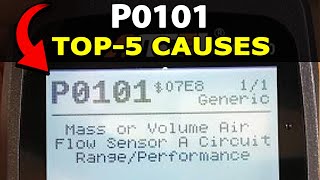
The P0101 code on a 2008-2017 Mitsubishi Lancer most often points to a dirty or faulty Mass Airflow (MAF) sensor or a cracked air intake hose. Cleaning the sensor with a dedicated cleaner is a common first step. If that and inspecting the intake hose for cracks doesn't work, a replacement MAF sensor is the next likely fix, costing around $60-$120 for an aftermarket part.
- P0101 on a Lancer almost always relates to the Mass Airflow (MAF) sensor or the intake path.
- The most common and cheapest first step is to clean the MAF sensor with a dedicated cleaner.
- Thoroughly inspect the rubber air intake hose for cracks, as this is a frequent cause of vacuum leaks that trigger the code.
- If cleaning the sensor and checking for leaks doesn't work, replacing the MAF sensor is the most probable solution.
- Avoid using cheap, no-name aftermarket sensors, as they can be unreliable. Stick to reputable brands like Denso or Hitachi if not using an OEM part.
What's Unique About the 2008-2017 Mitsubishi Lancer
For the 2008-2017 Lancer with the 4B11 or 4B12 engine, the P0101 code is a straightforward issue, typically rooted in the MAF sensor itself or the intake system. Unlike some vehicles that have complex, model-specific TSBs for this code involving ECM reprogramming, the Lancer platform tends to follow classic diagnostic paths. Owners report that common causes like a contaminated sensor (especially from oiled aftermarket air filters), vacuum leaks from cracked intake hoses, or simply a failed sensor are the usual culprits. A notable platform-specific symptom is that the erratic airflow reading can cause the Continuously Variable Transmission (CVT) to behave poorly, with hesitation or incorrect ratio changes, which can be misdiagnosed as a primary transmission problem.
Symptoms You May Notice
- Check Engine Light is on
- Rough or unstable idle
- Engine hesitation or stumbling during acceleration
- Reduced engine power or sluggish performance
- Poor fuel economy
- Engine stalling, especially when coming to a stop
- Black smoke from the exhaust if the engine is running rich
- CVT transmission behaving erratically (e.g., hesitation, not 'shifting' correctly)
- Replacing the oxygen (O2) sensors. While O2 sensors are part of the fuel control system, P0101 is specific to the MAF sensor circuit and the air entering the engine.
- Replacing the throttle body without proper diagnosis. While a dirty throttle body can cause idle issues, it's less likely to be the primary cause of a P0101 code.
- Diagnosing a faulty CVT transmission when the actual cause is the P0101 code affecting engine performance and drivability.
Most Likely Causes
- Dirty or Contaminated Mass Airflow (MAF) Sensor 🔴 High Probability → Shop Fuel Injection Air Flow Meter Oiled aftermarket air filters are a common modification, and excess oil can contaminate the MAF sensor's delicate sensing wire. Dust and debris can also accumulate over time, insulating the sensor element.
How to confirm: Visually inspect the MAF sensor wires inside the housing. If they appear dirty, oily, or coated with debris, they need cleaning.
Typical fix: Remove the sensor and clean it carefully using only dedicated MAF sensor cleaner spray. Do not touch the wires. Allow it to dry completely before reinstalling. This is often the first and most successful repair attempt.
Est. part cost: $8-$15 for MAF cleaner spray - Vacuum Leak / Cracked Intake Air Hose 🔴 High Probability The flexible rubber intake hose between the air filter box and the throttle body is a known weak point. It frequently develops cracks in the ribbed 'accordion' sections due to age and engine movement, allowing unmetered air to enter the engine and throwing off the MAF sensor's readings.
How to confirm: Visually inspect the entire intake tract for cracks, especially in the ribbed sections of the hose. A smoke test is the most definitive way to find a leak.
Typical fix: Replace the cracked or leaking intake hose. Ensure all clamps are tight. The OEM part number is often 1505A239.
Est. part cost: $40-$100 for a new intake hose - Faulty Mass Airflow (MAF) Sensor 🟡 Medium Probability → Shop Fuel Injection Air Flow Meter Electronic components like the MAF sensor can fail with age and heat cycles. This is the next logical step if cleaning does not resolve the code and there are no vacuum leaks.
How to confirm: After cleaning the sensor and ensuring the intake system has no leaks, if the code returns, the sensor itself is likely bad. A scan tool can monitor the MAF reading (in grams/sec); erratic or non-responsive readings confirm failure.
Typical fix: Replace the MAF sensor. It is typically mounted on the air filter housing with two screws.
Est. part cost: $150-$250 for OEM, $60-$120 for aftermarket - Dirty or Clogged Air Filter ⚪ Low Probability → Shop Air Cleaner Assembly A severely clogged air filter can restrict airflow enough to cause the MAF sensor readings to be lower than expected for a given engine load.
How to confirm: Remove and inspect the engine air filter. If it is visibly dirty, clogged with debris, or has not been changed in a long time, it should be replaced.
Typical fix: Replace the engine air filter.
Est. part cost: $15-$40
Rare But Worth Checking
- Damaged MAF Sensor Wiring or Connector: → Shop Fuel Injection Air Flow Meter The wiring harness or connector for the MAF sensor can become damaged or corroded, leading to an intermittent or lost signal. Wiggle the connector with the engine running to see if the idle changes.
- Clogged Catalytic Converter: A severely restricted exhaust can impede airflow through the engine, causing the MAF sensor readings to be abnormally low. This is usually accompanied by other symptoms like a significant loss of power, especially at high RPM.
- Faulty Engine Control Module (ECM): This is extremely rare and should only be considered after all other possibilities (sensor, wiring, vacuum leaks) have been exhaustively ruled out.
Diagnosis Steps
- Read the Code: Use an OBD-II scanner to confirm P0101 is the active code. Note any other codes present.
- Inspect the Air Filter: Check the engine air filter and replace it if it's dirty or clogged.
- Inspect the Intake System: Thoroughly inspect the air intake hose, paying close attention to the flexible, ribbed sections for cracks or tears. Squeeze the hose to reveal hidden cracks. Ensure all clamps are secure.
- Inspect and Clean the MAF Sensor: Unplug and remove the MAF sensor. Spray the sensing elements with dedicated MAF sensor cleaner. Do not touch the wires. Let it dry completely before reinstalling.
- Check for Vacuum Leaks: With the engine running, listen for hissing sounds. For a more thorough check, use a smoke machine to pressurize the intake system and identify the source of any leaks.
- Inspect Wiring: Check the MAF sensor's electrical connector and wiring for any signs of damage, corrosion, or loose pins. Ensure the connector is fully seated.
- Monitor Live Data: Use a scan tool to view live data from the MAF sensor. At idle, a 2.0L/2.4L engine should read around 2-4 grams/second. This value should increase smoothly to approximately 8-15 g/s at 2500 RPM. If the reading is stuck, erratic, or doesn't change with RPM, the sensor is likely faulty.
- Replace the MAF Sensor: If all other steps fail to resolve the issue, replace the MAF sensor.
- Clear Codes and Test Drive: After any repair, clear the trouble codes and perform a test drive to ensure the code does not return.
Parts You'll Likely Need
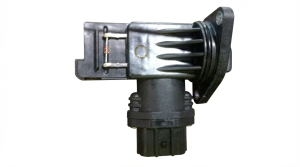
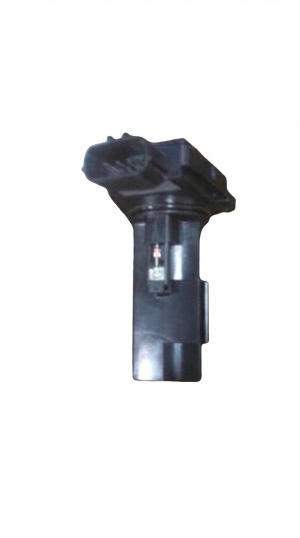
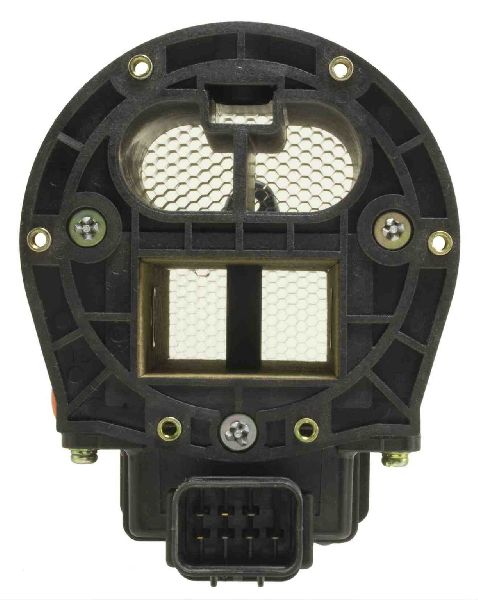
- Mass Airflow (MAF) Sensor
(OEM #1525A021)— This sensor is the most common point of failure for the P0101 code, either by becoming dirty or failing electronically.
Trusted brands: Denso (OEM Supplier, P/N: DMA-0111), Hitachi, Bosch, Delphi
OEM price range: $150-$250
Aftermarket price range: $60-$120 - Engine Air Intake Hose
(OEM #1505A239)— The rubber hose is notorious for cracking in its flexible sections with age, causing vacuum leaks that trigger the P0101 code.
Trusted brands: Genuine Mitsubishi, Gates
OEM price range: $70-$120
Aftermarket price range: $40-$80 - MAF Sensor Cleaner — Often, the sensor is just dirty and cleaning it is a cheap and effective first step before replacing parts.
Trusted brands: CRC, WD-40 Specialist
Aftermarket price range: $8-$15
Related Codes That Often Appear With This One
- P0171 — System Too Lean. This code often appears with P0101 if there is a vacuum leak. Unmetered air enters the engine after the MAF sensor, creating a lean air/fuel mixture that the O2 sensors detect.
Technical Service Bulletins (TSBs) & Recalls
- SR-20-003 / NHTSA #16V458 - While not directly for P0101, this is a critical safety recall for front crossmember corrosion in salt-belt states. A failing crossmember can affect vehicle dynamics and should be checked on any Lancer from this generation.
Platform-Specific Known Issues
- Cracked Air Intake Hose: → Shop Engine Air Intake Resonator The accordion-style ribs of the factory air intake hose are a very common failure point. They become brittle and crack over time, causing a significant vacuum leak that is the number one cause of P0101 besides a dirty MAF. Owners often find success by carefully inspecting and replacing this hose.
- Oiled Aftermarket Air Filters: → Shop Air Cleaner Assembly Many owners on forums like EvolutionM report that P0101 codes began appearing shortly after installing a new, freshly oiled aftermarket cone filter. The oil aerosolizes and contaminates the MAF sensor element. Switching to a non-oiled 'dry' filter or being extremely careful not to over-oil the filter is a common recommendation.
Mechanic-Grade Diagnostic Values
- Mass Airflow Sensor Voltage at Idle — expected: 1,300 - 1,670 millivolts (1.30V - 1.67V). Failure: Voltage is significantly outside this range, erratic, or does not increase smoothly as the engine is revved.
- MAF Sensor Power Supply Voltage (at connector A-05) — expected: Battery Positive Voltage. Failure: No voltage or significantly lower voltage indicates a wiring or MFI relay issue.
- MAF Sensor Ground Circuit (at connector A-05) — expected: Continuity to ground (near 0 ohms).. Failure: High resistance or an open circuit indicates a bad ground wire.
Scan Tool Commands That Help
- Mitsubishi M.U.T.-III (MB991958): Data List Item 10: Mass Airflow Sensor — This is the primary function used to monitor the live voltage or airflow (g/s) reading from the MAF sensor to check if it is within the expected range at idle and responds correctly to changes in engine RPM.
- Mitsubishi M.U.T.-III or equivalent OBD-II Scan Tool: OBD-II Drive Cycle - Pattern 6 or 7 — After replacing the MAF sensor and clearing the DTC, performing this specific drive cycle is the official procedure to confirm the repair and ensure the monitor runs and passes without the code returning.
Wiring & Ground Locations
- A-05 — The electrical harness connector at the Mass Airflow Sensor itself.. This is the primary connection point to test for power, ground, and signal directly at the sensor. Damage or corrosion here is a common cause of failure.
- B-109 — A main harness connector at the Engine Control Module (ECM).. If tests at connector A-05 fail, checking for continuity between A-05 and B-109 can isolate a wiring harness break between the sensor and the computer.
- A-30X — The electrical harness connector at the MFI (Multi-port Fuel Injection) relay.. The MAF sensor receives its power via the MFI relay. A problem at this connector could cut power to the sensor.
Real Owner Repair Stories
- EvolutionM forum user (2009 Lancer Ralliart (similar MAF system)) — P0101 code appeared, car running slower than normal.
❌ Tried (didn't work) Clearing the code (it did not immediately return but performance was still poor).
✅ What actually fixed it The user suspected oil from a cone air filter contaminated the sensor. Cleaning the MAF sensor and its wires with electrical parts cleaner resolved the issue and the code did not return. This confirms the link between oiled filters and P0101. - EvolutionM forum user (Mitsubishi Lancer Evo VIII (uses a similar diagnostic principle)) — MAF sensor code, low rough idle, engine won't accelerate over 4500 RPM.
❌ Tried (didn't work) Swapping in a known-good MAF sensor from another car did not fix the issue, suggesting the problem was not the sensor itself in this specific case (though it often is).
✅ What actually fixed it The user's problem was intermittent. Cleaning the original MAF sensor provided a temporary fix where the car ran perfectly, but the symptoms and code eventually returned. This pattern strongly indicates the original sensor was failing electronically and required replacement, as cleaning was not a permanent solution. - ClubCJ Lancer Forum user (2010 Lancer VRX) — No check engine light, but revs would drop to ~500 RPM at traffic lights, causing a rough idle before correcting.
❌ Tried (didn't work) The Mitsubishi dealer cleaned the MAF sensor during a service, which improved the issue, but it returned a few months later.
✅ What actually fixed it Another user with the same symptoms confirmed that cleaning both the MAF sensor (which was likely contaminated by a K&N oiled filter) and the throttle body resolved the idle-drop issue completely. This highlights that even without a code, MAF contamination can cause noticeable symptoms.
OEM Part Supersession History
1525A021→1525A021— No supersession found.
Heads up: This part number appears to be consistent for the specified vehicle range.
Model Year Variations Within This Range
- 2008-2017: No significant variations have been documented regarding the causes or diagnosis of P0101 on the 4B11/4B12 engines within this range. The primary components (MAF sensor, intake hose) and common failure points remain consistent.
Diagnostic Flowchart
Other Known Issues on This Vehicle
Issues unrelated to this code that are worth knowing about as an owner of this generation:
- Front Crossmember/Subframe Corrosion 🔴 High — Very common on vehicles operated in 'salt belt' regions. Can occur at any mileage and may lead to catastrophic failure of the lower control arm mount. (Ref: Recall SR-20-003 (NHTSA #16V458). Dealers will inspect, apply anti-corrosion treatment, or replace the crossmember.)
- CVT Transmission Overheating and Failure 🔴 High — More common on earlier models (2008-2012) but can affect all years. Symptoms like whining, hesitation, and a 'Slow Down' warning light may appear, often related to fluid degradation from heat or internal component wear. (Ref: Multiple software updates were released to address drivability, and a recall was issued for some 2015-2016 models for hesitation.)
- Clear Coat/Paint Failure 🟡 Low — Commonly reported across all years. The clear coat is perceived as soft and prone to chipping, peeling, and premature failure, especially on horizontal surfaces like the roof and trunk.
- Blower Motor Resistor Failure 🟡 Low — Widespread issue where the fan only works on the highest setting or not at all. This is typically due to a failed blower motor resistor, which is a simple and inexpensive part to replace.
Used vs. New Parts: Buying Guide for This Vehicle
When a used part is the smart pick: A used OEM intake hose (1505A239) from a low-mileage donor vehicle can be a cost-effective option, provided it is thoroughly inspected for any signs of cracking or brittleness, especially in the accordion ribs. For the MAF sensor, a used part is generally not recommended due to the sensitivity of the electronics, but may be considered a temporary diagnostic tool if it comes with a short-term warranty from the seller.
Donor-vehicle mileage cap: roughly under 60000 miles for the part to have meaningful remaining life.
What to inspect on the donor part:
- For Intake Hose: Squeeze and bend the hose to check for hidden cracks. The rubber should still be flexible, not hard or brittle.
- For MAF Sensor: Check the connector pins for corrosion or damage. Ask the seller if they offer a 30-day warranty or return policy.
- Visually inspect the donor vehicle for signs of being in a front-end collision, which could have damaged the sensor or surrounding components.
OEM-only on this vehicle (don't cheap out):
- Mass Airflow (MAF) Sensor: While not strictly 'OEM-only', using a genuine Mitsubishi or the OEM supplier (Denso) part is highly recommended for reliability. Cheap aftermarket sensors are a common source of persistent or new problems.
Aftermarket brands forum-validated for this vehicle:
- Denso (often the original equipment manufacturer)
- Hitachi
- Delphi
Brands owners have reported issues with on this vehicle:
- Unbranded, low-cost sensors from online marketplaces are frequently reported on forums as being inaccurate out of the box or failing prematurely.
Real Owner Stories
Aggregated from forums and TSBs cited above. Mileages and costs reflect what owners reported in those sources.
2009 Mitsubishi Lancer Ralliart
Symptoms: P0101 MAF Voltage Low code appeared after tuning; owner also noted the code would trigger specifically when it rained.
What fixed it: Cleaning the MAF sensor, which had been contaminated by an oiled cone filter.
Source hint: EvolutionM - 'p0101 MAF Voltage Low' - https://www.evolutionm.net/forums/09-ralliart-engine-tech-tuning-how-s/525154-p0101-maf-voltage-low.html
2008-2017 Mitsubishi Lancer 2.0L/2.4L
Symptoms: Check engine light with P0101; visual inspection revealed cracks in the flexible, ribbed 'accordion' section of the intake tract.
What fixed it: Replacing the cracked factory air intake hose (OEM part 1505A239).
Source hint: LancerForum - Numerous threads discuss P0101
Related OBD-II Codes
Frequently Asked Questions
I have a 2015 Lancer and heard about a crossmember recall; does this cause the P0101 code?
Can I use any cleaner on my Lancer's MAF sensor wires?
Is there a specific part number for the intake hose on the 4B11/4B12 engines?
Why did my P0101 code appear right after I installed an oiled performance air filter?
My Lancer's CVT is acting strange along with the P0101 code; are they related?
Does the Dodge Caliber with the same engine have this MAF sensor issue?
Helpful Videos

Used OEM Parts in Stock
New Aftermarket Parts Available

The information in this article is provided for general reference and educational purposes only. Vehicle specifications, procedures, and part compatibility can vary by production date, trim level, and region. Always consult your vehicle's factory service manual and verify part numbers before purchasing or performing repairs. Safety-critical components such as airbags, seat belts, and braking systems should be installed by a qualified professional.
- Mitsubishi Lancer:
- 🧭 Diagnostic Flowchart
- 🎬 Helpful Videos
- 🛍️ Shop This Part
- What's Unique About the 2008-2017 Mitsubishi Lancer
- Symptoms You May Notice
- Most Likely Causes
- Rare But Worth Checking
- Diagnosis Steps
- Parts You'll Likely Need
- Related Codes That Often Appear With This One
- Technical Service Bulletins (TSBs) & Recalls
- Platform-Specific Known Issues
- Mechanic-Grade Diagnostic Values
- Scan Tool Commands That Help
- Wiring & Ground Locations
- Real Owner Repair Stories
- OEM Part Supersession History
- Model Year Variations Within This Range
- Other Known Issues on This Vehicle
- Used vs. New Parts: Buying Guide for This Vehicle
- Real Owner Stories
- 2009 Mitsubishi Lancer Ralliart
- 2008-2017 Mitsubishi Lancer 2.0L/2.4L
- Related OBD-II Codes
- Frequently Asked Questions
- 🎟️ Get 5% Off