

P0101 on 2011-2018 Nissan Maxima: MAF Sensor Causes, TSBs, and Fixes
On a 2011-2018 Nissan Maxima, code P0101 is most often caused by a dirty or faulty Mass Airflow (MAF) sensor, but an ECM software issue is also a very common cause. Before replacing the sensor, clean it with dedicated MAF cleaner. If the code returns without any drivability issues, consult a dealer about TSBs NTB12-051k and NTB12051J, which call for an ECM reprogram. A cracked air intake boot is another frequent culprit.
- Always start with the cheapest and easiest fix: clean the MAF sensor with dedicated cleaner and check the air filter.
- If you replace the MAF sensor, use an OEM part (Nissan or Hitachi) to avoid compatibility issues.
- Be aware that a P0101 code on this specific car, especially without performance issues, is very likely a software problem.
- Do not repeatedly replace the MAF sensor. If the code returns, investigate the TSBs regarding an ECM reprogram with a dealer or qualified shop.
What's Unique About the 2011-2018 Nissan MAXIMA

For this generation of Nissan Maxima, a P0101 code doesn't automatically mean the MAF sensor has failed. Nissan has issued multiple Technical Service Bulletins (TSBs) indicating that the ECM software itself can be the problem, incorrectly flagging the P0101 code even when there are no actual drivability problems. This makes it crucial to consider an ECM reprogram as a primary fix, a step that is often overlooked on other vehicles. Additionally, these engines are known to be sensitive to aftermarket electronic sensors, with many owners and technicians on forums reporting that only OEM or OEM-supplier (Hitachi) MAF sensors work reliably. Cracks in the flexible air intake boot are also 🎬 See this walkthrough on fixing common intake boot leaks. a very common failure point leading to this code.
Diagnostic Flowchart

Tap your situation to follow the diagnostic path that matches what you're seeing on this vehicle.
Generation note: This range covers the end of the 7th generation (2011-2014, model A35) and the start of the 8th generation (2016-2018, model A36). Both generations use a version of the 3.5L VQ35DE V6 engine. The TSBs related to ECM reprogramming for P0101 (NTB12-051k/j) specifically apply to vehicles in this year range, including the 2011-2012 Maxima (A35), suggesting the underlying software and hardware issues are similar across this period. The 8th generation (A36) features a revised engine with improved fuel economy and a more responsive feel, but the core MAF sensor system and its potential faults remain similar.
Symptoms You May Notice
- Check Engine Light is on
- Engine hesitation or stumbling on acceleration
- Rough idle or surging RPMs, sometimes causing the 'Slip' indicator light to come on
- Poor fuel economy
- Stalling, especially when coming to a stop or at idle
- Vehicle entering 'limp mode' (won't accelerate past a certain RPM)
- Black smoke from the exhaust
- Car starts and then immediately dies
- Replacing the MAF sensor multiple times with cheap aftermarket parts when the root cause is an ECM software issue or the aftermarket sensor itself is faulty.
- Replacing the MAF sensor when the problem is a simple vacuum leak from a cracked intake boot.
- Assuming the MAF sensor is bad when it only needs to be cleaned.
Most Likely Causes

- ECM Software Calibration Issue 🔴 High Probability Nissan has released multiple TSBs (e.g., NTB12-051k, NTB12-051j) specifically for P0101 on these vehicles, where the fix is to reprogram the ECM. This is especially noted as the cause if no drivability issues are present.
How to confirm: If the MAF sensor has been cleaned or replaced and there are no vacuum leaks, but the code persists without noticeable performance problems, the cause is likely the ECM software. A Nissan dealer or a shop with a CONSULT scan tool can check if the TSB applies to your vehicle's VIN and current ECM software version. Some owners have reported the dealer performing this TSB reprogram for free or for a standard diagnostic fee.
Typical fix: Reprogramming the Engine Control Module (ECM) with updated software provided by Nissan. This requires a specialized J2534 pass-thru tool and access to Nissan's software (NERS).
Est. part cost: $0 - Dirty Mass Airflow (MAF) Sensor 🔴 High Probability → Shop Fuel Injection Air Flow Meter The sensor's delicate hot wire can be easily contaminated by dirt, moisture, or oil from aftermarket air filters, skewing its readings. This is a very common first step in diagnosis.
How to confirm: Visually inspect the sensor's wire elements after removal. If they appear dirty, coated, or have any debris on them, cleaning is warranted.
Typical fix: Remove the sensor (typically held by two Phillips screws) and clean it carefully using only dedicated MAF sensor cleaner spray. Do not touch the wires. Let it dry completely before reinstalling.
Est. part cost: $10-$15 for a can of cleaner - Vacuum Leak (Cracked Intake Boot) 🟡 Medium Probability The flexible rubber air intake boot located between the air filter box and the throttle body is known to develop cracks from age and heat, allowing unmetered air to enter the engine. This unmetered air bypasses the MAF sensor, causing its readings to be lower than actual airflow, triggering P0101.
How to confirm: Visually inspect the entire intake boot, especially in the accordion-like ribbed sections, for cracks or tears. A smoke test is the most effective way to find hidden leaks.
Typical fix: Replace the cracked intake boot. This is a common and relatively inexpensive part to replace.
Est. part cost: $50-$150 - Faulty Mass Airflow (MAF) Sensor 🟡 Medium Probability → Shop Fuel Injection Air Flow Meter Like any electronic component, the MAF sensor can fail over time. Nissans are particularly sensitive to aftermarket sensors, often requiring an OEM (Original Equipment Manufacturer) or high-quality OE-supplier part like Hitachi for a lasting fix. Many forum users report that cheap aftermarket sensors either don't work out of the box or fail quickly.
How to confirm: After cleaning the sensor and ruling out vacuum leaks, monitor the MAF sensor's readings (g/s) on a live data scan tool. If the readings are erratic, do not change with RPM, or are at 0, the sensor is likely bad. Test the wiring and connector for power, ground, and signal before replacing.
Typical fix: Replace the MAF sensor, preferably with an OEM Nissan or Hitachi branded part.
Est. part cost: $165-$350 - Dirty or Clogged Air Filter ⚪ Low Probability → Shop Air Cleaner Assembly A severely clogged air filter restricts airflow, which can cause the MAF sensor to report lower-than-expected values, triggering the code. It can also contribute to debris contaminating the MAF sensor itself.
How to confirm: Visually inspect the engine air filter. If it is visibly dirty, clogged with debris, or has been in service beyond its recommended interval, it should be replaced.
Typical fix: Replace the engine air filter.
Est. part cost: $20-$40
Rare But Worth Checking
- Dirty Throttle Body: → Shop Fuel Injection Throttle Body A buildup of carbon on the throttle plate can disrupt airflow at idle, which can sometimes contribute to a P0101 code. Cleaning it may be necessary, and an Idle Air Volume Relearn procedure is often required afterward.
- Clogged Catalytic Converter: A restricted exhaust system creates backpressure that can affect the engine's ability to draw in air, potentially skewing MAF sensor readings. This is usually accompanied by other codes and a significant loss of power.
Diagnosis Steps
- Read all stored fault codes with an OBD-II scanner. Note any other codes present and check for "permanent" DTCs, which may require a specific drive cycle to clear.
- Visually inspect the entire air intake system from the air filter box to the throttle body. Pay close attention to the flexible rubber boot for cracks, especially in the accordion folds.
- Inspect the engine air filter. Replace if it is dirty or clogged.
- Remove the MAF sensor. Inspect the sensing elements for dirt or contamination. Clean it using only dedicated MAF sensor cleaner spray. Let it dry completely before reinstalling.
- Inspect the MAF sensor electrical connector and wiring for any signs of corrosion, damage, or loose pins.
- Clear the codes and perform a test drive. If the code does not return, the issue is resolved.
- If the code returns, use a scan tool to monitor live data from the MAF sensor (Mass A/F Sensor g/s). At a fully warmed-up idle in Park/Neutral, a 3.5L engine should read around 3-5 g/s. The reading should increase smoothly and quickly to 15-25 g/s or more when you snap the throttle.
- If the live data is erratic, stuck at zero, or does not change with RPM, test the MAF sensor connector for proper voltage (12V), ground, and signal (5V reference).
- If wiring is confirmed to be good and the sensor readings are still incorrect, replace the MAF sensor, preferably with an OEM (Nissan) or OE-supplier (Hitachi) part.
- If the code persists, especially if there are no drivability symptoms, consult a Nissan dealership or a qualified shop about TSBs NTB12-051k and NTB12-051j to check if an ECM reprogram is needed for your VIN.
- If the throttle body was cleaned or the MAF sensor was replaced, and the idle is now unstable, perform the "Accelerator Pedal Released Position Learning" and "Idle Air Volume Learning" procedures. This can sometimes be done without a scan tool following a precise sequence of key turns and pedal presses.
Parts You'll Likely Need
- Mass Airflow (MAF) Sensor
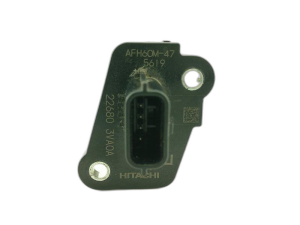
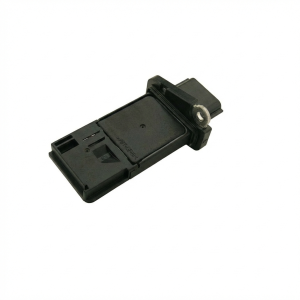
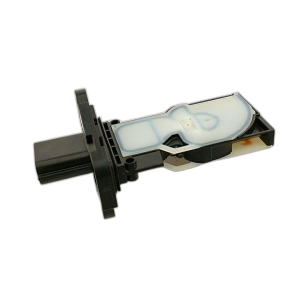
(OEM #22680-7S000 (or 22680-7S00A))— This sensor is the most common hardware failure for P0101 after ruling out dirt and vacuum leaks. Nissans are known to be sensitive to aftermarket electronics, making an OEM or OEM-supplier part the recommended choice. This part number is widely used across many Nissan models. For 2016+ models, part numbers may change to 22680-BV80B or 22680-5RB0A. Always verify with VIN.
Trusted brands: Nissan (OEM), Hitachi (MAF0031 is the OE equivalent for 22680-7S000)
OEM price range: $240-$350
Aftermarket price range: $70-$200 - Engine Air Intake Hose (Boot) — This flexible rubber part is a common failure point, developing cracks that cause vacuum leaks and trigger P0101. It's a frequent cause of misdiagnosis where the MAF sensor is blamed incorrectly.
Trusted brands: Nissan (OEM), Dorman, Various Aftermarket
OEM price range: $80-$150
Aftermarket price range: $40-$70 - MAF Sensor Cleaner — Often, the sensor is just dirty and does not need to be replaced. This is the cheapest and easiest first step. Only use cleaner specifically designed for MAF sensors.
Trusted brands: CRC Mass Air Flow Sensor Cleaner, WD-40 Specialist Air Sensor Clean
OEM price range: $10-$15
Aftermarket price range: $10-$15
Related Codes That Often Appear With This One
- P0087 — This code for Fuel Rail/System Pressure Too Low can appear with P0101. Nissan TSB NTB19-045b lists them together in the context of an ECM software update. [⭐ MANUFACTURER TSB — highest authority]
- P0448 — This EVAP system code is also mentioned alongside P0101 in TSBs NTB19-045b and P9328_P9343_P934, pointing to a potential ECM software update that addresses how multiple DTCs are stored. [⭐ MANUFACTURER TSB — highest authority]
- P2008 — This code for Intake Manifold Runner Control Circuit/Open is another one grouped with P0101 in TSBs that recommend an ECM reprogram after the primary fault is fixed. [⭐ MANUFACTURER TSB — highest authority]
- P0103 — This code for MAF Circuit High Input can appear alongside P0101, indicating a more severe electrical issue with the sensor or its circuit.
Technical Service Bulletins (TSBs) & Recalls

- NTB12-051k: The primary TSB for 2011-2012 models, instructing technicians to reprogram the ECM if P0101 is present without any drivability issues.
- NTB12-051j: An earlier version of the same bulletin, covering the same issue.
- NTB19-045b: A bulletin for newer models (including 2018 Maxima) that groups P0101 with other codes (P0087, P0448, P2008) that may be resolved with an ECM software update.
- P9328_P9343_P934: A California-specific bulletin related to permanent DTCs for several codes including P0101, where the fix is an ECM reprogram due to calibration errors.
- NTB12-051: The original TSB from 2012 addressing the P0101 false code on Altimas, which was later expanded to include the Maxima and other models.
Platform-Specific Known Issues
- Real Owner Experience: Aftermarket MAF Failure: A user on Maxima.org with a 2012 Maxima reported getting a P0101 code, entering limp mode, and experiencing RPM surging. They replaced the MAF sensor twice with parts from O'Reilly's, but the problem persisted. This is a classic example of how these cars often reject non-OEM sensors, leading the owner to waste time and money on parts that don't fix the underlying issue, which could be the ECM software or a different component like the throttle body.
- Real Owner Experience: The Cracked Intake Boot Fix: In a thread on Maxima.org, an owner of a 2011 Maxima was struggling with P0101 and P0103, causing stalling and stumbling. After trying other fixes, they discovered the air intake duct (boot) was cracked. After replacing the boot, the check engine light turned off on its own and all symptoms were resolved, confirming the vacuum leak was the true cause.
- Real Owner Experience: TSB Reprogram Success: Multiple owners on forums have confirmed that taking their vehicle to a Nissan dealer for the ECM reprogram mentioned in TSB NTB12-051k fixed their persistent P0101 code, especially when no other symptoms were present. One owner noted they paid $150 for the service, while another mentioned the dealer initially wanted to charge a diagnostic fee plus the reprogram cost but ended up doing it for free under the TSB.
Mechanic-Grade Diagnostic Values
- MAF Sensor Signal Voltage (Key On, Engine Off) — expected: 0.4 - 0.6 V. Failure: Voltage is 0V or significantly higher than 0.6V.
- MAF Sensor Signal Voltage (Engine Warmed, At Idle) — expected: 1.0 - 1.5 V. Failure: Voltage is static, erratic, or outside this range.
- MAF Sensor Signal Voltage (Engine at 2,500 RPM) — expected: 1.7 - 2.4 V. Failure: Voltage does not increase smoothly with RPM or is outside this range.
- MAF Sensor Power Wire Voltage (Red w/ Green Stripe) — expected: 11 - 14 V (Battery Voltage). Failure: Voltage is significantly lower than battery voltage, indicating a power supply issue.
- MAF Sensor Ground Wire Voltage Drop — expected: 0.05 V or less. Failure: Voltage is higher than 0.05V, indicating a poor ground connection.
Scan Tool Commands That Help
- Nissan CONSULT / compatible aftermarket (Autel, Launch): Idle Air Vol Learn — This function is required after cleaning or replacing the throttle body, or replacing the ECM. It resets the base idle airflow calibration. Failure to perform this can cause an unstable idle and may even contribute to the P0101 code returning.
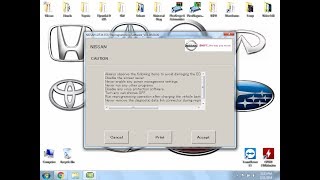
- Nissan CONSULT / J2534 Pass-thru device: ECM Reprogramming — Used to apply the software update specified in TSBs like NTB12-051k. This is the specific fix when P0101 is set without any actual drivability issues, indicating a logic error in the original ECM calibration. [⭐ MANUFACTURER TSB — highest authority]
Wiring & Ground Locations
- MAF Sensor Connector (VQ35DE) — On the air intake duct, immediately following the air filter box.. This 5-pin connector provides power, ground, and signal return for both the MAF and integrated IAT sensor. Corrosion or loose pins here are a direct cause of P0101.
- Main Engine Ground — On the engine block, directly below the Bank 2 (front) cylinder head.. A poor engine ground can introduce electrical noise and voltage drops, affecting the MAF sensor's reference voltage and signal accuracy, potentially triggering a P0101 code.
- Chassis Ground Points — Located near each headlight assembly, behind the headlight.. These are secondary ground points. While less likely to be the primary cause, corrosion at these locations can contribute to floating grounds and intermittent electrical issues across the engine sensor network.
Real Owner Repair Stories
- Reddit user in r/Nissan (2012 Nissan Maxima) — Check Engine Light with code P0101. Also throwing P0113 (Intake Air Temp Sensor High).
❌ Tried (didn't work) Replacing the MAF sensor with an aftermarket part., Having the ECM reprogrammed while the faulty aftermarket sensor was still installed.
✅ What actually fixed it A Nissan Master Technician on the forum advised to reinstall the original OEM MAF sensor and then have the ECM reprogrammed per TSB NTB12-051. The user later confirmed that replacing the aftermarket sensor with a new OEM one and clearing codes resolved the issue, highlighting the vehicle's sensitivity to non-OEM sensors.
OEM Part Supersession History
22680-7S00A, 22680-7S00B→22680-7S000— Standard part revision and consolidation by Nissan.
Heads up: The OE supplier is Hitachi, part number MAF0031. This is identical to the genuine Nissan part. Using other aftermarket brands is highly discouraged as they are a known cause of persistent P0101 codes even when new.
Model Year Variations Within This Range
- 2011-2014 (7th Gen, A35) vs 2016-2018 (8th Gen, A36): While both use the VQ35DE and the same MAF sensor part number, the 8th generation received significant engine updates for efficiency. The TSB NTB12-051k/j specifically calls out the 2011-2012 models for the ECM reprogram, suggesting the software issue was most prevalent in the early 7th gen years. The 8th gen has a different negative battery ground cable (PN 24080-3NT0A), indicating changes to the grounding scheme.
Helpful Videos
We Have This Part in Stock

The information in this article is provided for general reference and educational purposes only. Vehicle specifications, procedures, and part compatibility can vary by production date, trim level, and region. Always consult your vehicle's factory service manual and verify part numbers before purchasing or performing repairs. Safety-critical components such as airbags, seat belts, and braking systems should be installed by a qualified professional.
- Nissan MAXIMA:
- 🧭 Diagnostic Flowchart
- 🎬 Helpful Videos
- 🛍️ Shop This Part
- What's Unique About the 2011-2018 Nissan MAXIMA
- Symptoms You May Notice
- Most Likely Causes
- Rare But Worth Checking
- Diagnosis Steps
- Parts You'll Likely Need
- Related Codes That Often Appear With This One
- Technical Service Bulletins (TSBs) & Recalls
- Platform-Specific Known Issues
- Mechanic-Grade Diagnostic Values
- Scan Tool Commands That Help
- Wiring & Ground Locations
- Real Owner Repair Stories
- OEM Part Supersession History
- Model Year Variations Within This Range
- 🎟️ Get 5% Off