

P0101 on 2008-2017 Opel Insignia 2.0L CDTi: MAF Sensor and Air Leak Causes
Code P0101 on an Insignia 2.0L CDTi most often points to an air leak in the intake system, such as a split hose between the air filter and turbo, or a cracked intake manifold. Before replacing the MAF sensor, thoroughly inspect for leaks; cleaning the sensor is also a common first step. A smoke test is the most reliable method for finding hidden leaks.
- Do not assume P0101 means you need a new MAF sensor. On the Insignia 2.0L CDTi, it is more often an air leak.
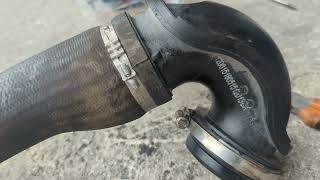
- Thoroughly inspect all intake hoses and pipes for cracks, especially the large hose from the air filter box.
- A smoke test is the most reliable method to find hidden air leaks in the intake manifold or intercooler system.
- Always try cleaning the MAF sensor with a dedicated cleaner before considering replacement.
- If the intake manifold is the cause, be aware that its replacement is a complex job that may be best left to a professional.
What's Unique About the 2008-2017 Opel Insignia
On the Insignia A with the A20DTH diesel engine, the P0101 code is very frequently caused by unmetered air entering the engine *after* the MAF sensor. The plastic and rubber components of the intake system are known to degrade from heat and oil vapor exposure over time. A split in the main intake hose (snorkel) or a crack in the plastic intake manifold itself are common failure points that will set this code long before the MAF sensor itself is the root cause. Many owners and even some workshops often mistakenly replace the sensor first, only to find the problem was a hard-to-see air leak that requires a smoke test to locate.
🎬 See why air leaks are the most common P0101 cause.Generation note: The 2008-2017 year range covers the first generation of the Opel/Vauxhall Insignia, known as the Insignia A. The causes and fixes are generally consistent across this entire generation for the A20DTH engine.
Symptoms You May Notice
- Check Engine Light is on
- Vehicle enters 'limp mode' with significantly reduced engine power
- Poor acceleration and throttle response
- Rough or unstable idle
- Decreased fuel economy
- Hesitation or surging during acceleration
- Black smoke from the exhaust under acceleration
- Immediately replacing the MAF sensor without checking for air leaks. An air leak is the most common cause on this engine, and a new sensor will not fix it.
Most Likely Causes
- Air leak in the intake system (post-MAF) 🔴 High Probability The rubber intake hose (snorkel) between the airbox and turbocharger is known to split, especially on the underside or in the ribbed sections. The plastic intake manifold can also develop hairline cracks or have leaking gaskets, causing unmetered air to enter the engine.
How to confirm: Visually inspect all intake piping for obvious cracks or loose connections. Squeeze the flexible hoses to reveal hidden splits. A smoke test is the most effective and definitive way to find hidden leaks in the hoses, intercooler, or intake manifold.
Typical fix: Replace the damaged hose or intake manifold/gasket. The intake manifold replacement is a labor-intensive job.
Est. part cost: $50-$150 for a hose, $150-$400 for an intake manifold. - Dirty or contaminated MAF sensor 🟡 Medium Probability → Shop Fuel Injection Air Flow Meter Oil vapor from the crankcase ventilation (PCV) system or fine dust that gets past the air filter can coat the sensor's delicate elements, causing incorrect readings.
How to confirm: Remove the sensor and visually inspect the sensing wires. If they appear dirty or oily, cleaning is the next step.
Typical fix: Carefully remove the MAF sensor and spray the sensing elements with a dedicated MAF sensor cleaner. 🎬 Watch: How to properly clean and test your MAF sensor. Do not use brake or carb cleaner as they can damage the sensor. Allow it to dry completely before reinstalling.
Est. part cost: $10-$20 for a can of cleaner. - Faulty MAF sensor ⚪ Low Probability → Shop Fuel Injection Air Flow Meter While electronic components can fail, on this platform, it's far more likely to be an air leak. This should only be considered after ruling out leaks and contamination. Many owners replace the sensor needlessly.
How to confirm: After confirming there are no air leaks and cleaning the sensor has not resolved the issue, the sensor itself is suspect. It can be tested with a scan tool by observing airflow readings (grams/second) at idle and under load to see if they are rational and responsive.
Typical fix: Replace the MAF sensor. It is highly recommended to use an OEM-quality part from a brand like Bosch, as the ECM is sensitive to sensor calibration.
Est. part cost: $100-$200 - Clogged or dirty air filter ⚪ Low Probability → Shop Air Cleaner Assembly
How to confirm: Visually inspect the air filter. If it is visibly dirty, black, or clogged with debris, it is restricting airflow.
Typical fix: Replace the engine air filter. This is a basic maintenance item that should be checked first.
Est. part cost: $20-$40
Rare But Worth Checking
- Restricted exhaust system: A clogged Diesel Particulate Filter (DPF) can create excessive backpressure, which can skew the airflow readings and trigger a P0101 code. This would typically be accompanied by other DPF-related fault codes or warnings.
- Wiring or connector issue: Damage to the wiring harness or corrosion in the MAF sensor connector can cause an erratic or missing signal. This can be checked by inspecting the harness and testing for continuity and correct voltage at the connector pins. One owner traced a P0101 fault to a lack of 12v power at the connector.
Diagnosis Steps
- Read the fault code with an OBD-II scanner.
- Inspect the engine air filter and replace if dirty.
- Thoroughly inspect the entire air intake tract, from the airbox to the turbo and the intercooler piping to the intake manifold, for any visible cracks, splits, or loose clamps. Pay close attention to the large rubber intake hose, especially the underside.
- If no obvious leaks are found, remove the MAF sensor and clean it with a dedicated MAF sensor cleaner. Let it dry completely before reinstalling.
- Clear the code and test drive the vehicle. If the code returns, a smoke test is the next logical step to definitively identify any hard-to-see air leaks.
- If the smoke test reveals no leaks, check the wiring and connector to the MAF sensor for damage, corrosion, and proper voltage (12v ignition and 5v reference).
- Using a scan tool with live data, monitor the MAF sensor reading (in g/s) at idle and while driving to see if the values are plausible and change with engine load.
- If all other possibilities are exhausted, the MAF sensor itself is likely faulty and should be replaced.
- As a final check, especially if performance is severely limited, investigate for a potential restriction in the exhaust system, such as a clogged DPF.
Parts You'll Likely Need
- Mass Air Flow (MAF) Sensor
(OEM #0280218427)— This is the sensor that directly reports the data causing the code. It may be replaced if cleaning it doesn't work and no air leaks are found.
Trusted brands: Bosch
OEM price range: $150-$200
Aftermarket price range: $70-$120 - Intake Manifold
(OEM #55571993)— The plastic intake manifold is a known failure point on the A20DTH engine, which can crack and cause a significant air leak, triggering P0101.
Trusted brands: Genuine Vauxhall/Opel, NTY, Pierburg
OEM price range: $300-$450
Aftermarket price range: $150-$250 - Intake Hose / Air Duct
(OEM #55561787 (Main hose, airbox to MAF), 23163574 (Intercooler inlet hose))— The flexible rubber hoses in the intake tract are a very common place for splits and cracks to develop, causing a major unmetered air leak. The main hose from the airbox and the hose to the intercooler are frequent culprits. 🎬 Watch: Step-by-step guide to replacing a split turbo boost pipe.
Trusted brands: Genuine Vauxhall/Opel, Metzger, Vaico
OEM price range: $80-$150
Aftermarket price range: $40-$70
Related Codes That Often Appear With This One
- P2279 - Intake Air System Leak (often a companion code)
- P0421 / P2080 - Codes related to exhaust gas temperature sensors, which can sometimes be triggered by incorrect combustion from air/fuel mixture issues.
- DPF-related codes if the filter becomes overloaded due to poor combustion.
Platform-Specific Known Issues
- The plastic intake manifold on the A20DTH engine is prone to cracking or warping, leading to persistent P0101 codes that are not resolved by replacing the MAF sensor.
- The main rubber intake hose (snorkel) frequently splits on the underside or in the accordion ribs, making the leak difficult to spot without removing the part or performing a smoke test.
Mechanic-Grade Diagnostic Values
- MAF Sensor Live Data (Scan Tool) — expected: 2-5 g/s at idle; over 100 g/s at full throttle under load.. Failure: Readings are inconsistent, do not rise smoothly with acceleration, or are stuck at a fixed value.
- MAF Sensor Signal Voltage (Multimeter) — expected: Voltage should increase smoothly and steadily from idle as the engine is accelerated. Typical idle voltage is around 0.7-1.0V, rising towards 4.5V under load.. Failure: Voltage spikes, drops out, or does not change with engine RPM.
- MAF Sensor Power Supply (Multimeter) — expected: Approximately 12V (battery voltage) at the power supply pin with key on, engine off.. Failure: No voltage or significantly low voltage indicates a wiring or fuse issue.
- MAF Sensor Ground Circuit (Multimeter) — expected: Less than 100 mV (0.1V) between the ground pin and the battery negative terminal.. Failure: High voltage reading indicates a poor ground connection.
Scan Tool Commands That Help
- GDS2 / Tech2: MAF Sensor Adaptation Reset — After replacing the MAF sensor, it is recommended to perform an adaptation reset to allow the ECM to learn the values of the new sensor quickly.
Wiring & Ground Locations
- MAF Sensor Connector (Bosch 5-pin) — On the intake duct, immediately after the air filter box.. This is the central connection point for the sensor. Pins must be tested for power, ground, and signal. A common 5-pin layout includes: Pin 1 (Temp Sensor), Pin 2 (12V Power), Pin 3 (Ground), Pin 4 (5V Reference), Pin 5 (Signal Output). Verifying 12V at Pin 2 and a good ground at Pin 3 is a critical first step in electrical diagnosis.
- Engine Block Ground — Main ground strap from the battery negative terminal to the engine block or chassis. Specific ground points (e.g., G-points) are located on the chassis near the A-pillars and center console.. A poor engine ground can cause floating or incorrect readings from various sensors, including the MAF, as it relies on a stable ground reference.
Real Owner Repair Stories
- Bilforumet.no user (Opel Insignia (year not specified), 2.0 CDTI) — Check engine light with code P0101.
❌ Tried (didn't work) Initial troubleshooting and measurements.
✅ What actually fixed it After a month of troubleshooting, the owner discovered there was no 12V power being supplied to the MAF sensor connector. The final fix was restoring the 12V supply to the sensor's wiring harness. - Insignia Club Polska user (Insignia B20DTH (related engine)) — P0101 code, sluggish performance, rough start.
❌ Tried (didn't work) Smoke test (no leaks found), Replaced MAF sensor, Replaced MAP sensor, Cleaned intake manifold and EGR, Replaced all gaskets, Replaced air filter
✅ What actually fixed it The user's thread details a long diagnostic process where all common fixes failed. While the final resolution isn't posted by the original author, another user suggests that a smoke test without sufficient pressure might miss leaks, and that a cracked intercooler could be the hidden cause. This highlights cases where even a smoke test can be inconclusive.
"I Checked Everything" — The Actual Cause
- In a forum discussion, a user with a B20DTH engine reported having a P0101 code despite the intake system passing a smoke test. They had already replaced the MAF, MAP, cleaned the intake/EGR, and replaced gaskets without success. This indicates the leak may be in a location not easily revealed by a low-pressure smoke test, such as a cracked intercooler, or the fault is non-leak related (e.g., electrical or another component like the turbo actuator).
When the Usual Fixes Don't Work
- While the vast majority of P0101 faults on the A20DTH are caused by intake air leaks, there are documented cases where the root cause was purely electrical. In one instance, a month-long diagnostic effort concluded when the owner found the MAF sensor was not receiving 12V power from the harness, and fixing the wiring resolved the code without replacing any parts. This serves as a critical reminder to always verify power and ground at the sensor connector before assuming a part is faulty or a leak is present.
OEM Part Supersession History
55573362→55575611— The original turbocharger boost control solenoid was prone to failure (causing buzzing noises). An upgraded part was released to resolve the issue.
Heads up: A temporary service bulletin fix (part 55589096) was available but has been discontinued. Owners should avoid buying the old part number (55573362) and purchase the upgraded 55575611.
Model Year Variations Within This Range
- 2013-2017: The Insignia received a facelift in 2013. While the core A20DTH engine remained, some variants were introduced with slightly different power outputs. However, the fundamental causes of P0101 (intake leaks, sensor issues) are consistent across the pre-facelift (2008-2013) and post-facelift (2013-2017) models using this engine family.
Diagnostic Flowchart
Other Known Issues on This Vehicle
Issues unrelated to this code that are worth knowing about as an owner of this generation:
- Oil Pickup Pipe Seal Failure 🔴 High — A very common and critical failure point. The rubber seal in the sump hardens over time, allowing air to be drawn in, causing oil starvation and catastrophic engine failure. Often occurs with no prior warning light.
- Intake Manifold Swirl Flap Failure 🔴 High → Shop Engine Intake Manifold — Carbon buildup causes the swirl flaps to stick or break. The metal flaps on earlier models can detach and be ingested by the engine, causing severe piston, valve, and turbo damage. (Ref: Vauxhall/Opel later released an improved manifold design with plastic flaps to mitigate engine damage.)
- Dual-Mass Flywheel (DMF) Failure 🟠 Medium — Common on manual transmission models, often manifesting between 30,000 and 60,000 miles. Symptoms include clutch judder, vibration, and rattling noises from the gearbox area.
- Frequent DPF Clogging 🟠 Medium — Common for vehicles used predominantly for short, urban journeys, which prevents the DPF from reaching temperature to perform a successful regeneration. Leads to warning lights and limp mode.
Used vs. New Parts: Buying Guide for This Vehicle
When a used part is the smart pick: A used intake manifold from a reputable breaker can be a cost-effective solution, as it is a large plastic component where failure is typically a visible crack. A used intake hose can also be acceptable if it is thoroughly inspected for splits, especially in the ribbed sections, and is still pliable.
Donor-vehicle mileage cap: roughly under 80000 miles for the part to have meaningful remaining life.
What to inspect on the donor part:
- For an intake manifold, check for any hairline cracks, especially around mounting points and seams.
- For hoses, squeeze and bend them to reveal hidden splits that aren't visible when relaxed.
- Ensure all connector clips and mounting tabs on any used part are intact.
- Avoid parts from vehicles that show signs of a major front-end collision.
OEM-only on this vehicle (don't cheap out):
- Mass Air Flow (MAF) Sensor: The ECM is highly sensitive to the calibration of the MAF sensor. Aftermarket sensors are frequently cited in forums as being poorly calibrated, causing the P0101 code to persist or return. Using a genuine OEM (Bosch) sensor is strongly recommended to avoid repeat repairs.
Aftermarket brands forum-validated for this vehicle:
- Bosch for the MAF sensor (as they are the OEM supplier).
- Pierburg for intake manifolds and solenoids.
Brands owners have reported issues with on this vehicle:
- Unbranded, no-name MAF sensors from online marketplaces are a common source of continued problems.
Real Owner Stories
Aggregated from forums and TSBs cited above. Mileages and costs reflect what owners reported in those sources.
2008-2017 Opel Insignia A20DTH 2.0L CDTi
Symptoms: I have P0101 immediately when start a car and 277g/S of air (fixed value) and water in diesel fuel on dash.
What fixed it: The source indicates a fixed value of 277g/S, suggesting a diagnostic path of checking for air leaks or sensor failure, though the specific final fix for this user is not detailed beyond the initial report.
Source hint: insignia-drivers.uk (re-interpreted from mhhauto.com)
2008-2017 Opel Insignia 2.0 CDTi
Symptoms: A month-long struggle with P0101 MAF Range/Performance issues.
What fixed it: Traced the cause to a lack of 12V power at the MAF sensor's electrical connector.
Source hint: Bilforumet.no (bilforumet.no/topic/313837-p0101-mafrange-performance-opel-insignia/)
Opel Astra 2.0 CDTi
Symptoms: Error P0101, hesitation (tirones) in 2nd and 3rd gear, and frequent DPF full warnings.
What fixed it: The user identified that intake air issues were directly impacting the emissions system (FAP/DPF).
Source hint: Opel Astra Club (opelastraclub.com/t16053-error-p0101-tirones-en-2-y-3-marcha-y-el-fap-lleno)
Related OBD-II Codes
Frequently Asked Questions
I've already replaced the MAF sensor on my A20DTH Insignia, but the P0101 code keeps coming back. What else should I check?
Can a dirty air filter really trigger a P0101 code on the 2.0 CDTi?
Is there a specific cleaner I should use for the MAF sensor on my 2008-2017 Insignia?
My Insignia is showing P0101 and the DPF is filling up quickly. Are these related?
Are there any known issues with the intake manifold design for the A20DTH engine?
Could an electrical issue cause P0101 even if the intake hoses are fine?
Helpful Videos


The information in this article is provided for general reference and educational purposes only. Vehicle specifications, procedures, and part compatibility can vary by production date, trim level, and region. Always consult your vehicle's factory service manual and verify part numbers before purchasing or performing repairs. Safety-critical components such as airbags, seat belts, and braking systems should be installed by a qualified professional.
- Opel Insignia:
- 🧭 Diagnostic Flowchart
- 🎬 Helpful Videos
- What's Unique About the 2008-2017 Opel Insignia
- Symptoms You May Notice
- Most Likely Causes
- Rare But Worth Checking
- Diagnosis Steps
- Parts You'll Likely Need
- Related Codes That Often Appear With This One
- Platform-Specific Known Issues
- Mechanic-Grade Diagnostic Values
- Scan Tool Commands That Help
- Wiring & Ground Locations
- Real Owner Repair Stories
- "I Checked Everything" — The Actual Cause
- When the Usual Fixes Don't Work
- OEM Part Supersession History
- Model Year Variations Within This Range
- Other Known Issues on This Vehicle
- Used vs. New Parts: Buying Guide for This Vehicle
- Real Owner Stories
- 2008-2017 Opel Insignia A20DTH 2.0L CDTi
- 2008-2017 Opel Insignia 2.0 CDTi
- Opel Astra 2.0 CDTi
- Related OBD-II Codes
- Frequently Asked Questions
- 🎟️ Get 5% Off