

P0101 on 2010-2014 Subaru Legacy 2.5L: MAF Sensor Causes and Fixes
For a 2010-2014 Subaru Legacy, code P0101 is most often caused by a dirty Mass Airflow (MAF) sensor or a cracked rubber intake boot causing a vacuum leak. Start by cleaning the sensor with dedicated MAF cleaner (~$15). If that doesn't work, inspect the intake boot carefully for cracks before replacing the sensor. Always use a genuine Subaru or OEM Denso MAF sensor if replacement is necessary.
- Always start with the cheapest and easiest fix: clean the MAF sensor with dedicated cleaner.
- The second step should always be to thoroughly inspect the rubber intake boot for cracks, as this is a very common failure point on Subarus.
- If you must replace the MAF sensor, spend the extra money on a genuine Subaru or OEM Denso part to avoid future headaches.
- This code is often paired with P0171 (System Too Lean), which strongly points towards a vacuum leak somewhere between the MAF sensor and the engine.
What's Unique About the 2010-2014 Subaru Legacy
On this generation of Subaru Legacy with the EJ253 engine, the P0101 code is very frequently caused by a physical failure of the air intake system rather than the sensor itself. The flexible, accordion-style rubber intake boot is a known weak point that develops cracks over time, allowing unmetered air to enter the engine. This vacuum leak is so common that it should be considered a primary suspect alongside a dirty MAF sensor. Owner communities strongly advise against using aftermarket MAF sensors, as the EJ253 engine is sensitive and often rejects them, leading to persistent problems and additional codes.
Symptoms You May Notice
- Check Engine Light is on (often accompanied by flashing cruise control and VSC/traction control lights)
- Rough or unstable idle
- Engine hesitation or stumbling on acceleration
- Reduced engine power and poor performance
- Decreased fuel economy
- Black smoke from the exhaust
- Engine may be hard to start or stall after starting
- A hissing sound from the engine bay, indicating a vacuum leak
- Replacing the front or rear oxygen (O2) sensors. A P0101 code is related to measuring incoming air, not reading exhaust gases. This misdiagnosis often happens when P0101 is accompanied by a P0171 (System Too Lean) code, which can also be caused by a faulty O2 sensor, but in this context, is almost always due to the same vacuum leak causing the P0101.
Most Likely Causes
- Dirty or Contaminated Mass Airflow (MAF) Sensor 🔴 High Probability → Shop Fuel Injection Air Flow Meter The MAF sensor's hot wire element is sensitive and can become contaminated by dirt, debris, or oil (especially from aftermarket oiled air filters), causing inaccurate readings. This is the most common and easiest first step in diagnosis.
How to confirm: Remove the sensor (located on the air filter housing, held by two Phillips screws) and visually inspect the internal wires for grime or debris.
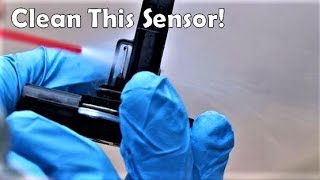
Typical fix: Thoroughly spray the sensor's wires and elements with a dedicated MAF sensor cleaner. 🎬 Watch: How to clean the MAF sensor on your Subaru. Do not use brake cleaner or other harsh chemicals, and do not touch the wires. Allow it to dry completely before reinstalling.
Est. part cost: $10-$20 - Cracked or Leaking Intake Air Boot 🔴 High Probability The flexible rubber 'accordion' boot between the air filter box and the throttle body is a very common failure point on Subarus. Heat and age cause cracks to form in the folds, creating a vacuum leak that the MAF sensor cannot measure, which often triggers P0101 along with P0171 (System Too Lean).
How to confirm: Remove the boot and flex it while meticulously inspecting every fold for cracks or splits. A smoke test is the most definitive way to find leaks in the intake system.
Typical fix: Replace the cracked intake boot with a new OEM part. The OEM part number is reportedly 14462AA354 or a superseding number.
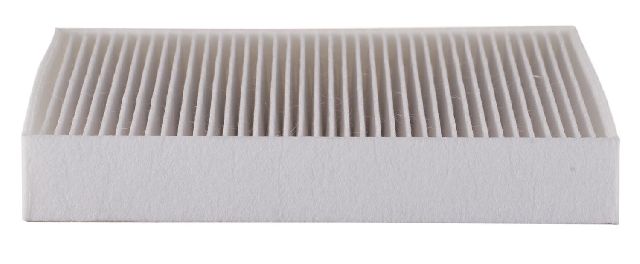
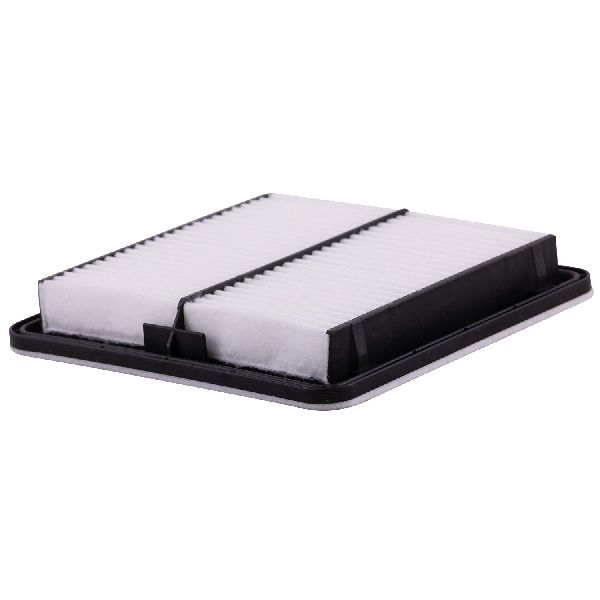
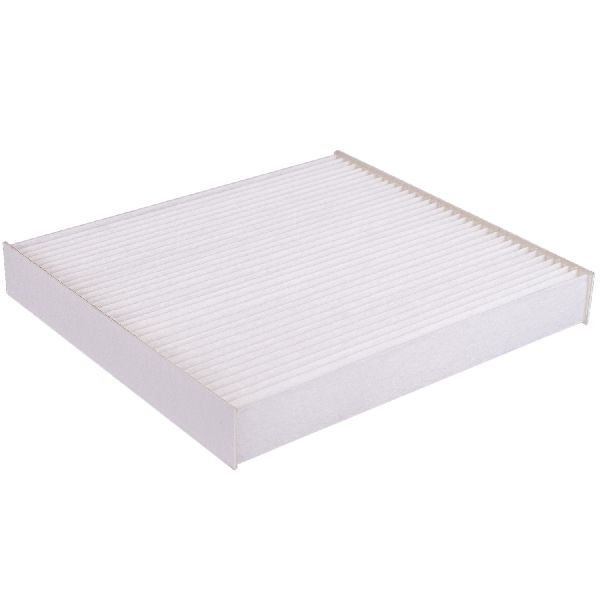
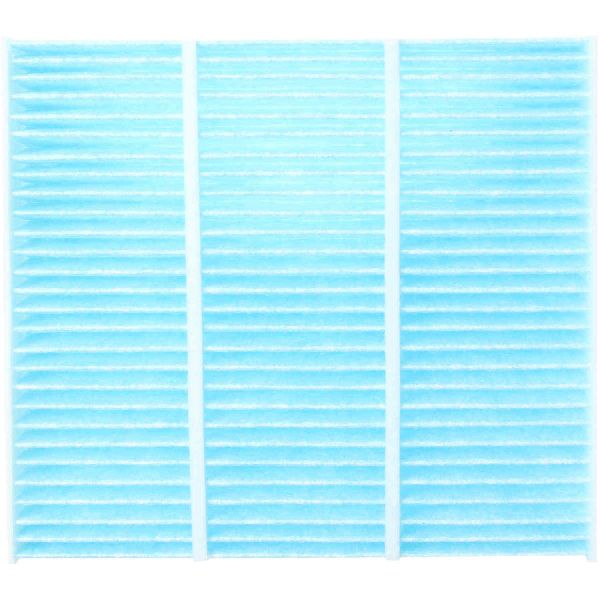
Est. part cost: $40-$80 - Clogged or Dirty Engine Air Filter 🟡 Medium Probability → Shop Air Cleaner Assembly
How to confirm: Inspect the engine air filter. If it is visibly dirty, clogged with debris, or past its service interval, it can restrict airflow and cause the MAF sensor's readings to be out of the expected range.
Typical fix: Replace the engine air filter.
Est. part cost: $15-$40 - Faulty Mass Airflow (MAF) Sensor ⚪ Low Probability → Shop Fuel Injection Air Flow Meter While durable, the sensor can fail electronically. It is highly recommended by the owner community to use an OEM (Denso) or genuine Subaru replacement, as aftermarket sensors are known to be poorly calibrated and cause persistent issues on this platform. The genuine part is often a Denso unit.
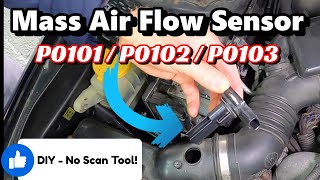
How to confirm: This is typically diagnosed by exclusion. If cleaning the sensor, replacing the air filter, and confirming there are no vacuum leaks does not resolve the code, the sensor itself is the likely culprit. A scan tool can also be used to monitor live MAF data 🎬 See this walkthrough on testing and replacing your MAF sensor. to check for erratic readings.
Typical fix: Replace the MAF sensor with a genuine Subaru or OEM Denso part.
Est. part cost: $90-$270
Rare But Worth Checking
- Damaged MAF Sensor Wiring or Connector: → Shop Fuel Injection Air Flow Meter Check for frayed wires, loose pins, or corrosion on the connector, especially if other work has recently been done in the engine bay. A poor connection can mimic a failed sensor.
- Clogged Catalytic Converter: A severely restricted exhaust can affect airflow and trigger a P0101 code, but this is usually accompanied by more significant power loss and other codes like P0420 (Catalyst System Efficiency Below Threshold).
Diagnosis Steps
- Read the code with an OBD-II scanner and note any other codes, especially P0171.
- Inspect the engine air filter. Replace if it is dirty or clogged.
- Visually inspect the MAF sensor wiring and connector for any obvious damage or corrosion.
- Carefully remove the MAF sensor. It is located on the air filter housing and held by two Phillips screws.
- Thoroughly clean the MAF sensor's internal elements using only dedicated MAF sensor cleaner spray. Do not use other chemicals or touch the delicate wires. Let it dry completely.
- While the sensor is out, inspect its O-ring for cracks or damage and replace if necessary.
- Reinstall the sensor, clear the codes, and perform a test drive to see if the code returns.
- If the code reappears, remove and meticulously inspect the accordion-style rubber intake boot between the airbox and throttle body. Flex it and check every crevice for cracks. A common failure point is on the underside, which is difficult to see without removal. 🎬 Watch: Why you should check for leaks before buying parts.
- If no cracks are found, perform a smoke test to find any hidden vacuum leaks in the intake manifold, PCV system, or other vacuum hoses.
- If all other steps fail to resolve the issue, the MAF sensor itself has likely failed. Replace it with a genuine Subaru or OEM Denso part.
Parts You'll Likely Need
- Mass Airflow Sensor Cleaner — This is the cheapest and most common first step, as a dirty sensor is a primary cause of P0101.
Trusted brands: CRC, Liqui Moly
Aftermarket price range: $10-$20 - Mass Airflow (MAF) Sensor
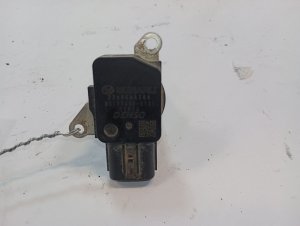
(OEM #22680AA38A (superseded by 22680AA380))— If cleaning the sensor and checking for vacuum leaks fails, the sensor itself is the next part to replace. Using an OEM part is critical for this vehicle.
Trusted brands: Subaru (Genuine), Denso
OEM price range: $180-$270
Aftermarket price range: $90-$190 - Engine Air Filter
(OEM #16546AA12A)— A clogged air filter restricts airflow and can contribute to a P0101 code. It should be inspected and replaced if dirty as part of the diagnosis.
Trusted brands: Subaru (Genuine), Denso, Wix
OEM price range: $25-$40
Aftermarket price range: $15-$30 - Intake Air Boot / Duct
(OEM #14462AA354 (supersedes 14462AA352, 14462AA353))— This flexible rubber part is a very common failure point, developing cracks that cause vacuum leaks and trigger P0101.
Trusted brands: Subaru (Genuine)
OEM price range: $40-$80
Aftermarket price range: $25-$50
Related Codes That Often Appear With This One
- P0171 — System Too Lean (Bank 1). This code is very frequently seen with P0101 because a vacuum leak (like a cracked intake boot) allows unmetered air into the engine. The MAF sensor doesn't see this air, but the oxygen sensor detects the resulting lean exhaust, triggering both codes.
Mechanic-Grade Diagnostic Values
- MAF Sensor Voltage at Idle (Warm Engine) — expected: Approximately 1.2V - 1.4V. Failure: A reading significantly higher, like 2.7V - 3.1V, indicates a major issue with the sensor or a massive air leak. A reading below 1.2V may indicate a failing sensor.
- MAF Sensor Airflow at Idle (Warm Engine, ~750 RPM) — expected: Approximately 2.5 g/s to 4.5 g/s. A general rule of thumb is engine displacement (2.5L) x 1.1 to 1.3.. Failure: Readings that are significantly lower can indicate a vacuum leak after the sensor. Readings that are significantly higher can indicate a dirty sensor or exhaust restriction. Fluctuation of around 1.0 g/s at idle is considered somewhat normal.
- MAF Sensor Airflow at Cold Start (High Idle) — expected: Can be much higher, around 16 g/s, until the engine warms up and idle speed drops.. Failure: This is a baseline reading; failure is better determined at warm idle.
Scan Tool Commands That Help
- Subaru Select Monitor (SSM) or equivalent: A/F Learning #1 and A/F Correction #1 — When diagnosing a P0101, especially if accompanied by P0171. High positive values (e.g., > +15%) in these parameters strongly suggest a vacuum leak, as the ECU is adding significant amounts of fuel to compensate for unmetered air.
- Any OBD-II Scanner: ECU Reset / Clear Fault Codes — After cleaning or replacing the MAF sensor, the ECU's learned fuel trims must be reset. This can be done by clearing the codes with a scanner or by disconnecting the negative battery terminal for 15-30 minutes. Following the reset, an idle relearn procedure (idling for 10-15 minutes from a warm start) and a varied drive cycle are necessary for the ECU to adapt to the new/clean sensor readings.
Wiring & Ground Locations
- Engine Control Module (ECM) — Located on the right side of the dashboard, typically accessible by removing the glove box.. The ECM receives the voltage signal from the MAF sensor. In very rare cases of persistent, undiagnosable P0101 codes, a faulty ECM driver could be the cause, but all other possibilities must be exhausted first.
- Main Engine Grounds — Key grounds are located on the driver's side strut tower, from the passenger side cylinder head to the chassis, and on a bracket in front of the master brake cylinder.. A poor engine ground can cause erratic voltage signals from various sensors, including the MAF. Cleaning these main ground points is a crucial step when troubleshooting persistent electronic issues after a major repair like a head gasket replacement.
Real Owner Repair Stories
- SilveradoSS.com forum user (General Motors truck, but principle applies) — P0101 and multiple O2 sensor codes.
❌ Tried (didn't work) Initial diagnosis pointed towards MAF or vacuum leaks.
✅ What actually fixed it The ultimate cause was a failing front O2 sensor. A bad O2 sensor can provide incorrect data that, when cross-referenced by the ECU with MAF sensor data, can cause the ECU to incorrectly flag the MAF sensor as having a range/performance issue.
"I Checked Everything" — The Actual Cause
- A stuck-open Positive Crankcase Ventilation (PCV) valve can act as a significant vacuum leak, causing a P0101 code. This is often missed because a smoke test is typically performed with the engine off and may not reveal a valve that only sticks open under specific running conditions. If a smoke test is clean, the PCV valve itself should be inspected or replaced as a low-cost diagnostic step.
OEM Part Supersession History
22680AA38A→22680AA380— Standard part revision and update by Subaru.
Heads up: The third line of numbers on the Denso sensor is a lot/batch number for manufacturing traceability and does not affect compatibility as long as the primary Subaru (22680AA380) and Denso (e.g., 197400-5111) part numbers match.14462AA352, 14462AA353→14462AA354— Standard part revision and update by Subaru.
Heads up: These are direct supersessions for the intake air duct. The newest part number should always be used.
Diagnostic Flowchart
Other Known Issues on This Vehicle
Issues unrelated to this code that are worth knowing about as an owner of this generation:
- Excessive Oil Consumption 🔴 High — Common on 2013-2014 models. Some owners report needing to add a quart of oil every 1,000-2,000 miles. The issue was subject to a class-action lawsuit. (Ref: TSB 02-157 series addressed related components; Subaru also extended warranties for affected vehicles.)
- Lineartronic CVT Reliability (TR690) 🔴 High — Early models (2010-2012) were prone to torque converter lock-up clutch failure, causing stalling. While generally considered more reliable than other CVTs of the era, failures can be catastrophic and expensive ($7,000+ for replacement). (Ref: Subaru extended the CVT warranty to 10 years/100,000 miles for many vehicles due to these issues.)
- Premature Headlight Burnout 🟡 Low — Very common on 2010-2011 models. Owners report replacing low-beam headlight bulbs multiple times a year.
Used vs. New Parts: Buying Guide for This Vehicle
When a used part is the smart pick: A used intake air boot/duct from a low-mileage donor vehicle can be a cost-effective option if it is thoroughly inspected for pliability and has no signs of cracking. Other components like connectors or small brackets are also good candidates for used parts.
Donor-vehicle mileage cap: roughly under 50000 miles for the part to have meaningful remaining life.
What to inspect on the donor part:
- For the intake boot, squeeze and flex it in your hands, checking deep within the accordion folds for any hairline cracks or hardening of the rubber.
- Ensure the donor vehicle was not in a front-end collision that could have stressed plastic and rubber components.
- Check that all mounting tabs and connection points are intact.
OEM-only on this vehicle (don't cheap out):
- Mass Airflow (MAF) Sensor: The EJ253 engine's ECU is notoriously sensitive to MAF sensor calibration. Forum consensus is overwhelming: only use a genuine Subaru or OEM Denso sensor. Aftermarket sensors are a very common cause of persistent P0101 codes and other performance issues, even when brand new.
Aftermarket brands forum-validated for this vehicle:
- Denso (for MAF Sensor, as they are the OEM manufacturer)
Brands owners have reported issues with on this vehicle:
- Any non-Denso aftermarket MAF sensor is highly discouraged for this specific vehicle and engine combination.
Real Owner Stories
Aggregated from forums and TSBs cited above. Mileages and costs reflect what owners reported in those sources.
2012 Subaru Legacy 2.5i — 103000 miles
Symptoms: poor acceleration and a persistent check engine light
What fixed it: Replaced the MAF sensor (part number 22680AA380) by disconnecting the battery, removing the air filter housing, and swapping the sensor.
Source hint: AliExpress Review: Subaru 22680AA380 Air Flow Sensor: A Complete Performance & Reliability Review
2012 Subaru Outback 2.5i
Symptoms: CEL and ABS light on, brake and cruise control lights flashing. Car sometimes dies at idle or sounds like it might. Rough start, rough acceleration. Codes P0101, P0507, P0172.
What fixed it: The owner was planning to clean or replace the MAF sensor (final fix not confirmed in source).
Source hint: Reddit r/AskMechanics
2010-2014 Subaru Legacy 2.5L
Symptoms: P0101 code often appearing with P0171 (System Too Lean).
What fixed it: Finding and fixing a vacuum leak, usually the accordion-style rubber intake boot between the airbox and throttle body.
Source hint: Reddit (r/subaru)
Related OBD-II Codes
Frequently Asked Questions
My 2012 Legacy has a P0101 code and the cruise control and VSC lights are flashing. Is this normal?
Where is the MAF sensor located on the 2010-2014 Legacy 2.5L?
Can I use brake cleaner to clean my Subaru's MAF sensor?
Is there a specific brand of MAF sensor I should buy for my EJ253 engine?
I found a crack in the rubber 'accordion' boot between the airbox and throttle body. Could this cause P0101?
My 2013 Legacy is throwing P0101 and also uses a lot of oil. Are these related?
Helpful Videos
Used OEM Parts in Stock
New Aftermarket Parts Available

The information in this article is provided for general reference and educational purposes only. Vehicle specifications, procedures, and part compatibility can vary by production date, trim level, and region. Always consult your vehicle's factory service manual and verify part numbers before purchasing or performing repairs. Safety-critical components such as airbags, seat belts, and braking systems should be installed by a qualified professional.
- Subaru Legacy:
- 🧭 Diagnostic Flowchart
- 🎬 Helpful Videos
- 🛍️ Shop This Part
- What's Unique About the 2010-2014 Subaru Legacy
- Symptoms You May Notice
- Most Likely Causes
- Rare But Worth Checking
- Diagnosis Steps
- Parts You'll Likely Need
- Related Codes That Often Appear With This One
- Mechanic-Grade Diagnostic Values
- Scan Tool Commands That Help
- Wiring & Ground Locations
- Real Owner Repair Stories
- "I Checked Everything" — The Actual Cause
- OEM Part Supersession History
- Other Known Issues on This Vehicle
- Used vs. New Parts: Buying Guide for This Vehicle
- Real Owner Stories
- 2012 Subaru Legacy 2.5i — 103000 miles
- 2012 Subaru Outback 2.5i
- 2010-2014 Subaru Legacy 2.5L
- Related OBD-II Codes
- Frequently Asked Questions
- 🎟️ Get 5% Off