

P0101 on 2004-2009 Toyota Prius: MAF Sensor Causes and Fixes
On a 2004-2009 Prius, P0101 is almost always caused by a dirty Mass Air Flow (MAF) sensor. Cleaning it with dedicated MAF cleaner for about $10 is the most likely fix. If that fails, a new Denso sensor (Part No. 22204-21010) costs around $100-$150.
- P0101 on a Gen 2 Prius is most likely a dirty MAF sensor.
- The first and cheapest step is to clean the sensor with dedicated MAF sensor cleaner.
- Always check the engine air filter, as a clogged filter can cause this code.
- If you must replace the sensor, use a genuine Denso part to avoid further issues.
- The repair is very simple and accessible for a DIYer with basic tools.
What's Unique About the 2004-2009 Toyota Prius
The 1NZ-FXE engine in the second-generation Prius is generally very reliable, but like many modern Toyota engines, its MAF sensor is sensitive to dirt and oil contamination. Because the hybrid system frequently starts and stops the gasoline engine, any issue affecting the air-fuel mixture can be particularly noticeable during the transition from electric to gas power. Owners on forums like PriusChat consistently report that a simple cleaning of the MAF sensor is the most common and effective first step, often resolving the issue without needing to replace parts.
Symptoms You May Notice
- Check Engine Light illuminated
- Reduced fuel economy
- Engine hesitation or stumbling on acceleration
- Rough idle
- Difficulty starting the engine, sometimes accompanied by code P3191
- Stalling when coming to a stop
- Replacing the oxygen (O2) sensors. While O2 sensors are part of the fuel control system, P0101 points specifically to an issue with the measured airflow at the front of the system, not the exhaust gases at the end.
- Replacing the throttle body. While a dirty throttle body can cause idling issues, it is less likely to be the primary cause of a P0101 code compared to the MAF sensor itself.
- Cleaning the wrong part of the sensor. The MAF sensor assembly contains both the MAF hot wires and a bulb-shaped Intake Air Temperature (IAT) sensor. Many DIYers mistakenly clean only the visible IAT bulb, leaving the critical MAF wires dirty.
Most Likely Causes
- Dirty Mass Air Flow (MAF) Sensor 🔴 High Probability → Shop Fuel Injection Air Flow Meter The sensor's hot wire is sensitive and can become contaminated with dust, oil vapor from the PCV system, or debris over time, skewing its readings. This is the most common cause by a wide margin.
How to confirm: Visually inspect the sensor's sensing wire (located inside the sensor housing) for grime or debris. Often, cleaning is performed as the first diagnostic step regardless due to how common it is.
Typical fix: Remove the sensor and clean it carefully using only dedicated Mass Air Flow sensor cleaner spray. 🎬 Watch: A step-by-step guide to cleaning your Prius MAF sensor. Do not touch the internal wires.
Est. part cost: $8-$15 for a can of MAF cleaner - Clogged or Dirty Engine Air Filter 🟡 Medium Probability → Shop Air Cleaner Assembly A neglected air filter restricts airflow, causing the MAF sensor to report a lower-than-actual amount of air, which can conflict with other sensor data and trigger the code.
How to confirm: Remove and visually inspect the engine air filter. If it is dark, full of debris, or has not been changed per the maintenance schedule, it should be replaced.
Typical fix: Replace the engine air filter.
Est. part cost: $15-$30 - Vacuum Leak ⚪ Low Probability Intake boots can crack with age, or clamps can loosen, allowing 'unmetered' air to enter the engine after the MAF sensor. This forces the ECM to adjust fuel trims, and a large enough leak can conflict with MAF readings.
How to confirm: Visually inspect the air intake hose for cracks and ensure all clamps are tight. A smoke test, where smoke is fed into the intake system, is the most effective way to find hidden leaks.
Typical fix: Replace the cracked intake hose or tighten loose clamps.
Est. part cost: $30-$70 for a new intake hose - Faulty Mass Air Flow (MAF) Sensor ⚪ Low Probability → Shop Fuel Injection Air Flow Meter
How to confirm: If cleaning the sensor and checking for vacuum leaks does not resolve the code, the sensor itself may have failed. This can be confirmed by monitoring its output with a scan tool (looking for erratic g/s readings) or by swapping it with a known-good part.
Typical fix: Replace the MAF sensor. It is highly recommended to use an OEM (Denso) part, as aftermarket sensors are known to cause issues.
Est. part cost: $100-$180 for a Denso sensor
Rare But Worth Checking
- Damaged MAF Sensor Wiring or Connector: → Shop Fuel Injection Air Flow Meter Check the wiring harness leading to the MAF sensor for any visible damage, and ensure the connector is clean, free of corrosion, and securely plugged in. A poor connection can cause the same symptoms as a faulty sensor.
- Improperly Seated Air Filter Housing: → Shop Air Cleaner Assembly If the air filter box cover is not installed correctly, it can create an air leak around the MAF sensor, causing this code. This is more common if an aftermarket air intake was installed or after a recent air filter change.
- Clogged Catalytic Converter: A severely restricted exhaust can cause backpressure that affects the engine's ability to draw in air, which can sometimes manifest as a P0101 code. This would typically be accompanied by a significant loss of power.
Diagnosis Steps
- Read the code and any other codes present with an OBD-II scanner. Note the freeze frame data if available to see engine conditions when the code was set.
- Inspect the engine air filter. Replace if it is dirty or clogged.
- Visually inspect the air intake system between the air filter housing and the throttle body. Look for any cracks in the rubber boot or loose hose clamps.
- Remove the MAF sensor (held by two Phillips screws). It is located on the air filter housing outlet.
- Carefully spray the sensor's internal wire and thermistor with a dedicated MAF sensor cleaner. Do not use brake cleaner or carb cleaner, and do not touch the delicate components.
- Allow the sensor to dry completely for at least 15-20 minutes before reinstalling it.
- Clear the trouble codes with the scanner and perform a test drive to see if the code returns.
- If the code returns, inspect the MAF sensor connector and wiring for any signs of damage or corrosion. Check for 12V power and good ground at the connector with the key on.
- If a scan tool is available, monitor the MAF sensor data (in grams/second). At idle on a warm engine, it should be a relatively stable value (typically 1.5-2.5 g/s for the 1.5L engine). If the reading is erratic or zero, the sensor is likely bad.
- If no other issues are found, the MAF sensor itself is likely faulty and should be replaced. Using a high-quality OEM brand like Denso is strongly recommended.
Parts You'll Likely Need
- Mass Air Flow (MAF) Sensor
(OEM #22204-21010 (also cross-references to 22204-22010, 22204-0D030))— This is the sensor that triggers the code. If cleaning doesn't fix the issue, replacement is the next step. 🎬 See this easy DIY walkthrough for replacing the sensor yourself. Aftermarket sensors are known to be unreliable for this application.
Trusted brands: Denso
OEM price range: $130-$200
Aftermarket price range: $40-$100 - Mass Air Flow Sensor Cleaner — This is required for the most common and inexpensive fix: cleaning the existing sensor.
Trusted brands: CRC, WD-40 Specialist, Liqui Moly
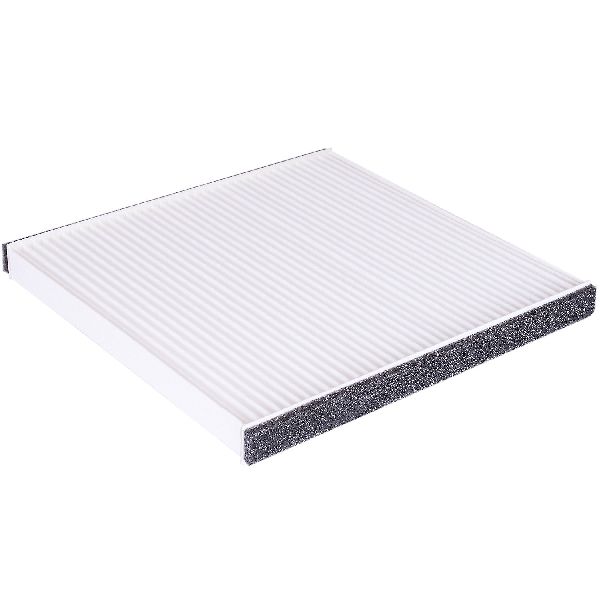
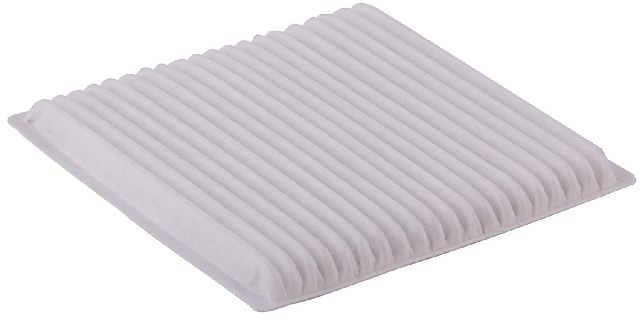
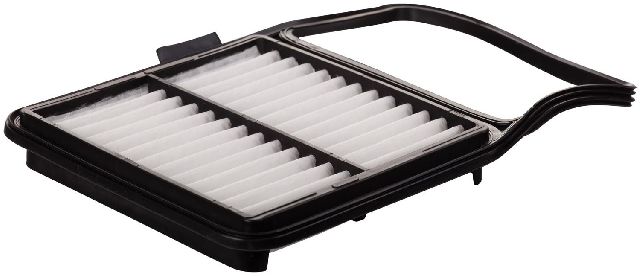
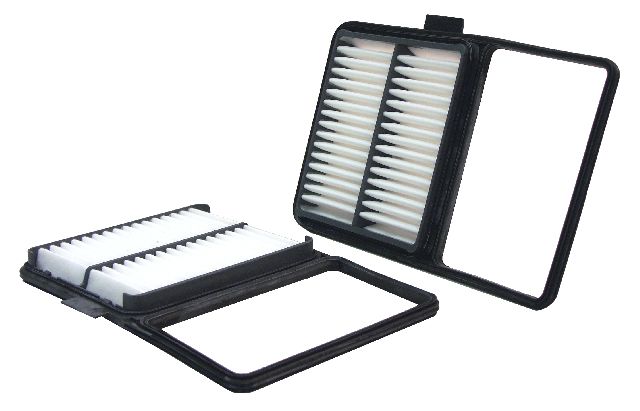
Aftermarket price range: $8-$15 - Engine Air Filter
(OEM #17801-21030)— A clogged air filter is a common contributing cause and should be replaced as part of routine maintenance and diagnosis for this code.
Trusted brands: Denso, WIX, Purolator, Toyota OEM
OEM price range: $20-$35
Aftermarket price range: $15-$25
Related Codes That Often Appear With This One
- P0171 — A vacuum leak or a dirty MAF sensor under-reporting airflow can cause the engine to run lean (too much air, not enough fuel), which triggers the P0171 'System Too Lean' code alongside P0101.
- P3191 — On a Prius, P3191 means 'Engine Did Not Start'. A severely malfunctioning MAF sensor can provide such incorrect data that the engine fails to start properly, logging both codes. This is a well-documented combination on Prius forums. 🎬 Watch: How to diagnose a P3191 engine no-start condition.
Technical Service Bulletins (TSBs) & Recalls
- While there is no specific TSB for P0101 on the 2004-2009 Prius, Toyota has addressed this code on other models. For instance, TSB Bulletin #T-SB-0092-15 notes that certain Toyota vehicles may experience a MIL "ON" condition with DTC P0101 (Mass Air Flow Circuit Range/Performance Problem) and provides specific procedures to address the condition.
- Toyota did issue a Warranty Enhancement Program (ZE1) for a common related issue on this generation: Combination Meter Failure. This involved the dashboard display going blank. Owners experiencing electrical issues should be aware of this platform weakness.
Platform-Specific Known Issues
- Owner Experience: Cleaning Solves P0101 and P0172: A user on PriusChat reported getting P0101 along with P0172 (System Too Rich). After cleaning the MAF sensor, the codes were resolved. However, the user also noted a dealer technician's warning that repeated cleanings can eventually wear out the fragile sensor wires, leading to failure.
- Owner Experience: P0101 with No-Start (P3191): Multiple forum discussions on PriusChat confirm the link between a faulty MAF sensor and a no-start condition. A user experiencing P0101 and P3191 was advised by the community to clean the MAF sensor as the first and most likely solution before suspecting more serious issues like a fuel pump.
Mechanic-Grade Diagnostic Values
- MAF Sensor Reading (g/s) with Key On, Engine Off — expected: Less than 0.70 g/s. Failure: A reading higher than 0.70 g/s with the engine off indicates a faulty sensor.
- MAF Sensor Voltage at Idle (Warm Engine) — expected: Between 0.4V and 2.2V. Failure: A voltage reading greater than 2.2V at idle (engine speed < 900 rpm, coolant > 158°F) will trigger the code.
- MAF Sensor Voltage during Operation — expected: Proportional to engine speed and load, typically 0.2V to 4.9V overall range.. Failure: Voltage less than 0.4V when engine speed is below 1,500 rpm, or less than 1.0V when engine speed is above 1,500 rpm, will trigger the code.
- MAF Sensor Connector Pin Test — expected: With ignition ON, voltage between terminal +B and E2G should be battery voltage (11-14V). Voltage between VG and E2G should be 0.2-4.9V depending on airflow.. Failure: No voltage at +B indicates a power supply issue (fuse, relay, wiring). Incorrect voltage at VG indicates a faulty sensor or wiring.
- Long Term Fuel Trim (LTFT) — expected: Ideally within +/- 10%.. Failure: A high negative fuel trim (e.g., -20%) indicates the ECM is trying to remove fuel, which can happen if the MAF is over-reporting air. A high positive trim (e.g., +20%) suggests a vacuum leak or the MAF under-reporting air.
Hidden / Shadow Codes Worth Checking
- P0101 DTC Detection Logic (CASE 1): The ECM sets the code if all of the following conditions are met for more than 10 seconds: Throttle valve is fully closed, MAF voltage is > 2.2V, Engine Coolant Temp is > 70°C (158°F), and Engine speed is < 900 rpm. (see via This is the internal logic the ECM uses to set the code, visible in Toyota service manuals. Understanding this helps diagnose a sensor that reads high at idle.)
- P0101 DTC Detection Logic (CASE 2): The ECM sets the code if the following conditions are met for more than 6 seconds: Throttle is open (>0.1V) AND MAF voltage is < 0.4V while engine speed is < 1,500 rpm, OR MAF voltage is < 1.0V while engine speed is > 1,500 rpm. (see via This is the internal logic the ECM uses to set the code. This helps diagnose a sensor that is reading too low under load.)
Scan Tool Commands That Help
- Toyota Techstream: Data List -> Powertrain / Engine and ECT / MAF — This is the primary function used to monitor the live g/s reading from the MAF sensor to see if it's within the expected range under various conditions (engine off, idle, load).
- Toyota Techstream: Active Test -> Control the EGR Step Position — While not a direct test of the MAF, the P0101 diagnostic procedure recommends checking the EGR system. This active test allows the technician to command the EGR valve open and closed to verify its operation, as a stuck-open EGR valve can sometimes affect intake airflow readings.
Wiring & Ground Locations
- MAF Connector (C26) — On the MAF sensor itself, located on the air filter housing outlet.. This is the primary connection point. Checking for power, ground, and signal here is the first step in electrical diagnosis.
- ECM Connector (C20) — The main Engine Control Module connector, located behind the glove box.. This is the destination for the MAF sensor signals. A continuity check between the MAF connector (C26) and this connector (C20) can identify a broken wire in the harness.
- MAF Sensor Pins (at ECM) — VG (Signal) at pin C20-118, E2G (Sensor Ground) at pin C20-116.. These are the specific pins on the ECM for the MAF sensor. Knowing these allows for precise testing of the circuit from the ECM side.
- MAF Sensor Pins (at Sensor) — Pin 1: +B (Power, Black wire), Pin 2: E2G (Ground, Brown wire), Pin 3: VG (Signal, Yellow wire), Pin 4: THA (IAT Signal, Green wire), Pin 5: ETHA (IAT Ground, Blue/White wire).. This is the pinout at the sensor connector itself, critical for testing power, ground, and signal voltage directly at the component.
Real Owner Repair Stories
- PriusChat user 'CactusCoug' (2011 Prius (Gen 3, but same principle and common issue)) — P0101 code, incorrect fuel mileage display.
❌ Tried (didn't work) Cleaning the MAF sensor twice., Cleaning the throttle body.
✅ What actually fixed it Replacement of the fuel pump. The shop determined the failing pump was causing the issue, and replacement resolved the P0101 code and corrected the MPG calculation. - PriusChat user 'Phil Schuyler' (2008 Prius) — Persistent P0101 code.
❌ Tried (didn't work) Cleaning the MAF sensor multiple times with dedicated cleaner.
✅ What actually fixed it The user realized they were only cleaning the visible Intake Air Temperature (IAT) sensor bulb and not the actual MAF hot wire plates inside the sensor housing. After properly cleaning the correct components, the code was resolved. - PriusChat user 'H00s13r' (2010 Prius (Gen 3, but relevant)) — P0101 code appeared immediately after a major service.
❌ Tried (didn't work) Double checking the MAF sensor electrical connection.
✅ What actually fixed it The user had just performed a full EGR system cleaning, replaced the PCV valve, and installed an oil catch can. The P0101 code appeared right after this work. The resolution was to clear the code and re-check all work. The implication is that a connector was not perfectly seated or the sensor was disturbed during the extensive work, triggering the fault. Cleaning the sensor resolved the recurring code.
"I Checked Everything" — The Actual Cause
- A technician on a fleet vehicle reported a persistent P0101 even after replacing the MAF, confirming no vacuum leaks with a smoke machine, and verifying wiring was in spec. The long-term fuel trims were pegged at -20%, and the fuel smelled of ethanol. After draining the contaminated fuel and refilling with fresh gasoline, the issue persisted, suggesting a potential long-term adaptation problem or another unspotted issue. This highlights that severe fuel contamination can mimic MAF sensor issues.
When the Usual Fixes Don't Work
- While cleaning the MAF sensor is the most common fix, there are numerous documented cases where it provides no solution or only a temporary one. In a notable case from a Prius forum, a user cleaned the MAF and throttle body multiple times to no avail. The final, confirmed repair was a new fuel pump, which cost the owner $950 at a shop. This demonstrates that while P0101 is an airflow code, it can be triggered by a fuel delivery problem that causes the engine's operating state to conflict with the MAF's readings.
OEM Part Supersession History
22204-07010→22204-21010— Standard part evolution and consolidation.22204-21010→22204-22010 / 22204-0D030— These part numbers are often listed as compatible or cross-referenced for different Toyota models using the same sensor design.
Heads up: Extreme caution is advised. While a sensor like 22204-22010 may physically fit, it might be calibrated for a different engine (e.g., a V6 Tacoma) and will not provide the correct airflow data for the 1NZ-FXE, leading to persistent codes and performance issues despite being a 'new' part. Always use the exact OEM part number specified for the Prius (22204-21010).
Diagnostic Flowchart
Other Known Issues on This Vehicle
Issues unrelated to this code that are worth knowing about as an owner of this generation:
- Inverter Coolant Pump Failure 🔴 High — Common failure, especially on higher mileage vehicles (150k+ miles). Can cause the hybrid system to shut down while driving. (Ref: A recall was issued, but many pumps are now failing again due to age. The associated trouble code is often P0A93.)
- Combination Meter (Dashboard) Failure 🟠 Medium — Widespread problem where the entire dashboard display goes blank, often intermittently at first, especially in cold weather. (Ref: Toyota issued a Warranty Enhancement Program (ZE1) for this issue, but it has since expired.)
- Brake Actuator Assembly Failure 🔴 High — Very common failure. Symptoms include a loud, frequent buzzing/honking noise from the engine bay, and illumination of ABS, VSC, and BRAKE warning lights. Leads to loss of power braking assist. (Ref: A warranty extension was offered but has expired. Common codes are C1256 and C1391.)
- Excessive Oil Consumption 🟠 Medium — Many 1NZ-FXE engines begin to consume significant amounts of oil (up to 1qt per 600-1000 miles) at higher mileage (100k+ miles), often due to piston rings. (Ref: No recall, but it is a widely acknowledged characteristic. Toyota's official stance is that consumption up to 1.1 quarts per 600 miles is within spec.)
- Main Hybrid Battery (HV) Degradation 🔴 High — Inevitable with age and mileage. Symptoms include reduced fuel economy, the gas engine running more often, and eventually the P0A80 'Replace Hybrid Battery Pack' code.
Used vs. New Parts: Buying Guide for This Vehicle
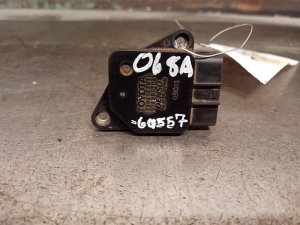
When a used part is the smart pick: A used OEM Denso MAF sensor from a low-mileage wrecked Prius can be a very cost-effective and reliable option. Since the part is electronic and not a typical wear item, a known-good used part is often superior to a new, non-OEM aftermarket part.
Donor-vehicle mileage cap: roughly under 120000 miles for the part to have meaningful remaining life.
What to inspect on the donor part:
- Check the vehicle history of the donor car if possible to ensure it wasn't in a front-end collision that could have damaged the sensor.
- Visually inspect the sensor's internal wires; they should be clean and intact, not broken or coated in oil.
- Ensure the plastic housing and connector are not cracked or damaged.
OEM-only on this vehicle (don't cheap out):
- Mass Air Flow (MAF) Sensor
Aftermarket brands forum-validated for this vehicle:
- Denso (is the OEM supplier)
- Hitachi (mentioned as a reputable alternative)
- Delphi (mentioned as a reputable alternative)
Brands owners have reported issues with on this vehicle:
- Unbranded, low-cost sensors from online marketplaces like Amazon or eBay are frequently reported on forums to be poorly calibrated, dead-on-arrival, or fail within a few months, causing the P0101 code to return.
Real Owner Stories
Aggregated from forums and TSBs cited above. Mileages and costs reflect what owners reported in those sources.
2004-2009 Toyota Prius 1.5L
Symptoms: P0101 along with P0172 (System Too Rich).
What fixed it: Cleaning the MAF sensor resolved both codes.
Source hint: PriusChat.com thread titled 'Owner Experience: Cleaning Solves P0101 and P0172'
2004-2009 Toyota Prius 1.5L
Symptoms: P0101 accompanied by a no-start condition (P3191).
What fixed it: Cleaning the MAF sensor was identified as the most likely solution over replacing the fuel pump.
Source hint: PriusChat.com thread titled 'Owner Experience: P0101 with No-Start (P3191)'
Related OBD-II Codes
Frequently Asked Questions
Can I use any cleaner to fix the P0101 code on my 2004-2009 Prius?
Is there a TSB or recall for the P0101 code on this generation Prius?
My Prius won't start and has codes P0101 and P3191. Are they related?
Should I buy an aftermarket MAF sensor to save money?
How often should I clean the MAF sensor to prevent P0101?
What are the typical MAF sensor readings I should see on a scan tool for the 1.5L engine?
Helpful Videos


Used OEM Parts in Stock
New Aftermarket Parts Available


The information in this article is provided for general reference and educational purposes only. Vehicle specifications, procedures, and part compatibility can vary by production date, trim level, and region. Always consult your vehicle's factory service manual and verify part numbers before purchasing or performing repairs. Safety-critical components such as airbags, seat belts, and braking systems should be installed by a qualified professional.
- Toyota Prius:
- 🧭 Diagnostic Flowchart
- 🎬 Helpful Videos
- 🛍️ Shop This Part
- What's Unique About the 2004-2009 Toyota Prius
- Symptoms You May Notice
- Most Likely Causes
- Rare But Worth Checking
- Diagnosis Steps
- Parts You'll Likely Need
- Related Codes That Often Appear With This One
- Technical Service Bulletins (TSBs) & Recalls
- Platform-Specific Known Issues
- Mechanic-Grade Diagnostic Values
- Hidden / Shadow Codes Worth Checking
- Scan Tool Commands That Help
- Wiring & Ground Locations
- Real Owner Repair Stories
- "I Checked Everything" — The Actual Cause
- When the Usual Fixes Don't Work
- OEM Part Supersession History
- Other Known Issues on This Vehicle
- Used vs. New Parts: Buying Guide for This Vehicle
- Real Owner Stories
- 2004-2009 Toyota Prius 1.5L
- 2004-2009 Toyota Prius 1.5L
- Related OBD-II Codes
- Frequently Asked Questions
- 🎟️ Get 5% Off