

P0101 on 2006-2012 Toyota RAV4: MAF Sensor Causes and Fixes
For a 2006-2012 RAV4, code P0101 is most often caused by a dirty Mass Air Flow (MAF) sensor. Cleaning it with a dedicated MAF sensor cleaner for about $15 is the first and most effective step. If cleaning doesn't work, inspect for vacuum leaks, especially cracked intake hoses, before replacing the sensor.
- Start with the cheapest and easiest fix: clean the MAF sensor with dedicated MAF sensor cleaner.
- Before buying a new sensor, thoroughly check for vacuum leaks, especially the large rubber intake boot between the air filter and the engine.
- Ensure the air filter is clean and the air filter housing is an undamaged, OEM part, as aftermarket intakes can cause this code on the RAV4.
- This code is often seen with a P0171 (System Too Lean) code, which strongly points towards a vacuum leak or a faulty MAF reading.
What's Unique About the 2006-2012 Toyota RAV4
While the causes for P0101 on the RAV4 are typical for most vehicles (dirty sensor, vacuum leaks), this platform can be sensitive to the physical components around the MAF sensor. Some owners have found that using non-OEM (aftermarket) or physically damaged air filter boxes can create air turbulence. This turbulence leads to incorrect readings from the MAF sensor, triggering a P0101 code even if the sensor itself is perfectly fine. Before extensive diagnosis, it's worth ensuring the airbox is an original, undamaged part and is sealed correctly. This is a common topic in owner forums when P0101 appears after installing a 'cold air intake'.
Symptoms You May Notice
- Check Engine Light is on
- Reduced engine power and poor acceleration
- Rough or unstable idle
- Engine hesitation or stalling, especially under load
- Decreased fuel economy
- Black smoke from the exhaust in some cases
- Hesitation when snapping the throttle
- Immediately replacing the MAF sensor without first attempting to clean it.
- Replacing the MAF sensor when the actual problem is a vacuum leak (e.g., a cracked intake boot).
- Replacing O2 sensors when a lean code (P0171) is caused by the same vacuum leak or faulty MAF reading that set the P0101.
Most Likely Causes
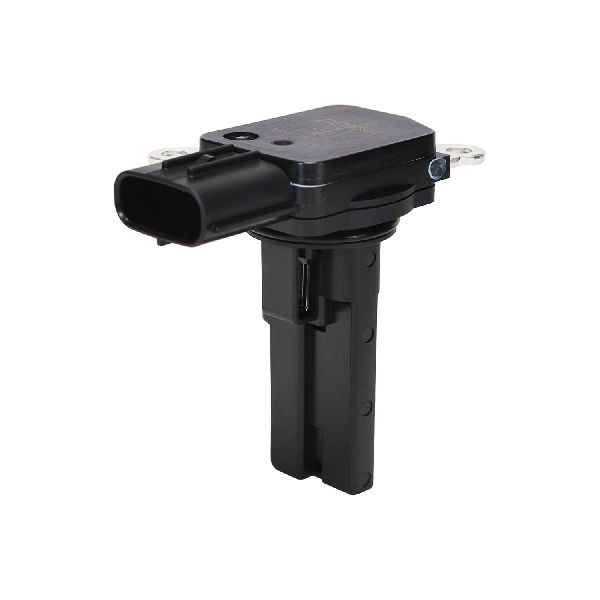
- Dirty Mass Air Flow (MAF) Sensor 🔴 High Probability → Shop Fuel Injection Air Flow Meter The MAF sensor's hot wire design can accumulate dust, oil, and other debris over time, insulating the wire and causing inaccurate readings. This is a common maintenance issue on most modern vehicles. Oiled air filters (like K&N) are a frequent source of contamination if over-oiled.
How to confirm: Remove the sensor and visually inspect the small wires inside the housing. Even if it looks clean, it can still be dirty enough to cause issues. Cleaning is the best confirmation. A scan tool may show MAF g/s readings that are abnormally low at idle or don't increase smoothly with RPM.
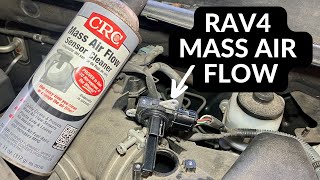
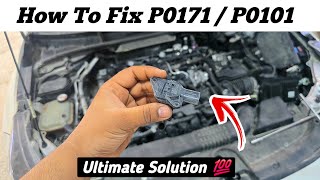
Typical fix: Remove the sensor and clean it thoroughly with a dedicated Mass Air Flow sensor cleaner spray. 🎬 Watch: A quick guide to cleaning your RAV4 MAF sensor. Do not use brake or carburetor cleaner, as they can damage the sensitive components. Let it dry completely before reinstalling.
Est. part cost: $10-$20 for MAF cleaner spray. - Vacuum Leak 🟡 Medium Probability As vehicles age, rubber and plastic components in the intake system can become brittle and crack. This allows 'unmetered' air to enter the engine after the MAF sensor, causing the sensor's readings to be lower than the actual airflow, often triggering a P0171 (System Too Lean) code alongside P0101. The intake air hose (boot) is a common failure point.
How to confirm: Visually inspect the air intake tube between the air filter and throttle body for cracks, especially in the flexible accordion sections. Check all vacuum hoses, including the PCV hose, for cracks or loose connections. A smoke test is the most effective way to find hidden leaks in the intake manifold gaskets or PCV system.
Typical fix: Replace the cracked intake tube, leaking gasket, or faulty vacuum hose. The OEM intake hose is part number 17881-0H050 for the 2AZ-FE. 🎬 See how to replace a cracked intake boot step-by-step.
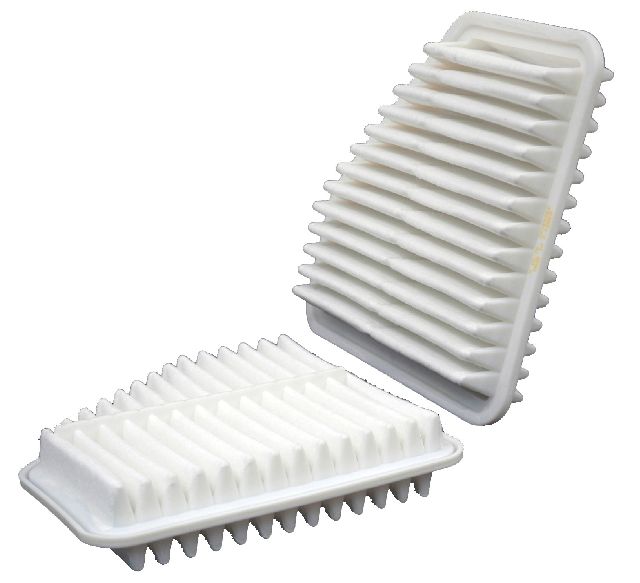
Est. part cost: $20-$150 depending on the specific part that failed. - Dirty or Clogged Engine Air Filter 🟡 Medium Probability → Shop Air Cleaner Assembly
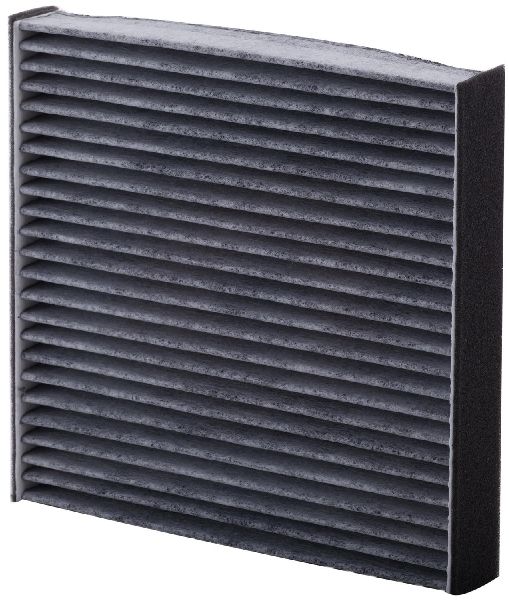
How to confirm: Remove and visually inspect the engine air filter. If it is visibly dirty, dark, or clogged with debris, it needs to be replaced. A severely clogged filter can restrict airflow enough to cause the MAF reading to be out of the expected range.
Typical fix: Replace the engine air filter. This should be done as part of regular maintenance.
Est. part cost: $15-$40 - Aftermarket or Damaged Air Filter Housing ⚪ Low Probability → Shop Air Cleaner Assembly The design of the OEM airbox ensures smooth, laminar airflow over the MAF sensor. A poorly designed aftermarket intake or a damaged/improperly sealed stock airbox can cause air turbulence, leading to erratic MAF sensor readings. Owners on forums frequently report P0101 after installing cheap aftermarket intake systems.
How to confirm: Inspect the air filter housing for any signs of damage, cracks, or modifications. Check if it is a non-OEM part. Ensure all clips are present and the box is sealed tightly.
Typical fix: Replace the damaged or aftermarket air filter housing with a genuine OEM part.
Est. part cost: $150-$300
Rare But Worth Checking
- Faulty MAF Sensor: → Shop Fuel Injection Air Flow Meter While often blamed, the sensor itself failing is less common than it simply being dirty. Only replace the sensor after you have thoroughly cleaned it and ruled out all other causes like vacuum leaks and wiring issues. Many owners report that cheap aftermarket sensors fail quickly or are inaccurate out of the box.
- Clogged Catalytic Converter: A restricted exhaust can cause back-pressure that affects airflow readings. This is usually accompanied by other symptoms like a significant loss of power, especially at high RPMs, a sulfur (rotten egg) smell, and potentially other exhaust-related codes.
- Wiring or Connector Issue: A damaged wire or a corroded connector for the MAF sensor can interrupt the signal to the ECM. Wiggling the harness while monitoring live data can sometimes reveal an intermittent connection. This is worth checking if cleaning or replacing the sensor doesn't solve the problem.
- Oil Contamination from VVT-i Line Leak (2GR-FE): On V6 models, a leaking VVT-i oil line can spray a fine mist of oil into the engine bay. This oil can be ingested by the intake system and contaminate the MAF sensor, causing recurring P0101 codes even after cleaning. This is a serious issue that requires immediate repair of the oil line.
Diagnosis Steps
- Read the code using an OBD-II scanner and check for any other stored codes. Address other codes first, especially lean codes (P0171/P0174) as they often share a root cause.
- Visually inspect the engine air filter. If it's dirty, replace it.
- Inspect the air intake tube between the air filter box and the throttle body for any cracks, tears, or loose connections. Pay close attention to the accordion-style ribs.
- Inspect the air filter housing itself for cracks, damage, or improper sealing. Ensure it is an OEM part.
- Carefully remove the MAF sensor. It is located on the air intake tube, held by two Phillips head screws. Disconnect the electrical connector first.
- Spray the delicate wires inside the sensor with at least 10-15 blasts of a dedicated MAF sensor cleaner. Do not touch the wires. Let it air dry completely for at least 30 minutes before reinstalling.
- Reinstall the sensor, clear the code with the scanner, and perform a test drive to see if the code returns.
- If the code returns, perform a smoke test to check for vacuum leaks that are not easily visible, such as from the intake manifold gasket or PCV hoses.
- If no vacuum leaks are found, use a scan tool to monitor the MAF sensor's live data. At idle, a 2.4L engine should read around 2-4 g/s, while a 3.5L V6 should be around 3-5 g/s. The reading should increase smoothly as you rev the engine. A sensor that is stuck or responds erratically is likely faulty. 🎬 Watch this walkthrough for diagnosing P0101 circuit performance issues.
- If a scan tool is not available, you can check the wiring with a multimeter. With the key on and engine off, verify power and ground at the connector.
- If all other steps fail to resolve the issue, the MAF sensor itself may be faulty and require replacement. It is highly recommended to use a Denso (OEM) sensor.
Parts You'll Likely Need
- Mass Air Flow Sensor
(OEM #22204-31020 (Common for 2GR-FE V6), 22204-0H010 (Common for 2AZ-FE I4). Also see 22204-31010, 22204-0P010.)— This is the sensor that measures airflow. It is the central component related to the P0101 code. It is often replaced if cleaning and other diagnostics do not solve the issue. Using an OEM Denso sensor is strongly recommended.
Trusted brands: Denso (OEM), Hitachi, Bosch
OEM price range: $150-$210
Aftermarket price range: $50-$120 - Mass Air Flow Sensor Cleaner — This is a special solvent for cleaning the MAF sensor, which is the most common and cost-effective first step in fixing a P0101 code.
Trusted brands: CRC, WD-40 Specialist
Aftermarket price range: $10-$20 - Engine Air Filter
(OEM #17801-YZZ02 (Denso))— A clogged air filter can restrict airflow and contribute to a P0101 code. It's a basic maintenance item that should be checked first.
Related Codes That Often Appear With This One
- P0171 — System Too Lean (Bank 1). This is the most common companion code. A vacuum leak or a faulty MAF sensor under-reporting airflow will cause the ECM to inject too little fuel, leading to a lean condition and triggering both codes together.
- P0174 — System Too Lean (Bank 2). On the V6 (2GR-FE) engine, a significant vacuum leak affecting the entire intake manifold could cause lean conditions on both banks, triggering P0171, P0174, and P0101 simultaneously.
Technical Service Bulletins (TSBs) & Recalls
- LSC for 2GR-FE VVT-i Oil Line: While not directly for P0101, Toyota issued a Limited Service Campaign for 2006-2009 V6 models to replace a faulty VVT-i oil line that could rupture. A leaking line can spray oil onto the intake system, contaminating the MAF sensor and causing a P0101 code.
- TSB Bulletin #T-SB-0092-15: Although issued for other Toyota models like the Tundra, this bulletin highlights that vehicles may experience a MIL "ON" condition with DTC P0101 (Mass Air Flow Circuit Range/Performance Problem), emphasizing the manufacturer's specific procedures to address this circuit performance issue.
Platform-Specific Known Issues
- Recurring P0101 after multiple cleanings: A user on RAV4World forums with a 2007 V6 reported a persistent P0101 code despite cleaning the MAF sensor multiple times. The issue was finally traced to a small crack in the intake resonator box, which is attached to the main intake tube. This allowed unmetered air to enter the system under certain conditions, but the crack was not easily visible until the component was removed for inspection.
Mechanic-Grade Diagnostic Values
- MAF Sensor Power Supply Voltage (2AZ-FE) — expected: 11-14V (Battery Voltage). Failure: 0V or significantly lower than battery voltage indicates a power supply issue (e.g., EFI fuse).
- MAF Sensor Ground Circuit Resistance (2AZ-FE) — expected: Below 1 Ω. Failure: High resistance indicates a poor ground connection, which can cause incorrect sensor readings.
- DTC P0101 Set Condition (2GR-FE) — expected: Average engine load value ratio between 0.81 and 1.15.. Failure: The code sets if the ratio of measured airflow to calculated airflow is less than 0.81 or more than 1.15 for over 10 seconds while the engine is warm and running.
- Live Data - Long Term Fuel Trim — expected: Close to 0%, typically within +/- 10%.. Failure: A large negative value (e.g., -20%) can indicate the ECM is compensating for a MAF sensor that is over-reporting air, which can happen with non-OEM air intakes.
Hidden / Shadow Codes Worth Checking
- Freeze Frame Data: While not a separate code, Freeze Frame data is a snapshot of all key engine sensor values at the exact moment the P0101 DTC was triggered. This data is critical for professional diagnosis, as it shows the engine speed, load, temperature, and fuel trims when the fault occurred, helping to distinguish between a fault at idle, under load, or during warm-up. (see via Advanced scan tools like Toyota's Techstream or equivalent professional scanners. Basic code readers may not show this data.)
Scan Tool Commands That Help
- Toyota Techstream: All Readiness — After performing a repair (like cleaning/replacing the MAF sensor and clearing codes), use this utility to check the status of the emission system monitors. You can confirm if the MAF sensor monitor has run and passed, verifying the fix without waiting for multiple drive cycles.
- Toyota Techstream: Data List — To monitor live MAF sensor readings (in g/s), fuel trims, and calculated load. Wiggling the sensor harness while watching the live data can help identify intermittent wiring connection problems.
Wiring & Ground Locations
- MAF Sensor Connector (2AZ-FE) — On the air intake tube, between the air filter box and the throttle body. Designated as connector 'B1' in some wiring diagrams.. This is the primary connection point for the sensor. Corrosion or damage to pins for power (+B), ground (E2G), or signal (VG) will directly cause P0101 or related codes.
- Engine Harness Ground (2GR-FE) — On the side of the cylinder head, directly underneath the throttle body.. An improper or corroded ground at this point can cause spurious sensor readings and multiple DTCs, including those related to the MAF sensor.
- Valve Cover Grounds (2GR-FE) — Wires running from the valve covers to a metal bracket on top of the strut tower.. These are additional engine grounds. Ensuring they are clean and tight is crucial for overall sensor stability.
Real Owner Repair Stories
- Reddit user in r/rav4club (2016 RAV4 Hybrid (later model, but same P0101/P0171 codes and principle)) — Check Engine Light with codes P0101 and P0171.
❌ Tried (didn't work) Was about to inspect/clean the MAF sensor.
✅ What actually fixed it Found the air hose between the air filter box and throttle body had come loose from the filter box. Tightening the clamp resolved the codes. - YouTube channel 'Oz Mechanics' (2017 Toyota RAV4 2.5L (later model, but demonstrates a key issue)) — Persistent P0101 code that another shop could not fix, very negative long-term fuel trims (-17% to -20%).
❌ Tried (didn't work) Replacing the MAF sensor with a new part., Checking for vacuum leaks.
✅ What actually fixed it The vehicle had an aftermarket air filter housing that was missing the integrated charcoal filter screen found in the OEM part. This caused air turbulence and incorrect MAF readings. Replacing the aftermarket housing with a genuine OEM air filter box fixed the problem instantly.
"I Checked Everything" — The Actual Cause
- In several documented cases, a smoke test of the intake system revealed no leaks, yet the P0101 code (often with a lean or rich code) persisted. The root cause was found to be an aftermarket air intake system or air filter box. These non-OEM parts, particularly those missing the original charcoal pre-filter/screen, create air turbulence across the MAF sensor, causing it to report incorrect airflow values even with no unmetered air leaks present. The fix was to reinstall the original OEM airbox.
OEM Part Supersession History
22204-31010, 22204-0P010, 22204-0H010→22204-31020— Standard part consolidation and potential minor revisions by the manufacturer.
Heads up: While these part numbers are often listed as interchangeable for the 2AZ-FE and 2GR-FE engines within this generation, always verify the correct part number for your specific VIN. The 22204-31020 is the most current replacement for many applications in this range.
Model Year Variations Within This Range
- 2009-2012: For the 2009 model year, Toyota replaced the 2.4L 2AZ-FE four-cylinder engine with a new 2.5L 2AR-FE engine. This guide's information for the 4-cylinder model primarily applies to the 2006-2008 2AZ-FE. While the P0101 diagnostic principles are similar, the MAF sensor part number and specific diagnostic values may differ for the 2009-2012 2.5L models. The 3.5L 2GR-FE V6 remained unchanged through the entire 2006-2012 period.
Diagnostic Flowchart
Other Known Issues on This Vehicle
Issues unrelated to this code that are worth knowing about as an owner of this generation:
- Excessive Oil Consumption (2AZ-FE) 🔴 High — Very common, particularly in 2006-2008 models. Caused by defective piston ring design. Can become noticeable after 60,000 miles and worsen over time. (Ref: Toyota issued TSB T-SB-0094-11 and Warranty Enhancement Program ZE7 to address this, which involved replacing pistons and rings on qualifying vehicles.)
- VVT-i Oil Line Rupture (2GR-FE) 🔴 High — Affects 2006-2009 V6 models. The original rubber section of the VVT-i oil supply hose can degrade and burst, causing a sudden and catastrophic loss of engine oil. (Ref: Toyota issued a Limited Service Campaign (LSC) to replace the rubber hose with an all-metal line (Part No. 15772-31030).)
- Steering Intermediate Shaft Clunk 🟠 Medium — Common on 2006-2010 models. A clunking or popping noise is heard and felt in the steering wheel at low speeds, caused by premature wear in the intermediate shaft's U-joints. (Ref: Toyota released TSBs T-SB-0318-08 and T-SB-0031-11, which superseded ST001-08, detailing the replacement of the faulty shaft with an updated part.)
- Water Pump Failure (2GR-FE) 🟠 Medium — A known weakness on the V6 engine, with failures sometimes occurring around 80,000-100,000 miles. Symptoms include coolant leaks from the weep hole, whining noises, and overheating.
Used vs. New Parts: Buying Guide for This Vehicle
When a used part is the smart pick: A used part is a smart choice for structural components like the air filter housing (airbox). If the original is cracked or an aftermarket one is causing issues, a used OEM airbox from a salvage yard is a cost-effective and reliable solution.
Donor-vehicle mileage cap: roughly under 150000 miles for the part to have meaningful remaining life.
What to inspect on the donor part:
- For an airbox, ensure there are no cracks, especially around the MAF sensor mount and the sealing edges.
- Confirm all factory clips and mounting points are intact and not broken.
- If possible, get the upper and lower halves together to ensure a matched set.
OEM-only on this vehicle (don't cheap out):
- Mass Air Flow (MAF) Sensor
Aftermarket brands forum-validated for this vehicle:
- Denso (This is the Original Equipment Manufacturer; buying a Denso-branded part is equivalent to buying the Toyota part in a different box, often for less money).
Brands owners have reported issues with on this vehicle:
- Generic, unbranded, or 'white-box' MAF sensors sold on marketplaces like eBay and Amazon. Forum consensus is that these parts are frequently inaccurate out of the box or fail prematurely, causing the P0101 code to return.
Real Owner Stories
Aggregated from forums and TSBs cited above. Mileages and costs reflect what owners reported in those sources.
2007 RAV4 V6
Symptoms: Persistent P0101 code despite cleaning the MAF sensor multiple times.
What fixed it: Replacement of the intake resonator box after discovering a small, hidden crack that allowed unmetered air to enter the system.
Source hint: vehicle_specific_issues: Recurring P0101 after multiple cleanings
2007 RAV4 V6
Symptoms: Experienced both P0101 and P0171; cleaning the MAF sensor and throttle body did not resolve the issue.
What fixed it: Replacing a cracked intake hose (vacuum leak).
Source hint: RAV4World thread titled 'p0101-and-p0171-on-2007-rav4-v6.198618/'
2006 RAV4
Symptoms: P0101 mass air flow sensor problem.
What fixed it: Cleaning the MAF sensor with dedicated MAF cleaner while being careful not to touch the sensor wires.
Source hint: Toyota Nation thread titled 'p0101-mass-air-flow-sensor-problem.373059/'
2008 RAV4
Symptoms: P0101 mass air flow circuit code.
What fixed it: Standard diagnostic procedure of cleaning the MAF sensor and checking for vacuum leaks before replacing the sensor.
Source hint: Reddit r/MechanicAdvice thread titled '2008_rav4_p0101_mass_air_flow_circuit/'
Related OBD-II Codes
Frequently Asked Questions
Can I use any cleaner to fix the P0101 code on my 2006 RAV4?
Is there a specific part number for the intake hose on the 2.4L 2AZ-FE engine?
Could an oil leak cause a P0101 code on my 2008 RAV4 V6?
What are the normal MAF sensor readings for the 2.4L and 3.5L RAV4 engines?
Why did my RAV4 start throwing P0101 after I installed an aftermarket air intake?
Which brand of replacement MAF sensor is recommended for the RAV4?
Helpful Videos
Used OEM Parts in Stock
New Aftermarket Parts Available

The information in this article is provided for general reference and educational purposes only. Vehicle specifications, procedures, and part compatibility can vary by production date, trim level, and region. Always consult your vehicle's factory service manual and verify part numbers before purchasing or performing repairs. Safety-critical components such as airbags, seat belts, and braking systems should be installed by a qualified professional.
- Toyota RAV4:
- 🧭 Diagnostic Flowchart
- 🎬 Helpful Videos
- 🛍️ Shop This Part
- What's Unique About the 2006-2012 Toyota RAV4
- Symptoms You May Notice
- Most Likely Causes
- Rare But Worth Checking
- Diagnosis Steps
- Parts You'll Likely Need
- Related Codes That Often Appear With This One
- Technical Service Bulletins (TSBs) & Recalls
- Platform-Specific Known Issues
- Mechanic-Grade Diagnostic Values
- Hidden / Shadow Codes Worth Checking
- Scan Tool Commands That Help
- Wiring & Ground Locations
- Real Owner Repair Stories
- "I Checked Everything" — The Actual Cause
- OEM Part Supersession History
- Model Year Variations Within This Range
- Other Known Issues on This Vehicle
- Used vs. New Parts: Buying Guide for This Vehicle
- Real Owner Stories
- 2007 RAV4 V6
- 2007 RAV4 V6
- 2006 RAV4
- 2008 RAV4
- Related OBD-II Codes
- Frequently Asked Questions
- 🎟️ Get 5% Off