

P0101 on 2016-2018 Toyota RAV4 Hybrid: MAF Sensor Causes and Fixes
On a 2016-2018 RAV4 Hybrid, code P0101 is most often caused by a loose intake hose clamp or a dirty Mass Airflow (MAF) sensor. Before buying parts, check that the intake tube is secure and try cleaning the MAF sensor with a dedicated cleaner. A Reddit user confirmed a loose clamp after an air filter change was the sole cause on their 2016 Hybrid.
- First, check the simple things: ensure the large black air intake hose is securely clamped at both ends.
- The second step should be to clean the MAF sensor with a special, dedicated cleaner. This costs very little and often fixes the problem.
- This code is frequently accompanied by P0171 (System Too Lean), which points strongly to an air leak after the MAF sensor.
- Only replace the MAF sensor after you have confirmed there are no air leaks and you have tried cleaning it first.
What's Unique About the 2016-2018 Toyota RAV4 Hybrid
For the XA40 generation RAV4 Hybrid, the 2AR-FXE engine's air intake system is highly sensitive to unmetered air. A very common and easy-to-fix issue is simply a loose hose clamp on the air intake tube between the air filter box and the engine. Owners often find this after a recent air filter change. Before suspecting a failed sensor, a thorough inspection of the entire air intake path for leaks is the most critical first step.
Symptoms You May Notice
- Check Engine Light is on
- Reduced engine power and sluggish acceleration
- Rough or inconsistent idle
- Poor fuel economy
- Hesitation during acceleration
- Black smoke from the exhaust (less common)
- Replacing the MAF sensor before checking for a loose intake hose or cleaning the sensor. A loose clamp is a free fix that is commonly the culprit.
Most Likely Causes
- Loose or Cracked Air Intake Hose 🔴 High Probability → Shop Engine Air Intake Resonator The clamps securing the large flexible intake tube can loosen over time or may not be properly tightened after an air filter replacement. This allows unmetered air to enter the engine, confusing the MAF sensor.
How to confirm: Visually inspect the entire air intake tract from the air filter box to the throttle body. Pay close attention to the hose clamps. Tug on the connections to see if they are loose. A Reddit user with a 2016 RAV4 Hybrid found this to be the exact cause, posting a photo of the disconnected hose at the airbox.
Typical fix: Tighten the hose clamps. If the hose itself is cracked, it must be replaced.
Est. part cost: $0 - $75 - Dirty Mass Airflow (MAF) Sensor 🔴 High Probability → Shop Fuel Injection Air Flow Meter Over time, dust and oil vapors can contaminate the sensitive platinum wires of the MAF sensor, causing it to give inaccurate readings. This is a common issue on most modern vehicles.
How to confirm: Remove the MAF sensor (typically held by two small screws) and visually inspect the internal wires for dirt or debris. Even if it looks clean, cleaning is a valid diagnostic step.
Typical fix: Carefully spray the sensor's wires and components with a dedicated Mass Airflow Sensor Cleaner. Do not touch the wires. Allow it to dry completely before reinstalling. 🎬 See this quick walkthrough on cleaning your RAV4 MAF sensor
Est. part cost: $10 - $20 for MAF cleaner spray. - Dirty or Clogged Engine Air Filter 🟡 Medium Probability → Shop Air Cleaner Assembly A severely clogged air filter can restrict airflow, causing the MAF sensor to report values that the ECM considers out of range for the given engine load.
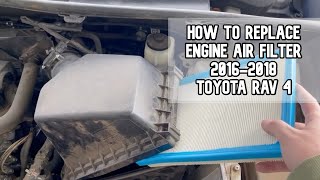
How to confirm: Remove the engine air filter from the airbox and inspect it. If it is visibly dirty, clogged with debris, or past its service interval, it should be replaced.
Typical fix: Replace the engine air filter.
Est. part cost: $20 - $40 - Faulty Mass Airflow (MAF) Sensor ⚪ Low Probability → Shop Fuel Injection Air Flow Meter While less common than being dirty, the sensor itself can fail electronically. This should only be considered after ruling out intake leaks and confirming the sensor is clean.
How to confirm: After cleaning the sensor and checking for leaks, if the code returns, the sensor is likely faulty. A professional can confirm this by monitoring the sensor's voltage/frequency output with a scan tool or oscilloscope, comparing it to specified ranges.
Typical fix: Replace the MAF sensor.
Est. part cost: $100 - $200
Rare But Worth Checking
- Vacuum Leak (other than intake hose): A crack in a smaller vacuum line, a leaking PCV hose, or a leaking intake manifold gasket can also cause this code, but is less common than a loose main intake boot. A smoke test is the best way to find these smaller leaks.
- Aftermarket Air Intake or Filter Box: → Shop Engine Air Intake Resonator Using a non-OEM air filter box or intake can alter airflow characteristics in a way that triggers a P0101 code. One technician on YouTube documented a 2017 RAV4 with a persistent P0101 that was only resolved by replacing a flimsy aftermarket air cleaner box with a genuine Toyota part that included the correct internal charcoal filter. 🎬 Watch: How an aftermarket airbox caused a P0101 disaster
Diagnosis Steps
- Read the code with an OBD-II scanner to confirm P0101 is present. Note any other codes, like P0171.
- Visually inspect the entire air intake system between the air filter and the engine. Check for loose clamps, disconnected hoses, or cracks in the flexible tubing.
- Inspect the engine air filter. Replace if it is dirty or clogged.
- Carefully remove the MAF sensor. Inspect the sensing element for any debris or contamination.
- Clean the MAF sensor using a dedicated MAF sensor cleaner spray. Do not use brake cleaner or carb cleaner, and do not touch the internal wires. Let it dry completely.
- Reinstall the MAF sensor, clear the code with the scanner, and perform a test drive to see if the code returns.
- If the code persists, check for less obvious vacuum leaks using a smoke machine.
- If no leaks are found and the sensor has been cleaned, the MAF sensor itself may have failed and requires replacement.
Parts You'll Likely Need
- Mass Airflow (MAF) Sensor
(OEM #22204-0V020)— If cleaning the sensor and checking for leaks doesn't resolve the code, the sensor itself has likely failed. This is the correct replacement part. Note that this part may supersede or be interchangeable with numbers like 22204-37010 and 22204-28010.
Trusted brands: Denso (OEM), Hitachi, BLUE PRINT
OEM price range: $150-$220
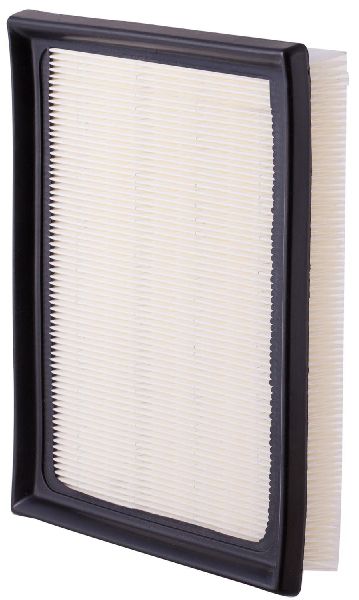
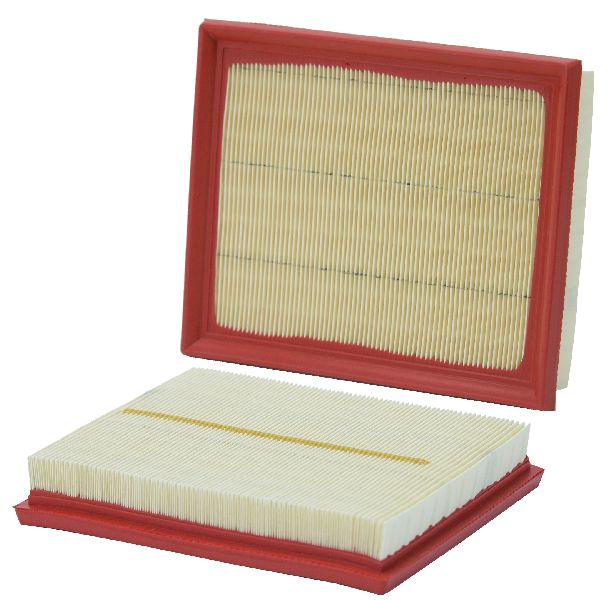
Aftermarket price range: $70-$150 - Engine Air Filter
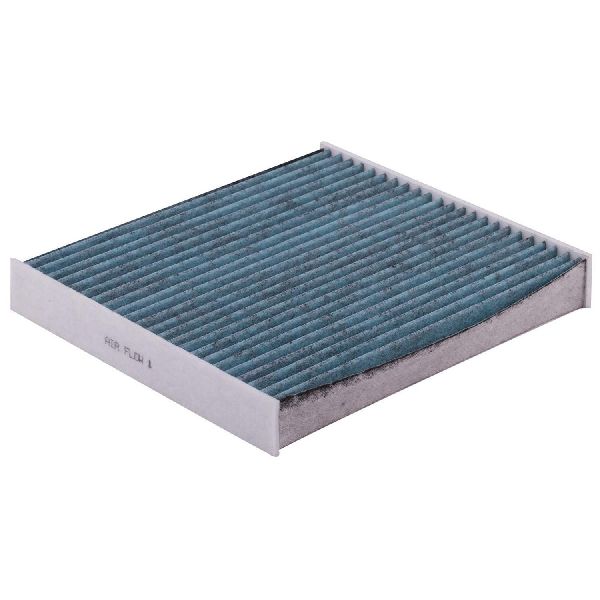
(OEM #17801-37021)— A clogged air filter can cause the P0101 code and is a routine maintenance item that should be checked first.
Trusted brands: Denso, Fram, Bosch
OEM price range: $25-$40
Aftermarket price range: $15-$25 - Mass Airflow Sensor Cleaner — This is the proper chemical for cleaning the MAF sensor, which is the most common and cost-effective fix.
Trusted brands: CRC, WD-40 Specialist
Aftermarket price range: $10-$20
Related Codes That Often Appear With This One
- P0171 — System Too Lean (Bank 1). This code often appears with P0101 because an air leak after the MAF sensor allows 'unmetered' air into the engine. The sensor reports less air than is actually present, causing the computer to inject too little fuel, creating a lean condition.
Technical Service Bulletins (TSBs) & Recalls
- T-SB-0039-16: 'Battery Maintenance During PDS' - While not directly for P0101, this TSB is relevant to ensuring the vehicle's electrical system and battery state-of-charge are correct during service, which is a foundational step in any electrical diagnosis.
- TSB Bulletin #T-SB-0092-15: While specifically addressing Tundra vehicles with the 3UR-FE engine, this manufacturer bulletin notes that vehicles may experience a MIL "ON" condition with DTC P0101 (Mass Air Flow Circuit Range/Performance Problem) and provides specific procedures to address the condition.
Mechanic-Grade Diagnostic Values
- Mass Airflow (MAF) Rate at warm idle — expected: 2.0 - 4.0 g/s. Failure: A reading significantly outside this range, or a reading that doesn't increase when the throttle is snapped, suggests a faulty sensor or large vacuum leak.
- Mass Airflow (MAF) Rate with Key On, Engine Off (KOEO) — expected: Less than 0.25 g/s. Failure: A reading higher than this indicates the sensor has an electrical fault or is failing to establish a zero-point.
- Calculated Load Value at Wide Open Throttle (WOT) — expected: 80% - 100%. Failure: If the value fails to reach at least 80% during a full-throttle acceleration test (in a safe location), the MAF sensor is under-reporting airflow and is likely contaminated or failing.
- MAF Sensor Voltage at Idle — expected: Below 2.2 V. Failure: The ECM will set P0101 if the voltage is more than 2.2 V at idle.
- MAF Sensor Voltage with Engine Off — expected: Above 0.4 V. Failure: The ECM will set P0101 if the voltage is less than 0.4 V when the engine is off.
Hidden / Shadow Codes Worth Checking
- Freeze Frame Data: While Toyota does not use 'shadow codes' in the same way as some German brands, the Freeze Frame Data stored at the time of the P0101 fault is critical. It captures engine speed, coolant temp, fuel trims, and other parameters, helping a technician understand the exact conditions that caused the code. (see via Toyota Techstream or any professional-grade OBD-II scanner.)
Scan Tool Commands That Help
- Toyota Techstream: Live Data List (MAF, Calculated Load) — This is the primary diagnostic screen. Monitor the 'MAF' value in g/s at idle and during throttle snaps, and monitor 'Calculated Load' during a WOT pull to verify sensor performance under load.
- Toyota Techstream: Active Test: Control the EGR Step Position — In the diagnostic procedure for P0101, this test is used to rule out a stuck-open EGR valve. A stuck EGR can create an air/exhaust gas leak into the intake that the MAF sensor doesn't account for, mimicking P0101 symptoms.
Wiring & Ground Locations
- Engine Harness Ground Points — Common Toyota engine harness ground points are located on the valve cover(s) and connect via a wire to a bolt on the strut tower in the engine bay. Ensuring these are clean and tight is crucial for stable sensor readings.. The MAF sensor relies on a clean ground (typically the E2G pin on the connector) to provide an accurate signal to the ECM. A poor ground can cause erratic or out-of-range readings, directly triggering a P0101 code.
- MAF Sensor Connector — The 5-pin connector plugs directly into the MAF sensor, located on the air intake tube just after the air filter box.. Corrosion or damage to the pins for power (+B), ground (E2G), or signal (VG) will cause P0100-series codes. Wiggling the connector while watching live data can help identify intermittent connection issues.
Real Owner Repair Stories
- YouTube - Oz Mechanics (2017 Toyota RAV4 2.5L (Non-Hybrid, but same intake design)) — Persistent P0101 code that would not clear, despite cleaning/swapping the MAF sensor. Customer also noted negative fuel trims (-17%).
❌ Tried (didn't work) Cleaning the MAF sensor, Replacing the MAF sensor
✅ What actually fixed it The vehicle had been in a wreck and was repaired with a cheap, aftermarket air filter housing (air cleaner box). This aftermarket part was missing the integrated charcoal filter found in the OEM housing. This difference altered the airflow dynamics across the MAF sensor, causing the P0101 code. Replacing the aftermarket housing with a genuine Toyota OEM part resolved the issue instantly.
"I Checked Everything" — The Actual Cause
- In a documented case on a 2017 RAV4, a persistent P0101 was not caused by a vacuum leak that a smoke test would find. The root cause was an aftermarket air filter housing that fit correctly but lacked the internal charcoal filter of the OEM part. This changed the intended airflow characteristics across the MAF sensor, triggering the code even though the system was perfectly sealed.
When the Usual Fixes Don't Work
- While the most common causes are a dirty sensor or a simple vacuum leak, a notable case showed that these fixes are not always the solution. A 2017 RAV4 with a persistent P0101 was only fixed by replacing a brand new, aftermarket air filter box with a genuine OEM part. The aftermarket unit, while appearing to fit correctly, lacked the internal charcoal filter, which was enough to disrupt the sensitive airflow readings and cause the code. This proves that even if a smoke test is clean and the sensor is new, the physical components around the sensor must be OEM-spec for the system to function correctly.
OEM Part Supersession History
22204-37010→22204-28010— Part revision or supplier change.
Heads up: These parts are generally considered interchangeable for this application.22204-0V010→22204-0V020— Part revision or supplier change.
Heads up: 22204-0V020 is the updated part number.22204-0T040→22204-0V020— Part revision or supplier change.
Heads up: 22204-0V020 is the updated part number.
Diagnostic Flowchart
Other Known Issues on This Vehicle
Issues unrelated to this code that are worth knowing about as an owner of this generation:
- High-Voltage Cable Corrosion ('Cablegate') 🔴 High — More common in regions with heavy road salt use (snow belt). Affects the 2019-2022 models most, but the underlying design originated with this platform. Can occur after several winters. Repair costs can exceed $5,000 if out of warranty. (Ref: Toyota issued a warranty extension for this issue on later models (2019+) following a class-action lawsuit, but owners of 2016-2018 models should be aware of the potential for corrosion at the rear motor generator connector.)
- Water Pump Weep/Leak 🟠 Medium — Can occur before 100,000 km. Often presents as a slow leak of pink coolant, which may evaporate before dripping on the ground, leaving a pink residue trail on the engine or hood liner. (Ref: A general Toyota TSB exists for non-electric water pump leak inspection tips.)
- Infotainment System Glitches (Rebooting/Freezing) 🟡 Low — Reported sporadically by owners. The system may freeze, become unresponsive, or reboot itself. Often resolved by a soft reset (holding the power/volume knob).
- Premature Brake Wear 🟡 Low — Some owners and technicians report shorter-than-expected life from brake pads and rotors, with some needing replacement as early as 30,000 miles. This is often attributed to the specific pad material used from the factory.
Used vs. New Parts: Buying Guide for This Vehicle
When a used part is the smart pick: A used part from a reputable salvage yard is a reasonable choice for the plastic air filter housing or the rubber intake boot. These are non-electronic parts that are easy to visually inspect.
Donor-vehicle mileage cap: roughly under 75000 miles for the part to have meaningful remaining life.
What to inspect on the donor part:
- For intake hoses: Squeeze the rubber to ensure it is still pliable and not brittle or cracking.
- For air filter housings: Check that all mounting tabs and clip points are intact and not broken.
- For a used MAF sensor: Visually inspect the internal hot-wire elements to ensure they are not physically broken, bent, or covered in oil.
OEM-only on this vehicle (don't cheap out):
- Mass Airflow (MAF) Sensor: Due to sensitivity and calibration, it is strongly recommended to use an OEM sensor from Toyota or the original supplier (Denso).
- Air Filter Housing: As documented, aftermarket housings may lack correct internal components (like a charcoal filter), altering airflow and causing persistent P0101 codes.
Aftermarket brands forum-validated for this vehicle:
- Denso (This is the Original Equipment Manufacturer for Toyota and is the most reliable choice for the MAF sensor).
Brands owners have reported issues with on this vehicle:
- Generic, no-name, or unbranded air filter housings should be avoided as they may not match the OEM design internally.
Real Owner Stories
Aggregated from forums and TSBs cited above. Mileages and costs reflect what owners reported in those sources.
2016 RAV4 Hybrid
Symptoms: Check Engine Light (CEL) with codes P0171 and P0101.
What fixed it: The air hose between the filter and throttle had come loose from the filter box; tightening the clamp resolved the issue.
Source hint: Reddit r/rav4club thread titled '2016 RAV4 hybrid, codes P0171 & P0101 - SOLVED'
2012-2018 Lexus ES 300h
Symptoms: P0101 code appearing on a vehicle with a new MAF sensor.
What fixed it: Diagnosis of the 2AR-FXE platform confirmed issues are typically related to dirty sensors or intake leaks.
Source hint: ClubLexus.com thread titled 'P0101 with new MAF?'
Related OBD-II Codes
Frequently Asked Questions
I have a 2016 RAV4 Hybrid with P0101 and P0171; could this just be a loose part?
Is there a TSB for electrical issues that might affect my P0101 diagnosis on a 2016-2018 RAV4 Hybrid?
Can I use any cleaner to fix the MAF sensor on my 2AR-FXE engine?
How do I confirm if my RAV4 Hybrid's air intake hose is the problem?
Are there other Toyota or Lexus models that have this same P0101 issue with the 2AR-FXE engine?
What should I check if cleaning the MAF sensor doesn't clear the P0101 code?
Helpful Videos

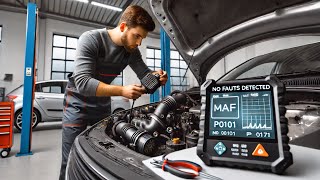
Used OEM Parts in Stock
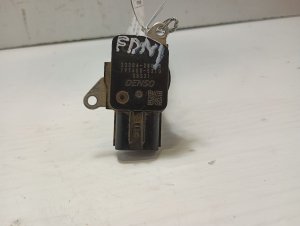
New Aftermarket Parts Available
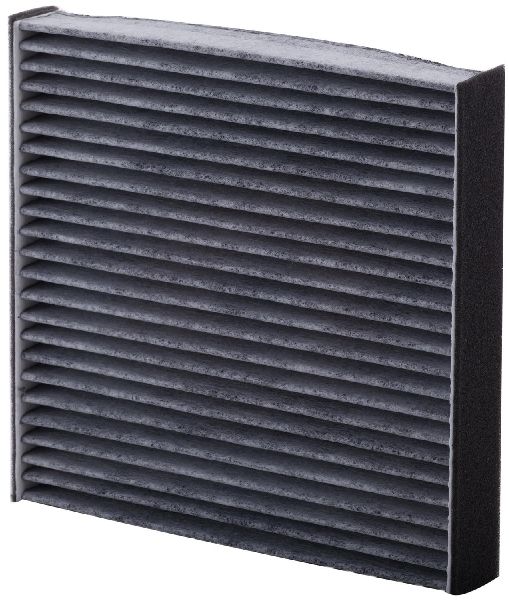

The information in this article is provided for general reference and educational purposes only. Vehicle specifications, procedures, and part compatibility can vary by production date, trim level, and region. Always consult your vehicle's factory service manual and verify part numbers before purchasing or performing repairs. Safety-critical components such as airbags, seat belts, and braking systems should be installed by a qualified professional.
- Toyota RAV4 Hybrid:
- 🧭 Diagnostic Flowchart
- 🎬 Helpful Videos
- 🛍️ Shop This Part
- What's Unique About the 2016-2018 Toyota RAV4 Hybrid
- Symptoms You May Notice
- Most Likely Causes
- Rare But Worth Checking
- Diagnosis Steps
- Parts You'll Likely Need
- Related Codes That Often Appear With This One
- Technical Service Bulletins (TSBs) & Recalls
- Mechanic-Grade Diagnostic Values
- Hidden / Shadow Codes Worth Checking
- Scan Tool Commands That Help
- Wiring & Ground Locations
- Real Owner Repair Stories
- "I Checked Everything" — The Actual Cause
- When the Usual Fixes Don't Work
- OEM Part Supersession History
- Other Known Issues on This Vehicle
- Used vs. New Parts: Buying Guide for This Vehicle
- Real Owner Stories
- 2016 RAV4 Hybrid
- 2012-2018 Lexus ES 300h
- Related OBD-II Codes
- Frequently Asked Questions
- 🎟️ Get 5% Off