

P0101 on 2015-2016 Volkswagen Golf: MAF Sensor and Vacuum Leak Guide
On a 2015-2016 VW Golf, code P0101 is most often caused by a dirty or faulty Mass Airflow (MAF) sensor or a vacuum leak in the intake system, frequently from a failed PCV valve. Cleaning the MAF sensor with a dedicated cleaner is a common first step and may resolve the issue.
- P0101 on a 2015-2016 Golf means the MAF sensor's reading doesn't match what the engine computer expects.
- Before replacing any parts, your first step should be to clean the MAF sensor with dedicated cleaner.
- The second most likely cause is a vacuum leak, often from a failed PCV valve, which should be checked with a smoke test.
- If you have an aftermarket air intake, it may be the source of the problem due to turbulent airflow.
- Only replace the MAF sensor after you have ruled out a dirty sensor and all possible vacuum leaks.
What's Unique About the 2015-2016 Volkswagen GOLF
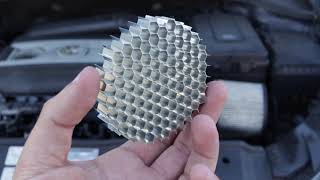
The 2015-2016 VW Golf (Mk7) is part of the MQB platform and primarily uses the EA888 Gen 3 turbocharged engine (1.8T or 2.0T in the GTI). This engine is highly sensitive to air intake issues. A very common cause for P0101 on this platform is a vacuum leak from a failed PCV (Positive Crankcase Ventilation) valve assembly, which has a diaphragm known to tear. This failure creates a significant unmetered air leak, often accompanied by a distinct whistling or squealing sound from the engine bay. Additionally, owners who install aftermarket cold air intakes sometimes encounter this code due to turbulent air confusing the MAF sensor, a problem that can occasionally be solved by installing a honeycomb-style air straightener in the intake tube before the sensor.
Diagnostic Flowchart
Tap your situation to follow the diagnostic path that matches what you're seeing on this vehicle.
Symptoms You May Notice
- Check Engine Light is on
- Reduced engine power and poor acceleration
- Rough idle, sometimes with RPMs fluctuating
- Engine hesitation or jerking during acceleration
- Decreased fuel economy
- Black smoke from the exhaust in some cases, indicating a rich condition
- Engine may enter a low-power "limp mode"
- A distinct whistling, squealing, or "cricket" sound from the engine bay at idle, often indicating a failed PCV valve diaphragm.
- Replacing the MAF sensor when the actual problem is a vacuum leak elsewhere in the system, such as a failed PCV valve.
- Assuming an aftermarket air intake is faulty when the MAF sensor simply needs cleaning due to an over-oiled filter.
Most Likely Causes
- Dirty or Contaminated MAF Sensor 🔴 High Probability → Shop Fuel Injection Air Flow Meter The MAF sensor uses a sensitive hot wire to measure airflow, which can become contaminated by oil vapor from the PCV system or dirt, especially if using an aftermarket oiled air filter.
How to confirm: Remove the MAF sensor from the intake tube and visually inspect the small wires inside for dirt, oil, or debris. A scan tool can also be used to monitor g/s readings; they should be erratic if the sensor is dirty.
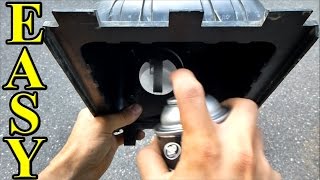
Typical fix: Clean the sensor wires carefully using only dedicated Mass Airflow Sensor cleaner. Do not touch the wires. Allow it to air dry completely before reinstalling.
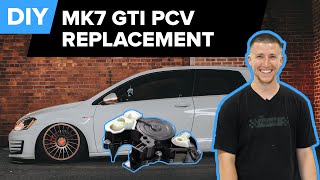
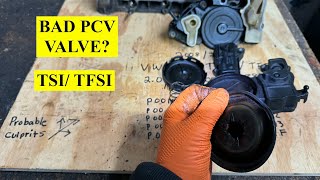
Est. part cost: $10-$15 for MAF cleaner - Vacuum Leak (especially PCV Valve) 🔴 High Probability The EA888 Gen 3 engine's PCV valve/oil separator is a well-documented failure point. The internal diaphragm tears, creating a large unmetered air leak. This is arguably the most common cause of P0101 on this platform.
How to confirm: A professional smoke test is the most reliable method. A simple DIY test is to let the engine idle and try to remove the oil filler cap. If there is strong suction holding the cap down, or if a loud squealing noise stops when the cap is removed, the PCV diaphragm is almost certainly torn. You may also hear a whistling or sucking noise from the PCV valve itself.
Typical fix: Replace the entire PCV valve assembly. It's recommended to use a genuine OEM part with the latest revision number to ensure longevity.
Est. part cost: $50-$160 depending on brand (OEM vs. aftermarket) - Faulty MAF Sensor 🟡 Medium Probability → Shop Fuel Injection Air Flow Meter
How to confirm: If cleaning the sensor and confirming there are no vacuum leaks does not resolve the code, the sensor itself may have failed. Use a scan tool to monitor the MAF sensor's g/s reading at idle and while driving. At idle, the reading should be stable around 2.0-5.0 g/s. If the readings are erratic, zero, or don't increase smoothly with RPM, the sensor is likely bad.
Typical fix: Replace the MAF sensor. It is highly recommended to use an OEM or the original Bosch-branded part to avoid compatibility issues.
Est. part cost: $150-$250 - Clogged or Dirty Air Filter ⚪ Low Probability → Shop Air Cleaner Assembly
How to confirm: Visually inspect the engine air filter. If it is dark, full of debris, or clogged, it needs replacement.
Typical fix: Replace the engine air filter.
Est. part cost: $20-$40
Rare But Worth Checking
- Cracked or Loose Intake Boot: A crack or loose clamp on the flexible intake tubing between the MAF sensor and the throttle body can allow unmetered air to enter the engine, causing a P0101.
- Wiring or Connector Issue: A loose connection, or corroded or damaged wiring at the MAF sensor connector can cause an implausible signal. Check for power, ground, and signal integrity at the connector pins.
- Clogged Intake Manifold or EGR passages: → Shop Engine Intake Manifold On diesel (TDI) models in particular, significant carbon buildup in the intake manifold or EGR system can restrict airflow and trigger this code. A video on a Golf Mk VII GTD showed a completely clogged intake as the root cause.
- Aftermarket Air Intake Turbulence: → Shop Engine Air Intake Resonator Some aftermarket cold air intakes (CAIs) can cause turbulent airflow that the MAF sensor cannot read correctly, triggering P0101. This has been reported by owners on forums, with a common solution being the installation of a honeycomb air straightener inside the intake tube just before the MAF sensor.
Diagnosis Steps
- Read the code with an OBD-II scanner and document all other accompanying codes.
- Visually inspect the entire air intake system from the air filter box to the throttle body for any obvious cracks, loose hoses, or disconnected clamps.
- Check the engine air filter and replace it if it is dirty or clogged.
- Test for a failed PCV valve. With the engine idling, listen for a loud whistling or squealing noise from the top of the engine. Try to remove the oil filler cap; if it's held on by strong vacuum or the noise changes/stops when it's loosened, the PCV valve has failed and needs replacement.
- If the PCV seems okay, perform a smoke test to check for other vacuum leaks. This is the most definitive way to find hidden leaks.
- If no leaks are found, unplug and remove the MAF sensor. Inspect the sensor element for any dirt, oil, or debris.
- Carefully clean the MAF sensor using only dedicated MAF sensor cleaner spray. Allow it to dry completely before reinstalling.
- Clear the codes and test drive the vehicle. If the code returns, proceed with further diagnosis.
- Use a scan tool with live data to monitor the MAF sensor reading (in grams/second) at idle and while driving. The reading should be stable at idle (around 2.0-5.0 g/s for this engine) and increase smoothly as you accelerate. If the readings are erratic, stuck at zero, or do not correspond to engine RPM, the sensor is likely faulty.
- Inspect the MAF sensor connector and wiring for any damage, corrosion, or loose pins. Check for ~12V power at the connector with the ignition on.
Parts You'll Likely Need
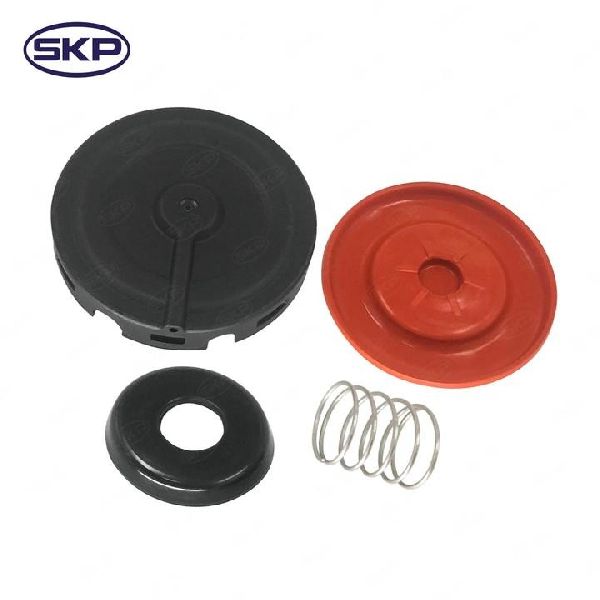
- PCV Valve / Oil Separator
(OEM #06K103495BL (supercedes 06K103495AR, 06K103495AF, etc.))— The diaphragm inside the PCV valve is a very common failure point on the EA888 Gen 3 engine, causing a large vacuum leak that triggers P0101. It is critical to get the latest revision.
Trusted brands: Volkswagen (OEM), Vaico, Hengst
OEM price range: $120-$160
Aftermarket price range: $50-$100 - Mass Airflow (MAF) Sensor
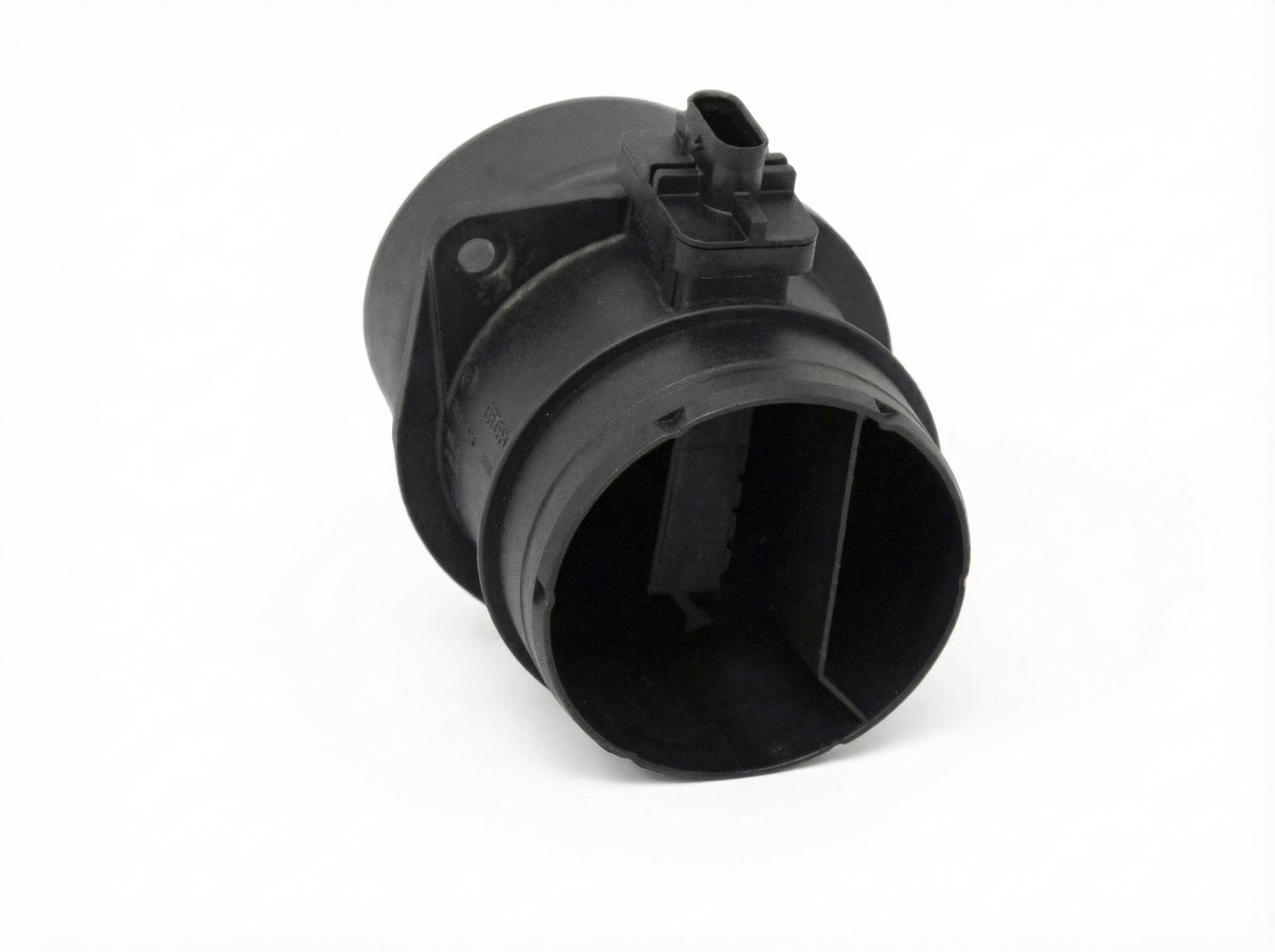
(OEM #06J906461D (Bosch))— This sensor is the primary component related to the code and can fail electronically or become too contaminated to clean effectively. Using the OEM Bosch part is strongly recommended.
Trusted brands: Bosch, Hitachi
OEM price range: $200-$250
Aftermarket price range: $80-$180 - MAF Sensor Cleaner — Often, the sensor is just dirty and cleaning it is a cheap and effective first step before replacing parts.
Trusted brands: CRC, Liqui Moly
Aftermarket price range: $10-$15
Related Codes That Often Appear With This One
- P0171 — System Too Lean. A vacuum leak from a bad PCV valve allows unmetered air into the engine, which the MAF sensor doesn't see. The oxygen sensors detect the extra air in the exhaust, leading to a lean code alongside the MAF performance code.
- P0299 — This code indicates a turbocharger underboost condition. A significant air leak in the intake system that causes P0101 can also lead to a loss of boost pressure. This code is also mentioned in TSB VIN-4-A-PIN AUGU.
- P0100 — This code indicates a malfunction in the MAF circuit itself (e.g., wiring issue). The provided TSB VIN-4-A-PIN AUGU lists P0100 and P0101 together as potential MIL-ON causes.
- P2177 — System Too Lean Off Idle. This is another lean code that points strongly toward a vacuum leak or an issue with an aftermarket intake causing incorrect MAF readings.
Technical Service Bulletins (TSBs) & Recalls
- VIN-4-A-PIN AUGU (dated 2016-08-30): Mentions "MIL-ON P0101 AND OR P0100" as a documented issue for 2016 Golfs.
- TSB 2044640 / 21 18 30: Although for a different VAG engine, it highlights how turbocharger damage can lead to performance issues and codes, which is relevant context for any VW turbo engine.
Platform-Specific Known Issues
- A Volkswagen Technical Service Bulletin (TSB), #VIN-4-A-PIN AUGU, lists "MIL-ON P0101 AND OR P0100" as a known issue for 2016 models, indicating a recognized pattern of this fault.
Mechanic-Grade Diagnostic Values
- Mass Airflow (g/s) at idle (1.8T Engine) — expected: 3.02 - 3.42 g/s. Failure: A significantly lower value suggests a vacuum leak (unmetered air). A higher value may indicate a contaminated sensor.
- Mass Airflow (g/s) at full throttle/high RPM — expected: Approximately 80% of rated horsepower (e.g., a 170hp engine should read ~136 g/s).. Failure: A reading significantly below this target under load can indicate a restriction (clogged filter/exhaust) or a failing sensor.
- MAF Sensor Connector Voltage (5-pin type) — expected: Pin 2: ~12V (Ignition On), Pin 3: Ground, Pin 4: ~5V reference from ECU, Pin 5: Signal voltage (~0.9V at idle, increasing with RPM).. Failure: Absence of 12V or 5V indicates a wiring or ECU issue. Signal voltage that is erratic or does not respond to RPM change indicates a failed sensor.
Hidden / Shadow Codes Worth Checking
- 16485 / 000257: This is the VAG-specific identifier for P0101, displayed as 'Mass Air Flow Sensor (G70): Implausible Signal' in tools like VCDS. (see via VCDS (VAG-COM), OBDeleven, or other professional VW/Audi diagnostic tools.)
Scan Tool Commands That Help
- VCDS (VAG-COM): Perform a data log in [01-Engine] -> [Meas. Blocks - 08] -> Group 003. — This is used to verify MAF sensor performance under real-world load. Log the data while driving in 3rd gear at full throttle from ~1700 to 4000 RPM to see if the sensor's readings match expected values and increase smoothly.
Wiring & Ground Locations
- Ground Point 15 — On the cylinder head.. A corroded or loose ground on the cylinder head can affect multiple engine sensors, including the MAF, leading to implausible signals.
- Main Engine Bay Ground — On the bulkhead behind the battery, identified by a collection of brown wires.. This is a primary grounding point for the engine harness. Corrosion here can cause a wide range of electrical issues, including sensor faults like P0101.
- MAF Sensor Connector (5-pin) — On the MAF sensor, located in the intake tube just after the air filter box.. Knowing the pinout is crucial for testing power, ground, and signal directly at the sensor to rule out wiring faults. Pin 3 is typically the ground wire (Brown).
Real Owner Repair Stories
- Reddit user on r/GolfGTI (MK6 GTI (similar EA888 engine) with an aftermarket MAPerformance intake.) — P0101 and P2177 (System Too Lean Off Idle) codes. Normal performance and MPG.
❌ Tried (didn't work) Cleaning the MAF sensor with CRC cleaner.
✅ What actually fixed it Installing a 3-inch honeycomb air straightener (from Treadstone Performance) into the intake piping just before the MAF sensor. The aftermarket intake was causing turbulent air, which the MAF could not read accurately. The straightener smoothed the airflow, resolving the codes. - Reddit user on r/GolfGTI (2010 MK6 GTI (similar EA888 engine)) — Engine stalling at idle, extremely loud turbo spool noise, P0101 code.
❌ Tried (didn't work) Cleaning the MAF sensor., Replacing the MAF sensor.
✅ What actually fixed it The user performed a DIY smoke test and found a massive air leak. The bracket on the side of the intercooler was completely missing, leaving a large hole. This demonstrates that a major boost/vacuum leak can be the root cause even when symptoms seem to point directly at the MAF sensor.
"I Checked Everything" — The Actual Cause
- In a 2016 Golf GTD (diesel), a P0101 code persisted after replacing the MAF sensor. A smoke test would have shown no leaks because the issue was not a leak, but a restriction. The actual cause was a severely clogged intake manifold due to carbon buildup. The manifold had to be removed and physically cleaned to restore proper airflow, which then allowed the MAF sensor to read correctly and cleared the code.
- The Ross-Tech wiki notes that on TDI engines, P0101 can be triggered by internal mechanical engine problems that restrict airflow, such as a worn camshaft lobe. This would not be found with a smoke test and would result in a legitimately low g/s reading that is implausible for a healthy engine.
OEM Part Supersession History
06K103495AF, 06K103495AR, 06K103495T→06K103495BL— The latest revision (BL) features an improved, more durable internal diaphragm to prevent tearing, which was the primary failure mode of the earlier versions.
Heads up: No incompatibility. It is highly recommended to only use the latest 'BL' revision (or newer) for replacement to ensure longevity.
Model Year Variations Within This Range
- 2015-2016: While the 2015-2016 models were originally fitted with earlier revisions of the PCV valve, the official replacement part is the updated 06K103495BL, which was standard on the 2017+ Mk7.5 Golf. This indicates a known weakness in the original part was corrected by the manufacturer.
Helpful Videos

Used OEM Parts in Stock
New Aftermarket Parts Available

The information in this article is provided for general reference and educational purposes only. Vehicle specifications, procedures, and part compatibility can vary by production date, trim level, and region. Always consult your vehicle's factory service manual and verify part numbers before purchasing or performing repairs. Safety-critical components such as airbags, seat belts, and braking systems should be installed by a qualified professional.
- Volkswagen GOLF:
- 🧭 Diagnostic Flowchart
- 🎬 Helpful Videos
- 🛍️ Shop This Part
- What's Unique About the 2015-2016 Volkswagen GOLF
- Symptoms You May Notice
- Most Likely Causes
- Rare But Worth Checking
- Diagnosis Steps
- Parts You'll Likely Need
- Related Codes That Often Appear With This One
- Technical Service Bulletins (TSBs) & Recalls
- Platform-Specific Known Issues
- Mechanic-Grade Diagnostic Values
- Hidden / Shadow Codes Worth Checking
- Scan Tool Commands That Help
- Wiring & Ground Locations
- Real Owner Repair Stories
- "I Checked Everything" — The Actual Cause
- OEM Part Supersession History
- Model Year Variations Within This Range
- 🎟️ Get 5% Off