

P0101 on 2007-2016 Volvo S80 3.2L: MAF Sensor Causes and Fixes
On a 2007-2016 Volvo S80 with the 3.2L engine, code P0101 is most often caused by a dirty Mass Airflow (MAF) sensor or a vacuum leak in the intake system. Start by cleaning the MAF sensor with a dedicated cleaner, a 15-minute job costing under $15. If that doesn't work, thoroughly inspect for vacuum leaks, especially from the PCV system, before suspecting a failed MAF sensor.
- Always start by cleaning the MAF sensor with a dedicated cleaner; it's the cheapest and most common fix.
- If cleaning the MAF doesn't work, thoroughly check for vacuum leaks before buying a new sensor. A smoke test is the best method.
- When replacing the MAF sensor on a Volvo, use a high-quality OEM or reputable aftermarket brand like Bosch to avoid further issues.
- Inspect the engine air filter as part of your initial diagnosis; a clogged filter is a simple but sometimes overlooked cause.
- Be aware of the common oil/vacuum leak from the brake vacuum pump on the driver's side of the 3.2L engine.
What's Unique About the 2007-2016 Volvo S80
The Volvo S80 with the 3.2L inline-six (SI6) engine is generally robust, but its unique transverse mounting required a complex Rear End Accessory Drive (READ) system. While P0101 is a universal code, on this platform it's frequently triggered by secondary issues like a failed PCV diaphragm creating a massive internal vacuum leak (often with a loud whistle) or a leak from the camshaft-driven brake vacuum pump. Owners often mistakenly replace the MAF sensor when the root cause is unmetered air from one of these common 3.2L-specific failure points.
Symptoms You May Notice
- Check Engine Light is on
- Reduced engine power and sluggish acceleration
- Hesitation or stumbling when accelerating
- Rough or unstable idle
- Decreased fuel economy
- Black smoke from the exhaust in some cases (running rich)
- Loud whistling or howling sound from the engine bay at idle (indicates PCV failure)
- Difficulty starting the engine
- Replacing the MAF sensor without checking for vacuum leaks. A vacuum leak, especially from the PCV system, is a very common cause, and a new MAF sensor will not fix it.
- Replacing oxygen (O2) sensors. While O2 sensors are part of the fuel control system, P0101 specifically points to an issue with the initial air measurement at the MAF sensor, which occurs upstream of the O2 sensors.
Most Likely Causes
- Dirty or Contaminated Mass Airflow (MAF) Sensor 🔴 High Probability → Shop Fuel Injection Air Flow Meter Over time, oil vapor from the PCV system and fine dust can coat the sensor's delicate hot wire, insulating it and causing inaccurate readings. A failing PCV system on this engine can exacerbate oil contamination of the intake tract.
How to confirm: Remove the MAF sensor, located on the air intake tube right after the air filter box. Visually inspect the small wires inside the sensor housing for a film of dirt or grime. The car may run better with the MAF sensor unplugged (forcing the ECU into a default mode), which strongly suggests a faulty sensor.
Typical fix: Clean the sensor using only a dedicated MAF sensor cleaner spray. Do not touch the wires. Let it dry completely before reinstalling. Some sources caution that cleaning is often a temporary fix and can sometimes damage the sensor's insulation. If cleaning does not resolve the issue, the sensor may have failed and requires replacement.
Est. part cost: $10-$20 for cleaner spray. - Vacuum Leak 🟡 Medium Probability Rubber and plastic vacuum lines, intake hoses, and gaskets become brittle with age and heat cycles, leading to cracks that allow unmetered air to enter the engine after the MAF sensor. On the 3.2L, the PCV diaphragm is a particularly common failure point.
How to confirm: The most reliable method is a smoke test, which involves feeding pressurized smoke into the intake system and watching for where it escapes. You can also perform a careful visual inspection of all hoses connected to the intake manifold and air ducting for obvious cracks or loose connections. A hissing sound from the engine bay at idle is another strong indicator. A disconnected main intake boot from the throttle body can also be a simple, overlooked cause.
Typical fix: Replace the cracked hose, leaking gasket, or tighten the loose clamp that is causing the leak. Common culprits include the air intake boot, PCV hoses, and the intake manifold gasket.
Est. part cost: $20-$150 depending on the specific hose or gasket. - Failed Mass Airflow (MAF) Sensor 🟡 Medium Probability → Shop Fuel Injection Air Flow Meter The internal electronics of the sensor can fail with age and heat cycles, even if it appears clean. Volvos are notoriously sensitive to the quality of electronic parts, and a cheap aftermarket sensor can cause more problems than it solves.
How to confirm: If cleaning the sensor and confirming there are no vacuum leaks does not fix the code, the sensor itself is likely faulty. A professional can confirm this by monitoring live data on a scan tool to see if the sensor's reported airflow (g/s) matches expected values at idle and under load. A faulty sensor may provide readings that are erratic or out of the plausible range.
Typical fix: Replace the MAF sensor. It is highly recommended to use a high-quality OEM or OEM-supplier part (like Bosch or Genuine Volvo) to ensure compatibility and longevity.
Est. part cost: $150-$300 for an OEM-quality sensor. - Clogged or Dirty Engine Air Filter ⚪ Low Probability → Shop Air Cleaner Assembly
How to confirm: Visually inspect the engine air filter. If it is visibly dirty, clogged with debris, or has not been replaced per the maintenance schedule, it is restricting airflow.
Typical fix: Replace the engine air filter. This is a simple and inexpensive maintenance item that should be checked first as a severely clogged filter can restrict air enough to trigger the code.
Est. part cost: $20-$50
Rare But Worth Checking
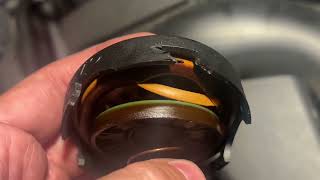
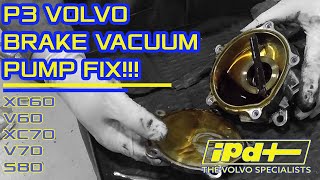
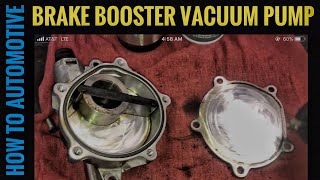
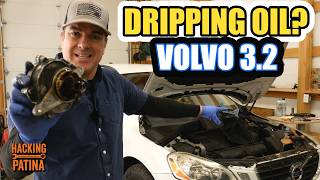
- Leaking Brake Vacuum Pump: The 3.2L engine is known for the seals in its camshaft-driven brake vacuum pump failing, causing a significant oil leak onto the driver's side of the transmission. In some cases, this can also create a vacuum leak, identifiable by a hissing sound, which could trigger a P0101 code. The primary symptom is usually the oil leak. A repair kit (Volvo P/N 31401556) is available. 🎬 See how to stop oil leaks and revive your vacuum pump.
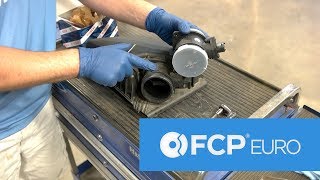
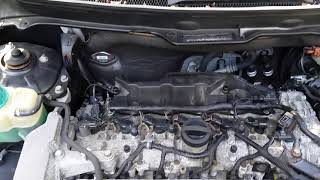
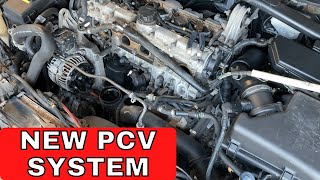
- Faulty PCV System (Oil Trap): A clogged or failed PCV (Positive Crankcase Ventilation) oil trap is a very common issue on this engine. A torn internal diaphragm creates a massive vacuum leak, causing a loud squealing, whistling, or 'hooting' noise from the engine. You can test for this by removing the oil filler cap while the engine is running; if there is extreme suction holding the cap down, or if removing it changes or stops the noise, the PCV unit has likely failed. 🎬 Watch this DIY walkthrough to replace the PCV and fix squealing. This can also cause oil to be pushed past seals or get sucked into the intake, contaminating the MAF sensor.
- Clogged Catalytic Converter: A restricted exhaust can create backpressure that throws off the engine's airflow dynamics, confusing the MAF sensor and triggering a P0101 code. This is usually accompanied by a significant loss of power, especially at higher RPMs, and potentially a sulfur-like smell from the exhaust.
- Loose Intake Ducting: In some cases, a large bump or impact can cause the main air intake hose to pop off the throttle body. This creates a massive post-MAF air leak, immediately triggering a P0101 and causing severe stalling and hesitation. Always check that all intake clamps are secure.
Diagnosis Steps
- Read the Code: Use an OBD-II scanner to confirm P0101 is the primary code. Note any other codes present, like P0171 or P0507, which strongly suggest a vacuum leak.
- Inspect the Air Filter: Remove and inspect the engine air filter. Replace if dirty.
- Inspect Intake System: Check the entire air intake path from the airbox to the throttle body. Ensure all clamps are tight and there are no visible cracks in the ducting. A loose hose clamp after a bump can be a simple cause.
- Check PCV System: With the engine running, listen for a loud whistle. Carefully try to remove the oil filler cap. If there is very strong suction or the noise changes, the PCV oil trap diaphragm has likely failed and is the source of a major vacuum leak.
- Clean the MAF Sensor: Disconnect the battery. Carefully remove the MAF sensor. Spray the internal wires generously with dedicated MAF sensor cleaner. Do not touch the wires. Allow it to air dry completely for at least 15 minutes before reinstalling.
- Clear Code and Test Drive: Reconnect the battery, clear the code with the scanner, and drive the vehicle to see if the code returns.
- Check for Vacuum Leaks: If the code returns, a more thorough check for vacuum leaks is needed. A smoke test is the most effective method. Pay close attention to all vacuum hoses, the intake manifold gasket area, and the brake vacuum pump.
- Inspect Wiring: If no leaks are found, inspect the MAF sensor's electrical connector and wiring for any signs of damage, corrosion, or loose pins.
- Replace MAF Sensor: If all other steps fail to resolve the issue, the MAF sensor itself has likely failed and should be replaced with a high-quality part (Bosch or Genuine Volvo).
Parts You'll Likely Need
- Mass Airflow (MAF) Sensor
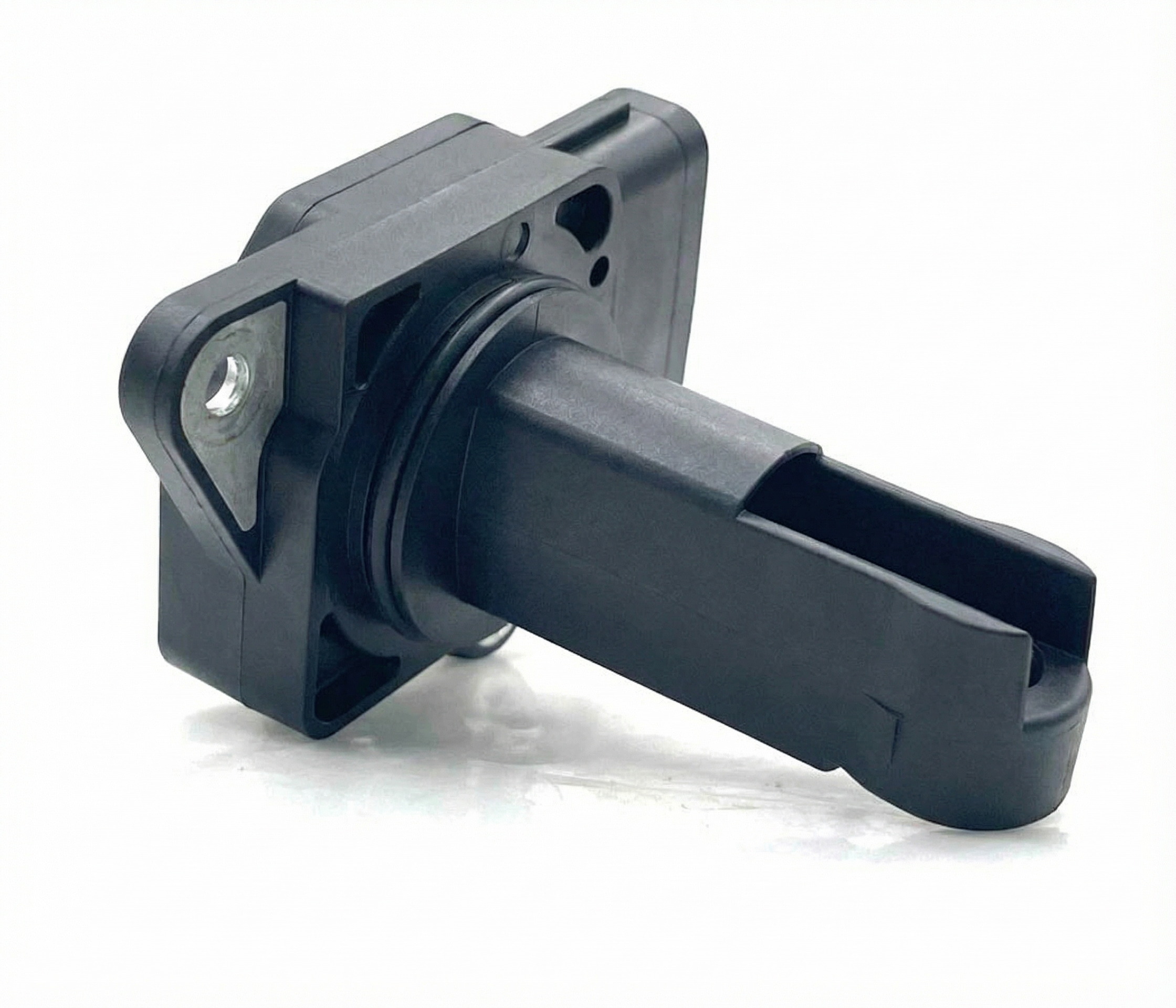
(OEM #31342363 (replaces 8670114))— This sensor is a common point of failure for this code, either through contamination or electronic failure. Using a Genuine Volvo or OEM Bosch part is highly recommended as these cars are sensitive to aftermarket electronics. - PCV Oil Trap / Breather Box
(OEM #31319642)— The diaphragm inside this unit is a very common failure item on the 3.2L engine, causing a massive vacuum leak that directly triggers P0101 and related codes. It often produces a loud whistling noise at idle. - Brake Vacuum Pump Repair Kit
(OEM #31401556)— The seals on the camshaft-driven brake vacuum pump are known to fail, causing both oil and vacuum leaks. If a hissing is heard from the driver's side of the engine and there is oil on the transmission, this is a likely culprit.
Related Codes That Often Appear With This One
- P0171 — System Too Lean (Bank 1). This code often appears with P0101 because a vacuum leak or under-reporting MAF sensor causes more air to enter the engine than the ECM is aware of, leading to a lean (too much air, not enough fuel) condition.
- P0507 — Idle Air Control System RPM Higher Than Expected. This can be triggered by a vacuum leak (like a failed PCV) that allows excess air into the engine at idle, causing the idle speed to be uncontrollably high.
Platform-Specific Known Issues
- The brake vacuum pump on the 3.2L I6 engine is a known source of oil leaks due to seal degradation. While primarily an oil leak issue, it can also cause a vacuum leak, which may contribute to or cause a P0101 code. A repair kit with upgraded seals is available from aftermarket suppliers.
Mechanic-Grade Diagnostic Values
- Mass Airflow (MAF) Sensor Reading at Idle — expected: 2.0-7.0 g/s (grams per second) at normal operating temperature.. Failure: Readings that are frozen, fluctuating wildly, or are 0.0 g/s while the engine is running indicate a faulty sensor or wiring issue. A reading below 1 g/s per liter of engine displacement (i.e., < 3.2 g/s for this engine) can point to a vacuum leak.
- MAF Sensor Power Supply Voltage — expected: Approximately battery voltage (12V+) at the power supply pin of the MAF connector with the key on, engine off.. Failure: A significantly lower voltage (e.g., 1.5-2.0V) indicates an open circuit or high resistance in the power supply wire from the system relay.
Hidden / Shadow Codes Worth Checking
- ECM-2101: This is the Volvo-specific Diagnostic Trouble Code (DTC) for 'Mass air flow (MAF) sensor - Signal too low / Signal too high'. It corresponds directly to the generic P0101 code and provides more detailed fault tracing information within the Volvo VIDA diagnostic software. (see via Volvo VIDA diagnostic software or a high-end professional scanner with Volvo-specific capabilities.)
Scan Tool Commands That Help
- Volvo VIDA: Vehicle Communication > ECM > Advanced > Resetting control module adaptations — After replacing a major component that affects the air-fuel mixture, such as the MAF sensor or the PCV oil trap, it is critical to perform this reset. It forces the Engine Control Module (ECM) to immediately relearn the long-term fuel trims with the new, correctly functioning part, preventing the system from trying to compensate based on old, faulty data.
- Volvo VIDA or equivalent professional scanner: Live Data Monitoring — Monitor the MAF sensor reading in g/s, short-term fuel trim (STFT), and long-term fuel trim (LTFT). For a P0101 caused by a vacuum leak, you will typically see high positive fuel trims (e.g., > +10%) as the ECM tries to add fuel to compensate for the unmetered air.
Wiring & Ground Locations
- MAF Sensor Connector (7/17) — On the MAF sensor itself, which is located in the air intake tube immediately after the air filter housing.. This 5-pin connector is the primary interface. Corrosion or a loose pin here will cause a P0101. The power supply wire (Pin 2) is a common point of failure due to an open circuit.
- Engine Harness Chafing Point — In the main engine wiring harness loom located directly behind the driver's side (left-hand drive) headlight assembly.. There is a documented case where the power supply wire to the MAF sensor was intentionally or accidentally cut inside this harness, leading to a 0 g/s reading and a P0101 code that was not resolved by replacing the sensor. A continuity test from the MAF connector to the fuse box is necessary if voltage is missing.
- Main Engine Ground Strap — On many P3 platform Volvos, a primary engine-to-chassis ground strap is located near the engine mount or transmission. A corroded or loose ground can cause a variety of erratic sensor readings.. A poor ground can create a floating reference for the MAF sensor, causing its signal to be out of the expected range and triggering a P0101 code.
Real Owner Repair Stories
- volvoXC.com forum user 'contrivance' (2002 Volvo V70 XC (Similar engine electronics principles)) — P0101 code, MAF reading 0.00 g/s at all engine speeds.
❌ Tried (didn't work) Replacing the MAF sensor with a new, genuine Bosch part.
✅ What actually fixed it Found a cut green power wire to the MAF sensor inside the wiring harness behind the driver's side headlight. Splicing the wire restored power to the sensor and fixed the problem. The user confirmed with a multimeter that Pin 2 at the MAF connector was only getting 1.5-2.0V instead of battery voltage before the fix. - Matthew's Volvo Site forum user (Volvo with 3.2L engine) — Loud whistling noise at idle, P0101 and lean codes (P0171).
❌ Tried (didn't work) Cleaning the MAF sensor., Searching for cracked vacuum hoses with carb cleaner.
✅ What actually fixed it The PCV oil trap diaphragm was torn. The whistling noise and extreme vacuum at the oil filler cap were the key indicators. Replacing the entire PCV box assembly resolved the massive vacuum leak and all associated codes.
"I Checked Everything" — The Actual Cause
- In cases where a smoke test shows no external vacuum leaks, the P0101 is often caused by an internal vacuum leak from a failed PCV oil trap diaphragm. The smoke test may not reveal this leak as it's internal to the crankcase ventilation system, but the classic symptom is a loud whistle at idle and strong suction at the oil filler cap.
- If a smoke test is clean and the PCV system is confirmed to be working, the issue can be a faulty fuel pressure sensor. The ECM may misinterpret the conflicting data between the O2 sensors (seeing a lean condition from low fuel pressure) and the MAF sensor (reporting correct airflow) by flagging the MAF with a P0101 code.
OEM Part Supersession History
8670114→31342363— Standard part revision and update by Volvo.
Heads up: The parts are generally interchangeable for the specified applications, but it is always recommended to use the latest part number (31342363) when replacing.
Diagnostic Flowchart
Other Known Issues on This Vehicle
Issues unrelated to this code that are worth knowing about as an owner of this generation:
- Brake Vacuum Pump Oil Leak 🔴 High — Very common on high-mileage (80k+ miles) 3.2L engines. The seals become hard and brittle, causing a significant oil leak onto the top of the transmission. (Ref: No official recall, but widely documented. Repair kits (e.g., Volvo P/N 31401556) are available.)
- PCV / Oil Filter Housing Diaphragm Failure 🟠 Medium — Common after 80k-120k miles. The rubber diaphragm tears, causing a loud whistling or howling noise at idle, high crankcase vacuum, and can lead to other oil leaks. (Ref: No recall. The diaphragm can sometimes be replaced separately (e.g., Land Rover P/N LR023777), but often the entire housing (Volvo P/N 31319643) is replaced.)
- READ (Rear End Accessory Drive) Bearing Failure 🔴 High — Less common than other issues but catastrophic. A whirring or grinding noise from the transmission side of the engine that increases with RPM. Failure can cause loss of power to all accessories (alternator, A/C) and potentially severe engine damage. (Ref: Volvo TSB 21-9 is noted in some forums, referencing noise from the READ unit. Repair is complex and requires special tools.)
- Oil Consumption 🟠 Medium — Many 3.2L engines are known to consume oil. Some owners report that switching to a higher viscosity oil, like 0W-40 or 5W-40, can help reduce consumption.
- Upper Engine Mount (Torque Rod) Failure 🟡 Low — The upper engine mount bushing wears out, leading to increased vibration in the cabin, especially at idle. It's a common and relatively easy part to replace.
- Front Control Arm Bushing Wear 🟠 Medium — The large bushings on the front control arms wear out, causing a metallic clunking sound when going over bumps. A common issue on the heavy P3 platform cars.
Used vs. New Parts: Buying Guide for This Vehicle
When a used part is the smart pick: Used parts are a reasonable choice for purely mechanical, non-wear components like the plastic air filter housing/lid or intake ducting if they are free of cracks. A used PCV box or brake vacuum pump from a low-mileage, rear-ended donor vehicle could be a cost-effective option, but carries risk.
Donor-vehicle mileage cap: roughly under 60000 miles for the part to have meaningful remaining life.
What to inspect on the donor part:
- For PCV/Oil Trap: Check the donor vehicle's oil cap for signs of sludge. Avoid if heavy buildup is present.
- For Brake Vacuum Pump: Inspect thoroughly for any signs of oil seepage around the seals. If it's already leaking, it's no good.
- For Intake Hoses: Squeeze the rubber to ensure it is still pliable and not hard or brittle. Check clamps and connection points for any stress marks.
OEM-only on this vehicle (don't cheap out):
- Mass Airflow (MAF) Sensor: Volvos are notoriously sensitive to aftermarket electronics. To avoid persistent issues, only use a Genuine Volvo or the original OEM supplier part (Bosch).
- PCV Oil Trap Diaphragm/Assembly: While cheaper aftermarket kits exist, OEM units have a better track record for longevity. A failed aftermarket PCV can quickly lead to the same P0101 code returning.
Aftermarket brands forum-validated for this vehicle:
- Bosch for the MAF sensor (as they are the OEM supplier).
Brands owners have reported issues with on this vehicle:
- Unbranded, no-name MAF sensors from online marketplaces are frequently reported to be dead-on-arrival or fail within a few months on Volvo forums.
Real Owner Stories
Aggregated from forums and TSBs cited above. Mileages and costs reflect what owners reported in those sources.
2000 Volvo S80 2.9L
Symptoms: Experienced a P0101 code.
What fixed it: Replacing a leaking intake gasket.
Cost: $7-$7
Source hint: Swedespeed - Need help with P0101 code
2007 Volvo S80 3.2L I6
Symptoms: P0101 code caused by a lean condition that the ECU misinterpreted.
What fixed it: Replacing a failing fuel pump.
Source hint: Reddit r/Volvo - People of Volvo... I need some help....
Volvo S80 2.4D
Symptoms: Hesitation and rough running along with the P0101 fault code.
What fixed it: Diagnostic process involved checking and replacing the swirl arm.
Source hint: Volvo Forums UK - Volvo S80 2.4d p0101 fault code
Related OBD-II Codes
Frequently Asked Questions
Why is my Volvo S80 3.2L making a loud whistling sound at idle along with the P0101 code?
Can I use any aftermarket MAF sensor to fix the P0101 on my S80?
I have an oil leak near my brake vacuum pump; could this be related to my P0101 code?
Will cleaning the MAF sensor on my 3.2L Volvo definitely fix the code?
How does the PCV system on the S80 3.2L affect the MAF sensor readings?
Helpful Videos



We Have This Part in Stock

The information in this article is provided for general reference and educational purposes only. Vehicle specifications, procedures, and part compatibility can vary by production date, trim level, and region. Always consult your vehicle's factory service manual and verify part numbers before purchasing or performing repairs. Safety-critical components such as airbags, seat belts, and braking systems should be installed by a qualified professional.
- Volvo S80:
- 🧭 Diagnostic Flowchart
- 🎬 Helpful Videos
- 🛍️ Shop This Part
- What's Unique About the 2007-2016 Volvo S80
- Symptoms You May Notice
- Most Likely Causes
- Rare But Worth Checking
- Diagnosis Steps
- Parts You'll Likely Need
- Related Codes That Often Appear With This One
- Platform-Specific Known Issues
- Mechanic-Grade Diagnostic Values
- Hidden / Shadow Codes Worth Checking
- Scan Tool Commands That Help
- Wiring & Ground Locations
- Real Owner Repair Stories
- "I Checked Everything" — The Actual Cause
- OEM Part Supersession History
- Other Known Issues on This Vehicle
- Used vs. New Parts: Buying Guide for This Vehicle
- Real Owner Stories
- 2000 Volvo S80 2.9L
- 2007 Volvo S80 3.2L I6
- Volvo S80 2.4D
- Related OBD-II Codes
- Frequently Asked Questions
- 🎟️ Get 5% Off