

P0101 on 2009-2017 Volvo XC60: MAF Sensor Causes and Fixes
On a 2009-2017 Volvo XC60, code P0101 is most often caused by a vacuum leak from a disconnected intake hose or a dirty Mass Air Flow (MAF) sensor. Before replacing parts, check for loose intake tubes and try cleaning the MAF sensor with a dedicated cleaner.
- First, check that the large air intake hose is securely clamped to the engine's throttle body. This is a common and free fix.
- Your second step should be to clean the MAF sensor with a dedicated cleaner; this often resolves the issue without needing new parts.
- If you do need to replace the MAF sensor, avoid cheap unbranded parts. Stick with OEM, Bosch, or Denso to prevent future problems.
- This code is often accompanied by a P0171 'System Too Lean' code, which strongly points to an unmetered air leak somewhere in the intake system.
What's Unique About the 2009-2017 Volvo XC60
For this generation of Volvo XC60, the P0101 code is frequently not a failure of the MAF sensor itself, but rather a 'mechanical' issue causing incorrect readings. The most common culprits are air leaks between the MAF sensor and the engine. Specifically, the large air intake pipe can become disconnected from the throttle body, creating a massive unmetered air leak that immediately triggers the code. One owner documented this exact failure occurring after hitting a large bump, which was fixed simply by re-clamping the hose. 🎬 Watch this owner fix the common P0101 intake hose issue. Always check for physical air leaks before spending money on a new sensor.
Symptoms You May Notice
- Check Engine Light is on
- Reduced engine power and poor acceleration, sometimes entering 'limp-home mode'
- Hesitation or stumbling when accelerating
- Rough or unstable idle
- Engine may stall, especially after a sudden event like hitting a bump
- Decreased fuel economy
- Black smoke from the exhaust in some cases
- Immediately replacing the MAF sensor without first checking for air leaks. An air leak is very common on this vehicle and will cause the P0101 code to return even with a new sensor.
Most Likely Causes
- Air Intake Leak (Disconnected/Cracked Hose) 🔴 High Probability → Shop Engine Air Intake Resonator The large flexible intake duct that connects the air filter housing to the throttle body can work itself loose or crack over time. A video specifically shows this hose popping off the throttle body on an XC60 after hitting a bump, causing an immediate stall and P0101 code. The clamp securing this connection is a critical checkpoint.
How to confirm: Visually inspect the entire air intake path from the air filter box to the engine. Pay close attention to the clamps securing the large rubber/plastic intake tube to the throttle body and the airbox. Tug on the connections to ensure they are secure.
Typical fix: Reconnect the hose and tighten the clamp securely. If the hose is cracked, it must be replaced.
Est. part cost: $0-$150 - Dirty Mass Air Flow (MAF) Sensor 🔴 High Probability → Shop Fuel Injection Air Flow Meter Over time, oil vapor from the PCV system and fine dust can coat the delicate sensing elements of the MAF sensor, insulating them and causing inaccurate readings.
How to confirm: Remove the sensor from the intake tube (typically held by two Torx screws). Visually inspect the small wires inside the sensor housing. If they appear dirty or coated, cleaning is warranted.
Typical fix: Carefully spray the sensor's internal wires with a dedicated Mass Air Flow sensor cleaner. Do not touch the wires. Allow it to dry completely before reinstalling. 🎬 See how to safely clean your XC60's MAF sensor.
Est. part cost: $10-$20 - Dirty or Clogged Engine Air Filter 🟡 Medium Probability → Shop Air Cleaner Assembly
How to confirm: Remove the engine air filter from the airbox and inspect it. If it is visibly clogged with dirt, debris, or insects, it is restricting airflow and can cause the P0101 code.
Typical fix: Replace the engine air filter. This is a standard maintenance item.
Est. part cost: $20-$50 - Failed Mass Air Flow (MAF) Sensor ⚪ Low Probability → Shop Fuel Injection Air Flow Meter
How to confirm: This is typically diagnosed by exclusion. If you have confirmed there are no air leaks, the sensor is clean, the air filter is new, and the wiring is intact, the sensor itself has likely failed electronically. You can also monitor live data; a healthy sensor should read around 3.5 g/s at idle.
Typical fix: Replace the MAF sensor. It is highly recommended to use an OEM or high-quality OE-brand part like Bosch or Denso, as cheap aftermarket sensors are known to cause persistent issues. 🎬 Follow this step-by-step guide to replace the MAF sensor.
Est. part cost: $150-$300
Rare But Worth Checking
- Vacuum leak in PCV system: The Positive Crankcase Ventilation (PCV) system, also known as the oil trap or breather box, uses vacuum hoses that can crack or break. The PCV box itself can fail, creating a significant unmetered air leak that can be difficult to find without a smoke test.
- Damaged MAF Sensor Wiring or Connector: → Shop Fuel Injection Air Flow Meter The wiring harness or connector for the MAF sensor can become damaged, causing an intermittent or total loss of signal. Wiggle the connector and wiring with the engine running to see if the idle changes.
Diagnosis Steps
- Read the code: Use an OBD-II scanner to confirm P0101 is the primary code. Note any other codes present, like P0171.
- Inspect Air Intake System: Open the hood and thoroughly inspect the entire air intake tract. Check that the large intake tube is securely clamped to both the air filter housing and the engine's throttle body. Look for any cracks or splits in the rubber/plastic components.
- Inspect Air Filter: Open the air filter box and check the condition of the air filter. Replace if it is dirty or clogged.
- Clean the MAF Sensor: Disconnect the electrical connector from the MAF sensor. Remove the two Torx screws holding it in place and carefully pull it out. Spray the internal sensor elements generously with MAF-specific cleaner. Do NOT touch the elements. Let it air dry completely before reinstalling.
- Clear Codes and Test Drive: After reassembly, clear the trouble codes with your scanner and perform a test drive to see if the code returns.
- Check for Vacuum Leaks: If the code comes back, the next step is to check for less obvious vacuum leaks. A professional smoke test is the most effective method. This involves feeding pressurized smoke into the intake system and looking for where it escapes. Pay close attention to the PCV system hoses.
- Test or Replace MAF Sensor: If all other steps fail to resolve the issue, the MAF sensor itself has likely failed and should be replaced. A healthy MAF sensor on this engine should read approximately 3.5 g/s at idle on a scan tool.
Parts You'll Likely Need
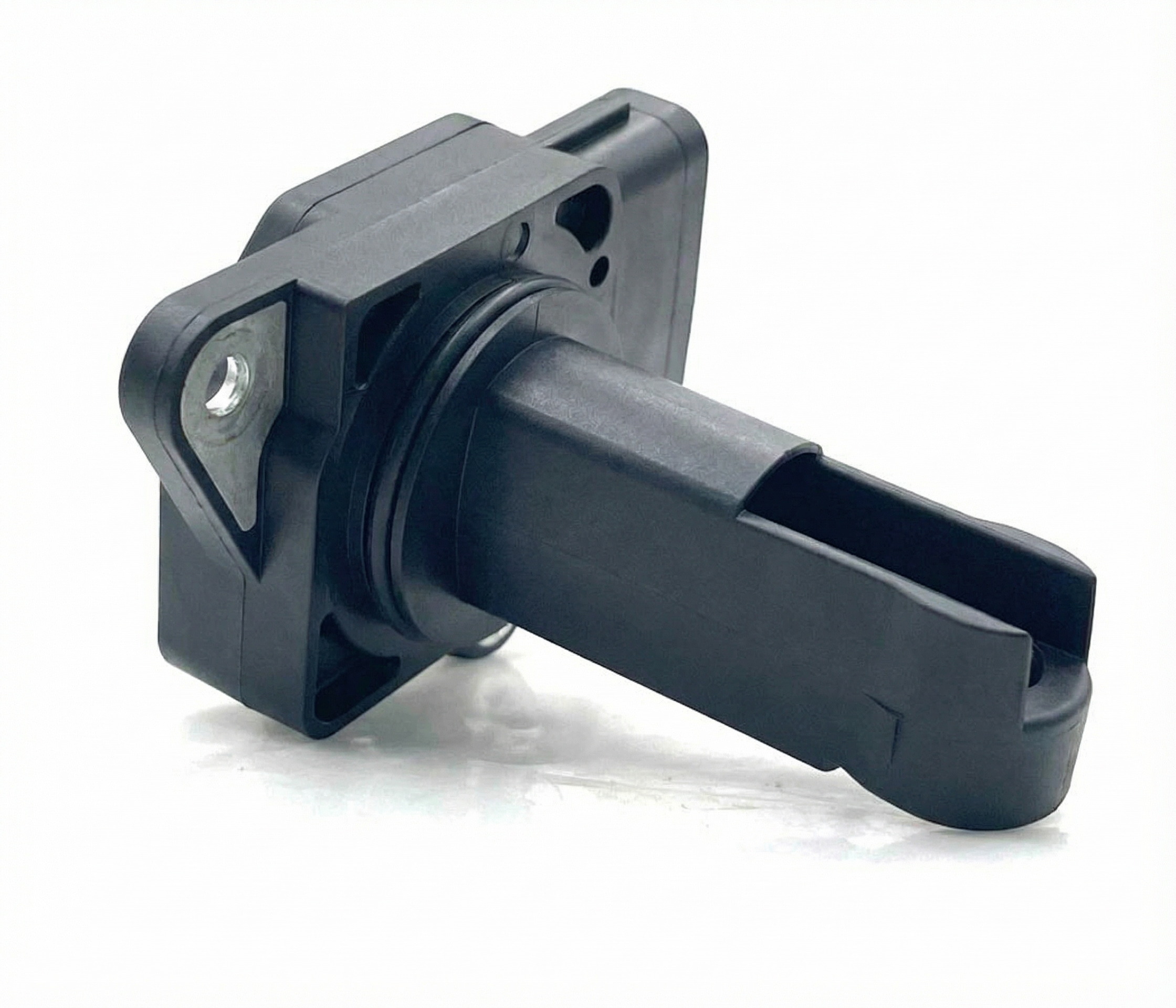
- Mass Air Flow Sensor
(OEM #30751293 (For 3.0L T6 Engines), 8658471 (For 3.2L Engines))— If cleaning the sensor and checking for leaks doesn't solve the problem, the sensor itself has likely failed. Part numbers vary by engine.
Trusted brands: Bosch, Denso, Genuine Volvo
OEM price range: $220-$300
Aftermarket price range: $80-$180 - Engine Air Filter — A clogged air filter restricts airflow and can trigger this code. It's a basic maintenance item that should be checked first.
Trusted brands: Mann-Filter, Mahle, Genuine Volvo
OEM price range: $35-$50
Aftermarket price range: $20-$35 - Mass Air Flow Sensor Cleaner — This is a special solvent for safely cleaning the delicate MAF sensor elements. It's the first and most cost-effective fix to try.
Trusted brands: CRC, Liqui Moly
OEM price range: $10-$20
Aftermarket price range: $10-$20
Related Codes That Often Appear With This One
- P0171 — System Too Lean (Bank 1). This code often appears with P0101 because an unmetered air leak (vacuum leak) causes more air to enter the engine than the MAF sensor reports. The ECU sees excess oxygen from the O2 sensors and flags a lean condition.
Platform-Specific Known Issues
- Intake Hose Disconnecting from Throttle Body: → Shop Fuel Injection Throttle Body A well-documented failure mode on the XC60 is the main intake hose popping off the throttle body connection, especially after hitting a bump or due to a weak clamp. This creates a very large unmetered air leak, causing an immediate stall and a P0101 code. Re-securing the clamp is often the only fix needed.
Mechanic-Grade Diagnostic Values
- Mass Air Flow Rate at Idle — expected: ~3.5 g/s. Failure: Significantly higher or lower values. A lower value can indicate a post-MAF vacuum leak, while a higher value could indicate a dirty sensor or other airflow issues.
- MAF Sensor Signal Voltage at Idle (Engine Warm) — expected: ~1.3 V. Failure: Voltage that is erratic or does not increase smoothly with RPM.
- MAF Sensor Signal Voltage at 3000 RPM — expected: ~1.9 V. Failure: Voltage does not rise in a linear fashion from idle, or the reading is flat.
- MAF Sensor Power Supply Voltage (Key On, Engine Off) — expected: 5V reference on one pin, 12V (Battery Voltage) on another.. Failure: Missing either the 5V reference or 12V supply indicates a wiring or ECM issue, not a sensor failure.
Hidden / Shadow Codes Worth Checking
- ECM-130A: Intake air leakage. This is a Volvo-specific code that often accompanies the generic P0101 and points directly to an unmetered air leak as the likely cause. (see via Volvo's official diagnostic software (VIDA) or a compatible high-end professional scanner.)
Scan Tool Commands That Help
- Volvo VIDA (Vehicle Information & Diagnostics for Aftersales): MAF Sensor Calibration / Adaptation Reset — This function should be performed after installing a new MAF sensor. It resets the engine control module's learned fuel trim values, allowing it to adapt to the new sensor's specific readings. While the car may run without it, performance and fuel economy may not be optimal until the calibration is done.
Wiring & Ground Locations
- Engine Bay Ground Points — Multiple M6 ground bolts are located on the driver and passenger side strut towers in the engine bay.. A poor ground connection for the engine wiring harness can cause erratic sensor readings, including from the MAF sensor. These points are susceptible to corrosion and should be checked for tightness and cleanliness.
- Main Engine Ground Strap — On similar Volvo platforms, a key ground strap runs from the top of the engine (near the timing cover) to the vehicle chassis.. This primary ground strap can corrode and break, leading to a host of electrical issues, including sensor performance problems that could trigger a P0101.
- MAF Sensor Connector Pins (5-pin connector) — On the MAF sensor itself.. Knowing the pin functions allows for testing. Based on similar Volvo engines: Pin 4 (Purple/White) is the 5V reference from the ECM, Pin 5 (Purple) is the signal wire, and other pins provide 12V power and ground. Testing for correct voltages here can isolate a bad sensor from a wiring problem.
Real Owner Repair Stories
- Volvo Owners Club Forum user 'Zander99' (Volvo S60 D5 (Diesel engine, but P0101 principle is similar)) — P0101 code with 'signal too high' message in VIDA, power loss under hard acceleration.
❌ Tried (didn't work) Initial diagnosis focused on the MAF sensor and intake leaks.
✅ What actually fixed it The swirl flap arm was completely broken ('FUBAR'). Replacing the arm resolved the airflow issue and the code. - Reddit user 'TroubledGeorge' (2006 Volvo S60 2.5T (P2 Platform, similar MAF issues)) — Persistent P0101 code, rough idle, surging.
❌ Tried (didn't work) Replaced the MAF sensor once. The problem continued. Replaced it a second time with another replacement part; the problem still persisted.
✅ What actually fixed it The owner acquired a used, original MAF sensor from a wrecked car as a test, and it worked perfectly, solving the problem. This indicated the two prior 'new' or 'tested' replacement sensors were faulty. - Reddit user '[deleted]' (2005 Volvo XC70) — P0101 and P3300 codes, engine sputtering.
❌ Tried (didn't work) Replaced MAF sensor multiple times, changed battery.
✅ What actually fixed it The user replaced the EVAP/charcoal canister. After clearing the codes, the engine ran well with no sputtering and the codes did not return.
"I Checked Everything" — The Actual Cause
- A smoke test of the intake system may come back clean, yet the P0101 code persists. In these cases, the root cause is often not an unmetered air leak. Common culprits include a clogged catalytic converter creating exhaust backpressure that skews airflow readings, or a series of faulty 'new' aftermarket MAF sensors that are bad out of the box.
When the Usual Fixes Don't Work
- While the most common fixes are cleaning the MAF and checking for intake leaks, numerous owner reports show that even a brand new, original Volvo MAF sensor does not always fix the code. In these cases, the problem was often an underlying issue that was fooling the sensor, such as an incompatible aftermarket air filter, a clogged catalytic converter, or a broken mechanical component like a swirl flap arm. This reinforces that P0101 is a 'Range/Performance' code, meaning the sensor's readings are illogical, not necessarily that the sensor itself is broken.
OEM Part Supersession History
30751293→31342521— Standard part revision or manufacturer change.
Heads up: These parts are generally interchangeable for the specified applications. However, another part, 8658471, is also listed for the same engines, creating confusion. Always verify the correct part number using the vehicle's VIN before ordering.
Model Year Variations Within This Range
- 2009-2017: There is significant overlap and potential confusion in part catalogs between MAF sensor part numbers 30751293 and 8658471 for both the 3.0L T6 and 3.2L engines. Unlike a clear split by engine, the correct part may be VIN-dependent. Do not assume one part number is for one engine and one for the other; always verify.
Diagnostic Flowchart
Other Known Issues on This Vehicle
Issues unrelated to this code that are worth knowing about as an owner of this generation:
- Excessive Engine Oil Consumption 🔴 High — Common on T6 engines and 2015-2016 four-cylinder engines. Often caused by faulty piston rings from the factory. Can require adding oil between changes. (Ref: Volvo has addressed this with extended warranty programs for certain vehicles.)
- AWD System (Haldex AOC Pump) Failure 🟠 Medium — The pump in the All-Wheel Drive coupling can fail, often due to a clogged filter, leading to an 'AWD Disabled' warning message. This is a common issue on AWD models as they age.
- Automatic Transmission Shift Quality Issues 🟠 Medium — Owners report issues with the Aisin automatic transmission, including harsh shifting, hesitation, or slipping. Problems can sometimes be traced to the valve body or the Transmission Control Module (TCM). (Ref: Software updates have been issued to address some shift quality complaints.)
- PCV System Failure 🟠 Medium — The PCV breather box/oil trap is known to clog or fail around 80-100k miles. If not addressed, this can cause excessive crankcase pressure, leading to blown engine seals (like the rear main seal) and oil leaks.
- Power Tailgate Malfunction 🟡 Low — The motorized struts for the power tailgate can fail, causing the tailgate to become stiff, not open, or make noise. A recall was issued for some model years due to the lifting arm potentially separating. (Ref: Recall issued for some vehicles concerning the tailgate lifting arm.)
Used vs. New Parts: Buying Guide for This Vehicle
When a used part is the smart pick: For the MAF sensor, a used OEM part (e.g., Bosch, Denso) from a reputable salvage yard is often a smarter and more reliable choice than a new, cheap, unbranded aftermarket sensor. For mechanical items like the air intake tube or PCV hoses, used parts are a good option if they are free of cracks, are still flexible, and the connections are intact.
Donor-vehicle mileage cap: roughly under 80000 miles for the part to have meaningful remaining life.
What to inspect on the donor part:
- For a used MAF, look for an original Bosch or Denso logo on the part.
- Inspect the intake hose for any hairline cracks, especially at the accordion sections and connection points.
- Squeeze any used rubber hoses to ensure they are not hard and brittle.
OEM-only on this vehicle (don't cheap out):
- Mass Air Flow Sensor: It is strongly recommended to use Genuine Volvo or the original OE manufacturer (Bosch/Denso). Many owners report immediate or persistent problems with cheap aftermarket sensors on this platform.
Aftermarket brands forum-validated for this vehicle:
- Walker Products (MAF Sensor): One user reported success with this brand as a cheaper alternative to OEM.
Brands owners have reported issues with on this vehicle:
- TPI (MAF Sensor): A user reported this brand was 'a piece of junk' that caused immediate rough idling.
- Generic unbranded Chinese sensors: Widely reported across forums to be unreliable or non-functional out of the box.
Real Owner Stories
Aggregated from forums and TSBs cited above. Mileages and costs reflect what owners reported in those sources.
2010 Volvo XC60
Symptoms: The car stalled immediately after hitting a bump, the Check Engine Light came on, and it threw a P0101 code.
What fixed it: The intake hose had popped off the throttle body. Reconnecting the hose and tightening the clamp resolved the issue.
Source hint: YouTube - Volvo P0101 Mass Air Flow Code Solved and Fixed DIY
Volvo XC60 (P3 Platform)
Symptoms: Persistent P0101 MAF sensor error even after installing a new original Volvo unit.
What fixed it: The issue was traced to vacuum leaks and the use of an incompatible aftermarket air filter; the mechanic recommended checking for a target idle reading of 3.5 g/s.
Source hint: JustAnswer - P0101 maf sensor error, I've put a new volvo original unit
Related OBD-II Codes
Frequently Asked Questions
My XC60 stalled immediately after hitting a bump and now has a P0101 code. What is the most likely cause?
What is the target Mass Air Flow reading for a healthy XC60 at idle?
Can I clean the MAF sensor on my Volvo myself, or do I need to replace it?
Are there specific brands I should use if I need to replace the MAF sensor on my XC60?
Could a PCV system failure cause a P0101 code on my 2009-2017 XC60?
Does the engine air filter affect the P0101 code on this vehicle?
Helpful Videos
We Have This Part in Stock

The information in this article is provided for general reference and educational purposes only. Vehicle specifications, procedures, and part compatibility can vary by production date, trim level, and region. Always consult your vehicle's factory service manual and verify part numbers before purchasing or performing repairs. Safety-critical components such as airbags, seat belts, and braking systems should be installed by a qualified professional.
- Volvo XC60:
- 🧭 Diagnostic Flowchart
- 🎬 Helpful Videos
- 🛍️ Shop This Part
- What's Unique About the 2009-2017 Volvo XC60
- Symptoms You May Notice
- Most Likely Causes
- Rare But Worth Checking
- Diagnosis Steps
- Parts You'll Likely Need
- Related Codes That Often Appear With This One
- Platform-Specific Known Issues
- Mechanic-Grade Diagnostic Values
- Hidden / Shadow Codes Worth Checking
- Scan Tool Commands That Help
- Wiring & Ground Locations
- Real Owner Repair Stories
- "I Checked Everything" — The Actual Cause
- When the Usual Fixes Don't Work
- OEM Part Supersession History
- Model Year Variations Within This Range
- Other Known Issues on This Vehicle
- Used vs. New Parts: Buying Guide for This Vehicle
- Real Owner Stories
- 2010 Volvo XC60
- Volvo XC60 (P3 Platform)
- Related OBD-II Codes
- Frequently Asked Questions
- 🎟️ Get 5% Off