

P0101 on 2001-2007 Volvo XC70: MAF Sensor, Vacuum Leak Causes, and Fixes
On a 2001-2007 Volvo XC70, code P0101 is most often caused by a vacuum leak from a cracked intake hose or a faulty PCV system, not just a bad MAF sensor. Before replacing the sensor, perform a smoke test to check for leaks and verify the PCV system's health. In Volvo's diagnostic software (VIDA), this may appear as code ECM-121B.
- Code P0101 on a 2001-2007 XC70 is more likely a vacuum leak than a bad MAF sensor.
- Always perform a smoke test to check for leaks in the intake and PCV system before buying parts.
- If you must replace the MAF sensor, use an OEM Bosch part to avoid compatibility issues.
- Symptoms include rough idle, hesitation, and poor fuel economy.
- Checking and cleaning the air filter, MAF sensor, and inspecting hoses are simple first steps in diagnosis.
What's Unique About the 2001-2007 Volvo XC70
On this P2 platform Volvo, P0101 is frequently a 'false flag' code. While it points to the MAF sensor, the actual cause is very often unmetered air entering the engine after the sensor due to vacuum leaks. These turbocharged engines have a complex network of intake and vacuum hoses, including the PCV (Positive Crankcase Ventilation) system, which are common failure points as they age and become brittle. Owners often mistakenly replace the MAF sensor multiple times without success, because the root cause is a simple cracked hose or a clogged PCV system.
Symptoms You May Notice
- Rough idle, especially on a cold start or when coming to a stop.
- Hesitation or lack of power during acceleration.
- Engine stalling, sometimes at startup or at stop lights.
- Poor fuel economy.
- Surging or fluctuating idle RPM.
- Rough or erratic transmission shifting that coincides with engine performance issues, as the transmission control module relies on accurate engine load data.
- Replacing the MAF sensor without first checking for vacuum leaks. Many owners replace the sensor, sometimes multiple times with aftermarket parts, only for the code to return because the actual problem is a cracked hose or clogged PCV system.
Most Likely Causes
- Vacuum Leaks (Intake Hoses, PCV System) 🔴 High Probability The plastic and rubber components in the intake and PCV systems become brittle with age and heat cycles, leading to cracks. The PCV system is a known maintenance item that often gets clogged, causing pressure to build and force leaks elsewhere. Common failure points include the main intake hose's accordion section and small, hidden PCV hoses.
How to confirm: Perform a smoke test. This involves 🎬 Watch: How to use a smoke machine to find leaks. feeding pressurized smoke into the intake system and watching for where it escapes. Check the large intake hose between the air filter box and the turbo, all PCV hoses, and vacuum lines around the intake manifold. A simpler, but less effective method, is to spray brake cleaner or starter fluid around suspected leak points with the engine running and listen for a change in idle speed.
Typical fix: Replace the cracked hose(s) or service the PCV system (replace the oil trap and associated hoses).
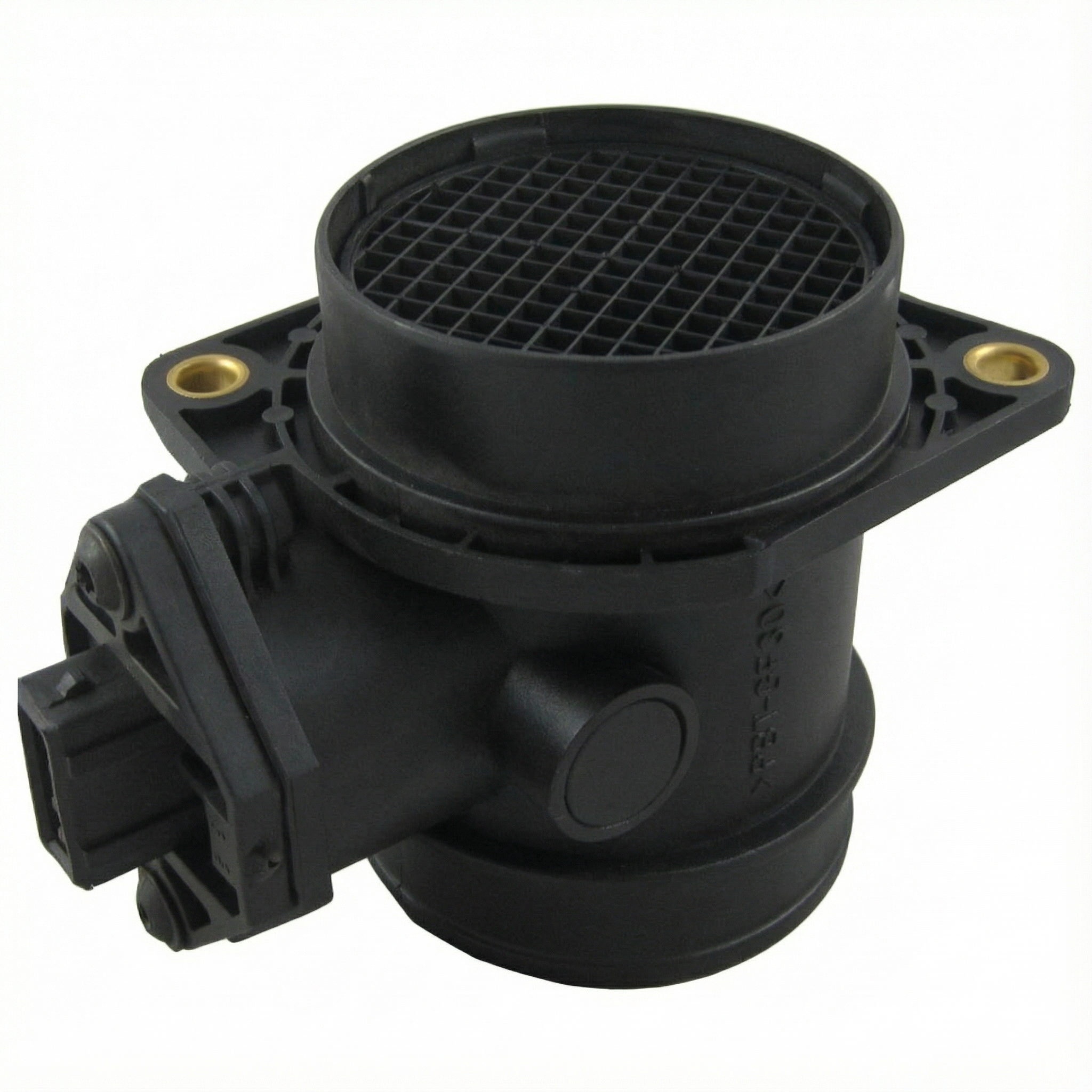
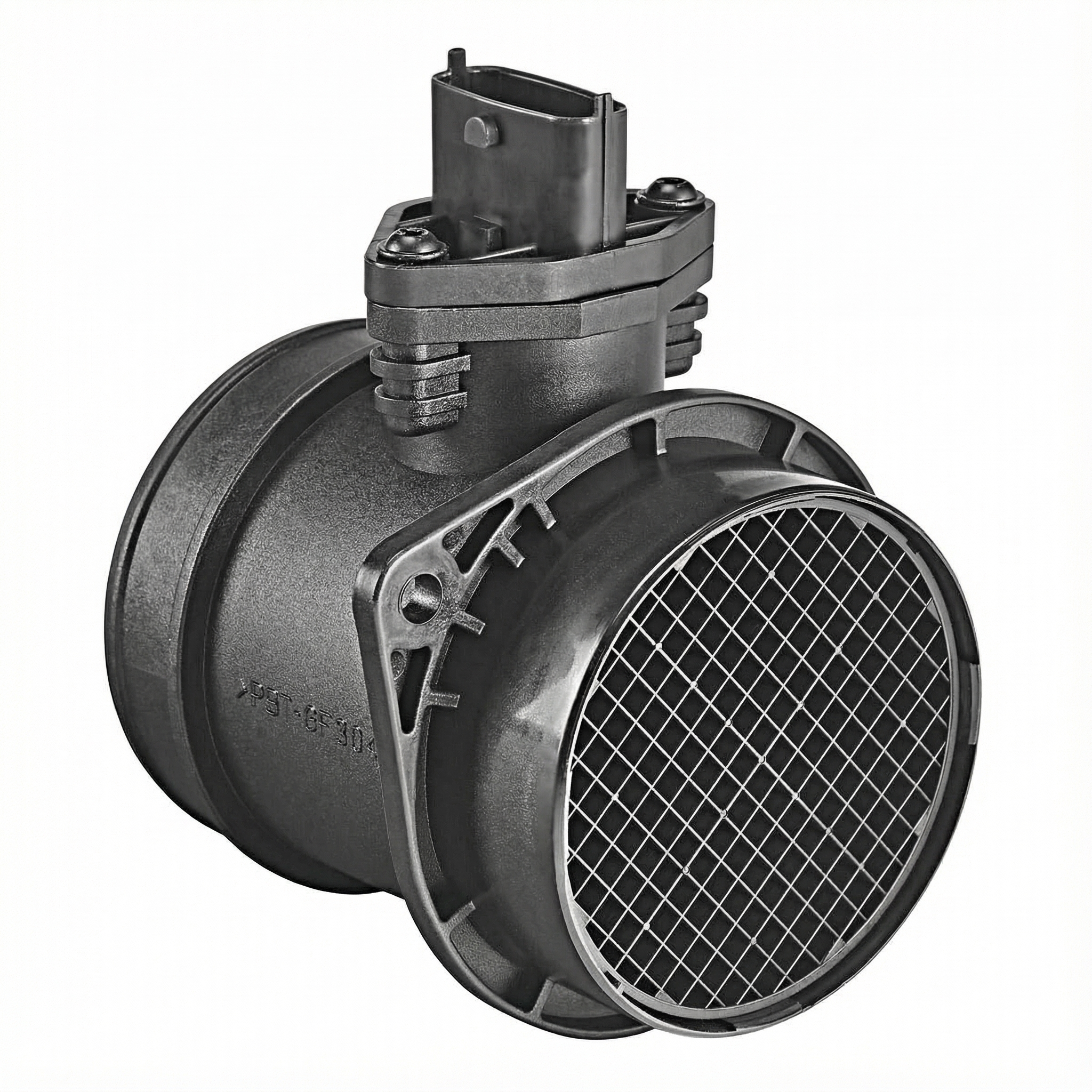
Est. part cost: $20-$250 - Dirty or Faulty Mass Airflow (MAF) Sensor 🟡 Medium Probability → Shop Fuel Injection Air Flow Meter Oil vapor from a failing PCV system or fine dust that gets past the air filter can contaminate the delicate sensor wires over time.
How to confirm: First, try cleaning the sensor with a dedicated MAF sensor cleaner spray. Do not touch the sensor wires. If cleaning doesn't work, the sensor may be faulty. A quick diagnostic test is to unplug the MAF sensor with the engine off, start the car, and see if the idle quality improves. If it runs better (though not perfectly), the MAF is likely providing bad data. One owner on Reddit reported having to replace two faulty new aftermarket MAF sensors before a used OEM Bosch unit fixed the problem, highlighting the sensitivity to part quality.
Typical fix: Replace the MAF sensor. It is highly recommended to use an OEM Bosch sensor, as these Volvos are notoriously sensitive and often reject aftermarket brands, causing the code to persist.
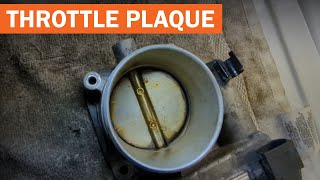
Est. part cost: $100-$200 - Dirty Electronic Throttle Body ⚪ Low Probability → Shop Fuel Injection Throttle Body Carbon and oil vapor from the PCV system can build up around the throttle plate, restricting airflow at idle and causing erratic performance that the ECU may misinterpret as a MAF issue.
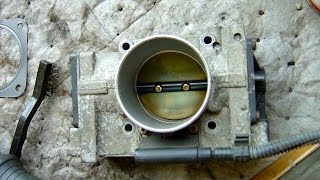
How to confirm: Visually inspect the throttle body for a ring of black carbon buildup. On these turbo models, the throttle body is located on the underside of the intake manifold and is difficult to access, requiring removal of the cooling fan and other components.
Typical fix: Remove and clean the throttle body with a dedicated throttle body cleaner and a soft cloth. This is a more involved job (2+ hours) on this engine due to its location.
Est. part cost: $10-$20
Rare But Worth Checking
- Broken Vacuum Control Valve: A user on YouTube fixed P0101 and P2188 on their 2005 XC70 by securing a small, plastic vacuum control valve located in front of the airbox. The valve had popped open, creating a vacuum leak. The user repaired it with zip ties as a temporary fix, which resolved the codes.
- Clogged Air Filter: → Shop Air Cleaner Assembly A severely clogged air filter can restrict airflow enough to cause the MAF sensor's readings to be out of the expected range. This should be one of the first and easiest things to check.
- Failing Fuel Pressure Sensor: A faulty fuel pressure sensor can cause the fuel system to deliver an incorrect amount of fuel. The ECU sees a conflict between the O2 sensor readings (lean or rich) and the MAF sensor's airflow reading, and may incorrectly flag the MAF sensor with a P0101 code.
Diagnosis Steps
- Check the Air Filter: Ensure it is clean and properly installed. A dirty filter can be a simple cause.
- Visual Inspection: Carefully inspect the entire air intake tract from the airbox to the throttle body. Look for obvious cracks, loose clamps, or disconnected hoses. Pay close attention to the large accordion-style intake hose between the MAF and turbo.
- Clean the MAF Sensor: Disconnect and remove the MAF sensor. Spray the sensor elements generously with a dedicated MAF sensor cleaner. Do not touch the wires. Allow it to dry completely before reinstalling.
- Perform a Smoke Test: This is the most effective way to find hidden vacuum leaks. Connect a smoke machine to the intake system and look for smoke escaping from any hoses, gaskets, or the PCV system. Common leak spots are PCV hoses and the intake manifold gasket.
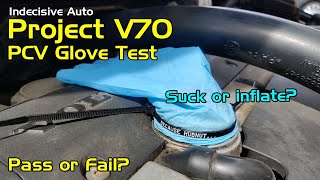
- Test PCV System (Glove Test): With the engine running at idle, remove the oil filler cap and place a rubber glove over the opening. 🎬 See how to perform the PCV glove test yourself. If the glove inflates, the PCV system is clogged and creating positive crankcase pressure, which needs to be serviced. If it sucks in slightly, it is working correctly.
- Inspect Throttle Body: If no leaks are found, consider inspecting the throttle body for heavy carbon buildup, though this is difficult due to its location on the underside of the intake manifold.
- Replace MAF Sensor: If all other possibilities have been exhausted and the symptoms point to the MAF (e.g., unplugging it improves idle), replace it with a new OEM Bosch unit. 🎬 Watch: A simple 5-minute guide to replacing your MAF sensor. Aftermarket sensors are a common source of persistent issues. After replacement, it is recommended to use a Volvo-specific scan tool like VIDA to reset fuel and air adaptations.
Parts You'll Likely Need
- Mass Airflow Sensor (MAF)
(OEM #8670393 (Bosch 0280218088))— This is the part directly implicated by the code, and it can fail. However, it should only be replaced after ruling out vacuum leaks. Using the OEM Bosch brand is critical for proper function.
Trusted brands: Bosch
OEM price range: $150-$200
Aftermarket price range: $50-$120 - PCV Breather System Kit
(OEM #KIT-504286 (FCP Euro Kit), 8692211 (Oil Trap), 30731068 (Hose for 2005+))— The PCV system is a very common failure point on these engines. A clogged system creates pressure that leads to vacuum leaks and oil seal failure. Servicing it often resolves P0101. Kits are available that include the oil trap and all necessary hoses.
Trusted brands: Volvo (OEM), IPD, FCP Euro, Rein
OEM price range: $150-$250
Aftermarket price range: $80-$150 - Intake Air Hose (MAF to Turbo)
(OEM #30680446)— The main hose between the MAF and the turbo/throttle body can crack in its flexible accordion section, causing a significant unmetered air leak.
Trusted brands: Volvo (OEM), URO Parts
OEM price range: $50-$150
Aftermarket price range: $30-$60
Related Codes That Often Appear With This One
- P2188 — This code means 'System Too Rich at Idle, Bank 1'. A faulty MAF sensor over-reporting air can cause this, but it can also be triggered by a vacuum leak that the ECU is overcompensating for. It is frequently seen with P0101.
- P0171 — This code means 'System Too Lean, Bank 1'. Unmetered air from a vacuum leak causes the engine to run lean, as the oxygen sensors detect more oxygen than expected. This is a classic companion code to P0101 when a vacuum leak is the root cause.
Platform-Specific Known Issues
- Real-World Owner Experience: Multiple Bad MAF Sensors: → Shop Fuel Injection Air Flow Meter A user on Reddit with a P2 platform Volvo shared their frustrating experience with a persistent P0101 code. They replaced the MAF sensor twice with new aftermarket units, but the problem continued. Finally, they installed a used MAF sensor from a wrecked car, which was an OEM Bosch part, and it solved the problem instantly. This highlights the platform's sensitivity to the quality and brand of the MAF sensor.
Mechanic-Grade Diagnostic Values
- MAF Sensor Live Data (Scan Tool) — expected: 2-7 g/s at idle, rising to 15-25 g/s at 2500 RPM, depending on engine load and temperature.. Failure: Readings are stuck, erratic, or significantly outside the expected range for a given RPM.
- MAF Sensor Signal Wire Voltage (Multimeter) — expected: Approximately 1.0V-1.5V with key on, engine off. Rises to ~2.4V at idle and should increase smoothly with acceleration up to 4.0V+.. Failure: Voltage is 0V, stuck at a specific value, or does not increase smoothly with engine RPM.
Hidden / Shadow Codes Worth Checking
- ECM-121B: Mass air flow (MAF) sensor - Flow too low. This is the Volvo-specific equivalent of the generic P0101 code, often indicating a vacuum leak. (see via Volvo-specific diagnostic tool like VIDA/DICE.)
- ECM-130A: Intake air leakage. This is a fault-tracing code in VIDA that specifically points the technician toward a leak in the intake system as the likely cause of the MAF range issue. (see via Volvo-specific diagnostic tool like VIDA/DICE.)
Scan Tool Commands That Help
- VIDA (Vehicle Information & Diagnostics for Aftersales): Resetting adaptation of fuel and air mixture / Resetting Long-Term Fuel Trims — This should be performed after replacing the MAF sensor, cleaning the throttle body, or fixing a major vacuum leak. It forces the ECM to immediately relearn air/fuel parameters with the new/repaired components, which can resolve persistent running issues.
- VIDA (Vehicle Information & Diagnostics for Aftersales): Readout of fuel trims (Lambda adaptations) — Use this to diagnose the nature of the air/fuel mixture problem. High positive fuel trims indicate the ECM is adding fuel to compensate for a lean condition (confirming a vacuum leak), while high negative trims indicate a rich condition.
Wiring & Ground Locations
- Main Engine Ground Strap — A large, thick cable running from the transmission housing to the vehicle's frame rail.. A poor main engine ground can cause a host of electrical issues and erratic sensor readings, including the MAF sensor. Intermittent errors and strange dash messages can be a symptom of a corroded or loose main ground.
- MAF Sensor Ground — The sensor's signal ground wire is typically grounded at the left fuel rail mounting bolt.. A specific, clean ground is critical for an accurate low-voltage signal from the MAF. Corrosion or looseness at this specific point can corrupt the MAF signal to the ECM, causing a P0101 code even if the sensor is good.
- MAF Sensor Fuse — In the engine compartment fuse box (15/31), the MAF sensor (component 7/17) is typically powered by fuse F37 or F38.. A blown fuse will cause a complete loss of signal from the MAF sensor, leading to a fault code and limp-home mode.
Real Owner Repair Stories
- Reddit user TroubledGeorge (2007 V70 2.0T (P2 Platform, similar engine management)) — Persistent P0101 code, rough idle, surging.
❌ Tried (didn't work) Replacing the MAF sensor with a new aftermarket unit., Replacing the MAF sensor a second time with another new aftermarket unit.
✅ What actually fixed it Installing a used, but genuine OEM Bosch MAF sensor sourced from a wrecked vehicle. - YouTube user 'Fix it Angel' (2005 Volvo XC70) — P0101 and P2188 codes.
❌ Tried (didn't work) Initial diagnosis pointed towards a common faulty MAF sensor.
✅ What actually fixed it The plastic vacuum control valve, located in front of the air filter box, had broken and popped open. Securing the valve shut with zip ties created a seal and resolved the codes. - volvoXC.com user 'Carllay' (2004 XC70, 102k miles) — Positive crankcase pressure (failed glove test) under cruise conditions, even after a full PCV system replacement.
❌ Tried (didn't work) Complete PCV system replacement with an IPD kit, including the oil trap and hoses.
✅ What actually fixed it The 'booster vacuum ejector' (a Y-shaped hose connector) had a completely blocked passage. Replacing this small, specific part restored proper PCV function.
"I Checked Everything" — The Actual Cause
- A failing fuel pump or faulty fuel pressure sensor can trigger a P0101 code. The ECU detects a lean condition from the O2 sensors and, seeing that the MAF is reporting a normal amount of air, assumes the MAF reading is incorrectly high for the amount of fuel being delivered. A smoke test will show no leaks because the problem is on the fuel delivery side, not the air intake side.
When the Usual Fixes Don't Work
- While vacuum leaks are the most common cause, a significant number of owners have confirmed that a faulty MAF sensor was the ultimate culprit. In one documented case, a P2 Volvo owner went through two new, faulty aftermarket MAF sensors before a used OEM Bosch unit from a salvage yard finally fixed the P0101 code. This proves that while leaks should be checked first, a bad MAF sensor cannot be ruled out, and part quality is absolutely critical.
OEM Part Supersession History
8670263→8670393— Standard part revision and consolidation by Volvo/Bosch.
Heads up: The parts are interchangeable, but 8670393 is the final, most current version for this application.
Model Year Variations Within This Range
- 2005-2007: The PCV system on 2005 and later models differs from earlier P2 cars. The job is more involved, requiring draining some coolant and removing the cooling fan for access. The fuel rail design and hose connections are also different, making the procedure distinct from 2001-2004 models.
Diagnostic Flowchart
Other Known Issues on This Vehicle
Issues unrelated to this code that are worth knowing about as an owner of this generation:
- Automatic Transmission Valve Body Failure 🔴 High — Common after 120,000-150,000 km, especially in 2001-2003 models. Manifests as harsh 2-3 shifts, flaring, or getting stuck in one gear.
- Angle Gear / Bevel Gear Collar Sleeve Failure 🔴 High — A very common failure where the splines on the collar sleeve connecting the transmission to the angle gear strip, resulting in loss of AWD. Often occurs between 80,000-120,000 miles.
- Upper Engine Mount Failure 🟠 Medium — The upper engine torque mount wears out, causing noise and vibration, particularly when shifting from Park to Drive or Reverse.
- ABS Control Module Failure 🟠 Medium — Solder joints on the ABS module's circuit board can crack, leading to an intermittent or constant ABS/STC warning light and loss of ABS function.
- Electronic Throttle Module (ETM) Failure 🔴 High — Primarily affects earlier 1999-2002 models with the Magneti Marelli ETM. A contactless replacement sensor (from companies like XeMODeX) is the permanent fix. (Ref: Volvo extended the warranty on these parts, but that has long since expired.)
Used vs. New Parts: Buying Guide for This Vehicle
When a used part is the smart pick: A used Mass Airflow (MAF) sensor from a reputable salvage yard can be a smart choice, especially if it's a confirmed OEM Bosch part. Real-world experience shows a used OEM part can work perfectly where new aftermarket parts fail.
Donor-vehicle mileage cap: roughly under 120000 miles for the part to have meaningful remaining life.
What to inspect on the donor part:
- Confirm the part is a genuine 'Bosch' brand by checking for the logo and part number (0 280 218 088).
- Inspect the connector pins for corrosion or damage.
- Avoid parts from vehicles that show signs of flood or fire damage.
- If possible, choose a part from a vehicle with lower reported mileage.
OEM-only on this vehicle (don't cheap out):
- Mass Airflow Sensor (must be Bosch brand, which is the Original Equipment Manufacturer)
- PCV Oil Trap / Flame Trap
Aftermarket brands forum-validated for this vehicle:
- For PCV system hoses and kits: IPD, Rein.
Brands owners have reported issues with on this vehicle:
- Generic, unbranded MAF sensors from eBay or Amazon.
- TPI (brand of MAF sensor reported as faulty out of the box).
Real Owner Stories
Aggregated from forums and TSBs cited above. Mileages and costs reflect what owners reported in those sources.
2001-2007 Volvo XC70 (P2 Platform)
Symptoms: Persistent P0101 code that would not clear despite replacing the MAF sensor twice with new aftermarket units.
What fixed it: Installed a used OEM Bosch MAF sensor from a wrecked car.
Source hint: reddit.com thread titled 'Volvo XC70 Mystery Engine Problem (P0101 code that won’t quit!)' and vehicle_specific_issues
2001-2007 Volvo XC70
Symptoms: Rough idle on cold days.
What fixed it: Cleaning the MAF sensor.
Source hint: volvoXC.com thread titled 'P0101 and P2188'
2007 Volvo XC70
Symptoms: P0442, P0101, and P2188 codes appearing all together.
What fixed it: Identifying and repairing an induction system leak rather than just replacing the MAF sensor.
Source hint: volvoXC.com thread titled '07' XC70: P0442 and P0101 and P2188 all together'
Related OBD-II Codes
Frequently Asked Questions
Why is it recommended to use an OEM Bosch MAF sensor for my XC70 instead of a cheaper aftermarket one?
Can a problem with my XC70's transmission be caused by a P0101 code?
How can I tell if my PCV system is causing the P0101 code without taking the engine apart?
Where is the throttle body located on the XC70 turbo engine if I need to clean it?
Is there a specific tool I should use after replacing the MAF sensor on my Volvo?
What are the most common physical leak points on the XC70 intake system?
Helpful Videos



We Have This Part in Stock

The information in this article is provided for general reference and educational purposes only. Vehicle specifications, procedures, and part compatibility can vary by production date, trim level, and region. Always consult your vehicle's factory service manual and verify part numbers before purchasing or performing repairs. Safety-critical components such as airbags, seat belts, and braking systems should be installed by a qualified professional.
- Volvo XC70:
- 🧭 Diagnostic Flowchart
- 🎬 Helpful Videos
- 🛍️ Shop This Part
- What's Unique About the 2001-2007 Volvo XC70
- Symptoms You May Notice
- Most Likely Causes
- Rare But Worth Checking
- Diagnosis Steps
- Parts You'll Likely Need
- Related Codes That Often Appear With This One
- Platform-Specific Known Issues
- Mechanic-Grade Diagnostic Values
- Hidden / Shadow Codes Worth Checking
- Scan Tool Commands That Help
- Wiring & Ground Locations
- Real Owner Repair Stories
- "I Checked Everything" — The Actual Cause
- When the Usual Fixes Don't Work
- OEM Part Supersession History
- Model Year Variations Within This Range
- Other Known Issues on This Vehicle
- Used vs. New Parts: Buying Guide for This Vehicle
- Real Owner Stories
- 2001-2007 Volvo XC70 (P2 Platform)
- 2001-2007 Volvo XC70
- 2007 Volvo XC70
- Related OBD-II Codes
- Frequently Asked Questions
- 🎟️ Get 5% Off