

P0102 on 2019-2025 Acura RDX: MAF Circuit Low Causes and Fixes
On a 2019-2025 Acura RDX, code P0102 is most often caused by a dirty Mass Airflow (MAF) sensor. The most likely fix is cleaning the sensor with dedicated MAF sensor cleaner, a $15 part and a 15-minute DIY job. If cleaning doesn't work, check for intake air leaks. If no leaks are found, a replacement sensor may be needed.
- P0102 on the RDX is most often caused by a dirty MAF sensor.
- Always try cleaning the MAF sensor with a dedicated cleaner before replacing it; this is a cheap and easy first step that often solves the problem.
- Inspect the air intake hose between the filter and the turbo for any cracks or loose clamps, as unmetered air leaks are another common cause.
- If the car is running very poorly or in 'limp mode', avoid driving it to prevent potential damage to the catalytic converter from an overly rich fuel mixture.
What's Unique About the 2019-2025 Acura RDX
The 2019-2025 RDX uses the 2.0L Turbo (K20C4) engine, which shares its MAF sensor design and sensitivity with other modern turbocharged Honda/Acura vehicles like the Honda Accord 2.0T. These forced-induction systems are highly sensitive to any disruption in metered airflow. While there are no specific TSBs for P0102 on this RDX, issues with the intake system are documented, such as a TSB for the intercooler on 2019-2021 models (20-053) which can cause related drivability problems like limp mode. Owners often find that simple issues like a dirty sensor or a minor air leak post-MAF are the root cause due to the system's reliance on precise airflow measurements for boost control.
Symptoms You May Notice
- Check Engine Light is on
- Engine running rough or unstable idle
- Hesitation or lack of power during acceleration
- Engine stalling, especially at low speeds or when stopping
- Reduced fuel economy
- Black smoke from the exhaust
- VSA, SH-AWD, or other warning lights may illuminate as the system enters a fault mode
- Smell of rich fuel from the exhaust
- Replacing the MAF sensor without first attempting to clean it. Cleaning is successful in a majority of cases and is significantly cheaper.
- Replacing oxygen (O2) sensors. P0102 specifically points to an issue with the measured airflow at the front of the engine, not the exhaust gases.
Most Likely Causes
- Dirty or Contaminated MAF Sensor 🔴 High Probability → Shop Fuel Injection Air Flow Meter The MAF sensor uses a delicate heated element to measure airflow, which can be easily contaminated by dirt, debris, or oil from an aftermarket air filter. This is the most common and easiest-to-fix cause, and cleaning is a well-documented DIY fix.
How to confirm: Visually inspect the MAF sensor's internal wire or film element. If it appears dirty, coated in grime, or oily, it needs cleaning.
Typical fix: Carefully remove the sensor and spray the element with 10-15 blasts of a dedicated MAF sensor cleaner. Do not touch the internal wires or use other chemicals like brake cleaner. Allow it to air dry completely for at least 20 minutes before reinstalling.
Est. part cost: $10-$20 for MAF cleaner spray - Vacuum Leak / Unmetered Air Leak 🟡 Medium Probability The factory intake system uses rubber and plastic components that can crack or loosen over time, especially under the pressure and heat of a turbocharged engine. A leak after the MAF sensor (e.g., a loose charge pipe coupler, cracked intake boot, or bad gasket) allows unmetered air to enter, causing the sensor's reading to be artificially low compared to the actual air entering the cylinders.
How to confirm: Visually inspect the entire intake tract from the airbox to the throttle body for cracked hoses, loose clamps, or poor seals. A smoke test is the most effective way to find small, hard-to-see leaks.
Typical fix: Tighten any loose clamps or replace the cracked/leaking intake hose or gasket.
Est. part cost: $20-$150 depending on which hose or gasket failed - Clogged Engine Air Filter ⚪ Low Probability → Shop Air Cleaner Assembly
How to confirm: Remove and inspect the engine air filter. If it is visibly black, filled with debris, or clogged, it is restricting airflow and can cause the MAF to read lower than expected.
Typical fix: Replace the engine air filter. This should be done as part of routine maintenance.
Est. part cost: $25-$60 - Faulty MAF Sensor ⚪ Low Probability → Shop Fuel Injection Air Flow Meter
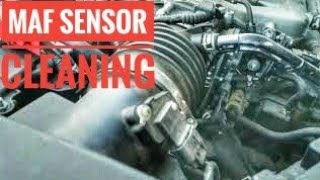
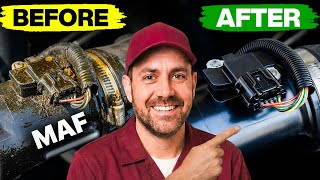
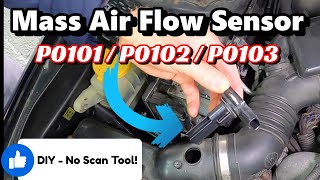
How to confirm: If cleaning the sensor and checking for leaks doesn't resolve the code, monitor the MAF sensor's live data with an OBD-II scanner. At idle, it should read a few grams/second (g/s) and increase smoothly with RPM. If the reading is stuck at or near zero, is erratic, or doesn't change with engine speed, the sensor has likely failed. 🎬 See how to test and replace a MAF sensor
Typical fix: Replace the MAF sensor.
Est. part cost: $130-$190 for OEM, $50-$120 for aftermarket
Rare But Worth Checking
- Wiring Harness or Connector Issue: A damaged wire or a loose/corroded connector pin for the MAF sensor can interrupt the signal, causing the P0102 code. This should be suspected if the sensor data is intermittent or completely absent.
- Faulty Ignition Coil or Spark Plug: A severe engine misfire can cause erratic airflow through the intake, which may confuse the ECM and lead it to incorrectly flag a MAF sensor code. One owner on Acurazine fixed a P0102 code by replacing a bad coil pack, not the MAF sensor.
Diagnosis Steps
- Read the code with an OBD-II scanner and record any other codes present.
- Inspect the engine air filter. If it's dirty, replace it.
- Visually inspect the MAF sensor's electrical connector for a secure fit and any signs of corrosion or damage.
- Inspect the entire air intake system between the MAF sensor and the engine for any cracks, tears, or loose connections. Pay close attention to the flexible intake boot and charge pipe connections.
- If no visible issues are found, remove the MAF sensor. It is typically held in by two Phillips head screws.
- Spray the sensor's internal elements with a dedicated MAF Sensor Cleaner. Do not use brake or carburetor cleaner, and do not touch the wires.
- Allow the sensor to air dry completely for at least 20 minutes before reinstalling. 🎬 Watch: Step-by-step MAF sensor cleaning and replacement tutorial
- Reinstall the sensor, clear the codes, and perform a test drive to see if the code returns.
- If the code persists, use a scan tool to monitor live data from the MAF sensor. Check for a stable reading at idle (typically 2-5 g/s) that increases smoothly as you raise the engine RPM. A reading that is stuck, erratic, or zero indicates a failed sensor or a wiring problem.
- If the sensor is suspected to be bad, test the wiring for proper power (12V), ground, and signal (5V reference) before replacing the part.
Parts You'll Likely Need
- Mass Air Flow (MAF) Sensor
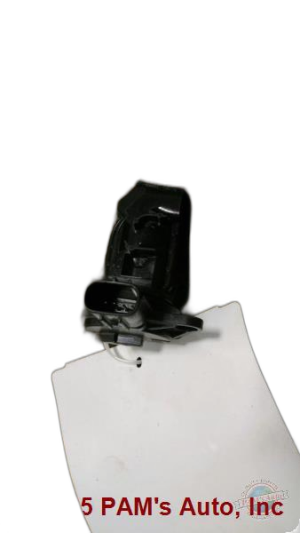
(OEM #37980-5BA-A01)— This is the part that fails or gets dirty, causing the code. If cleaning doesn't work, replacement is the next step. This part is shared across many Honda/Acura models.
Trusted brands: Acura (OEM), Denso, Delphi, Walker Products
OEM price range: $130-$190
Aftermarket price range: $50-$120 - MAF Sensor Cleaner — Often, the sensor is just dirty and does not need to be replaced. This is the first and most cost-effective fix to attempt.
Trusted brands: CRC, Liqui Moly
Aftermarket price range: $10-$20
Related Codes That Often Appear With This One
- P0113 — The Intake Air Temperature (IAT) sensor is often integrated into the MAF sensor assembly. A fault in the MAF sensor or its connector can sometimes trigger a related IAT code.
- P0172 — System Too Rich. The ECM may over-fuel the engine based on the faulty low-airflow reading from the MAF sensor, leading to a rich condition detected by the oxygen sensors.
Technical Service Bulletins (TSBs) & Recalls
- TSB 20-053: Addresses potential moisture in the intercooler on 2019-2021 RDX models, which can cause hesitation and limp mode, demonstrating the sensitivity of the intake system.
- TSB 21-009: Extends the warranty for MOST bus network connectors on 2019-2020 RDXs to address infotainment issues like popping sounds or blank screens. Not related to P0102 but a notable electronic issue for the model years.
- TSB 23-030: Details a repair procedure for FAKRA connectors related to the infotainment system, another data point on connector/wiring issues in the RDX platform.
Platform-Specific Known Issues
- While not directly causing P0102, 2019-2021 RDX models are subject to Acura TSB 20-053 for moisture accumulating in the intercooler, which can cause hesitation and a P0299 underboost code. This highlights a known sensitivity in the vehicle's forced induction and intake air system.
- A separate issue, TSB 21-007, addresses a P0455 EVAP leak code on some 2021 models due to a stuck fuel flap, which is another example of intake/fuel system sensitivity on this platform, though unrelated to P0102.
Mechanic-Grade Diagnostic Values
- MAF Sensor Live Data (g/s) at idle — expected: Approximately 2.0 - 4.0 g/s for a fully warmed-up 2.0L engine at idle with no load. A general rule of thumb is for the g/s value to be close to the engine's displacement in liters.. Failure: A reading stuck at or near 0 g/s, or a reading that does not increase smoothly as RPMs rise.
- MAF Sensor Live Data (g/s) at 2500 RPM — expected: Approximately 15 to 25 g/s, depending on load.. Failure: A reading that rises too slowly or not at all indicates a dirty sensor or an air leak. A reading that rises too quickly or erratically can indicate a calibration or wiring issue.
- MAF Sensor Output Voltage at Idle (800 RPM) — expected: Approximately 0.7 - 1.1 V.. Failure: A voltage significantly below this range, or stuck at 0V, indicates a circuit low fault.
- MAF Sensor Signal Wire Voltage Reference (Key-On, Engine-Off) — expected: Approximately 5V.. Failure: No voltage or significantly low voltage points to a wiring or ECM issue.
- MAF Sensor Power Wire Voltage (Key-On, Engine-Off) — expected: Approximately 12V (Battery Voltage).. Failure: No voltage indicates a problem with the power supply circuit, such as a blown fuse or broken wire.
Scan Tool Commands That Help
- Honda HDS (or advanced aftermarket scanner): Snapshot Function — To capture a recording of all sensor data at the exact moment an intermittent P0102 fault is triggered. This is useful for diagnosing elusive wiring or connection issues.
- Professional Scan Tool: Throttle Position Relearn / TP Position Check — This should be performed if the throttle body was disconnected or cleaned during the diagnosis of P0102, as a dirty throttle body can accompany intake issues. An incorrect idle position after cleaning can cause high idle and other drivability problems.
- OBD-II Scanner: Reset Fuel Trim Adaptations — After replacing the MAF sensor or fixing a major vacuum leak, resetting the long-term fuel trims forces the ECM to immediately start learning with the new, correct airflow data instead of slowly adapting away from the old, faulty values.
Wiring & Ground Locations
- MAF Sensor Connector — On the air intake tube, immediately following the air filter box. It is a 5-pin connector.. This is the primary connection point for the sensor. A known failure point on this engine family is a wire breaking internally right at the connector pin, causing an intermittent or persistent P0102 code that won't be fixed by a new sensor. A wiggle test of the harness here while the engine is running can help identify this issue.
- Engine Ground Points — Key Honda engine grounds are typically located on the transmission housing, on the cylinder head/valve cover, and from the block to the chassis.. The MAF sensor circuit relies on a clean ground path to the ECM. While a specific ground point failure is a rare cause for P0102, a corroded or loose main engine ground can cause a variety of sensor data issues, including this one.
Real Owner Repair Stories
- Acurazine Forum Thread (1st Generation Acura RDX (conceptually applicable to 3rd Gen)) — Limp mode, poor idle, little power, VSA light on, smelly fuel-rich exhaust, shuddering. Codes P0102 and P0113.
❌ Tried (didn't work) Replacing the MAF sensor, Replacing the IAT sensor
✅ What actually fixed it The root cause was a failed ignition coil on cylinder #1. The fouled spark plug in that cylinder confirmed the misfire. Replacing the bad coil pack and spark plug resolved all symptoms and codes. - YouTube video by Autotips.ca (Honda vehicle (similar intake design)) — No start, then rough running with high idle and P0102 code.
❌ Tried (didn't work) Initial diagnosis pointed towards a bad sensor.
✅ What actually fixed it A visual inspection revealed the clamp on the intake boot between the MAF sensor and the throttle body was completely loose, creating a massive unmetered air leak. The fix was to properly secure the clamp. The mechanic also cleaned the dirty throttle body and performed a throttle relearn with a scanner to correct the high idle.
"I Checked Everything" — The Actual Cause
- In a documented case on an Acura RDX, codes P0102 and P0113 with limp mode were not caused by a vacuum leak or a faulty MAF sensor. A smoke test would have come back clean. The actual cause was a failed ignition coil pack, which created a severe misfire. The resulting erratic airflow through the engine confused the ECM, causing it to incorrectly flag the MAF circuit. The fix was to identify the misfiring cylinder via the spark plug condition and replace the coil pack.
When the Usual Fixes Don't Work
- While P0102 almost always points to the MAF sensor or intake tract, there are confirmed cases where the root cause is entirely different. In one instance involving an RDX with P0102 and P0113, the owner replaced the MAF sensor, but the problem persisted. The actual fix was replacing a faulty ignition coil. The severe misfire was causing such erratic airflow that the ECU misinterpreted it as a MAF sensor circuit failure. This highlights the importance of checking for misfires (by inspecting spark plugs or looking for other codes) if the standard P0102 diagnostics (cleaning, leak checks) do not resolve the issue.
Diagnostic Flowchart
Other Known Issues on This Vehicle
Issues unrelated to this code that are worth knowing about as an owner of this generation:
- Infotainment System Malfunctions 🟠 Medium — Very common on 2019-2020 models. Symptoms include freezing, crashing, blank screens, and popping audio. (Ref: A class-action lawsuit was settled, and Acura extended the warranty via TSB 21-009 to address loose MOST bus connectors.)
- Low-Pressure Fuel Pump Failure 🔴 High — Affects a wide range of 2019-2020 Honda/Acura vehicles, including the RDX. Can cause engine stalling while driving. (Ref: NHTSA Recall Campaign (e.g., 20V-314, expanded later). Honda issued a voluntary recall to replace the fuel pump module.)
- Limp Mode / Intercooler Issues 🟠 Medium — Reported by owners of 2019-2021 models, especially in certain weather conditions. Can cause sudden loss of power. (Ref: Acura TSB 20-053 was issued to address moisture buildup in the intercooler, which is a primary cause.)
- Brake Squeal 🟡 Low — Common complaint on 2019+ models, particularly at low speeds. Generally considered an annoyance rather than a safety defect. (Ref: Multiple TSBs have been issued with updated brake pad and shim kits to address the noise.)
- Power Steering Loss (2025 models) 🔴 High — Specific to a batch of 2025 models due to a software error. (Ref: Recall issued in September 2025 for over 17,000 vehicles to reprogram the EPS software.)
Used vs. New Parts: Buying Guide for This Vehicle
When a used part is the smart pick: A used OEM MAF sensor from a reputable salvage yard is a reasonable choice for this repair, especially if sourced from a low-mileage, front-end collision vehicle. Since the part is not a typical wear-and-tear item and often fails from contamination, a clean, used OEM unit can be as reliable as a new aftermarket one.
Donor-vehicle mileage cap: roughly under 60000 miles for the part to have meaningful remaining life.
What to inspect on the donor part:
- Visually inspect the sensor element (the small wires or film inside the housing) for any signs of oil, dirt, or physical damage.
- Ensure the connector pins are straight, clean, and free of corrosion.
- Confirm the part number on the sensor is an exact match: 37980-5BA-A01.
- Ask for the VIN of the donor car to verify its mileage and year.
OEM-only on this vehicle (don't cheap out):
- For this specific P0102 repair, no parts are strictly 'OEM-only'. However, using an OEM or OEM-supplier (Denso) sensor is highly recommended over generic, unbranded aftermarket sensors which can have poor calibration and cause persistent issues.
Aftermarket brands forum-validated for this vehicle:
- Denso (often the OEM supplier, Part No. 197-6201 for this sensor)
- Hitachi
- Walker Products
Brands owners have reported issues with on this vehicle:
- Unbranded, low-cost sensors from online marketplaces. While not explicitly named in forum complaints, these are a frequent source of issues across all makes and models due to poor quality control and incorrect calibration.
Real Owner Stories
Aggregated from forums and TSBs cited above. Mileages and costs reflect what owners reported in those sources.
1st Gen Acura RDX
Symptoms: The vehicle entered limp mode and there was a noticeable smell of rich fuel from the exhaust.
What fixed it: The issue was misdiagnosed as a MAF sensor problem; the actual fix was replacing a bad ignition coil.
Source hint: Acurazine.com - A thread on a 1st Gen RDX with P0102 and P0113 codes
2019-2021 Acura RDX
Symptoms: Sudden loss of power and hesitation, particularly in specific weather conditions that caused moisture buildup.
What fixed it: Dealer repair following TSB 20-053 to address moisture in the intercooler.
Source hint: Acurazine.com - A poll and discussion on TSB 20-053 for the 3rd Gen RDX
Related OBD-II Codes
Frequently Asked Questions
Does TSB 20-053 apply to my 2019-2021 Acura RDX if I'm experiencing hesitation?
Can I use any cleaner to fix the MAF sensor on my RDX?
Is there a specific part number for the MAF sensor if I need a replacement for my 2019+ RDX?
Could my P0102 code be related to the infotainment popping sounds covered under TSB 21-009?
My RDX is stalling at low speeds; could this be the fuel pump recall instead of a MAF issue?
Will an aftermarket air filter cause a P0102 code on this vehicle?
Helpful Videos
We Have This Part in Stock

The information in this article is provided for general reference and educational purposes only. Vehicle specifications, procedures, and part compatibility can vary by production date, trim level, and region. Always consult your vehicle's factory service manual and verify part numbers before purchasing or performing repairs. Safety-critical components such as airbags, seat belts, and braking systems should be installed by a qualified professional.
- Acura RDX:
- 🧭 Diagnostic Flowchart
- 🎬 Helpful Videos
- 🛍️ Shop This Part
- What's Unique About the 2019-2025 Acura RDX
- Symptoms You May Notice
- Most Likely Causes
- Rare But Worth Checking
- Diagnosis Steps
- Parts You'll Likely Need
- Related Codes That Often Appear With This One
- Technical Service Bulletins (TSBs) & Recalls
- Platform-Specific Known Issues
- Mechanic-Grade Diagnostic Values
- Scan Tool Commands That Help
- Wiring & Ground Locations
- Real Owner Repair Stories
- "I Checked Everything" — The Actual Cause
- When the Usual Fixes Don't Work
- Other Known Issues on This Vehicle
- Used vs. New Parts: Buying Guide for This Vehicle
- Real Owner Stories
- 1st Gen Acura RDX
- 2019-2021 Acura RDX
- Related OBD-II Codes
- Frequently Asked Questions
- 🎟️ Get 5% Off