

P0102 on 2008-2016 Audi A4 2.0L TFSI: MAF Circuit Low Causes and Fixes
For a 2008-2016 Audi A4 2.0L TFSI, code P0102 is most often caused by a dirty Mass Airflow (MAF) sensor or a vacuum leak. Start by cleaning the MAF sensor with a dedicated cleaner. If that doesn't work, check for cracked intake hoses or a faulty PCV valve before replacing the sensor itself. A failed PCV valve is a very common culprit on this engine and often triggers a P0171 code alongside P0102.
- P0102 on your Audi A4 means the MAF sensor is reporting less air than the engine expects.
- Before buying any parts, your first step should be to clean the MAF sensor with dedicated cleaner, as this is a very common and cheap fix.
- If you also have a P0171 code, a vacuum leak from a cracked hose or bad PCV valve is a highly likely cause.
- If you must replace the MAF sensor, use a quality OEM brand like Bosch to avoid performance issues with cheaper aftermarket parts.
- After replacing the sensor, the code may need to be cleared with a scan tool, and the car may need to be driven for a short period for the ECU to adapt.
What's Unique About the 2008-2016 Audi A4
On the 2.0L TFSI engine, the P0102 code is frequently accompanied by a P0171 (System Too Lean) code. This combination often points towards a vacuum leak from a cracked hose or a failing PCV (Positive Crankcase Ventilation) valve, which are common issues on this platform. Unmetered air enters the engine after the MAF sensor, causing the MAF to report low airflow (P0102) while the oxygen sensors detect the lean condition from the extra air (P0171). A failed PCV diaphragm can create a significant internal vacuum leak.
Symptoms You May Notice
- Check Engine Light is on
- Rough or unstable idle
- Hesitation, stumbling, or jerking during acceleration
- Noticeable loss of engine power
- Reduced fuel economy
- Black smoke from the exhaust
- Engine may be hard to start or stall at low speeds
- Whistling or 'honking' noise from the engine bay, indicating a bad PCV valve
- Replacing the MAF sensor without first checking for vacuum leaks. A failed PCV valve is a very common cause of P0102 on this engine, especially if code P0171 is also present.
Most Likely Causes
- Dirty or Contaminated MAF Sensor 🔴 High Probability → Shop Fuel Injection Air Flow Meter The hot-wire sensor is sensitive and can be contaminated by oil vapors from the PCV system or fine dust that gets past the air filter. The 2.0T engine is known for some oil blow-by, increasing this risk.
How to confirm: Remove the sensor from the intake tube and visually inspect the small wires inside the sensor housing for a film of dirt or oil.
Typical fix: Clean the sensor element carefully using only dedicated Mass Airflow Sensor cleaner. Do not touch the wires. 🎬 See this guide on cleaning and replacing your MAF sensor. Allow it to dry completely before reinstalling.
Est. part cost: $10-$15 for MAF cleaner - Vacuum Leak (especially PCV Valve) 🔴 High Probability The diaphragm in the PCV valve/oil separator is a notorious failure point on the 2.0T engine. It tears, creating a large, unmetered vacuum leak inside the engine. Plastic and rubber hoses in the intake tract also become brittle and crack.
How to confirm: With the engine running, try to remove the oil filler cap. If there is strong suction holding it down, the PCV valve has likely failed. A professional smoke test is the most effective way to find other leaks in hoses or gaskets.
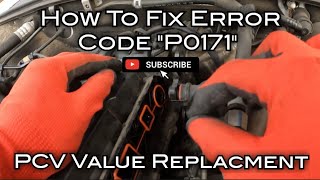
Typical fix: Replace the entire PCV valve / oil separator assembly. 🎬 Watch: How to replace the PCV valve to fix P0171. Replace any cracked hoses found during a smoke test.
Est. part cost: $50-$200 depending on the specific hose or valve - Failed MAF Sensor 🟡 Medium Probability → Shop Fuel Injection Air Flow Meter
How to confirm: If cleaning the sensor and confirming there are no vacuum leaks doesn't resolve the code, the sensor has likely failed electronically. You can monitor the MAF reading in g/s with a scan tool; it should be stable at idle (typically 2.0-4.0 g/s) and increase smoothly as you rev the engine. Some owners report that unplugging the MAF sensor makes the car run better, which strongly points to a bad sensor.
Typical fix: Replace the MAF sensor. It is highly recommended to use an OEM or high-quality OE-equivalent brand like Bosch.
Est. part cost: $150-$250 - Clogged Air Filter ⚪ Low Probability → Shop Air Cleaner Assembly
How to confirm: Remove and inspect the engine air filter. If it is visibly black and clogged with debris, it is restricting airflow. One owner found their new filter was blocked by leftover packaging material.
Typical fix: Replace the engine air filter.
Est. part cost: $20-$50 - Wiring or Connector Issue ⚪ Low Probability
How to confirm: Inspect the MAF sensor's electrical connector for corrosion, bent pins, or broken wires. Wiggle the harness while monitoring MAF data on a scan tool to see if the reading drops out. Use a multimeter to test for proper voltage (12V), ground, and signal at the connector.
Typical fix: Repair the damaged section of the wiring harness or replace the connector pigtail.
Est. part cost: $15-$50 for a new connector
Rare But Worth Checking
- Failed Rear Main Seal:
Diagnosis Steps
- Read the fault codes with an OBD-II scanner and record the freeze frame data. 🎬 Watch: A professional pre-diagnosis walkthrough for the P0102 code.
- Inspect the engine air filter. Replace if it is dirty or clogged.
- With the engine idling, try to remove the oil filler cap. If strong vacuum holds it in place, the PCV valve has likely failed and should be replaced.
- Visually inspect the entire air intake system, from the airbox to the throttle body, for any obvious cracks, loose clamps, or disconnected hoses. Pay close attention to the PCV hoses.
- Carefully remove the MAF sensor. Inspect its sensing element for any dirt, oil, or debris.
- Clean the MAF sensor using only dedicated MAF sensor cleaner spray. Allow it to dry completely before reinstalling.
- Clear the codes and test drive the vehicle to see if the code returns. If it does, proceed with further diagnosis.
- Inspect the MAF sensor's electrical connector and wiring for any damage, corrosion, or loose pins. Wiggle the harness to check for intermittent connections.
- Use a scan tool to monitor the MAF sensor's output in grams per second (g/s) at idle and while revving the engine. The reading should be stable at idle (typically 2.0-4.0 g/s) and increase smoothly with RPM.
- If a vacuum leak is suspected, perform a smoke test to pinpoint the source. Introduce smoke into the intake tract first. If no leaks are found, introduce smoke into the crankcase via the oil filler neck to check the PCV system and engine seals like the rear main seal.
- If all other possibilities are ruled out, the MAF sensor itself has likely failed and should be replaced.
Parts You'll Likely Need
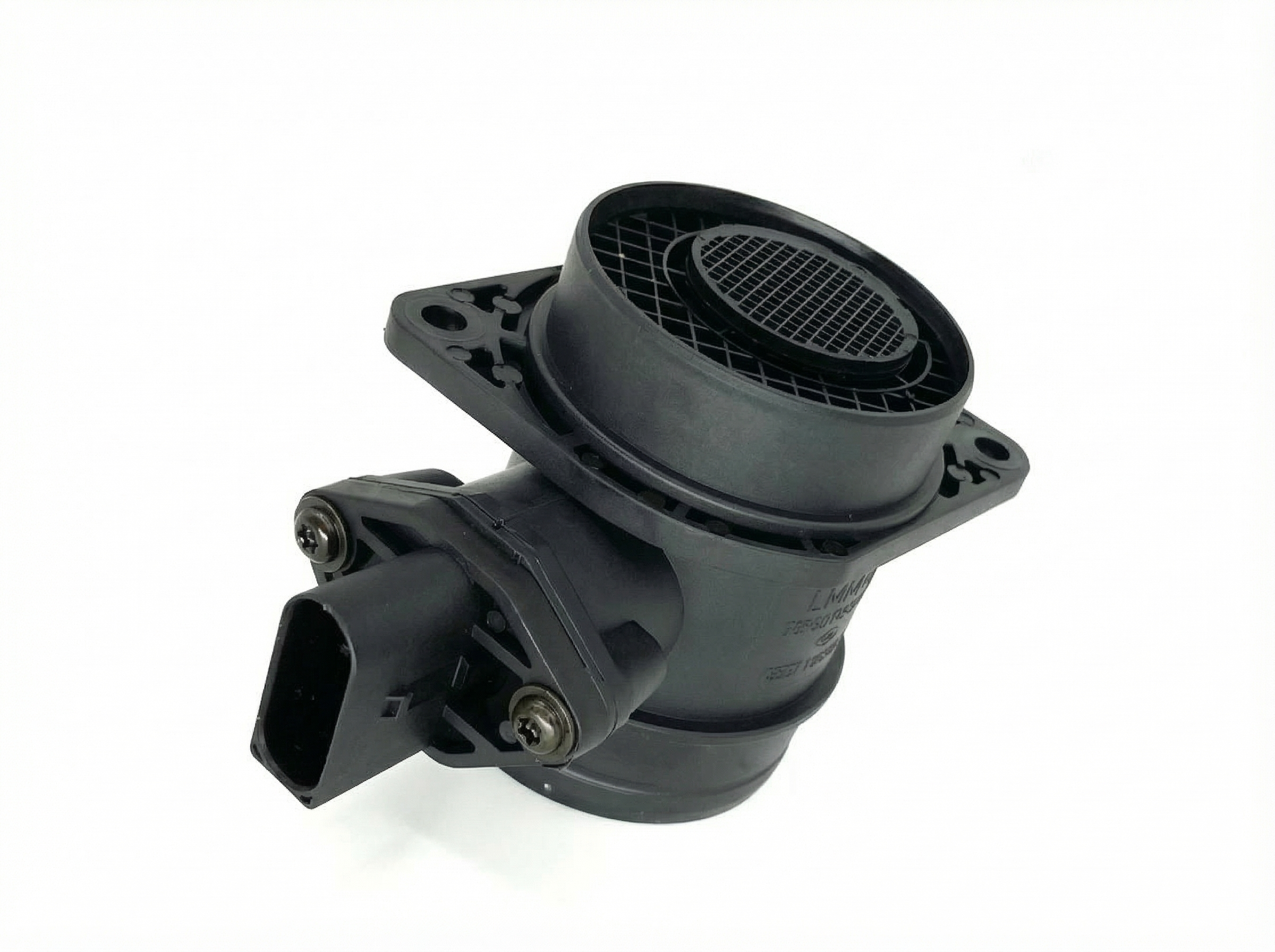
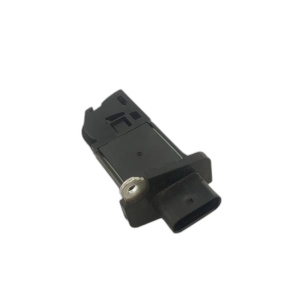
- Mass Airflow (MAF) Sensor
(OEM #06J906461D)— This sensor is the primary component related to the code. It either fails electronically or becomes too contaminated to clean effectively.
Trusted brands: Bosch, Hitachi, Hamburg Tech
OEM price range: $200-$250
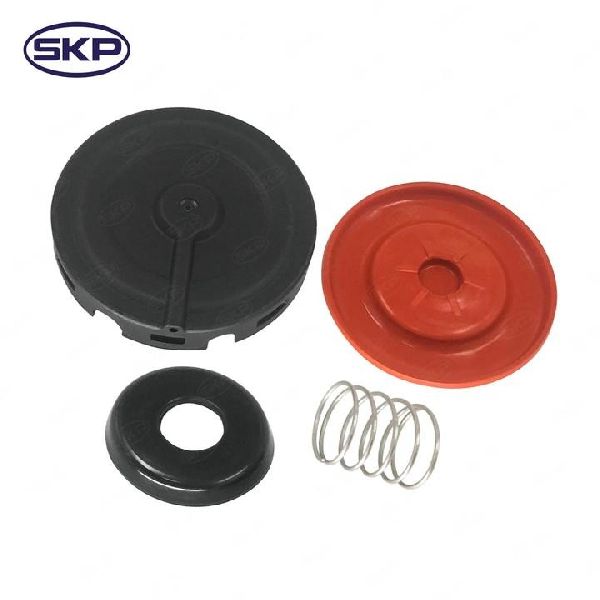
Aftermarket price range: $70-$150 - PCV Valve / Oil Separator Assembly
(OEM #06H103495AK (latest revision, supersedes 06H103495AE, 06H103495J, etc.))— The diaphragm inside the PCV valve is a common failure point on the 2.0T engine, creating a significant vacuum leak that can trigger P0102 and P0171.
Trusted brands: Genuine Audi, Hengst, Vaico
OEM price range: $150-$200
Aftermarket price range: $50-$100 - Mass Airflow Sensor Cleaner — Often, the sensor is just dirty and cleaning it is a simple, inexpensive first step that can fix the problem.
Trusted brands: CRC, Liqui Moly
Aftermarket price range: $10-$15
Related Codes That Often Appear With This One
- P0171 — This code for 'System Too Lean (Bank 1)' often appears with P0102. A vacuum leak (like a bad PCV) allows unmetered air into the engine, so the MAF sensor reports low air (P0102), but the oxygen sensor detects the extra air in the exhaust and flags a lean condition (P0171).
- P0300, P0301, P0302, etc. — These codes indicate random or specific cylinder misfires. An incorrect air/fuel mixture from the faulty MAF reading or a vacuum leak can cause incomplete combustion, leading to misfires.
- P2279 — Indicates an 'Intake Air System Leak'. This code directly supports the diagnosis of a vacuum leak as the root cause for the P0102 reading.
Technical Service Bulletins (TSBs) & Recalls
- TSB 2059446/3 (and later revisions): While for a different engine (3.0T), this TSB details ho
Platform-Specific Known Issues
- There was an emissions service action/recall for the crankcase pressure regulating valve (PCV valve) on some 2.0L TFSI engines. A failure of this part can cause intake vacuum issues that may contribute to a P0102 code. Audi TSB 2025272/5 addresses a similar issue on other engines, highlighting the commonality of PCV problems.
- A user on AudiForums.com with a P0102 code ultimately found the cause to be a hard-to-find vacuum leak in the intake manifold, which was only discoverable via a smoke test after replacing the MAF sensor did not fix the issue.
Mechanic-Grade Diagnostic Values
- MAF Sensor Connector - Power Pin Voltage — expected: ~12V with key on, engine off (or battery voltage). Can be ~13.5-14.5V with engine running.. Failure: Significantly lower than battery voltage or 0V indicates a wiring or fuse issue.
- MAF Sensor Connector - Ground Pin Voltage Drop — expected: Less than 100 mV (0.1V) when tested against the battery negative terminal.. Failure: A reading higher than 100 mV indicates a poor ground connection, which can cause erratic sensor readings.
- MAF Sensor Connector - Signal Pin Voltage — expected: Typically around 1.0V at idle, increasing smoothly with engine RPM.. Failure: A signal voltage that is stuck low (e.g., below 0.5V) or does not change with RPM points to a failed sensor or wiring fault. One case showed a faulty sensor providing only 1V, which was too low.
- Engine-to-Chassis Ground Voltage Drop — expected: Less than 0.15 Volts at idle.. Failure: A higher reading indicates a degraded main engine ground strap, which can cause unstable sensor readings across the engine.
Scan Tool Commands That Help
- VCDS (VAG-COM): Basic Settings - Group 060: Throttle Body Adaptation (TBA) — After cleaning or replacing the throttle body, or after disconnecting the battery for an extended period. While not directly for the MAF, an un-adapted throttle body can cause idle and airflow issues that may confuse MAF diagnostics. It's a critical reset procedure for the intake system.
- VCDS (VAG-COM): Log Measuring Value Blocks (MVB) — Use to log Group 002 to monitor MAF (g/s), engine load, and throttle angle simultaneously. This helps verify if the MAF reading correlates correctly with engine load and driver input, or if it's dropping out intermittently, which could suggest a wiring issue.
Wiring & Ground Locations
- MAF Sensor Fuse — Fuse 7 on fuse holder B (SB7), located in the relay and fuse carrier in the engine bay plenum chamber (under the plastic cowl near the windshield).. This 5A or 7.5A fuse provides power to the MAF sensor (G70). If this fuse is blown, the sensor will have no power, causing a P0102 code.
- G105 / G12 — Engine block-to-firewall ground strap, typically located at the center of the firewall.. This is a primary ground for the engine management system. Corrosion or looseness here can cause floating grounds and erratic sensor behavior, including the MAF sensor.
- G106 — Chassis ground point in the left (driver's side in LHD) engine bay, near the battery tray or firewall.. Provides a ground path for multiple engine bay components. A poor connection here can lead to various electrical issues.
- MAF Connector (G70) — 5-pin electrical connector on the MAF sensor housing, part of the intake tube after the air filter box.. This is the direct connection point for testing. Pin 2 is typically the 12V power supply, and Pin 3 is the ground. Verifying power and ground here is a critical first step in diagnosing a circuit fault.
Real Owner Repair Stories
- AudiWorld Forums user 'SongLamm' (2010 Audi A4 Premium Plus) — Rough idle, rough acceleration, EPC light, limp mode, and a lean condition.
❌ Tried (didn't work) Replacing the MAF sensor, Replacing spark plugs and coils, Replacing the PCV valve (this was done by a mechanic who then found the next issue)
✅ What actually fixed it The final diagnosis was a failed rear main seal, which was causing a massive, unmetered air leak into the crankcase. This air was then pulled into the intake manifold via the PCV system, causing the lean condition and rough running that the MAF sensor could not account for. - Ross-Tech Forums user 'rob.mwpropane' (2013 Audi A4 Quattro with APR tune) — Recurring P0101 (MAF Range/Performance), sudden jerking, flashing TPMS and ETC lights. Car runs perfectly with the MAF sensor unplugged.
❌ Tried (didn't work) Replacing the MAF sensor (multiple times), Replacing the high-pressure fuel pump (HPFP), Replacing the fuel injectors
✅ What actually fixed it The user concluded the issue was almost certainly a wiring problem in the harness between the MAF sensor and the ECU, as replacing all related components did not solve the issue, while disconnecting the sensor (forcing the ECU to use default values) did. The final resolution was not posted, but the diagnosis points directly to a wiring fault. - AudiWorld Forums user (2001 Audi A4 1.8T (B5 platform)) — P0102 code along with illuminated ABS and ESP warning lights immediately after changing the air filter.
❌ Tried (didn't work) Initial inspection for loose hoses around the air filter housing.
✅ What actually fixed it Replacing the Mass Airflow (MAF) sensor resolved the P0102 code and also extinguished the ABS and ESP lights, indicating that the faulty MAF signal was causing cascading errors in the other vehicle stability systems.
"I Checked Everything" — The Actual Cause
- A cracked intercooler end tank can pass a low-pressure smoke test performed at idle but open up under boost pressure, creating a significant unmetered air leak post-MAF. This will cause a low MAF reading (P0102) and lean conditions (P0171) under load, but may be undetectable during a standard smoke test. A whining or whistling noise under acceleration is a key symptom.
When the Usual Fixes Don't Work
- In several documented cases, replacing the MAF sensor did not resolve the P0102 code. One owner went through multiple MAF sensors, a new HPFP, and new injectors before realizing the car ran perfectly only when the MAF was unplugged, pointing to a persistent wiring fault. Another owner had the code return after a PCV valve replacement, which ultimately led to the discovery of a failed rear main seal causing a massive vacuum leak that was the true root cause. These instances highlight that while the MAF sensor is implicated by the code, it is often just the messenger reporting an issue elsewhere in the system.
OEM Part Supersession History
06H103495J, 06H103495AE→06H103495AK— Improved diaphragm material and design to increase longevity and resistance to tearing, which was a common failure point in earlier revisions.
Model Year Variations Within This Range
- 2009-2012 (B8): Early EA888 Gen 2 engines in this range were more susceptible to significant oil consumption issues due to piston ring design. This increases the likelihood of oil vapor contaminating the MAF sensor and the entire intake tract.
- 2013-2016 (B8.5): While still using the EA888 Gen 2 engine in the US, many running changes were made to auxiliary parts. The intake manifold design was updated around 2012, which can alter vacuum line routing and potential leak points compared to earlier B8 models. The oil consumption issue was also partially addressed in later engines, though not eliminated entirely.
Diagnostic Flowchart
Other Known Issues on This Vehicle
Issues unrelated to this code that are worth knowing about as an owner of this generation:
- Excessive Oil Consumption 🔴 High — Very common, especially on 2009-2011.5 models with the CAEB engine code. Can start as early as 50k-70k miles. Often consumes 1 quart of oil every 300-1000 miles. (Ref: A class-action lawsuit was settled for this issue. The fix involved a new PCV valve and, if unsuccessful, new piston rings.)
- Timing Chain Tensioner Failure 🔴 High — Common on 2008-2012 models with the original tensioner design. Failure can be catastrophic, causing engine damage. Warning sign is a 1-3 second rattle on cold starts. (Ref: No recall, but updated tensioner parts are available. Inspection is recommended. A camshaft adaptation value beyond -5 degrees indicates chain stretch.)
- Water Pump Failure 🟠 Medium — The plastic water pump housing is prone to cracking and leaking coolant. Failure can occur at any mileage, with many owners reporting issues between 60k-100k miles. (Ref: There have been some recalls and warranty extensions on similar engines, but it's a known weak point. Aftermarket aluminum housings are a popular upgrade, though the seals can still fail if oil leaks on them.)
- Carbon Buildup on Intake Valves 🟠 Medium — As a direct-injection engine, fuel doesn't wash over the intake valves. Significant buildup causing misfires and performance loss is common every 60k-80k miles.
Used vs. New Parts: Buying Guide for This Vehicle
When a used part is the smart pick: For this repair, using used parts is generally not recommended for the primary failure items. A used structural component like an air filter housing or a section of intake piping could be acceptable if it is thoroughly inspected for cracks and is not brittle.
Donor-vehicle mileage cap: roughly under 40000 miles for the part to have meaningful remaining life.
What to inspect on the donor part:
- For any plastic or rubber hose: Squeeze the part to ensure it is still pliable and not hardened or brittle.
- Check for any fine cracks, especially around connection points and bends.
- Ensure all mounting tabs and connector clips are intact and not broken.
OEM-only on this vehicle (don't cheap out):
- Mass Airflow (MAF) Sensor: Aftermarket sensors are notoriously unreliable for this application and can cause persistent running issues even if they don't set a code immediately. Stick with the OEM Bosch part.
- PCV Valve / Oil Separator: Cheap aftermarket PCV assemblies are known to have weak diaphragms that fail quickly or use poor quality plastic that can warp, causing leaks. Use a Genuine Audi part or a reputable OE manufacturer like Hengst.
Aftermarket brands forum-validated for this vehicle:
- Bosch (for MAF Sensor - they are the Original Equipment Manufacturer)
- Hengst (for PCV Valve - they are a known Original Equipment supplier)
- RKX (for upgraded PCV diaphragm-only repair kits, reported by enthusiasts to be more durable than the stock diaphragm)
Brands owners have reported issues with on this vehicle:
- Unbranded, 'white-box' MAF sensors and PCV valve assemblies commonly found on eBay and Amazon. These frequently fail out of the box or within a few months.
Real Owner Stories
Aggregated from forums and TSBs cited above. Mileages and costs reflect what owners reported in those sources.
2013 Audi A4 B8.5 2.0T
Symptoms: The owner experienced persistent MAF issues despite replacing the sensor, high-pressure fuel pump (HPFP), and injectors. Interestingly, the car ran perfectly with the MAF sensor unplugged.
What fixed it: The owner suspected a wiring issue in the MAF harness after multiple part replacements failed to resolve the issue.
Source hint: Ross-Tech Forums: 2013 Audi A4 B8.5 MAF Issues?
2008-2016 Audi A4 2.0T
Symptoms: A persistent P0102 code that remained even after replacing the MAF sensor.
What fixed it: A smoke test revealed a hard-to-find vacuum leak in the intake manifold that was not visible during a standard inspection.
Source hint: AudiForums.com: P0102 mass airflow sensor input too low
2008-2017 Audi A5 2.0T
Symptoms: Engine management light with P0102 code. The owner had already replaced the EGR and MAF sensor without success.
What fixed it: The air filter was found to be severely blocked by polystyrene from its original packaging, and a breather tube at the bottom of the airbox was also blocked.
Source hint: Audi A5 Club: Engine Management Light P0102 (Mass Airflow Low Circuit)
Related OBD-II Codes
Frequently Asked Questions
Is there a recall or TSB for the PCV valve on the Audi 2.0L TFSI that might cause P0102?
Why does my Audi A4 2.0T run better when I unplug the MAF sensor?
Can a vacuum leak on my A4 B8 cause a P0102 code even if the sensor is clean?
What should the MAF sensor readings look like on a scan tool for this engine?
I replaced my MAF sensor but the P0102 code is still there. What else should I check on my Audi?
Can a dirty air filter really cause a P0102 on an Audi A4?
Helpful Videos
Used OEM Parts in Stock
New Aftermarket Parts Available

The information in this article is provided for general reference and educational purposes only. Vehicle specifications, procedures, and part compatibility can vary by production date, trim level, and region. Always consult your vehicle's factory service manual and verify part numbers before purchasing or performing repairs. Safety-critical components such as airbags, seat belts, and braking systems should be installed by a qualified professional.
- Audi A4:
- 🧭 Diagnostic Flowchart
- 🎬 Helpful Videos
- 🛍️ Shop This Part
- What's Unique About the 2008-2016 Audi A4
- Symptoms You May Notice
- Most Likely Causes
- Rare But Worth Checking
- Diagnosis Steps
- Parts You'll Likely Need
- Related Codes That Often Appear With This One
- Technical Service Bulletins (TSBs) & Recalls
- Platform-Specific Known Issues
- Mechanic-Grade Diagnostic Values
- Scan Tool Commands That Help
- Wiring & Ground Locations
- Real Owner Repair Stories
- "I Checked Everything" — The Actual Cause
- When the Usual Fixes Don't Work
- OEM Part Supersession History
- Model Year Variations Within This Range
- Other Known Issues on This Vehicle
- Used vs. New Parts: Buying Guide for This Vehicle
- Real Owner Stories
- 2013 Audi A4 B8.5 2.0T
- 2008-2016 Audi A4 2.0T
- 2008-2017 Audi A5 2.0T
- Related OBD-II Codes
- Frequently Asked Questions
- 🎟️ Get 5% Off