

P0102 on 2010-2015 Chevrolet Camaro 3.6L: MAF Circuit Low Causes & Fixes
P0102 on a 3.6L Camaro most often means the Mass Airflow (MAF) sensor is dirty or has failed. Cleaning the sensor with a dedicated MAF cleaner for about $10 is the first step. If that doesn't work, a replacement sensor is the likely fix, costing around $60-$120 for a quality aftermarket part. Before replacing, always check for vacuum leaks and inspect the wiring connector, as these are also common culprits.
- P0102 means the MAF sensor circuit is sending a low signal, most often due to a dirty sensor.
- Always start by cleaning the MAF sensor with a dedicated cleaner; this is a cheap fix that often works.
- Inspect the air intake hose between the sensor and the engine for any cracks or loose clamps, as this is a common cause of related codes.
- If cleaning doesn't work, the sensor itself has likely failed and needs replacement.
- Ensure you are buying the correct MAF sensor for your engine, as the LLT (2010-2011) and LFX (2012-2015) use different parts.
What's Unique About the 2010-2015 Chevrolet Camaro
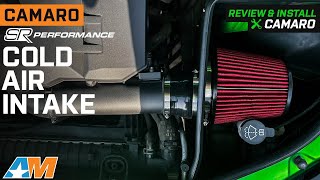
The 2010-2015 Camaro spans two different 3.6L V6 engines: the LLT (2010-2011) and the LFX (2012-2015). While the P0102 code has the same meaning for both, they use different MAF sensors. This guide focuses on the LLT engine specified. A common issue on this platform is contamination of the MAF sensor, especially if an aftermarket oiled air filter has been installed. 🎬 See how a cold air intake is installed on this Camaro. Also, because P0102 is a circuit code, it's important to check the wiring and connectors near the sensor, as they can become brittle or loose over time. GM also issued a preliminary information bulletin (PI1009) noting that P0102 can be set inadvertently if the MAF sensor is disconnected while the ignition is on during other service procedures. Additionally, manufacturer diagnostic tips in Bulletin #PI1009 provide further information for cases where P0102 sets alongside other circuit-related codes like P0097 or P0113.
Symptoms You May Notice
- Check Engine Light is on
- Rough or erratic idle
- Engine stalling, especially at idle
- Hesitation or sluggish acceleration
- Reduced fuel economy
- Black smoke from the exhaust
- Engine running rough and may have difficulty starting.
- Replacing oxygen sensors. While a bad MAF sensor can affect air-fuel ratio and cause O2 sensor codes, P0102 points specifically to the MAF circuit, not the O2 sensors themselves.
Most Likely Causes
- Dirty or Contaminated MAF Sensor 🔴 High Probability → Shop Fuel Injection Air Flow Meter The use of aftermarket oiled air filters can deposit a thin layer of oil on the MAF sensor's delicate wires, insulating them and causing incorrect readings. Regular road dirt and debris can also accumulate over time. The sensor's internal hot wire elements are sensitive to any contamination.
How to confirm: Visually inspect the sensor's wire elements. If they appear dirty, oily, or have any debris on them, they need cleaning.
Typical fix: Remove the sensor and clean it carefully using only a dedicated Mass Airflow Sensor cleaner spray. Do not touch the sensor wires. Allow it to dry completely for at least 20-30 minutes before reinstalling.
Est. part cost: $10-$15 - Failed MAF Sensor 🟡 Medium Probability → Shop Fuel Injection Air Flow Meter
How to confirm: If cleaning the sensor does not resolve the code, and the wiring is confirmed to be good, the sensor's internal electronics have likely failed. A diagnostic scan tool can monitor the MAF sensor's output in grams/second; a reading that is stuck at a very low number (like 0 g/s) or doesn't change with RPM indicates a failed sensor. A healthy 3.6L V6 should read around 3.6-4.0 g/s at idle.
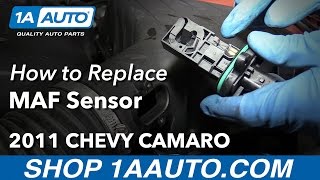
Typical fix: Replace the Mass Airflow Sensor. It is recommended to use an OEM (ACDelco) or reputable OE-quality brand. The ACDelco part number for the LLT engine is 213-4222. 🎬 Watch: See this step-by-step MAF sensor replacement walkthrough.
Est. part cost: $60-$180 - Vacuum Leak or Disconnected Intake Boot 🟡 Medium Probability The plastic and rubber components of the intake system, including the PCV hoses, can become brittle and crack over time, or clamps can loosen, allowing unmetered air to enter the engine after the MAF sensor.
How to confirm: Visually inspect all intake ducting between the MAF sensor and the throttle body for cracks, loose clamps, or disconnections. Listen for a hissing sound at idle. A smoke test is the most definitive way to find a leak. 🎬 Watch: A pro shows you how to find vacuum leaks.
Typical fix: Tighten any loose clamps or replace the cracked or damaged intake hose.
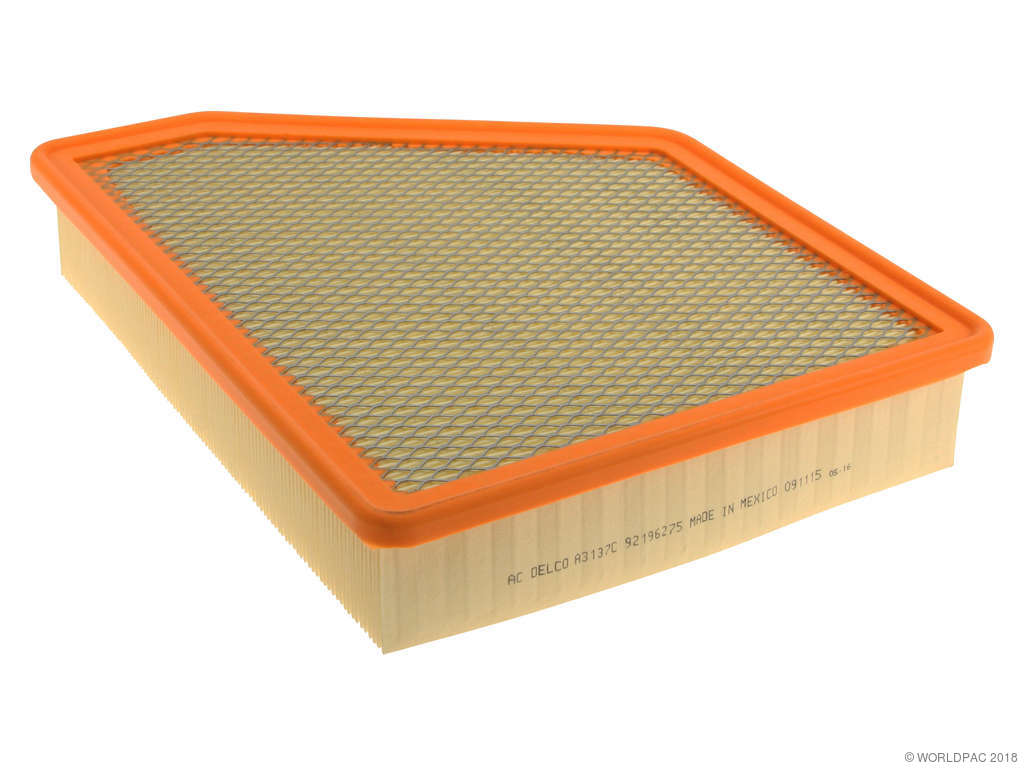
Est. part cost: $50-$150 - Clogged Engine Air Filter ⚪ Low Probability → Shop Air Cleaner Assembly
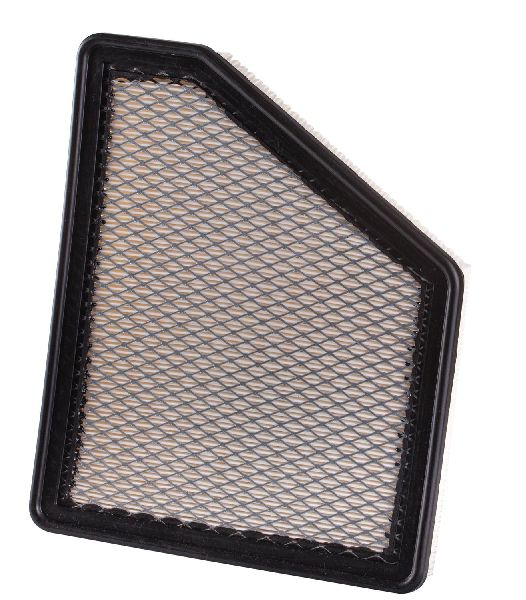
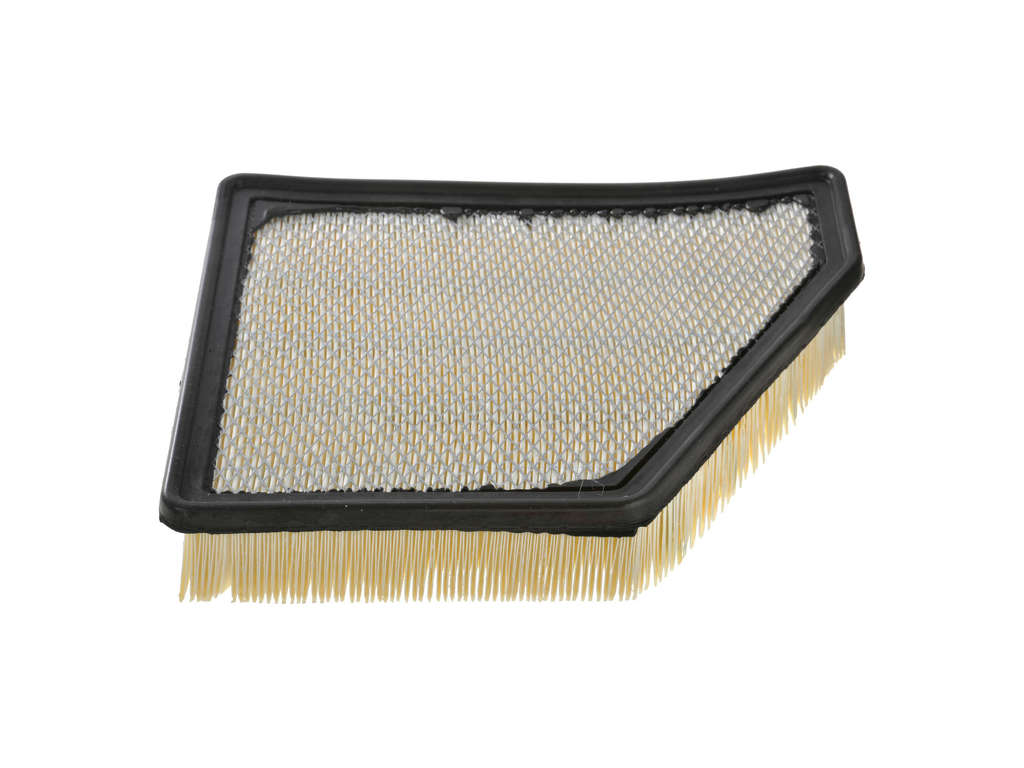
How to confirm: Inspect the engine air filter. If it is visibly dirty, clogged with debris, or has not been changed in a long time, it can restrict airflow enough to trigger the code.
Typical fix: Replace the engine air filter.
Est. part cost: $20-$50 - Wiring or Connector Issue ⚪ Low Probability The wiring harness to the MAF sensor can be damaged or the connector pins can become corroded or loose, leading to a low or intermittent signal. A common chafe point is where the harness is secured by a metal clip to the cylinder head behind the tensioner pulley.
How to confirm: Inspect the MAF sensor's electrical connector for corrosion or loose pins. Wiggle the wiring harness near the connector with the engine running and live data on a scan tool to see if it causes the MAF reading to spike or drop out. Use a multimeter to check for the correct ignition voltage (12V) and ground at the connector.
Typical fix: Repair the damaged section of wiring or replace the connector pigtail.
Est. part cost: $20-$40
Rare But Worth Checking
- Blown Fuse: Some GM vehicles have a dedicated fuse for the MAF sensor circuit. While less common on newer models, it's a quick and easy check to perform in the under-hood fuse box.
- Faulty Engine Control Module (ECM): This is extremely rare, but if all other possibilities have been exhausted, the ECM itself could be the source of the problem. This should be the last resort.
Diagnosis Steps
- Read the code with an OBD-II scanner and confirm P0102 is present. Note any other codes, such as P0101, P0171, or P0174.
- Inspect the engine air filter and replace it if it is dirty or clogged.
- Visually inspect the entire air intake system between the air filter housing and the throttle body. Look for any cracks, loose hoses, or disconnected clamps. Pay special attention to the intake boot and PCV hoses.
- Carefully remove the MAF sensor. Inspect the sensing elements for any dirt, oil, or debris.
- If dirty, clean the sensor using only dedicated MAF sensor cleaner spray. Spray the internal wires and elements thoroughly and let it air dry completely for 20-30 minutes before reinstalling.
- Inspect the MAF sensor connector and wiring. Check for pushed-out pins, corrosion, or damaged wires. Wiggle the harness with the engine running to check for changes. Pay close attention to the harness section behind the tensioner pulley for chafing against a metal clip.
- Clear the codes with the scanner and test drive the vehicle to see if the code returns. It may be necessary to perform a MAF or idle learn reset with a capable scan tool.
- If the code returns, use a scan tool with live data to monitor the MAF sensor reading (g/s) at idle and while increasing RPM. The reading should be stable at idle (around 3.6-4.0 g/s for the 3.6L V6) and increase smoothly with engine speed. If it's stuck low or erratic, the sensor is likely faulty.
- If the scan tool shows 0 g/s, perform a pinout voltage test at the MAF connector with the key on. Verify 12V on the Pink wire and good continuity to ground on the Black/White wire.
- If wiring and the sensor itself are confirmed good, perform a smoke test to definitively rule out hard-to-see vacuum leaks.
- If all else fails, consider replacing the MAF sensor with a high-quality part, such as ACDelco 213-4222.
Parts You'll Likely Need
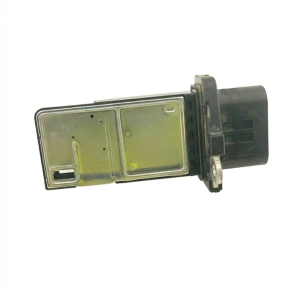
- Mass Airflow Sensor
(OEM #15865791 (GM), 213-4222 (ACDelco))— This sensor is the most common point of failure for a P0102 code, either due to contamination or internal electronic failure.
Trusted brands: ACDelco, Delphi, Bosch, Hitachi
OEM price range: $100-$180
Aftermarket price range: $60-$120 - Mass Airflow Sensor Cleaner — Often, the sensor is just dirty and does not need to be replaced. This is the cheapest and most effective first step in diagnosis and repair.
Trusted brands: CRC, Liqui Moly
Aftermarket price range: $10-$15 - Engine Air Filter — A severely clogged air filter can restrict airflow and cause a P0102 code. It's a routine maintenance item that should be checked first.
Related Codes That Often Appear With This One
- P0171 — System Too Lean (Bank 1). If there is a large vacuum leak, unmetered air enters the engine. The MAF sensor reports low airflow (P0102), but the oxygen sensors detect the extra air, resulting in a lean condition code.
- P0174 — System Too Lean (Bank 2). This is the same as P0171 but for the opposite engine bank, further indicating a vacuum leak affecting the entire engine.
- P0101 — Mass Air Flow (MAF) Circuit Range/Performance. This code often accompanies P0102 and indicates the sensor's readings are not plausible for the given engine speed and load, which can happen if the sensor is dirty, failing, or there's a leak.
- P2097 / P2099 — Post Catalyst Fuel Trim System High Limit. These codes can appear alongside P0102, indicating the fuel trim system is at its limit trying to compensate for the incorrect airflow readings.
Technical Service Bulletins (TSBs) & Recalls
- TSB 24-NA-158: A TSB was issued for some GM vehicles regarding water intrusion into the MAF sensor connector, which can cause a P0102 code. The fix involves replacing both the sensor and the connector pigtail. This bulletin provides a specific procedure to correct the Malfunction Indicator Lamp illumination when DTC P0102 is active.
Mechanic-Grade Diagnostic Values
- MAF Sensor Connector Pinout Test (Key On, Engine Off) — expected: Pin 4 (Pink wire): 12V Ignition Voltage. Pin 2 (Black/White wire): Good continuity to ground (<1 Ohm). Pin 5 (Yellow wire): 0-5V square wave signal when running, may show 5V reference from ECM with key on/sensor disconnected.. Failure: No voltage on Pin 4 indicates a power supply issue (fuse or wiring). High resistance on Pin 2 indicates a bad ground. No signal activity on Pin 5 when running points to a failed sensor or wiring issue.
- MAF Sensor Reading at Idle (Scan Tool Live Data) — expected: Approximately 3.6-4.0 g/s at normal operating temperature.. Failure: A reading stuck at or near 0 g/s, or a reading that does not increase smoothly as engine RPM is raised.
Scan Tool Commands That Help
- GDS2 / Professional Scan Tool: Idle Learn Reset / Throttle Relearn — Required after replacing the throttle body, and recommended after disconnecting the battery or replacing intake components like the MAF sensor to stabilize idle speed and prevent stalling.
Wiring & Ground Locations
- MAF Sensor Connector (B75B) — In the air intake duct between the air filter housing and the throttle body.. This is the primary connection for the sensor. A P0102 is a circuit code, making this connector and its wiring a primary inspection point. The LLT V6 uses a 5-pin connector.
- Engine Grounds G106, G107, G108, G109 — G106/G107 are at the left rear of the engine. G108/G109 are on the left side of the engine block.. The MAF sensor and ECM rely on a clean ground reference for accurate signaling. A loose or corroded connection at these points can cause erratic sensor readings and trigger a P0102 code.
- Main Engine-to-Chassis Ground — A primary ground strap is located on the passenger side of the engine, running from the front of the cylinder head to the chassis near the ABS block. Another is reported to be underneath near the starter and is difficult to access.. A poor main ground connection can cause a host of electrical issues, including incorrect sensor readings. Some owners report these being loose from the factory.
- MAF Harness Chafe Point — Where the MAF wiring harness meets the main engine harness, it is secured by a metal clip to the cylinder head, located behind the tensioner pulley.. The protective wire loom can become brittle and crack, allowing the MAF signal or power wire to rub against the metal clip, causing an intermittent short to ground. This will set a P0102 and can cause repeated MAF sensor failures.
Real Owner Repair Stories
- Camaro5 Forum user 'Hogiewan1' and 'eLeSthree' (2012 Camaro SS (LS3 engine, but directly applicable wiring issue)) — Repeatedly throwing P0102 code. New MAF sensors would work for about 50 miles, then fail, showing 0 g/s on the scan tool.
❌ Tried (didn't work) Replacing the MAF sensor (3 times), Smoke testing for vacuum leaks (none found), Checking for over-oiled air filter, Verifying 5V reference and other voltages at the connector
✅ What actually fixed it Found a tiny exposed portion of the MAF wire rubbing on a metal harness clip located behind the tensioner pulley. The wiring loom had dry-rotted and cracked, causing the wire to short to ground. Wrapping the wire with electrical tape and fabricating a new loom permanently solved the issue. - LS1Tech Forum user 'Greg88' and 'Injuneer' (1997 Pontiac Firebird (LT1 engine, but demonstrates a common GM wiring failure pattern)) — P0102 code immediately after engine work. No 12V power on the pink wire at the MAF connector.
❌ Tried (didn't work) Checking fuses
✅ What actually fixed it The user found a break in the 12V power wire within the harness, after the splice where it branches off to power other sensors. The problem was resolved by locating and repairing the break in the splice. It was noted that running a new, fused, ignition-switched 12V wire is a common and effective workaround for this issue. - NHTSA ODI #10262711 — An owner reported a recurring P0102 code for MAF sensor low input. Despite replacing the sensor with one that appeared identical and showed no signs of fouling, the issue persisted, highlighting the frustration of dealing with circuit-related faults that aren't resolved by simple part replacement.
"I Checked Everything" — The Actual Cause
- A user on the Camaro5 forums performed a smoke test which revealed no vacuum leaks, yet they continued to get a P0102 code and repeatedly burn through new MAF sensors. The actual cause was found to be the MAF signal wire chafing on a metal harness clip and shorting to ground, an electrical issue that a smoke test cannot detect.
- An unsealed crankcase, due to a loose oil dipstick or oil filler cap, can allow unmetered air to enter the intake via the PCV system. This can cause a P0102 but may not be detected by a smoke test depending on the test procedure.
When the Usual Fixes Don't Work
- In a well-documented case on a Camaro forum, replacing the MAF sensor multiple times failed to fix a recurring P0102 code. The owner had also confirmed with a smoke test that there were no vacuum leaks. The final solution was tracing the wiring harness and finding a small, hidden chafe point where the MAF signal wire was shorting to a metal clip on the engine block. This highlights that for a circuit code like P0102, a thorough wiring inspection is critical and can be the root cause even when the sensor itself is new and there are no air leaks.
OEM Part Supersession History
15865791 (GM)→213-4222 (ACDelco)— This is the standard GM to ACDelco part number cross-reference. No major design change is noted, but GM regularly updates parts to integrate new materials or technologies.
Heads up: The most critical incompatibility is not a supersession, but the model year change. The MAF sensor for the 2010-2011 LLT engine (ACDelco 213-4222) is different and not interchangeable with the sensor for the 2012-2015 LFX engine.
Model Year Variations Within This Range
- 2012-2015: Starting in 2012, the V6 engine was updated from the LLT to the LFX. This new engine uses a different MAF sensor (e.g., ACDelco 23262343), a composite intake manifold, and different fuel injectors. Parts are not interchangeable with the 2010-2011 LLT.
Diagnostic Flowchart
Other Known Issues on This Vehicle
Issues unrelated to this code that are worth knowing about as an owner of this generation:
- Premature Timing Chain Stretch 🔴 High — Very common on 2010-2011 LLT engines, often appearing between 60,000 and 120,000 miles. Symptoms include a rattling noise on cold startup and codes P0008, P0017. (Ref: TSB #12-06-01-009F)
- Excessive Oil Consumption 🟠 Medium — Commonly reported on LLT engines, often linked to PCV system design and piston ring wear. Can lead to low oil levels that accelerate timing chain wear.
- Intake Valve Carbon Buildup 🟠 Medium — A known side effect of the direct injection (SIDI) system on the LLT engine. Over time, carbon deposits on the back of intake valves can cause misfires, rough idle, and performance loss.
- Water Pump Failure 🟠 Medium — The water pump on the 3.6L V6 is a known failure point, often leading to coolant leaks and potential overheating.
- Ignition Switch and Key Recall 🔴 High — A widespread GM recall (NHTSA Campaign ID: 14V346000) affected the 2010-2015 Camaro. The ignition switch could be inadvertently moved from the 'Run' position, causing a loss of power. All vehicles should have been fixed under this recall. (Ref: 14V346000)
Used vs. New Parts: Buying Guide for This Vehicle
When a used part is the smart pick: Using a used part is generally not recommended for the MAF sensor itself due to its sensitive electronics. It is a viable option for passive intake components like the air filter housing or intake ducting if they are cracked or damaged.
Donor-vehicle mileage cap: roughly under 50000 miles for the part to have meaningful remaining life.
What to inspect on the donor part:
- Verify the donor vehicle was running without any MAF-related codes.
- Inspect the sensor for any physical damage, corrosion on the pins, or signs of tampering.
- Check the donor vehicle's air filter; a clean filter is a good sign, while a filthy one suggests the MAF has been exposed to excessive debris.
- Avoid sensors from vehicles that used aftermarket oiled air filters.
OEM-only on this vehicle (don't cheap out):
- Mass Airflow Sensor
Aftermarket brands forum-validated for this vehicle:
- ACDelco (OEM supplier)
- Delphi
- Bosch
- Hitachi
Brands owners have reported issues with on this vehicle:
- Unbranded, low-cost sensors from online marketplaces like eBay or Amazon are frequently reported by owners to be defective out of the box or fail prematurely.
Real Owner Stories
Aggregated from forums and TSBs cited above. Mileages and costs reflect what owners reported in those sources.
2010 Chevrolet Camaro 3.6L V6 (LLT) — ~90000 miles
Symptoms: Godawful rattle at startup and general reliability concerns regarding the engine's timing components.
What fixed it: The source discusses the necessity of addressing premature timing chain stretch, which is a common high-severity issue for this specific model year.
Source hint: Camaro5 Forum - Timing Chain and Oil Burning Issues on 2010 V6
2010-2015 Chevrolet Camaro 3.6L V6 (LLT)
Symptoms: P0102 along with several catalyst and fuel trim codes (P2099, P0420, P0430, P2097).
What fixed it: The owner reported these codes appearing specifically after modifying the vehicle by performing a cat delete (exhaust system modification).
Source hint: Camaro5 Forum - P0102 with other codes after cat delete
Related OBD-II Codes
Frequently Asked Questions
What is the specific ACDelco part number for a replacement MAF sensor on my 3.6L LLT engine?
Is there a TSB for the P0102 code regarding water getting into the sensor connector?
What should the MAF sensor reading be at idle for my 3.6L V6 Camaro?
I heard there is a common wiring problem near the pulley; where should I look?
Can my aftermarket oiled air filter cause the P0102 code?
Which wires should I test at the MAF connector to check for power and ground?
Helpful Videos

Used OEM Parts in Stock
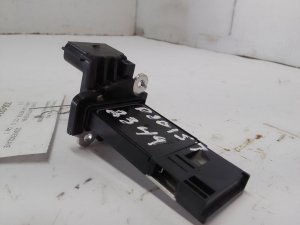
New Aftermarket Parts Available

The information in this article is provided for general reference and educational purposes only. Vehicle specifications, procedures, and part compatibility can vary by production date, trim level, and region. Always consult your vehicle's factory service manual and verify part numbers before purchasing or performing repairs. Safety-critical components such as airbags, seat belts, and braking systems should be installed by a qualified professional.
- Chevrolet Camaro:
- 🧭 Diagnostic Flowchart
- 🎬 Helpful Videos
- 🛍️ Shop This Part
- What's Unique About the 2010-2015 Chevrolet Camaro
- Symptoms You May Notice
- Most Likely Causes
- Rare But Worth Checking
- Diagnosis Steps
- Parts You'll Likely Need
- Related Codes That Often Appear With This One
- Technical Service Bulletins (TSBs) & Recalls
- Mechanic-Grade Diagnostic Values
- Scan Tool Commands That Help
- Wiring & Ground Locations
- Real Owner Repair Stories
- "I Checked Everything" — The Actual Cause
- When the Usual Fixes Don't Work
- OEM Part Supersession History
- Model Year Variations Within This Range
- Other Known Issues on This Vehicle
- Used vs. New Parts: Buying Guide for This Vehicle
- Real Owner Stories
- 2010 Chevrolet Camaro 3.6L V6 (LLT) — ~90000 miles
- 2010-2015 Chevrolet Camaro 3.6L V6 (LLT)
- Related OBD-II Codes
- Frequently Asked Questions
- 🎟️ Get 5% Off