

P0102 on 2006-2013 Chevrolet Impala: MAF Circuit Low Causes and Fixes
On a 2006-2013 Impala, code P0102 is most often caused by a dirty Mass Airflow (MAF) sensor. Before replacing any parts, try cleaning the sensor with dedicated MAF cleaner, which often resolves the issue for under $15. If that fails, check the wiring and connector before replacing the sensor, as a bad connection can mimic a failed sensor. A new sensor is the next likely fix if cleaning and wiring checks don't solve it.
- P0102 on a 2006-2013 Impala almost always points to the Mass Airflow (MAF) sensor.
- The most common and cheapest fix is to clean the MAF sensor with a dedicated aerosol cleaner. Do this first.
- If cleaning doesn't work, inspect the intake hose for cracks and the sensor's wiring before buying a new MAF sensor.
- Replacing the MAF sensor is a simple DIY job, typically requiring only a screwdriver and/or a Torx bit, and takes less than 15 minutes.
What's Unique About the 2006-2013 Chevrolet Impala
For the ninth-generation Impala, the P0102 code is a very common issue, but often not due to a completely failed part. These vehicles are prone to contamination of the MAF sensor's sensing element over time from oil vapor from the PCV system and dirt. Owners and mechanics frequently report that a simple cleaning of the MAF sensor resolves the code without needing to purchase a new sensor. 🎬 Watch: How to clean or replace your Impala's MAF sensor While the specific MAF sensor part may differ between the 2006-2011 engines (3.5L, 3.9L, 5.3L) and the 2012-2013 3.6L LFX engine, the cause and diagnostic approach are nearly identical. A faulty connection at the ENG 1 fuse in the underhood fuse block has also been identified by owners as a specific, though less common, cause of this code on Impalas.
Generation note: The 2006-2013 year range covers the entire ninth generation of the Chevrolet Impala. However, there was a significant powertrain update for the 2012 model year. The 2006-2011 models used the 3.5L V6, 3.9L V6, or 5.3L V8, while the 2012-2013 models exclusively used the 3.6L LFX V6. The diagnosis and common causes for P0102 are consistent across all engines in this generation, though the specific MAF sensor part number differs.
Symptoms You May Notice
- Check Engine Light is on
- Engine runs rough or has an unstable idle.
- Hesitation or jerking during acceleration.
- Stalling, especially at idle or when coming to a stop.
- Reduced fuel economy.
- Black smoke from the exhaust.
- Hard starting, may require 2-3 attempts.
- Replacing the MAF sensor without first attempting to clean it. Cleaning is often successful and much cheaper.
- Replacing oxygen (O2) sensors, as a bad MAF reading can affect the air-fuel ratio and sometimes trigger other codes related to fuel trim.
Most Likely Causes
- Dirty or Contaminated MAF Sensor 🔴 High Probability → Shop Fuel Injection Air Flow Meter The MAF sensor's hot wire is sensitive and can become coated with dirt, oil from the PCV system, and other contaminants from the intake system over time, insulating it and causing it to read airflow incorrectly.
How to confirm: Visually inspect the small wires inside the MAF sensor. If they appear dirty or coated, cleaning is warranted. This is the most common and cheapest first step.
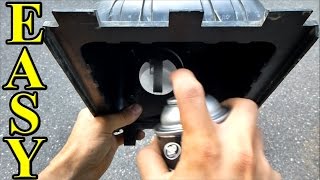
Typical fix: Remove the sensor from the air intake tube and clean it thoroughly using only dedicated Mass Airflow Sensor cleaner (e.g., CRC MAF Sensor Cleaner). Do not use brake or carburetor cleaner. Allow it to air dry completely before reinstalling.
Est. part cost: $10-$20 for MAF cleaner - Faulty Mass Airflow (MAF) Sensor 🟡 Medium Probability → Shop Fuel Injection Air Flow Meter If cleaning the sensor does not resolve the issue, the sensor's internal electronics may have failed. This is a common failure part on many GM vehicles of this era.
How to confirm: After cleaning the sensor and clearing the code, if P0102 returns, the sensor is likely bad. You can also monitor the MAF sensor data (grams/sec) with an OBD-II scan tool; the reading should be near zero with the engine off (Key On, Engine Off) and increase smoothly with RPM. If the reading is stuck at zero or doesn't change, the sensor is likely faulty.
Typical fix: Replace the MAF sensor. It is typically held in the air intake duct by two Torx screws. 🎬 Watch this step-by-step MAF sensor replacement walkthrough
Est. part cost: $60-$150 - Damaged Wiring or Poor Connection ⚪ Low Probability
How to confirm: Inspect the MAF sensor's electrical connector for corrosion, bent pins, or a loose fit. Trace the wiring harness as far as possible, looking for any signs of chafing, melting, or breaks. A known issue on some GM vehicles is a poor connection at the 'ENG 1' fuse in the underhood fuse box, which powers the sensor; check for a distorted contact that may provide low voltage.
Typical fix: Clean the connector terminals. Repair or replace the damaged section of the wiring harness or the connector pigtail. If the fuse terminal is loose, it may need to be carefully re-tensioned or the fuse box repaired.
Est. part cost: $15-$50 for a pigtail connector - Vacuum Leak in the Air Intake System ⚪ Low Probability → Shop Engine Air Intake Resonator The plastic and rubber components of the air intake duct can become brittle and crack over time, allowing unmetered air to enter the engine after the MAF sensor.
How to confirm: Visually inspect the air intake boot and all connecting hoses between the MAF sensor and the engine's throttle body for cracks, tears, or loose clamps. A smoke test is the most effective way to find a leak.
Typical fix: Replace the cracked or torn intake hose or secure any loose clamps.
Est. part cost: $30-$80 for an intake boot
Rare But Worth Checking
- Severely Clogged Engine Air Filter: → Shop Air Cleaner Assembly A completely blocked air filter can starve the engine of air, causing the MAF sensor to report an abnormally low airflow reading. Always check the filter as a basic first step.
- Clogged Catalytic Converter: A significant exhaust restriction can prevent the engine from breathing properly, which can indirectly cause a low airflow reading at the MAF sensor. This is usually accompanied by a severe lack of power, especially at higher RPMs.
Technical Service Bulletins (TSBs) & Recalls
Manufacturer service bulletins provide professional diagnostic guidance for persistent electrical issues. TSB Bulletin #PI1009 provides specific diagnostic tips for cases where P0102 is set, often in conjunction with other electrical or intake-related codes like P0097 or P0113.
Diagnosis Steps
- Read the code with an OBD-II scanner and check for any other accompanying codes.
- Inspect the engine air filter. If it is dirty or clogged, replace it.
- Visually inspect the entire air intake system from the airbox to the throttle body. Look for any cracks in the plastic ducting or loose clamps.
- Inspect the MAF sensor's electrical connector and wiring for any visible damage, corrosion, or looseness.
- Check the 'ENG 1' fuse in the underhood fuse box for a loose or corroded connection.
- Remove the MAF sensor. If the sensing elements look dirty, clean them using only dedicated MAF sensor cleaner. Let it dry completely.
- Reinstall the sensor, clear the codes, and perform a test drive to see if the code returns.
- If the code returns, use a scan tool to monitor live data. Check the MAF reading in grams per second (g/s) at idle (should be a stable, low number, typically 3-7 g/s depending on engine) and while revving the engine (should increase smoothly). With the key on and engine off, it should read at or very near 0 g/s.
- If the readings are erratic or do not change with RPM, and the wiring has been verified to have good power and ground, replace the MAF sensor.
- If the sensor and wiring seem good, perform a smoke test to definitively rule out a hard-to-see vacuum leak.
Parts You'll Likely Need
- Mass Airflow (MAF) Sensor
(OEM #ACDelco 213-4251 (for 3.5L/3.9L/5.3L, 2006-2009); ACDelco 213-4222 (for 3.6L LFX, 2012-2013))— This is the most common part to fail if cleaning does not resolve the issue. The sensor's electronics can fail over time.
Trusted brands: ACDelco, Delphi, NTK, Walker Products
OEM price range: $100-$180
Aftermarket price range: $50-$120 - Mass Airflow Sensor Cleaner — A dirty sensor is the most probable cause of P0102. This specialized cleaner is required to safely clean the delicate sensor elements without leaving a residue.
Trusted brands: CRC, WD-40 Specialist
OEM price range: $10-$20
Aftermarket price range: $10-$20 - Engine Air Filter — A clogged air filter can restrict airflow and trigger this code. It's a basic maintenance item that should be checked first.
Trusted brands: ACDelco, Wix, Fram
OEM price range: $20-$40
Aftermarket price range: $15-$30
Related Codes That Often Appear With This One
- P0101 — P0101 indicates a MAF sensor 'Range/Performance' issue. It often appears alongside P0102 as the sensor's signal is not only low but also irrational compared to other sensor inputs like throttle position.
- P0171 — This code means 'System Too Lean'. If there is a vacuum leak after the MAF sensor, the sensor reports low air, the ECM commands less fuel, but extra unmetered air is entering, creating a lean condition.
- P0172 — This code means 'System Too Rich'. If the MAF sensor is faulty and incorrectly reporting low air, the ECM may default to a rich fuel mixture to prevent engine damage, triggering this code.
Mechanic-Grade Diagnostic Values
- MAF Sensor Live Data (g/s) at warm idle — expected: 4.2 to 7 g/s, with V6 engines at the lower end and V8s at the higher end. A common rule of thumb is that g/s should roughly equal engine displacement in liters at idle (e.g., a 3.5L engine should be around 3.5 g/s).. Failure: A reading stuck at or near 0, or a reading significantly lower than the engine's displacement, indicates a problem.
- MAF Sensor Live Data (Hz) at warm idle (3.6L LFX) — expected: Approximately 2.0 to 3.6 kHz.. Failure: A frequency reading that is stuck, erratic, or does not increase smoothly as engine RPM rises.
- MAF Connector Pin C (Pink Wire) Voltage — expected: 12V (Battery Voltage) with Key On, Engine Off.. Failure: Significantly less than 12V indicates a power supply issue, possibly from the fuse box or a damaged wire.
- MAF Connector Pin B (Black/White Wire) Ground Voltage Drop — expected: Less than 0.1V (100mV) with Key On, Engine Off.. Failure: Voltage significantly higher than 0.1V (e.g., 0.5V or more) indicates a poor ground connection.
- MAF Connector Pin A (Yellow Wire) Signal Voltage — expected: This is a frequency-based signal on many GM vehicles, not a simple analog voltage. With the sensor unplugged, you may see a 5V bias voltage from the ECM.. Failure: Using a voltmeter on the signal wire of a frequency-type MAF will give erratic and meaningless readings. A lab scope is needed to properly view the square wave signal. If the 5V bias is missing with the sensor unplugged, it points to a wiring or ECM issue.
Wiring & Ground Locations
- G102 — Located at the left rear of the engine.. This is a primary engine ground. A poor connection here can cause a variety of sensor issues, including erratic ground reference for the MAF sensor circuit, leading to P0102.
- G111 — On a transmission-to-engine bolt. For non-5.3L engines, it's above the starter; for the 5.3L, it's below the starter.. This ground is used by the Engine Control Module (ECM) and Transmission Control Module (TCM). A faulty G111 can cause a floating ground for the ECM, which interprets sensor data, making it a potential root cause for incorrect sensor readings.
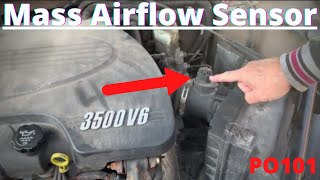
- MAF Sensor Connector — In the air intake tube, between the air filter box and the throttle body.. The 3-wire connector provides power (Pin C, Pink), ground (Pin B, Black/White), and signal (Pin A, Yellow) to the MAF sensor. Corrosion or damage to these pins is a direct cause of P0102.
Real Owner Repair Stories
- ScannerDanner YouTube Channel (2000 Chevrolet Malibu 3.1L (similar GM V6 architecture)) — P0102 code, hesitation, low power.
❌ Tried (didn't work) Initial scan showed MAF frequency and g/s at zero with engine running.
✅ What actually fixed it A voltage drop test on the sensor ground wire showed over 0.5V (a bad ground). The cause was a damaged engine block ground connector, likely broken during a recent engine mount replacement. Repairing the ground connection restored the MAF signal and fixed the code. - Southsideboy Style YouTube Channel (2009 Chevrolet Impala) — Persistent P0102 code (Mass air flow sensor circuit low frequency).
❌ Tried (didn't work) Clearing the code, which would immediately return.
✅ What actually fixed it The owner removed the entire air intake tube assembly. He found and cleaned corrosion from inside the MAF sensor's electrical connector. After cleaning the connector pins and reinstalling, the code did not return. The MAF sensor itself was not faulty.
OEM Part Supersession History
15865791→ACDelco 213-4222— Standard part lifecycle update by GM.
Heads up: ACDelco 213-4222 is the correct service replacement for many GM vehicles originally equipped with 15865791, including the 2012-2013 Impala with the 3.6L LFX engine.
Model Year Variations Within This Range
- 2012-2013: The 3.6L LFX V6 was introduced. While the P0102 diagnosis is the same, the LFX engine had different horsepower ratings depending on the vehicle platform (e.g., ~300 hp in the Impala vs. ~323 hp in the Camaro). This was due to intake and exhaust tuning, not different internal MAF sensor logic.
- 2006-2011 vs 2012-2013: The MAF sensor part number is different. Early models (3.5L/3.9L/5.3L) use a different sensor (e.g., ACDelco 213-4251) than the later 3.6L LFX models (ACDelco 213-4222). While they function similarly, they are not interchangeable.
Diagnostic Flowchart
Other Known Issues on This Vehicle
Issues unrelated to this code that are worth knowing about as an owner of this generation:
- Transmission Failure / Harsh Shifting (4T65-E) 🔴 High — Very common, especially in 2006-2011 models. Issues include failed shift solenoids, pressure control solenoid (PCS) failure, and torque converter problems. (Ref: TSB #08-07-30-040B addresses harsh engagement by recommending stronger pan magnets to catch metallic debris.)
- Intermediate Steering Shaft Clunk 🟠 Medium — Widespread issue causing a clunking or popping noise in the steering wheel when turning at low speeds. (Ref: GM issued a TSB acknowledging the issue, which is caused by a stick-slip condition in the shaft. The fix is replacement, not re-greasing.)
- HVAC Blend Door Actuator Failure 🟡 Low — Extremely common across all years. Presents as a loud clicking or tapping sound from the dashboard. The plastic gears inside the actuator strip and fail.
- Premature Timing Chain Wear (3.6L LFX V6) 🔴 High — A known issue on the 2012-2013 models with the LFX engine, often exacerbated by extended oil change intervals. Can lead to codes like P0008, P0009, P0016-P0019. (Ref: TSB #12-06-01-009F was released with updated parts and procedures.)
- Excessive Oil Consumption 🟠 Medium — Reported on both the V6 and V8 engines, but particularly noted on the 3.6L LFX. GM has considered consumption of up to 1 quart per 2,000 miles to be within operating standards.
- EVAP Purge Solenoid Valve Failure 🟡 Low — Common failure part causing a check engine light for EVAP codes like P0449 or P0455, and sometimes difficulty fueling.
Used vs. New Parts: Buying Guide for This Vehicle
When a used part is the smart pick: A used MAF sensor from a reputable salvage yard can be a cost-effective option, especially if you suspect a faulty sensor but want to test with a cheap part before buying new. Given that the issue is often wiring or dirt, a used part is a good diagnostic step. Also, sourcing a used air intake boot/tube is perfectly acceptable if yours is cracked, as it is a simple plastic/rubber component.
Donor-vehicle mileage cap: roughly under 80000 miles for the part to have meaningful remaining life.
What to inspect on the donor part:
- Check the salvage vehicle for signs of a front-end collision; avoid parts from cars with heavy impact near the airbox.
- Inspect the connector pins on the used MAF sensor for any corrosion or damage before purchasing.
- Look at the overall condition of the donor car's engine bay. A clean, well-maintained appearance is a positive sign.
- Ask for the donor vehicle's VIN to check for any reported major electrical or engine issues.
Aftermarket brands forum-validated for this vehicle:
- ACDelco (OEM)
- Delphi
- NTK / NGK
Brands owners have reported issues with on this vehicle:
- Ultra-cheap, no-name sensors from online marketplaces are frequently reported on forums as being dead-on-arrival or failing within a few months.
Real Owner Stories
Aggregated from forums and TSBs cited above. Mileages and costs reflect what owners reported in those sources.
Chevrolet Impala
Symptoms: Persistent P0102 code that would not go away after typical repairs.
What fixed it: Traced to a bad connection at the 'ENG 1' fuse terminal in the underhood fuse box rather than a faulty sensor.
Source hint: https://www.chevytalk.org/fusionbb/showtopic.php?tid/309190/
Chevrolet Impala
Symptoms: Owner performed a diagnostic process for P0102 symptoms.
What fixed it: The repair log emphasizes the diagnostic process including checking for vacuum leaks after the sensor and using proper MAF cleaner.
Source hint: https://www.youtube.com/watch?v=3LzIAiS59iE
Related OBD-II Codes
Frequently Asked Questions
I have a 2012 Impala with the 3.6L LFX engine; is there a specific TSB I should know about regarding engine codes?
My Impala is shifting very harshly; could this be related to the P0102 code?
Can I use any cleaner to fix the MAF sensor on my 2006-2013 Impala?
Is there a specific fuse I should check for the MAF sensor on this vehicle?
Which other GM vehicles share the same MAF sensor issues as my Impala?
My 2013 Impala is using a lot of oil; is this normal?
Helpful Videos
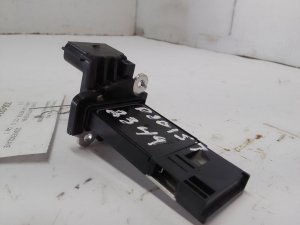
Used OEM Parts in Stock
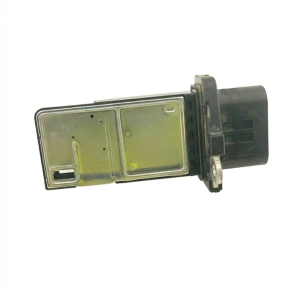
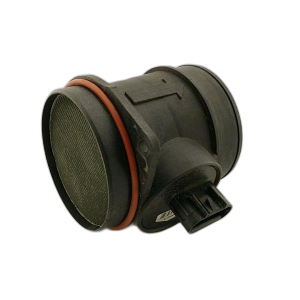
New Aftermarket Parts Available


The information in this article is provided for general reference and educational purposes only. Vehicle specifications, procedures, and part compatibility can vary by production date, trim level, and region. Always consult your vehicle's factory service manual and verify part numbers before purchasing or performing repairs. Safety-critical components such as airbags, seat belts, and braking systems should be installed by a qualified professional.
- Chevrolet Impala:
- 🧭 Diagnostic Flowchart
- 🎬 Helpful Videos
- 🛍️ Shop This Part
- What's Unique About the 2006-2013 Chevrolet Impala
- Symptoms You May Notice
- Most Likely Causes
- Rare But Worth Checking
- Technical Service Bulletins (TSBs) & Recalls
- Diagnosis Steps
- Parts You'll Likely Need
- Related Codes That Often Appear With This One
- Mechanic-Grade Diagnostic Values
- Wiring & Ground Locations
- Real Owner Repair Stories
- OEM Part Supersession History
- Model Year Variations Within This Range
- Other Known Issues on This Vehicle
- Used vs. New Parts: Buying Guide for This Vehicle
- Real Owner Stories
- Chevrolet Impala
- Chevrolet Impala
- Related OBD-II Codes
- Frequently Asked Questions
- 🎟️ Get 5% Off