

P0102 on 2011-2019 Ford Explorer 3.5L: MAF Circuit Low Causes and Fixes
On a 2011-2019 Ford Explorer with the 3.5L V6, code P0102 is most often caused by a dirty Mass Air Flow (MAF) sensor or a vacuum leak from a broken fitting on the air intake hose. Start by cleaning the MAF sensor with dedicated cleaner (~$15) and inspecting the intake tube for cracks, especially the small plastic nipples for vapor lines.
- P0102 on your Explorer most likely means the MAF sensor is dirty, not broken. Always try cleaning it first with a dedicated MAF cleaner.
- If you also have codes P0171 and P0174, the problem is almost certainly a vacuum leak. Carefully inspect the large air intake hose for cracks or broken plastic fittings.
- This is a very DIY-friendly repair. Cleaning or replacing the MAF sensor takes less than 15 minutes and only requires a T20 Torx driver.
- Do not use any chemical other than MAF Sensor Cleaner on the sensor, as other solvents can permanently damage it.
- If you must replace the sensor, using the OEM Motorcraft part (AFLS-165) is highly recommended for proper performance and longevity.
What's Unique About the 2011-2019 Ford Explorer
The 5th generation Ford Explorer with the 3.5L Cyclone engine is generally reliable, but this code often points to one of two highly common issues: a MAF sensor contaminated by oil vapors and dirt, or a vacuum leak. A frequently seen failure point is a brittle plastic fitting for a PCV or vapor line on the main air intake duct, located between the MAF sensor and the throttle body. When this fitting breaks, often during an air filter change, it creates an unmetered air leak that directly causes the MAF to report low airflow, often triggering lean codes P0171 and P0174 as well.
Symptoms You May Notice
- Check Engine Light is on
- Rough or erratic idle
- Engine hesitation or stumbling during acceleration
- Stalling, especially when coming to a stop
- Reduced engine power
- Worse than normal fuel economy
- Black smoke from the exhaust in some cases
- Replacing the MAF sensor without first attempting to clean it.
- Replacing oxygen (O2) sensors when lean codes (P0171/P0174) are present alongside P0102. The lean codes are usually a symptom of the vacuum leak that is also causing the P0102, not a separate problem.
Most Likely Causes
- Dirty or Contaminated MAF Sensor 🔴 High Probability → Shop Fuel Injection Air Flow Meter Over time, oil vapor from the PCV system and fine dust can coat the sensor's delicate wire, insulating it and causing it to read airflow incorrectly. This is the most common cause and the easiest to fix.
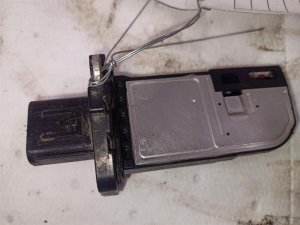
How to confirm: Remove the sensor (held by two T20 Torx screws) and visually inspect the small wires inside the sensor housing. If they appear dirty or coated, cleaning is necessary.
Typical fix: Clean the sensor using a dedicated Mass Airflow Sensor cleaner spray. Do not use brake or carburetor cleaner, as they can damage the sensor. Let it dry completely before reinstallation.
Est. part cost: $10-$20 for a can of MAF cleaner. - Vacuum Leak (Cracked Intake Boot or Broken Nipple) 🔴 High Probability The plastic nipples on the air intake duct for PCV/vapor lines become brittle with age and can easily break, especially during air filter service. This allows unmetered air to enter the engine after the MAF sensor, causing the sensor to under-report airflow.
How to confirm: Visually inspect the entire air intake duct between the air filter box and the throttle body for cracks or broken fittings. A common owner experience is discovering the broken nipple after getting a P0102 code shortly after an air filter change. Listen for a hissing sound with the engine running. If lean codes (P0171, P0174) are also present, a vacuum leak is extremely likely.
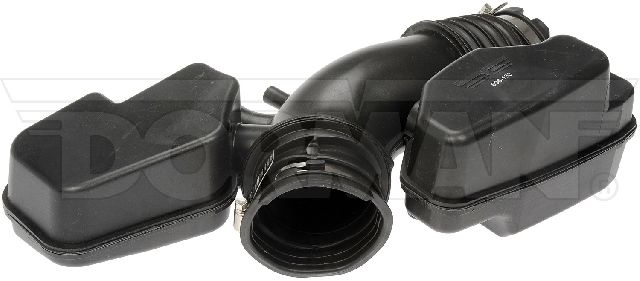
Typical fix: Replace the entire air intake duct assembly. OEM part numbers include BB5Z-9B659-D for the naturally aspirated 3.5L. Aftermarket versions like Dorman 696-133 are also available.
Est. part cost: $70-$150 for an aftermarket intake duct, $80-$130 for OEM. - Severely Clogged Engine Air Filter 🟡 Medium Probability → Shop Air Cleaner Assembly
How to confirm: Remove and inspect the engine air filter. If it is visibly clogged with dirt and debris, it is restricting airflow.
Typical fix: Replace the engine air filter. This should be done as part of routine maintenance.
Est. part cost: $20-$50 - Faulty MAF Sensor 🟡 Medium Probability → Shop Fuel Injection Air Flow Meter
How to confirm: If cleaning the sensor and confirming there are no vacuum leaks does not resolve the code, the sensor's internal electronics may have failed. A diagnostic scan tool can be used to monitor the MAF sensor's output in grams/second (g/s); if the reading is stuck at a very low number or doesn't change with RPM, the sensor is likely bad.
Typical fix: Replace the MAF sensor. It is recommended to use an OEM Motorcraft part for best results. The part number is often AFLS-165.
Est. part cost: $70-$120 for an aftermarket sensor, $120-$180 for an OEM Motorcraft sensor. - Damaged Wiring or Loose Connector ⚪ Low Probability
How to confirm: Inspect the MAF sensor's electrical connector for corrosion or loose pins. Check the wiring harness leading to the sensor for any signs of chafing, melting, or breaks. A multimeter can be used to check for 12V power and ground at the connector with the key on.
Typical fix: Repair the damaged section of wiring or clean/replace the connector pigtail.
Est. part cost: $15-$40 for a new pigtail connector.
Rare But Worth Checking
- Faulty Powertrain Control Module (PCM): This is extremely rare and should only be considered after all other possibilities (sensor, wiring, vacuum leaks) have been exhaustively ruled out by a professional.
Diagnosis Steps
- Read the codes: Use an OBD-II scanner to confirm P0102 and check for any other codes like P0171 or P0174.
- Inspect the Air Filter: Check the engine air filter. If it's dirty or clogged, replace it.
- Inspect for Vacuum Leaks: Carefully inspect the entire air intake system from the MAF sensor to the throttle body. Pay close attention to the plastic fittings on the main intake tube for cracks or breaks. A common failure is a small nipple for a vapor line breaking off. Listen for a hissing sound with the engine running.
- Inspect Wiring: Check the MAF sensor's electrical connector for damage, corrosion, or a loose fit. Ensure the locking tab is secure. Trace the wiring as far as possible, looking for damage.
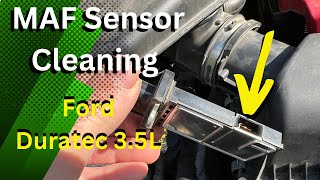
- Clean the MAF Sensor: Disconnect the battery. Remove the two T20 Torx screws holding the MAF sensor. Carefully remove the sensor and spray the internal wires and elements with 10-15 bursts of dedicated MAF sensor cleaner. Do not touch the wires. Let it dry completely for at least 30 minutes before reinstalling.
- Clear Codes and Test Drive: Reconnect the battery and the sensor. Clear the codes with the scanner and perform a test drive to see if the code returns.
- Monitor Live Data: If the code returns, use a scan tool to monitor the MAF reading at idle (should be around 3-5 g/s for the 3.5L V6) and see if it increases smoothly as you raise the engine RPM. If the reading is stuck or erratic, the sensor is likely faulty.
- Replace the MAF Sensor: If all other steps fail, replace the MAF sensor, preferably with an OEM Motorcraft part (Part # AFLS-165).
Parts You'll Likely Need
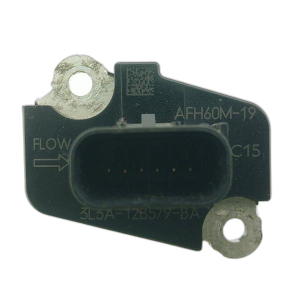
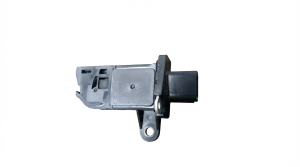
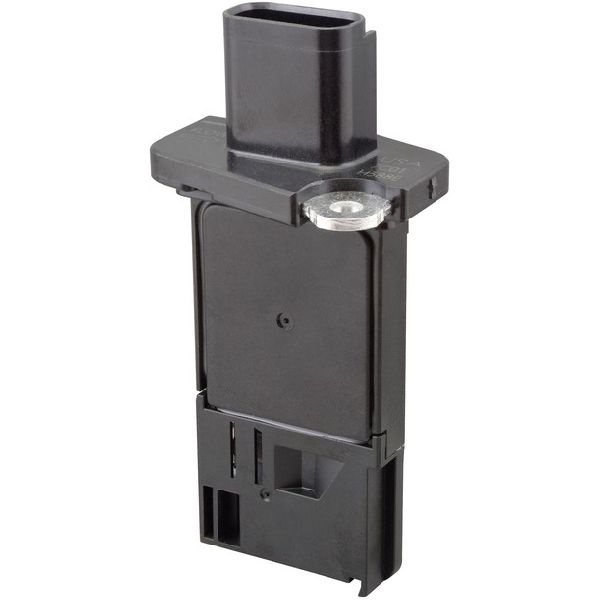
- Mass Air Flow Sensor
(OEM #AFLS-165)— This is the part that fails or gets dirty, causing the code. Replacement is the ultimate fix if cleaning and checking for leaks doesn't work.
Trusted brands: Motorcraft, Hitachi, Delphi
OEM price range: $120-$180
Aftermarket price range: $70-$120 - Engine Air Intake Hose
(OEM #BB5Z-9B659-D)— This part is frequently the source of a vacuum leak due to cracks or a broken PCV/vapor line nipple, which is a very common cause for P0102 on this vehicle.
Trusted brands: Ford (OEM), Dorman (696-133)
OEM price range: $80-$130
Aftermarket price range: $70-$100 - Mass Air Flow Sensor Cleaner — Often, the sensor is just dirty. A $15 can of cleaner can save you from buying a new sensor.
Trusted brands: CRC, Liqui Moly, WD-40
Aftermarket price range: $10-$20
Related Codes That Often Appear With This One
- P0171 — System Too Lean (Bank 1). This code is often triggered with P0102 when there is a vacuum leak. The MAF sensor reports low airflow (P0102) because unmetered air is entering the engine, and the oxygen sensor detects the resulting excess oxygen, triggering the lean code.
- P0174 — System Too Lean (Bank 2). Same reason as P0171. Seeing both lean codes with P0102 is a very strong indicator of a significant vacuum leak affecting both cylinder banks. 🎬 See this guide for diagnosing common Ford lean condition causes.
- P0113 — Intake Air Temperature (IAT) Sensor Circuit High. On Ford vehicles, the IAT sensor is integrated into the MAF sensor assembly. A fault in the MAF sensor or its wiring can sometimes trigger codes for both components.
Mechanic-Grade Diagnostic Values
- Mass Airflow (MAF) Sensor Reading at Idle — expected: Approximately 3-5 g/s for a fully warmed-up 3.5L V6 engine at idle.. Failure: A reading that is stuck at zero, erratic, or does not increase smoothly as the throttle is applied indicates a faulty sensor or a large vacuum leak post-sensor.
- Mass Airflow (MAF) Sensor Reading at 2500 RPM — expected: Between 15 to 25 g/s at 2500 RPM, depending on engine load.. Failure: A reading that does not rise significantly from idle or is inconsistent suggests a sensor or airflow problem.
- MAF Sensor Signal Voltage at Connector — expected: With the key on and engine off, the signal wire should read close to 0V. At idle, it should be less than 1.0V. Voltage should increase smoothly with RPM.. Failure: Voltage stuck at 0V or a high value (e.g., over 1.5V at idle) points to a wiring or sensor fault.
- Power (VPWR) and Ground (PWR GND) at MAF Connector — expected: With key on, engine off, voltage between the power and ground pins should be greater than 10.5 volts.. Failure: Voltage below 10.5V indicates a problem in the power supply or ground circuit leading to the sensor.
- Low-Side Fuel Pressure (Key On, Engine Running) — expected: 55-65 PSI. While not a direct cause of P0102, this is a critical value to check if lean codes P0171/P0174 are also present.. Failure: Pressure significantly below 55 PSI indicates a weak fuel pump or failing Fuel Pump Control Module (FPCM), which can cause symptoms that mimic a MAF issue.
Scan Tool Commands That Help
- Ford IDS / FORScan: MAF PID Graphing — Use this to visually monitor the MAF sensor's output in grams/second or voltage while performing a slow RPM sweep from idle to ~2500 RPM. A smooth, linear graph indicates a healthy sensor, while dropouts, spikes, or a flat line confirms a fault in the sensor or its circuit.
Wiring & Ground Locations
- MAF Sensor Connector — On the air intake tube, immediately after the air filter housing.. This is the primary connection point for the sensor. A loose connection, corrosion on the pins, or damaged wires right at the connector are common causes of a 'Circuit Low' code. Wiggling the connector and harness while watching live data can help identify intermittent connection issues.
- MAF Connector Pinout (Typical 5-wire Ford) — At the MAF sensor harness connector.. Knowing the pin functions is essential for electrical testing. Pin 2 is typically VPWR (12V+), Pin 3 is PWR GND (Power Ground), and Pin 4 can be a VREF (Voltage Reference). Testing for correct voltage and ground at these pins confirms the integrity of the circuit from the PCM to the sensor.
Real Owner Repair Stories
- Reddit user in r/FordExplorer (2008 Ford Explorer, 170k miles) — Persistent P0102 code.
❌ Tried (didn't work) Replaced the MAF sensor with an OEM part., Inspected the air filter, which appeared brand new.
✅ What actually fixed it The user was advised that the next steps were to check for unmetered air leaks (vacuum leaks) in the intake system and to inspect the wiring harness going to the MAF sensor for damage or a loose connection, as these are the most likely culprits after a sensor replacement fails to fix the issue. - Ford Truck Owner (Cyclone V6 Platform) — Stalling at stop signs and "wrench" light.
✅ What actually fixed it According to NHTSA ODI #10383032, a pinpoint leak was discovered in the resonator hose, which triggered the P0102 code and caused the vehicle to stall.
OEM Part Supersession History
BB5Z-9B659-A→BB5Z-9B659-D— Part revision by Ford. The design and material may have been updated to improve durability and prevent cracking of the plastic nipples, which is a common failure point.BR3Z-12B579-A→AFLS-165 (Motorcraft Service Number)— This is the standard engineering part number to service part number transition. BR3Z-12B579-A is the Ford engineering number, while AFLS-165 is the Motorcraft part number sold for service and repair.
Model Year Variations Within This Range
- 2016-2019: For the 2016 model year, the Explorer received a mid-cycle refresh. This included a redesigned front fascia, hood, and standard LED low-beam headlights. While the base 3.5L V6 engine remained largely the same, the interior received the updated Sync 3 infotainment system, replacing the often-criticized MyFord Touch. These changes do not significantly alter the diagnosis for P0102 but are important for sourcing correct interior/exterior parts if needed during a repair.
Diagnostic Flowchart
Other Known Issues on This Vehicle
Issues unrelated to this code that are worth knowing about as an owner of this generation:
- Internal Water Pump Failure 🔴 High — Common after 80,000-120,000 miles. Failure allows coolant to mix with engine oil, leading to timing chain stretch and eventual engine failure if not addressed. (Ref: No specific recall, but a widely documented issue. Repair often involves replacing the timing chain, guides, and tensioners along with the water pump.)
- Power Transfer Unit (PTU) Failure (AWD Models) 🔴 High — Commonly occurs due to overheating of the 'lifetime' fluid, which is cooked by the nearby exhaust. Symptoms include a burning gear oil smell, whining, or grinding. (Ref: No recall, but a well-known problem. Preventative fluid changes every 30,000 miles are recommended. Dorman offers an improved aftermarket unit with a drain plug (600-234XD).)
- Exhaust Fumes / Carbon Monoxide in Cabin 🔴 High — Affects 2011-2017 models. Fumes can enter the cabin during heavy acceleration or when using the A/C in recirculation mode, caused by unsealed body seams in the rear of the vehicle. (Ref: Multiple TSBs issued, including TSB 14-0130, 16-0166, and 17-0029, which outline procedures for sealing body seams and reprogramming the climate control module.)
- Electronic Throttle Body Malfunction 🟠 Medium — Common on 5th generation models, causing sudden power loss, hesitation, and the vehicle entering 'limp mode'. Often triggers codes P2111 or P2112. (Ref: Ford had a Customer Satisfaction Program (13N03) for some models, but it has since expired.)
- Rear Suspension Toe Link Fracture 🔴 High — Primarily affects 2011-2017 models. The rear toe links can fracture, leading to a sudden loss of steering control. (Ref: Subject to multiple recalls (e.g., NHTSA campaign 19V435000) to replace the components.)
Used vs. New Parts: Buying Guide for This Vehicle
When a used part is the smart pick: A used Engine Air Intake Hose (BB5Z-9B659-D) from a junkyard is a reasonable choice, especially if it's from a lower-mileage, newer model year donor vehicle. It is a simple plastic/rubber part without complex electronics.
Donor-vehicle mileage cap: roughly under 80000 miles for the part to have meaningful remaining life.
What to inspect on the donor part:
- Check the small plastic nipples for the vapor/PCV lines; ensure they are not brittle, cracked, or previously repaired.
- Flex the rubber portions of the hose to check for hidden cracks or dry rot.
- Ensure the donor vehicle was not in a front-end collision that could have stressed the part.
OEM-only on this vehicle (don't cheap out):
- Mass Air Flow Sensor: It is strongly recommended to use an OEM Motorcraft (AFLS-165) or a reputable OE-equivalent brand like Hitachi or Delphi. Cheap, no-name aftermarket MAF sensors are notorious for being improperly calibrated, leading to persistent performance issues and codes even when new.
Aftermarket brands forum-validated for this vehicle:
- Dorman (for the Air Intake Hose, part 696-133)
- Delphi, Hitachi, Spectra Premium (for the MAF Sensor)
Brands owners have reported issues with on this vehicle:
- Unbranded, low-cost MAF sensors from online marketplaces are frequently reported by mechanics to be dead-on-arrival or fail shortly after installation.
Real Owner Stories
Aggregated from forums and TSBs cited above. Mileages and costs reflect what owners reported in those sources.
2008 Ford Explorer
Symptoms: Keep getting a P0102 code even after replacing the MAF sensor.
What fixed it: Troubleshooting pointed towards checking for wiring issues or vacuum leaks beyond just the sensor itself.
Source hint: Reddit thread titled 'Keep getting a P0102 code on my 08 Explorer any...'
Ford Truck (Cyclone V6 Platform)
Symptoms: P0102 code and no power at all.
What fixed it: Detailed diagnostic of complex wiring issues and checking voltages at the MAF connector.
Source hint: Ford Truck Enthusiasts forum thread titled 'MAF sensor code P0102 and no power at all'
Documented NHTSA Reports
Ford Edge (Related Platform)
Symptoms: Diagnostic trouble codes P0756, P1450, P0136, and P0102 were retrieved.
What fixed it: As detailed in NHTSA ODI #11539323, a dealer determined that coolant had intruded into the engine block, necessitating an engine replacement.
Ford F-150 (Related Platform)
Symptoms: The vehicle stalled at a stop sign and at 9,511 miles, a P0102 code was triggered.
What fixed it: NHTSA ODI #10383032 reports that the dealer identified a pinpoint leak in the resonator hose and replaced the resonator to resolve the issue.
Related OBD-II Codes
Frequently Asked Questions
I just changed my air filter on my 3.5L Explorer and now I have a P0102 code. What happened?
Can I use any cleaner to fix the MAF sensor on my Ford Explorer?
What is the correct MAF sensor reading for the 3.5L V6 engine at idle?
Should I buy an aftermarket MAF sensor or stick with Ford parts?
My Explorer has P0102 along with P0171 and P0174. Does this mean I have multiple sensor failures?
What size tools do I need to remove the MAF sensor on my 2011-2019 Explorer?
Helpful Videos
Used OEM Parts in Stock
New Aftermarket Parts Available


The information in this article is provided for general reference and educational purposes only. Vehicle specifications, procedures, and part compatibility can vary by production date, trim level, and region. Always consult your vehicle's factory service manual and verify part numbers before purchasing or performing repairs. Safety-critical components such as airbags, seat belts, and braking systems should be installed by a qualified professional.
- Ford Explorer:
- 🧭 Diagnostic Flowchart
- 🎬 Helpful Videos
- 🛍️ Shop This Part
- What's Unique About the 2011-2019 Ford Explorer
- Symptoms You May Notice
- Most Likely Causes
- Rare But Worth Checking
- Diagnosis Steps
- Parts You'll Likely Need
- Related Codes That Often Appear With This One
- Mechanic-Grade Diagnostic Values
- Scan Tool Commands That Help
- Wiring & Ground Locations
- Real Owner Repair Stories
- OEM Part Supersession History
- Model Year Variations Within This Range
- Other Known Issues on This Vehicle
- Used vs. New Parts: Buying Guide for This Vehicle
- Real Owner Stories
- 2008 Ford Explorer
- Ford Truck (Cyclone V6 Platform)
- Documented NHTSA Reports
- Ford Edge (Related Platform)
- Ford F-150 (Related Platform)
- Related OBD-II Codes
- Frequently Asked Questions
- 🎟️ Get 5% Off