

P0102 on 2001-2006 Hyundai Santa Fe: MAF Circuit Low Causes and Fixes
For a 2001-2006 Santa Fe, P0102 most often means the Mass Airflow (MAF) sensor is dirty. Cleaning it with a dedicated spray is the first step. If that fails, check for cracked intake hoses or replace the sensor itself. A new OEM-quality sensor costs between $125-$200. An unusual but confirmed symptom on this platform is the 'ESC Off' light illuminating along with the P0102 code, which is resolved by fixing the MAF issue.
- P0102 on a 2001-2006 Santa Fe is most likely caused by a dirty MAF sensor.
- Always start by cleaning the sensor with dedicated MAF cleaner spray before buying any parts.
- Thoroughly inspect the flexible air intake hose between the sensor and the engine for cracks, as this is a very common failure point.
- Replacing the MAF sensor is a simple, 15-minute DIY job for most owners.
- Don't be surprised if the 'ESC Off' light is also on; fixing the MAF sensor often resolves this secondary light as well.
What's Unique About the 2001-2006 Hyundai Santa Fe
The first-generation (2001-2006) Santa Fe, codenamed 'SM', was offered with a 2.4L 4-cylinder ('Sirius'), a 2.7L V6 ('Delta'), and a 3.5L V6 ('Sigma'). While the P0102 code is common across all engines, the most frequent culprits are simple maintenance items like a dirty sensor or a cracked air intake boot, which can become brittle with age on these vehicles. A notable and well-documented quirk on the Santa Fe is the illumination of the 'ESC Off' warning light in conjunction with a P0102 code. Multiple owners have confirmed that replacing a faulty MAF sensor resolves both the engine code and the ESC light, suggesting a shared data pathway or fail-safe logic within the vehicle's electronics.
Symptoms You May Notice
- Check Engine Light is on
- Engine stalls, especially when coming to a stop or after starting
- Rough or unstable idle
- Hesitation, jerking, or lack of power during acceleration
- Reduced fuel economy
- Black smoke from the exhaust
- Engine is hard to start or cranks but won't start
- "ESC Off" light may illuminate on the dashboard
- Replacing the oxygen sensors. While a bad MAF can affect O2 sensor readings, the P0102 code points specifically to the MAF circuit.
- Replacing the throttle position sensor (TPS). A user on Reddit reported getting a P0102 code after changing the TPS, indicating a potential wiring issue was created during the repair.
Most Likely Causes
- Dirty or Contaminated MAF Sensor 🔴 High Probability → Shop Fuel Injection Air Flow Meter Over time, oil vapor from the PCV system and fine dust can coat the sensor's delicate hot wire or film, insulating it and causing it to read airflow incorrectly. Using an improperly fitting or low-quality air filter can accelerate this contamination.
How to confirm: Remove the sensor and visually inspect the small wires inside. Even if they don't look dirty, cleaning is the recommended first step. A video by YouTuber 'ninfanmechanic' shows a case where a very dirty airbox was the root cause of contamination.
Typical fix: Remove the sensor and clean it thoroughly with a dedicated Mass Airflow Sensor cleaner spray. Do not use brake cleaner or carburetor cleaner, and do not touch the wires. Let it air dry completely before reinstalling.
Est. part cost: $8-$15 for a can of MAF cleaner. - Cracked or Leaking Air Intake Hose 🟡 Medium Probability → Shop Engine Air Intake Resonator The flexible rubber or plastic intake duct located between the MAF sensor and the throttle body can become brittle with age and heat, developing cracks. This allows unmetered air to enter the engine, which the MAF sensor doesn't see, but the oxygen sensors do, creating conflicting data for the PCM.
How to confirm: With the engine running, carefully listen for a hissing sound around the intake duct. Visually inspect the entire hose, especially in the ribbed, flexible sections, for any splits or cracks. A smoke test is the most definitive way to find a leak.
Typical fix: Replace the damaged air intake hose.
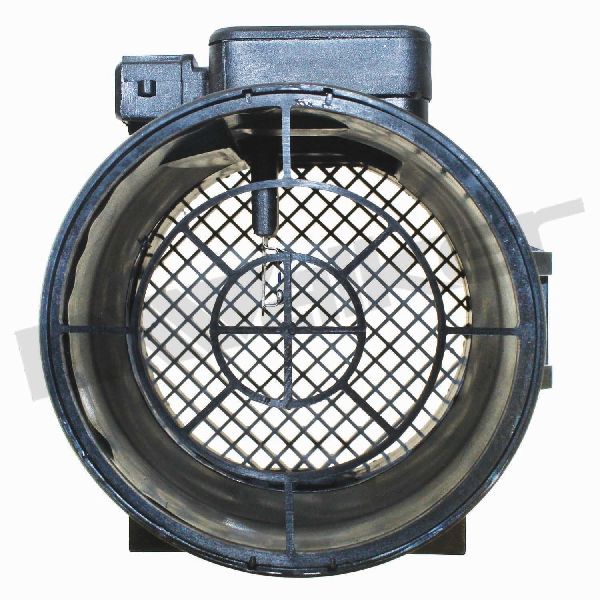
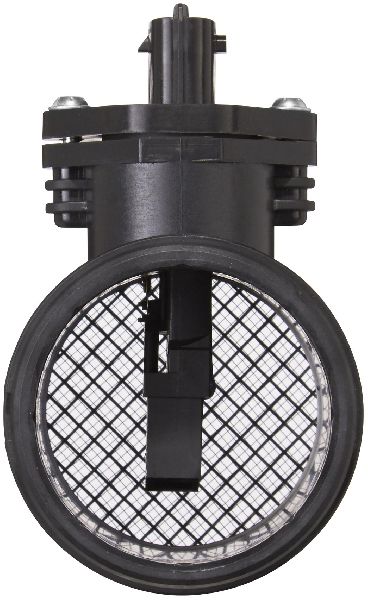
Est. part cost: $40-$100 - Faulty Mass Airflow (MAF) Sensor 🟡 Medium Probability → Shop Fuel Injection Air Flow Meter
How to confirm: If cleaning the sensor and confirming there are no intake leaks does not resolve the code, the sensor itself has likely failed. A diagnostic scan tool can be used to watch the MAF data (g/s or Volts); if the reading is stuck at a very low number (e.g., 0.0 or 0.1 volts) or doesn't change with RPM, the sensor is bad. One owner on YouTube confirmed that after 200,000 miles, cleaning was ineffective and only a replacement fixed the issue.
Typical fix: Replace the MAF sensor assembly. This is typically a simple DIY job requiring only a 10mm socket or Phillips screwdriver. 🎬 Watch: Step-by-step guide to replacing your Santa Fe MAF sensor.
Est. part cost: $70-$200 for an aftermarket sensor, $125-$450 for an OEM part. - Clogged Engine Air Filter ⚪ Low Probability → Shop Air Cleaner Assembly
How to confirm: Remove the air filter from the airbox and inspect it. If it is visibly black, full of debris, or has not been changed in a long time, it is likely restricting airflow. An ill-fitting aftermarket filter can also cause issues by allowing dirty air to bypass the filter media.
Typical fix: Replace the engine air filter with a quality part.
Est. part cost: $15-$30 - Wiring or Connector Issue ⚪ Low Probability
How to confirm: Visually inspect the electrical connector and wiring going to the MAF sensor. Look for any frayed or broken wires, corrosion on the pins, or a loose connection. With the engine running and a scan tool displaying live MAF data, gently wiggle the connector and wires to see if the reading drops out or changes erratically.
Typical fix: Repair the damaged section of wiring or clean/replace the connector pigtail.
Est. part cost: $10-$30 for a new pigtail connector.
Rare But Worth Checking
- Faulty Powertrain Control Module (PCM): This is extremely rare. All other possibilities, especially wiring continuity and power/ground at the sensor, should be exhaustively ruled out before considering PCM failure.
Diagnosis Steps
- Read the code with an OBD-II scanner and confirm P0102 is present. Note any other codes and check monitor readiness status.
- Visually inspect the entire air intake system from the air filter box to the throttle body. Look for obvious cracks in the rubber ducting, loose clamps, or disconnected hoses.
- Inspect the engine air filter. If it's dirty or ill-fitting, replace it.
- Locate the MAF sensor on the air intake tube. Disconnect the electrical connector and inspect for corrosion or bent pins. Ensure the locking tab on the connector is secure.
- Remove the MAF sensor (usually two 10mm nuts or Phillips screws). Carefully spray the internal wires and sensing elements with dedicated MAF sensor cleaner. Let it dry completely for at least 30 minutes before reinstalling.
- Reconnect the sensor, clear the codes with the scanner, and start the engine. Take the vehicle for a test drive to see if the code returns.
- If the code returns, use a scan tool to monitor the MAF sensor reading (in grams per second or Volts) at idle and while raising the RPM. A healthy sensor should show a reading of around 2-7 g/s at idle for a V6, increasing smoothly with RPM. If the reading is stuck low (e.g., 0.0 g/s or <0.5V) or doesn't change, the sensor is likely bad.
- If the sensor has been replaced and the code persists, check the wiring. Using a multimeter, verify battery voltage (usually on a pink wire), good ground (black wire), and a 5V reference or signal at the sensor connector with the key on, engine off. Check for signal continuity back to the PCM. 🎬 See this diagnostic walkthrough for troubleshooting the P0102 circuit.
Parts You'll Likely Need
- Mass Airflow (MAF) Sensor
(OEM #Varies by engine: 2.4L (28164-38080), 2.7L (28164-37200), 3.5L (28164-38200). Always verify with VIN.)— This is the component that fails if cleaning and checking for leaks doesn't solve the problem.
Trusted brands: Hyundai (OEM), Bosch, Delphi, Walker Products
OEM price range: $125-$450
Aftermarket price range: $70-$200 - MAF Sensor Cleaner — This is the first and most crucial step in diagnosing the issue. It is often the only thing needed to fix the problem.
Trusted brands: CRC, Liqui Moly, WD-40 Specialist
Aftermarket price range: $8-$15 - Engine Air Intake Hose
(OEM #Varies by engine. e.g., 28138-37200 (2.7L). Verify with VIN.)— The rubber hose becomes brittle and cracks over time, causing unmetered air leaks that can trigger a P0102 code.
Trusted brands: Hyundai (OEM), Dorman
OEM price range: $70-$150
Aftermarket price range: $40-$100
Related Codes That Often Appear With This One
- P0101 — This code for 'MAF Circuit Range/Performance' is often a precursor or companion to P0102, indicating the sensor's readings are erratic or illogical, not just low.
- P0171 or P0174 — These 'System Too Lean' codes can occur if there is a large vacuum leak after the MAF sensor. The sensor reports low airflow, but the oxygen sensors detect excess air in the exhaust, creating a conflict.
Platform-Specific Known Issues
- ESC Off Light Triggered by MAF Fault: A peculiar but confirmed issue on the first-generation Santa Fe is the simultaneous illumination of the 'ESC Off' light and the Check Engine Light for P0102. Owners and repair videos show that replacing the faulty MAF sensor and clearing the codes resolves both warnings, indicating an electronic dependency between the engine management and stability control systems. One owner on YouTube documented this exact scenario, where a new OEM MAF sensor fixed both the P0102 code and the ESC light on his high-mileage Santa Fe.
Mechanic-Grade Diagnostic Values
- MAF Sensor Power Supply Voltage — expected: Battery Voltage (approx. 12V with key on, 14V with engine running). Failure: 0V or significantly low voltage indicates a blown fuse (check fuse C21) or an open in the power wire.
- MAF Sensor Ground Circuit — expected: Near 0V. Failure: Voltage present on the ground wire indicates a poor ground connection. Check continuity between the ground pin (often Pin 3, black wire) and a known good ground point on the chassis or engine block.
- MAF Sensor Signal Voltage (at idle) — expected: ~0.5V - 1.5V. Failure: A reading stuck near 0V or a flat line that does not increase when the engine is revved points to a faulty sensor or a circuit issue.
- MAF Sensor Signal Wire (unplugged) — expected: ~5V Reference. Failure: 0V on the signal wire when the sensor is unplugged (with key on) can indicate an open circuit in the signal wire between the PCM and the connector.
Wiring & Ground Locations
- G01 — On the vehicle body, near the right front of the engine compartment.. This is a primary engine bay ground point. A corroded or loose connection here can cause erratic behavior or low voltage faults for various engine sensors, including the MAF.
- MAF Connector (V6 Engines) — On the MAF sensor, which is attached to the air filter housing.. This is the primary point for testing. On many V6 models, it's a 3-pin connector. Pin 1 is signal, Pin 2 is power (pink/black wire), and Pin 3 is ground. Verifying power, ground, and signal here is the fastest way to diagnose the circuit.
- Fuse C21 — In the under-hood fuse/relay box.. A diagnostic guide indicates this fuse may supply power to the MAF sensor circuit. If there is no power at the MAF connector, this fuse should be checked.
Real Owner Repair Stories
- YouTube channel 'Design Build Fix Review' (Hyundai Santa Fe (2001-2006 generation) with 200,000 miles) — Check Engine Light with code P0102, and the 'ESC Off' light was also illuminated. Rough idle.
❌ Tried (didn't work) Cleaning the MAF sensor with dedicated cleaner spray.
✅ What actually fixed it Replacing the entire MAF sensor assembly with a new, genuine Hyundai part purchased from RockAuto for about $125-$150. This resolved both the P0102 code and the ESC Off light. - YouTube channel 'ninfanmechanic' (2003 Hyundai Santa Fe) — Engine starts but then stalls immediately when put into Drive or Reverse. Check Engine Light with code P0102.
❌ Tried (didn't work) Cleaning the MAF sensor.
✅ What actually fixed it Replacing the MAF sensor fixed the stalling issue. The owner noted that the root cause of the failure was likely an extremely dirty air filter box that had allowed debris to contaminate and ruin the original sensor.
"I Checked Everything" — The Actual Cause
- In a case documented for a similar Hyundai with P0102, the code remained even after a new MAF sensor was installed. The issue was not a vacuum leak or a faulty part, but an open circuit in the signal wire between the PCM and the MAF sensor connector. The technician confirmed this by measuring ~5V at the PCM pin for the signal wire but 0V at the corresponding pin on the sensor connector, indicating a break in the wire somewhere in the harness.
Model Year Variations Within This Range
- 2001-2004: These years offered the 2.4L 4-cylinder engine as the base option, in addition to the 2.7L V6.
- 2005-2006: Following a mid-cycle refresh, the 2.4L engine was dropped. The 2.7L V6 became the standard engine, and a larger 3.5L V6 was introduced as an option. These models also have a different grille, taillights, and instrument cluster.
Diagnostic Flowchart
Other Known Issues on This Vehicle
Issues unrelated to this code that are worth knowing about as an owner of this generation:
- Crankshaft Position Sensor (CPS) Failure 🔴 High — Extremely common, especially on the 2.7L V6. Often fails when the engine is hot, causing sudden stalling. Failure is typical after 80,000 miles. (Ref: Hyundai Recall 049 / NHTSA ID: 03V030000 (for some 2002 2.7L models))
- Subframe and Rear Trailing Arm Rust/Corrosion 🔴 High — Very common in 'Salt Belt' states. Front subframes and rear trailing arms can rust severely, potentially leading to structural failure. (Ref: Hyundai Recall 124 / NHTSA ID: 14V-435 (Coil Spring Corrosion) and Recall Campaign 09-01-013 (Rear Trailing Arms))
- Leaking Valve Cover Gaskets 🟠 Medium → Shop Engine Valve Cover — Common on the V6 engines (2.7L and 3.5L). Gaskets become hard and brittle, allowing oil to leak onto the exhaust manifolds, creating a burning smell.
- Timing Belt Replacement Interval 🔴 High — Not a failure, but a critical maintenance item. The V6 engines are interference engines. The recommended replacement interval is every 60,000 miles. Failure to replace the belt will result in catastrophic engine damage.
Used vs. New Parts: Buying Guide for This Vehicle
When a used part is the smart pick: For this repair, a used part is generally not recommended for the MAF sensor itself. However, a used air intake hose from a low-mileage donor vehicle can be a cost-effective option if it is thoroughly inspected and found to be pliable with no cracks.
Donor-vehicle mileage cap: roughly under 80000 miles for the part to have meaningful remaining life.
What to inspect on the donor part:
- For a MAF sensor: Visually inspect the internal sensing wires/film for any signs of physical damage, contamination, or previous tampering. Avoid any units that look oily or have broken mesh screens.
- For an intake hose: Squeeze the rubber to ensure it is still flexible and not hard or brittle. Bend it in several places, paying close attention to the ribbed sections to check for hidden cracks.
OEM-only on this vehicle (don't cheap out):
- Mass Airflow (MAF) Sensor: Due to the sensor's sensitivity and precise calibration, an OEM (Genuine Hyundai) or OEM-supplier (like Bosch or Delphi) part is strongly recommended. Many owners report that cheap, unbranded aftermarket sensors are often dead-on-arrival or fail prematurely.
Aftermarket brands forum-validated for this vehicle:
- Bosch
- Delphi
- Denso
- Hitachi
- Standard Motor Products (avoid their budget 'T-Series' line)
Brands owners have reported issues with on this vehicle:
- Generic, unbranded sensors from online marketplaces like eBay or Amazon are frequently reported by users to be unreliable or non-functional.
Real Owner Stories
Aggregated from forums and TSBs cited above. Mileages and costs reflect what owners reported in those sources.
2001-2006 Hyundai Santa Fe — ~200000 miles
Symptoms: The Check Engine Light was on for P0102 and the 'ESC Off' light was also illuminated on the dashboard. Cleaning the sensor did not work.
What fixed it: Replacing the MAF sensor with a new OEM part.
Cost: $125-$150
Source hint: YouTube - MAF P0102 and ESC Off problem on a Santa Fe
2003 Hyundai Santa Fe
Symptoms: The vehicle would start and then immediately stall.
What fixed it: Checking the air filter and cleaning the MAF sensor elements with dedicated cleaner.
Source hint: YouTube - NoneMechanic101
2001-2006 Hyundai Santa Fe
Symptoms: P0102 code appeared immediately after a different repair involving the Throttle Position Sensor (TPS).
What fixed it: Investigation suggested a wiring or connector disturbance during the previous repair; inspecting the electrical connector for loose pins or frayed wires is required.
Source hint: Reddit r/AskMechanics
Related OBD-II Codes
Frequently Asked Questions
Why is my 'ESC Off' light on at the same time as the P0102 Check Engine code on my Santa Fe?
Can I use any cleaner to fix the MAF sensor on my 2001-2006 Santa Fe?
My Santa Fe stalls immediately after starting or when coming to a stop; is this related to P0102?
Is it better to clean or replace the MAF sensor on a high-mileage Santa Fe?
Could a simple air filter change fix my P0102 code?
Where is the MAF sensor located on the 2001-2006 Santa Fe engine?
Helpful Videos
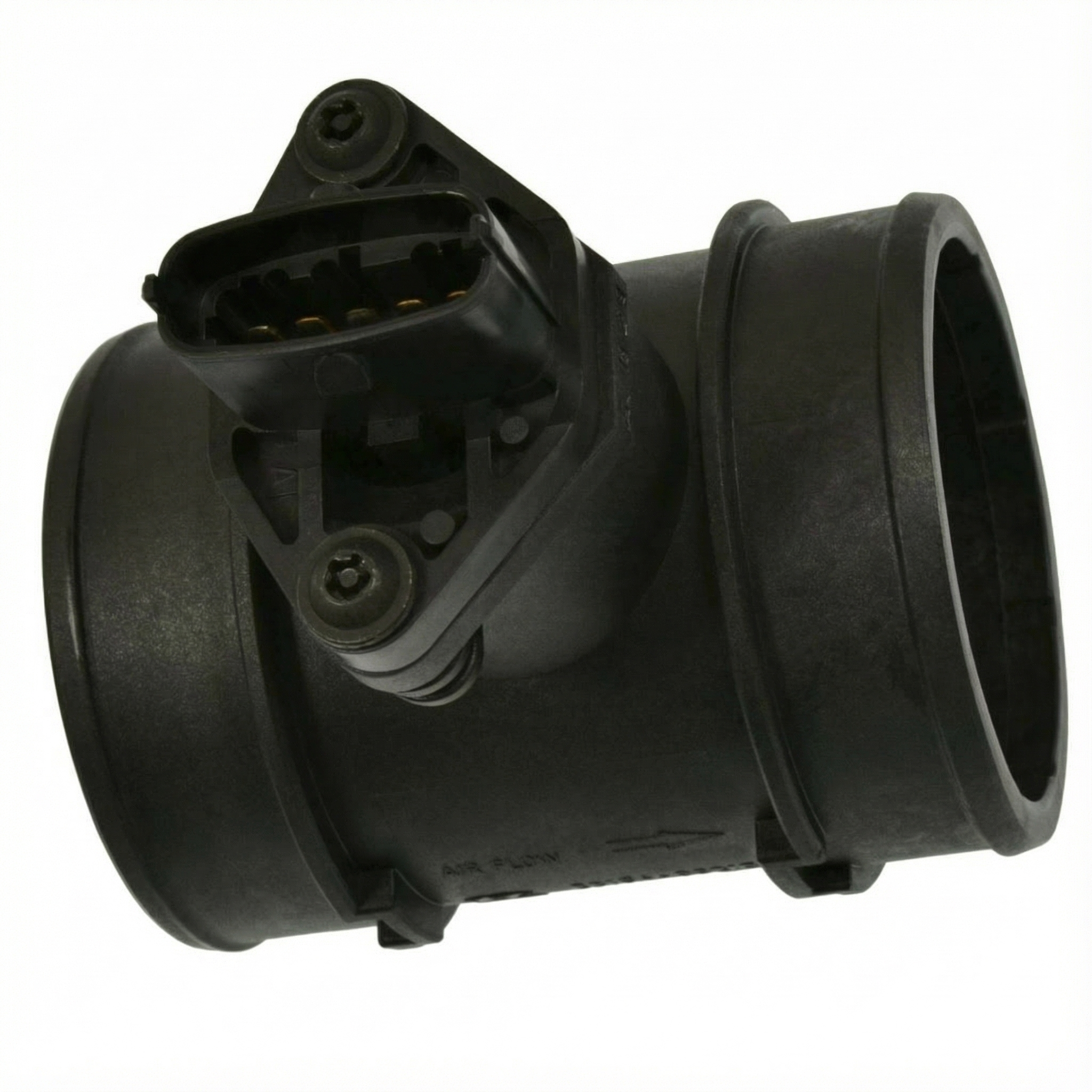
Used OEM Parts in Stock
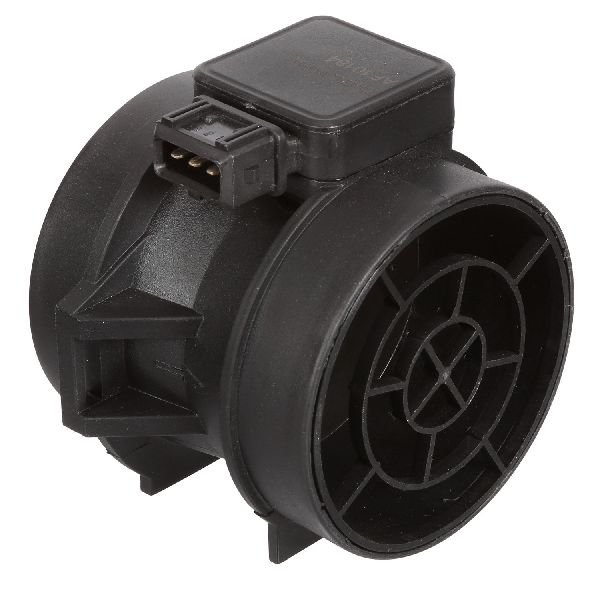
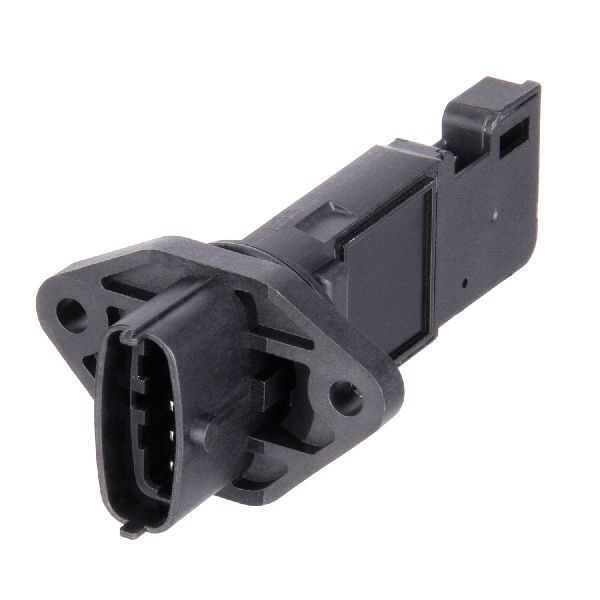
New Aftermarket Parts Available



The information in this article is provided for general reference and educational purposes only. Vehicle specifications, procedures, and part compatibility can vary by production date, trim level, and region. Always consult your vehicle's factory service manual and verify part numbers before purchasing or performing repairs. Safety-critical components such as airbags, seat belts, and braking systems should be installed by a qualified professional.
- Hyundai Santa Fe:
- 🧭 Diagnostic Flowchart
- 🎬 Helpful Videos
- 🛍️ Shop This Part
- What's Unique About the 2001-2006 Hyundai Santa Fe
- Symptoms You May Notice
- Most Likely Causes
- Rare But Worth Checking
- Diagnosis Steps
- Parts You'll Likely Need
- Related Codes That Often Appear With This One
- Platform-Specific Known Issues
- Mechanic-Grade Diagnostic Values
- Wiring & Ground Locations
- Real Owner Repair Stories
- "I Checked Everything" — The Actual Cause
- Model Year Variations Within This Range
- Other Known Issues on This Vehicle
- Used vs. New Parts: Buying Guide for This Vehicle
- Real Owner Stories
- 2001-2006 Hyundai Santa Fe — ~200000 miles
- 2003 Hyundai Santa Fe
- 2001-2006 Hyundai Santa Fe
- Related OBD-II Codes
- Frequently Asked Questions
- 🎟️ Get 5% Off