

P0102 on 2006-2013 Lexus IS350: MAF Sensor Circuit Low Causes and Fixes
On a 2006-2013 Lexus IS350, code P0102 is most often caused by a dirty Mass Airflow (MAF) sensor. Cleaning it with dedicated MAF sensor cleaner is a common and effective first step. If that fails, or if the code returns, the next step is to replace the sensor with an OEM Denso part. A dirty sensor can also be triggered by an over-oiled aftermarket air filter or a vacuum leak from a cracked hose.
- P0102 on your IS350 means the MAF sensor is sending a low signal. This is most likely due to a dirty sensor.
- Before buying any parts, spend $10 on a can of dedicated MAF sensor cleaner and clean the sensor. This solves the problem in many cases.
- If cleaning doesn't work, check for vacuum leaks in the intake hose between the sensor and the engine.
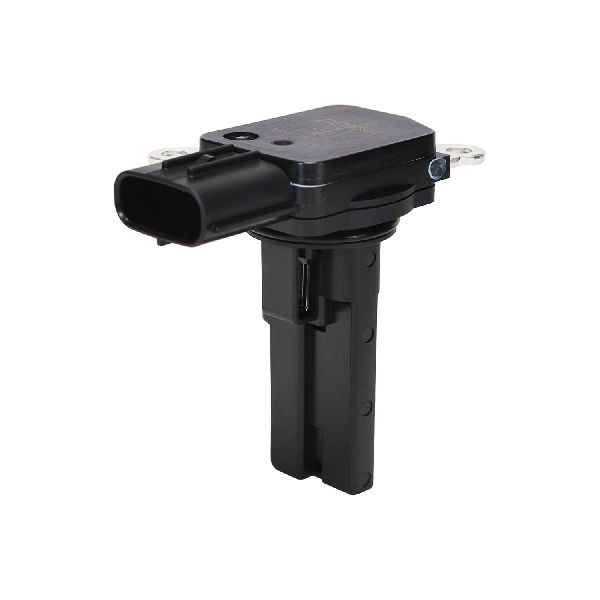
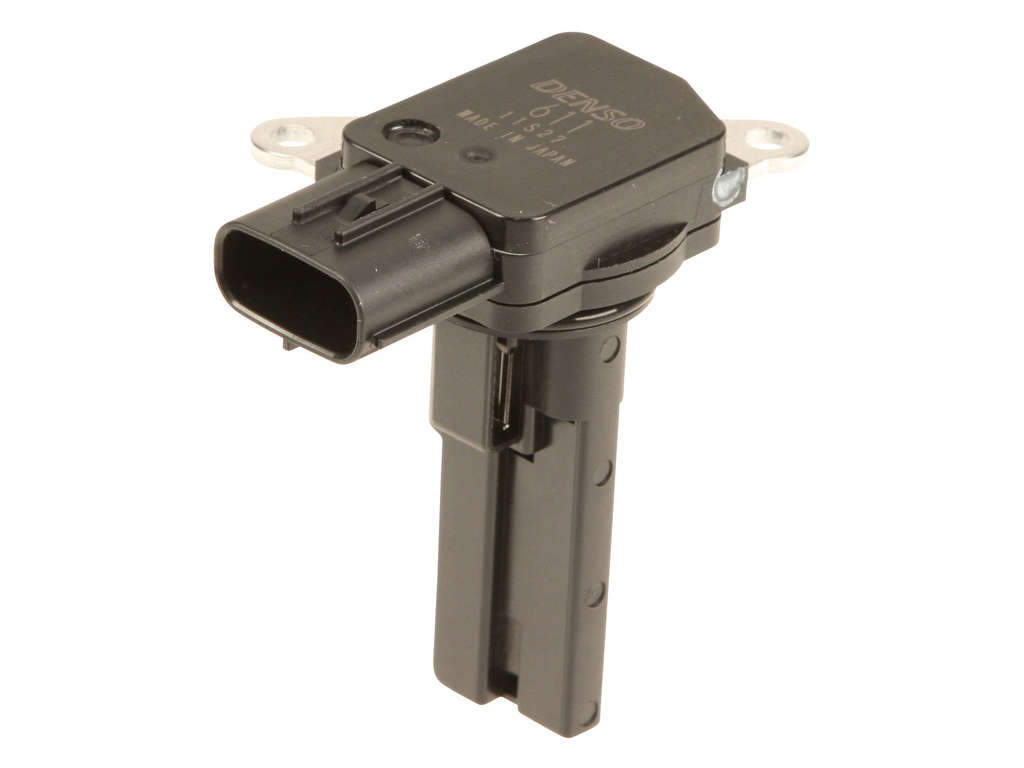
- If the sensor is clean and there are no leaks, the sensor itself has likely failed. Replace it with an OEM Denso part (22204-31020) for best results.
- This is a very DIY-friendly repair that requires minimal tools and time.
What's Unique About the 2006-2013 Lexus IS350
The 2GR-FSE engine in the second-generation IS350 is generally very reliable, and P0102 is not an unusually common complaint. When it does occur, it's typically due to the universal causes of MAF sensor issues—contamination or age-related failure—rather than a specific design flaw on this platform. A frequent topic on forums like ClubLexus is the appearance of P0102 after installing an aftermarket cold air intake (CAI). This can be due to an improper seal causing a vacuum leak, turbulence from the new piping affecting the sensor reading, or over-oiled filters contaminating the sensor's delicate wires.
Symptoms You May Notice
- Check Engine Light is on
- VSC (Vehicle Stability Control) light may also illuminate
- Vehicle may hesitate or feel sluggish during acceleration
- Rough or unstable idle, sometimes hunting between high and low RPMs
- Engine may stall, especially when coming to a stop
- Noticeably worse fuel economy
- Black smoke from the exhaust, indicating a rich fuel mixture
- Difficulty starting the engine
- Replacing oxygen (O2) sensors. While related codes for rich conditions (like P0172/P0175) might appear, the root cause is the incorrect air measurement from the MAF circuit, not the O2 sensors themselves.
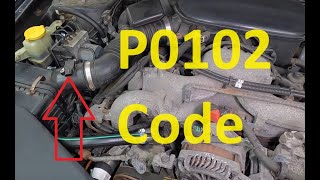
- Ignoring a 'Permanent' code. On some Toyota/Lexus vehicles, even after fixing the issue and clearing codes with a basic scanner, a 'permanent' P0102 may remain until the ECU completes a specific drive cycle to verify the fix. This can cause a smog check failure. 🎬 See how to clear a permanent Toyota/Lexus P0102 code
Most Likely Causes
- Dirty or Contaminated MAF Sensor 🔴 High Probability → Shop Fuel Injection Air Flow Meter Over time, or from using an over-oiled aftermarket air filter, the sensor's delicate wire can get coated in dirt or oil, insulating it and causing it to read airflow incorrectly. This is the most common cause.
How to confirm: Remove the sensor from the intake tube and visually inspect the small wires inside the sensor housing. If they appear dirty or coated, cleaning is warranted.
Typical fix: Carefully remove the sensor and spray the sensing element with a dedicated Mass Airflow Sensor cleaner. Do not touch the wires or use other chemicals like brake cleaner. 🎬 Watch this step-by-step Lexus MAF cleaning guide Allow it to dry completely before reinstalling.
Est. part cost: $8-$15 for a can of MAF cleaner. - Failed Mass Airflow (MAF) Sensor 🟡 Medium Probability → Shop Fuel Injection Air Flow Meter The internal electronics of the sensor can fail with age and heat cycles, though Denso sensors are generally robust.
How to confirm: After cleaning the sensor, if the code returns, the next step is to test the sensor's output signal using a scan tool that can display live data. The voltage or grams/second (g/s) reading should increase smoothly with engine RPM. If the signal is stuck at zero, is erratic, or doesn't respond, the sensor has likely failed. With the engine off, the g/s reading should be at or very near 0.
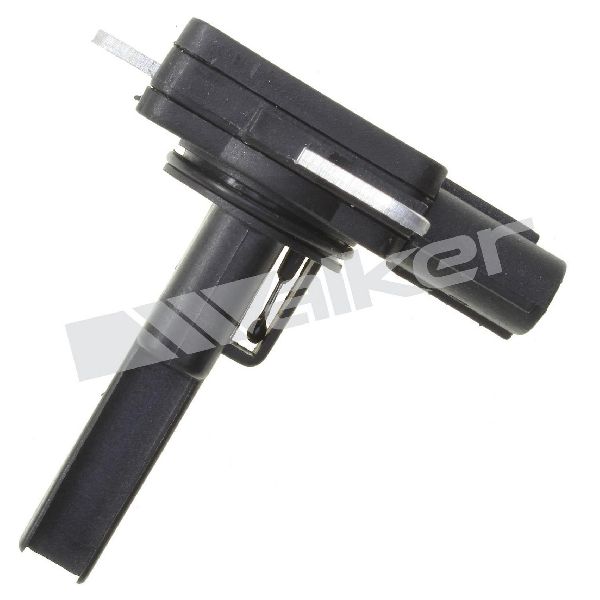
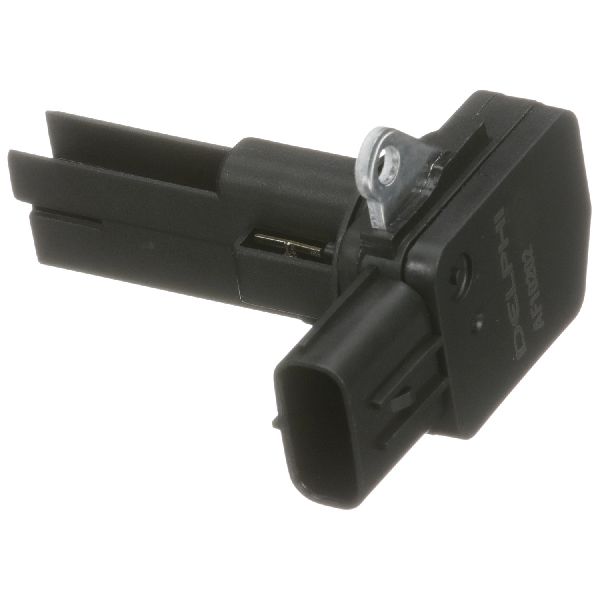
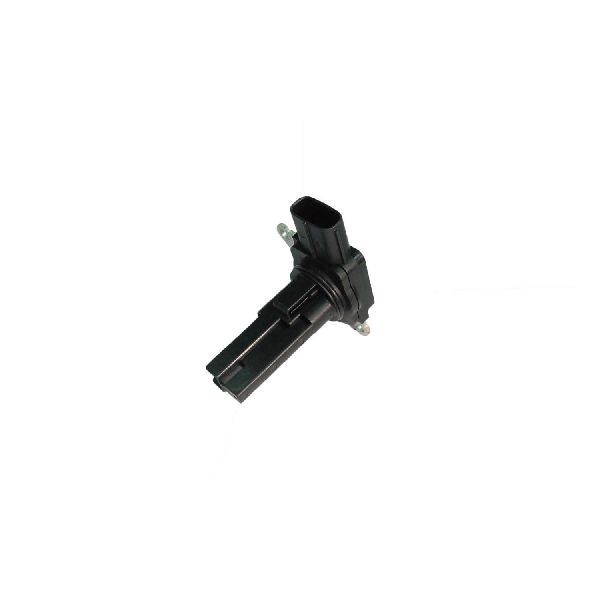
Typical fix: Replace the MAF sensor. It is a simple plug-and-play part held in by two screws. It is highly recommended to use an OEM Denso part for this engine.
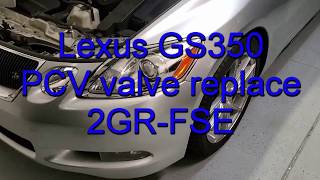
Est. part cost: $100-$210 - Vacuum Leak 🟡 Medium Probability Cracks in the intake boot, loose clamps, or leaking intake manifold gaskets can allow un-metered air to enter the engine after the MAF sensor. The PCV hose on the 2GR-FSE can become brittle and crack 🎬 Watch this 2GR-FSE PCV service walkthrough, creating a significant vacuum leak.
How to confirm: Visually inspect all intake ducting between the MAF sensor and the engine for cracks or loose connections. A professional can use a smoke machine to pressurize the intake system and quickly reveal the source of any leaks.
Typical fix: Tighten loose clamps or replace the cracked intake hose or faulty gasket.
Est. part cost: $20-$150 depending on the leaking part. - Clogged Engine Air Filter ⚪ Low Probability → Shop Air Cleaner Assembly A severely neglected air filter can become so clogged that it physically restricts airflow, causing the MAF sensor to report a lower-than-normal value.
How to confirm: Remove and inspect the engine air filter. If it is visibly black and clogged with debris, it needs to be replaced.
Typical fix: Replace the engine air filter.
Est. part cost: $20-$40 - MAF Sensor Wiring or Connector Issue ⚪ Low Probability → Shop Fuel Injection Air Flow Meter
How to confirm: Inspect the MAF sensor's electrical connector for corrosion, bent pins, or a loose fit. The locking tab on the connector pigtail can become brittle and break, causing an intermittent connection. Trace the wiring harness back as far as possible, looking for any signs of damage, fraying, or breaks.
Typical fix: Clean the connector terminals or repair/replace the damaged section of wiring or pigtail connector.
Est. part cost: $5-$50 for wiring repair supplies.
Rare But Worth Checking
- Faulty Engine Control Module (ECM): This is extremely rare. The ECM should only be considered after all other possibilities, including the sensor, wiring, and intake system, have been thoroughly tested and ruled out.
- Low System Voltage: A failing alternator can cause low system voltage, which can trigger a variety of seemingly unrelated codes, including P0102. If multiple, random codes appear at once, it's wise to check the battery and charging system voltage.
Diagnosis Steps
- Read the code with an OBD-II scanner and document any other codes present. Note if they are current, pending, or permanent.
- Check battery voltage with the car off (should be ~12.5V) and running (should be 13.3-14.5V) to rule out alternator issues.
- Visually inspect the air intake system from the air filter box to the throttle body. Look for any disconnected hoses, loose clamps, or visible cracks in the plastic/rubber tubing, paying special attention to the PCV hose.
- Inspect the engine air filter. If it is dirty or clogged, replace it.
- Unplug the MAF sensor and inspect the electrical connector for corrosion or damage. Ensure it makes a secure connection.
- Remove the MAF sensor (typically held by two Phillips screws). Visually inspect the internal sensing wires. Do not touch them.
- If the sensor appears dirty, clean it using only dedicated MAF sensor cleaner spray. Allow it to air dry completely.
- Reinstall the sensor, clear the codes, and perform a test drive to see if the code returns.
- If the code returns, use a scan tool with live data to monitor the MAF sensor reading (in grams/second). The value should be low at idle (around 1-3 g/s for a 3.5L V6) and increase smoothly as you raise the engine RPM. If the value is stuck at zero, is erratic, or does not change with RPM, the sensor is likely bad.
- If the sensor signal seems plausible but the code persists, perform a smoke test to check for hard-to-see vacuum leaks.
- If all wiring and intake components are good and the sensor signal is confirmed to be faulty, replace the MAF sensor. Use an OEM Denso part for best results.
- If a 'permanent' code remains after repair, a specific drive cycle may be required to clear it, which typically involves a mix of city and highway driving, including a period of steady-state cruising and a full-throttle acceleration event.
Parts You'll Likely Need
- Mass Airflow (MAF) Sensor
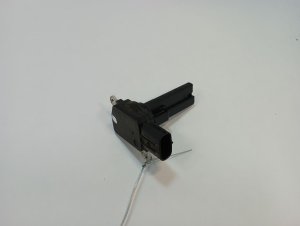
(OEM #22204-31020)— This is the most common part to fail for this code, either through contamination or internal electronic failure.
Trusted brands: Denso (OEM), Hitachi
OEM price range: $150-$215
Aftermarket price range: $70-$140 - MAF Sensor Cleaner — Often, the sensor is just dirty and cleaning it is the only fix required. This should always be the first step before replacing the part.
Trusted brands: CRC, WD-40 Specialist
Aftermarket price range: $8-$15
Related Codes That Often Appear With This One
- P0172 — System Too Rich (Bank 1). The ECM may default to a rich fuel mixture as a fail-safe when it gets an unreliable signal from the MAF sensor.
- P0175 — System Too Rich (Bank 2). Same as P0172, but for the second bank of cylinders.
- P0113 — Intake Air Temperature (IAT) Sensor Circuit High. On many Lexus models, the IAT sensor is integrated into the MAF sensor assembly. A failure of the assembly or its connector can trigger codes for both sensors simultaneously.
Platform-Specific Known Issues
- Permanent DTC after repair: Some owners report that even after fixing the root cause and clearing the Check Engine Light with a standard OBD-II scanner, a 'permanent' P0102 code remains stored in the ECU. This permanent DTC (PDTC) will not illuminate the CEL but can cause a vehicle to fail a smog inspection. To clear it, a specific drive cycle must be completed which involves steady highway driving (e.g., 50-75 mph for several minutes) followed by a wide-open throttle event. This allows the ECU to verify the repair and clear the permanent code.
Mechanic-Grade Diagnostic Values
- MAF Sensor Live Data (g/s) at Idle — expected: 1.0 to 3.0 g/s (grams per second) at normal operating temperature.. Failure: A value of approximately 0.0 g/s indicates a potential open in the power circuit or a faulty sensor. A value that is stuck and does not change with RPM also indicates a failure.
- MAF Sensor Live Data (g/s) with Engine Stopped — expected: Less than 0.70 g/s (grams per second) with ignition ON, engine OFF, after waiting 30 seconds.. Failure: A value higher than 0.70 g/s with the engine off points to an internal sensor fault.
- MAF Sensor Connector Voltage (+B to E2G) — expected: 9V to 14V with ignition ON, engine OFF.. Failure: Voltage below 9V indicates a problem with the power supply from the EFI relay or fuse.
- MAF Sensor Connector Wire Colors (2006 IS350) — expected: RED/BLK and BLK/WHT. Failure: N/A - for identification purposes.
- MAF Sensor Connector Wire Colors (2007-2010 IS350) — expected: RED/BLK and GRN/BLK. Failure: N/A - for identification purposes.
Hidden / Shadow Codes Worth Checking
- Permanent P0102 (PDTC): A version of the P0102 code that remains stored in the ECU's memory even after the fault is corrected and the CEL is cleared with a standard scanner. It does not trigger a light but will be detected during an emissions (smog) check, causing a failure. (see via Visible with professional scan tools or some advanced consumer OBD-II scanners that can read permanent diagnostic trouble codes. It may also be reported by a state emissions testing station's equipment.)
Scan Tool Commands That Help
- Toyota Techstream: Data List -> All Data -> MAF — This is the primary function used to monitor the live g/s reading from the MAF sensor to check if it's responding correctly to changes in engine RPM and to compare its readings at idle and with the engine off against known specifications.
- Toyota Techstream: Active Test — While there isn't a direct 'Active Test' for the MAF sensor itself (as it's a passive input device), a technician can use Active Tests for related components like 'Control the Fuel Pump / Speed' or manipulating VVT timing to observe the MAF sensor's reaction in the Data List, helping to confirm if it's responding logically to changes in engine state.
Wiring & Ground Locations
- MAF Sensor Connector — Located in the air intake duct, immediately after the air filter housing.. This 5-pin connector is the single point of electrical connection for the MAF sensor. The plastic locking tab is known to become brittle and break, leading to a poor connection and intermittent P0102 codes.
- Engine Ground Points — The 2GR-FSE has several critical engine harness ground points. One is on the front (right side) cylinder head, and another is on the rear (left side) valve cover, attaching to a bracket on the strut tower.. A corroded or loose engine ground can cause a floating ground reference for multiple sensors, including the MAF, leading to incorrect voltage readings and triggering codes like P0102.
- EFI No. 2 Fuse — Located in the engine room relay block (fuse box).. This fuse supplies power to the MAF sensor circuit. A blown fuse will cause a complete loss of signal and immediately trigger a P0102 code.
Real Owner Repair Stories
- ClubLexus user 'tugaycicek' (2006 Lexus IS350) — CEL and VSC lights on, unstable hunting idle, hesitation, and eventually a no-start condition. Codes P0172, P0175, P0102, P0113 appeared.
❌ Tried (didn't work) Cleaning the MAF sensor, Cleaning the throttle body
✅ What actually fixed it The issue was diagnosed by another forum member as a voltage problem. The user was advised to check the battery and alternator. A failing alternator can cause low system voltage, triggering multiple, seemingly unrelated codes. Fixing the charging system resolves these codes. - ClubLexus user 'kenji211' (2008 Lexus IS350) — Intermittent Check Engine Light for P0102.
❌ Tried (didn't work) Clearing the code, which would then return.
✅ What actually fixed it The locking tab on the MAF sensor's electrical connector had broken off due to age, causing a loose connection. The user ordered a replacement connector plug from the dealer, de-pinned the wires from the old broken plug, and inserted them into the new one, which secured the connection and resolved the code.
OEM Part Supersession History
22204-31010, 22204-0H010, 22204-0P010→22204-31020— Standard part consolidation and minor revisions by the manufacturer.
Heads up: The current part number 22204-31020 is fully backward-compatible with the earlier numbers for this vehicle.
Model Year Variations Within This Range
- 2006 vs 2007-2013: The wire colors for the MAF sensor connector may differ slightly. For 2006, the primary wires are listed as Red/Black and Black/White. For 2007-2010, they are listed as Red/Black and Green/Black. This is critical for anyone performing manual wiring tests.
Diagnostic Flowchart
Other Known Issues on This Vehicle
Issues unrelated to this code that are worth knowing about as an owner of this generation:
- Carbon Buildup on Intake Valves 🟠 Medium — Common on direct-injection only engines like the 2GR-FSE, typically becoming noticeable after 60,000-100,000 miles. Can cause misfires, rough idle, and reduced performance. (Ref: L-SB-0029-12 was issued for a similar issue on the IS250 (4GR-FSE), but the problem is known to affect the IS350 as well.)
- Sticky / Melting Dashboard and Door Panels 🟡 Low — Extremely common on 2006-2008 models due to a manufacturing defect exacerbated by heat and humidity. The material becomes shiny, sticky, and brittle. (Ref: Lexus issued a Warranty Enhancement Program (ZLD) to replace affected panels, but this program has expired.)
- Water Pump Failure 🟠 Medium — A known weak point on the 2GR engine family. Failure can occur as early as 50,000 miles but is more common around 80,000-120,000 miles. Signs include a grinding/whining noise from the engine bay and pink, dried coolant residue around the pump pulley.
- Front Timing Cover Oil Leak 🟠 Medium — A common oil leak for the 2GR engine family. It's a slow seep from the sealant on the front timing cover. The repair is labor-intensive as it requires removing the engine to properly reseal the cover.
Used vs. New Parts: Buying Guide for This Vehicle
When a used part is the smart pick: A used OEM Denso MAF sensor from a low-mileage donor vehicle can be a cost-effective alternative to a new OEM part. Given the high reliability of the Denso unit, a used part is often preferable to a new, non-OEM aftermarket part. It is not a common wear item, so failure is usually due to contamination or random electronics failure rather than predictable wear.
Donor-vehicle mileage cap: roughly under 80000 miles for the part to have meaningful remaining life.
What to inspect on the donor part:
- Verify the donor vehicle's mileage.
- Inspect the sensor for any physical damage to the housing or connector.
- Look inside the sensor bore; the sensing wires should be clean and free of oil or debris.
- Ensure the part number on the sensor (e.g., 22204-31020) matches the required part for your vehicle.
OEM-only on this vehicle (don't cheap out):
- Mass Airflow Sensor
Aftermarket brands forum-validated for this vehicle:
- Denso (This is the Original Equipment Manufacturer, buying a Denso-branded part is identical to the Lexus part but often cheaper).
Brands owners have reported issues with on this vehicle:
- Unbranded, 'white-box' sensors from online marketplaces. Forum discussions frequently mention issues with incorrect calibration on cheap aftermarket MAF sensors, leading to persistent performance problems or different trouble codes (e.g., lean codes after replacing a sensor for a rich code).
Real Owner Stories
Aggregated from forums and TSBs cited above. Mileages and costs reflect what owners reported in those sources.
2006 Lexus IS350 3.5L V6
Symptoms: No-start condition after cleaning the MAF and throttle body; multiple codes including P0102, P0113, P0172, and P0175 appeared.
What fixed it: Checking for low voltage/alternator issues as they can cause multiple sporadic codes.
Source hint: ClubLexus.com thread titled 'IS350 OBD II Reading P0102, P0113, P0172, P0175'
Lexus IS350 3.5L V6
Symptoms: P0102 and P0113 codes appeared together on a stock vehicle.
What fixed it: Inspecting the integrated MAF/IAT sensor unit and its electrical connection.
Source hint: ClubLexus.com thread titled 'P0113 / P0102 / P0430 - Help'
2009 Lexus IS350 3.5L V6
Symptoms: P0102 code and a no-start condition immediately following the installation of a Fujita intake and HKS exhaust.
What fixed it: Ensuring the MAF sensor was properly plugged in and seated correctly in the new intake housing.
Source hint: ClubLexus.com thread titled 'Have someone got the same problem like me?'
Related OBD-II Codes
Frequently Asked Questions
I fixed the issue on my IS350 but the P0102 code is still showing as 'permanent' on my scanner. How do I clear it?
Should I use any specific brand of replacement MAF sensor for my 2GR-FSE engine?
Can I use brake cleaner to clean the MAF sensor on my Lexus?
My IS350 has a P0102 and won't start after I installed an aftermarket intake. What should I check first?
Could a bad alternator cause a P0102 code on my 2006 IS350?
What is a common physical part that fails and causes vacuum leaks on the IS350 3.5L?
Helpful Videos
Used OEM Parts in Stock
New Aftermarket Parts Available


The information in this article is provided for general reference and educational purposes only. Vehicle specifications, procedures, and part compatibility can vary by production date, trim level, and region. Always consult your vehicle's factory service manual and verify part numbers before purchasing or performing repairs. Safety-critical components such as airbags, seat belts, and braking systems should be installed by a qualified professional.
- Lexus IS350:
- 🧭 Diagnostic Flowchart
- 🎬 Helpful Videos
- 🛍️ Shop This Part
- What's Unique About the 2006-2013 Lexus IS350
- Symptoms You May Notice
- Most Likely Causes
- Rare But Worth Checking
- Diagnosis Steps
- Parts You'll Likely Need
- Related Codes That Often Appear With This One
- Platform-Specific Known Issues
- Mechanic-Grade Diagnostic Values
- Hidden / Shadow Codes Worth Checking
- Scan Tool Commands That Help
- Wiring & Ground Locations
- Real Owner Repair Stories
- OEM Part Supersession History
- Model Year Variations Within This Range
- Other Known Issues on This Vehicle
- Used vs. New Parts: Buying Guide for This Vehicle
- Real Owner Stories
- 2006 Lexus IS350 3.5L V6
- Lexus IS350 3.5L V6
- 2009 Lexus IS350 3.5L V6
- Related OBD-II Codes
- Frequently Asked Questions
- 🎟️ Get 5% Off