

P0102 on 2009-2013 Mazda 3: MAF Circuit Low Causes and Fixes
On a 2009-2013 Mazda 3, code P0102 is most often caused by a dirty Mass Airflow (MAF) sensor. Before replacing any parts, the first step is to clean the sensor using a dedicated MAF sensor cleaner. If cleaning doesn't resolve the issue, a faulty MAF sensor is the next likely culprit, with replacement costs ranging from $70 for an aftermarket part to over $250 for an OEM sensor. Also, carefully inspect the flexible intake hose between the air filter box and throttle body for cracks, as this is a
- The most likely fix for P0102 on a 2009-2013 Mazda 3 is cleaning the Mass Airflow (MAF) sensor.
- If cleaning doesn't work, inspect the air intake hose for cracks before replacing the MAF sensor.
- This generation of Mazda 3 used at least three different MAF sensors. Verify your engine type (2.0L/2.5L MZR, 2.0L Skyactiv, or 2.3L Turbo) to ensure you buy the correct replacement part.
- Using a high-quality OEM or Denso brand replacement MAF sensor is strongly recommended to avoid premature failure and other issues.
What's Unique About the 2009-2013 Mazda 3
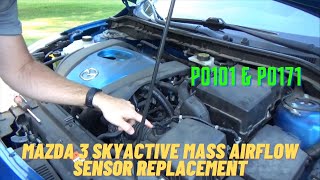
The 2009-2013 Mazda 3 (second generation, or 'BL' chassis) offered several different engines, including the 2.0L and 2.5L MZR engines, the 2.3L MZR DISI Turbo in the Mazdaspeed3, and the new 2.0L Skyactiv-G engine introduced in 2012. While the P0102 code has the same meaning across all of them, the specific MAF sensor part number is different for each engine family. It is critical to identify the correct engine before purchasing a replacement sensor, as they are not interchangeable. The Skyactiv engines in particular are noted in some service bulletins as having MAF sensor failure as a common cause for this code.
Symptoms You May Notice
- Check Engine Light is on
- Rough or unstable idle
- Engine stalling, especially at low speeds or when coming to a stop
- Hesitation or stumbling during acceleration
- Reduced engine power or 'limp mode'
- Poor fuel economy
- Black smoke from the exhaust (indicating a rich condition)
- Hard starting
- Replacing the MAF sensor without first attempting to clean it.
- Replacing oxygen sensors when the root cause is a vacuum leak causing the engine to run lean, which often throws a P0171 code alongside P0102.
Most Likely Causes
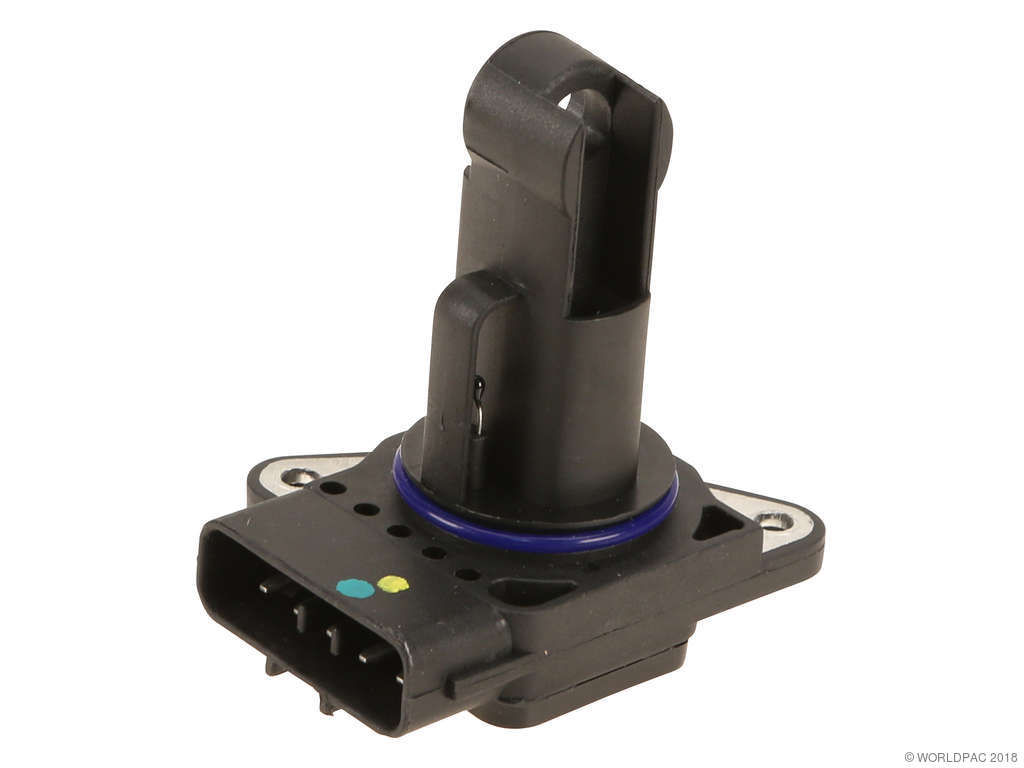
- Dirty or Contaminated MAF Sensor 🔴 High Probability → Shop Fuel Injection Air Flow Meter Over time, oil vapors from the PCV system or fine dust can coat the sensor's delicate sensing wire, insulating it and causing it to read airflow incorrectly. This is the most common cause for P0102 across all vehicles.
How to confirm: Visually inspect the MAF sensor's wire elements. If they appear dirty, cleaning is the first logical step. On a scan tool, the g/s reading at idle may be unusually low (e.g., <2.0 g/s).
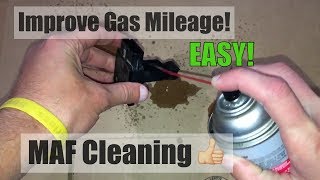
Typical fix: Remove the sensor and clean it carefully with a dedicated Mass Airflow Sensor cleaner spray. Do not touch the wires or use other chemicals like brake or carb cleaner. Allow it to fully air dry before reinstalling. 🎬 Watch: Easy step-by-step Mazda 3 MAF sensor cleaning guide
Est. part cost: $8-$15 for MAF cleaner spray - Faulty Mass Airflow (MAF) Sensor 🟡 Medium Probability → Shop Fuel Injection Air Flow Meter The electronic components within the sensor can fail over time due to heat cycles and vibration, leading to a complete loss of signal or a signal that is stuck low. This is a known issue on some Mazda vehicles with Skyactiv engines.
How to confirm: After cleaning, if the code returns, test the sensor's voltage output with a multimeter or monitor its readings (g/s) on a scan tool. With the key on and engine off, the reading should be near zero. At idle, it should be a few g/s and increase smoothly as you rev the engine. An erratic or static signal indicates a failed sensor.
Typical fix: Replace the MAF sensor with a new unit. Using an OEM or reputable OE-supplier part (like Denso) is highly recommended, as cheap aftermarket sensors are known to fail quickly or be improperly calibrated.
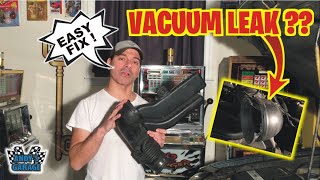
Est. part cost: $70-$280 - Vacuum Leak / Unmetered Air Leak 🟡 Medium Probability The flexible rubber intake hose between the MAF sensor and the throttle body can develop cracks in its accordion-like ribs, allowing unmetered air to enter the engine. This causes the MAF sensor to report less air than the engine is actually receiving, triggering P0102 and often a P0171 (System Too Lean) code as well.
How to confirm: Visually inspect the entire intake tract for cracks, loose clamps, or disconnected hoses. A smoke test is the most effective way to find small, hard-to-see leaks. Pay close attention to the PCV hose and intake manifold gaskets.
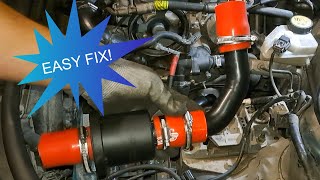
Typical fix: Replace the cracked intake hose or repair the source 🎬 Watch: How to replace a cracked intake boot of the leak.
Est. part cost: $40-$100 for a new intake hose - Wiring or Connector Issue ⚪ Low Probability
How to confirm: Visually inspect the MAF sensor's electrical connector and wiring harness for any signs of damage, corrosion, or loose pins. Wiggle the harness while monitoring the live data on a scan tool to see if the signal drops out. Use a multimeter to check for proper voltage and ground at the connector.
Typical fix: Repair the damaged wiring or clean/replace the connector pigtail.
Est. part cost: $15-$50 for a new connector
Rare But Worth Checking
- Clogged Catalytic Converter: A severely restricted exhaust can reduce airflow through the engine, causing the MAF sensor to report an abnormally low value. This is usually accompanied by a significant loss of power, especially at higher RPMs, and potentially other exhaust-related codes.
- Dirty or Clogged Engine Air Filter: → Shop Air Cleaner Assembly A very dirty air filter can restrict airflow enough to cause a P0102 code, though it would have to be severely clogged. This is a simple and inexpensive item to check first.
Diagnosis Steps
- Check for other stored trouble codes that could provide more clues, especially P0171.
- Visually inspect the engine air filter. Replace if it is dirty or clogged.
- Inspect the MAF sensor connector and wiring for any visible damage, corrosion, or loose connections.
- Carefully remove the MAF sensor and inspect its sensing elements. If they appear dirty, clean them using only dedicated MAF sensor cleaner spray. Allow it to dry completely before reinstalling.
- Inspect the entire air intake system between the MAF sensor and the engine for any cracks, tears, or loose clamps. Pay close attention to the flexible intake boot.
- If a leak is suspected but not visible, perform a smoke test to pinpoint the source of the unmetered air.
- If the above steps do not resolve the issue, use a scan tool to monitor the MAF sensor's live data (in grams per second). The reading should be near zero with the key on/engine off, rise to 2-4 g/s at idle, and increase smoothly and proportionally with RPM.
- If the scan tool data is erratic, static, or does not change with RPM, the sensor is likely faulty and needs to be replaced.
Parts You'll Likely Need
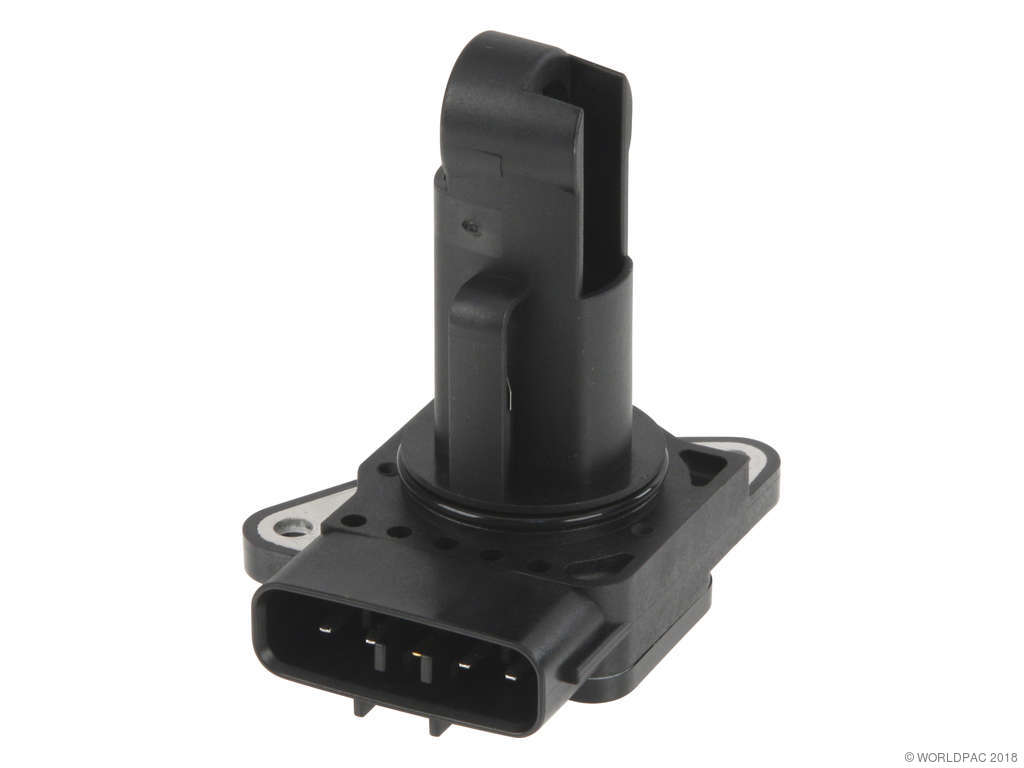
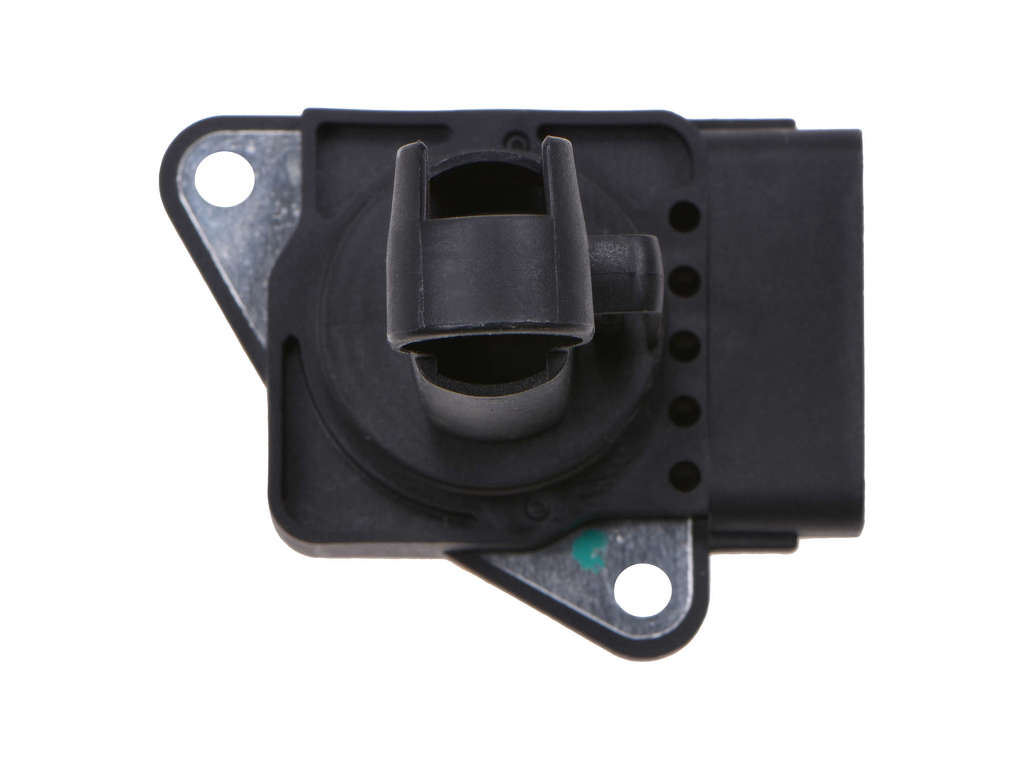
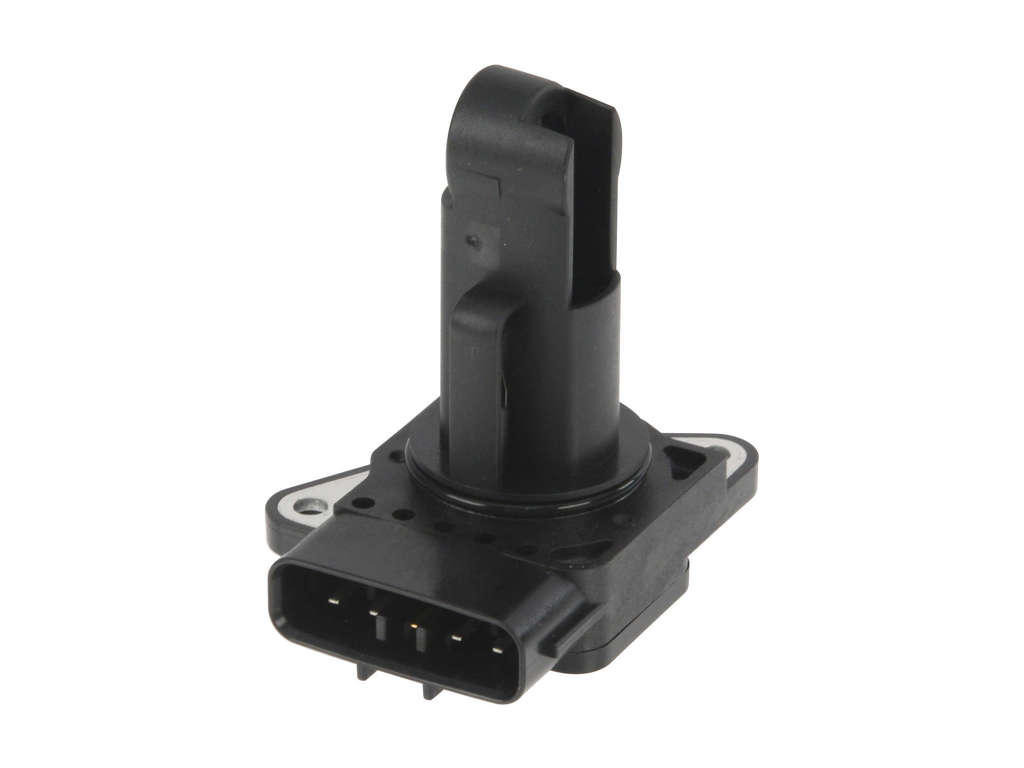
- Mass Airflow (MAF) Sensor
(OEM #See notes below)— This is the most common part to fail and cause a P0102 code, either due to contamination or internal electronic failure.
Trusted brands: Mazda (OEM), Denso
OEM price range: $200-$280
Aftermarket price range: $70-$150 - Engine Air Intake Hose
(OEM #Varies by engine)— The flexible rubber can crack with age and heat, creating vacuum leaks that are a common cause of this code.
Trusted brands: Mazda (OEM), Dorman
OEM price range: $70-$120
Aftermarket price range: $40-$80 - Mass Airflow Sensor Cleaner — Often, the sensor is just dirty and cleaning it is the only fix required. This is the first and cheapest diagnostic step.
Trusted brands: CRC, WD-40 Specialist
Aftermarket price range: $8-$15
Related Codes That Often Appear With This One
- P0171 — If a vacuum leak is present after the MAF sensor, the sensor will report low airflow (P0102), causing the PCM to inject less fuel. However, the extra unmetered air makes the mixture lean, which is detected by the oxygen sensors and triggers a P0171 (System Too Lean) code. This combination strongly points to a vacuum leak.
- P061B — This code for 'Internal Control Module Torque Calculation Performance' can appear with P0102 because the PCM's torque calculations rely heavily on accurate airflow data from the MAF sensor. An incorrect MAF signal can cause this fault. 🎬 See how to diagnose P0102 and P061B codes together
Technical Service Bulletins (TSBs) & Recalls
- While no TSBs directly address P0102 for this specific model, Mazda has issued TSBs for related issues on other models. For example, a TSB for the 2002 Nissan Maxima with a P0102 code recommended cleaning debris from the air filter housing and replacing the MAF. This reinforces the importance of checking for simple issues first.
Platform-Specific Known Issues
- Engine-Specific MAF Sensors: → Shop Fuel Injection Air Flow Meter The 2009-2013 Mazda 3 uses different MAF sensors depending on the engine. It is crucial to get the correct part number:
- 2.0L & 2.5L MZR Engines (non-Skyactiv): OEM Part # ZL01-13-215, which is superseded by L321-13-215.
- 2.0L Skyactiv-G Engine (2012-2013): OEM Part # PE01-13-215. This sensor is also used in many other Mazda Skyactiv models.
- 2.3L MZR DISI Turbo Engine (Mazdaspeed3): OEM Part # L3K9-13-215.
Mechanic-Grade Diagnostic Values
- MAF Sensor Voltage (Key On, Engine Off) — expected: Less than 0.69V (for 2012-2013 models). Failure: If the voltage is equal to or greater than 0.69V after waiting 30 seconds with the key on, the sensor is considered faulty by Mazda's test procedure.
- MAF Sensor Live Data (g/s) at Idle (Warm 2.0L Engine) — expected: Approximately 2.0 g/s to 3.0 g/s. Failure: A reading significantly lower than 2.0 g/s, or a reading that is stuck and does not increase when the engine is revved.
- Intake Air Temperature (IAT) Sensor Resistance (part of MAF sensor) — expected: 2.5 - 2.7 kΩ at 20°C (68°F). Failure: A resistance reading that is significantly different at a known temperature, indicating a failure of the IAT portion of the sensor.
Scan Tool Commands That Help
- Mazda M-MDS (or equivalent professional scanner): Monitor PID 'MAF' voltage — This is a specific Key On, Engine Off (KOEO) test. After turning the ignition on, wait 30 seconds. If the MAF voltage PID is at or above the maximum static voltage (e.g., 0.69V for 2012-2013 models), Mazda considers the sensor to be faulty and recommends replacement.
Wiring & Ground Locations
- Main Engine Ground — A main grounding lug is often bolted to the intake manifold bracket, right next to the passenger-side engine mount.. A poor engine ground can cause erratic voltage readings for all engine sensors, including the MAF sensor. A bad ground connection here can introduce electrical noise or a voltage drop, leading to a P0102 code even if the sensor itself is good.
- MAF Sensor Connector — On the MAF sensor, located in the air intake tube immediately after the air filter housing.. This 5-pin connector is the single point of contact for the MAF sensor's power, ground, and signal wires. Corrosion, spread pins, or broken wires right at the connector are common failure points that will directly cause a P0102.
OEM Part Supersession History
ZL01-13-215→L321-13-215— Standard part update/revision by Mazda.
Heads up: These parts are interchangeable for the MZR engines. ZL0113215R00 is a remanufactured version.
Model Year Variations Within This Range
- 2012-2013: The introduction of the 2.0L Skyactiv-G engine in 2012 brought a different MAF sensor (PE01-13-215) and a slightly different KOEO maximum static voltage threshold (0.69V) in the official diagnostic procedure compared to earlier MZR engines.
Diagnostic Flowchart
Other Known Issues on This Vehicle
Issues unrelated to this code that are worth knowing about as an owner of this generation:
- Melting/Sticky/Cracked Dashboard 🟠 Medium — Very common, especially in warmer climates. Can begin to show signs after 3-5 years. (Ref: SSP 99 / TSB 09-038/12)
- Premature Manual Clutch Failure 🔴 High — Commonly reported on 2010-2012 models, often failing well before 60,000 miles. (Ref: CSP09 (Reimbursement Program))
- Failing Power Steering Pump 🔴 High — Primarily affects 2007-2009 models, but some later models can experience issues. Can lead to a sudden loss of power assist. (Ref: Safety Recall 6010H)
- Defective Engine Mounts 🟠 Medium — The passenger-side hydraulic mount is prone to leaking and collapsing, causing excessive vibration at idle and during acceleration. Often occurs after 60,000 miles.
- Stuck Open Thermostat 🟡 Low → Shop Integrated Thermostat Housing Assembly — Reported on various model years, causing the engine to not reach full operating temperature and triggering a Check Engine Light.
Used vs. New Parts: Buying Guide for This Vehicle
When a used part is the smart pick: A used OEM intake air hose from a low-mileage donor car is a reasonable choice if it is thoroughly inspected for cracks and brittleness. A used MAF sensor is generally not recommended due to the sensitivity of the electronics and the unknown history.
Donor-vehicle mileage cap: roughly under 75000 miles for the part to have meaningful remaining life.
What to inspect on the donor part:
- For intake hose: Squeeze the rubber; it should be pliable, not hard or crunchy. Check the accordion sections carefully for hairline cracks.
- For MAF sensor (if unavoidable): Ensure the connector pins are clean and straight. Look for a clean, undamaged sensing wire inside the housing.
OEM-only on this vehicle (don't cheap out):
- Mass Airflow (MAF) Sensor
Aftermarket brands forum-validated for this vehicle:
- Denso (This is the Original Equipment supplier for Mazda, so a Denso-branded part is equivalent to OEM)
Brands owners have reported issues with on this vehicle:
- Unbranded, low-cost sensors from online marketplaces. Forum users frequently report that these parts are often faulty out of the box, are not calibrated correctly, and can cause more drivability issues than the original failed part.
Real Owner Stories
Aggregated from forums and TSBs cited above. Mileages and costs reflect what owners reported in those sources.
2010-2013 Mazda 3
Symptoms: The user reported an 'Infamous P0171' code which is often paired with P0102, indicating a lean condition and airflow issues.
What fixed it: A certified Mazda tech advised checking for vacuum leaks between the MAF and O2 sensor, specifically focusing on intake manifold gaskets and vacuum lines.
Source hint: Mazdas247 Forum - 'Infamous P0171, I need help on this one'
Related OBD-II Codes
Frequently Asked Questions
Which MAF sensor part number do I need for my 2012 Mazda 3 with the Skyactiv-G engine?
My 2010 Mazda 3 is idling roughly and has a P0102 code. Could this be related to the intake hose?
Is there a specific cleaner I should use for the MAF sensor on my Mazdaspeed3?
I have a P0102 and my dashboard is also melting/sticky. Are these related?
Can I use a cheap aftermarket MAF sensor to fix the P0102 code on my Mazda 3?
Could a bad engine mount cause the MAF sensor wiring to fail?
Helpful Videos



We Have This Part in Stock

The information in this article is provided for general reference and educational purposes only. Vehicle specifications, procedures, and part compatibility can vary by production date, trim level, and region. Always consult your vehicle's factory service manual and verify part numbers before purchasing or performing repairs. Safety-critical components such as airbags, seat belts, and braking systems should be installed by a qualified professional.
- Mazda 3:
- 🧭 Diagnostic Flowchart
- 🎬 Helpful Videos
- 🛍️ Shop This Part
- What's Unique About the 2009-2013 Mazda 3
- Symptoms You May Notice
- Most Likely Causes
- Rare But Worth Checking
- Diagnosis Steps
- Parts You'll Likely Need
- Related Codes That Often Appear With This One
- Technical Service Bulletins (TSBs) & Recalls
- Platform-Specific Known Issues
- Mechanic-Grade Diagnostic Values
- Scan Tool Commands That Help
- Wiring & Ground Locations
- OEM Part Supersession History
- Model Year Variations Within This Range
- Other Known Issues on This Vehicle
- Used vs. New Parts: Buying Guide for This Vehicle
- Real Owner Stories
- 2010-2013 Mazda 3
- Related OBD-II Codes
- Frequently Asked Questions
- 🎟️ Get 5% Off