

P0102 on 1997-2004 Porsche Boxster: MAF Circuit Low Causes and Fixes
On a 1997-2004 Boxster, code P0102 almost always points to a dirty or failed Mass Air Flow (MAF) sensor. The official definition is 'Mass or Volume Air Flow Circuit Low Input', indicating the voltage signal from the MAF is below the expected range. Cleaning it with dedicated MAF cleaner is a common first step, but replacement is often necessary for a permanent fix. A new Bosch sensor costs around $200-$300 and is a simple 15-minute DIY job. Vacuum leaks from components like a cracked oil filler
- P0102 on a Boxster almost always points to the Mass Air Flow (MAF) sensor.
- Before buying a new sensor, spend $15 on a can of dedicated MAF cleaner and clean the old one. This fixes the problem about 50% of the time.
- DO NOT use an oiled aftermarket air filter (e.g., K&N). The oil will contaminate and destroy your MAF sensor. Stick to the OEM-style paper filter.
- If cleaning or replacing the MAF doesn't fix the code, your next step is to check for vacuum leaks, especially a cracked oil filler tube.
- Verify the part number on your existing MAF sensor before ordering a new one, as the design changed in early 2000.
What's Unique About the 1997-2004 Porsche Boxster
The M96 engine in the 986 Boxster is known for being sensitive to MAF sensor health. These sensors, typically made by Bosch, can become contaminated over time, especially if an over-oiled aftermarket air filter (like a K&N) is used, which is a widely documented issue. Furthermore, unmetered air from vacuum leaks is a very common problem on aging Porsches due to brittle plastic and rubber hoses, which can trigger MAF-related codes. While the P0102 code specifically points to an electrical fault (low voltage/short to ground), it's most often the sensor itself that has failed internally rather than a true wiring problem. A key distinction is that code P0101 often points to a faulty sensor (performance/range), whereas P0102 points more directly to a circuit issue 🎬 Watch: Diagnosing P0102 and P0112 codes on the M96 engine like a short to ground or an open circuit, though sensor failure remains the top cause.
Symptoms You May Notice
- Check Engine Light is on
- Rough or unstable idle, sometimes surging
- Engine hesitation or stumbling during acceleration
- Reduced engine power and sluggish performance
- Hard starting or stalling, especially when coming to a stop or when cold
- Poor fuel economy
- Black smoke from the exhaust in some cases, indicating a rich condition
- PSM/ABS lights may illuminate in conjunction with the engine stutter
- Replacing oxygen sensors. While O2 sensor codes (like P1124, P1126, P1128, P1130) often accompany P0102 due to the incorrect air-fuel mixture, the root cause is often the MAF or a vacuum leak, not the O2 sensors themselves.
Most Likely Causes
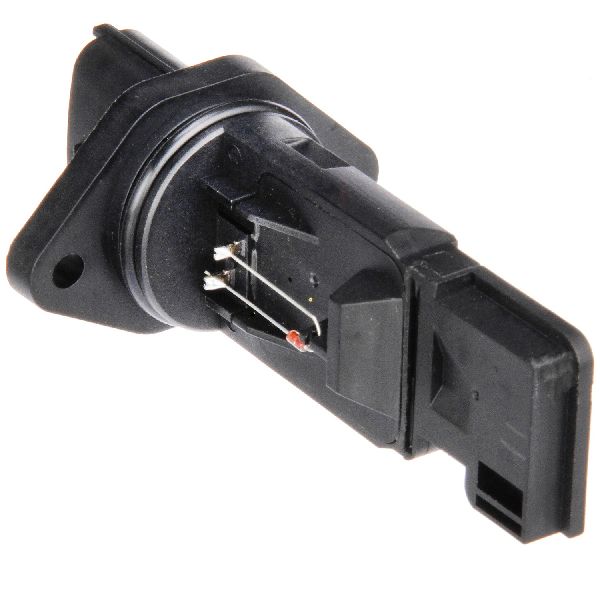
- Dirty or Failed Mass Air Flow (MAF) Sensor 🔴 High Probability → Shop Fuel Injection Air Flow Meter The hot-film elements in Bosch MAF sensors degrade over time and are highly sensitive to contamination from oil (from over-oiled air filters or AOS issues) and dirt. Forum users report that cleaning is often a temporary fix and that the sensors are a wear item that eventually fails electronically after 70,000+ miles.
How to confirm: First, try cleaning the sensor with a dedicated MAF sensor cleaner spray. Do not touch the internal elements. If cleaning doesn't resolve the issue or the fix is temporary, the sensor has likely failed. Unplugging the MAF sensor and seeing if the engine runs more smoothly can also indicate a failed sensor, as the DME will switch to a default map. With a diagnostic tool like Durametric, you can monitor the MAF voltage; a healthy sensor should show around 1.3V-1.4V at hot idle and increase with RPM. A faulty sensor may be stuck at a constant 1.0V.
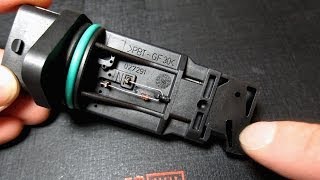
Typical fix: Replace the MAF sensor. It is held in by two T20 security Torx screws 🎬 See this walkthrough for replacing the MAF sensor and filter and is easily accessible in the engine bay. Always reset the ECU/DME after replacement by disconnecting the battery for a few minutes to clear fuel trim adaptations.
Est. part cost: $200-$350 - Vacuum Leak 🟡 Medium Probability Aging rubber and plastic components in the intake system become brittle and crack. The most common source on the 986 is the oil filler tube, which often develops cracks in its bellows section. Hoses connected to the Air-Oil Separator (AOS) are also frequent failure points.
How to confirm: A smoke test is the most effective way to find a vacuum leak. 🎬 Watch: How to perform a smoke test for vacuum leaks You may also hear a hissing or whistling sound at idle. A very high vacuum when removing the oil cap at idle (difficult to remove) can point to a failing AOS, which creates a large vacuum leak.
Typical fix: Replace the cracked hose or failed component (e.g., oil filler tube, AOS). A user on RennTech.org fixed their idle issue by finding a leak in the oil filler tube and temporarily sealing it.
Est. part cost: $20-$250 - Contaminated or Oiled Aftermarket Air Filter ⚪ Low Probability → Shop Air Cleaner Assembly Oiled-gauze filters like those from K&N can release fine oil droplets that coat the MAF sensor's delicate hot film, insulating it and causing incorrect low readings. This is a well-documented issue on Boxsters, with many owners and mechanics recommending sticking to the OEM paper filter.
How to confirm: Inspect the air filter. If it is an oiled aftermarket type, check the intake tract and MAF sensor for any oily residue. A user on Rennlist also noted that a dislodged honeycomb air straightener in the airbox can cause similar issues.
Typical fix: Replace the oiled filter with a high-quality paper element filter (OEM style) and thoroughly clean the MAF sensor. If the sensor is already damaged, it will also need replacement.
Est. part cost: $25-$50 - Wiring Harness or Connector Issue ⚪ Low Probability While less common than sensor failure, engine vibration and heat can cause wires to chafe or the connector pins to become loose or corroded over time. The P0102 code specifically suggests a short to ground or open circuit.
How to confirm: Visually inspect the MAF sensor connector and wiring for damage. Use a multimeter to check for continuity on the signal wire (Pin 5 at the MAF to Pin 17 at the DME) and for a short to ground. Also check for 12V and 5V reference voltages at the connector with the key on. A Rennlist user performed this continuity check before determining their MAF sensor was the ultimate culprit.
Typical fix: Repair the damaged section of wiring or replace the connector pigtail. Soldering is not recommended as it can bias the voltage reading.
Est. part cost: $10-$50
Rare But Worth Checking
- Failing Air-Oil Separator (AOS):
Diagnosis Steps
- Read the code with an OBD-II scanner. Note any other codes present, such as P0112 or fuel trim codes (P112x).
- Inspect the engine air filter. If it is dirty or an over-oiled aftermarket type, replace it with a standard paper filter. Check for a dislodged honeycomb air straightener in the airbox.
- With the engine running, listen for hissing sounds that could indicate a vacuum leak. Pay close attention to the oil filler tube and AOS area.
- Carefully remove the MAF sensor (requires a T20 Security Torx bit). Visually inspect the sensor wires for contamination.
- Clean the MAF sensor using only dedicated MAF sensor cleaner spray. Allow it to dry completely before reinstalling. Do not touch the sensor elements.
- Clear the codes and drive the car. If the P0102 code returns quickly, the sensor has likely failed. A common owner experience is that cleaning provides only a temporary fix.
- (Optional but recommended) Unplug the MAF sensor's electrical connector and start the engine. If the car idles and runs more smoothly, this strongly points to a failed MAF sensor.
- If a new MAF sensor does not fix the issue, perform a smoke test to check the entire intake system for vacuum leaks.
- If no vacuum leaks are found, inspect the MAF sensor wiring harness for continuity and shorts to ground between the sensor connector and the DME.
Parts You'll Likely Need
- Mass Air Flow (MAF) Sensor (2000-2004 models)
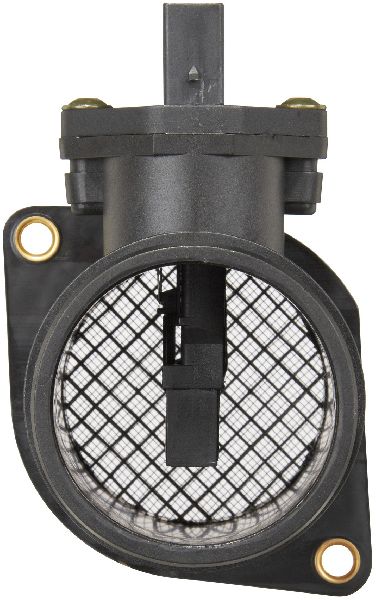
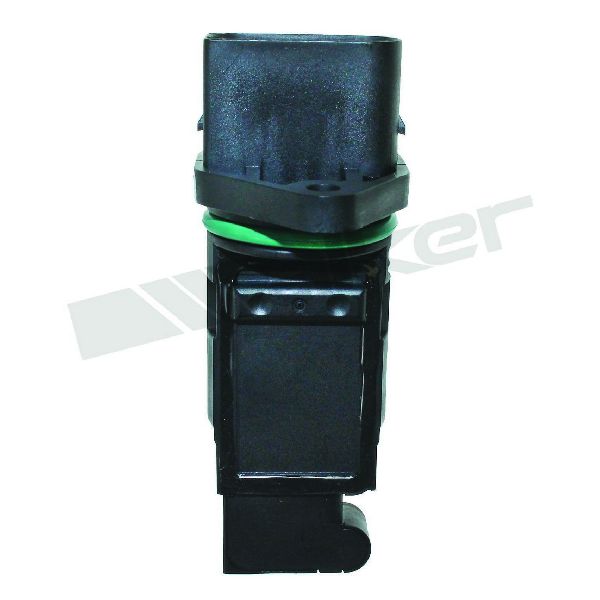
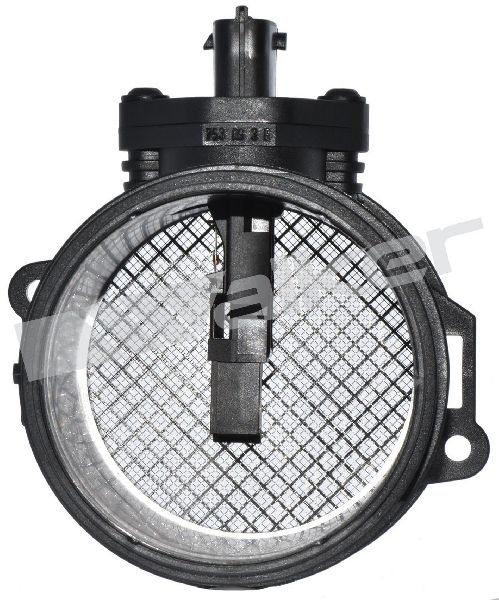
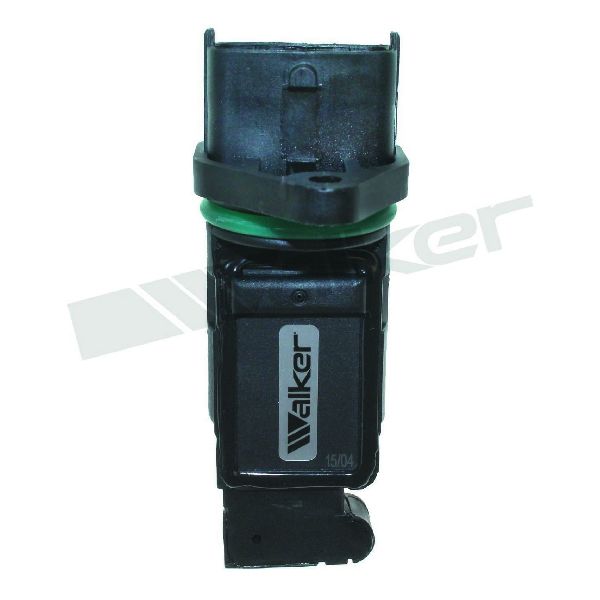
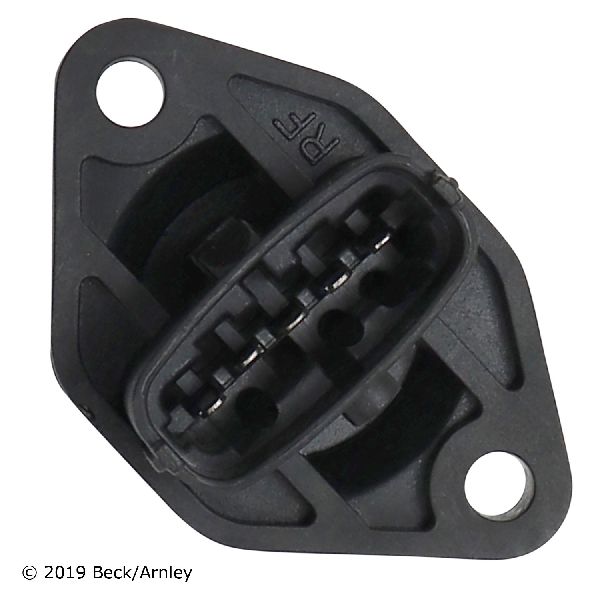
(OEM #986.606.125.01)— This is the most common failure point for code P0102. The internal electronics fail over time. This is the updated part for 2000+ models. The corresponding Bosch part number is 0 280 218 055.
Trusted brands: Bosch
OEM price range: $250-$350
Aftermarket price range: $80-$200 - Mass Air Flow (MAF) Sensor (1997-1999 models)
(OEM #996.606.123.00)— Early 2.5L Boxsters used a different MAF sensor. Verify by part number on the original sensor. The corresponding Bosch part number is 0 280 217 007.
Trusted brands: Bosch
OEM price range: $280-$400
Aftermarket price range: $150-$220 - MAF Sensor Cleaner — Often, a dirty sensor is the cause, and cleaning it is the first and cheapest diagnostic step.
Trusted brands: CRC, Liqui Moly
OEM price range: $15-$20
Aftermarket price range: $10-$15 - T20 Security Torx Bit — This specific tool is required to remove the two screws holding the MAF sensor in its housing.
OEM price range: $5-$10
Aftermarket price range: $5-$10
Related Codes That Often Appear With This One
- P0112 — Intake Air Temperature (IAT) Sensor Circuit Low Input. The IAT sensor is integrated into the same housing as the MAF sensor, so a failure of the unit or its connector can trigger both codes simultaneously.
- P1128 / P1130 — Oxygen sensing adaptation codes (Fuel Trim). These codes indicate the DME is reaching its limit while trying to adjust the fuel mixture. A bad MAF reading or a vacuum leak is a common cause for these fuel trim errors.
- P1124 / P1126 — Similar to P1128/P1130, these are oxygen sensing adaptation codes indicating a rich threshold has been met. A user on RennTech.org reported these codes alongside P0102, which was ultimately caused by a vacuum leak from the oil filler tube.
- P0300-P0306 — Misfire codes. An incorrect air-fuel mixture caused by a faulty MAF can lead to misfires in one or more cylinders.
Technical Service Bulletins (TSBs) & Recalls
- TSB 1/00 2445 - Air Flow Sensor (dated April 18, 2000): Details the update of the MAF sensor for 2000 model year vehicles and the potential need for DME reprogramming if upgrading from the old part (996.606.124.00) to the new one (986.606.125.01).
Platform-Specific Known Issues
- A technical service bulletin (TSB 1/00 2445, dated 4-18-00) was issued regarding a MAF sensor update for 2000 model year cars. Early cars (1997-1999) use part number 996.606.124.00. If a 2000 model year car with this older sensor is retrofitted with the newer style sensor (986.606.125.01), the DME may require reprogramming by a dealer. It is critical to check the part number on the existing sensor before ordering a replacement.
- Cracked oil filler tubes are a very common source of vacuum leaks on the 986 Boxster, which can trigger MAF-related codes like P0102 and fuel trim codes. The plastic bellows section becomes brittle with age and heat.
- Aftermarket MAF sensors have a very poor reputation in the Porsche community. Many forum threads detail experiences where cheap, non-Bosch sensors were dead on arrival or failed quickly, causing more diagnostic confusion. It is strongly recommended to use a genuine Bosch replacement part.
Mechanic-Grade Diagnostic Values
- MAF Sensor Voltage (Key On, Engine Off) — expected: 0.9 - 1.1 VDC. Failure: Voltage outside this range, or 0V.
- MAF Sensor Voltage (Engine at Idle) — expected: ~1.23 V to ~1.4 VDC. Failure: Voltage stuck at a constant 1.0V, or not increasing with RPM.
- MAF Sensor Air Mass (Hot Film MAF) at Idle — expected: ~15 kg/h (+/- 2 kg/h). Failure: Significantly different values, or values that do not increase with RPM. A reading of 65-70 kg/h at 2000 RPM was noted with a faulty sensor.
- MAF Signal Wire Continuity (MAF Connector to DME) — expected: 0 - 5 Ohms. Failure: Infinite ohms (open circuit).
- Long-Term Fuel Trim (Additive) at Idle (TRA or RKAT) — expected: Close to 0. Failure: A faulty MAF often causes TRA/RKAT values to be low or significantly below 0.
- Long-Term Fuel Trim (Multiplicative) at Cruise (FRA or FRAU) — expected: Close to 1.0. Failure: Values below 1.0 indicate the DME is removing fuel (rich condition), while values above 1.0 indicate it's adding fuel (lean condition).
Scan Tool Commands That Help
- Durametric or PIWIS/PST2: Actual Values / Live Data Monitoring — This is essential for diagnosing a P0102. Monitor 'Hot Film MAF (V)', 'Air Mass (kg/h)', and fuel trims (TRA/RKAT, FRA) to see if the sensor is providing a plausible, changing signal that responds to engine RPM.
- PIWIS or PST2: DME Software Update/Reprogramming — This is required on some Model Year 2000 vehicles when replacing the original MAF (p/n 996.606.124.00) with the updated, superseding part (p/n 986.606.125.01). Failure to reflash the DME will result in incorrect readings from the new sensor.
Wiring & Ground Locations
- MAF Connector Pin 5 — On the MAF sensor electrical connector.. This is the signal output wire. It should be checked for a changing voltage as RPMs increase. It connects to Pin 17 on the DME connector.
- DME Connector Pin 17 — On the main engine computer (DME) connector. The DME is located in the rear trunk.. This is the receiving pin for the MAF signal. Continuity should be checked between this pin and Pin 5 on the MAF connector to rule out an open circuit in the harness.
- DME Ground Point — The main ground point for the DME is a post on the #1 intake runner in the engine compartment.. A poor ground connection for the DME can cause a variety of sensor reading issues, including a P0102, by creating a floating ground or voltage offset.
- Ground Point 5 — Designated as the 'Electronics ground' in the vehicle's electrical system.. This is a central grounding point for various electronic components. Verifying it is clean and tight is good practice when troubleshooting any electrical fault code.
Real Owner Repair Stories
- Rennlist user 'De Jeeper' (1999 Porsche 911 C2 (similar M96 engine and MAF)) — Hard to start, would not idle without holding the throttle. Durametric showed MAF voltage constant at 1.0V regardless of RPM.
❌ Tried (didn't work) Cleaning the MAF sensor, Cleaning the IACV and throttle body, Comprehensive smoke test (found no leaks), Full wiring continuity and resistance check from DME to MAF plug (all checked out OK)
✅ What actually fixed it Replacing the MAF sensor with a new Bosch unit resolved all issues. The voltage then correctly increased with RPM and the car idled properly. - 986 Forum user 'Spinnaker' (2000 Boxster S with 104k miles) — Recurring P0102 code, sagging sensation during acceleration.
❌ Tried (didn't work) Cleaning the MAF sensor multiple times. The code would clear but return within a month.
✅ What actually fixed it Replaced the original MAF (p/n 986.606.125.00) with a new one (p/n 986.606.125.01). This permanently fixed the P0102 code and improved acceleration. - RennTech.org user 'Stefan' (1999 Boxster 5-speed) — Recurring P0102 code that came on several hundred miles after installing an EVO high-flow air intake.
❌ Tried (didn't work) Cleaning the MAF sensor., Replacing the MAF sensor with a new, identical Bosch part (p/n 996 606 123 00). The code returned after a few hundred miles.
✅ What actually fixed it Reverting to the stock Porsche air intake box. The user had no further MAF issues for over 15,000 miles, concluding the aftermarket intake was causing the issue on the more sensitive pre-2000 MAF sensor.
"I Checked Everything" — The Actual Cause
- In one documented case on Rennlist, a user with a P0102 code performed a comprehensive smoke test that revealed no vacuum leaks. They also performed a full wiring harness check for continuity and shorts, which also passed. The ultimate cause was a failed MAF sensor, which was confirmed when a new Bosch unit fixed the problem. This demonstrates that even with a perfect intake seal and wiring, the sensor itself can fail electronically and be the sole cause of the code.
OEM Part Supersession History
996.606.123.00→N/A (Still the correct part for this application)— This is the correct part for 1997-1999 non-E-Gas models.
Heads up: This part is physically different (D-shaped connector) and will not work on 2000+ models.996.606.124.00→986.606.125.00, then 986.606.125.01, and finally 986.606.125.02— The sensor design was updated to be more resistant to contamination.
Heads up: If a car originally equipped with the '124.00' MAF is fitted with a '125.xx' version, the DME must be reprogrammed by a dealer using a PST2 or PIWIS tool to recognize the new sensor's output. Without the reflash, the car may run poorly or continue to set codes.986.606.125.00→986.606.125.01 / 986.606.125.02— Minor revisions and updates to the sensor.
Heads up: Cars that originally came with a '125.00' sensor can use the '125.01' or '125.02' as a direct replacement without needing a DME reflash.
Model Year Variations Within This Range
- 1997-1999: These models use a non-E-Gas (cable throttle) system and a specific MAF sensor (p/n 996.606.123.00). This sensor is known to be less robust and more sensitive to issues from aftermarket intakes.
- 2000: This was a transition year for E-Gas (drive-by-wire) and the MAF sensor. Early 2000 models may have the older E-Gas MAF (996.606.124.00), while later ones have the updated version (986.606.125.00 or .01). Replacing the older part with the newer one requires a dealer DME software update, as specified in Porsche TSB 2445.
- 2001-2004: These models came from the factory with the updated MAF sensor (p/n 986.606.125.00 or later) and do not require a DME reflash when replacing with the current part number (986.606.125.01 or .02).
Diagnostic Flowchart
Used vs. New Parts: Buying Guide for This Vehicle
When a used part is the smart pick: A used OEM Bosch MAF sensor can be a cost-effective option if its history is known, but it is generally considered a gamble. Given that the sensor is a known wear item, buying used is risky unless it's from a very low-mileage donor car or as a cheap temporary diagnostic part.
Donor-vehicle mileage cap: roughly under 50000 miles for the part to have meaningful remaining life.
What to inspect on the donor part:
- Verify the Bosch and Porsche part numbers on the housing match your required part exactly.
- Inspect the connector pins for any corrosion or damage.
- Look at the internal sensor elements; they should be clean and free of any oil residue or physical damage.
- Avoid parts from cars that used an oiled aftermarket air filter.
OEM-only on this vehicle (don't cheap out):
- Mass Air Flow (MAF) Sensor
Aftermarket brands forum-validated for this vehicle:
- Bosch (This is the Original Equipment Manufacturer, and buying a Bosch-branded part is identical to the Porsche part but often cheaper).
Brands owners have reported issues with on this vehicle:
- Unnamed or generic aftermarket MAF sensors are widely reported on forums to be unreliable, with many users stating they fail quickly or are inaccurate out of the box. It is a 'roulette wheel' with non-Bosch parts.
Real Owner Stories
Aggregated from forums and TSBs cited above. Mileages and costs reflect what owners reported in those sources.
Porsche Boxster (986) — ~70000 miles
Symptoms: Owner experienced MAF and fuel trim codes (P0102, P1124, P1126) along with idle issues.
What fixed it: The issue was traced back to a cracked oil filler tube causing a vacuum leak. The owner temporarily sealed the leak to resolve the problem.
Source hint: RennTech.org - 'Codes P0102, P1124, P1126'
1999 Porsche Boxster
Symptoms: The P0102 code was triggered by a vacuum leak that was introduced during a recent Air-Oil Separator (AOS) installation.
What fixed it: Fixing the vacuum leak related to the AOS installation resolved the code.
Source hint: 986forum.com - 'P0102 - mass or volume air flow circuit low input, 99 Boxster'
Porsche M96 Engine
Symptoms: The owner had a persistent P0102 code and performed extensive troubleshooting, including wiring continuity checks and a smoke test, which found no other issues.
What fixed it: The final solution was replacing the faulty sensor with a new Bosch MAF sensor.
Source hint: Rennlist - 'Fault Code P0102 - MAF Short Circuit/Open Circuit'
Porsche Boxster (986)
Symptoms: The P0102 code returned immediately after a new MAF sensor was installed.
What fixed it: The problem was resolved by resetting the DME (ECU) to clear old fuel trim adaptations. This was done by disconnecting the battery for a few minutes after the new sensor was installed.
Source hint: 986forum.com - 'Po102 back agin after MAF replacement'
Related OBD-II Codes
Frequently Asked Questions
I have a 2000 Boxster. Is there anything special I need to know when replacing the MAF sensor?
Should I buy a cheap aftermarket MAF sensor for my Boxster?
Is cleaning the MAF sensor a permanent fix for P0102?
My car runs much better with the MAF sensor unplugged. What does this mean?
Besides the MAF sensor, what's a very common cause for P0102 and rough idle on a 986 Boxster?
What tool do I need to remove the MAF sensor?
Do I need to do anything after installing a new MAF sensor?
Helpful Videos

We Have This Part in Stock

The information in this article is provided for general reference and educational purposes only. Vehicle specifications, procedures, and part compatibility can vary by production date, trim level, and region. Always consult your vehicle's factory service manual and verify part numbers before purchasing or performing repairs. Safety-critical components such as airbags, seat belts, and braking systems should be installed by a qualified professional.
- Porsche Boxster:
- 🧭 Diagnostic Flowchart
- 🎬 Helpful Videos
- 🛍️ Shop This Part
- What's Unique About the 1997-2004 Porsche Boxster
- Symptoms You May Notice
- Most Likely Causes
- Rare But Worth Checking
- Diagnosis Steps
- Parts You'll Likely Need
- Related Codes That Often Appear With This One
- Technical Service Bulletins (TSBs) & Recalls
- Platform-Specific Known Issues
- Mechanic-Grade Diagnostic Values
- Scan Tool Commands That Help
- Wiring & Ground Locations
- Real Owner Repair Stories
- "I Checked Everything" — The Actual Cause
- OEM Part Supersession History
- Model Year Variations Within This Range
- Used vs. New Parts: Buying Guide for This Vehicle
- Real Owner Stories
- Porsche Boxster (986) — ~70000 miles
- 1999 Porsche Boxster
- Porsche M96 Engine
- Porsche Boxster (986)
- Related OBD-II Codes
- Frequently Asked Questions
- 🎟️ Get 5% Off