

P0102 on 2014-2018 Subaru Forester XT: MAF Circuit Low Causes and Fixes
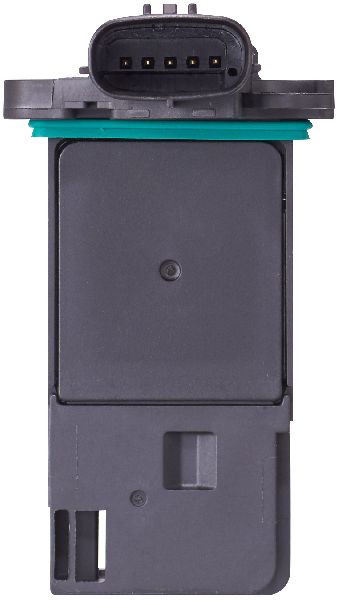
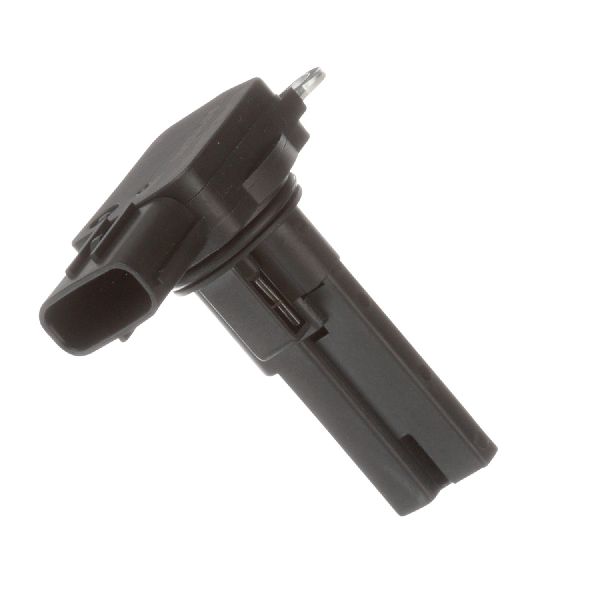
For a 2014-2018 Forester XT, P0102 almost always points to a dirty or faulty Mass Airflow (MAF) sensor. The first step is to clean the sensor with dedicated MAF cleaner (~$15). If the code returns, a new OEM sensor (Subaru P/N 22680AA410 or Denso equivalent) is the recommended fix (approx. $180-$340). Aftermarket sensors are not recommended for this platform.
- P0102 on your Forester XT is almost always related to the Mass Airflow Sensor.
- Before buying any parts, spend $15 on a can of dedicated MAF sensor cleaner and clean the sensor. This is the most common fix.
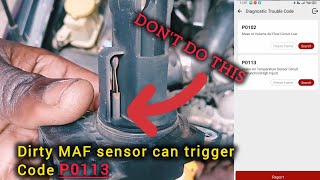
- Do not touch the delicate wires inside the MAF sensor and only use MAF-specific cleaner.
- If you must replace the sensor, it's wise to invest in an OEM Denso or reputable brand like Hitachi, as these cars can be sensitive to cheap aftermarket sensors.
- Check for intake leaks (cracked hoses, loose clamps) between the sensor and the engine, as this is another possible cause.
What's Unique About the 2014-2018 Subaru Forester
The 2014-2018 Forester XT uses the FA20F direct-injection turbo (DIT) engine. Like many modern Subarus, these engines can be sensitive to the condition of the MAF sensor. Owners frequently report that using aftermarket oiled air filters can contaminate the MAF sensor over time, leading to this code. Additionally, forum discussions highlight that these vehicles can be picky about replacement sensors, with many owners recommending sticking with the OEM Denso brand to avoid persistent issues. A bad ground connection for the MAF sensor is also a known, though less common, culprit that can be difficult to diagnose.
Symptoms You May Notice
- Check Engine Light is on
- Engine running rough or has a rough idle
- Engine stalling, especially at low RPMs or when coming to a stop
- Hesitation or lack of power during acceleration
- Poor fuel economy
- Black smoke from the exhaust
- Engine cranks but will not start, or starts and dies immediately
- Replacing the MAF sensor without cleaning it first. A simple cleaning fixes the issue a majority of the time.
- Replacing other components like O2 sensors or spark plugs before properly diagnosing the MAF sensor circuit.
- Assuming a new aftermarket (non-OEM/Denso) MAF sensor is good. These platforms are known to be incompatible with many cheap aftermarket sensors.
Most Likely Causes
- Dirty or Contaminated MAF Sensor 🔴 High Probability → Shop Fuel Injection Air Flow Meter Oiled aftermarket air filters are a common modification, and excess oil can easily coat the sensitive MAF sensor wires. The PCV system on the FA20F engine also routes oil vapor into the intake tract, which can bake onto the sensor over time.
How to confirm: Remove the sensor (held by two screws on the intake) and visually inspect the small wires inside the housing. Any film of dirt, oil, or debris can cause a fault.
Typical fix: Clean the sensor using only dedicated MAF sensor cleaner spray. Do not touch the internal wires. Spray generously and let it air dry completely for at least 10-15 minutes before reinstalling.
Est. part cost: $10-$15 - Faulty Mass Airflow (MAF) Sensor 🟡 Medium Probability → Shop Fuel Injection Air Flow Meter Subarus can be sensitive to MAF sensor calibration. A user on Reddit reported getting a bad MAF sensor right out of the box, which only resolved after swapping it for another new one. Tuners have also noted that older sensors (over 100k miles) can lose accuracy even without throwing a code, affecting performance.
How to confirm: If cleaning the sensor doesn't resolve the code, and the wiring is confirmed to be good, the sensor itself has likely failed. A scan tool can monitor the MAF g/s reading; a value of 0 or one that doesn't change with RPM points to a failed sensor or circuit.
Typical fix: Replace the MAF sensor. It is highly recommended to use an OEM (Subaru P/N: 22680AA410) or the original manufacturer part (Denso).
Est. part cost: $180-$340 - Damaged Wiring or Poor Connection ⚪ Low Probability A poor ground connection is a known issue that can cause a P0102. A Reddit user with a 2014 FXT chased this code for an extended period, suspecting a harness issue. Another owner found a previous bad splice repair on the harness was the root cause.
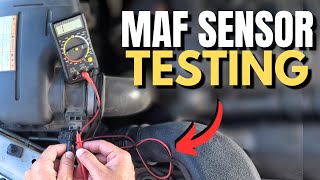
How to confirm: Inspect the MAF sensor connector for corrosion or loose pins. Check the wiring harness for any visible damage, especially near the sensor. Use a multimeter to verify power (around 12V on the center pin) and ground at the sensor connector with the key on, engine off. Tracing ground wires to their chassis connection point to check for corrosion is a key step.
Typical fix: Repair the damaged section of wiring, clean/replace the connector pigtail, or clean the chassis ground point.
Est. part cost: $15-$50 - Vacuum Leak in the Intake System ⚪ Low Probability The plastic and rubber components of the intake system can become brittle and crack over time, especially on a turbocharged engine that experiences more heat and pressure changes. A torn O-ring on the MAF sensor itself can be a source of a leak.
How to confirm: Visually inspect all intake hoses and connections between the MAF sensor and the throttle body for cracks, loose clamps, or disconnections. A smoke test is the most effective way to find hidden leaks. Check the MAF sensor O-ring for damage when it is removed.
Typical fix: Tighten loose clamps or replace the cracked intake boot/hose or MAF sensor O-ring.
Est. part cost: $30-$150
Rare But Worth Checking
- Severely Clogged Engine Air Filter: → Shop Air Cleaner Assembly While a dirty filter usually causes other issues first, a completely blocked filter can restrict airflow enough to trigger a P0102 code.
- Faulty Engine Control Module (ECM): This is extremely rare and should only be considered after all other possibilities have been exhaustively ruled out.
Diagnosis Steps
- Read the code with an OBD-II scanner and note any other codes present, especially P0113.
- Visually inspect the entire air intake tract from the air filter box to the throttle body. Look for loose clamps, cracked hoses, or any signs of unmetered air leaks.
- Inspect the MAF sensor's electrical connector for loose pins, corrosion, or damaged wires.
- Remove the MAF sensor (typically held by two Phillips screws). Visually inspect the sensor elements for dirt, oil, or debris.
- If dirty, clean the sensor using only dedicated MAF sensor cleaner. Spray the elements generously from a safe distance and let it air dry completely for at least 10-15 minutes. Do NOT use brake cleaner or touch the wires.
- While the sensor is out, inspect its rubber O-ring for cracks or damage and replace if necessary.
- Reinstall the sensor, clear the codes, and perform a test drive to see if the code returns.
- If the code returns, use a scan tool to monitor the MAF sensor's live data (in grams/second). The reading should be stable at idle and increase smoothly as you raise the engine RPM. A reading of zero or a static value indicates a failed sensor or circuit problem.
- If live data is suspect, use a multimeter to check for proper power (approx. 12V) and ground at the sensor connector with the key on, engine off. A bad ground connection is a known possibility.
- If the wiring and connections are confirmed to be good and cleaning did not work, the MAF sensor is faulty and should be replaced with an OEM part.
Parts You'll Likely Need
- Mass Air Flow (MAF) Sensor
(OEM #22680AA410)— This is the most likely component to fail if cleaning does not resolve the P0102 code. Using the genuine OEM part is critical for this vehicle.
Trusted brands: Subaru (Genuine OEM), Denso (Original Manufacturer)
OEM price range: $180-$340
Aftermarket price range: $90-$180 - MAF Sensor Cleaner — This is the required consumable for the most common and least expensive fix, as a dirty sensor is the number one cause of P0102.
Trusted brands: CRC Mass Air Flow Sensor Cleaner, Liqui Moly Air Flow Sensor Cleaner
Aftermarket price range: $10-$15
Related Codes That Often Appear With This One
- P0113 — Intake Air Temperature (IAT) Sensor Circuit High Input. On this Forester, the IAT sensor is integrated into the same physical housing as the MAF sensor. A fault in the unit or its connector can trigger both codes.
- P0171 — System Too Lean (Bank 1). This can occur if the root cause of P0102 is a vacuum leak after the MAF sensor. Unmetered air enters the engine, causing the MAF to under-report airflow and the O2 sensor to detect a lean condition.
Platform-Specific Known Issues
- source — A user on the r/SubaruForester subreddit reported chasing a P0102 code on their 2014 FXT. After replacing the MAF sensor, the problem persisted. The final solution was replacing the 'new' MAF sensor with another new one, as the first replacement was faulty out of the box. This highlights the importance of using high-quality OEM parts and not ruling out a new part as a potential failure point.
- source — Multiple owners have traced a persistent P0102 to issues in the wiring harness, not the sensor itself. One owner on YouTube diagnosed a bad splice from a previous repair. Another forum thread discusses the importance of checking and cleaning the ground wire locations for the MAF circuit, as a poor ground can cause the low voltage reading.
Mechanic-Grade Diagnostic Values
- MAF Sensor Signal Voltage (Key On, Engine Off) — expected: Below 0.2V. Failure: The service manual flags P0102 if the voltage is below this threshold; a reading of 0V indicates a complete circuit failure.
- MAF Sensor Power Supply Voltage (at connector pin) — expected: ~12V (Battery Voltage). Failure: No voltage or significantly low voltage on the center pin of the 5-pin connector (with key on, engine off) indicates an open in the power supply wire or a relay/fuse issue.
- MAF Sensor Live Data (Scan Tool, at idle) — expected: Approximately 2.5 - 4.0 g/s for a 2.0L turbo engine at normal operating temperature.. Failure: A reading of 0 g/s or a value that does not increase with RPM points to a failed sensor or circuit.
- MAF Sensor Signal Voltage (at idle) — expected: Approximately 1.1V - 1.4V. Failure: A significantly lower voltage (approaching 0V) or a static voltage that doesn't change with RPM indicates a fault.
Scan Tool Commands That Help
- Subaru Select Monitor (or equivalent professional scanner): Live Data Monitoring for 'Mass Airflow Sensor Voltage' and 'Mass Airflow (g/s)' — This is the primary method to confirm if the sensor is sending any data and if that data is plausible. A reading of 0V or 0 g/s with the engine running immediately points to a circuit or sensor failure.
- Subaru Select Monitor (or equivalent professional scanner): Clear Memory / Clear DTCs — After any repair attempt (cleaning, wiring repair, or replacement), the codes must be cleared. For a P0102, the code will often reappear immediately on the next key-on cycle if the fault is not resolved.
Wiring & Ground Locations
- B3 (MAF Sensor Connector) — On the air intake duct, between the air filter box and the turbo inlet pipe.. This 5-pin connector is the primary test point. Pin 3 (center pin) should have ~12V power with key on. Pin 2 is the sensor ground. A poor connection, corrosion, or damaged wire at this connector is a direct cause of P0102.
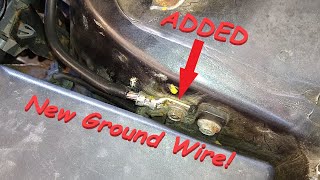
- Engine Ground (GE) — Bolted to the top of the engine block, often near the intake manifold or alternator bracket.. The MAF sensor circuit relies on a solid engine-to-chassis ground. Corrosion or a loose connection at these main ground points can introduce resistance, causing a low voltage reading and triggering a P0102 code. These should be removed, cleaned, and securely re-fastened during diagnosis.
Real Owner Repair Stories
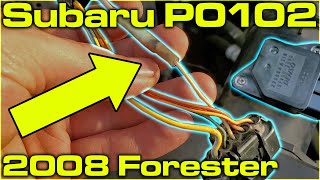
- MrSubaru1387 on YouTube (2008 Subaru Forester 2.5L (Note: Not an XT, but the diagnostic process for a circuit code is identical)) — Random stalling, poor performance, P0102 code present.
❌ Tried (didn't work) A new Denso MAF sensor was already installed by the owner, but the code persisted.
✅ What actually fixed it The technician found a previous, poorly-repaired splice in the MAF sensor power wire within the harness. After unwrapping the electrical tape, a corroded butt connector was discovered. Repairing this single wire with a proper solder and heat shrink connection resolved the 0V reading at the sensor and fixed the P0102 code. - NHTSA ODI #11523727 — An owner of a related Subaru model reported a no-start condition where an OBD reader retrieved codes P0102, P0113, P0174, and P0177. A dealership diagnosis confirmed that both the fuel pump and the mass airflow sensor required attention to resolve the issue.
OEM Part Supersession History
22680AA410→N/A— This part number appears to be stable and fits a wide range of Subaru vehicles from 2014-2021, including the Forester XT and WRX with the 2.0L engine.
Model Year Variations Within This Range
- 2017-2018: A facelift was introduced for the 2017 model year which included revised styling (headlights, grille), and additional driver-assist features. However, the powertrain, including the FA20F engine and its associated sensors like the MAF, remained unchanged from the 2014-2016 models. Therefore, the causes and fixes for P0102 are identical across the entire 2014-2018 range.
Diagnostic Flowchart
Other Known Issues on This Vehicle
Issues unrelated to this code that are worth knowing about as an owner of this generation:
- Intake Valve Carbon Buildup 🔴 High — A known issue for all FA20F Direct Injection Turbo (DIT) engines. Can become noticeable after 30,000-60,000 miles, causing misfires, hesitation, and power loss. (Ref: TSB 09-74-21R provides a procedure for carbon deposit removal.)
- Lineartronic CVT Reliability 🔴 High — Failures of the CVT, particularly the valve body or torque converter, are widely reported. Symptoms include shuddering, hesitation, or complete failure. Subaru extended the CVT warranty to 10 years/100,000 miles for many vehicles, including the 2014-2018 Forester. (Ref: Subaru issued a warranty extension. TSB 16-156-25 addresses a design change in the CVT control valve body for some models.)
- Excessive Oil Consumption 🟠 Medium — Primarily affects 2014 models with the 2.5L engine, but some XT owners also report issues. Caused by faulty piston rings. Led to a class-action lawsuit. (Ref: TSB 02-157-14R and a related warranty extension (8 years/100,000 miles) were issued to address this, often involving a short block replacement.)
- Failing Rear Suspension Springs 🟡 Low — Some owners have experienced premature failure/breakage of the rear coil springs, particularly on 2014 models. (Ref: A recall was issued for some 2014-2018 Foresters for this issue.)
- CAN System Parasitic Battery Drain 🟡 Low — A number of owners across various modern Subaru models report batteries dying unexpectedly. This is sometimes attributed to the CAN system keeping modules awake, draining the battery overnight.
Used vs. New Parts: Buying Guide for This Vehicle
When a used part is the smart pick: A used part is a reasonable choice for the MAF sensor wiring harness pigtail if the original connector is damaged. It is generally not recommended to buy a used MAF sensor itself due to its sensitivity and unknown history.
Donor-vehicle mileage cap: roughly under 60000 miles for the part to have meaningful remaining life.
What to inspect on the donor part:
- For a wiring pigtail, ensure the connector body is not cracked or melted.
- Check that the locking tab on the connector is intact and functional.
- Inspect the wire insulation for any signs of brittleness, cracking, or previous repairs.
- Ensure at least 4-6 inches of wire is present for easier splicing.
OEM-only on this vehicle (don't cheap out):
- Mass Airflow (MAF) Sensor: The FA20F engine is highly sensitive to MAF sensor calibration. Forum and owner consensus strongly advises against using aftermarket sensors. Only Genuine Subaru (P/N 22680AA410) or the original manufacturer, Denso, should be used to avoid persistent issues.
Aftermarket brands forum-validated for this vehicle:
- Denso (This is the Original Equipment Manufacturer)
Brands owners have reported issues with on this vehicle:
- Any unbranded or generic 'white-box' MAF sensors sold on auction sites or discount auto parts stores are frequently reported to be faulty out of the box or fail shortly after installation on this platform.
Real Owner Stories
Aggregated from forums and TSBs cited above. Mileages and costs reflect what owners reported in those sources.
2014 Subaru Forester XT 2.0L Turbo
Symptoms: Persistent P0102 code that remained even after the MAF sensor was replaced.
What fixed it: Replacing the 'new' MAF sensor with a second new one, as the first replacement part was faulty out of the box.
Source hint: r/SubaruForester on Reddit: 'P0102 codes are the bane of my forester/'
2017 Subaru Forester 2.5L (Non-Turbo)
Symptoms: Engine would not start or would stall immediately; codes P0102 and P0113 were present.
What fixed it: The owner attempted cleaning and replacing the MAF sensor, though the source notes these severe symptoms often require deeper electrical or sensor verification.
Source hint: r/MechanicAdvice on Reddit: '2017 subaru forester p0102 and p0113/'
2014 Subaru Forester XT 2.0L Turbo
Symptoms: Chased a persistent P0102 code for an extended period, suspecting a harness issue.
What fixed it: The issue was traced to a bad ground connection or a previous bad splice repair on the wiring harness.
Source hint: Reddit user report cited in 'Damaged Wiring or Poor Connection' and 'Wiring Harness and Ground Issues' sections.
Subaru Forester (General FA20F) — ~100000 miles
Symptoms: Loss of accuracy in the sensor affecting performance and drivability, though it did not initially throw a hard code.
What fixed it: Cleaning or replacing the MAF sensor to restore accuracy after high-mileage degradation.
Source hint: Blingstrom.com MAF Cleaning DIY
Related OBD-II Codes
Frequently Asked Questions
Which specific MAF sensor part number should I use for my 2014-2018 Forester XT?
Can my aftermarket air filter cause a P0102 code on my FA20F engine?
Is there a TSB for the carbon buildup issues mentioned in the context for the FA20F?
I just installed a new MAF sensor but the P0102 code is still there. What should I check next?
How long should I let the MAF sensor dry after cleaning it with dedicated spray?
Does the 2015-2021 Subaru WRX share this same MAF sensor issue?
Helpful Videos
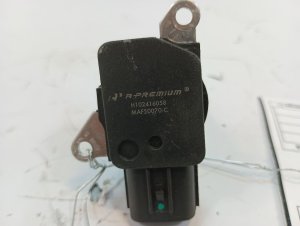
Used OEM Parts in Stock
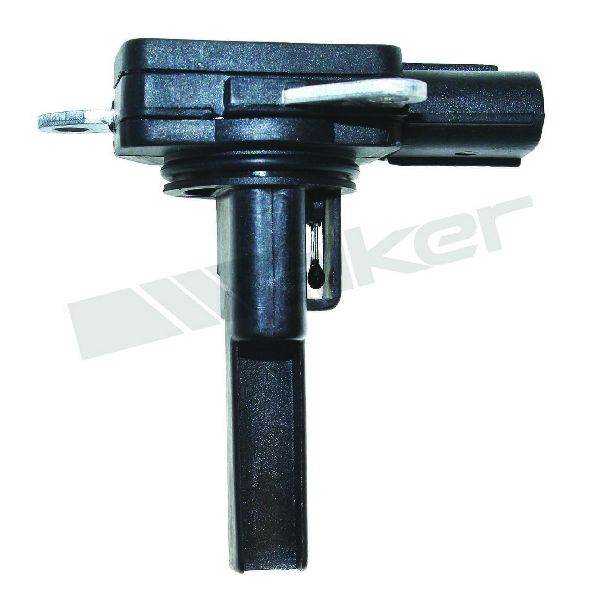
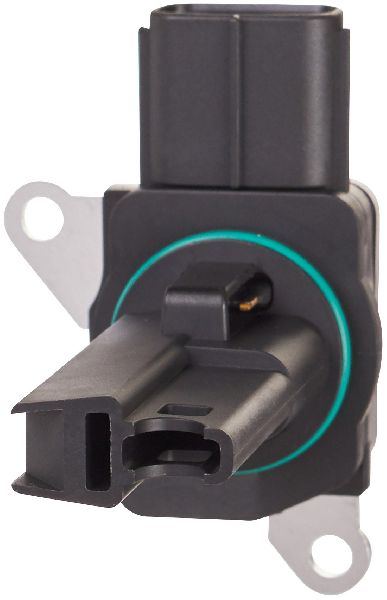
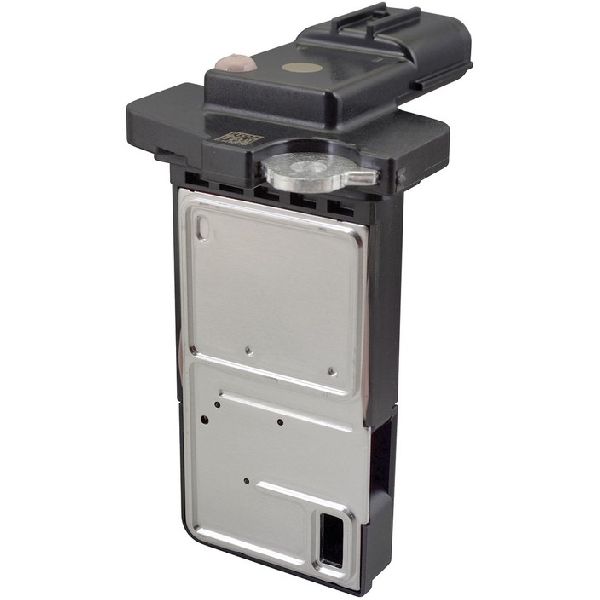
New Aftermarket Parts Available


The information in this article is provided for general reference and educational purposes only. Vehicle specifications, procedures, and part compatibility can vary by production date, trim level, and region. Always consult your vehicle's factory service manual and verify part numbers before purchasing or performing repairs. Safety-critical components such as airbags, seat belts, and braking systems should be installed by a qualified professional.
- Subaru Forester:
- 🧭 Diagnostic Flowchart
- 🎬 Helpful Videos
- 🛍️ Shop This Part
- What's Unique About the 2014-2018 Subaru Forester
- Symptoms You May Notice
- Most Likely Causes
- Rare But Worth Checking
- Diagnosis Steps
- Parts You'll Likely Need
- Related Codes That Often Appear With This One
- Platform-Specific Known Issues
- Mechanic-Grade Diagnostic Values
- Scan Tool Commands That Help
- Wiring & Ground Locations
- Real Owner Repair Stories
- OEM Part Supersession History
- Model Year Variations Within This Range
- Other Known Issues on This Vehicle
- Used vs. New Parts: Buying Guide for This Vehicle
- Real Owner Stories
- 2014 Subaru Forester XT 2.0L Turbo
- 2017 Subaru Forester 2.5L (Non-Turbo)
- 2014 Subaru Forester XT 2.0L Turbo
- Subaru Forester (General FA20F) — ~100000 miles
- Related OBD-II Codes
- Frequently Asked Questions
- 🎟️ Get 5% Off