

P0102 on 2005-2009 Subaru Outback 2.5L: MAF Sensor Low Input Causes and Fixes
On a 2005-2009 Subaru Outback, code P0102 is most often caused by a dirty Mass Air Flow (MAF) sensor. Cleaning the sensor with a dedicated MAF cleaner for about $10 is the most common fix and should be your first step. If that fails, a replacement sensor is the next likely solution. A dirty sensor under-reports airflow, causing the engine to run poorly.
- P0102 on your Outback almost always points to the Mass Air Flow sensor.
- Before buying any parts, spend $10 on a can of dedicated MAF sensor cleaner and clean the sensor. This fixes the problem in a majority of cases.
- If you must replace the sensor, consider spending more for an OEM (Denso) or reputable aftermarket brand, as these cars can reject cheap sensors.
- The job is very easy for a DIYer, requiring only a screwdriver and about 15 minutes of your time.
What's Unique About the 2005-2009 Subaru Outback
For the third-generation Subaru Outback with the 2.5L SOHC EJ253 engine, the P0102 code is a very common and straightforward issue, almost always pointing to the MAF sensor itself. The 2.5L engine is sensitive to air-fuel mixture, and owners frequently report that the first and most effective step is simply cleaning the original sensor. It's also noted in enthusiast communities that these vehicles can be sensitive to cheap, aftermarket MAF sensors, which may be poorly calibrated and cause persistent issues right out of the box. Some owners have also reported that using high-flow, oiled air filters can contaminate the MAF sensor element, leading to this code.
Symptoms You May Notice
- Check Engine Light is on
- Engine runs rough or has a poor idle
- Stalling, especially at idle or when coming to a stop.
- Hesitation or lack of power during acceleration.
- Difficulty starting the engine.
- Decreased fuel economy
- Black smoke from the exhaust.
- Replacing oxygen sensors before diagnosing the MAF sensor. A bad MAF reading can cause the engine to run rich or lean, which may make the O2 sensors read out of range, but they are not the root cause.
Most Likely Causes
- Dirty or Contaminated MAF Sensor 🔴 High Probability → Shop Fuel Injection Air Flow Meter Over time, dirt, oil vapor from the PCV system, and fibers from the air filter can coat the sensor's delicate hot wire, insulating it and causing it to read airflow incorrectly. Using an aftermarket oiled air filter can accelerate this contamination.
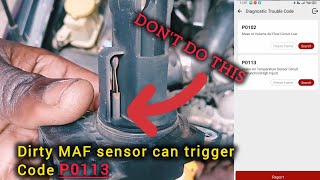
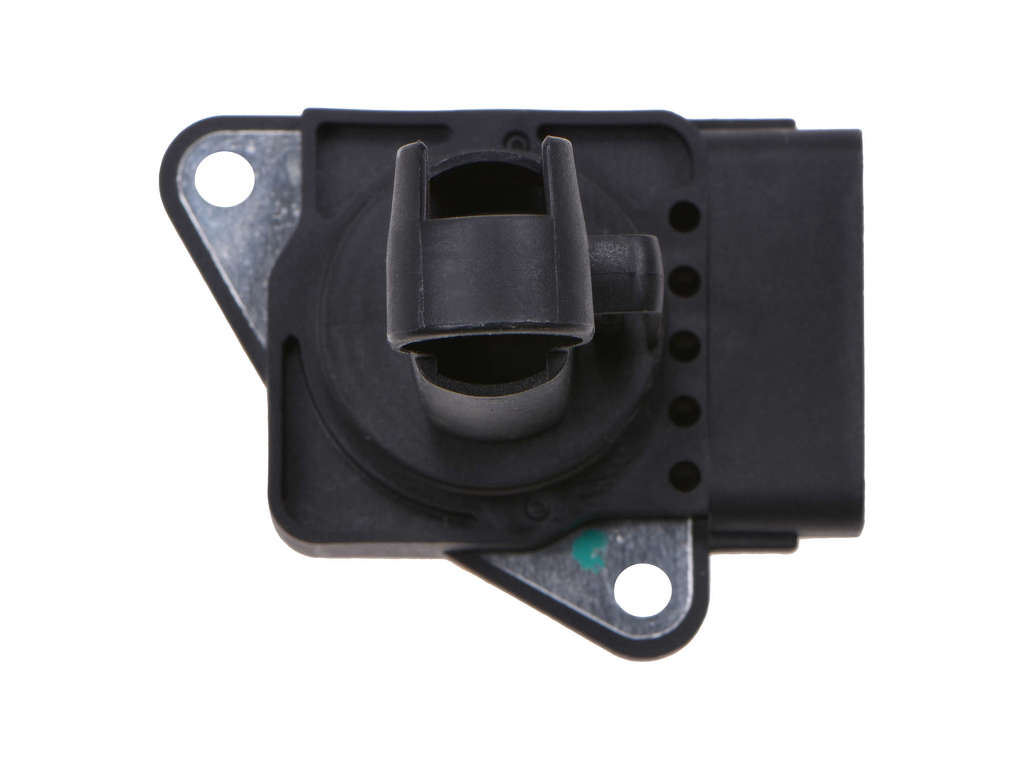
How to confirm: Visually inspect the sensor elements (the thin wires inside the sensor housing). If they appear dirty or coated, cleaning is warranted. This is the most common fix and should be the first step.
Typical fix: Remove the sensor (held by two Phillips screws) and clean it thoroughly with a dedicated MAF sensor cleaner spray. Do not touch the sensor elements or use other chemicals like brake or carb cleaner, which can damage the sensor. Let it air dry completely before reinstalling.
Est. part cost: $10-$15 - Faulty Mass Air Flow (MAF) Sensor 🟡 Medium Probability → Shop Fuel Injection Air Flow Meter If cleaning doesn't resolve the issue, or if the code returns quickly, the sensor's internal electronics may have failed. This is the second most likely cause.
How to confirm: After cleaning, if the code returns, the sensor is likely faulty. A technician can confirm by monitoring the sensor's output (grams/sec) with a scan tool; the reading should increase smoothly with RPM. A flatlined reading on a scan tool graph while the engine is running indicates a failed sensor. Unplugging the sensor may cause the car to run better (using default ECU values), which also points to a bad sensor.
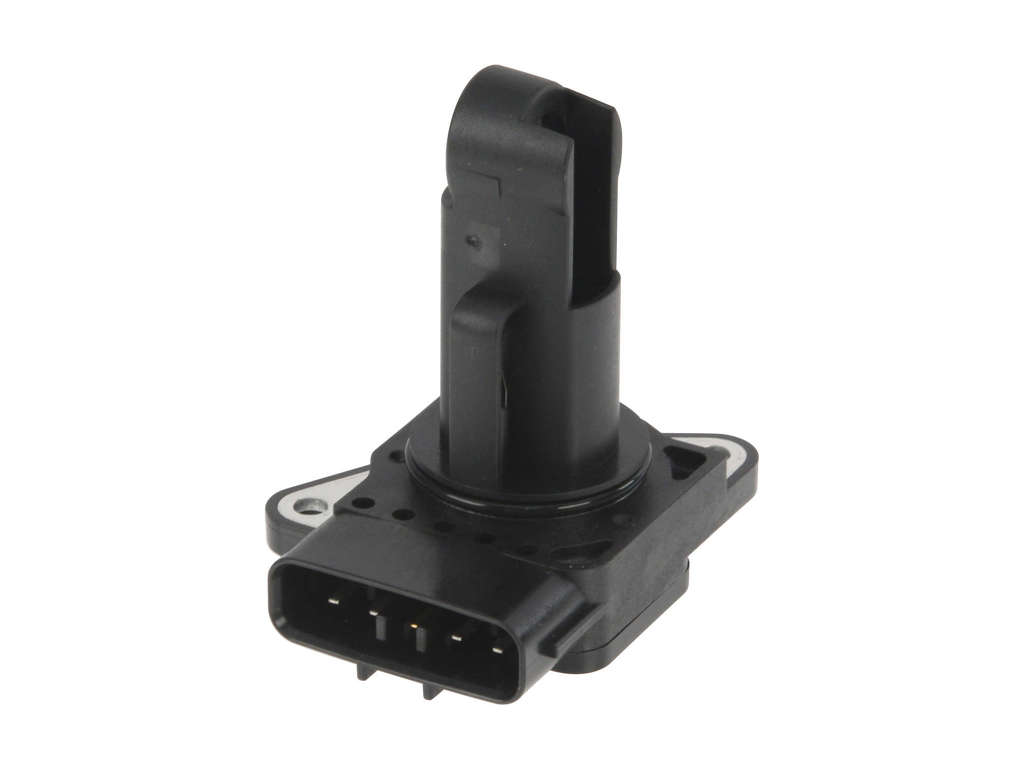
Typical fix: Replace the MAF sensor. It is held in place by two screws in the intake tube. It is highly recommended to use an OEM or high-quality OEM-equivalent brand like Denso or Hitachi, as these Subarus are known to be problematic with cheap aftermarket sensors.
Est. part cost: $70-$220 - Vacuum Leak ⚪ Low Probability The large plastic or rubber intake boot between the MAF sensor and the throttle body can develop cracks over time due to heat and age. This allows unmetered air to enter the engine, which the MAF sensor doesn't measure, causing the ECU to see a discrepancy and throw a code.
How to confirm: Visually inspect the intake boot and all vacuum hoses connected to it for cracks, especially in the ribbed sections. A smoke test is the most effective way to find hidden leaks.
Typical fix: Replace the cracked intake boot or vacuum hose.
Est. part cost: $20-$100 - Damaged Wiring or Connector ⚪ Low Probability
How to confirm: Visually inspect the MAF sensor connector and its wiring for any signs of corrosion, loose pins, or physical damage like melting or fraying. Wiggle the connector with the engine running to see if it affects the idle or scan tool data. A Reddit user reported melting their connector and having to solder a new one, highlighting the importance of checking this area.
Typical fix: Repair the damaged section of wire or replace the connector pigtail. In one documented case, a user with a persistent P0102 on an STI fixed it by shielding a repaired ground wire with foil tape to reduce signal noise.
Est. part cost: $15-$50
Rare But Worth Checking
- Clogged Catalytic Converter: A severely clogged catalytic converter can create enough exhaust backpressure to restrict airflow into the engine, causing the MAF to report a lower-than-normal reading. This is usually accompanied by a severe loss of power, especially at high RPMs, and may be accompanied by a P0420 code.
- Faulty Engine Control Module (ECM): This is extremely rare. The ECM itself could be failing to read the sensor signal correctly. All other possibilities, including wiring and grounds, must be exhausted before considering the ECM as the cause.
Diagnosis Steps
- Check for other stored trouble codes that could provide more context, such as P0113 or P0171.
- Visually inspect the wiring and electrical connector at the MAF sensor for damage, corrosion, or loose pins. A user on Reddit reported chasing a P0102 code after melting their connector.
- Inspect the engine air filter. A severely clogged or improperly seated filter can restrict airflow and should be replaced.
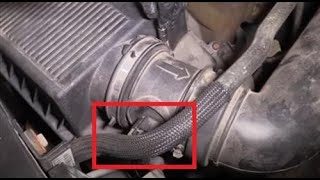
- Remove the MAF sensor from the intake tube. It is typically held by two Phillips head screws. Unplug the electrical connector first.
- Carefully clean the sensor's internal wires using only dedicated MAF sensor cleaner. Spray generously and do not touch the wires. Let it air dry completely for at least 30 minutes before reinstalling.
- Clear the code with a scan tool and test drive the vehicle to see if the code returns. If it does not, the problem is solved.
- If the code returns, inspect the entire intake system between the MAF sensor and the engine for any air leaks (cracked hoses, loose clamps). Pay close attention to the flexible, ribbed sections of the main intake boot.
- With a scan tool, monitor the MAF sensor reading (in g/s) at idle and while revving the engine. The value should be near zero with the engine off, a few g/s at idle, and increase smoothly as RPMs rise. A flatlined or erratic reading points to a bad sensor or wiring issue.
- If no leaks are found and the code persists after cleaning, the MAF sensor is likely faulty and should be replaced. Use an OEM or trusted brand part.
Parts You'll Likely Need
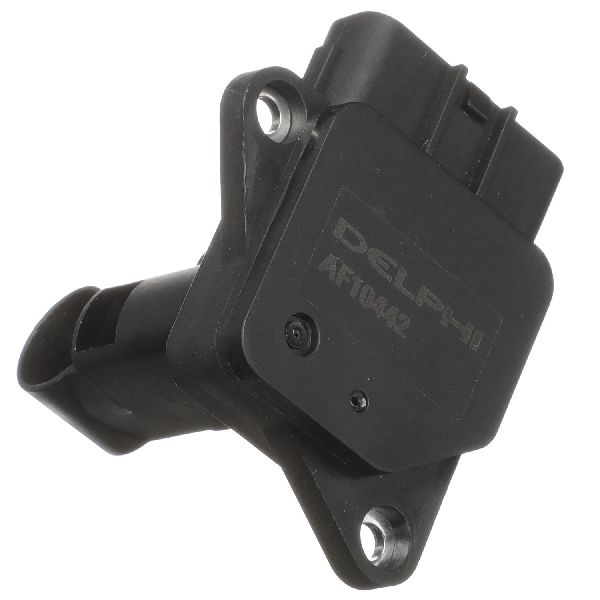
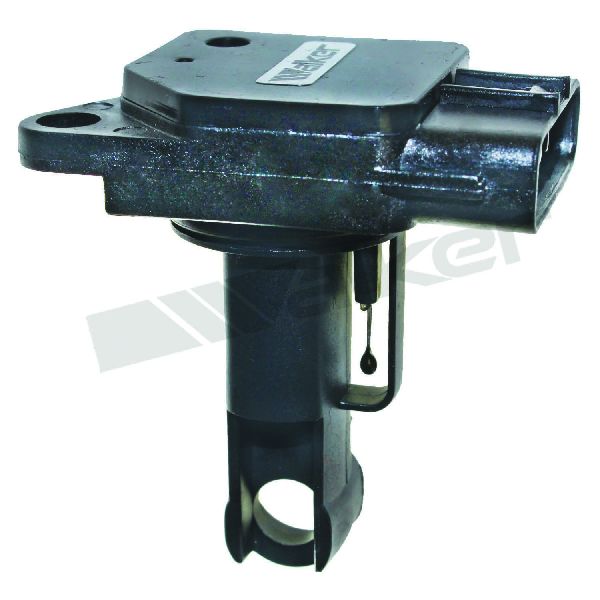
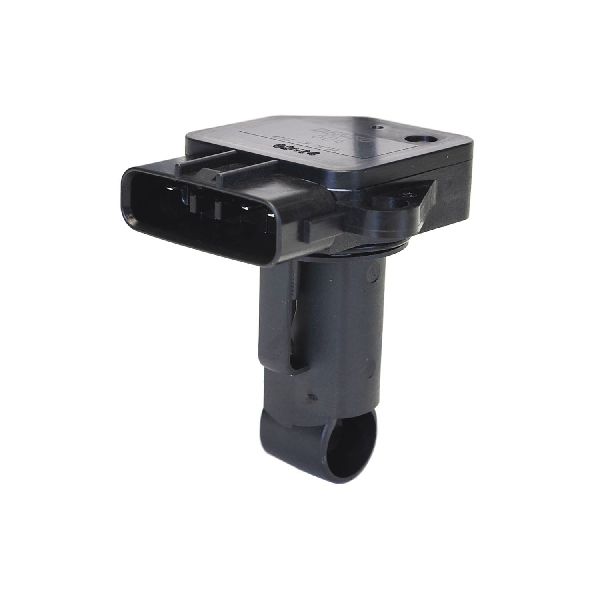
- Mass Air Flow (MAF) Sensor
(OEM #22680AA310)— This is the most likely part to have failed if cleaning the original sensor does not resolve the P0102 code. This part number fits many 2005-2008 non-turbo 2.5L SOHC models. Always verify with VIN.
Trusted brands: Denso (OEM Manufacturer), Hitachi, Subaru (Genuine)
OEM price range: $180-$230
Aftermarket price range: $70-$150 - MAF Sensor Cleaner — This is a required tool for the most common, and least expensive, fix. A dirty sensor is the number one cause of P0102.
Trusted brands: CRC Mass Air Flow Sensor Cleaner, Liqui Moly Air Flow Sensor Cleaner
Aftermarket price range: $10-$15
Related Codes That Often Appear With This One
- P0171 — System Too Lean - If there is a vacuum leak after the MAF sensor, unmetered air enters the engine, causing a lean condition that the MAF sensor itself does not account for.
- P0101 — Mass Air Flow (MAF) Circuit Range/Performance - This code often appears with P0102 as it indicates the sensor's readings are not plausible given other engine parameters like throttle position and RPM.
- P0113 — Intake Air Temperature Sensor Circuit High - On this platform, the IAT sensor is integrated into the MAF sensor assembly. A fault in the MAF sensor or its connector can trigger both codes simultaneously.
Platform-Specific Known Issues
- Stalling When Coming to a Stop: A common complaint from owners on Reddit is that the car will run fine at speed but will stall or threaten to stall whenever RPMs drop below 1k, such as when stopping at a light or driving slowly through a parking lot. This often happens after the engine is fully warmed up. This symptom strongly points to a faulty MAF sensor even after cleaning has been attempted.
- Melted or Damaged MAF Connector: In at least one documented case on Reddit, an owner accidentally melted the MAF sensor's plastic electrical connector. Even after soldering on a new pigtail, issues can persist if the repair is not perfect, highlighting the sensitivity of the circuit.
Mechanic-Grade Diagnostic Values
- MAF Sensor Signal Voltage at Connector — expected: Should be below 0.2V with key on, engine off. The service manual flags a P0102 if the voltage is below this threshold.. Failure: A reading of 0V indicates a complete circuit failure (open or short to ground).
- MAF Sensor Power Supply Voltage — expected: Approximately 12V (battery voltage) at the center pin (Pin 3) of the disconnected MAF sensor connector with the key on, engine off.. Failure: No voltage or significantly low voltage indicates an open in the power supply wire from the main relay or a blown fuse.
- MAF Sensor Live Data (Scan Tool) — expected: At idle, a 2.5L engine should read between 2 to 7 grams/second (g/s). This should rise smoothly to 15-25 g/s at 2500 RPM.. Failure: A reading that is flatlined at 0 g/s, does not increase with RPM, or is erratic points to a faulty sensor or wiring issue.
Scan Tool Commands That Help
- Subaru Select Monitor (SSM): Current Data Display & Save — Used to view live data parameters like 'Mass Air Flow' in g/s and 'Coolant Temp' to verify sensor functionality under different engine loads. It is the dealership-level tool for diagnosis.
- Subaru Select Monitor (SSM): Read Diagnostic Trouble Code (DTC) — To read current and historical fault codes. The SSM can provide more detailed information and trip counters than a generic OBD-II scanner.
Wiring & Ground Locations
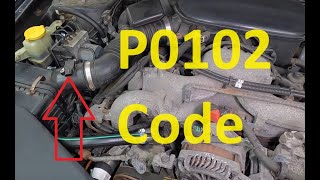
- MAF Sensor Connector (B3) — Located in the air intake duct between the air filter box and the throttle body.. This is the primary connection point for the sensor. A P0102 is a circuit code, so checking for power, ground, and signal at these pins is a critical diagnostic step.
- MAF Sensor Power (Pin 3) — The center pin of the 5-pin connector. It is a White wire on the 2005-2009 2.5L non-turbo Outback.. This pin supplies battery voltage to the sensor from the main relay. Loss of power here will cause a P0102 and a 0V/0 g/s reading.
- MAF Sensor Ground (Pin 2) — Pin 2 of the 5-pin connector. This is a primary ground for the sensor electronics.. A poor ground connection can cause erratic or low voltage readings, directly leading to a P0102 code. Checking for continuity to chassis ground from this pin is essential.
- Engine Ground (GE) — On the right rear of the engine block.. This is a main grounding point for many engine sensors. Corrosion or a loose connection here can cause widespread electrical issues, including sensor circuit codes like P0102.
Real Owner Repair Stories
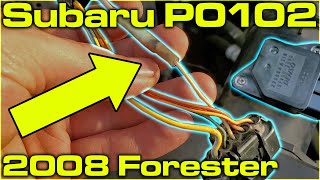
- MrSubaru1387 on YouTube (2008 Subaru Forester 2.5L (Similar EJ25 engine and MAF system)) — P0102 code, random stalling, poor performance.
❌ Tried (didn't work) A new Denso MAF sensor was already installed by the owner, but the problem persisted.
✅ What actually fixed it The technician found 0V power at the MAF connector. Upon inspecting the harness, a previous, poorly-done splice in the power wire was discovered. Repairing the bad splice restored power to the sensor and fixed the P0102 code. - Reddit user r/WRX (2017 Subaru WRX) — Persistent P0102 that would not clear, stalling, no-start.
❌ Tried (didn't work) Replacing the MAF sensor., Resetting the ECU by disconnecting the battery.
✅ What actually fixed it The issue was a faulty aftermarket intake's MAF extension harness. Replacing the extension harness resolved the code and drivability issues. - NHTSA ODI #11523727 — An owner reported a no-start condition where an OBD reader retrieved codes P0177, P0174, P0102, and P0113.
✅ What actually fixed it The dealer diagnosed the vehicle and determined that both the fuel pump and the mass airflow sensor required replacement.
Model Year Variations Within This Range
- 2006-2009: For 2006, the 2.5L SOHC engine (EJ253) received the i-Active Valve Lift System (AVLS), which increased horsepower to 175. While the MAF sensor part number remained the same, the ECU's expected airflow values and fuel mapping are different from the 2005 non-AVLS engine.
Diagnostic Flowchart
Used vs. New Parts: Buying Guide for This Vehicle
When a used part is the smart pick: A used OEM MAF sensor from a reputable salvage yard can be a cost-effective option if the donor vehicle is low-mileage and has no signs of front-end damage or engine fire. Given the sensitivity of these vehicles to aftermarket sensors, a used OEM part is often a better choice than a new, cheap aftermarket one.
Donor-vehicle mileage cap: roughly under 80000 miles for the part to have meaningful remaining life.
What to inspect on the donor part:
- Verify the part number on the sensor (22680AA310) matches exactly.
- Inspect the connector pins for corrosion or damage.
- Look at the sensor elements (hot wire) to ensure they are not physically broken or caked in debris.
- Ask for the VIN of the donor car to verify its year and engine type.
OEM-only on this vehicle (don't cheap out):
- Mass Air Flow Sensor
Aftermarket brands forum-validated for this vehicle:
- Denso (OEM manufacturer)
- Hitachi
Brands owners have reported issues with on this vehicle:
- Unbranded or generic 'white box' sensors from online marketplaces are frequently reported as being poorly calibrated and causing persistent codes or poor performance right out of the box.
Real Owner Stories
Aggregated from forums and TSBs cited above. Mileages and costs reflect what owners reported in those sources.
2006 Subaru Forester 2.5L
Symptoms: The car stalls at low RPMs when it's warm, even after the MAF sensor was cleaned.
What fixed it: A dealer technician suggested that the MAF/IAT sensor had failed and required replacement, as cleaning was not sufficient.
Source hint: Reddit r/subaru thread titled 'P0102 and P0113 car stalls at low RPMs'
2008 Subaru Outback 2.5L
Symptoms: A persistent P0102 code after accidentally melting the MAF sensor connector.
What fixed it: The root cause was identified as a wiring/connector issue. The fix involved properly repairing the damaged connector and wiring from the attempt to solder on a new one.
Source hint: Reddit r/subaru thread titled 'Would crossing these two wires cause my P0102 code?'
NHTSA Reported Incident
Symptoms: An owner reported a no-start condition and used an OBD reader to find codes P0177, P0174, P0102, and P0113 (NHTSA ODI #11523727).
What fixed it: After being towed to a dealer, the vehicle was diagnosed with a failed fuel pump and a faulty mass airflow sensor, both of which required replacement.
Source hint: NHTSA ODI #11523727
Related OBD-II Codes
Frequently Asked Questions
Can I use a cheap aftermarket MAF sensor from an auto parts store for my 2007 Outback?
My Outback is stalling at stop lights. Is it safe to clean the MAF sensor myself, and what should I use?
I just installed an oiled air filter on my Subaru Outback. Could this cause a P0102 code?
I've heard that unplugging the MAF sensor on my Outback can help diagnose a P0102. Is this true?
My 2008 Outback runs fine on the highway but stalls when I come to a stop. Is this a common P0102 symptom for this car?
Besides the MAF sensor itself, what else should I check on my Outback for a P0102 code?
Helpful Videos
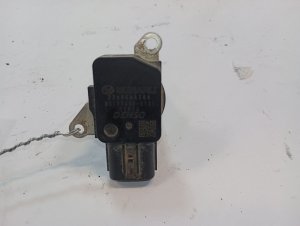
Used OEM Parts in Stock
New Aftermarket Parts Available


The information in this article is provided for general reference and educational purposes only. Vehicle specifications, procedures, and part compatibility can vary by production date, trim level, and region. Always consult your vehicle's factory service manual and verify part numbers before purchasing or performing repairs. Safety-critical components such as airbags, seat belts, and braking systems should be installed by a qualified professional.
- Subaru Outback:
- 🧭 Diagnostic Flowchart
- 🎬 Helpful Videos
- 🛍️ Shop This Part
- What's Unique About the 2005-2009 Subaru Outback
- Symptoms You May Notice
- Most Likely Causes
- Rare But Worth Checking
- Diagnosis Steps
- Parts You'll Likely Need
- Related Codes That Often Appear With This One
- Platform-Specific Known Issues
- Mechanic-Grade Diagnostic Values
- Scan Tool Commands That Help
- Wiring & Ground Locations
- Real Owner Repair Stories
- Model Year Variations Within This Range
- Used vs. New Parts: Buying Guide for This Vehicle
- Real Owner Stories
- 2006 Subaru Forester 2.5L
- 2008 Subaru Outback 2.5L
- NHTSA Reported Incident
- Related OBD-II Codes
- Frequently Asked Questions
- 🎟️ Get 5% Off