

P0102 on 2013-2018 Toyota RAV4 2.5L: Causes and Fixes for MAF Circuit Low
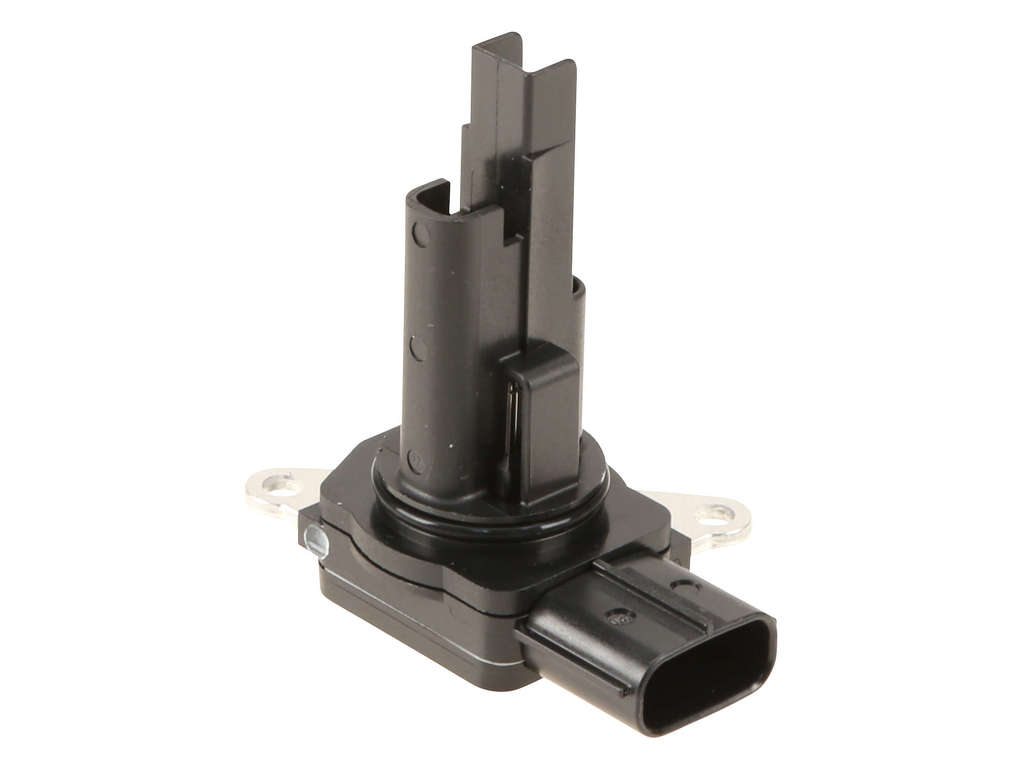
On a 2013-2018 RAV4, code P0102 is most often caused by a dirty Mass Air Flow (MAF) sensor. Cleaning it with a dedicated spray cleaner is the most likely fix and costs under $15. If that fails, a replacement Denso sensor is the next step. The code indicates the sensor's voltage signal to the ECU is below the expected 0.2V threshold.
- Start by cleaning the MAF sensor with dedicated cleaner; this is a 15-minute job that fixes the problem in most cases.
- Never touch the delicate wires inside the MAF sensor with your fingers or any tools.
- If you recently changed your air filter, double-check that you plugged the MAF sensor connector back in securely.
- If cleaning doesn't work, replacing the sensor with a quality part (Denso is OEM) is the next logical step and is also a very easy DIY task.
- Always inspect the air intake hose for cracks or loose clamps, as unmetered air can also cause this code.
What's Unique About the 2013-2018 Toyota RAV4
For the 2013-2018 (XA40 generation) RAV4 with the 2AR-FE engine, this code is very common and overwhelmingly points to a contaminated MAF sensor. The sensor is extremely easy to access, located directly on top of the air filter housing and held by two Phillips screws. A unique Toyota quirk is that if the engine is started even once with the MAF sensor unplugged, it can set a 'permanent' P0102 code that may not clear with a standard scanner or battery disconnect. This permanent code is only cleared after the onboard diagnostic monitor for the MAF circuit runs successfully during a specific drive cycle, confirming the fault is gone.
Symptoms You May Notice
- Check Engine Light is on
- Rough or unstable idle, sometimes hunting up and down
- Engine hesitation or stumbling during acceleration
- Reduced engine power or entering 'limp mode'
- Poor fuel economy
- Occasional stalling, especially when coming to a stop or at idle
- Black smoke from the exhaust in some cases
- Hard starting
- Replacing oxygen (O2) sensors. While a bad MAF sensor can affect the air-fuel ratio and potentially trigger related O2 sensor codes, P0102 specifically points to the MAF circuit, which should be diagnosed first.
Most Likely Causes
- Dirty or Contaminated MAF Sensor 🔴 High Probability → Shop Fuel Injection Air Flow Meter The hot-wire design of the Denso sensor is sensitive to oil vapors from aftermarket air filters (like K&N) or fine dust that gets past the stock filter, which can bake onto the sensing element and insulate it.
How to confirm: Visually inspect the two small sensor wires inside the MAF sensor housing. If they appear coated in grime or debris, they need cleaning. On a scan tool, the MAF reading at idle may be erratically low or flat.
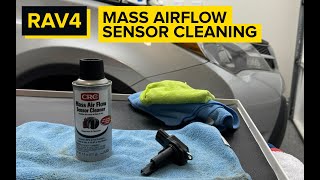
Typical fix: Remove the sensor and clean it thoroughly with a dedicated Mass Air Flow sensor cleaner spray. 🎬 Watch: How to safely clean your RAV4's MAF sensor. Do not use brake or carb cleaner, as they can damage the plastics and sensitive components. Do not touch the wires with any tools or your fingers.
Est. part cost: $10-$15 for a can of CRC MAF cleaner. - Faulty Mass Air Flow (MAF) Sensor 🟡 Medium Probability → Shop Fuel Injection Air Flow Meter While reliable, the sensor can fail electronically over time, especially after many heat cycles. Sometimes cleaning is not enough to restore function if the internal circuitry is damaged.
How to confirm: If cleaning the sensor does not resolve the code and symptoms, and there are no vacuum leaks or wiring issues, the sensor itself is likely faulty. A professional can test the sensor's voltage output with a multimeter or watch its live data on a scan tool to confirm erratic readings or a signal that does not respond to changes in RPM.
Typical fix: Replace the MAF sensor. It is held in by two screws and is a simple DIY job. 🎬 See this walkthrough for replacing a faulty MAF sensor. Always opt for an OEM Denso part for reliability.
Est. part cost: $150-$200 for an OEM (Denso) sensor, $40-$80 for an aftermarket brand. - Vacuum Leak in the Air Intake System ⚪ Low Probability → Shop Engine Air Intake Resonator The plastic and rubber components of the intake tube can become brittle and crack over time, allowing unmetered air to enter the engine after the MAF sensor. This is a common cause when P0102 is accompanied by a P0171 (System Too Lean) code.
How to confirm: Visually inspect the entire air intake duct between the MAF sensor and the engine's throttle body for cracks, splits, or loose clamps. Listen for a hissing sound with the engine running. A smoke test is the most definitive way to find a leak.
Typical fix: Repair the source of the leak, which usually involves replacing a cracked intake boot or tightening a loose clamp.
Est. part cost: $50-$100 for a new intake boot. - Clogged Engine Air Filter ⚪ Low Probability → Shop Air Cleaner Assembly
How to confirm: Remove and inspect the engine air filter. If it is visibly black, filled with debris, or has not been changed in a long time, it can restrict airflow enough to contribute to this code.
Typical fix: Replace the engine air filter.
Est. part cost: $20-$40
Rare But Worth Checking
- Damaged Wiring or Connector: Check if the connector was left unplugged after an air filter change, a very common mistake. Also, inspect the wires leading to the MAF sensor for any signs of fraying, corrosion in the connector pins, or damage, which could cause a short or open circuit.
- Faulty ECM (Engine Control Module): This is extremely rare. The ECM should only be considered as a potential cause after all other possibilities (sensor, wiring, leaks) have been exhaustively ruled out by a professional using advanced diagnostic tools.
Diagnosis Steps
- Read the code with an OBD-II scanner to confirm P0102 is present. Note any other codes like P0113 or P0171.
- Visually inspect the MAF sensor connector to ensure it is securely plugged in and the locking tab is engaged.
- Inspect the air intake hose between the air filter box and the throttle body for any cracks, tears, or loose connections. Ensure all clamps are tight.
- Remove and inspect the engine air filter. Replace if it is dirty or clogged.
- Carefully remove the MAF sensor (two Phillips screws).
- Spray the internal wires and components of the sensor with 10-15 short bursts of a dedicated MAF sensor cleaner. Do not touch the delicate hot wires.
- Allow the sensor to air dry completely for at least 15-20 minutes before reinstalling. Do not use compressed air to speed this up.
- Reinstall the sensor, clear the code with the scanner, and perform a test drive. If the code was 'permanent', a specific drive cycle may be needed for the ECU to self-clear the code after confirming the repair.
- If the code returns, check the wiring. With the key on and engine off, back-probe the connector to verify battery voltage on the power wire and a good ground. The signal wire should have a specific voltage that changes with airflow.
- If wiring is good and cleaning failed, the MAF sensor itself is likely faulty and should be replaced with a genuine Denso part.
Parts You'll Likely Need
- Mass Air Flow (MAF) Sensor
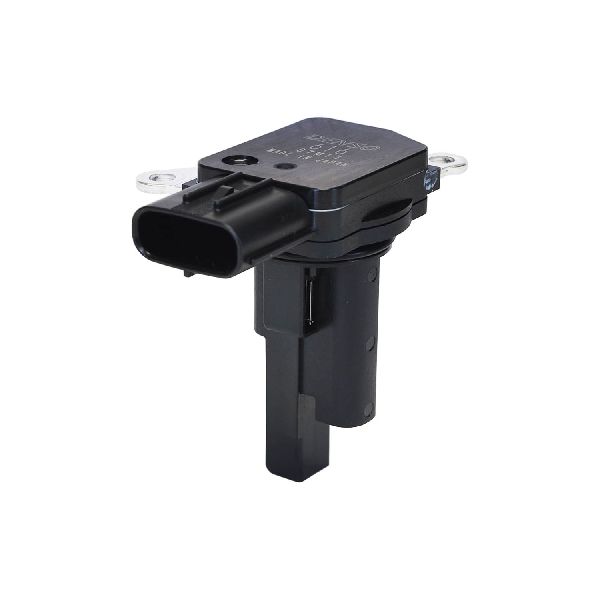
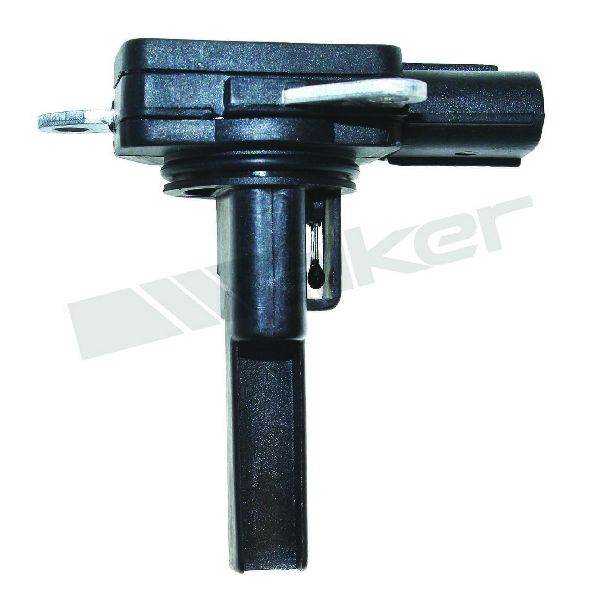
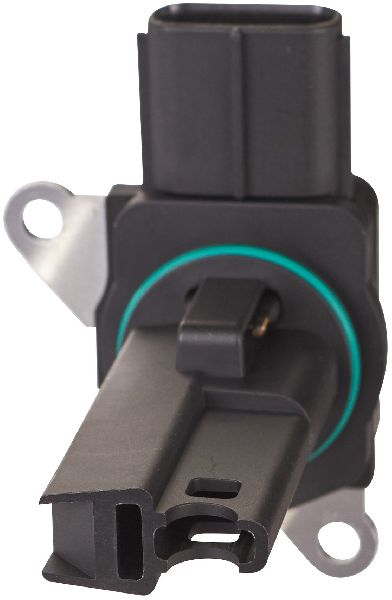
(OEM #22204-0V010 (superseded by 22204-0V020, 22204-36010))— This is the most common part to fail if cleaning the original sensor does not resolve the P0102 code.
Trusted brands: Denso (OEM), Walker, SKP, Spectra Premium
OEM price range: $150-$200
Aftermarket price range: $40-$80 - Mass Air Flow Sensor Cleaner — This is the first and most crucial step in fixing a P0102 code, as a dirty sensor is the most frequent cause.
Trusted brands: CRC, WD-40 Specialist
Aftermarket price range: $10-$15
Related Codes That Often Appear With This One
- P0113 — The Intake Air Temperature (IAT) sensor is integrated into the same housing as the MAF sensor on the 2AR-FE engine. A fault in the MAF sensor or its connector, or even just unplugging it, can trigger a code for the IAT circuit as well.
- P0171 — A 'System Too Lean' code is a strong indicator of a vacuum leak when seen with P0102. Unmetered air enters the engine after the MAF sensor, so the sensor reports low airflow (P0102) while the oxygen sensors detect the excess air from the lean mixture, triggering the P0171 code.
Technical Service Bulletins (TSBs) & Recalls
- T-SB-0023-15 Rev1: While not related to P0102, this TSB addresses a common torque converter shudder on 2013-2015 RAV4s, a valuable piece of information for owners of this vehicle. The fix involves an ECM reprogram and potentially a new torque converter.
Platform-Specific Known Issues
- Permanent Code After Unplugging Sensor: A user on PriusChat with a similar Toyota system noted that a P0102 code became 'permanent' after they forgot to plug the MAF sensor back in. The check engine light went away after plugging it in and clearing codes, but the permanent code remained stored until a specific, and sometimes difficult to achieve, drive cycle was completed that allowed the MAF monitor to run and pass its self-test. 🎬 Watch: How to clear a stubborn permanent P0102 code.
Mechanic-Grade Diagnostic Values
- MAF Sensor Live Data (Scan Tool) — expected: 2 to 7 g/s at normal operating temperature idle. Should rise to 15 to 25 g/s at 2500 RPM.. Failure: A reading near 0 g/s, or a reading that does not increase with RPM, indicates a fault.
- MAF Sensor Live Data (Scan Tool, KOEO) — expected: Less than 0.70 g/s with Key On, Engine Off (after waiting 30 seconds).. Failure: A value higher than 0.70 g/s with the engine off points to an internal sensor fault.
- MAF Sensor Signal Wire Voltage (Multimeter) — expected: Approximately 0.9V to 1.2V at warm idle. Voltage should increase smoothly with acceleration.. Failure: Voltage is stuck low (near 0V) or does not respond to throttle changes.
- IAT Sensor Resistance (within MAF housing) — expected: Approximately 2.21kΩ to 2.69kΩ at 20°C (68°F).. Failure: Resistance is significantly outside this range, indicating a failed IAT component which can sometimes trigger related MAF codes.
Hidden / Shadow Codes Worth Checking
- Permanent DTC (P-code): If the MAF sensor is unplugged and the engine is started, a 'permanent' P0102 code can be stored that won't be cleared by a standard scanner or battery disconnect. It does not keep the Check Engine Light on if the fault is fixed, but will cause a smog check failure. (see via Some advanced OBD-II scanners can view 'Permanent DTCs'. It will also be detected during an official emissions (smog) test.)
Scan Tool Commands That Help
- Toyota Techstream: Data List -> Primary -> MAF — This is the primary function to monitor the live g/s reading from the MAF sensor to check if it's responding to engine RPM changes correctly.
- Toyota Techstream: Active Test -> Control the Injection Mode — While not a direct MAF test, this allows a technician to alter fuel injection and observe how it affects air/fuel ratio sensors, which can help differentiate between a fuel delivery problem and an air measurement (MAF) problem.
Wiring & Ground Locations
- MAF Connector (5-pin) — On the MAF sensor itself, which is located on the engine air filter housing.. This is the central connection point. The pins for power (B+), ground (E2G), and the MAF signal (VG) must all have good continuity. The other two pins are for the integrated IAT sensor (THA, E2).
- Ground Point 'BB' — On the left rear of the engine block/cylinder head.. This is a primary engine ground point. A loose or corroded connection here can cause sensor ground issues, leading to erratic readings and codes like P0102.
- Ground Point 'EA' / 'EB' — Typically found on the inner fender apron in the engine bay, near the battery or fuse box.. These are chassis ground points for the main engine wiring harness. The ECM and its sensors rely on these grounds. A problem here can cause widespread electrical issues, including sensor circuit codes.
Real Owner Repair Stories
- YouTube video by Serhii Chernetskyi (2013-2018 Toyota RAV4) — Check Engine Light with code P0102, erratic MAF signal on scan tool.
❌ Tried (didn't work) Visual inspection of intake system (no leaks found), Electrical testing confirmed power and ground to the sensor were good.
✅ What actually fixed it The sensing element had visible debris buildup. Cleaning the MAF sensor with a dedicated MAF sensor cleaner and clearing the codes resolved the issue completely. The check engine light did not return. - YouTube video by 'How to fix a permanent P0102 code' (Toyota/Lexus vehicle (demonstrated on a Lexus RX, but applies to RAV4)) — No Check Engine Light, but failed smog test due to a stored 'permanent' P0102 code.
❌ Tried (didn't work) Using a standard OBD2 scanner to clear codes., Disconnecting the battery for 15-20 minutes.
✅ What actually fixed it The permanent code was cleared by performing a specific drive cycle: driving the car at around 50 MPH for a period, then flooring the accelerator to push the RPM over 4,000. This forces the MAF monitor to run and pass, which then clears the permanent code. - NHTSA ODI #11296751 — An owner of a Toyota vehicle with a similar electrical architecture reported that error codes P0113 and P0102, along with warning messages for the check engine light and ICS malfunction, appeared suddenly when starting the vehicle.
OEM Part Supersession History
22204-0V010→22204-0V020, then 22204-36010— Standard part revision and consolidation by Toyota.
Heads up: The listed part numbers are generally interchangeable for this application. However, always verify with a dealer using the vehicle's VIN, as some early/late production models can have exceptions.
Model Year Variations Within This Range
- 2016-2018: A significant facelift occurred for the 2016 model year. While the 2AR-FE engine and MAF sensor part remained the same, the refresh introduced Toyota Safety Sense (on GXL/Limited trims), improved cabin insulation, and other electronic changes. This makes wiring diagrams and module locations potentially different for 2013-2015 vs 2016-2018 models.
Diagnostic Flowchart
Other Known Issues on This Vehicle
Issues unrelated to this code that are worth knowing about as an owner of this generation:
- Torque Converter Shudder 🟠 Medium — Common on 2013-2015 models, typically felt as a brief shudder under light load between 25-50 mph. (Ref: T-SB-0023-15 Rev1)
- Infotainment/Navigation Screen Issues 🟡 Low — Frequently reported issue involving screen glare, unresponsiveness, or the system rebooting. Affects multiple model years.
- Brake Squeal/Grind 🟡 Low — Some owners report squeaking or grinding from front or rear brakes. Toyota issued a TSB in 2016 for front brakes on some models. (Ref: TSB issued in 2016 (front brakes), TSB #T-TT-0636-20 (TCMC pads))
- Battery Hold-Down Short Circuit Risk 🔴 High — A recall was issued for 2013-2018 models because certain replacement 12V batteries could shift and contact the hold-down bracket, causing a short circuit and fire risk. (Ref: NHTSA Recall)
Used vs. New Parts: Buying Guide for This Vehicle
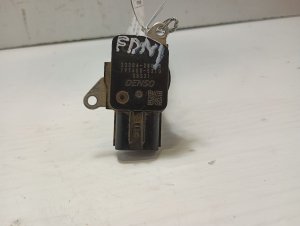
When a used part is the smart pick: A used OEM Denso MAF sensor from a reputable salvage yard is a reasonable choice for this repair. The part is not a high-wear item and failures are often due to contamination rather than electronic burnout. Given the high cost of a new OEM sensor, a used part offers significant savings.
Donor-vehicle mileage cap: roughly under 80000 miles for the part to have meaningful remaining life.
What to inspect on the donor part:
- Ensure the donor vehicle was not in a front-end collision that could have damaged the airbox or sensor.
- Visually inspect the sensor's internal wires through the mesh screen; avoid any that look physically damaged, corroded, or heavily coated in oil.
- Ask for the donor vehicle's VIN to verify it had the same 2AR-FE engine.
- Prefer parts from sellers that offer a short warranty (e.g., 30-90 days) to protect against a dead-on-arrival part.
OEM-only on this vehicle (don't cheap out):
- Mass Air Flow Sensor
Aftermarket brands forum-validated for this vehicle:
- Denso (This is the Original Equipment Manufacturer)
Brands owners have reported issues with on this vehicle:
- Unnamed, no-brand, or ultra-cheap sensors from online marketplaces are highly likely to be poorly calibrated, fail quickly, or be dead on arrival. For this specific part, the cost savings are not worth the high probability of the code returning.
Real Owner Stories
Aggregated from forums and TSBs cited above. Mileages and costs reflect what owners reported in those sources.
2011 Toyota RAV4 2AR-FE 2.5L
Symptoms: The owner experienced P0102 after attempting to fix other lean codes.
What fixed it: Cleaning the sensor and checking for vacuum leaks were confirmed as the primary successful diagnostic steps.
Source hint: Reddit r/MechanicAdvice - '2011 Rav4 code P0102'
2013-2018 Toyota RAV4 (similar Toyota system)
Symptoms: The check engine light remained on with a 'permanent' status even after the sensor was plugged back in and codes were cleared.
What fixed it: The code required the computer to run its own internal checks over several drive cycles to clear the permanent status.
Source hint: PriusChat - 'Reset "permanent" p0102'
Toyota Owner (NHTSA ODI #11296751)
Symptoms: The owner reported that warning messages for the check engine light and ICS malfunction appeared alongside error codes P0113 and P0102 when starting the vehicle.
What fixed it: Diagnostic records indicate these codes often appear together when the MAF/IAT circuit is disrupted.
Source hint: NHTSA ODI #11296751
Related OBD-II Codes
Frequently Asked Questions
Does T-SB-0023-15 Rev1 apply to my 2013-2018 Toyota RAV4 P0102 issue?
Can I use any cleaner to fix the MAF sensor on my 2AR-FE engine?
Why did a 'permanent' P0102 code stay on my RAV4 even after I plugged the sensor back in?
Is there a specific brand of MAF sensor I should buy for the 2013-2018 RAV4?
Could my aftermarket K&N air filter be causing the P0102 code?
What should I check if P0102 is accompanied by P0171 on my RAV4?
Helpful Videos
Used OEM Parts in Stock
New Aftermarket Parts Available


The information in this article is provided for general reference and educational purposes only. Vehicle specifications, procedures, and part compatibility can vary by production date, trim level, and region. Always consult your vehicle's factory service manual and verify part numbers before purchasing or performing repairs. Safety-critical components such as airbags, seat belts, and braking systems should be installed by a qualified professional.
- Toyota RAV4:
- 🧭 Diagnostic Flowchart
- 🎬 Helpful Videos
- 🛍️ Shop This Part
- What's Unique About the 2013-2018 Toyota RAV4
- Symptoms You May Notice
- Most Likely Causes
- Rare But Worth Checking
- Diagnosis Steps
- Parts You'll Likely Need
- Related Codes That Often Appear With This One
- Technical Service Bulletins (TSBs) & Recalls
- Platform-Specific Known Issues
- Mechanic-Grade Diagnostic Values
- Hidden / Shadow Codes Worth Checking
- Scan Tool Commands That Help
- Wiring & Ground Locations
- Real Owner Repair Stories
- OEM Part Supersession History
- Model Year Variations Within This Range
- Other Known Issues on This Vehicle
- Used vs. New Parts: Buying Guide for This Vehicle
- Real Owner Stories
- 2011 Toyota RAV4 2AR-FE 2.5L
- 2013-2018 Toyota RAV4 (similar Toyota system)
- Toyota Owner (NHTSA ODI #11296751)
- Related OBD-II Codes
- Frequently Asked Questions
- 🎟️ Get 5% Off