

P0102 on 2004-2012 Volvo S40 T5: MAF Circuit Low Causes and Fixes
For a 2004-2012 Volvo S40 T5, code P0102 most often indicates a dirty or failed Mass Airflow (MAF) sensor. Cleaning the sensor with a dedicated cleaner is a common first step. If that fails, replacing the sensor, typically a Bosch unit (OEM P/N: 8692624), is the most likely fix. Always check for vacuum leaks and ensure the air filter is clean before replacing parts.
- P0102 on your S40 T5 means the MAF sensor is sending a low signal.
- The most common fix is cleaning the MAF sensor with a special cleaner. Do not use other chemicals.
- If cleaning fails, the next step is usually replacing the MAF sensor. Use a quality brand like Bosch for best results.
- Before replacing parts, always check for simple issues like a dirty air filter or cracked/loose intake hoses.
- Symptoms like rough idle, stalling, and poor acceleration are common with this code.
What's Unique About the 2004-2012 Volvo S40
The 2.5L T5 engine in the second-generation (P1 platform) S40 is a turbocharged unit that is sensitive to air metering. While the P0102 code is common across many brands, on this Volvo platform, it's frequently a straightforward issue with the MAF sensor itself becoming dirty or failing. Owners often find that simply cleaning the sensor resolves the issue, but using a quality OEM-spec sensor (like Bosch) is critical if replacement is needed, as these engines can be finicky with cheaper aftermarket parts. A related issue on these engines is the PCV system; a clogged PCV can alter crankcase pressures and potentially affect intake readings or even cause oil to be drawn into the intake, contaminating the MAF sensor.
Generation note: The 2004-2012 Volvo S40 belongs to a single generation, often referred to as the P1 platform, which began with the 2004.5 model year. The diagnosis and common fixes for P0102 are consistent across this entire year range for the T5 engine.
Symptoms You May Notice
- Check Engine Light is on.
- Engine runs rough, especially at idle.
- Hesitation or jerking during acceleration.
- Stalling, sometimes immediately after starting or when coming to a stop.
- Reduced engine power or 'limp mode'.
- Poor fuel economy.
- Black smoke from the exhaust if the engine runs too rich.
- Hard starting.
- Replacing the oxygen (O2) sensors. While a bad MAF can cause fuel trim issues, the P0102 code points directly to the MAF circuit, which should be the primary focus.
- Replacing the throttle body. While throttle body issues can cause similar symptoms, they typically generate different trouble codes.
- Ignoring a faulty PCV system. A significant vacuum leak from a failed PCV diaphragm can mimic a bad MAF sensor and should be investigated, especially if a whistling noise is present.
Most Likely Causes
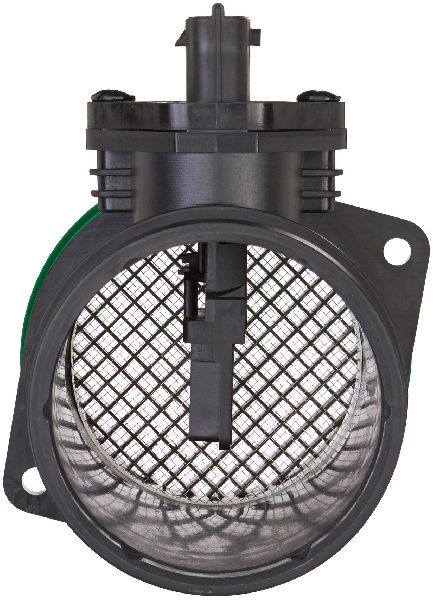
- Dirty or Contaminated MAF Sensor 🔴 High Probability → Shop Fuel Injection Air Flow Meter The MAF sensor uses a hot wire/film to measure airflow, which can become coated with dirt, oil from the PCV system, or residue from aftermarket oiled air filters, insulating it and causing incorrect low readings.
How to confirm: Visually inspect the sensor's wire elements. If they appear dirty, cleaning is warranted. Unplugging the MAF sensor may cause the engine's idle to stabilize; if a stalling engine now runs (albeit poorly), it strongly points to a bad sensor.
Typical fix: Remove the sensor and clean it carefully using only dedicated Mass Airflow Sensor cleaner. Do not touch the sensor wires. Let it dry completely before reinstalling.
Est. part cost: $10-$20 for cleaner - Failed Mass Airflow (MAF) Sensor 🔴 High Probability → Shop Fuel Injection Air Flow Meter
How to confirm: If cleaning the sensor does not resolve the code, and the wiring is confirmed to be good, the sensor itself has likely failed internally. A scan tool can monitor the MAF signal voltage; if it's flatlined or doesn't increase with RPM, the sensor is bad. This is the most common resolution after cleaning fails.
Typical fix: Replace the MAF sensor. It is highly recommended to use an OEM (Volvo) or OEM-equivalent (Bosch) part. Cheaper aftermarket sensors are notorious for failing quickly or being dead-on-arrival.
Est. part cost: $150-$250 - Vacuum Leak in the Intake System 🟡 Medium Probability Hoses and intake boots can crack with age and heat, allowing unmetered air to enter the engine after the MAF sensor. A common culprit on the T5 is a failure in the PCV system, particularly the diaphragm on the oil filter housing, which acts as a large vacuum leak.
How to confirm: Visually inspect all intake hoses and vacuum lines between the MAF sensor and the throttle body for cracks, loose clamps, or disconnections. A smoke test is the most effective way to find hidden leaks. A whistling or howling noise at idle strongly suggests a torn PCV diaphragm.
Typical fix: Replace the cracked hose or tighten the loose clamp. If the PCV diaphragm is torn, the entire oil filter housing assembly is typically replaced.
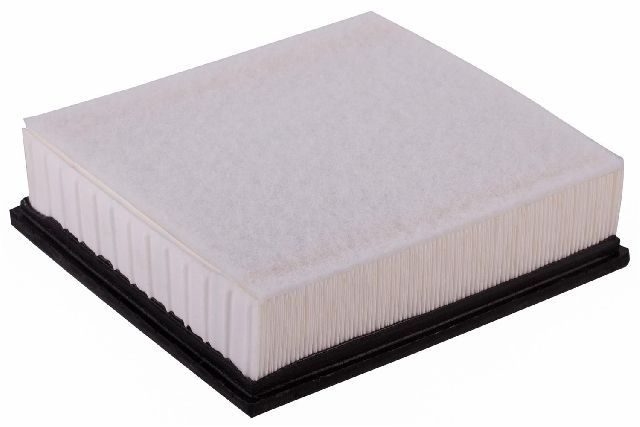
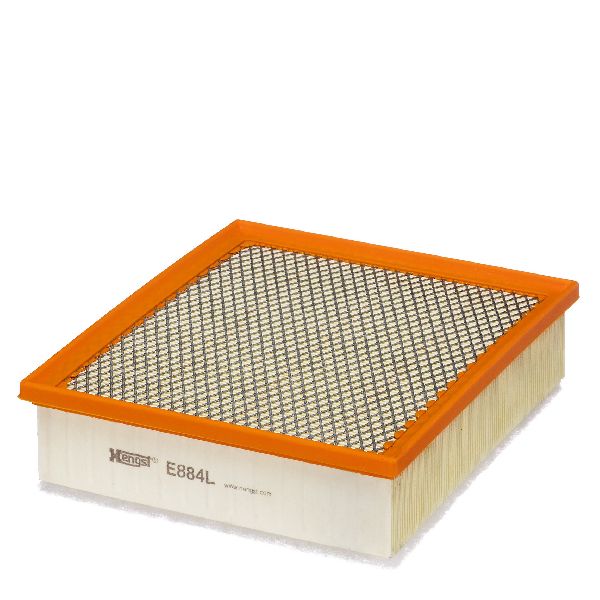
Est. part cost: $20-$300 depending on the hose or if the PCV housing needs replacement - Clogged Engine Air Filter ⚪ Low Probability → Shop Air Cleaner Assembly
How to confirm: Inspect the engine air filter. If it is visibly dirty and clogged, it can restrict airflow enough to cause a low signal from the MAF sensor.
Typical fix: Replace the engine air filter.
Est. part cost: $20-$50 - Wiring or Connector Issue ⚪ Low Probability
How to confirm: Inspect the MAF sensor's electrical connector for corrosion or loose pins. Check the wiring harness for any signs of chafing, melting, or breaks. Use a multimeter to verify power and ground at the connector.
Typical fix: Clean the connector terminals or repair the damaged section of the wiring harness.
Est. part cost: $5-$50 for repair materials
Rare But Worth Checking
- Faulty Engine Control Module (ECM): This is extremely rare. The ECM should only be considered after all other possibilities, including the sensor, wiring, and intake system, have been exhaustively tested and ruled out. In some cases, a trace on the ECM circuit board related to the MAF input can fail, requiring specialized repair.
- Stuck Airbox Pre-Heat Valve: On some older Volvo models, a thermostat-controlled flap in the airbox could get stuck, feeding constant hot air from the exhaust manifold to the intake. This hot air could destroy the MAF sensor. While less documented on the P1 platform, it's a known issue on older Volvos that can cause repeat MAF failures.
Diagnosis Steps
- Read the code with an OBD-II scanner and confirm P0102 is present. Note any other codes.
- Visually inspect the entire air intake tract from the air filter box to the throttle body. Look for disconnected hoses, loose clamps, or cracked intake boots.
- Inspect the engine air filter and replace it if it's dirty or clogged.
- Locate the MAF sensor and inspect its electrical connector and nearby wiring for any visible damage, corrosion, or looseness.
- Carefully remove the MAF sensor. Inspect the sensing elements. If they appear dirty, clean them using only dedicated MAF sensor spray cleaner. Let it dry completely before reinstalling.
- Clear the codes and test drive the vehicle. If the code returns, proceed with further testing.
- Listen for a loud whistling or howling noise at idle. If present, investigate the PCV system for a torn diaphragm. A quick test is to remove the oil dipstick; if the noise changes or stops, the PCV system is the likely culprit.
- Using a scan tool with live data, monitor the MAF sensor reading (usually in grams/second) at idle and while increasing engine RPM. The reading should be stable at idle (around 3-5 g/s) and increase smoothly with RPM. A reading that is stuck, erratic, or doesn't change indicates a likely failed sensor.
- If you don't have a scan tool, you can test the sensor's signal wire with a multimeter. The voltage should increase smoothly from about 0.5-1.0V at idle as you open the throttle.
- If the sensor signal appears faulty, and the connector has proper power and ground, replace the MAF sensor with a high-quality part (Bosch or genuine Volvo).
- If the new sensor does not fix the issue, perform a smoke test to definitively rule out any hard-to-see vacuum leaks.
Parts You'll Likely Need
- Mass Airflow (MAF) Sensor
(OEM #8692624)— This is the most common part to fail and directly cause the P0102 code when cleaning doesn't work.
Trusted brands: Bosch (P/N: 0280218134 or 0280218088 depending on year/VIN), Volvo (Genuine)
OEM price range: $200-$280
Aftermarket price range: $80-$180 - MAF Sensor Cleaner — Often, the sensor is just dirty. This is the first and most cost-effective repair attempt.
Trusted brands: CRC, Liqui Moly
Aftermarket price range: $10-$20 - Engine Air Filter
(OEM #30637444)— A clogged filter can restrict airflow and contribute to the code. It's a routine maintenance item that should be checked.
Trusted brands: Mann-Filter, Mahle, Bosch
OEM price range: $30-$50
Aftermarket price range: $20-$40
Related Codes That Often Appear With This One
- P0171 — System Too Lean. A vacuum leak after the MAF sensor allows unmetered air in, causing the engine to run lean while also potentially causing an erratic or low MAF signal.
- P0172 — System Too Rich. A failing MAF sensor that incorrectly reads low airflow can cause the ECM to inject too much fuel for the actual amount of air entering the engine.
- P0300-P0305 — Cylinder Misfire. An incorrect air-fuel mixture caused by the MAF issue can lead to incomplete combustion and misfires in one or more cylinders.
- P0237 — Turbocharger Boost Sensor 'A' Circuit Low. This can appear alongside P0102 as a cascading failure, where the initial MAF fault causes erratic engine operation that leads to implausible readings from the boost pressure sensor.
- P0112/P0113 — Intake Air Temperature (IAT) Sensor Circuit Low/High. On these Volvos, the IAT sensor is integrated into the MAF sensor assembly. A failure of the MAF sensor or its wiring can therefore trigger IAT codes simultaneously.
Platform-Specific Known Issues
- A user on the SwedeSpeed forums with a 2005 S40 T5 reported sputtering and stalling with codes P0102 and P0237. The community pointed towards either a bad MAF sensor or a significant vacuum leak as the primary causes, corroborating the common diagnostic path.
- On jagrullar.se, a Swedish Volvo forum, a user with an S40 experiencing P0102 and stalling was advised to first clean the MAF, check for intake leaks post-MAF, and inspect the connector before replacing the sensor, which aligns with standard procedure.
- Multiple part cross-references confirm that Volvo part number 8692624 is equivalent to Bosch 0280218134 and fits the S40 T5, C30 T5, and Ford Focus 2.5T, solidifying the link between these platform-mates.
Mechanic-Grade Diagnostic Values
- MAF Sensor Live Data (Grams/Second) at Idle — expected: Approximately 3-5 g/s on a fully warm engine.. Failure: A reading of 0.00 g/s, or a reading that is stuck and does not change with RPM, indicates a failed sensor or wiring fault.
- MAF Sensor Signal Voltage at Idle — expected: Approximately 0.5V - 1.5V at idle, increasing smoothly with throttle application.. Failure: Voltage is near 0V or does not respond to changes in engine speed.
- MAF Sensor Connector - Power Supply — expected: Battery voltage (approx. 12V) at Pin 2 with ignition on.. Failure: No voltage indicates a problem with the power supply from the system relay.
- MAF Sensor Connector - ECM Power Supply — expected: 5V reference voltage at Pin 4.. Failure: No voltage indicates a wiring issue or a fault with the ECM's 5V reference circuit.
Hidden / Shadow Codes Worth Checking
- ECM-1300: Mass air flow (MAF) sensor - Flow too low. This is the Volvo-specific diagnostic trouble code (DTC) that corresponds to the generic P0102 code. (see via A Volvo-specific scanner like VIDA/DiCE is required to read this manufacturer-specific code.)
Scan Tool Commands That Help
- Volvo VIDA: Adaptation of Mass Airflow Sensor / Resetting Adaptations for Air Flow Measurement — This function should be used after replacing the MAF sensor. It forces the ECM to clear its learned long-term fuel trim values and re-learn the characteristics of the new sensor, which can resolve rough running or hesitation issues that may persist after replacement.
Wiring & Ground Locations
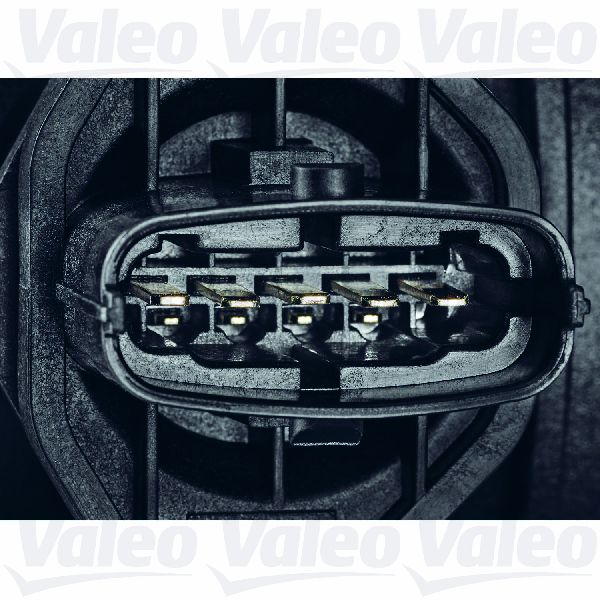
- MAF Sensor Connector (5-pin) — On the MAF sensor itself, which is located in the intake tract between the air filter box and the turbo inlet pipe.. This is the primary connection point for all MAF sensor signals. Corrosion or loose pins here will directly cause a P0102. Pin 5 is the signal wire to ECM terminal A22, Pin 4 is a 5V power supply from ECM terminal A39, and Pin 2 is the main power supply.
- Engine Bay Ground Points — There are easily accessible ground terminals on both the driver and passenger side spring strut turrets in the engine bay.. A poor engine ground can cause a variety of electrical issues, including erratic sensor readings. The main engine ground strap connects from the engine to the passenger side strut tower. Ensuring these connections are clean and tight is a crucial step in diagnosing any electrical fault.
- Central Electronic Module (CEM) — Located in the passenger compartment, under the glove compartment.. The CEM is the central hub for the vehicle's network and electrical system. While not a common failure point for this code, it is where the MAF sensor signal is ultimately processed and where the fault code is stored.
Real Owner Repair Stories
- Turbobricks forum user (2001 Volvo V70 T5 (P2 Platform, same engine family)) — Car jolted violently and lost all power while accelerating, then ran rough and stalled.
❌ Tried (didn't work) Checked all intercooler hoses and accessible vacuum lines.
✅ What actually fixed it Discovered a cracked nozzle on the Turbo Control Valve (TCV), which was creating a massive vacuum leak. Replacing the TCV resolved the P0102 code and drivability issues. - volvoXC.com forum user (2002 Volvo V70 XC (P2 Platform, 2.4T engine)) — Persistent P0102 / ECM-1300 code. Scan tool showed MAF reading was 0.00 g/s at all times.
❌ Tried (didn't work) Cleaning throttle body, Checking for intake leaks
✅ What actually fixed it The user followed VIDA diagnostic steps, which involved checking for an open-circuit in the power supply cable (Pin 2) and a short-to-ground on the signal cable (Pin 5). The final fix was not posted, but the diagnostic path pointed directly to a wiring fault or a completely dead sensor, as the signal was flatlined.
"I Checked Everything" — The Actual Cause
- In one documented case on a similar Volvo T5 engine, a P0102 code was caused by a cracked plastic nozzle on the Turbo Control Valve (TCV). This acted as a significant air leak that might not be immediately obvious during a standard smoke test focused on the main intake tract, as the TCV is part of the boost control system. The car ran rough, stalled, and threw the P0102 code until the TCV was replaced.
OEM Part Supersession History
Bosch 0280218088→Bosch 0280218134 / Volvo 8692624— Part update/revision.
Heads up: While Bosch 0280218134 is often listed as the correct replacement for the S40 T5, there are multiple cross-references. Some owners of other P2 platform Volvos have reported issues with other superseded part numbers (e.g., 0280218335 replacing 0280218088 on an XC90) causing poor running conditions despite being listed as compatible. It is critical to verify the exact Bosch or Volvo part number for the specific vehicle VIN before purchasing.
Model Year Variations Within This Range
- 2004-2007 vs 2008-2012: The Volvo S40 P1 platform received a facelift for the 2008 model year. While the 2.5L T5 engine remained largely the same, there can be minor differences in wiring harnesses and component locations. The MAF sensor part number (Bosch 0280218134 / Volvo 8692624) appears to be consistent for the T5 across the entire 2004.5-2012 range, but it's always best to confirm with a VIN-specific parts catalog.
Diagnostic Flowchart
Other Known Issues on This Vehicle
Issues unrelated to this code that are worth knowing about as an owner of this generation:
- PCV/Oil Trap System Clogging/Failure 🔴 High — Commonly occurs between 60,000 and 120,000 miles. A torn diaphragm can cause a loud whistling or howling noise. (Ref: Volvo issued an extended warranty (No. 205) for some earlier P1 models (up to 10 years/120k miles), but this has likely expired for most vehicles.)
- Clogged Sunroof Drains Leading to Water Ingress 🔴 High — A very common issue across all years. The drain tubes can clog or detach, causing water to leak into the cabin, often damaging the Central Electronic Module (CEM) located in the passenger footwell.
- Timing Belt and Tensioner Replacement 🔴 High — This is a critical maintenance item. The interval for the T5 engine is typically 10 years or 120,000 miles (180,000 km), whichever comes first. Failure is catastrophic for the engine.
- Cracked Coolant Expansion Tank 🟠 Medium — The plastic coolant reservoir is prone to developing cracks over time, leading to coolant leaks. The vehicle notably lacks a low coolant level sensor.
- Premature Wheel Bearing Failure 🟠 Medium — Front and rear wheel bearings can fail earlier than expected, often requiring replacement before 100,000 miles.
Used vs. New Parts: Buying Guide for This Vehicle
When a used part is the smart pick: A used MAF sensor is generally not recommended. These are sensitive electronic components that degrade over time and can be easily damaged. Given the high probability of failure, the cost and labor of installing a used part that may be faulty or have a short lifespan often outweighs the savings. A used intake hose or airbox component is a reasonable choice if it is in good physical condition with no cracks.
Donor-vehicle mileage cap: roughly under 50000 miles for the part to have meaningful remaining life.
What to inspect on the donor part:
- For a used MAF, ask for the donor vehicle's mileage and check for any physical damage to the housing or connector.
- Ensure the internal sensing wires are intact and do not appear to be physically broken or coated in oil.
- For hoses or plastic intake parts, inspect thoroughly for hairline cracks, brittleness, or soft/swollen spots.
OEM-only on this vehicle (don't cheap out):
- Mass Airflow (MAF) Sensor
Aftermarket brands forum-validated for this vehicle:
- Bosch (This is the Original Equipment Manufacturer, OEM)
Brands owners have reported issues with on this vehicle:
- Unnamed, no-brand, or exceptionally cheap MAF sensors found on online marketplaces. Forum consensus is overwhelmingly negative, with many reports of these parts being dead-on-arrival or failing within weeks, causing a repeat of the P0102 code.
Real Owner Stories
Aggregated from forums and TSBs cited above. Mileages and costs reflect what owners reported in those sources.
2005 Volvo S40 T5
Symptoms: Sputtering and stalling with codes P0102 and P0237.
What fixed it: The community identified the cause as either a bad MAF sensor or a significant vacuum leak.
Source hint: SwedeSpeed Forums - '2005 S40 T5 sputtering and stalling'
2005 Volvo S40 T5
Symptoms: P0102 code present; cleaning the sensor provided no improvement.
What fixed it: Replacing the MAF sensor with a genuine Bosch part.
Source hint: Matthews Volvo Site - 'P0102 on my 2005 S40 T5'
2005 Volvo S40 T5
Symptoms: Sputtering and stalling with error codes P0102 and P0237.
What fixed it: Diagnosis focused on the MAF issue triggering cascading sensor faults.
Source hint: Reddit r/Volvo - 'Error codes p0102 and p0237'
Volvo S40
Symptoms: P0102 code and stalling.
What fixed it: The recommended procedure was to clean the MAF, check for intake leaks post-MAF, and inspect the connector.
Source hint: jagrullar.se - 'P0102 - Mass Air Flow (MAF) Circuit Low Input'
Related OBD-II Codes
Frequently Asked Questions
Can I use any brand of replacement MAF sensor for my S40 T5?
My 2005 S40 T5 is making a whistling noise at idle along with the P0102 code. What is it?
How can I quickly test if my S40's stalling is caused by the MAF sensor?
Is there a specific cleaner I should use for the S40 T5 MAF sensor?
What are the typical MAF sensor readings I should see on a scan tool for this Volvo?
Could an aftermarket air filter be causing the P0102 code on my S40?
Helpful Videos

Used OEM Parts in Stock
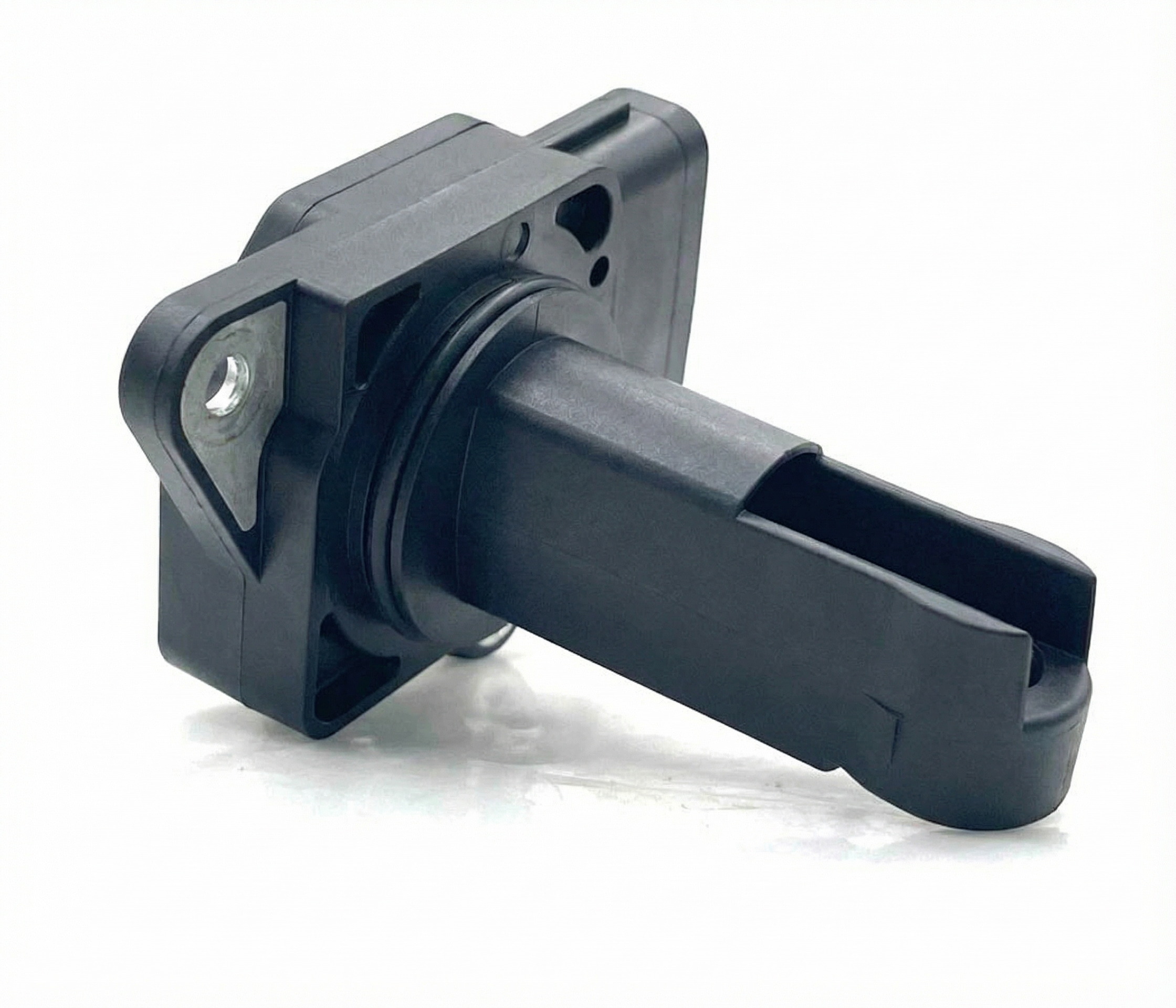
New Aftermarket Parts Available


The information in this article is provided for general reference and educational purposes only. Vehicle specifications, procedures, and part compatibility can vary by production date, trim level, and region. Always consult your vehicle's factory service manual and verify part numbers before purchasing or performing repairs. Safety-critical components such as airbags, seat belts, and braking systems should be installed by a qualified professional.
- Volvo S40:
- 🧭 Diagnostic Flowchart
- 🎬 Helpful Videos
- 🛍️ Shop This Part
- What's Unique About the 2004-2012 Volvo S40
- Symptoms You May Notice
- Most Likely Causes
- Rare But Worth Checking
- Diagnosis Steps
- Parts You'll Likely Need
- Related Codes That Often Appear With This One
- Platform-Specific Known Issues
- Mechanic-Grade Diagnostic Values
- Hidden / Shadow Codes Worth Checking
- Scan Tool Commands That Help
- Wiring & Ground Locations
- Real Owner Repair Stories
- "I Checked Everything" — The Actual Cause
- OEM Part Supersession History
- Model Year Variations Within This Range
- Other Known Issues on This Vehicle
- Used vs. New Parts: Buying Guide for This Vehicle
- Real Owner Stories
- 2005 Volvo S40 T5
- 2005 Volvo S40 T5
- 2005 Volvo S40 T5
- Volvo S40
- Related OBD-II Codes
- Frequently Asked Questions
- 🎟️ Get 5% Off