

P0103 on 1995-2003 BMW 5 Series (E39): MAF Circuit High Causes and Fixes
On a 1995-2003 BMW 5 Series, code P0103 is most often caused by a failed Mass Airflow (MAF) sensor. Replacing it with an OEM Bosch (for V8) or Siemens/VDO (for I6) unit is the most likely fix. Before replacing, check for cracked intake boots and vacuum leaks, which are also common culprits on the E39 platform, as these can set a MAF code.
- P0103 on an E39 most often means you need a new Mass Airflow (MAF) sensor.
- Before buying a new sensor, perform the 'unplug test': if the car runs better with the MAF disconnected, the sensor is bad.
- Always inspect for vacuum leaks, especially the large rubber intake boot, as this is a very common problem on these cars and can trigger MAF codes.
- Only use a high-quality OEM (Bosch) replacement MAF sensor. Cheap aftermarket parts often cause more problems.
- Consider cleaning the sensor with dedicated MAF cleaner as a first, inexpensive diagnostic step.
What's Unique About the 1995-2003 BMW 5 Series
The E39 5 Series is known for having two primary weaknesses that lead to this code: the MAF sensor itself failing with age, and the engine's various plastic and rubber vacuum hoses becoming brittle and cracking. While the code points directly to the MAF circuit, an underlying vacuum leak is a very frequent issue on these cars, causing unmetered air to throw off sensor readings. A simple but effective diagnostic trick on the E39 is to unplug the MAF sensor with the engine off; if the engine's idle and performance improve upon starting, it strongly points to a faulty MAF sensor as the car reverts to a safe, pre-programmed fuel map. It's also important to note that 6-cylinder (M52/M54) and V8 (M62) engines used different MAF sensor suppliers (Siemens/VDO and Bosch, respectively), which have different failure characteristics and part numbers.
Generation note: The 1995-2003 year range covers the fourth generation of the 5 Series, known as the E39. While the code's meaning is the same across all engines (e.g., 525i, 528i, 530i, 540i, M5), the specific MAF sensor part number and manufacturer (Bosch for V8s, Siemens/VDO for I6s) varies depending on the engine and model year. Post-1998 "Technical Update" (TU) engines also featured different intake setups.
Symptoms You May Notice
- Check Engine Light is on
- Rough or unstable idle, sometimes stalling at stop lights.
- Hesitation or stumbling when accelerating.
- Noticeable loss of engine power, feeling sluggish.
- Decreased fuel economy.
- Black smoke from the exhaust in some cases, indicating a rich fuel condition.
- Car runs noticeably better when the MAF sensor is unplugged.
- On some models, cruise control may stop working.
- Automatic transmission may exhibit harsh shifting due to incorrect engine load data.
- Replacing oxygen (O2) sensors. While a bad MAF can cause O2 sensor codes to appear due to the incorrect air/fuel mixture, the root cause is often the MAF itself.
- Replacing the Idle Control Valve (ICV). While a faulty ICV can cause idle issues, the P0103 code specifically points to the MAF circuit.
Most Likely Causes
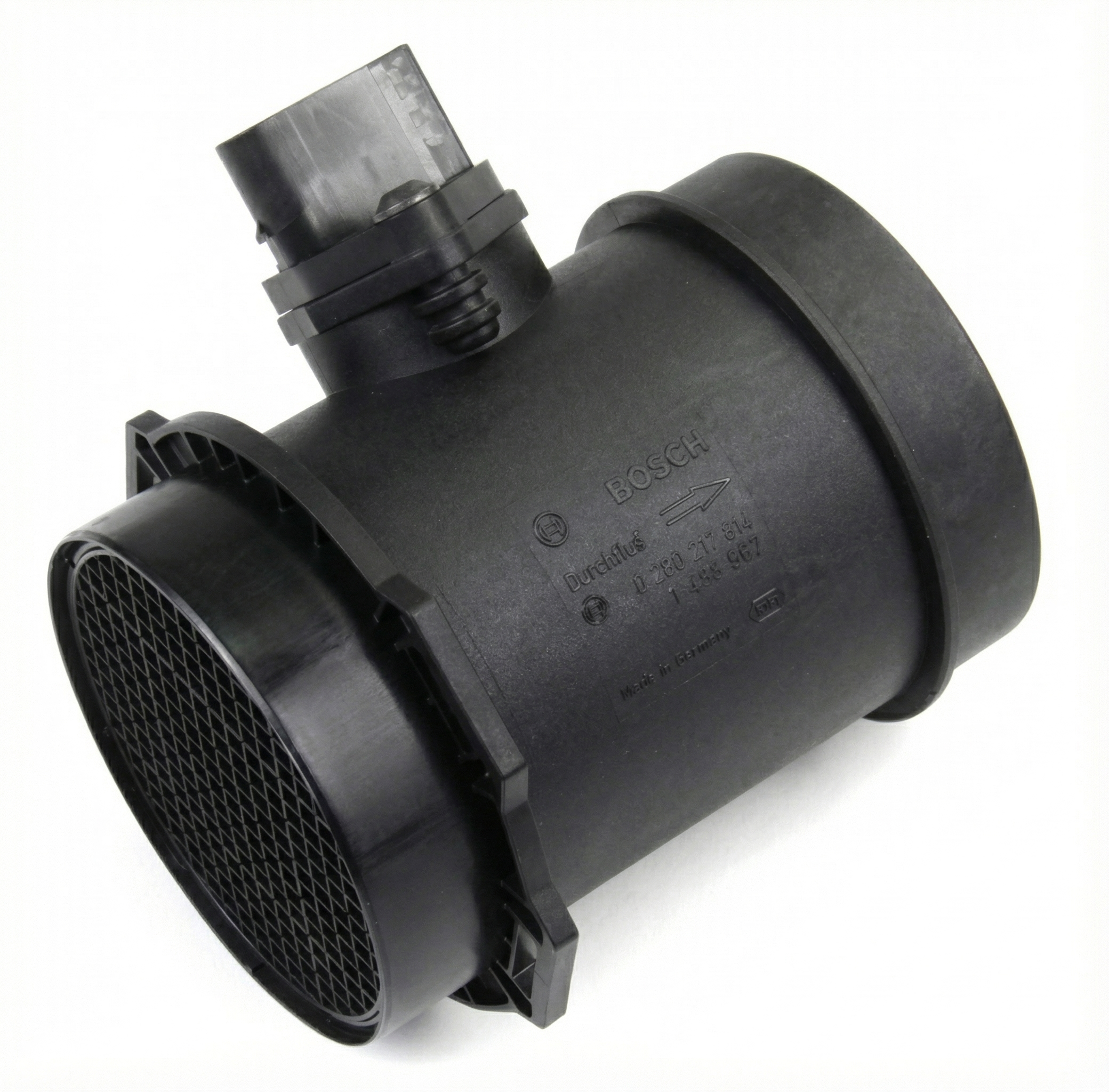
- Faulty Mass Airflow (MAF) Sensor 🔴 High Probability → Shop Fuel Injection Air Flow Meter The original Bosch (V8) and Siemens (I6) hot-film sensors can fail internally after many years and heat cycles. This is the most direct cause of a P0103 code.
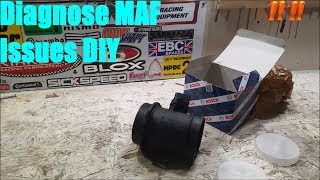
How to confirm: Unplug the MAF sensor's electrical connector while the engine is off. Start the engine. If the stalling and rough idle symptoms improve significantly, the MAF sensor is almost certainly bad. The engine will run on a default map, which is safer than the incorrect readings from the bad sensor. A BMW-specific scanner can also read live MAF data to see if it's reporting erroneously high values at idle. 🎬 Watch: How to diagnose a MAF issue on your E39
Typical fix: Replace the entire MAF sensor assembly. It is highly recommended to use an OEM part from Bosch or VDO/Siemens. Cheaper, unbranded sensors are known to fail quickly or be inaccurate out of the box, often causing the code to return immediately.
Est. part cost: $150-$350 - Vacuum Leak 🟡 Medium Probability The E39's engine bay contains numerous plastic and rubber components (intake boots, vacuum lines, CCV/PCV system hoses) that crack with age, causing unmetered air to enter the engine after the MAF sensor. On V8 models (540i), the rear crankcase ventilation valve and the valley pan gasket are notorious leak points.
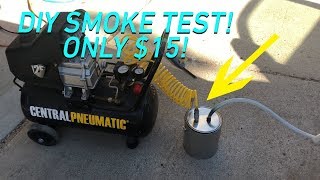
How to confirm: Perform a smoke test. This involves feeding pressurized smoke into the intake system and watching for where it escapes. 🎬 See how to find vacuum leaks with a DIY smoke tester A visual inspection may also reveal obvious cracks, especially in the large rubber intake boot between the MAF and the throttle body.
Typical fix: Replace the cracked hose(s) or gaskets. Common failure points include the lower intake boot, valve cover gaskets, and the entire Crankcase Ventilation (CCV) system. On V8s, the valley pan gasket is a more involved but common repair.
Est. part cost: $20-$250 - Dirty or Contaminated MAF Sensor ⚪ Low Probability → Shop Fuel Injection Air Flow Meter Over-oiled aftermarket air filters can deposit a film on the MAF's sensing element, skewing its readings. Normal dirt and debris can also accumulate over time.
How to confirm: Remove the sensor and visually inspect the small wires or film inside. If they appear dirty or coated in oil, this is a likely issue.
Typical fix: Carefully clean the sensor element using only a dedicated Mass Airflow Sensor cleaner spray. Do not touch the element or use other chemicals like brake or carb cleaner, as they will destroy it. Let it dry completely before reinstalling. If cleaning doesn't work, the sensor has likely failed internally and needs replacement.
Est. part cost: $10-$15 for cleaner - Wiring or Connector Issue ⚪ Low Probability Engine harness wires can become brittle and crack from heat and age, potentially causing a short to power that results in a high voltage signal. The connector pins can also corrode.
How to confirm: Inspect the wiring harness leading to the MAF sensor for any signs of damage, chafing, or corrosion on the connector pins. Use a multimeter to check for proper voltage (typically a 5V reference and a 12V power supply) and ground at the connector according to a wiring diagram.
Typical fix: Repair the damaged section of the wiring harness or replace the connector pigtail.
Est. part cost: $15-$50
Rare But Worth Checking
- Faulty Engine Control Module (DME): This is extremely rare. Before condemning the DME, all other possibilities (sensor, wiring, vacuum leaks) must be exhaustively ruled out by a professional.
Diagnosis Steps
- Read the code with an OBD-II scanner and confirm P0103 is present. Note any other codes, especially lean codes (P0171, P0174).
- With the engine off, disconnect the MAF sensor's electrical plug.
- Start the engine. If it now idles and runs significantly better, the MAF sensor is the primary suspect.
- If unplugging the MAF makes no difference, shut off the engine and reconnect it. Thoroughly inspect the entire intake path from the air filter to the engine for cracks, especially the large rubber boots.
- Inspect the air filter. A very dirty or improperly seated filter can cause issues.
- If no obvious leaks are found, remove the MAF sensor and inspect its internal element. If dirty, clean it with dedicated MAF sensor cleaner. Let it dry completely before reinstalling.
- If the problem persists, a smoke test is the most reliable way to find hidden vacuum leaks from components like the CCV system or intake gaskets.
- Inspect the MAF sensor connector and wiring for any visible damage, corrosion, or loose pins. Check for correct voltage at the connector with a multimeter.
- If all else fails, replace the MAF sensor with a new, high-quality OEM (Bosch for V8, Siemens/VDO for I6) unit.
- After replacement, clear the codes. It is highly recommended to use a BMW-specific scan tool to reset the engine's fuel and air adaptations to allow the DME to learn the new sensor's values correctly.
Parts You'll Likely Need
- Mass Airflow (MAF) Sensor (Bosch)
(OEM #13621433567)— This is the most common part to fail on V8 models (540i) and directly cause code P0103. Part number shown is for post-09/1998 540i models; verify the correct part for your specific engine via VIN.
Trusted brands: Bosch
OEM price range: $200-$300
Aftermarket price range: $80-$150 - Mass Airflow (MAF) Sensor (Siemens/VDO)
(OEM #13621432356)— The common failure part for 6-cylinder models (525i, 528i, 530i). This part number is for M54 engines (525i, 530i); pre-facelift M52TU engines may use a different part (e.g., 13621703275). Always verify by VIN.
Trusted brands: VDO, Siemens, Continental
OEM price range: $250-$350
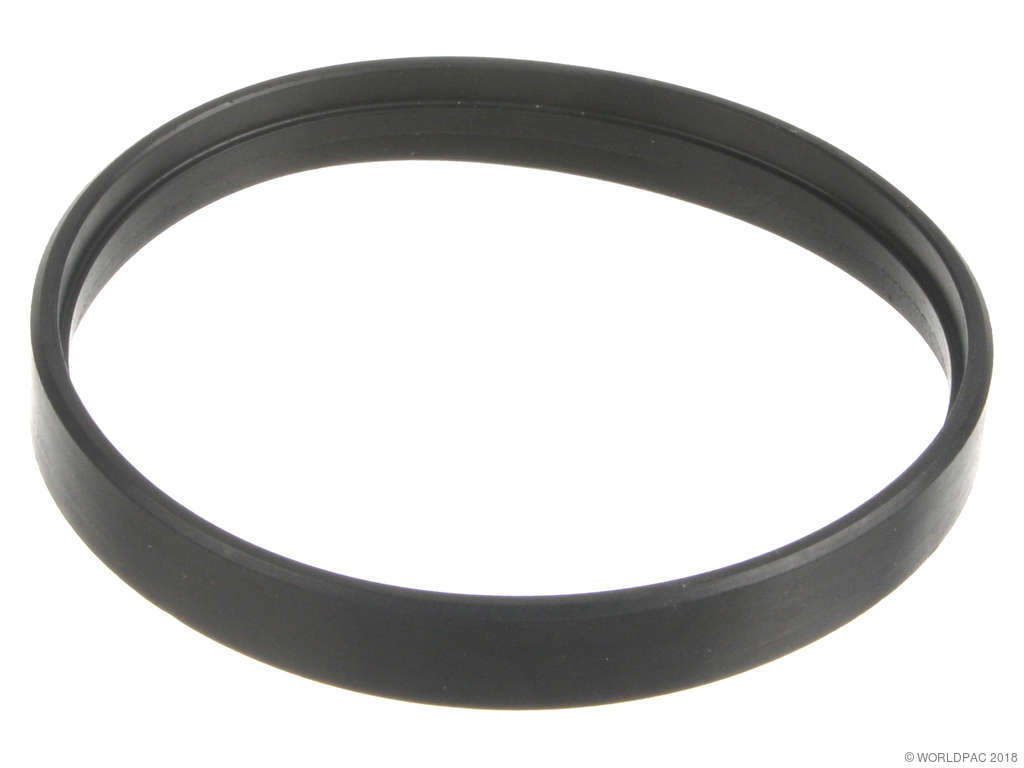
Aftermarket price range: $100-$180 - Intake Air Boot — The large rubber boot connecting the MAF sensor to the throttle body is a very common place for cracks to develop, causing vacuum leaks that trigger MAF codes.
Trusted brands: Rein, CRP
OEM price range: $40-$80
Aftermarket price range: $20-$50 - Mass Airflow Sensor Cleaner — A low-cost first step. Cleaning a dirty sensor can sometimes resolve the issue without needing to replace the part.
Trusted brands: CRC, Liqui Moly
Aftermarket price range: $10-$15
Related Codes That Often Appear With This One
- P0171 — System Too Lean (Bank 1) - Often triggered by a vacuum leak, which is a common cause of MAF issues on the E39.
- P0174 — System Too Lean (Bank 2) - Often triggered by a vacuum leak on V8 models, which is a common cause of MAF issues on the E39.
- P0102 — Mass Air Flow (MAF) Circuit Low Input - This code may appear intermittently along with P0103 if the sensor or wiring is failing erratically.
Mechanic-Grade Diagnostic Values
- MAF Sensor Signal Voltage (M5 V8) — expected: Key On Engine Off: ~1.0V. Idle: ~1.3V. 2500 RPM: ~1.8V.. Failure: A reading significantly higher than expected for the given state, especially a reading stuck high (e.g., >4.5V) regardless of engine speed, indicates a circuit high fault.
- MAF Connector Power Supply Pin — expected: 12V with key on, engine off.. Failure: No voltage or significantly low voltage points to a wiring or fuse issue before the sensor.
- MAF Connector Ground Pin — expected: Near 0V, with good continuity to chassis ground.. Failure: High resistance or voltage on the ground pin indicates a bad ground connection, which can cause erratic sensor readings.
- MAF Connector Signal Wire (at idle) — expected: Approximately 1.0V - 1.6V, varying by engine (I6 vs V8) and specific conditions.. Failure: A signal voltage pegged high (approaching 5V) is a direct indicator of a P0103 fault condition.
Hidden / Shadow Codes Worth Checking
- BMW FC 8 (or 08) - Air Flow Meter: On older DME versions (like MS41/MS42) used in early E39s, this is the manufacturer-specific code that corresponds to a generic P0103. It directly indicates a fault with the HFM (Hot Film Air Mass Meter). (see via BMW-specific diagnostic software like INPA or DIS/GT1.)
Scan Tool Commands That Help
- ISTA/D or INPA: Clear Adaptations / Reset Adaptation Values — This is a critical step after replacing the MAF sensor. The DME 'learns' the characteristics of the old, failing sensor and stores these adjustments as fuel trims. Resetting adaptations forces the DME to discard the old data and learn the values from the new sensor, ensuring proper air/fuel mixture control.
- ISTA/D: Vehicle Management -> Service Functions -> Powertrain -> Engine Electronics -> Delete Adaptation/variants — This is the specific path within the ISTA software to access the function for resetting engine adaptations after a component replacement like the MAF sensor.
Wiring & Ground Locations
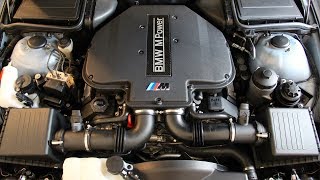
- MAF Connector (V8 M62) — On the MAF sensor itself, located between the air filter box and the intake tube on the passenger side of the engine bay.. This is the primary connection point for the sensor. Corrosion or damage to the pins or wires here can directly cause a 'Circuit High' fault.
- DME Connector (e.g., X60002, X60003) — The DME is located in the 'E-Box' on the rear passenger side of the engine compartment, under a protective cover.. The MAF signal wire terminates at the DME. A fault could exist at the DME connector pin, although this is less common than a fault at the sensor end.
- Engine Ground Straps — One major ground strap is typically located on the passenger side of the engine, connecting the engine block to the chassis. Other smaller ground points exist on the firewall.. A poor engine ground can cause voltage potential differences, leading to incorrect sensor readings and floating ground issues that can manifest as high circuit codes.
Real Owner Repair Stories
- speckog.com blog post (Ford Mondeo (uses similar Duratorq engine components, diagnosis is analogous)) — Loss of power, check engine light, P0103 code.
❌ Tried (didn't work) Replacing the MAF sensor with a new one., Disconnecting the battery to reset the ECU., Performing a smoke test which did find and fix a vacuum leak, but the P0103 code remained.
✅ What actually fixed it A dodgy wire in the MAF sensor plug connector was found. The connector was cut from a donor car at a scrapyard and soldered onto the loom, which finally resolved the fault. - YouTube channel 350Z-247 (BMW E39 540i) — Car would start and instantly die/stall. Would only stay running if throttle was applied. Code P0102 (Low circuit) was present, but diagnostic principle is the same.
❌ Tried (didn't work) Searching for vacuum leaks (none found)., Cleaning O2 sensors.
✅ What actually fixed it The car ran perfectly when the MAF sensor was disconnected, confirming the MAF was the issue. Replacing the entire MAF sensor assembly with a new OEM unit fixed the stalling and cleared the codes.
OEM Part Supersession History
Varies by year and engine→Varies— Component improvements, supplier changes.
Heads up: Siemens/VDO was acquired by Continental. A MAF sensor branded as VDO or Continental is considered OE for I6 engines. It is critical to use the correct brand (Bosch for V8, Siemens/VDO/Continental for I6) as they are not interchangeable. Using a non-OEM brand is a common cause of immediate or premature failure.
Model Year Variations Within This Range
- 1999-2003 (I6 Engines): The introduction of the M52's 'Technical Update' (M52TU) and later the M54 engine brought changes. The M52TU used a hybrid drive-by-wire throttle, while the M54 (2001+) used a fully electronic throttle. While the MAF sensor's function is the same, the intake manifolds, CCV systems, and some sensor part numbers differ between these engine revisions.
- 1997-2003 (I6 Engines): Early six-cylinder models used a MAF sensor with a longer body and a screw-on type electrical connector. Later models used a shorter body with a push-in style connector.
Diagnostic Flowchart
Other Known Issues on This Vehicle
Issues unrelated to this code that are worth knowing about as an owner of this generation:
- Cooling System Failure 🔴 High — Very common. Components like the radiator, expansion tank, water pump, and thermostat are made of plastic that becomes brittle. Recommended to overhaul every 60,000-80,000 miles to prevent catastrophic engine damage from overheating.
- VANOS Seal Degradation 🟠 Medium — Extremely common on all engines (M52TU, M54, M62TU). The original Buna-rubber seals inside the VANOS unit fail, causing loss of low-RPM torque, rough cold idle, and poor fuel economy. Seal failure can begin as early as 30,000 miles.
- Instrument Cluster / MID Pixel Loss 🟡 Low — Almost guaranteed to happen on high-mileage cars. The ribbon cable connecting the LCD screen to the main board fails, causing pixels to disappear and making the display unreadable.
- V8 (M62TU) Timing Chain Guide Failure 🔴 High — A well-known issue on the 540i, typically occurring after 100,000 miles. The plastic timing chain guides become brittle and break apart, which can cause the timing chain to jump, leading to catastrophic engine failure if not addressed.
- V8 (M62TU) Valley Pan Gasket Leak 🟠 Medium — A common coolant leak on the 540i. The gasket under the intake manifold fails, causing a slow coolant leak that pools in the engine 'V' and often drips out the back of the engine, appearing like a rear main seal leak.
- Window Regulator Failure 🟡 Low — Very common. The plastic clips and cables in the window regulators break, causing the window to fall into the door or become inoperable. Affects both front and rear windows.
Used vs. New Parts: Buying Guide for This Vehicle
When a used part is the smart pick: A used OEM MAF sensor from a junkyard can be a cost-effective option if you can verify it is a genuine Bosch or Siemens/VDO part and the donor car was not wrecked due to engine failure. It is a gamble, but can be cheaper than a new OEM unit.
Donor-vehicle mileage cap: roughly under 100000 miles for the part to have meaningful remaining life.
What to inspect on the donor part:
- Verify the brand stamp on the housing (Bosch, Siemens, VDO).
- Inspect the connector pins for corrosion or damage.
- Look at the internal sensing element; if it's visibly coated in oil or dirt, it may be in poor condition.
- If possible, check the donor vehicle's service history or reason for being in the junkyard.
OEM-only on this vehicle (don't cheap out):
- Mass Airflow Sensor
Aftermarket brands forum-validated for this vehicle:
- Bosch (for V8)
- VDO / Continental (for I6)
Brands owners have reported issues with on this vehicle:
- Unbranded 'eBay' or 'Amazon' sensors are strongly discouraged. Forum and owner experiences consistently show these parts are often inaccurate out of the box, fail quickly, and cause the code to return immediately.
- Some owners have reported issues with brands like Hella or Bremi lasting only a year or two before failing.
Real Owner Stories
Aggregated from forums and TSBs cited above. Mileages and costs reflect what owners reported in those sources.
BMW E39
Symptoms: The car had a rough idle.
What fixed it: Unplugging the MAF sensor immediately smoothed out the idle, confirming the sensor was bad. The problem was resolved by replacing the MAF sensor.
Source hint: YouTube video titled 'How to Diagnose a MAF Issue DIY - BMW E39'
Related OBD-II Codes
Frequently Asked Questions
What's the first and easiest test I can do on my E39 if I get a P0103 and it's running rough?
Does it matter what brand of MAF sensor I buy for my 1995-2003 5 Series?
My 540i has a P0103. Are there any specific vacuum leaks I should look for on the V8 model?
Can I just clean the MAF sensor instead of replacing it?
My automatic transmission is shifting harshly ever since the Check Engine Light for P0103 came on. Are these issues related?
After I replace the MAF sensor, is there anything else I need to do besides clearing the code?
Besides the MAF sensor itself, what is another common cause for P0103 on an E39?
Helpful Videos
Used OEM Parts in Stock
New Aftermarket Parts Available

The information in this article is provided for general reference and educational purposes only. Vehicle specifications, procedures, and part compatibility can vary by production date, trim level, and region. Always consult your vehicle's factory service manual and verify part numbers before purchasing or performing repairs. Safety-critical components such as airbags, seat belts, and braking systems should be installed by a qualified professional.
- BMW 5 Series:
- 🧭 Diagnostic Flowchart
- 🎬 Helpful Videos
- 🛍️ Shop This Part
- What's Unique About the 1995-2003 BMW 5 Series
- Symptoms You May Notice
- Most Likely Causes
- Rare But Worth Checking
- Diagnosis Steps
- Parts You'll Likely Need
- Related Codes That Often Appear With This One
- Mechanic-Grade Diagnostic Values
- Hidden / Shadow Codes Worth Checking
- Scan Tool Commands That Help
- Wiring & Ground Locations
- Real Owner Repair Stories
- OEM Part Supersession History
- Model Year Variations Within This Range
- Other Known Issues on This Vehicle
- Used vs. New Parts: Buying Guide for This Vehicle
- Real Owner Stories
- BMW E39
- Related OBD-II Codes
- Frequently Asked Questions
- 🎟️ Get 5% Off