

P0103 on 2012-2017 Honda Accord: MAF Circuit High Causes and Fixes
For a 2012-2017 Honda Accord, code P0103 is most often caused by a dirty Mass Air Flow (MAF) sensor. The easiest and most likely fix is cleaning the sensor with dedicated MAF sensor cleaner (~$15), which is a 15-minute DIY job. If cleaning doesn't work, the sensor itself has likely failed, requiring replacement.
- P0103 on a 2012-2017 Accord almost always points to the Mass Air Flow sensor.
- The first, cheapest, and most common fix is to clean the MAF sensor with a dedicated cleaner spray. This is a very easy DIY task.
- If cleaning doesn't work, inspect the wiring for damage before buying a new sensor. Rodent damage is a known possibility on Hondas.
- If the code is accompanied by P0172 (System Too Rich), it strongly reinforces that the MAF sensor is the root cause.
- Do not use brake cleaner or carb cleaner on the MAF sensor; it will destroy it.
What's Unique About the 2012-2017 Honda Accord
On both the 8th and 9th generation Accords, the MAF sensor is very accessible on the intake tube between the air filter box and throttle body, making diagnosis and cleaning straightforward for DIYers. A common issue across many Honda vehicles is the use of soy-based wire insulation, which can attract rodents that chew through the wiring. This makes a visual inspection of the wiring harness for chew marks a surprisingly important step if cleaning the sensor doesn't resolve the code. Honda even produces a special, chili-pepper-infused electrical tape to deter them after a repair.
Generation note: The 2012-2017 range covers two Accord generations: the end of the 8th generation (2012) and the full 9th generation (2013-2017). The 8th gen uses K24Z (I4) and J35Z (V6) engines, while the 9th gen introduced the 'Earth Dreams' K24W (I4) and J35Y (V6). While part numbers for the MAF sensor may differ, the function, location, and common causes for P0103 are virtually identical across these generations. The primary OEM part number for the 8th gen is 37980-RNA-A01, while the 9th gen often uses 37980-R11-A01.
Symptoms You May Notice
- Check Engine Light is illuminated
- Rough or unstable idle
- Engine stalling, especially after starting or when coming to a stop
- Hesitation or sluggish acceleration
- Black smoke from the tailpipe
- Decreased fuel economy
- Hard starting
- Replacing the oxygen sensors. A P0103 code can cause the engine to run rich, which might trigger other codes related to the O2 sensors, but the root cause is the MAF sensor's incorrect reading, not the O2 sensors themselves.
Most Likely Causes
- Dirty or Contaminated MAF Sensor 🔴 High Probability → Shop Fuel Injection Air Flow Meter Oiled aftermarket air filters or simple accumulation of dust and debris over time can coat the sensor's delicate platinum hot wire, insulating it and causing incorrect high voltage readings.
How to confirm: Visually inspect the sensor element. If it appears dirty, dusty, or oily, it needs cleaning. This is the most common cause and the easiest first step.
Typical fix: Remove the sensor and clean it thoroughly with a dedicated Mass Air Flow sensor cleaner spray. Do not use brake or carburetor cleaner, as they can damage the sensor's protective coating. Allow it to air dry completely before reinstalling.
Est. part cost: $10-$20 for cleaner spray - Faulty MAF Sensor 🟡 Medium Probability → Shop Fuel Injection Air Flow Meter Internal electronics of the sensor can fail from age, heat, or vibration, causing it to short internally and send a constant high voltage signal to the PCM.
How to confirm: If cleaning the sensor does not fix the issue, and the wiring is confirmed to be good, the sensor itself is the likely culprit. A scan tool can show live data; if the voltage is stuck high (near 5V) even at idle with the engine running, the sensor has failed. Normal voltage should be around 0.5V at idle and rise to ~4.5V at wide-open throttle.
Typical fix: Replace the Mass Air Flow sensor. It is held in by two screws and is easily accessible on the intake tube.
Est. part cost: $70-$250 - Wiring or Connector Issue ⚪ Low Probability Rodents are known to chew on the soy-based insulation of Honda wiring harnesses, causing shorts or open circuits. Vibration can also cause wires to chafe or the connector pins to become loose or corroded.
How to confirm: Visually inspect the entire wiring harness leading to the MAF sensor for any signs of damage, such as chew marks, chafing, or melted insulation. Check that the connector is securely plugged in and the terminals are clean and free of corrosion.
Typical fix: Repair the damaged section of wire by splicing in a new piece with solder and heat shrink, or replace the connector pigtail. Honda sells a specific anti-rodent tape (P/N 4019-2317) that can be used to wrap the harness to prevent future issues. 🎬 Watch: How to repair mouse-chewed wiring
Est. part cost: $10-$50 for wiring repair supplies
Rare But Worth Checking
- Severely Clogged Engine Air Filter: → Shop Air Cleaner Assembly A completely blocked air filter can cause highly turbulent and unpredictable air patterns across the MAF sensor, potentially leading to erratic high voltage readings. It's a simple check worth doing first.
- Cracked or Torn Air Intake Boot: A large tear in the flexible intake boot between the MAF sensor and the throttle body can let in unmetered air. While this more commonly causes lean codes (P0171), it can sometimes cause erratic MAF readings that trigger a P0103.
- Faulty Powertrain Control Module (PCM): In very rare instances, the PCM itself can have an internal fault. This should only be considered after all other possibilities (sensor, wiring, intake) have been definitively ruled out by testing.
Diagnosis Steps
- Read the code with an OBD-II scanner and check for any other accompanying codes, such as P0172 or P0101.
- Inspect the engine air filter. If it is excessively dirty or clogged, replace it.
- Inspect the air intake boot between the air filter housing and the throttle body for any cracks, tears, or loose clamps.
- Carefully inspect the MAF sensor's wiring harness and connector. Look for any signs of rodent damage, chafing, or corrosion on the connector pins. Ensure the connector is fully seated.
- Turn the ignition off and unplug the MAF sensor. Remove the two screws holding it in place.
- Visually inspect the sensor's wire or film element. If it looks dirty, spray it generously with a dedicated MAF sensor cleaner. Do not touch the element with your hands or any tools.
- Allow the sensor to air dry completely for at least 15-20 minutes before reinstalling.
- Clear the codes with the scanner, start the engine, and go for a test drive to see if the code returns.
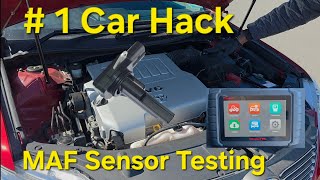
- If the code returns, use a multimeter or a scan tool with live data to check the MAF sensor's output. With the key on and engine off, the signal wire should have a very low voltage. At idle, it should be around 0.5V. If the voltage is stuck high (near 5V) at all times, the sensor has likely failed and requires replacement. 🎬 Watch: How to test a MAF sensor with a scan tool
- If the sensor and wiring appear good, consider performing a smoke test to check for hidden vacuum leaks in the intake system.
Parts You'll Likely Need
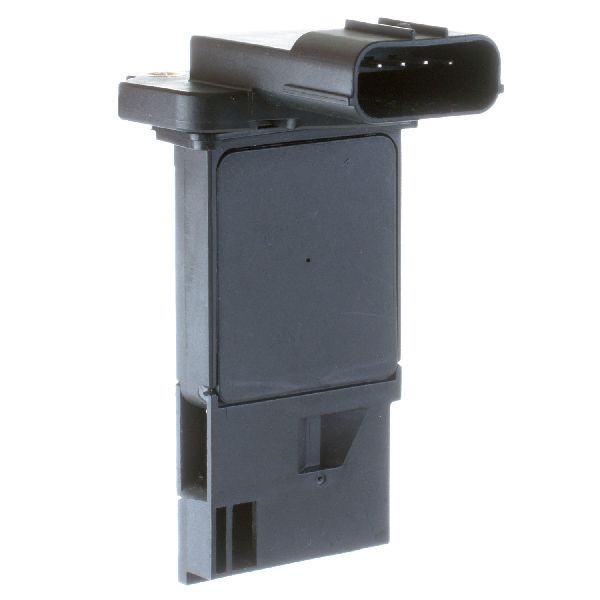
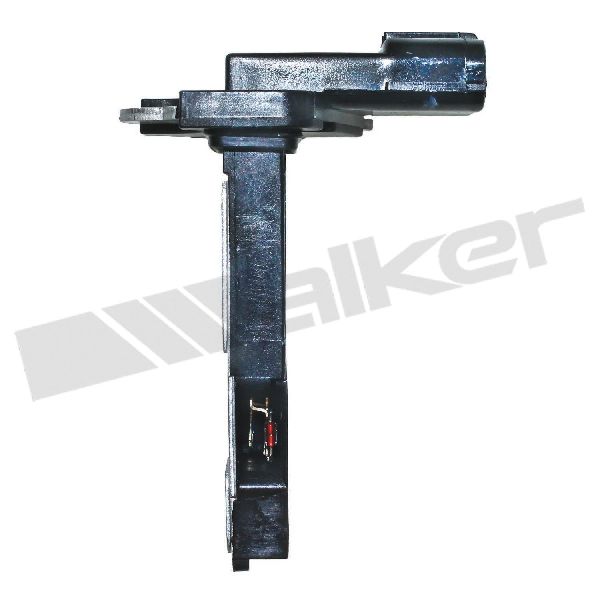
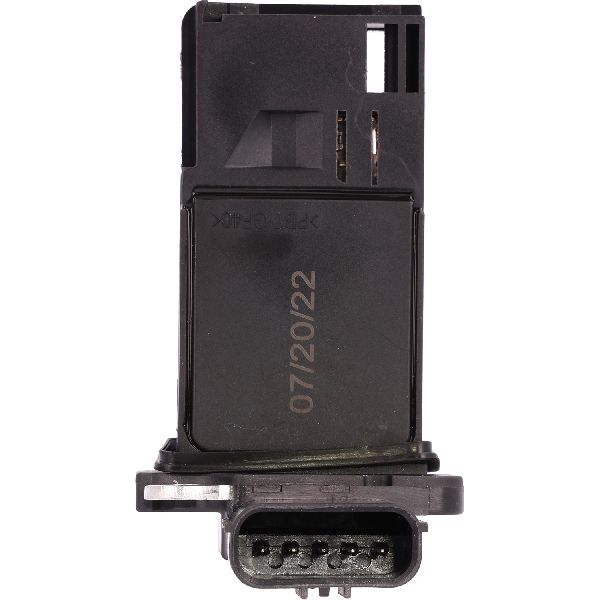
- Mass Air Flow (MAF) Sensor
(OEM #37980-RNA-A01 (8th Gen), 37980-R11-A01 (9th Gen))— This is the most common part to fail if cleaning the original sensor does not resolve the P0103 code. Part numbers may vary by specific engine and year.
Trusted brands: Denso (OEM), Hitachi (OEM)
OEM price range: $180-$250
Aftermarket price range: $70-$150 - Mass Air Flow Sensor Cleaner — This is required for the first, and most likely, fix. Using the wrong type of cleaner will damage the sensor.
Trusted brands: CRC, Liqui Moly
OEM price range: $15-$20
Aftermarket price range: $10-$15
Related Codes That Often Appear With This One
- P0172 — P0103 causes the PCM to think a large amount of air is entering the engine, so it injects a large amount of fuel. This leads to an overly rich fuel mixture, which is detected by the oxygen sensors and logged as P0172 (System Too Rich).
- P0101 — P0101 indicates the MAF sensor signal is irrational compared to other sensor inputs (like throttle position and engine speed). A signal that is stuck high (P0103) is often an irrational signal, so the two codes can appear together.
- P0102 — Seeing P0102 (MAF Circuit Low) along with P0103 can indicate an intermittent wiring problem or a failing sensor that is fluctuating between open and shorted states.
Platform-Specific Known Issues
- Owner Experience with P0103, P0101, and P0172: A user on DriveAccord.net with a 2013 Accord EX-L V6 reported getting codes P0103, P0101, and P0172 simultaneously. The symptoms were a flashing check engine light and the car going into limp mode. After cleaning the MAF sensor with CRC MAF Sensor Cleaner and clearing the codes, the problem was resolved. This is a typical owner experience confirming that cleaning is the first and often most successful step.
- Rodent Damage Confirmed Fix: A Reddit user in r/Cartalk posted about their Honda Accord having chewed wires near a connector, leading to engine codes. Other users confirmed this is a common Honda issue due to soy-based wiring and that the fix involves splicing the damaged wires with solder and heat shrink, then wrapping the harness in rodent-deterrent tape.
Mechanic-Grade Diagnostic Values
- MAF Sensor Signal Voltage at Idle (Warm Engine) — expected: 0.5V - 1.5V. Failure: A steady value near 5.0V indicates a short to power or internal sensor failure. A reading below 0.2V suggests a different fault (like P0102).
- MAF Sensor Airflow Reading at Idle (Scan Tool, Warm Engine) — expected: 2.0 - 4.0 g/s (grams per second). A rule of thumb is the g/s value should approximate the engine displacement in liters (e.g., ~2.4 g/s for the 2.4L engine).. Failure: An unusually high reading at idle (e.g., 10+ g/s) that doesn't correspond to engine RPM suggests a faulty sensor.
- MAF Sensor Airflow Reading at 2500 RPM (No Load) — expected: 15 - 25 g/s. Failure: A reading that does not increase smoothly and proportionally with RPM, or is stuck at a maximum value, points to a sensor or circuit fault.
- MAF Sensor Connector Pin Voltages (Key On, Engine Off) — expected: Pin 1 (Power): ~12V, Pin 3 (Reference): ~5V, Pin 4 (Ground): ~0V, Pin 5 (Signal): ~0V.. Failure: Voltage on Pin 5 (Signal) that is high (near 5V) with the sensor connected but engine off indicates a shorted sensor. Missing voltage on Pin 1 or 3 indicates a wiring or fuse issue upstream.
- PCM Fault Trigger Threshold — expected: Signal voltage below 4.89V.. Failure: The PCM will set code P0103 if it sees a signal voltage at or above 4.89V for more than 2 seconds.
Scan Tool Commands That Help
- Honda HDS (Honda Diagnostic System) or equivalent professional scan tool: PCM Reset / Idle Learn Procedure — This is critical after replacing the MAF sensor or cleaning the throttle body. It clears the old learned fuel trim values and forces the PCM to recalibrate to the new/clean sensor's readings. Skipping this step can cause the code to return or result in a persistent rough idle.
Wiring & Ground Locations
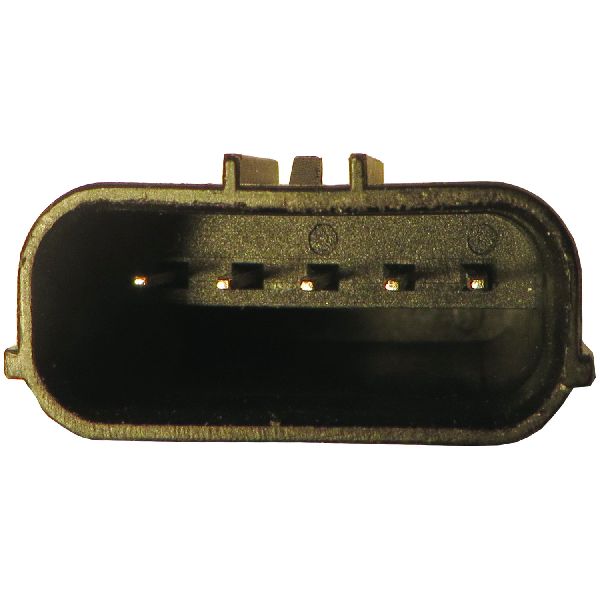
- MAF Sensor Connector (5-Pin) — On the air intake tube, between the air filter housing and the throttle body.. This is the primary point of failure for wiring issues. The pinout for testing is: Pin 1: Power (12V), Pin 2: IAT Signal, Pin 3: 5V Reference, Pin 4: Ground, Pin 5: MAF Signal Output. A short between Pin 3 (5V Ref) and Pin 5 (Signal) will cause a constant high reading.
- G101 — On the right front of the engine for the 2.4L engine. For V6 models, a primary ground is typically on the driver's side, from the engine mount area to the chassis.. This is a main engine harness ground. A loose or corroded G101 can cause a floating ground, leading to erratic voltage readings for multiple sensors, including the MAF. Verifying this ground is clean and tight is a key step if sensor replacement and wiring checks don't solve the problem.
- ACG Fuse — In the under-dash fuse box. The specific fuse number can vary (e.g., Fuse #2 on some models).. The ACG (Alternator/Charging) fuse often powers several components in the engine control circuit, including the MAF sensor relay. While a blown fuse typically causes a P0102 (low input) or no signal, an intermittent connection at the fuse block could potentially cause voltage spikes.
Real Owner Repair Stories
- Reddit r/hondafit user (2013 Honda Fit Sport, 130k miles (Note: While a Fit, the cause is highly relevant to Accords with soy-based wiring)) — P0103 code, traction control light on, engine in limp mode (under 3000 RPM).
❌ Tried (didn't work) Replaced the MAF sensor, Replaced the air filter, Checked and replaced the ACG fuse, Checked spark plugs for tightness
✅ What actually fixed it After extensive diagnosis, the root cause was found to be rodent-chewed wiring. The damaged section was hidden deep under other components and was difficult to find, requiring significant disassembly to locate and repair.
OEM Part Supersession History
37980-RNA-A01→Current part number remains 37980-RNA-A01, but it has superseded older numbers like 37980-RAD-L11.— Standard part consolidation and minor revisions over time.
Heads up: This part is primarily for 8th Gen Accords (and other Hondas of that era). While it may physically fit other models, its calibration is specific. Using it on a 9th Gen Accord is not recommended.37980-R11-A01→37980-RLF-013— Part has been updated by Honda. The new part number is the correct service replacement.
Heads up: 37980-R11-A01 was also superseded by 37980-R11-A02 and 37980-R40-A01 before the final change to 37980-RLF-013. Using the latest part number (37980-RLF-013) is recommended for 9th Gen Accords to ensure you have the most current revision.
Model Year Variations Within This Range
- 2012 vs 2013-2017: The 2012 model year is the final year of the 8th generation and uses the K24Z/J35Z engines with MAF sensor P/N 37980-RNA-A01. The 2013-2017 models are the 9th generation with 'Earth Dreams' K24W/J35Y engines, which use MAF sensor P/N 37980-R11-A01 (now superseded by 37980-RLF-013). While the diagnostic principles are identical, the sensors are calibrated differently and are not interchangeable.
Diagnostic Flowchart
Other Known Issues on This Vehicle
Issues unrelated to this code that are worth knowing about as an owner of this generation:
- VTC Actuator Rattle on Cold Start (K24 Engines) 🟠 Medium — Very common on K24Z and early K24W engines, typically noticeable on cold startups after the car has sat overnight. (Ref: Honda TSB 16-012 addresses a software update that can help, but often the actuator itself requires replacement.)
- Failing Starter Motor (Especially V6 Models) 🔴 High — Common failure around 50,000-80,000 miles, can leave the driver stranded. V6 models are particularly affected. (Ref: Honda TSB 16-002 was issued for 2013-2016 V6 models for a grinding noise/no-start condition due to poor starter/torque converter clearance.)
- Prematurely Burnt-Out LED Daytime Running Lights (DRL) 🟡 Low — Widespread on 2016-2017 models, leading to a class-action lawsuit. The entire headlight assembly must be replaced. (Ref: Honda issued warranty extension 19-042, covering the DRL LEDs for 10 years with unlimited mileage.)
- Excessive Oil Consumption (Earth Dreams Engines) 🟠 Medium — Affects both 4-cylinder and V6 'Earth Dreams' engines, often starting after 60,000 miles. Can be caused by sticking piston rings or a faulty PCV valve. (Ref: Honda addressed V6 oil consumption in a class-action settlement and issued TSBs like 11-033 for older V6s. Replacing the PCV valve (P/N 17130-5A2-A01) is a common DIY fix for the 4-cylinder.)
Used vs. New Parts: Buying Guide for This Vehicle
When a used part is the smart pick: A used MAF sensor is generally NOT recommended. It is a sensitive electronic component with a delicate hot-wire element that degrades over time and can be easily damaged. The cost savings are minimal compared to the risk of getting a part that is out of calibration or fails shortly after installation, leading to wasted time and repeated diagnostics.
Donor-vehicle mileage cap: roughly under 30000 miles for the part to have meaningful remaining life.
What to inspect on the donor part:
- Ensure the donor vehicle was not in a front-end collision that could have damaged the sensor or intake tract.
- Visually inspect the sensor element through the mesh screen; avoid any that look oily, contaminated, or have physical debris on them.
- Check the connector pins for any signs of corrosion, bending, or moisture intrusion.
- Ask for the donor vehicle's mileage; a low-mileage donor is always preferable.
OEM-only on this vehicle (don't cheap out):
- Mass Air Flow (MAF) Sensor
Aftermarket brands forum-validated for this vehicle:
- Denso (often the original OEM supplier)
- Hitachi (often the original OEM supplier)
Brands owners have reported issues with on this vehicle:
- No-name, unbranded, or unusually cheap sensors from online marketplaces. These are notorious for being poorly calibrated out of the box, causing performance issues, and failing prematurely. Sticking with OEM or the direct OEM supplier (Denso/Hitachi) is the safest bet.
Real Owner Stories
Aggregated from forums and TSBs cited above. Mileages and costs reflect what owners reported in those sources.
2013 Accord EX-L V6
Symptoms: Flashing check engine light and the car going into limp mode; codes P0103, P0101, and P0172 were present simultaneously.
What fixed it: Cleaning the MAF sensor with CRC MAF Sensor Cleaner and clearing the codes.
Source hint: DriveAccord.net user report in vehicle_specific_issues
2012-2017 Honda Accord
Symptoms: Engine codes caused by chewed wires near a connector.
What fixed it: Splicing the damaged wires with solder and heat shrink, then wrapping the harness in rodent-deterrent tape.
Source hint: Reddit r/Cartalk thread titled 'Honda accord - rats chewed wires'
Related OBD-II Codes
Frequently Asked Questions
Can I use any cleaner to fix the P0103 code on my 2012-2017 Accord?
Is there a specific part to help prevent rodents from chewing my Accord's MAF sensor wiring?
What are the normal voltage readings for a healthy MAF sensor on this vehicle?
Does my 2013-2016 Accord V6 have any related issues that might cause starting problems alongside P0103?
Could my aftermarket air filter be causing the P0103 code?
Is the VTC actuator rattle related to the MAF sensor code?
Helpful Videos
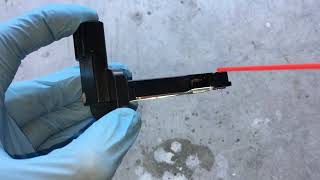
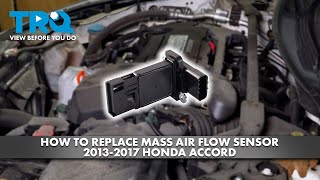
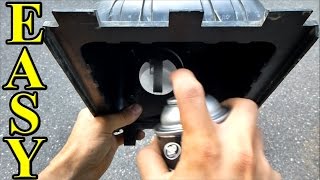
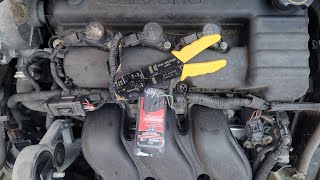
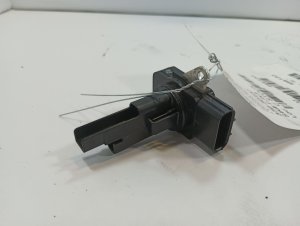
Used OEM Parts in Stock
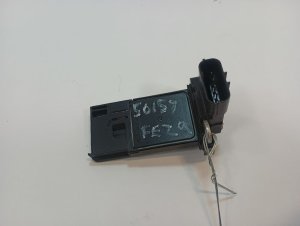
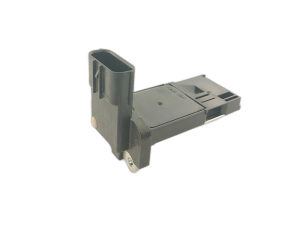
New Aftermarket Parts Available



The information in this article is provided for general reference and educational purposes only. Vehicle specifications, procedures, and part compatibility can vary by production date, trim level, and region. Always consult your vehicle's factory service manual and verify part numbers before purchasing or performing repairs. Safety-critical components such as airbags, seat belts, and braking systems should be installed by a qualified professional.
- Honda Accord:
- 🧭 Diagnostic Flowchart
- 🎬 Helpful Videos
- 🛍️ Shop This Part
- What's Unique About the 2012-2017 Honda Accord
- Symptoms You May Notice
- Most Likely Causes
- Rare But Worth Checking
- Diagnosis Steps
- Parts You'll Likely Need
- Related Codes That Often Appear With This One
- Platform-Specific Known Issues
- Mechanic-Grade Diagnostic Values
- Scan Tool Commands That Help
- Wiring & Ground Locations
- Real Owner Repair Stories
- OEM Part Supersession History
- Model Year Variations Within This Range
- Other Known Issues on This Vehicle
- Used vs. New Parts: Buying Guide for This Vehicle
- Real Owner Stories
- 2013 Accord EX-L V6
- 2012-2017 Honda Accord
- Related OBD-II Codes
- Frequently Asked Questions
- 🎟️ Get 5% Off