

P0103 on 2007-2012 Hyundai Santa Fe 3.3L: MAF Sensor High Input Causes and Fixes
On a 2007-2009 Santa Fe 3.3L, code P0103 almost always means the Mass Air Flow (MAF) sensor has failed due to an internal electronic fault. A replacement sensor assembly (OEM Part #28164-3C100) is the typical fix. Expect to pay around $150-$250 for an OEM part and $70-$120 for an aftermarket one. It's a very easy DIY repair that takes less than 15 minutes.
- P0103 on your Santa Fe almost certainly means the MAF sensor itself has failed electronically.
- Cleaning the sensor is unlikely to fix a 'Circuit High' code; replacement is the standard repair.
- The correct OEM part number for the 2007-2009 3.3L V6 is 28164-3C100.
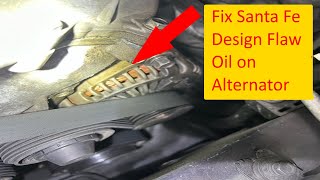
- While you're working on the engine, check for oil leaks from the front valve cover onto the alternator, as this is a very common and destructive issue on this specific engine.
What's Unique About the 2007-2012 Hyundai Santa Fe
For the second-generation (CM) Santa Fe with the 3.3L V6 (2007-2009), the MAF sensor itself is the most common failure point leading to a P0103 code. Unlike some other platforms where wiring or vacuum leaks are more common for MAF codes, on this Hyundai, an internal electrical fault in the sensor is the typical culprit. While cleaning the sensor is a valid diagnostic step for performance codes (P0101), it is highly unlikely to fix a 'Circuit High' code (P0103), as this usually indicates a definitive electronic failure rather than contamination.
Symptoms You May Notice
- Check Engine Light is on
- Rough or unstable idle
- Hesitation or stumbling during acceleration
- Noticeable loss of engine power
- Decreased fuel economy
- Engine may stall, especially when coming to a stop or at idle
- Black smoke from the exhaust due to an overly rich fuel mixture
- Hard starting
- Replacing oxygen (O2) sensors to fix a rich or lean condition without first diagnosing the MAF sensor.
- Replacing spark plugs or ignition coils to fix a rough idle without checking MAF data first.
- Assuming a vacuum leak is the cause. While vacuum leaks cause many MAF-related codes (like P0171/P0174), they are less likely to cause a 'Circuit High' fault like P0103.
Most Likely Causes
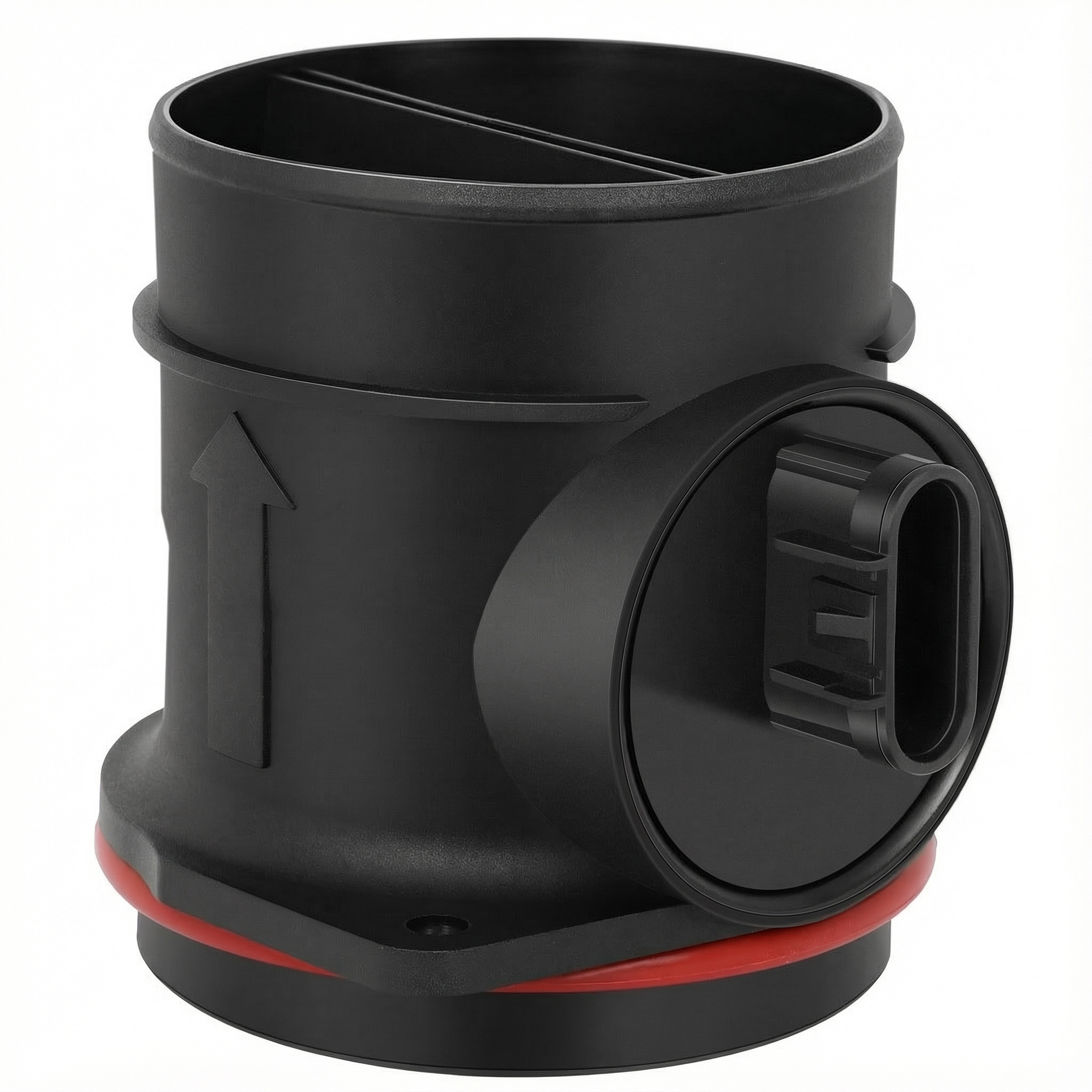
- Failed Mass Air Flow (MAF) Sensor 🔴 High Probability → Shop Fuel Injection Air Flow Meter The MAF sensor used on this platform (Part #28164-3C100) is a very common failure item. An internal short or electronic fault within the sensor can cause it to send a continuous high voltage or frequency signal to the computer, triggering P0103.
How to confirm: With the key on and engine off, use a multimeter to check the signal wire voltage; if it's stuck high (near 5 volts), the sensor is bad. The most definitive test is to replace it with a known-good sensor. If the code returns even after replacement, the problem is likely in the wiring.
Typical fix: Replace the entire MAF sensor assembly. 🎬 Watch this step-by-step MAF sensor replacement guide It is typically sold with a section of the intake housing.
Est. part cost: $70-$250 - MAF Sensor Wiring or Connector Issue ⚪ Low Probability → Shop Fuel Injection Air Flow Meter While less common than outright sensor failure, the connector can become corroded or wires can fray over time due to engine bay heat and vibration.
How to confirm: Visually inspect the MAF sensor connector and wiring harness for any signs of damage, corrosion, or loose pins. Check for a short to power on the signal wire using a multimeter. If a new sensor doesn't fix the code, the wiring is the next logical suspect.
Typical fix: Repair the damaged wiring or clean/replace the connector pigtail.
Est. part cost: $15-$50 - Dirty or Contaminated MAF Sensor ⚪ Low Probability → Shop Fuel Injection Air Flow Meter While common for other MAF codes like P0101 (Range/Performance), contamination is a less frequent cause for a P0103 'Circuit High' fault. However, it's still possible for debris or oil from a PCV system to cause an electrical short on the sensor element.
How to confirm: Remove the sensor and visually inspect the internal wires/film. If they appear coated in grime, cleaning is a valid, low-cost first step.
Typical fix: Clean the sensor elements using only a dedicated MAF sensor cleaner spray. Do not touch the sensor wires. Let it dry completely before reinstalling.
Est. part cost: $10-$15 for cleaner
Rare But Worth Checking
- Faulty Powertrain Control Module (PCM): This is extremely rare. The PCM should only be considered as the cause after all other possibilities, including wiring and the sensor itself, have been thoroughly ruled out with 100% certainty.
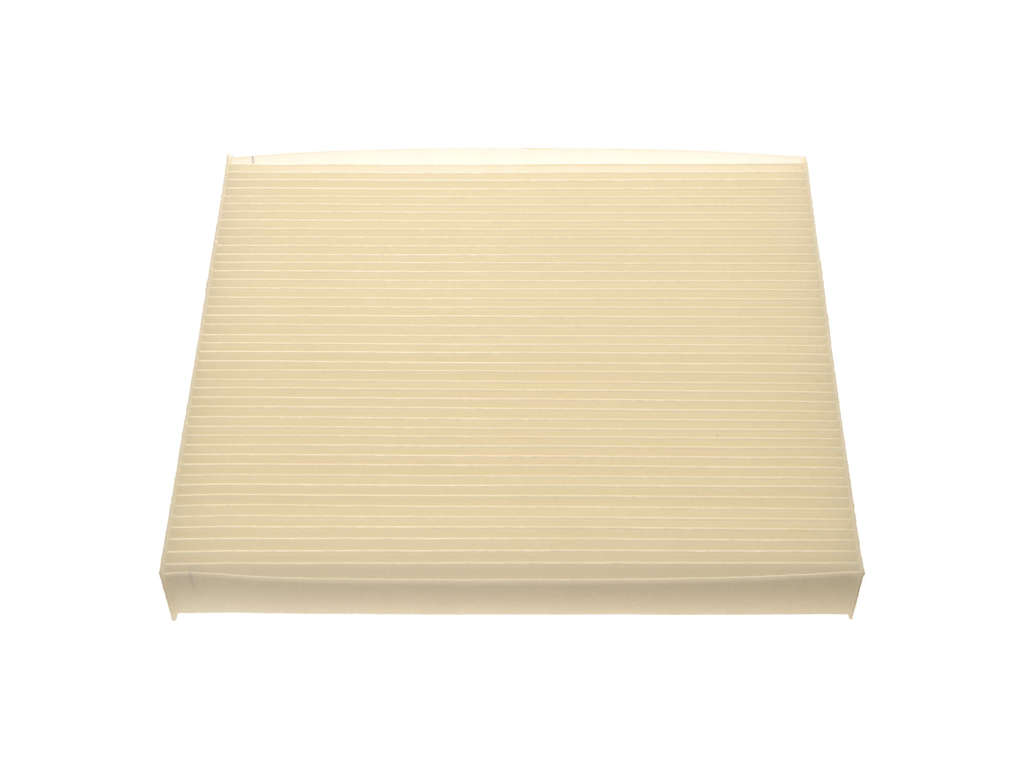
- Clogged Air Filter: → Shop Air Cleaner Assembly A severely clogged air filter can, in some cases, disrupt airflow enough to cause strange readings, though it's more likely to cause a P0101 or P0102 code. It's a simple check and good maintenance practice.
Diagnosis Steps
- Verify the code P0103 is present using an OBD-II scanner.
- Check for any TSBs or recalls. Specifically, check for TSB 15-01-031 regarding oil leaks onto electrical components.
- Visually inspect the air intake system for any obvious issues, like a disconnected hose, though this is more relevant for other MAF codes.
- Carefully inspect the MAF sensor's electrical connector and wiring for any damage, corrosion, or loose connections. A poor connection can cause this fault.
- With the ignition on but the engine off, use a scanner to view live data for the MAF sensor. A P0103 fault will often show a very high g/s reading that is unrealistic for a non-running engine, or a value that is maxed out.
- If a scanner is not available, you can back-probe the connector. Check for battery voltage on the power wire and a good ground. The signal wire should not be stuck at 5V.
- As a low-cost diagnostic step, you can try cleaning the sensor with dedicated MAF sensor cleaner. Let it dry completely before reinstalling. Clear the code and see if it returns.
- If cleaning does not resolve the issue, the most probable cause is a failed MAF sensor. Replace the sensor assembly with a quality part.
- If a new, known-good MAF sensor does not fix the problem, perform a detailed wiring check for a short to power between the sensor and the PCM.
- If wiring is confirmed to be good, the fault may lie within the PCM, but this is highly unlikely and should be the absolute last resort.
Parts You'll Likely Need
- Mass Air Flow Sensor Assembly
(OEM #28164-3C100)— This is the primary cause of code P0103 on this vehicle due to internal electronic failure. This part number is confirmed for 2007-2009 Santa Fe 3.3L and other Hyundai/Kia models.
Trusted brands: Hyundai (OEM), Bosch, Delphi, Walker Products
OEM price range: $150-$250
Aftermarket price range: $70-$120 - Engine Air Filter — It is best practice to replace the air filter when replacing the MAF sensor to prevent contamination of the new part and ensure proper airflow readings. A clogged filter can contribute to air flow issues.
Trusted brands: Hyundai (OEM), Wix, Purolator, Fram
OEM price range: $25-$40
Aftermarket price range: $15-$25
Related Codes That Often Appear With This One
- P0102 — If the MAF sensor is failing intermittently, it may set both 'Circuit Low' and 'Circuit High' codes at different times as the internal electronics short out or fail completely.
- P0172 — System Too Rich (Bank 1) - If the PCM believes a large amount of air is entering (due to the P0103 fault), it will command excessive fuel, leading to a rich condition.
- P0175 — System Too Rich (Bank 2) - Same reason as P0172, but for the second bank on the V6 engine.
Technical Service Bulletins (TSBs) & Recalls
- TSB 15-01-031 / Service Campaign 936: Addresses the procedure to inspect and replace the front valve cover gasket and inspect/replace the oil-contaminated alternator on 2007-2009 3.3L Santa Fe models. This is a critical issue for owners to be aware of.
- TSB 12-FL-004: Relates to an ECM software update for some 3.5L vehicles for a Check Engine Light, which may be relevant for later models in the specified range but not the 3.3L.
Platform-Specific Known Issues
- Owner Experience: Solved by Replacement: Multiple owners on hyundai-forums.com and other platforms report that for P0103, cleaning the sensor rarely works and replacement is almost always the required fix. The failure is typically sudden and electronic, not gradual contamination.
- Repair Story: Oil Contamination from Valve Cover Leak: A well-documented issue on the 3.3L V6 is the front valve cover gasket leaking oil directly onto the alternator, causing it to fail. While this doesn't directly cause P0103, oil mist throughout the engine bay can contaminate connectors, including the MAF sensor connector, potentially causing a short or high resistance reading. If you have P0103, it's critical to inspect the area around the alternator for oil residue. 🎬 Watch how to fix this common alternator oil leak
Mechanic-Grade Diagnostic Values
- PCM Fault Trigger Threshold (Frequency) — expected: Below 11900 Hz. Failure: The PCM will set code P0103 if the MAF sensor frequency signal is detected to be higher than 11900 Hz for more than 75 seconds during a 125-second diagnostic test.
- MAF Sensor Signal (Frequency) at Idle — expected: ~2617 Hz (for ~12.6 kg/h airflow). Failure: A frequency significantly higher than expected at idle, or one that is maxed out near or above the 11900 Hz fault threshold.
- MAF Sensor Signal Wire Voltage (Key On, Engine Off) — expected: Near 0V. Failure: A steady voltage reading near 5V indicates a short to power in the wiring or an internal failure of the sensor.
Wiring & Ground Locations
- MAF Sensor Signal Wire — On the 5-pin connector at the MAF sensor assembly, located between the air filter box and the throttle body.. For the 2008-2009 Santa Fe 3.3L, the MAF signal wire color is YELLOW. This is the wire to back-probe for voltage or frequency readings when diagnosing a P0103.
- Engine/PCM Grounds — Key grounds for the engine management system are located on the left side of the engine compartment and at the rear of the engine compartment. A main engine block ground strap connects the engine to the chassis.. A poor ground connection can cause a floating voltage reference, potentially leading to incorrect sensor readings and triggering a circuit high code. While less common than sensor failure, checking that grounds are clean and tight is a valid diagnostic step.
Real Owner Repair Stories
- Hyundai Forum user (2007 Santa Fe 3.3L) — Car wasn't driving right.
❌ Tried (didn't work) Unplugging the MAF sensor made the car run better, indicating the sensor was sending bad data.
✅ What actually fixed it The user replaced the MAF sensor, but then received a P0102 (low circuit) code, suggesting the replacement part may have been faulty or incompatible. The final resolution was not posted, but the initial diagnosis points to a definitive MAF sensor failure.
OEM Part Supersession History
28164-3C100→N/A— This part number appears to be the consistent OEM part for the entire 2007-2009 3.3L V6 range.
Heads up: This part is specific to the 2.7L and 3.3L V6 engines. It is not compatible with the 2.4L I4 or 3.5L V6 engines used in the 2010-2012 facelift models, which use different sensors.
Model Year Variations Within This Range
- 2010-2012: The 2010 model year introduced a facelift and new engines, including a 3.5L V6 that replaced the 3.3L V6. While the 3.5L may also use MAF sensor part number 28164-3C100, it is critical to verify by VIN as wiring and PCM software may differ.
Diagnostic Flowchart
Other Known Issues on This Vehicle
Issues unrelated to this code that are worth knowing about as an owner of this generation:
- Leaking Front Valve Cover Gasket 🔴 High — Very common, typically between 60,000-100,000 miles. Oil leaks directly onto the alternator, causing premature failure. (Ref: Service Campaign 936 / TSB 15-01-031.)
- Timing Chain Tensioner Wear 🔴 High — Common on early 2007 models, causing a distinct rattle for 2-3 seconds on cold startups. (Ref: TSB 06-20-002 for models produced before Aug 4, 2006.)
- Faulty Fuel Level Sending Unit 🟠 Medium — Widespread issue where the fuel gauge reads empty or is erratic, often after filling the tank. (Ref: TSB 13-FL-012 may be related but is not a direct recall for the sender itself.)
- Cracked Air Intake Hose 🟠 Medium — The flexible accordion-style intake hose between the airbox and throttle body is known to crack with age, causing unmetered air leaks and lean codes (P0171/P0174).
- Faulty Stop Lamp Switch 🔴 High — A widespread recall was issued for this part, which could prevent the vehicle from shifting out of park and disable the Electronic Stability Control (ESC). (Ref: NHTSA Campaign 13V113000 / Recall 110.)
Used vs. New Parts: Buying Guide for This Vehicle
When a used part is the smart pick: A used OEM MAF sensor from a low-mileage donor vehicle can be a cost-effective alternative to a new aftermarket part, as OEM electronics are often more reliable. Given the high failure rate of this specific part, a used part is only a smart choice if its history is known or it comes with a warranty from the seller.
Donor-vehicle mileage cap: roughly under 60000 miles for the part to have meaningful remaining life.
What to inspect on the donor part:
- Verify the part number on the housing is an exact match (28164-3C100).
- Inspect the connector pins for any signs of corrosion, bending, or damage.
- Look at the internal sensor element (hot film/wire); it should be clean and free of oil or debris.
- Avoid parts from vehicles that show signs of a front-end collision or engine fire.
Aftermarket brands forum-validated for this vehicle:
- Bosch
- Delphi
Brands owners have reported issues with on this vehicle:
- Unbranded, no-name sensors from online marketplaces are frequently reported as being dead-on-arrival or failing within a short period.
Real Owner Stories
Aggregated from forums and TSBs cited above. Mileages and costs reflect what owners reported in those sources.
2007 Hyundai Santa Fe 3.3L V6
Symptoms: Frustrating cycle of stalling and electrical issues; found the alternator caked in oil.
What fixed it: Replacing the front valve cover gasket and the oil-contaminated alternator as per Service Campaign 936.
Source hint: CarComplaints.com stories and Reddit r/Justrolledintotheshop
2008 Hyundai Santa Fe 3.3L V6 — ~85000 miles
Symptoms: Sudden electronic failure of the MAF sensor; cleaning the sensor did not resolve the P0103 code.
What fixed it: Replacement of the entire MAF sensor assembly (Part #28164-3C100).
Source hint: hyundai-forums.com threads on CM Santa Fe MAF failures
Related OBD-II Codes
Frequently Asked Questions
Does TSB 15-01-031 apply to my 2008 Santa Fe 3.3L V6 regarding electrical issues?
Can I just clean the MAF sensor on my Santa Fe to fix a P0103 code?
What is the specific part number for the MAF sensor I need for my 3.3L Lambda engine?
Is there a software update for the P0103 code on my 2011 Santa Fe?
My 2007 Santa Fe has a rattle on cold starts; is this related to the MAF sensor?
Could an air intake leak cause the P0103 code on this vehicle?
Helpful Videos
Used OEM Parts in Stock
New Aftermarket Parts Available

The information in this article is provided for general reference and educational purposes only. Vehicle specifications, procedures, and part compatibility can vary by production date, trim level, and region. Always consult your vehicle's factory service manual and verify part numbers before purchasing or performing repairs. Safety-critical components such as airbags, seat belts, and braking systems should be installed by a qualified professional.
- Hyundai Santa Fe:
- 🧭 Diagnostic Flowchart
- 🎬 Helpful Videos
- 🛍️ Shop This Part
- What's Unique About the 2007-2012 Hyundai Santa Fe
- Symptoms You May Notice
- Most Likely Causes
- Rare But Worth Checking
- Diagnosis Steps
- Parts You'll Likely Need
- Related Codes That Often Appear With This One
- Technical Service Bulletins (TSBs) & Recalls
- Platform-Specific Known Issues
- Mechanic-Grade Diagnostic Values
- Wiring & Ground Locations
- Real Owner Repair Stories
- OEM Part Supersession History
- Model Year Variations Within This Range
- Other Known Issues on This Vehicle
- Used vs. New Parts: Buying Guide for This Vehicle
- Real Owner Stories
- 2007 Hyundai Santa Fe 3.3L V6
- 2008 Hyundai Santa Fe 3.3L V6 — ~85000 miles
- Related OBD-II Codes
- Frequently Asked Questions
- 🎟️ Get 5% Off