

P0103 on 2009-2013 Toyota Corolla 2.4L: MAF Circuit High Causes and Fixes
On a 2009-2013 Corolla with the 2.4L 2AZ-FE engine, code P0103 is most often caused by a dirty or failed Mass Airflow (MAF) sensor. The first step is to clean the sensor with dedicated MAF cleaner (~$10). If that fails, a replacement Denso (OEM) sensor costs around $100-$150 and is a 15-minute DIY job. The engine's known oil consumption issue can accelerate MAF contamination.
- P0103 on this Corolla almost always points to the Mass Airflow (MAF) sensor.
- Always start by cleaning the MAF sensor with dedicated MAF cleaner; it's the cheapest and most likely fix.
- The 2AZ-FE engine's known oil consumption problem is a direct contributor to MAF sensor contamination.
- If replacement is necessary, use a Denso (OEM) sensor to avoid compatibility issues.
What's Unique About the 2009-2013 Toyota Corolla
The 2009-2013 Corolla XRS uses the 2.4L 2AZ-FE engine, which was also found in the Camry, RAV4, and Scion tC. This engine is infamous for excessive oil consumption due to a piston ring design flaw, which was subject to a warranty enhancement program. This high oil consumption increases oil vapor contamination of the MAF sensor via the PCV system, making a dirty sensor a highly probable cause for P0103 on this specific vehicle. Fortunately, the MAF sensor is easily accessible in the engine bay, making diagnosis and replacement a straightforward DIY task.
Symptoms You May Notice
- Check Engine Light is on
- Rough or unstable idle, may fluctuate at a stop
- Hesitation or stumbling during acceleration, especially from a stop
- Noticeable loss of engine power
- Poor fuel economy, often a 5-10% drop
- Black smoke from the exhaust, indicating a rich fuel mixture
- Engine may stall, especially when stopping or at idle
- Hard starting, engine may crank but struggle to fire up
- Replacing the oxygen (O2) sensors. A bad MAF sensor can cause a rich fuel condition, but the root cause is the MAF, not the O2 sensors.
- Assuming a vacuum leak. While vacuum leaks are common on many vehicles, they typically cause lean codes (P0171, P0174) because unmetered air enters *after* the MAF sensor. P0103 points specifically to an issue with the sensor's electrical signal being too high.
Most Likely Causes
- Dirty or Contaminated MAF Sensor 🔴 High Probability → Shop Fuel Injection Air Flow Meter The 2AZ-FE engine's high oil consumption (TSB T-SB-0094-11) leads to oil vapors from the PCV system contaminating the MAF sensor's hot wire. This is the most common reason for P0103 on this platform.
How to confirm: Visually inspect the sensor's internal wire element for dirt, oil, or debris. The sensor is located in the intake tube just after the air filter box. A dirty sensor is often the root cause.
Typical fix: Remove the sensor and clean it thoroughly using only dedicated Mass Airflow Sensor cleaner spray. Do not touch the internal wires or use other chemicals like brake cleaner.
Est. part cost: $10-$15 for cleaner spray - Faulty Mass Airflow (MAF) Sensor 🟡 Medium Probability → Shop Fuel Injection Air Flow Meter The sensor can fail internally from age, heat cycles, or contamination that cleaning cannot fix. Aftermarket sensors are known to cause issues; sticking with the OEM Denso brand is highly recommended.
How to confirm: If cleaning the sensor does not resolve the code, and the wiring is confirmed to be good, the sensor itself has likely failed. A scan tool can monitor live MAF data; a faulty sensor may show a fixed high voltage reading (near 5V) regardless of engine RPM.
Typical fix: Replace the MAF sensor. It is held in by two screws and has a single electrical connector. Using the OEM brand (Denso) is highly recommended to avoid compatibility problems.
Est. part cost: $100-$180 for an OEM Denso sensor - Damaged Wiring or Loose Connector ⚪ Low Probability A TSB for 2009 models (TSB-0379-08) noted that a faulty engine wiring harness could cause MAF-related codes (P0101) and others, suggesting a potential vulnerability in early-production 10th-gen models.
How to confirm: Inspect the MAF sensor connector for loose pins, corrosion, or damage. Check the wiring harness for any signs of fraying, breaks, or heat damage, particularly where it might rub against other components. The service manual provides steps to check for continuity and shorts between the MAF connector and the ECM.
Typical fix: Repair the damaged section of the harness or clean/replace the connector pigtail. In rare cases matching the TSB, the entire engine harness may need replacement.
Est. part cost: $10-$30 for a new pigtail connector
Rare But Worth Checking
- Clogged Engine Air Filter: → Shop Air Cleaner Assembly A severely clogged air filter can disrupt airflow dynamics enough to cause strange readings. It's a simple and inexpensive item to check and replace as part of routine maintenance.
- Vacuum Leak: While a vacuum leak typically causes a lean code (P0171), a large leak located between the MAF sensor and the throttle body could, in some circumstances, disrupt airflow in a way that causes an erratic or high reading, though this is less common for P0103.
- Faulty Engine Control Module (ECM): This is very rare. The ECM's internal circuit for the MAF sensor can fail, but all other possibilities should be exhausted before condemning the ECM. This is the last step in any diagnosis.
Diagnosis Steps
- Read the code with an OBD-II scanner and check the freeze frame data to see the engine conditions when the code was set.
- Visually inspect the MAF sensor wiring and connector for any obvious damage, corrosion, or loose connections.
- Inspect the engine air filter. If it is filthy or clogged, replace it.
- Remove the MAF sensor (typically two Phillips screws). Carefully inspect the internal sensing wires. Are they coated in dirt, oil, or debris?
- Clean the MAF sensor using only dedicated MAF sensor cleaner. Spray the elements generously and let it air dry completely. Do not use brake cleaner or carb cleaner. Reinstall the sensor, clear the code, and test drive.
- If the code returns, use a scan tool to monitor the MAF sensor's live data (g/s) and voltage. At idle, voltage should be around 0.5-1.0V. It should increase smoothly with engine RPM, up to about 4.5V at wide-open throttle. If the voltage is stuck high (near 5V) or the readings are erratic, the sensor is likely bad.
- If the sensor appears good, perform a voltage and resistance check on the wiring between the MAF sensor connector and the ECM, following the procedure in the factory service manual.
- If wiring and the sensor are confirmed good, the final, though very unlikely, possibility is a faulty ECM.
Parts You'll Likely Need
- Mass Airflow Sensor
(OEM #22204-22010)— This is the most common failed component for this code after cleaning proves ineffective. Using the OEM Denso part is critical to avoid further issues.
Trusted brands: Denso (OEM), Hitachi
OEM price range: $120-$180
Aftermarket price range: $40-$90 - Mass Airflow Sensor Cleaner — Often, the sensor is just dirty and does not need to be replaced. This is the first and cheapest step in the diagnostic process.
Trusted brands: CRC, WD-40 Specialist
Aftermarket price range: $10-$15
Related Codes That Often Appear With This One
- P0113 — Intake Air Temperature (IAT) Sensor 1 Circuit High. The IAT sensor is integrated into the same housing as the MAF sensor, so a connector, wiring, or internal sensor fault could affect both, triggering codes for each circuit.
- P0102 — MAF Circuit Low Input. If there is an intermittent wiring problem, the voltage could fluctuate between being too high (P0103) and too low (P0102), or the sensor could be failing erratically.
- P0172 — System Too Rich. The P0103 code indicates the ECM thinks a large amount of air is entering the engine, so it commands a large amount of fuel. If the MAF reading is false, this will create an actual rich condition, which the O2 sensors will detect and flag as P0172.
Technical Service Bulletins (TSBs) & Recalls
- TSB-0379-08: Some 2009 Corolla/Matrix models may set MAF-related codes (P0101) and a host of other DTCs due to a faulty engine wiring harness. If multiple, seemingly unrelated codes are present, this TSB should be investigated.
- T-SB-0094-11 / T-SB-0030-15: These bulletins address the excessive oil consumption issue on the 2AZ-FE engine, which is a primary contributing factor to the MAF sensor contamination that causes P0103.
Mechanic-Grade Diagnostic Values
- MAF Sensor Signal Voltage at ECM — expected: 0.5V to 3.0V at idle with engine warm and A/C off.. Failure: Voltage stuck above 4.9V for more than 3 seconds will set P0103.
- MAF Sensor Live Data (Scan Tool) — expected: 0.58 to 4.67 g/sec at idle (A/T); 3.33 to 9.17 g/sec at 2500 RPM no load.. Failure: Reading is fixed at a very high value (e.g., 271.0 g/sec or more) or does not change with RPM.
- MAF Sensor Live Data (Key On, Engine Off) — expected: Less than 0.45 g/sec after waiting 30 seconds.. Failure: A reading significantly higher than 0.45 g/sec with the engine off points to a sensor or circuit fault.
- MAF Sensor Power Source Voltage — expected: Battery voltage (9V-14V) at the +B terminal of the MAF connector with ignition ON.. Failure: Low or no voltage indicates a problem with the EFI MAIN fuse or wiring from the integration relay.
Scan Tool Commands That Help
- Toyota Techstream: Data List / Primary / MAF — This is the primary function to view the live airflow reading in grams/second (g/s). It should be used to check if the sensor's output changes smoothly with engine RPM and matches specified values at idle and 2500 RPM.
- Toyota Techstream: Utility / All Readiness — After a repair, this function can be used to check the DTC judgment result for P0103 to confirm if the fault condition is no longer present without having to complete a full drive cycle.
Wiring & Ground Locations
- MAF Connector (B1) — On the air intake tube, immediately following the air filter housing.. This is the primary connection point. Pins can become corroded or loose, and the harness can be damaged here. It has 5 pins: +B (Power), VG (Signal), E2G (Sensor Ground), and two for the integrated IAT sensor.
- ECM Connector (B30) — Located behind the glove box in the passenger compartment.. The VG (signal) and E2G (ground) wires from the MAF sensor terminate here. A pin-fit test or checking for corrosion at this connector may be necessary in advanced diagnosis.
- Ground Point A1 — Left front of the engine compartment, near the battery and engine room junction block.. This is a major chassis ground point for several engine management components. A corroded or loose connection here can cause various electrical issues, including erratic sensor readings.
- Ground Point B3 / B4 — On the top of the engine (2.4L).. This is a primary engine block to harness ground. A poor connection here can affect the sensor ground reference (E2G) for the MAF, causing an offset in the signal voltage.
OEM Part Supersession History
22204-0H010→22204-31020— Unknown, likely a minor revision or consolidation of part numbers.
Heads up: The original part number for many 2AZ-FE applications was 22204-0H010, which was superseded by 22204-31020. The OEM part specified for the Corolla, 22204-22010, is also physically similar but calibrated differently. It is critical to use the exact part number specified for the vehicle's VIN or a direct, confirmed supersession, as MAF sensors are calibrated specifically for engine displacement and intake design.
Diagnostic Flowchart
Other Known Issues on This Vehicle
Issues unrelated to this code that are worth knowing about as an owner of this generation:
- Excessive Oil Consumption 🔴 High — Very common, especially on 2007-2011 models. Can start as early as 60,000 miles. Caused by faulty piston ring design. (Ref: T-SB-0094-11 / T-SB-0030-15 / ZRE Warranty Enhancement)
- Stripped Cylinder Head Bolt Threads 🔴 High — More common in earlier 2AZ-FE engines (pre-2007) but can still occur. Often triggered by an overheating event which causes the aluminum block threads to fail.
- Water Pump Failure 🟠 Medium — A known failure point on the 10th generation Corolla. Symptoms include coolant leaks (pink crust) and whining noises from the passenger side of the engine.
- Faulty Alternator 🟠 Medium — Failures are commonly reported, leading to a battery light and the battery not charging.
- Engine Wire Harness Faults (Early Models) 🟡 Low — Primarily affects 2009 models built before a production change. Can cause a variety of seemingly unrelated engine codes. (Ref: TSB-0379-08)
Used vs. New Parts: Buying Guide for This Vehicle
When a used part is the smart pick: A used OEM (Denso) MAF sensor from a low-mileage donor vehicle can be a cost-effective option, as they are not a high-wear item but can be expensive new. It is generally a safe part to buy used if the donor history is known.
Donor-vehicle mileage cap: roughly under 80000 miles for the part to have meaningful remaining life.
What to inspect on the donor part:
- Verify the part number on the sensor is an exact match (e.g., 22204-22010).
- Inspect the connector pins for any signs of corrosion or damage.
- Look through the sensor bore; avoid any units with visible oil contamination or physical damage to the sensing elements.
- Ask for the VIN of the donor car to confirm it's from a compatible 2.4L 2AZ-FE engine.
OEM-only on this vehicle (don't cheap out):
- Mass Airflow Sensor
Aftermarket brands forum-validated for this vehicle:
- Denso (OEM supplier)
Brands owners have reported issues with on this vehicle:
- Unbranded, low-cost sensors from eBay or Amazon. Forum discussions frequently report that these parts are often dead-on-arrival, have incorrect calibrations leading to other codes (like P0171/P0172), or fail within a few months.
Real Owner Stories
Aggregated from forums and TSBs cited above. Mileages and costs reflect what owners reported in those sources.
2009 Toyota Corolla 2.4L
Symptoms: Owner experienced electrical system problems and was quoted $2,000 for a wiring harness replacement due to a P0354 code and other issues.
What fixed it: The owner discovered TSB-0379-08 which described the exact wiring harness fault affecting early 10th-gen models.
Cost: $2,000-$2,000
Source hint: CarComplaints.com - '2009 Toyota Corolla Electrical System Problems'
2007-2011 Toyota Corolla/Matrix 2AZ-FE — ~60000 miles
Symptoms: Excessive oil consumption leading to potential sensor contamination.
What fixed it: Repair involves addressing faulty piston ring design as outlined in T-SB-0094-11 / T-SB-0030-15.
Source hint: T-SB-0094-11 / T-SB-0030-15
Related OBD-II Codes
Frequently Asked Questions
How does the 2AZ-FE oil consumption issue relate to my P0103 code?
Should I use a specific brand of MAF sensor for my 2009-2013 Corolla?
My 2009 Corolla has multiple codes including P0103; could it be the wiring?
Can I use brake cleaner to fix the P0103 code on my Corolla?
What are the specific symptoms of a failing MAF sensor on the 2.4L engine?
Helpful Videos
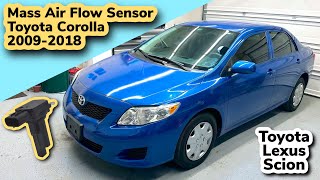
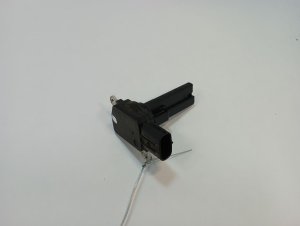
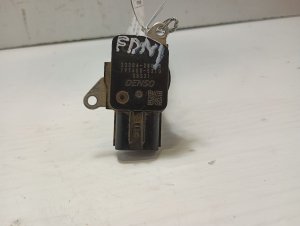
We Have This Part in Stock

The information in this article is provided for general reference and educational purposes only. Vehicle specifications, procedures, and part compatibility can vary by production date, trim level, and region. Always consult your vehicle's factory service manual and verify part numbers before purchasing or performing repairs. Safety-critical components such as airbags, seat belts, and braking systems should be installed by a qualified professional.
- Toyota Corolla:
- 🧭 Diagnostic Flowchart
- 🎬 Helpful Videos
- 🛍️ Shop This Part
- What's Unique About the 2009-2013 Toyota Corolla
- Symptoms You May Notice
- Most Likely Causes
- Rare But Worth Checking
- Diagnosis Steps
- Parts You'll Likely Need
- Related Codes That Often Appear With This One
- Technical Service Bulletins (TSBs) & Recalls
- Mechanic-Grade Diagnostic Values
- Scan Tool Commands That Help
- Wiring & Ground Locations
- OEM Part Supersession History
- Other Known Issues on This Vehicle
- Used vs. New Parts: Buying Guide for This Vehicle
- Real Owner Stories
- 2009 Toyota Corolla 2.4L
- 2007-2011 Toyota Corolla/Matrix 2AZ-FE — ~60000 miles
- Related OBD-II Codes
- Frequently Asked Questions
- 🎟️ Get 5% Off