

P0103 on 2006-2012 Toyota RAV4: MAF Circuit High Causes and Fixes
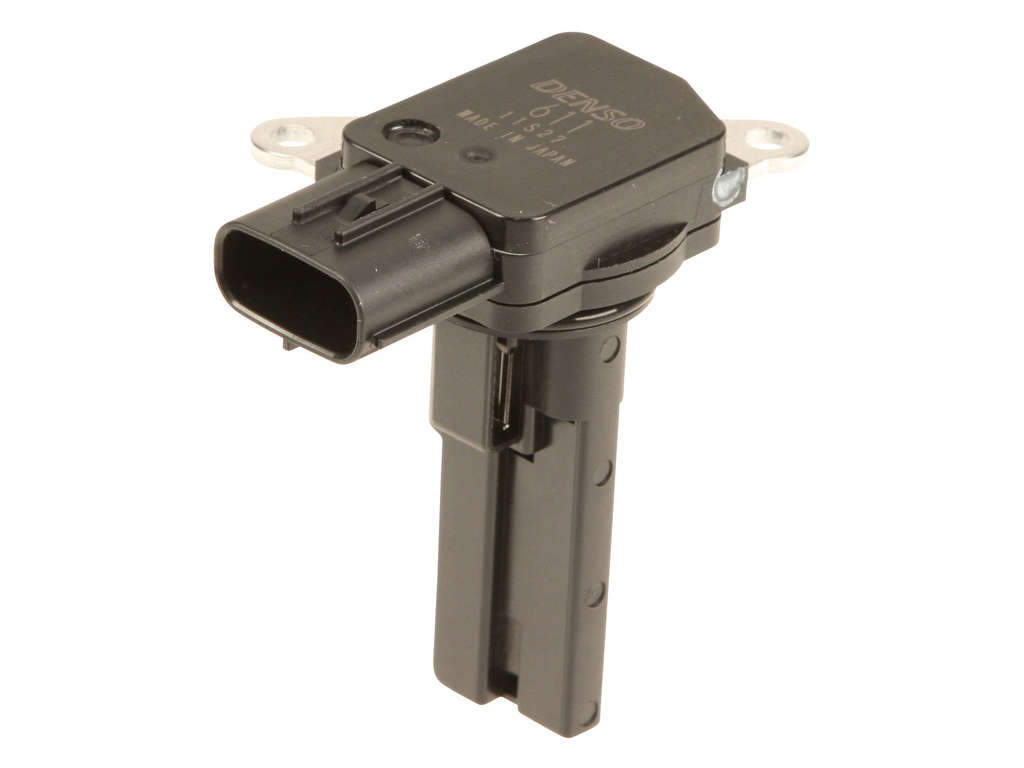
This code almost always points to a dirty or failed Mass Air Flow (MAF) sensor. Start by cleaning it with dedicated MAF cleaner (about $15). If that doesn't work, a new Denso (OEM) sensor costs around $100-$180, and replacement is a 10-minute DIY job.
- P0103 on a 2006-2012 RAV4 is overwhelmingly likely to be a MAF sensor issue.
- Always start with the cheapest, easiest fix: clean the MAF sensor with a dedicated cleaner.
- Do not use anything other than MAF cleaner on the sensor, and do not touch the internal wires.
- If you must replace the sensor, using the OEM brand (Denso) is strongly recommended to avoid further issues.
- The repair is very accessible in the engine bay and is considered a beginner-level DIY task.
What's Unique About the 2006-2012 Toyota RAV4
On this generation of RAV4, the MAF sensor is a common failure point, but often it's just dirty rather than completely broken. The engine bay layout provides very easy access to the sensor, making it a straightforward DIY diagnosis. The user's vehicle range spans two different 4-cylinder engines (the 2.4L 2AZ-FE from 2006-2008 and the 2.5L 2AR-FE from 2009-2012), but the cause, symptoms, and repair process for P0103 are virtually identical for both.
Generation note: The 2006-2012 year range covers the entire third generation (XA30) of the RAV4. The specified 2.5L 2AR-FE engine was used in the 2009, 2010, 2011, and 2012 model years. The 2006-2008 models used a 2.4L 2AZ-FE engine. While the diagnostic procedure for P0103 is the same, the specific Denso MAF sensor part number differs between the two engines.
Symptoms You May Notice
- Check Engine Light is on
- Rough or unstable idle, may fluctuate between 600-900 rpm.
- Hesitation or stumbling when accelerating.
- Noticeable loss of engine power or sluggish acceleration.
- Decreased fuel economy (MPG), sometimes a drop of 5-10%.
- Black smoke from the exhaust pipe, indicating a rich fuel condition.
- Engine may stall, especially at idle or shortly after starting.
- Engine is hard to start.
- Replacing the oxygen (O2) sensors. A bad MAF sensor reading will cause an incorrect air/fuel mixture, which can make the O2 sensors report unusual data, but they are not the root cause.
- Replacing the throttle body. The MAF sensor is located before the throttle body, and issues with the MAF are not typically resolved by replacing the throttle body.
Most Likely Causes
- Dirty Mass Air Flow (MAF) Sensor 🔴 High Probability → Shop Fuel Injection Air Flow Meter The hot-wire design of the sensor is susceptible to contamination from oil vapors (from the PCV system) and fine dust that gets past the air filter over time. This buildup insulates the sensing wire, causing it to misread airflow.
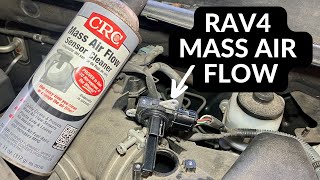
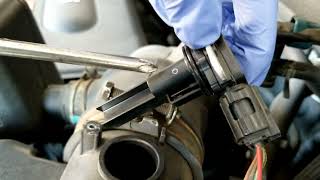
How to confirm: Remove the sensor (two Phillips head screws and an electrical connector) and visually inspect the small wires inside. If they are coated in grime, the sensor is dirty. The most definitive test is to clean it with dedicated MAF cleaner, clear the code, and see if the issue is resolved.
Typical fix: Clean the sensor using a dedicated MAF sensor cleaner spray. Do not touch the delicate wires or use any other type of chemical like brake cleaner, which will destroy it.
Est. part cost: $10-$20 for a can of CRC or Liqui Moly MAF cleaner. - Failed Mass Air Flow (MAF) Sensor 🟡 Medium Probability → Shop Fuel Injection Air Flow Meter After many years and heat cycles, the sensor's internal electronics can fail, causing it to send a constant high voltage signal (short circuit) regardless of actual airflow.
How to confirm: If cleaning the sensor does not resolve the code, and the wiring is confirmed to be good, the sensor itself has likely failed. Using a scan tool like Toyota's Techstream, monitor the MAF data stream. If the voltage is stuck high (near 5V) or the flow rate is illogical (e.g., reading 50 g/s at idle), the sensor is bad.
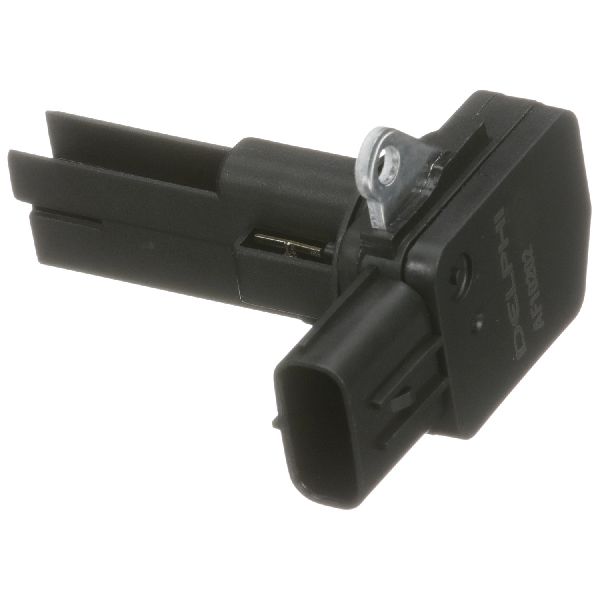
Typical fix: Replace the MAF sensor. It is highly recommended to use the OEM Denso part for reliable operation. Aftermarket sensors are known to cause performance issues.
Est. part cost: $100-$180 for an OEM Denso sensor. - Damaged Wiring or Loose Connector ⚪ Low Probability
How to confirm: Visually inspect the wiring harness leading to the MAF sensor for any signs of chafing, breaks, or corrosion at the connector pins. Wiggle the connector with the engine running to see if it affects the idle. Use a multimeter to check for 12V power, ground, and signal continuity between the sensor connector and the ECM per the factory service manual.
Typical fix: Repair the damaged section of wire or clean/replace the connector pins. Secure the harness away from any sharp edges or heat sources.
Est. part cost: $5-$50 for wiring repair supplies. - Severely Clogged Engine Air Filter ⚪ Low Probability → Shop Air Cleaner Assembly
How to confirm: Visually inspect the engine air filter. If it is black and clogged with debris, it is overdue for replacement. A severely restricted filter can cause strange airflow dynamics that may, in some cases, contribute to erratic MAF readings.
Typical fix: Replace the engine air filter. This should be done as routine maintenance regardless.
Est. part cost: $15-$30
Rare But Worth Checking
- Faulty Engine Control Module (ECM): This is extremely rare. Before condemning the ECM, every other possibility (sensor, wiring, leaks) must be exhaustively ruled out by a professional.
- Large Vacuum Leak Post-MAF: While more commonly associated with lean codes (P0171), a significant tear in the air intake boot between the MAF sensor and the throttle body can sometimes cause 🎬 Watch: Complete intake, throttle body, and MAF service guide erratic readings that may trigger a P0103, although P0102 (low input) is more likely.
Diagnosis Steps
- Read the trouble code with an OBD-II scanner and note any other codes that are present. Record the freeze frame data to see engine conditions when the code was set.
- Visually inspect the engine air filter. If it's dirty, replace it.
- Inspect the air intake tube between the air filter housing and the throttle body for any cracks, tears, or loose clamps.
- Carefully inspect the MAF sensor's electrical connector for a secure fit and look for any corrosion on the pins or damage to the wires.
- With the ignition off, disconnect the MAF sensor. Remove the two screws holding it in place and gently pull it out.
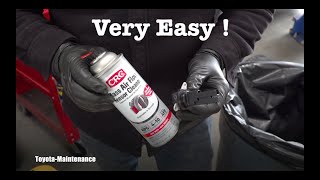
- Spray the sensor's internal wires generously with a dedicated Mass Air Flow sensor cleaner. Do not touch the wires. Let it air dry completely for at least 15-20 minutes before reinstalling.
- Reinstall the sensor, clear the codes with the scanner, and perform a test drive, trying to replicate the conditions from the freeze frame data to see if the code returns.
- If the code returns, use a scan tool (ideally Toyota Techstream) to monitor the MAF sensor's voltage or flow rate (g/s) at idle and while revving the engine. A healthy sensor on a warmed-up 2AR-FE should read around 1.8-4.5 g/s at idle and increase smoothly with RPM. A reading stuck high (e.g., > 5.0 g/s at idle) or a voltage stuck near 5V indicates a likely failed sensor or wiring short.
- If the sensor is suspected to be bad after cleaning, replace it with a new OEM Denso part.
- If the problem persists, perform a continuity and resistance check on the wiring between the MAF sensor connector and the ECM to rule out an open or short circuit, following the procedure in the Toyota service manual.
Parts You'll Likely Need
- Mass Air Flow Sensor
(OEM #For 2.5L 2AR-FE (2009-2012): Toyota P/N 22204-0V010 or 22204-0V020. The equivalent Denso part is 197-6160. For 2.4L 2AZ-FE (2006-2008): Toyota P/N 22204-31020. The equivalent Denso part is 197-6110.)— This is the most common cause of the P0103 code if cleaning the original sensor does not resolve the issue.
Trusted brands: Denso (OEM)
OEM price range: $120-$180
Aftermarket price range: $50-$110 (Not Recommended) - Mass Air Flow Sensor Cleaner — This is the first and most cost-effective step in attempting to fix the code, as contamination is a very common problem.
Trusted brands: CRC, Liqui Moly, WD-40 Specialist
Aftermarket price range: $10-$20
Related Codes That Often Appear With This One
- P0101 — Mass Air Flow (MAF) Circuit Range/Performance. This code often appears alongside P0103 as the sensor's readings are both out of the expected range and illogical.
- P0102 — Mass Air Flow (MAF) Circuit Low Input. Seeing this with P0103 can indicate an intermittent wiring problem where the signal is shorting to ground and also shorting to power, or a failing sensor that is fluctuating wildly.
- P0171 / P0172 — System Too Lean / System Too Rich. While P0171 (Lean) is mentioned in Pass 1, a P0103 (High Input) can trick the ECM into injecting too much fuel, causing a P0172 (Rich) condition and black smoke.
Technical Service Bulletins (TSBs) & Recalls
- T-SB-0012-11 Rev1: Addresses a rattle from the VVT system on the 2AR-FE engine, which is a known issue for this platform but not directly related to P0103.
- T-SB-0318-08: Details the repair for a common clunking noise from the intermediate steering shaft, a well-known issue for the XA30 RAV4 platform.
Platform-Specific Known Issues
- Real Owner Experience: A user on speckog.com with a P0103 code went through a long diagnostic journey. After replacing the MAF sensor with no luck, a smoke test revealed a large vacuum leak from a torn hose. Fixing the leak improved the car's performance significantly, though other issues were present. This highlights the importance of checking for vacuum leaks, even if they are not the most common cause for this specific code.
Mechanic-Grade Diagnostic Values
- MAF Sensor Signal Voltage (at ECM) — expected: 0.5V - 4.5V (Varies with airflow). Failure: Voltage remains higher than 4.9V for more than 3 seconds.
- MAF Sensor Live Data (Scan Tool) — expected: Approx. 1.8 to 4.5 g/s at warm idle. Rises smoothly to 15-25 g/s at 2500 RPM.. Failure: Reading is stuck at an abnormally high value (e.g., over 50 g/s) at idle, or does not change with RPM.
- MAF Sensor Connector - Power Supply Voltage — expected: Approximately 12V (Battery Voltage) with ignition ON.. Failure: No voltage or significantly low voltage, indicating a wiring issue from the integration relay.
- MAF Sensor Connector - Ground Circuit — expected: Near 0V. A continuity test to a known good chassis ground should show less than 1 ohm of resistance.. Failure: Voltage present on the ground wire, or high resistance to ground, indicating a bad ground connection (often at a shared ground point).
Scan Tool Commands That Help
- Toyota Techstream: Data List -> MAF — This is the primary function used to monitor the live airflow reading in grams per second (g/s). It's used to verify if the sensor is reading illogically high at idle or not responding to changes in engine RPM.
- Toyota Techstream: Trouble Codes -> Pending — After clearing codes and test driving, checking for pending DTCs can reveal if the fault condition has been met again before the MIL (Check Engine Light) is commanded on.
- Toyota Techstream: Utility -> All Readiness — Used to check the status of the OBD system's self-test monitors after a repair. This confirms if the MAF sensor monitor has completed its check and passed, verifying the fix.
Wiring & Ground Locations
- MAF Sensor Connector — On the air filter housing assembly, right after the main air filter box.. This is the primary point of failure for loose connections or corrosion. The 5-pin connector contains the power, ground, and signal wires essential for sensor operation.
- Engine Ground Points (e.g., EA, EB) — Various points on the engine block, cylinder head, and inner fender aprons. The specific ground for the MAF sensor circuit is shared with other sensors and terminates on the engine or chassis.. A corroded or loose engine ground can create high resistance in the sensor's ground circuit, causing a floating ground and leading to an incorrect high voltage signal being sent to the ECM.
- ECM Connectors — Typically located in the engine bay on the passenger side or behind the glove box, depending on the specific model year.. This is the termination point for the MAF signal wire. A continuity test between the MAF connector and the corresponding pin at the ECM connector is the definitive way to rule out a break in the wiring harness.
Real Owner Repair Stories
- Tacoma World forum user 'slowtacotruck' (Toyota Tacoma (similar engine management and sensor)) — P0103 code appeared immediately after changing spark plugs. Scan tool showed extremely high MAF readings of 62.3 g/s to 76.8 g/s at idle.
❌ Tried (didn't work) Initial visual inspection of the connector seemed fine.
✅ What actually fixed it The owner disassembled the air intake tube and airbox, then reassembled everything carefully to ensure a proper seal. At the same time, they sprayed the MAF sensor with MAF cleaner. After this, the code cleared and the idle MAF reading returned to a normal 6.5 g/s. The likely cause was either a slightly dislodged intake tube creating a leak or the sensor being disturbed/contaminated during the spark plug job.
OEM Part Supersession History
22204-0V010→22204-0V020— Standard part revision and consolidation by the manufacturer.
Heads up: The new part number (22204-0V020) is the correct and direct replacement for the original. It also replaces part number 22204-0T020.
Model Year Variations Within This Range
- 2006-2008 vs 2009-2012: The primary difference affecting this code is the engine and corresponding MAF sensor. The 2006-2008 models use the 2.4L 2AZ-FE engine with MAF sensor P/N 22204-31020. The 2009-2012 models use the 2.5L 2AR-FE engine with MAF sensor P/N 22204-0V020. The diagnostic principles are identical.
Diagnostic Flowchart
Other Known Issues on This Vehicle
Issues unrelated to this code that are worth knowing about as an owner of this generation:
- Excessive Oil Consumption (2.4L 2AZ-FE Only) 🔴 High — Common on 2006-2008 models with the 2AZ-FE engine, often noticeable after 60,000 miles. Caused by defective piston ring design. (Ref: Toyota issued a Warranty Enhancement Program (ZE7) and T-SB-0094-11 to address this by replacing pistons and rings.)
- VVT Gear Rattle on Cold Start (2.5L 2AR-FE) 🟠 Medium — A brief rattle or knocking sound for a few seconds after a cold start is common. It's often more of an annoyance than a critical failure. (Ref: T-SB-0012-11 Rev1 addresses this issue, which may also set codes P0015 or P0017, by replacing the camshaft timing exhaust gear assembly.)
- Intermediate Steering Shaft Clunk 🟠 Medium — A clunking or knocking noise from the steering column when turning, especially at low speeds. Very common on the XA30 platform. (Ref: T-SB-0318-08 details the replacement of the intermediate steering shaft with an improved part (P/N 45260-42090).)
- Water Pump Failure 🟠 Medium — Leaks or bearing failure can occur, typically after 80,000-120,000 miles. More common on the V6 but also seen on the 2AR-FE.
- Torque Converter Shudder (U-series Transmissions) 🟡 Low — Some owners report a brief shudder under light load between 25-50 mph. This was more prominent on later models but has been reported on this generation. (Ref: T-SB-0023-15 was issued for 2013-2015 models but the condition is similar to what some 2009-2012 owners describe. The fix involves a software update and/or torque converter replacement.)
Used vs. New Parts: Buying Guide for This Vehicle
When a used part is the smart pick: For a critical and relatively inexpensive sensor like the MAF, buying used is generally not recommended. It should only be considered as a last resort for temporary diagnosis if an extremely cheap part is available from a junkyard with a return policy.
Donor-vehicle mileage cap: roughly under 50000 miles for the part to have meaningful remaining life.
What to inspect on the donor part:
- Inspect the connector for corrosion or broken clips.
- Look at the sensing wires inside; if they are visibly broken, caked in oil, or appear to have been physically touched, reject the part.
- Choose a donor vehicle that appears well-maintained and is from a front-end collision (indicating the engine was likely running well) rather than one junked for unknown engine issues.
OEM-only on this vehicle (don't cheap out):
- Mass Air Flow Sensor
Aftermarket brands forum-validated for this vehicle:
- Denso (This is the Original Equipment Manufacturer and should be the first choice)
Brands owners have reported issues with on this vehicle:
- Generic, unbranded sensors from online marketplaces. Forum and expert consensus strongly advises against non-OEM electronic sensors for Toyota vehicles, as they often have incorrect calibration, leading to persistent performance issues or new trouble codes.
Real Owner Stories
Aggregated from forums and TSBs cited above. Mileages and costs reflect what owners reported in those sources.
2010 Toyota RAV4 2.5L
Symptoms: Experienced P0103 along with P0101 and P0104 codes. Attempted cleaning the sensor which only provided a temporary fix before the issue returned.
What fixed it: Replacing the MAF sensor with a new Denso unit.
Source hint: rav4world.com - 'P0101, P0103, P0104 codes'
2009 Toyota RAV4 2.5L
Symptoms: Reported a P0103 code accompanied by a very rough idle.
What fixed it: Replacing the MAF sensor with a Denso part (Part #197-6160) from a local auto parts store.
Source hint: toyotanation.com - 'RAV4 P0103 and rough idle'
Toyota RAV4 2.5L
Symptoms: P0103 code present. After replacing the MAF sensor failed to fix the problem, a smoke test was performed.
What fixed it: Repairing a large vacuum leak from a torn hose discovered during a smoke test.
Source hint: speckog.com user experience cited in vehicle_specific_issues
Related OBD-II Codes
Frequently Asked Questions
Which specific MAF sensor should I buy for my 2006-2012 RAV4 2.5L?
Does T-SB-0012-11 Rev1 regarding the 2AR-FE engine relate to my P0103 code?
Can I use brake cleaner to clean the MAF sensor on my RAV4?
What are the normal MAF sensor readings for a healthy 2AR-FE engine at idle?
Is the clunking noise in my steering related to the P0103 engine code?
My 2007 RAV4 is consuming a lot of oil; could this cause my P0103 code?
Helpful Videos

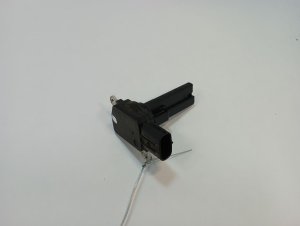
Used OEM Parts in Stock
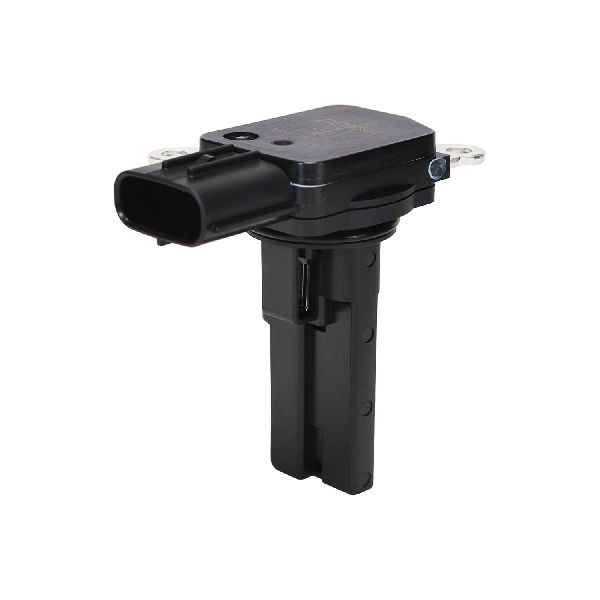
New Aftermarket Parts Available

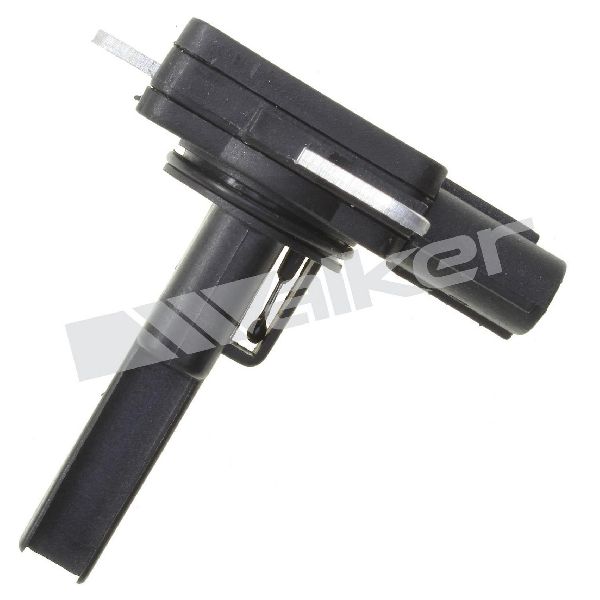

The information in this article is provided for general reference and educational purposes only. Vehicle specifications, procedures, and part compatibility can vary by production date, trim level, and region. Always consult your vehicle's factory service manual and verify part numbers before purchasing or performing repairs. Safety-critical components such as airbags, seat belts, and braking systems should be installed by a qualified professional.
- Toyota RAV4:
- 🧭 Diagnostic Flowchart
- 🎬 Helpful Videos
- 🛍️ Shop This Part
- What's Unique About the 2006-2012 Toyota RAV4
- Symptoms You May Notice
- Most Likely Causes
- Rare But Worth Checking
- Diagnosis Steps
- Parts You'll Likely Need
- Related Codes That Often Appear With This One
- Technical Service Bulletins (TSBs) & Recalls
- Platform-Specific Known Issues
- Mechanic-Grade Diagnostic Values
- Scan Tool Commands That Help
- Wiring & Ground Locations
- Real Owner Repair Stories
- OEM Part Supersession History
- Model Year Variations Within This Range
- Other Known Issues on This Vehicle
- Used vs. New Parts: Buying Guide for This Vehicle
- Real Owner Stories
- 2010 Toyota RAV4 2.5L
- 2009 Toyota RAV4 2.5L
- Toyota RAV4 2.5L
- Related OBD-II Codes
- Frequently Asked Questions
- 🎟️ Get 5% Off