

OBD-II Code P0105: Manifold Absolute Pressure (MAP) Sensor Circuit Malfunction
The Ultimate Guide to Diagnosing and Fixing P0105
- Code P0105 indicates the Engine Control Module (ECM) is receiving a voltage signal outside the normal 0.5V to 4.5V range from the MAP sensor circuit.
- Test the 5-volt reference and ground wires with a multimeter before spending $150 or more on a replacement MAP sensor.
- Inspect vacuum hoses for cracks and listen for hissing sounds, as unmetered air leaks trigger a large percentage of MAP-related codes.
- If P0105 appears alongside lean codes like P0171 or P0174, prioritize finding an intake manifold vacuum leak rather than replacing electrical parts.
What Does P0105 Mean?
The Engine Control Module (ECM) detected an electrical circuit problem with the Manifold Absolute Pressure (MAP) sensor. The MAP sensor measures intake manifold pressure, dictating how much fuel the engine needs. When this signal is incorrect or missing, the engine cannot run efficiently, causing immediate performance issues.
Technical definition: Manifold Absolute Pressure/Barometric Pressure Circuit Malfunction. The Powertrain Control Module (PCM) detected the MAP sensor voltage signal is outside its expected 0.5V to 4.5V range for several seconds. The PCM uses this data to calculate engine load and adjust fuel injection. The code sets when the PCM identifies an electrical open, short, or irrational reading in the MAP or barometric (BARO) pressure sensor circuit.
Can I Drive With P0105?
Yes, But With Caution. You can drive short distances, but we do not recommend it. Ignoring a P0105 code causes poor fuel economy, engine damage, and stalling in traffic. Long-term neglect destroys your catalytic converter, a repair costing $800 to $2,500. For turbocharged vehicles, faulty MAP readings cause underboost or overboost conditions, risking $1,500–$3,000 in turbocharger damage. If the check engine light flashes, stop driving immediately to prevent severe misfire damage.
Common Causes
- Faulty MAP Sensor (Very Common) — The sensor fails internally from age, heat, or oil contamination, sending incorrect voltage signals to the computer.
- Damaged Wiring or Connectors (Common) — Wires leading to the MAP sensor fray, break, or corrode. Loose or contaminated electrical connectors disrupt the 5-volt signal.
- Vacuum Leaks (Common) — Cracked, disconnected, or clogged vacuum hoses connected to the intake manifold cause false pressure readings. Intake manifold gasket leaks also trigger this code.
- Clogged MAP Sensor Port (Less Common) — Carbon buildup or debris blocks the small port on the sensor or intake manifold, preventing accurate pressure measurement.
- Irregular Voltage Supply (Uncommon) — The MAP sensor requires a stable 5-volt reference from the ECM. A failing alternator or poor ground strap causes voltage fluctuations, flagging the sensor signal as faulty.
- Faulty Barometric Pressure (BARO) Sensor (Uncommon) — In vehicles with a separate Barometric Pressure (BARO) sensor, a malfunction in its circuit triggers the P0105 code.
- Faulty Throttle Position Sensor (TPS) (Uncommon) — A malfunctioning Throttle Position Sensor sends conflicting data to the ECM. If the MAP reading and throttle position do not correlate, the computer triggers P0105.
- Faulty Engine Control Module (ECM) (Rare) — The car's main computer fails, misinterpreting the MAP sensor signal or failing to provide the 5-volt reference.
Symptoms
- Check Engine Light is On — The light illuminates immediately when the ECM logs the P0105 fault code.
- Rough Idle — The engine shakes, vibrates, or sounds uneven when stopped. Idle speed fluctuates erratically.
- Poor Engine Performance — The engine hesitates, stumbles, or lacks power during acceleration.
- Engine Stalling — The engine stalls unexpectedly, especially during cold starts or when coming to a complete stop.
- Increased Fuel Consumption — The computer fails to calculate the correct air-fuel mixture, drastically reducing gas mileage.
- Hard Starting — The vehicle struggles to start or fails to start entirely due to an incorrect air-fuel ratio.
- Black Smoke from Exhaust — The ECM enriches the fuel mixture excessively, pushing unburned fuel out the tailpipe as black smoke.
Diagnostic Flowchart
Tap your situation to follow the diagnostic path that matches what you're seeing on this code.
Common Fixes & Costs
- Replace MAP Sensor — Parts: $40-$200, Labor: $50-$150, ~0.5 hr book time (DIY)
- Repair or Replace Wiring/Connector — Parts: $10-$50, Labor: $100-$200, ~1.5 hr book time (Intermediate)
- Repair Vacuum Leak (Hose) — Parts: $5-$30, Labor: $50-$100, ~0.5 hr book time (DIY)
- Clean MAP Sensor and Port — Parts: $5-$15, Labor: $20-$50, ~0.2 hr book time (DIY)
- Repair Vacuum Leak (Intake Gasket) — Parts: $30-$50, Labor: $200-$400, ~4 hr book time (Professional)
- Replace Engine Control Module (ECM) — Parts: $800-$1,200, Labor: $150-$250, ~1.5 hr book time (Professional)
DIY vs Professional
- Replace MAP Sensor 🟢 Beginner
Tools: Basic hand tools (socket set, screwdrivers) - Repair Vacuum Leak (Hose) 🟢 Beginner
Tools: Pliers, hose cutters - Repair Vacuum Leak (Intake Gasket) 🟢 Beginner
Tools: Extensive tool set, torque wrench, gasket scraper - Repair or Replace Wiring/Connector 🟢 Beginner
Tools: Multimeter, wire strippers, crimpers, soldering iron, heat shrink tubing - Replace Engine Control Module (ECM) 🟢 Beginner
Tools: Specialized scan tools for programming - Clean MAP Sensor and Port 🟢 Beginner
Tools: Basic hand tools, electrical contact cleaner, soft brush
Used vs. New Parts: Buying Guide
When a used part is worth it: For a common and relatively inexpensive part like a MAP sensor, buying new is almost always the better option due to the low cost and warranty.
Donor-vehicle mileage cap: roughly under 50000 miles for the part to have meaningful remaining life.
Donor quality checklist:
- Verify donor vehicle wasn't scrapped for engine-related failure
- Match part number exactly
- Inspect the part for physical damage or corrosion
Decision logic:
- If Vehicle is < 80K miles AND part is < $100 new → buy new — savings are minimal and risk is higher with a used part
- If Vehicle is > 150K miles AND budget is tight → a used part from a low-mileage donor is acceptable
- If The part is electronic and critical for engine management → favor new to ensure reliability and longevity
Warranty tradeoff: Used parts typically have a 30-90 day warranty. New aftermarket parts usually offer a 1-year to limited lifetime warranty. OEM new parts carry a 1-2 year warranty.
Worst-case if a used part fails: $100-200 if used part fails after install — repeat labor + replacement part
What Happens If You Wait — Timeline
- 0-2 weeks: Check Engine Light is on, but often no other noticeable symptoms. The ECM logs the fault but operates in a normal range. (MPG impact: 0-5%% · Added cost: $0)
- 2 weeks - 3 months: A noticeable drop in fuel economy occurs. You experience a rough idle, especially when the engine is cold, and slight hesitation during acceleration as the ECM defaults to a rich fuel mixture. (MPG impact: 10-15%% · Added cost: $50-150 in wasted fuel)
- 3-6 months: Engine performance degrades further with frequent stumbling, potential stalling at stops, and black smoke from the exhaust. The consistently rich fuel mixture overheats the catalytic converter, reducing its efficiency. (MPG impact: 15-25%% · Added cost: $200-400 in wasted fuel + potential damage to spark plugs and O2 sensors)
- 6+ months: The catalytic converter substrate melts or becomes completely clogged from being constantly bathed in unburned fuel. This creates significant exhaust backpressure, leading to severe power loss and potential internal engine damage. (MPG impact: 25-40%% · Added cost: $1,500 - $3,000+ for catalytic converter and potential engine repairs)
Cost of Not Fixing It
- 0-1 month: MPG drop of 10-15% (Added cost: Negligible)
- 1-6 months: Catalytic converter overheats due to rich fuel mixture, leading to failure (Added cost: $1200-2800)
- 6+ months: Internal engine damage from prolonged misfires and incorrect fuel mixture (Added cost: $2500+)
Diagnosis Steps
- Read the Codes and Freeze Frame Data
Use an OBD-II scanner to confirm P0105. Record related codes and analyze freeze frame data to identify engine conditions (RPM, load) when the fault occurred.
Tools: OBD-II Scanner (Beginner) - Check Live Data with a Scan Tool
Observe MAP sensor readings on a scan tool with the engine running. Compare the data to repair manual specifications to verify sensor response under varying loads.
Tools: OBD-II Scanner with live data capability (Intermediate) - Visual Inspection
Inspect the MAP sensor, connector, and intake manifold vacuum hoses. Look for cracked, disconnected, or damaged components. Ensure wiring avoids high-voltage parts.
Tools: Flashlight (Beginner) - Test the MAP Sensor Circuit (Pro Tip)
Use a multimeter to probe the MAP connector (key on, engine off). Verify a 5-volt reference (4.8V-5.2V) and a ground (under 0.5Ω). Missing voltage indicates a wiring or ECM fault.
Tools: Multimeter (Intermediate) - Test the MAP Sensor's Output Voltage (Pro Tip)
Back-probe the signal wire. Voltage should read 4.5-4.8V (engine off, sea level), drop to 1-1.5V at idle, and increase smoothly as you open the throttle. Static voltage means a dead sensor.
Tools: Multimeter, back-probe pins (Advanced) - Check for Vacuum Leaks
With the engine running, listen for hissing. Spray brake cleaner around intake gaskets and vacuum lines; an idle change pinpoints the leak.
Tools: Brake cleaner or soapy water spray bottle (Intermediate) - Inspect the MAP Sensor Port
Remove the MAP sensor and inspect its port for carbon buildup. Clean gently with electrical contact cleaner and a soft brush.
Tools: Basic hand tools, electrical contact cleaner (Intermediate) - Check MAP Sensor Resistance
Disconnect the sensor and measure terminal resistance with a multimeter. Compare to factory specs (typically 1-2 kΩ at 68°F). Infinite or zero resistance means internal failure.
Tools: Multimeter (Advanced) - Perform a Vacuum Gauge Test
Connect a vacuum gauge to the intake manifold. Steady 17-21 in. Hg at idle is healthy. Low or fluctuating vacuum indicates mechanical issues or leaks.
Tools: Vacuum gauge (Advanced) - Test Fuel Pressure
Connect a fuel pressure gauge to the fuel rail. Verify pressure matches manufacturer specs (typically 30-50 PSI). Low pressure occasionally mimics MAP symptoms.
Tools: Fuel pressure gauge (Advanced)
When This Code Triggers (Freeze-Frame Conditions)
- Engine Coolant Temp: 180-200°F (fully warmed up)
- RPM: 1500-2500 (cruise / steady throttle)
- Engine Load: 30-60% (steady state driving)
- Vehicle Speed: 35-55 mph (highway driving)
Related Codes
- P0106 — MAP/Barometric Pressure Sensor Circuit Range/Performance. While P0105 indicates a general circuit malfunction, P0106 means the sensor's signal is not rational compared to other sensors like the Throttle Position Sensor (TPS). A P0105 shows a fixed voltage, while a P0106 shows voltage that changes incorrectly.
- P0107 — MAP/Barometric Pressure Sensor Circuit Low Input. This is a specific version of P0105, indicating the voltage signal is consistently below 0.5V. This points directly to a short to ground in the signal wire, a bad ground, or a completely failed sensor.
- P0108 — MAP/Barometric Pressure Sensor Circuit High Input. This indicates the voltage is stuck above 4.5V. This is caused by a short to the 5V reference wire, an open ground circuit, or an internally shorted sensor.
- P0171/P0174 — System Too Lean (Bank 1/Bank 2). These codes trigger alongside P0105 when the root cause is a significant vacuum leak. Unmetered air causes the MAP sensor to read higher pressure, leading to P0105, while simultaneously making the air-fuel ratio too lean.
Climate & Environmental Factors
- Altitude: High altitude changes the baseline barometric pressure reading. While the ECM compensates for this, a borderline faulty sensor triggers a P0105 code as it struggles to adapt to lower atmospheric pressure.
- Extreme Temperatures: Extreme cold stiffens the sensor's internal diaphragm, leading to inaccurate readings. High humidity and temperature swings accelerate corrosion on wiring and connectors, causing circuit failures.
How to Talk to a Mechanic About This Code
Say this: "I have a P0105 code and I'd like to schedule a diagnostic. I've already performed a visual inspection of the vacuum hoses and wiring. Please check the MAP sensor's live voltage readings and test for intake manifold vacuum leaks before recommending a sensor replacement."
This signals that you've done your research and are aware of common misdiagnoses, like replacing the sensor when a simple vacuum leak is the culprit. It directs the technician to perform specific, necessary diagnostic steps rather than just swapping parts.
Avoid saying:
- 'Just replace the MAP sensor.'
- 'My check engine light is on, can you look at it?' (too vague — invites upsell)
- 'I think it's a sensor problem.'
Questions to ask before authorizing the repair:
- What were the MAP sensor voltage readings at idle and with the engine off?
- Did you perform a smoke test to check for vacuum leaks? If so, what were the results?
- Can you show me the old part and explain why it failed?
- What is the warranty on the parts and labor for this repair?
Where to Take It: Dealer vs Independent vs Chain
- Dealer:
Best for: Vehicles still under powertrain or emissions warranty, Known manufacturer-specific issues (like a required software update for some Ford models), Complex electrical issues that an independent shop has failed to diagnose
Downsides: Typically higher labor rates (1.5-2x vs. independent shops), May recommend replacing related components as a preventative measure, increasing cost (Typical cost: +50% vs. baseline) - Independent Shop:
Best fit for most P0105 situations. The causes are typically not complex, and a reputable independent shop handles the diagnosis and repair effectively and affordably.
Best for: Most out-of-warranty vehicles, Straightforward diagnosis of common causes like vacuum leaks and sensor replacement
Downsides: Quality and diagnostic capabilities vary greatly; check for ASE certification and good reviews, May not have access to the latest manufacturer-specific technical service bulletins (TSBs) (Typical cost: +0% vs. baseline) - Chain Shop:
Acceptable for a simple MAP sensor replacement if you are certain that is the issue. AVOID for initial diagnosis, as they may overlook a vacuum leak and sell you a sensor you don't need.
Best for: Simple, clear-cut part replacements when you have already diagnosed the issue yourself
Downsides: Technician skill and experience is inconsistent, High pressure to upsell services and parts; may recommend unnecessary repairs (Typical cost: -10% vs. baseline)
When to Walk Away From the Repair
If the estimated repair cost for the P0105 code exceeds 40-50% of your car's private-party value, consider selling the vehicle.
- Car worth $4000, fix is $250: Fix it. This is a relatively inexpensive repair that is well below the threshold.
- Car worth $3000, fix is $1500: Walk away. This repair cost is significant compared to the car's value, especially if the cause is a rare ECM failure.
- Car worth $8000, fix is $450: Fix it. The repair cost is a small fraction of the vehicle's value.
What Scan Tool You Need for This Code
Minimum: A scanner that reads and clears codes, and displays live sensor data and freeze frame data.
A basic $20 code reader only tells you that code P0105 is present. It lacks live data viewing, which is critical for verifying MAP sensor voltage. Without live data, you are guessing whether the problem is the sensor, a vacuum leak, or a wiring issue.
Budget: BlueDriver Pro (~$100) — Connects to your smartphone via Bluetooth and provides access to reading/clearing codes, freeze frame data, and live data graphing for the MAP sensor. This is typically enough to distinguish between a faulty sensor and other potential causes.
Mid-range: Foxwell NT510 Elite (~$180) — In addition to live data and freeze frame, this handheld scanner offers bidirectional controls (active tests) which help activate components to test their functionality, providing a deeper level of diagnostics for complex electrical issues.
Professional: Autel MaxiCOM MK808 (~$500) — Provides comprehensive, professional-level diagnostics. It offers full bidirectional control, extensive data graphing, and access to manufacturer-specific codes and data, which is crucial for diagnosing less common causes or issues on European vehicles.
Rent vs buy: For a one-time diagnosis, auto parts stores like AutoZone read your codes for free. However, they use basic readers and won't diagnose live data. If you plan on doing DIY repairs, buying a budget-friendly scanner like the BlueDriver Pro is a worthwhile investment.
How to Clear the Code After You Fix It
- Reconnect battery
- Use OBD-II scan tool to clear code
- Drive at least one full warm-up cycle
Drive cycle (~30 minutes): Cold start → 5 min idle → 15 min mixed driving → 5 min steady highway → cool to ambient
Readiness monitors affected: Catalyst monitor, O2 sensor monitor
Before emissions retest: drive at least 100 miles to fully set monitors.
Watch out for:
- Disconnecting the battery doesn't always reset readiness monitors
- Code returns if root cause is not fixed
Will This Fail Emissions / State Inspection?
Yes — this code typically fails an OBD-II emissions inspection.
- California: A P0105 code results in an automatic smog check failure. All readiness monitors must be set to 'Ready' before a retest.
- New York: The NYS DMV emissions inspection includes an OBD-II scan; a P0105 code causes the vehicle to fail.
- Texas: In counties where emissions testing is required, a vehicle with a P0105 code will not pass the inspection.
Most Commonly Affected Vehicles
- Volkswagen Jetta, Golf (with Turbo) (2005-2015) — Turbocharged engines in these models are particularly sensitive to MAP sensor failures and vacuum leaks. The P0105 code is a common issue in these vehicles.
- Audi A4, A6 (with Turbo) (2005-2015) — Similar to Volkswagen, the turbocharged engines frequently experience P0105 due to sensor or wiring issues. A replacement MAP sensor for an Audi Q5 costs between $147 and $187 for the part alone.
- BMW 3-Series, 5-Series (2002-2012) — These models often see this code related to MAP sensor failures or complex wiring problems.
- Volvo S60, XC90 (2001-2009) — Older Volvo models are more prone to triggering this code due to vacuum leaks from aging hoses rather than sensor failure.
- Chevrolet Silverado, Cruze (2007-2016) — This code is common in various Chevrolet models, often stemming from a faulty MAP sensor or intake manifold vacuum leaks.
- Hyundai / Kia Sonata, Optima, Santa Fe, Sorento (with 2.4L GDI engine) (2010-2015) — The 2.4L GDI engine used across many Hyundai and Kia models is known to set P0105 and related MAP sensor codes.
- Honda Civic, Accord, HR-V (2005-2022) — P0105 appears on various Honda models, often related to the sensor itself or wiring issues.
- Ford Focus, Fusion, F-150 (2008-2017) — This code is frequently seen in Ford vehicles, sometimes related to the MAP sensor and other times linked to vacuum leaks or software glitches in turbocharged models.
- Nissan Maxima, Pathfinder, Altima (1997-2010) — On these Nissan models, the P0105 code is often a straightforward MAP sensor or vacuum line failure.
Manufacturer-Specific Notes
- General Motors (GM): On some GM vehicles, a faulty MAP sensor causes harsh shifting in the automatic transmission because the transmission control module uses MAP data to control shift pressure.
- Ford: In certain Ford models with turbochargers, a P0105 code triggers due to a software glitch in the ECM that requires a calibration update from the dealer. TSB 15-0045 is one example for 2.0L EcoBoost engines.
- Chrysler/Dodge/Jeep: These vehicles often have the MAP sensor mounted directly to the intake manifold. The O-ring seal becomes brittle and leaks, causing a P0105 code even if the sensor works correctly.
- Mercedes-Benz: Some Mercedes-Benz models show a higher prevalence of P0105 codes, often related to MAP sensor failures or wiring issues.
Real Owner Stories
2005 Toyota RAV4 D4D
Check engine light came on and engine became 'jumpy' at higher speeds in second gear after replacing a physically broken MAP sensor.
What they tried:
- Replaced the broken MAP sensor with a new one, but the P0105 code appeared afterward.
- Considered if the new sensor was faulty or if not disconnecting the battery during the swap caused the issue.
Outcome: The issue was related to the new sensor's compatibility or a remaining wiring/connector issue. The owner was advised to perform circuit tests to verify the signal from the new sensor.
Lesson: Even when a part is clearly broken, the replacement part can be faulty or incompatible. Always verify the new sensor's signal and check wiring integrity before assuming the fix is complete.
2007 Vauxhall/Opel Corsa 1.2
Engine light on with P0105, P0108, and P0068 codes, but no noticeable difference in driving or idling.
What they tried:
- Cleared the codes, but one of them returned within 5 minutes of driving.
Outcome: The combination of codes points strongly toward an electrical issue, such as a bad ground or a wiring short, rather than a faulty sensor, especially since no performance issues were felt.
Lesson: Multiple related sensor codes appearing at once indicate a shared electrical problem (like a bad ground or 5V reference circuit) rather than multiple failed components.
Mercedes-Benz W639 Viano
Vehicle went into limp mode with EML on when accelerating hard past 3000 RPM. Restarting the engine cleared the issue temporarily.
What they tried:
- Found the variable vane arm on the turbo was tight and lubricated it.
- A garage cleared the stored P0105 code ('Boost pressure sensor voltage too high').
Outcome: The root cause was a mechanical issue with the turbo's variable vanes sticking, causing an overboost condition. This registered as a high voltage signal from the MAP (boost) sensor, triggering P0105. Freeing the mechanical parts resolved the electrical code.
Lesson: A sensor code doesn't always mean the sensor is bad. It accurately reports mechanical problems. In turbocharged cars, P0105 is often a symptom of a boost control issue.
Fiat Stilo
Car wouldn't start after sitting for 3 months. After a new battery, it had a P0105 code, rough idle, and stalling issues that multiple garages could not fix after replacing many parts.
What they tried:
- Multiple shops replaced various parts, including the MAP sensor, without success.
- Owner eventually bought a used throttle body from a scrapyard for £20, cleaned it, and installed it.
Outcome: A faulty throttle body was the root cause. After replacing and performing a self-adaptation procedure, the car started and ran like new. The MAP sensor was reporting erratic pressure caused by the malfunctioning throttle body.
Lesson: Don't get stuck on replacing the sensor named in the code. Other components, like the throttle body, create conditions that cause the MAP sensor to send faulty data to the ECU.
How to Prevent This Code From Triggering
- Clean the MAP Sensor Periodically (Every 30,000 miles or during throttle body service) — Oil vapor from the PCV system and carbon buildup coat the sensor, insulating it and causing slow or inaccurate readings. Cleaning with a dedicated electronics or MAF sensor cleaner restores its sensitivity.
- Inspect Vacuum Hoses (During every oil change) — Rubber and plastic hoses become brittle and crack with age and heat exposure. A quick visual inspection for cracks and ensuring connections are tight prevents vacuum leaks that trigger P0105.
- Maintain Battery and Ground Connections (Annually) — The MAP sensor relies on a stable 5-volt reference from the ECM. A weak battery or corroded ground straps cause voltage fluctuations, leading the ECM to incorrectly flag the sensor's signal as faulty.
- Secure Wiring Harnesses (Once, or after any engine work) — Use zip ties to secure the MAP sensor wiring harness away from hot exhaust components and moving parts like belts and pulleys. This prevents insulation from melting or chafing, which causes shorts or open circuits.
- Service the PCV System (Per manufacturer's interval (typically 30,000-60,000 miles)) — A failing or clogged PCV valve causes excessive oil vapor to be drawn into the intake manifold, which contaminates and clogs the MAP sensor, leading to failure.
Frequently Asked Questions
Can I just replace the MAP sensor to fix P0105?
Not always. While a faulty MAP sensor is common, the problem is often a vacuum leak or wiring issue. Replacing the sensor without proper diagnosis wastes money.
What is the most common misdiagnosis for a P0105 code?
Replacing the MAP sensor when the actual problem is a cracked vacuum hose or bad intake gasket. Failing to check for a stuck-open EGR valve is another frequent mistake.
How much does it cost to fix a P0105 code?
A simple vacuum hose replacement costs under $100. A new MAP sensor replacement typically runs $150 to $280 for parts and labor. Complex wiring or ECM repairs exceed $500.
Will clearing the code make it go away?
Clearing the code turns off the Check Engine Light temporarily, but it returns as soon as the computer detects the fault again. You must fix the underlying problem.
Is a P0105 code serious?
Yes, it is moderately serious. It causes poor fuel economy and increased emissions, and destroys your catalytic converter if ignored for too long.
Where is the MAP sensor located?
The MAP sensor mounts directly on or near the engine's intake manifold. It is a small plastic sensor with a 3-wire electrical connector and sometimes a vacuum hose.
Can a dirty air filter cause a P0105 code?
No, a dirty air filter does not cause a P0105 circuit malfunction code. This code points specifically to an electrical fault or an out-of-range voltage reading. A clogged filter affects performance but won't trigger a circuit error.
Can a bad battery cause a P0105 code?
Yes. The MAP sensor requires a stable 5-volt reference from the ECM. A failing battery causes voltage fluctuations that trigger the code.
Key Takeaways
- Code P0105 indicates the Engine Control Module (ECM) is receiving a voltage signal outside the normal 0.5V to 4.5V range from the MAP sensor circuit.
- Test the 5-volt reference and ground wires with a multimeter before spending $150 or more on a replacement MAP sensor.
- Inspect vacuum hoses for cracks and listen for hissing sounds, as unmetered air leaks trigger a large percentage of MAP-related codes.
- If P0105 appears alongside lean codes like P0171 or P0174, prioritize finding an intake manifold vacuum leak rather than replacing electrical parts.
Helpful Videos
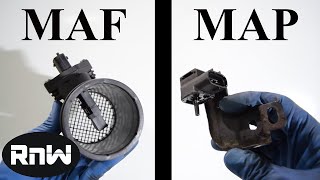
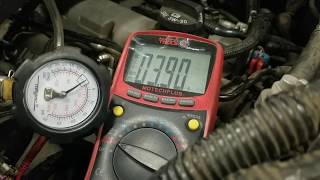
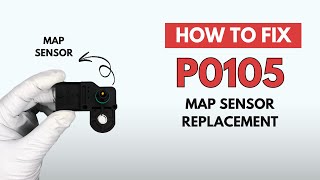
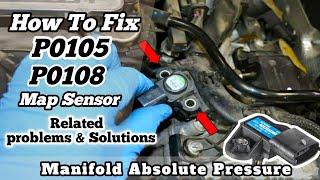
![How to Fix P0105 Engine Code in 2 Minutes [1 DIY Method / Only $11.91]](https://img.youtube.com/vi/nDSbnbkR6U4/mqdefault.jpg)
Shop the Parts Behind P0105
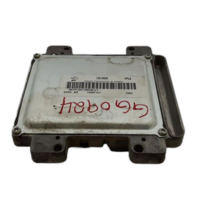
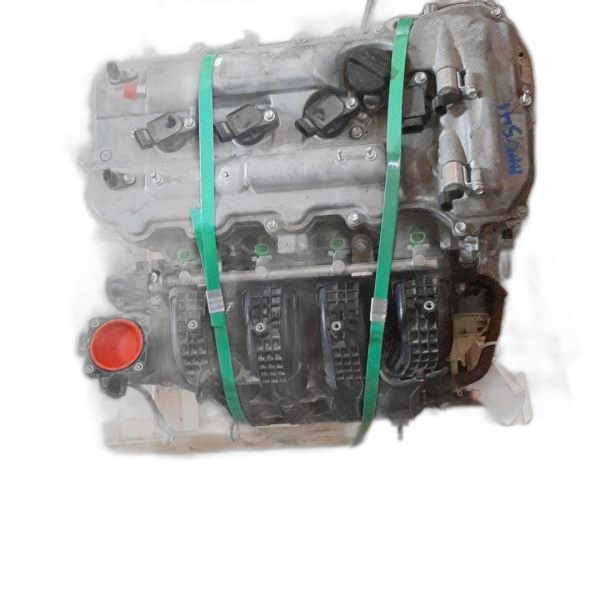
Below are the parts most often responsible for code P0105, ranked by how frequently each one is the actual culprit (per the diagnosis above). Tap any to see what we have for your vehicle.


The information in this article is provided for general reference and educational purposes only. Vehicle specifications, procedures, and part compatibility can vary by production date, trim level, and region. Always consult your vehicle's factory service manual and verify part numbers before purchasing or performing repairs. Safety-critical components such as airbags, seat belts, and braking systems should be installed by a qualified professional.
- 🧭 Diagnostic Flowchart
- 🎬 Helpful Videos
- 🛍️ Shop This Part
- What Does P0105 Mean?
- Can I Drive With P0105?
- Common Causes
- Symptoms
- Common Fixes & Costs
- DIY vs Professional
- Used vs. New Parts: Buying Guide
- What Happens If You Wait — Timeline
- Cost of Not Fixing It
- Diagnosis Steps
- When This Code Triggers (Freeze-Frame Conditions)
- Related Codes
- Climate & Environmental Factors
- How to Talk to a Mechanic About This Code
- Where to Take It: Dealer vs Independent vs Chain
- When to Walk Away From the Repair
- What Scan Tool You Need for This Code
- How to Clear the Code After You Fix It
- Will This Fail Emissions / State Inspection?
- Most Commonly Affected Vehicles
- Manufacturer-Specific Notes
- Real Owner Stories
- 2005 Toyota RAV4 D4D
- 2007 Vauxhall/Opel Corsa 1.2
- Mercedes-Benz W639 Viano
- Fiat Stilo
- How to Prevent This Code From Triggering
- Frequently Asked Questions
- Can I just replace the MAP sensor to fix P0105?
- What is the most common misdiagnosis for a P0105 code?
- How much does it cost to fix a P0105 code?
- Will clearing the code make it go away?
- Is a P0105 code serious?
- Where is the MAP sensor located?
- Can a dirty air filter cause a P0105 code?
- Can a bad battery cause a P0105 code?
- Key Takeaways
- 🎟️ Get 5% Off