

P0106 on 2005-2008 Audi A4 2.0T: MAP Sensor, PCV, and Carbon Buildup Causes
For a B7 Audi A4 2.0T, code P0106 is most often caused by a failed PCV valve creating a vacuum leak. If the PCV is good, suspect a faulty MAP sensor or heavy carbon buildup on the intake valves. A new PCV valve costs around $45.
- Before buying any parts for a P0106 code, check for a failed PCV valve. A simple test on the oil cap can often confirm this in minutes.
- This code is frequently caused by a mechanical issue (vacuum leak or carbon buildup) rather than an electrical sensor failure.
- The 2.0T FSI engine requires periodic intake valve cleaning (walnut blasting) to prevent performance issues, including this code.
- If you replace the PCV valve, ensure you buy the correct version for your car's specific production date (pre or post 12/16/2005).
- Bosch is an original equipment supplier for the MAP sensor; using this brand is a reliable choice for replacement.
What's Unique About the 2005-2008 Audi A4
The 2.0T FSI (EA113) engine in the B7 generation A4 is notorious for two specific issues that directly cause the P0106 code. The first is the diaphragm in the PCV (Positive Crankcase Ventilation) valve, which frequently tears and creates a massive vacuum leak, often accompanied by a whistling or honking noise. The second is severe carbon buildup on the intake valves, a known side effect of the direct-injection design where fuel doesn't wash over the valves. Both of these common mechanical failures can create implausible readings at the MAP sensor, often leading to a misdiagnosis of the sensor itself.
Symptoms You May Notice
- Check Engine Light is on
- EPC (Electronic Power Control) light may be on
- Rough or erratic idle
- Hesitation or stumbling during acceleration
- Noticeable loss of power, especially turbo boost
- Poor fuel economy
- Black smoke from the exhaust in some cases
- Loud whistling or 'honking' sound from the engine bay at idle (indicates PCV failure)
- Replacing the MAP sensor when the actual cause is a failed PCV valve or significant carbon buildup.
- Replacing the throttle body when it only needs to be cleaned.
- Assuming the MAP sensor is faulty because its readings are implausible, without realizing a mechanical issue (like a vacuum leak) is causing the implausible readings.
Most Likely Causes
- Failed PCV Valve 🔴 High Probability The diaphragm inside the PCV valve is made of rubber that becomes brittle and tears over time, a very common failure on the 2.0T FSI engine. This creates a large, unmetered vacuum leak, causing the MAP sensor to report readings that are implausible for the engine's state.
How to confirm: With the engine idling, try to remove the oil cap. If there is strong suction holding the cap down, the PCV valve has likely failed. A high-pitched whistle is also a dead giveaway. A smoke test of the intake system will also definitively show a leak at the PCV valve.
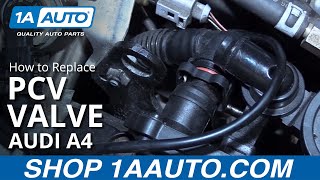
Typical fix: Replace the PCV valve assembly 🎬 Watch: Step-by-step guide to replacing your PCV valve. and the associated gasket. Be sure to order the correct part for your vehicle's production date. The latest revision for early models is generally considered the most robust.
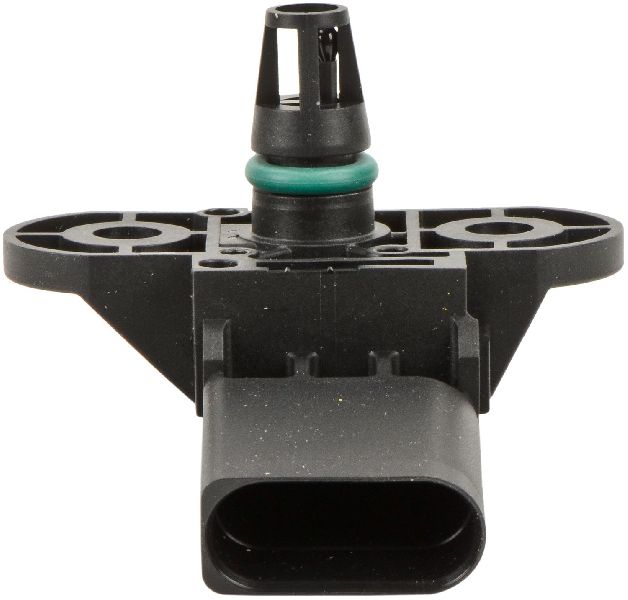
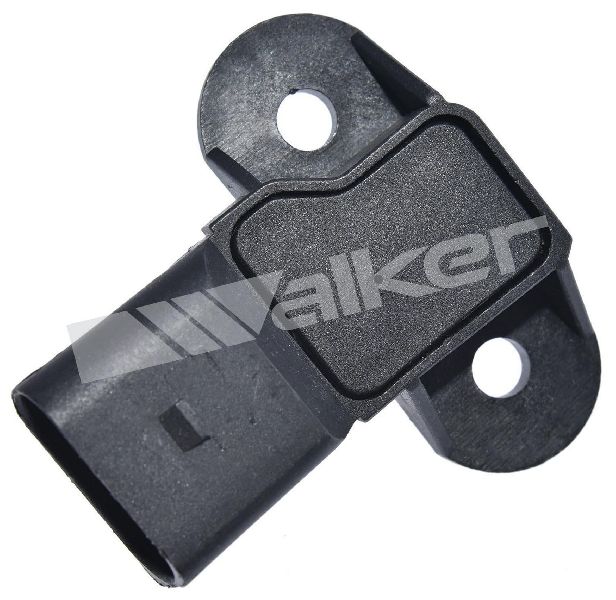
Est. part cost: $40-$70 - Faulty MAP (Boost Pressure) Sensor 🟡 Medium Probability → Shop Manifold Absolute Pressure Sensor The sensor (VW/Audi part G71) can fail electronically or become contaminated with oil from the PCV system over time, leading to incorrect readings. It's often replaced unnecessarily when the PCV valve is the true culprit.
How to confirm: Using a diagnostic scan tool (like VCDS), monitor the MAP sensor's live data with the key on, engine off. The reading should be nearly identical to the barometric pressure reading (F96) and local atmospheric pressure. Then, monitor the readings at idle and under load to see if they are logical. Also, inspect the sensor's wiring and connector for damage or oil contamination.
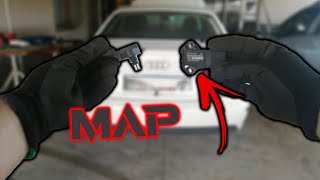
Typical fix: Replace the MAP sensor. It is located on the charge pipe 🎬 See this walkthrough on how to change your MAP sensor. leading to the throttle body. Cleaning a contaminated sensor with appropriate electronics cleaner can be attempted but is often a temporary fix.
Est. part cost: $30-$60 - Carbon Buildup on Intake Valves 🟡 Medium Probability As a direct-injection engine, fuel is sprayed directly into the cylinders, so it never washes over the intake valves. Oil vapor from the PCV system bakes onto the hot valves, forming hard carbon deposits that restrict airflow and cause turbulence, leading to implausible pressure readings. This issue typically becomes significant after 60,000-80,000 miles.
How to confirm: This requires physical inspection by removing the intake manifold. A borescope can be used to view the valves through the intake ports. Symptoms are often most noticeable during cold starts as misfires.
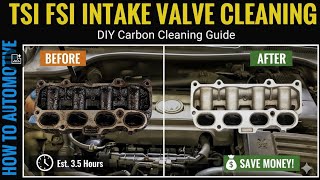
Typical fix: The intake valves must be manually cleaned. This is typically done by walnut blasting the ports 🎬 Watch: How to clean carbon buildup from your intake valves. and valves. It is a labor-intensive job.
Est. part cost: $20-$40 for gaskets, but labor is significant. - Vacuum Leak (Other than PCV) ⚪ Low Probability Plastic and rubber vacuum lines and gaskets become brittle with age and heat cycles, leading to cracks. The brake booster vacuum line and its check valve are common failure points that can cause a P0106 code.
How to confirm: Perform a smoke test on the intake system. Smoke will emerge from any cracked hoses, bad gaskets, or leaking seals. Pay close attention to the brake booster line and any check valves in the vacuum system.
Typical fix: Replace the specific hose, gasket, or seal that is found to be leaking.
Est. part cost: $15-$100 depending on the part.
Rare But Worth Checking
- Faulty Turbocharger Diverter Valve: → Shop Turbocharger A torn diaphragm in the diverter valve (another common failure item) can cause boost pressure to leak, which may contribute to erratic manifold pressure readings. This usually presents with other boost-related codes as well.
- Damaged Wiring or Connector: While less common than part failure, a corroded connector or damaged wire to the MAP sensor will cause a signal fault and trigger the P0106 code. This can happen due to physical damage, especially if the car was in a front-end collision near the intercooler piping.
- Cracked Brake Booster Check Valve: → Shop Power Brake Booster The hard plastic lines and check valves for the brake booster are a known weak point. A crack in this system creates a significant vacuum leak that can trigger P0106.
Diagnosis Steps
- Scan the ECM for any other fault codes that may provide more context. Note if codes like P0171 (lean) or P030x (misfire) are present.
- With the engine running, listen for hissing or loud whistling sounds that indicate a vacuum leak. Perform the oil cap test: if it's difficult to remove due to strong vacuum, the PCV valve has almost certainly failed.
- If a vacuum leak is suspected, perform a smoke test to pinpoint the exact location. Check the PCV valve, brake booster lines, and all intake hoses.
- Inspect the MAP sensor connector and wiring for any signs of damage, corrosion, or loose connections.
- Using a scan tool (like VCDS), observe the live data from the MAP sensor (G71) and the Barometric sensor (F96). With the key on and engine off, the readings should be within a few millibars of each other and match local atmospheric pressure. At idle, MAP pressure should drop significantly (to around 300-400 mbar).
- If the PCV system and wiring are confirmed to be good and the sensor readings are still implausible, replace the MAP sensor.
- If the code returns after replacing the PCV and MAP sensor, the next step is to inspect the intake valves for carbon buildup by removing the intake manifold.
Parts You'll Likely Need
- Pressure Crankcase Ventilation (PCV) Valve (Early Style)
(OEM #06F129101R)— This is the most common cause of P0106 on this engine due to a high failure rate of the internal diaphragm, causing a large vacuum leak. The 'R' revision is the latest and most commonly used replacement for earlier versions like 'L', 'N', 'C', 'F', and 'K'.
Trusted brands: Audi (Genuine), Vaico, Topran
OEM price range: $50-$70
Aftermarket price range: $30-$50 - Manifold Absolute Pressure (MAP) Sensor
(OEM #038906051D)— This sensor provides the direct reading that triggers the code. It can fail electronically or become contaminated. The Bosch equivalent is part number 0261230234.
Trusted brands: Bosch, Delphi, Febi Bilstein
OEM price range: $50-$70
Aftermarket price range: $25-$50 - Intake Manifold Gasket
(OEM #06F129717D)— Required if removing the intake manifold to clean carbon buildup from the intake valves.
Trusted brands: Victor Reinz, Elring, Mahle
OEM price range: $20-$30
Aftermarket price range: $10-$20
Related Codes That Often Appear With This One
- P0238 — This code indicates 'Turbocharger Boost Sensor 'A' Circuit High'. It often appears with P0106 when there is an electrical fault in the MAP sensor circuit or the sensor has failed completely.
- P0171 — This code means 'System Too Lean (Bank 1)'. It is commonly triggered alongside P0106 when a vacuum leak (like a bad PCV valve) is the root cause, as unmetered air is entering the engine.
- P030x (e.g., P0300, P0301) — Misfire codes can occur because the incorrect MAP sensor readings lead to a poor air/fuel mixture, causing incomplete combustion. Carbon buildup is also a primary cause of cold-start misfires on this engine.
Technical Service Bulletins (TSBs) & Recalls
- While no specific TSB is universally cited for P0106 on this exact model, Audi and VW have issued numerous bulletins for the 2.0T FSI engine related to the primary causes. These include TSBs for excessive carbon buildup diagnosis and cleaning, updated PCV valve designs to improve durability, and issues with related vacuum lines like the brake booster hose check valve. For example, TSB 2055646 addresses a hard brake pedal from a faulty check valve, which can also present as a vacuum leak causing P0106.
Platform-Specific Known Issues
- The 2.0T FSI engine is a direct-injection engine, which makes it highly susceptible to heavy carbon deposits on the intake valves. This is not a matter of 'if' but 'when', and it can directly cause P0106 by disrupting airflow.
- There are two different PCV valve designs for this vehicle, with a changeover on December 16th, 2005. Early models use a separate, replaceable valve (e.g., 06F129101R), while later B7 models have a different design. It is crucial to verify which version your car has before ordering parts.
Mechanic-Grade Diagnostic Values
- MAP (G71) vs. Barometric (F96) Pressure Correlation (Key On, Engine Off) — expected: Readings should be nearly identical (within a few millibars) and match local atmospheric pressure.. Failure: A difference greater than ~80 mbar can trigger the fault. The official fault threshold is a difference of 210-230 hPa (mbar).
- MAP Sensor (G71) Reading at Idle — expected: Approximately 300-400 mbar, indicating strong engine vacuum.. Failure: A reading closer to atmospheric pressure at idle suggests a significant vacuum leak (e.g., failed PCV).
- MAP Sensor (G71) Connector Voltage — expected: Approximately 5.0V reference signal from the ECU on one pin, and a ground pin at 0V.. Failure: Absence of the 5V reference voltage points to a wiring or ECU fault.
- Long-Term Fuel Trims (VCDS Measuring Block 032) — expected: Values close to 0%. Small deviations are normal.. Failure: Large negative values (e.g., -5% or more) can indicate the ECU is correcting for a perceived rich condition caused by incorrect pressure readings, even if no vacuum leak is present.
Hidden / Shadow Codes Worth Checking
- 16490 / 000262: This is the VAG-specific fault code number for P0106, 'Manifold / Barometric Pressure Sensor (G71) / (F96): Implausible Signal'. (see via VCDS or other VAG-compatible diagnostic tools.)
Scan Tool Commands That Help
- VCDS: Throttle Body Adaptation (TBA) — After cleaning or replacing the throttle body. While not a direct fix for P0106, an unadapted or dirty throttle body can cause erratic idle and airflow issues that may contribute to implausible sensor readings. A user reported attempting this, but it did not solve their P0106.
- VCDS: Graphing Measuring Blocks (e.g., 002, 113, 115) — To log and compare 'Specified' vs. 'Actual' boost pressure and to monitor the G71 and F96 sensor readings during a drive cycle. This is the primary diagnostic method to see if the sensor readings are rational relative to engine load and each other.
Wiring & Ground Locations
- G12 — Located at the center of the firewall, in the plenum chamber (under the plastic cowl cover).. This is a primary ground point for the Engine Control Module (ECM). A poor connection here can cause a host of erratic sensor readings and faults, including P0106.
- Engine Block Ground Strap — Connects the engine block to the chassis. One major ground point is located on the passenger side of the engine block, near the turbocharger and engine mount.. The sensors ground through the engine harness, which ultimately relies on a clean engine-to-chassis ground. A corroded or loose strap can introduce electrical noise and cause sensor signal faults.
- MAP Sensor (G71) Connector — On the charge pipe just before the throttle body.. This 4-pin connector provides power, ground, and signal return for both the Manifold Pressure (G71) and Intake Air Temperature (G42) sensors. The pins are: Pin 1 (Signal Ground), Pin 2 (IAT Signal), Pin 3 (5V Reference), Pin 4 (MAP Signal). Verifying 5V at Pin 3 and good ground at Pin 1 is a critical wiring check.
Real Owner Repair Stories
- AudiWorld Forums user 'das60' (2006 Audi A4 2.0T) — Persistent P0106 code that needed to be cleared for an emissions test.
❌ Tried (didn't work) Replacing the MAP sensor (G71) with a new Bosch unit., Checking for vacuum leaks (fuel trims were good).
✅ What actually fixed it The final diagnosis pointed to a faulty Engine Control Module (ECM). Using VCDS, the owner discovered that the external MAP sensor (G71) was reading atmospheric pressure correctly with the engine off (1010 mbar), but the ECM's internal barometric sensor (F96) was reading incorrectly low (924 mbar). This ~86 mbar discrepancy was enough to trigger the 'implausible signal' fault. The issue was not an external sensor or leak, but the ECM's own internal reference being faulty.
"I Checked Everything" — The Actual Cause
- A smoke test will show no leaks if the root cause is a faulty internal barometric pressure sensor (F96) within the ECM. The system is mechanically sealed, but the ECM's two pressure readings (internal F96 and external G71) don't correlate, triggering the P0106 code. Technicians may chase non-existent vacuum leaks or replace a perfectly good MAP sensor when the ECM itself is the source of the problem.
When the Usual Fixes Don't Work
- In one documented case, a vehicle owner replaced the MAP sensor and confirmed there were no vacuum leaks, which are the two most common fixes. The P0106 code persisted. The actual problem was a faulty barometric pressure sensor located inside the main engine computer (ECM), which was providing an incorrect baseline reading. This is a rare but important possibility to consider when the common fixes fail, as it requires diagnosing and potentially replacing the entire ECM.
OEM Part Supersession History
06F129101C, 06F129101F, 06F129101K, 06F129101L, 06F129101N→06F129101R— Improved diaphragm material and design to increase longevity and prevent premature tearing.
Heads up: These part numbers apply to vehicles built up to 12/15/2005. Later vehicles use a different PCV system integrated into the valve cover. Using the 'R' revision is highly recommended for all earlier cars.
Model Year Variations Within This Range
- 2005.5-2008: The 2.0T FSI engine in North American B7 A4s came with two primary engine codes: BPG (earlier models) and BWT (approx. 2007+). While largely similar, they can have minor differences in components and ECU software. A swap between them is possible but may require transferring some accessories.
- 2005.5 vs 2006+: As noted in Pass 2, the PCV valve design changed on vehicles produced after December 15th, 2005. The early style is a separate assembly on the oil filter housing, while the later style is integrated differently. This is the most critical model-year variation for this specific trouble code.
Diagnostic Flowchart
Real Owner Stories
Aggregated from forums and TSBs cited above. Mileages and costs reflect what owners reported in those sources.
Audi A4 B7 2.0T
Symptoms: Experienced a cluster of codes including P0106, P0507, P1297, and P2187. Initially replaced the MAP sensor, but the issue persisted.
What fixed it: Replaced the failed PCV valve, which was confirmed as the primary culprit for the vacuum leak.
Source hint: Audizine - B7 A4 P0106, P0507, P1297, P2187 - PCV was the fix
Audi A4 2.0T
Symptoms: Triggered a P0106 code and found an oil-coated MAP sensor. The root cause was a bad PCV diaphragm, which was confirmed using the oil cap test.
What fixed it: Replaced a faulty N80 purge valve and addressed the PCV diaphragm.
Source hint: Ross-Tech Forums - P0106 - N80 Valve and PCV Diaphragm
Related OBD-II Codes
Frequently Asked Questions
How do I know which PCV valve to buy for my 2005-2008 Audi A4 2.0T?
Is carbon buildup a common cause for P0106 on the 2.0T FSI engine?
Does TSB 2055646 apply to my P0106 code?
How can I quickly test if the PCV valve is causing my P0106 code?
How do I test the MAP sensor using VCDS?
Can a bad N80 purge valve cause a P0106 on the B7 A4?
Helpful Videos
Used OEM Parts in Stock
New Aftermarket Parts Available



The information in this article is provided for general reference and educational purposes only. Vehicle specifications, procedures, and part compatibility can vary by production date, trim level, and region. Always consult your vehicle's factory service manual and verify part numbers before purchasing or performing repairs. Safety-critical components such as airbags, seat belts, and braking systems should be installed by a qualified professional.
- Audi A4:
- 🧭 Diagnostic Flowchart
- 🎬 Helpful Videos
- 🛍️ Shop This Part
- What's Unique About the 2005-2008 Audi A4
- Symptoms You May Notice
- Most Likely Causes
- Rare But Worth Checking
- Diagnosis Steps
- Parts You'll Likely Need
- Related Codes That Often Appear With This One
- Technical Service Bulletins (TSBs) & Recalls
- Platform-Specific Known Issues
- Mechanic-Grade Diagnostic Values
- Hidden / Shadow Codes Worth Checking
- Scan Tool Commands That Help
- Wiring & Ground Locations
- Real Owner Repair Stories
- "I Checked Everything" — The Actual Cause
- When the Usual Fixes Don't Work
- OEM Part Supersession History
- Model Year Variations Within This Range
- Real Owner Stories
- Audi A4 B7 2.0T
- Audi A4 2.0T
- Related OBD-II Codes
- Frequently Asked Questions
- 🎟️ Get 5% Off