

P0106 on 2009-2016 Audi A4 3.2L V6: MAP Sensor Causes and Fixes
For the Audi A4 3.2L V6 (CALA), code P0106 is most often caused by a faulty MAP sensor, a failed PCV valve creating a large vacuum leak, or brittle vacuum hoses. Before replacing the MAP sensor (Bosch P/N: 0261230247), test the PCV valve by checking for strong suction at the oil cap with the engine running. A new PCV assembly (OEM P/N: 06E103547P) is a common fix.
- Before replacing the MAP sensor, always check for a failed PCV valve by listening for suction at the oil cap while the engine is running.
- Use a scan tool to compare MAP and Barometric pressure with the engine off. If they don't match, the MAP sensor is the most likely culprit.
- Inspect vacuum lines carefully; brittle plastic is common on these cars and a frequent cause of this code.
- Be aware that if all else fails, the problem could be a rare but documented issue with the barometric sensor located inside the engine's main computer (ECU).
What's Unique About the 2009-2016 Audi A4
On this Audi V6 engine, the P0106 code can be tricky. While a bad MAP sensor is a common cause, these direct-injection engines are also known for issues with the PCV (Positive Crankcase Ventilation) system and carbon buildup on intake valves, both of which can create the implausible pressure readings that trigger this code. Furthermore, the barometric pressure sensor (F96) is located inside the main engine computer (ECU), meaning a persistent P0106 code with no other identifiable cause can point to an internal ECU fault. A user on the Ross-Tech forums with a 3.2L A4 confirmed this, noting they could manipulate the F96 reading by blowing air at the ECU box itself, indicating the sensor is internal and not separately serviceable.
Symptoms You May Notice
- Check Engine Light is on
- Rough or unstable idle
- Hesitation or lack of power during acceleration
- Reduced fuel economy, sometimes significantly
- Engine stalling in some cases
- Black smoke from the exhaust if running rich
- Strong smell of gasoline, especially at idle
- Replacing the MAP sensor without first checking for vacuum leaks, especially from the PCV system.
- Replacing the throttle body when it only needs to be cleaned of carbon buildup.
- Chasing vacuum leaks when the root cause is a failed barometric pressure sensor inside the ECU.
Most Likely Causes
- Faulty Manifold Absolute Pressure (MAP) Sensor 🔴 High Probability → Shop Manifold Absolute Pressure Sensor The sensor can become contaminated with oil and carbon from the PCV system, or simply fail electronically over time. It is highly recommended to use an OEM-quality (Bosch) sensor, as cheap aftermarket versions are known for poor calibration and early failure.
How to confirm: With a VAG-specific scan tool (like VCDS), compare the MAP sensor reading (G71) to the barometric pressure reading (F96) with the key on, engine off. They should be within a few millibars of each other. If they differ significantly, or the MAP reading doesn't change with engine RPM, the sensor is likely faulty. Also inspect the sensor for physical damage or oil contamination.
Typical fix: Replace the MAP sensor. It is located on the intake manifold and is typically held in by one or two Torx screws.
Est. part cost: $40-$80 - Faulty PCV (Positive Crankcase Ventilation) Valve 🟡 Medium Probability The diaphragm inside the PCV valve can tear, creating a large internal vacuum leak that the MAP sensor reads as an implausible value. This is a very common failure on many VAG engines of this era.
How to confirm: With the engine idling, try to remove the oil filler cap. If you feel strong suction holding the cap down or hear a loud 'honking' or whistling sound, the PCV diaphragm has likely failed. This indicates unmetered air is being drawn into the crankcase.
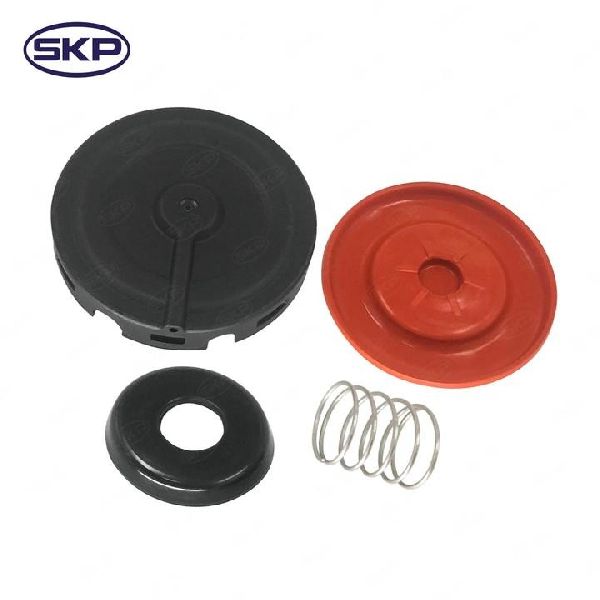
Typical fix: Replace the entire PCV valve assembly (also called an oil separator). It is located on top of the engine between the cylinder banks.
Est. part cost: $150-$250 - Vacuum Leak 🟡 Medium Probability The plastic hoses and gaskets in the engine bay become brittle with age and heat cycles, leading to cracks and unmetered air entering the intake manifold. The air intake boot itself can also tear.
How to confirm: Visually inspect all vacuum lines, especially those connected to the intake manifold and PCV system. Listen for a hissing sound at idle. The best method is to have a smoke test performed, which forces smoke into the intake system to reveal the exact location of any leaks.
Typical fix: Replace the cracked or broken vacuum hose or gasket. The hose from the brake booster to the intake manifold is a common failure point.
Est. part cost: $20-$100 - Carbon Buildup on Intake Valves ⚪ Low Probability As a direct-injection (FSI) engine, fuel is sprayed directly into the cylinders, so it never washes over the intake valves. Oil vapor from the PCV system bakes onto the hot valves, restricting airflow and causing turbulence that can affect manifold pressure and trigger a P0106 code. This is a well-documented issue on all Audi FSI engines.
How to confirm: This requires a borescope to visually inspect the intake ports and the backs of the intake valves. Significant black, crusty deposits are a clear sign. This is often accompanied by cold start misfires.
Typical fix: The intake manifold must be removed and the valves cleaned, typically through walnut shell blasting. This is a labor-intensive job.
Est. part cost: $0 (if cleaning yourself), but labor cost is high ($600-$1200).
Rare But Worth Checking
- Failing Engine Control Module (ECU): On this platform, the barometric pressure sensor (F96) is integrated into the ECU. If this internal sensor fails, it will report an incorrect atmospheric pressure, causing a persistent P0106 code that cannot be fixed by replacing the external MAP sensor or fixing vacuum leaks. Diagnosis involves comparing the ECU's barometric pressure reading to the actual local atmospheric pressure. A user on the Ross-Tech forums reported their F96 reading was consistently 70-80 mbar lower than the MAP sensor reading with the engine off, pointing to a faulty ECU as the root cause after all other components were verified.
- Dirty or Faulty Throttle Body: → Shop Fuel Injection Throttle Body Excessive carbon buildup inside the throttle body can prevent the throttle plate from moving correctly, causing an air/fuel mixture problem that the ECU interprets as a MAP sensor performance issue. In some cases, the throttle position sensor itself can fail, leading to a correlation fault with the MAP sensor.
Diagnosis Steps
- Read Fault Codes: Use an OBD-II scanner to confirm P0106 and note any other codes present, especially lean codes (P0171, P2187) or misfire codes (P030x).
- Check PCV Valve: With the engine idling, try to remove the oil cap. If there is strong suction holding it down or a loud whistle, the PCV valve has likely failed and should be replaced. This is a quick and definitive test for this common failure.
- Inspect for Vacuum Leaks: Visually inspect all accessible vacuum hoses for cracks or disconnections. Pay close attention to the PCV hoses and the brake booster line. For best results, perform a smoke test to pinpoint hard-to-see leaks.
- Compare Sensor Readings (VCDS/Advanced Scanner): With the Key On, Engine Off (KOEO), compare the Manifold Absolute Pressure reading (G71) to the Barometric Pressure reading (F96). They should be nearly identical (within ~40 mbar). If they differ significantly, the MAP sensor is a strong suspect. If the F96 reading is illogical compared to your local altitude/weather, suspect an ECU fault.
- Inspect MAP Sensor and Connector: Locate the MAP sensor on the intake manifold. Unplug it and inspect the connector for corrosion or damage. Remove the sensor and check its port for oil or carbon contamination.
- Inspect Throttle Body: Remove the intake boot from the throttle body and inspect for heavy carbon deposits around the throttle plate. A dirty throttle body can cause airflow correlation issues.
- Inspect for Carbon Buildup: If other causes are ruled out, use a borescope to inspect the intake valves for heavy carbon deposits, a known issue on FSI engines that requires walnut blasting to resolve.
- Advanced Diagnosis (ECU): If the code persists after replacing the MAP sensor and confirming no vacuum leaks exist, and the F96 (barometric) reading from the ECU is inaccurate, the ECU itself is the likely culprit.
Parts You'll Likely Need
- Manifold Absolute Pressure (MAP) Sensor
(OEM #03C906051F)— This sensor is the most direct cause of the code and can fail electronically or become contaminated. The Bosch equivalent is part number 0261230247.
Trusted brands: Bosch, Genuine Audi
OEM price range: $60-$90
Aftermarket price range: $30-$60 - PCV Valve / Oil Separator
(OEM #06E103547P)— A torn internal diaphragm is a very common source of a large vacuum leak on VAG engines, causing this code. Part number may also appear as 06E103547E or 06E103547F depending on revision.
Trusted brands: Genuine Audi, Vaico, Hengst, Rein
OEM price range: $200-$250
Aftermarket price range: $80-$180
Related Codes That Often Appear With This One
- P0171 — Indicates 'System Too Lean', which is often caused by the same unmetered vacuum leak (e.g., bad PCV valve) that triggers P0106.
- P2187 — Indicates 'System Too Lean at Idle', another common companion code when a faulty PCV valve is the root cause.
- P030x (e.g., P0300, P0301) — Misfire codes can occur because the incorrect MAP readings lead to a poor air/fuel mixture and incomplete combustion. They are also a primary symptom of heavy carbon buildup on the intake valves.
- P0068 — Indicates 'MAP/MAF - Throttle Position Correlation'. This code can appear alongside P0106 if the ECU sees a conflict between the airflow measured by the MAP sensor and the angle reported by the throttle position sensor, often due to a dirty throttle body or a vacuum leak.
Platform-Specific Known Issues
- The barometric pressure sensor (F96) is integrated directly into the ECU. A failure of this internal component can mimic a bad external MAP sensor, leading to misdiagnosis.
- As a direct-injection engine, the intake valves are prone to severe carbon buildup, which can restrict airflow and cause this code. This is considered a regular maintenance item, often requiring walnut blasting every 60,000-80,000 miles.
- The plastic PCV assembly and associated hoses are known to become brittle and fail, creating significant vacuum leaks that are a primary cause of P0106.
Mechanic-Grade Diagnostic Values
- MAP (G71) vs. Barometric (F96) Pressure with Key On, Engine Off (KOEO) — expected: Readings should be nearly identical, within a few millibars (mbar) of each other and should reflect the local atmospheric pressure (approx. 1013 mbar at sea level).. Failure: A persistent difference of more than 40-50 mbar between the G71 and F96 sensors. A difference of 70-80 mbar has been reported by owners with this fault. The fault may officially set when the difference exceeds ~210 hPa (mbar).
- MAP Sensor (G71) Signal Voltage — expected: With KOEO, voltage should be high (e.g., ~4.5V). At idle with high vacuum, voltage should be low (e.g., 1.0-1.5V). Snapping the throttle should cause the voltage to rise sharply.. Failure: Voltage is stuck at 0V, 5V, or does not change with engine vacuum/RPM.
- MAP Sensor Supply Voltage — expected: Approximately 5.0V at the sensor's connector with the key on.. Failure: Voltage is significantly lower than 5.0V or is absent, indicating a wiring or ECU power supply issue.
- Long Term Fuel Trims (Lambda) — expected: Should be close to 0%, typically within +/- 5%.. Failure: High positive fuel trims (>10%) would indicate a vacuum leak the ECU is compensating for. A user with a suspected ECU fault had trims of -1.6% and -2.3%, indicating no significant vacuum leak was present.
Scan Tool Commands That Help
- VCDS (VAG-COM) or equivalent: Graphing Measuring Blocks for MAP (G71) and Barometric (F96) pressure — This is the primary diagnostic step after initial code reading. Use with Key On, Engine Off to check for the correlation fault between the external MAP and internal ECU barometric sensor. A significant deviation here points towards either a bad MAP sensor or a faulty ECU.
- VCDS (VAG-COM) or equivalent: Throttle Body Adaptation (TBA) — After cleaning or replacing the throttle body. This procedure resets the learned values for the throttle plate's idle and closed positions, which is necessary for smooth operation and to prevent correlation faults with the MAP sensor.
Wiring & Ground Locations
- F96 (Barometric Pressure Sensor) — Internal to the Engine Control Unit (ECU/ECM). The ECU is located in the plenum chamber (under the plastic cowl cover at the base of the windshield).. This is the most critical and commonly missed piece of information. There is no external wiring harness, connector, or ground point to check for the F96 sensor. If it fails, the entire ECU must be repaired or replaced. A user confirmed its location by blowing air into the vents on the ECU case and seeing the F96 reading change in VCDS.
- G71 (MAP Sensor) Connector — On the sensor itself, which is mounted to the intake manifold.. The 4-pin connector should be checked for 5V reference voltage, a good ground, and a signal wire that varies with pressure. A test procedure for a similar V6 involves checking for ~5V between pin 3 (ground) and pin 1 (supply). A bad connection here will mimic a failed sensor.
Real Owner Repair Stories
- Ross-Tech Forums user 'Dimitri' (2006 Audi A4 3.2L (B7, but same engine and issue as B8)) — Persistent P0106 code with no noticeable performance issues (smooth idle, good power).
❌ Tried (didn't work) Replacing the MAP sensor (G71), Checking wiring to the MAP sensor, Searching for vacuum leaks, Replacing the N80 purge valve, Replacing the air filter
✅ What actually fixed it The root cause was identified as a faulty internal barometric pressure sensor (F96) within the ECU. The F96 reading was consistently 70-80 mbar lower than the G71 MAP sensor reading with the engine off. The final fix requires replacing or repairing the ECU, or living with the Check Engine Light. - Reddit user 'TheRealDickPoncho' (Audi A4 3.2L) — P0106 code, occasional idle wave between 850-900 RPM.
❌ Tried (didn't work) Cleaning the MAP sensor, Cleaning battery and harness grounds, Replacing the MAP sensor, Replacing the ECU/computer, Performing a carbon cleaning of the intake manifold, Checking and cleaning the throttle body, Replacing wiring to the sensor
✅ What actually fixed it The issue was never resolved. The owner and the Audi dealership could not fix it, and the car was sold to someone in a county without emissions testing. This story highlights the extreme difficulty and expense when the cause is the internal F96 sensor and even an ECU swap doesn't resolve it (potentially due to immobilizer/coding issues).
"I Checked Everything" — The Actual Cause
- Multiple owners have reported that after passing a smoke test (confirming no vacuum leaks) and replacing the MAP sensor, the P0106 code remained. The actual cause was a faulty barometric pressure sensor (F96) located inside the ECU, which provides an incorrect baseline reading that the ECU compares against the MAP sensor (G71). This discrepancy triggers the code, especially at key-on, engine-off, when the two sensors should read identically.
When the Usual Fixes Don't Work
- The most significant counter-evidence to common diagnostic paths is the internal ECU barometer failure. An owner can replace the MAP sensor, PCV valve, and fix all vacuum leaks, yet the P0106 code will persist if the ECU's internal F96 sensor provides a faulty atmospheric pressure reading for the ECU to compare against. In these cases, the fault lies not with any part of the intake or vacuum system, but with the diagnostic brain of the car itself.
OEM Part Supersession History
06E103547, 06E103547E→06E103547P— Revisions to improve diaphragm material and longevity of the PCV valve / oil separator assembly.
Heads up: The latest revision (P) is the correct replacement for all previous versions on this engine.N/A→N/A— Bosch P/N 0261230247 is the specified OEM supplier part for the MAP sensor.
Heads up: While some catalogs show supersessions from other part numbers (e.g., 0261230248), these are often for different brands like Porsche. For this Audi, using the exact Bosch 0261230247 part is critical. Using cheap, unbranded aftermarket sensors is a common cause of repeat failures or persistent codes.
Model Year Variations Within This Range
- 2009: The 3.2L V6 CALA engine was primarily offered only for the 2009 model year in the North American Audi A4 (B8). It was discontinued in the A4 for subsequent years, replaced by the 2.0T four-cylinder. Therefore, there are no significant model-year variations for this specific engine/code combination within the 2009-2016 A4 range, as it effectively only applies to one year.
Diagnostic Flowchart
Other Known Issues on This Vehicle
Issues unrelated to this code that are worth knowing about as an owner of this generation:
- Timing Chain Tensioner Failure 🔴 High — Common, especially on earlier models. Often presents as a brief 'chain rattle' on cold starts that lasts for a few seconds. Failure can cause catastrophic engine damage. (Ref: While TSBs exist for the more common 2.0T engine, the 3.2L V6 can also suffer from tensioner issues.)
- Intake Valve Carbon Buildup 🟠 Medium — Inevitable on all FSI engines. Typically requires cleaning via walnut blasting every 60,000-80,000 miles to restore performance and prevent misfires.
- High Oil Consumption 🟠 Medium — While more infamous on the 2.0T engine of the same era, the 3.2L V6 can also consume oil due to PCV system issues or worn piston rings.
- Leaking Valve Cover and Oil Filter Housing Gaskets 🟡 Low → Shop Engine Valve Cover — These gaskets tend to harden and leak oil over time, a common maintenance item on higher-mileage vehicles.
- Intake Manifold Runner Flap Issues 🟠 Medium → Shop Engine Intake Manifold — The plastic components of the variable intake manifold runner control system can break or get stuck, causing fault codes (like P2006/P2007) and a loss of power.
Used vs. New Parts: Buying Guide for This Vehicle
When a used part is the smart pick: For this specific repair, using used parts is generally not recommended. The primary failure components (MAP sensor, PCV valve) are wear items. A used part could be considered for a component like the intake manifold itself if it were cracked, but this is not a common cause of P0106.
Donor-vehicle mileage cap: roughly under 60000 miles for the part to have meaningful remaining life.
What to inspect on the donor part:
- If considering a used electronic part like a MAP sensor, ensure it is a genuine Bosch part, not a no-name replacement.
- For a PCV valve, avoid used parts entirely as the internal diaphragm is a wear item and cannot be inspected.
- Check for any physical damage, cracks, or signs of extreme heat exposure on plastic components.
OEM-only on this vehicle (don't cheap out):
- Engine Control Module (ECU): Must be OEM or a specialist-repaired unit due to the integrated immobilizer and vehicle-specific coding. A used ECU cannot be simply swapped in.
- PCV Valve / Oil Separator: Strongly recommended to use OEM (Audi) or an OEM supplier (e.g., Hengst) part. The internal spring rates and diaphragm are calibrated for specific crankcase pressures, and aftermarket versions can cause oil consumption or other issues.
- MAP Sensor: Strongly recommended to use the OEM supplier part, which is Bosch. Cheaper aftermarket sensors are notorious for incorrect calibration and premature failure, leading to a repeat of the P0106 code.
Aftermarket brands forum-validated for this vehicle:
- Bosch for the MAP Sensor (P/N 0261230247).
- Hengst for the PCV Valve (P/N 06E103547P).
Brands owners have reported issues with on this vehicle:
- Unbranded, 'white-box' electronic sensors (MAP) from online marketplaces.
- PCV valve assemblies from unknown brands that do not explicitly state they are OEM-equivalent, as the internal calibration is critical.
Real Owner Stories
Aggregated from forums and TSBs cited above. Mileages and costs reflect what owners reported in those sources.
Audi A6 3.2L FSI (CALA)
Symptoms: Poor MPG and sluggish acceleration.
What fixed it: The owner used VCDS to identify the fault, though the specific part replaced in the snippet was the MAP sensor context.
Source hint: AudiWorld Forums: VAGCOM codes
Audi A4 B8 3.2L FSI
Symptoms: Vacuum leaks leading to a P0106 code.
What fixed it: Replacement of the PCV valve assembly (oil separator) located between the cylinder banks.
Source hint: Audizine: A4 B8 3.2L FSI PCV Valve Replacement
Audi 3.2L V6
Symptoms: Chasing a P0106 code after replacing the MAP sensor and checking for vacuum leaks; found the barometric pressure reading was still incorrect.
What fixed it: Discovered the barometric pressure sensor (F96) is internal to the ECU and was reading incorrectly, indicating an ECU fault.
Source hint: Ross-Tech Forums: P0106 - Is it as simple as a bad/wrong MAP sensor?
Related OBD-II Codes
Frequently Asked Questions
Which brand of MAP sensor should I buy for my 3.2L V6 Audi A4?
How can I tell if my P0106 code is caused by the PCV valve without taking things apart?
Is there a specific tool recommended for diagnosing the MAP sensor (G71) on this Audi?
I replaced my MAP sensor but the P0106 code and incorrect barometric readings persist. What else could it be?
How often does the CALA engine require intake valve cleaning to prevent codes like P0106?
Where is the MAP sensor located on the 3.2L V6 engine?
Helpful Videos



We Have This Part in Stock

The information in this article is provided for general reference and educational purposes only. Vehicle specifications, procedures, and part compatibility can vary by production date, trim level, and region. Always consult your vehicle's factory service manual and verify part numbers before purchasing or performing repairs. Safety-critical components such as airbags, seat belts, and braking systems should be installed by a qualified professional.
- Audi A4:
- 🧭 Diagnostic Flowchart
- 🎬 Helpful Videos
- 🛍️ Shop This Part
- What's Unique About the 2009-2016 Audi A4
- Symptoms You May Notice
- Most Likely Causes
- Rare But Worth Checking
- Diagnosis Steps
- Parts You'll Likely Need
- Related Codes That Often Appear With This One
- Platform-Specific Known Issues
- Mechanic-Grade Diagnostic Values
- Scan Tool Commands That Help
- Wiring & Ground Locations
- Real Owner Repair Stories
- "I Checked Everything" — The Actual Cause
- When the Usual Fixes Don't Work
- OEM Part Supersession History
- Model Year Variations Within This Range
- Other Known Issues on This Vehicle
- Used vs. New Parts: Buying Guide for This Vehicle
- Real Owner Stories
- Audi A6 3.2L FSI (CALA)
- Audi A4 B8 3.2L FSI
- Audi 3.2L V6
- Related OBD-II Codes
- Frequently Asked Questions
- 🎟️ Get 5% Off