

P0106 on 2012-2018 Audi A6 3.0T: MAP Sensor, PCV Valve & Vacuum Leak Guide
P0106 on the Audi A6 3.0T most often points to a faulty Manifold Absolute Pressure (MAP) sensor, a failed PCV valve causing a massive vacuum leak, or a combination of both. The MAP sensor is located at the rear of the supercharger and costs $50-$100 for an OEM-quality part. The PCV valve is under the supercharger and is a more involved, but common, repair. Before replacing parts, use a VAG-specific scan tool to compare MAP and Barometric sensor readings.
- P0106 on this engine is a pressure rationality code, usually caused by a bad MAP sensor or a vacuum leak.
- The most important diagnostic step is to use a scan tool to compare the MAP sensor (G71) and the ECU's internal barometer (F96) with the engine off.
- The primary MAP sensor is at the rear of the supercharger near the firewall, not on the sides.
- Start with the cheapest fixes: inspect for vacuum leaks and try cleaning the MAP sensor before buying a new one.
- If a new MAP sensor and a smoke test don't solve the issue, suspect a rare but documented failure of the ECU's internal sensor.
What's Unique About the 2012-2018 Audi A6
What makes the Audi 3.0T platform unique is the diagnostic logic. The P0106 code is frequently triggered by a disagreement between two separate pressure sensors: the main MAP sensor (designated G71) on the intake manifold and a secondary barometric sensor (F96) located inside the ECU itself. While a faulty MAP sensor is common, a known and frustrating failure mode for this platform is the internal ECU sensor failing, leading to a P0106 code even with a perfectly good MAP sensor. This makes diagnosis with a proper scan tool (like VCDS by Ross-Tech) that can read both sensor values independently absolutely critical to avoid unnecessary parts replacement.
Generation note: The 2012-2018 Audi A6 is all part of the C7 generation. However, the 3.0T engine was updated around 2016 to the 'CREC' version (C7.5 facelift). While the causes of P0106 are virtually identical between the earlier C7 (e.g., CGXB engine) and later C7.5 (CREC engine), some part locations and part numbers may have minor differences. The CREC engine features dual injection (port and direct), which reduces carbon buildup issues seen on earlier 3.0T engines but does not prevent P0106-related faults. This guide is applicable to the entire C7 generation.
Symptoms You May Notice
- Check Engine Light is on
- Rough or unstable idle, especially on a cold start
- Hesitation or stumbling during acceleration
- Noticeable loss of engine power or entering 'limp mode'
- Decreased fuel economy
- Engine stalling at stops
- High-pitched whistle or sucking sound from the engine bay at idle (indicative of a PCV failure)
- Black smoke from the exhaust during acceleration
- Replacing the two more accessible charge pressure sensors on the sides of the supercharger instead of the correct MAP sensor (G71) at the rear of the engine.
- Replacing the MAP sensor without first checking for vacuum leaks, especially from the PCV valve, which can cause identical symptoms.
- Replacing spark plugs or ignition coils to fix a rough idle when the root cause is an incorrect air-fuel mixture from the P0106 fault.
- Confusing the MAP sensor (G71) with the Low Pressure Fuel Sensor, which shares a similar part number (06E906051K) but is located on the high-pressure fuel pump.
Most Likely Causes
- Faulty Manifold Absolute Pressure (MAP) Sensor 🔴 High Probability → Shop Manifold Absolute Pressure Sensor The sensor is located in a high-heat area at the rear of the supercharger and is susceptible to oil and carbon contamination from the PCV system, which can cause it to fail or send inaccurate readings.
How to confirm: Use a scan tool (VCDS preferred) to compare the MAP sensor (G71) reading with the ECU's barometric pressure (F96) reading with the Key On, Engine Off. They should be nearly identical (within ~30 mbar). If the MAP sensor reading is stuck, irrational, or significantly different, it's likely faulty.
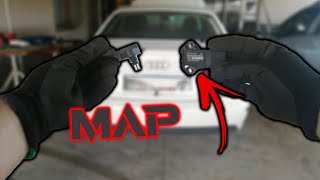
Typical fix: Replace the MAP sensor located at the rear of the supercharger, near the firewall. It is held in by two T30 Torx bolts. 🎬 Watch: How to swap out your MAP sensor Access is tight but manageable without major disassembly.
Est. part cost: $50-$120 - Vacuum Leak (especially PCV Valve) 🔴 High Probability The Positive Crankcase Ventilation (PCV) valve, located under the supercharger, is a very common failure item. Its internal rubber diaphragm tears, creating a large, unmetered vacuum leak. This causes the engine to run lean and can trigger a P0106 rationality fault.
How to confirm: A failed PCV often creates a loud sucking or whistling noise. A definitive way to check is to perform a smoke test on the intake system, which will quickly reveal leaks from the PCV or other hoses. Spraying brake cleaner is less precise and a fire hazard.
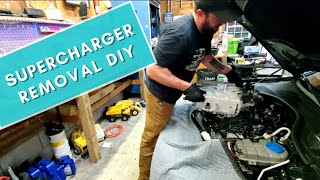
Typical fix: Replace the entire PCV assembly. This requires removing the supercharger, 🎬 Watch: Step-by-step guide to removing the 3.0T supercharger so it's a more involved job. Many owners proactively replace the thermostat and water pump at the same time.
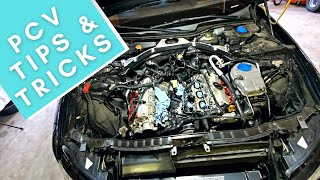
Est. part cost: $150-$250 for the PCV part, more for related gaskets. 🎬 See these expert tips for replacing the PCV assembly
- Dirty or Contaminated MAP Sensor 🟡 Medium Probability → Shop Manifold Absolute Pressure Sensor Oil vapor from the PCV (Positive Crankcase Ventilation) system can coat the sensor element over time, insulating it and causing slow or inaccurate readings.
How to confirm: Remove the sensor and visually inspect it for oil or carbon buildup.
Typical fix: Carefully clean the sensor element with a dedicated Mass Airflow (MAF) or electronics cleaner. Do not touch the sensor element. Allow it to dry completely before reinstalling. This is often a temporary fix if the underlying PCV issue isn't addressed.
Est. part cost: $10-$15
Rare But Worth Checking
- Faulty Engine Control Unit (ECU): A known issue on this platform is the failure of the internal barometric pressure sensor (F96) located inside the ECU. If the MAP sensor has been replaced, there are no vacuum leaks, and an ECU software update has been performed, but scan tool data still shows a persistent discrepancy between the MAP (G71) and Baro (F96) readings, the ECU itself is the likely culprit. The fix is typically a replacement ECU, which often needs to be cloned from the original, a costly repair.
- ECU Software Issue: Audi has released Technical Service Bulletins (TSBs), such as TSB 2043033/5, that address a P0106 code by performing an ECU software update. This is often the first step a dealer will take if no obvious hardware faults (like vacuum leaks) are present.
Diagnosis Steps
- Read Fault Codes: Use an OBD-II scanner (VAG-COM/VCDS is highly recommended) to confirm P0106 is present and check for any other codes like P0171, P0174, or P0507, which would strongly suggest a vacuum leak.
- Analyze Live Data (Key On, Engine Off): With a VAG-COM (VCDS) or similar advanced scan tool, view the live data for the Manifold Absolute Pressure sensor (G71) and the atmospheric/barometric pressure sensor (F96). With the Key On, Engine Off, their values should be within ~30 mbar of each other. A larger difference points to a faulty sensor or ECU.
- Check for Vacuum Leaks: The most common culprit is the PCV valve. Listen for a high-pitched whistle at idle. A professional smoke test is the best method to find all intake system leaks. Also check the brake booster hose and other visible lines for cracks.
- Inspect and Clean the MAP Sensor: Remove the MAP sensor from the rear of the supercharger (two T30 Torx bolts). Inspect for oil contamination. If dirty, clean it with electronics cleaner and let it dry fully. Reinstall and re-check live data.
- Test the Sensor and Wiring: If the problem persists, use a multimeter to check the sensor's wiring harness for a 5-volt reference, a good ground, and a fluctuating signal wire. A wiring diagram is essential for this step.
- Replace the MAP Sensor: If the wiring is good and the sensor readings are confirmed to be incorrect after cleaning and ruling out vacuum leaks, replace the MAP sensor with a quality OEM part (Bosch or Genuine Audi).
- Consider ECU Software/Failure: If a new MAP sensor does not fix the issue, check with a dealer for any available ECU software updates (TSB 2043033/5). If live data still shows a persistent discrepancy between a known-good MAP sensor and the internal Baro sensor (F96), the ECU itself is the likely point of failure.
Parts You'll Likely Need
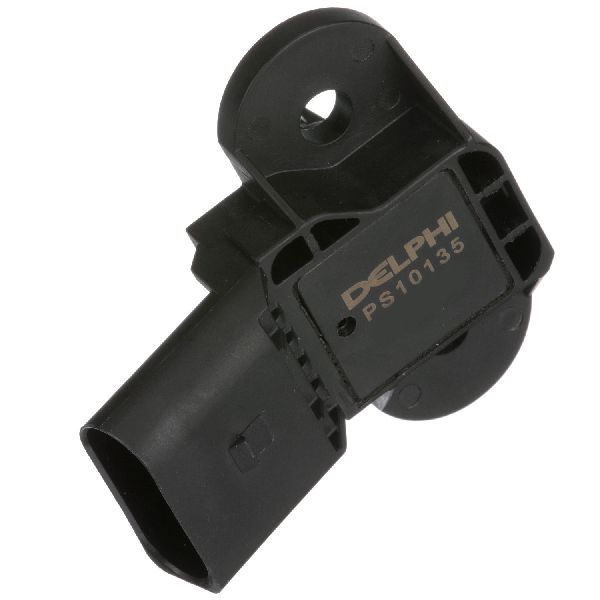
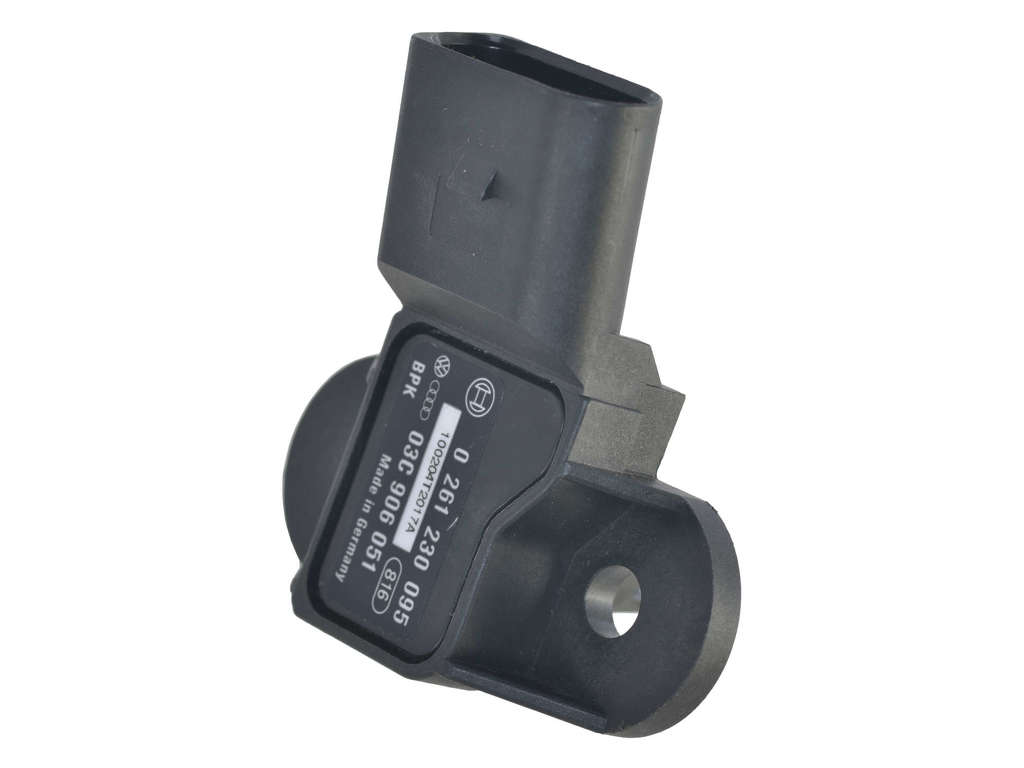
- Manifold Absolute Pressure (MAP) Sensor
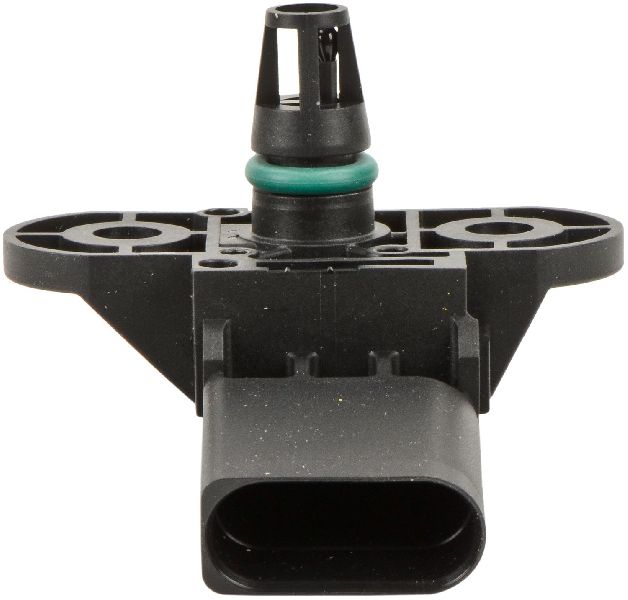
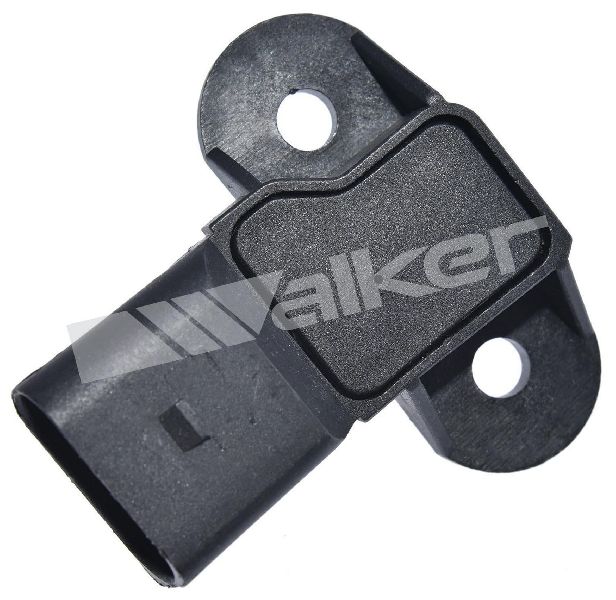
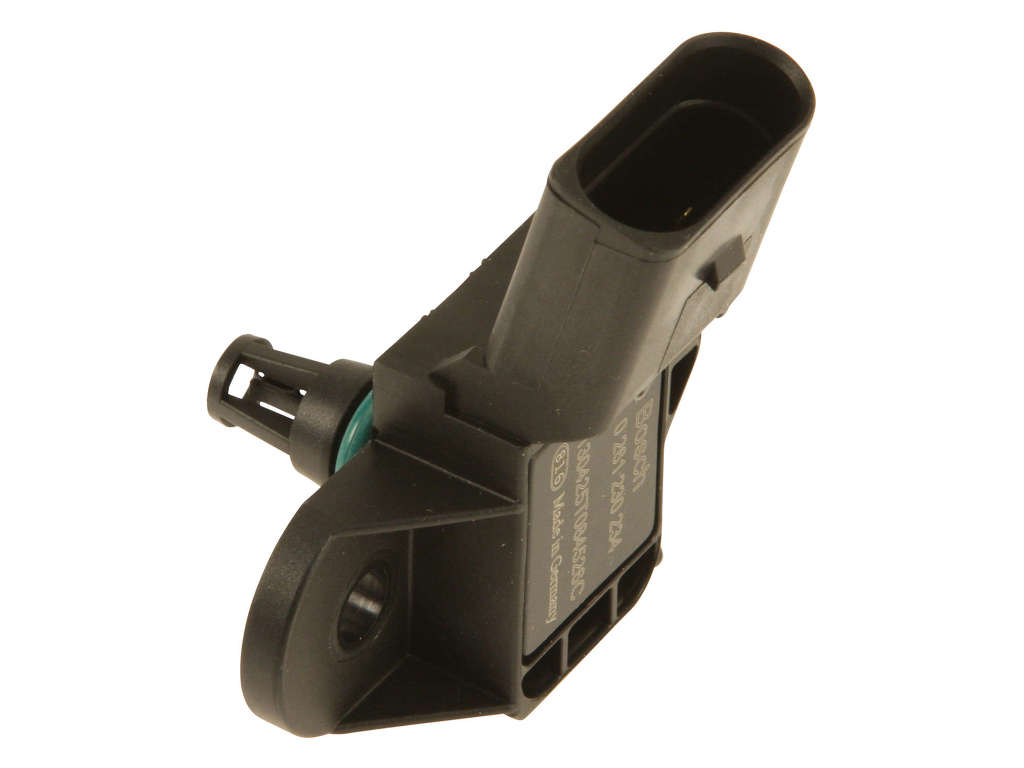
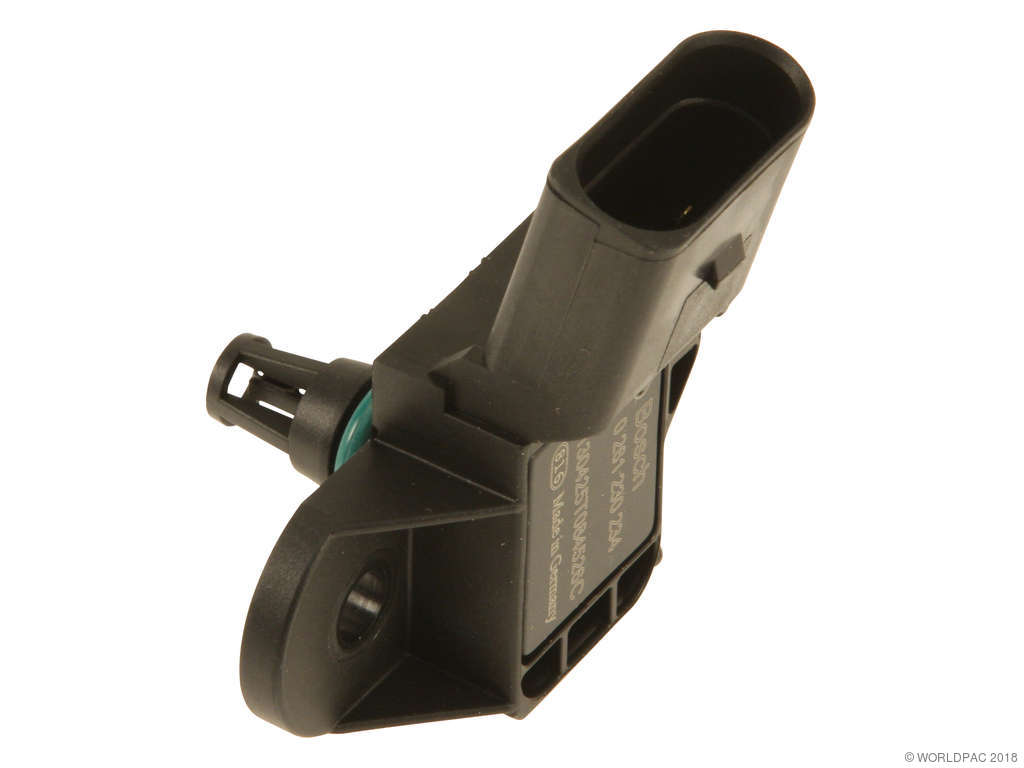
(OEM #06E906051K (superseded by 06E906051T))— This is the most frequent hardware failure for code P0106. It provides the primary pressure reading that the ECU uses for engine load calculations. Bosch is the OEM manufacturer, part number 0261230288.
Trusted brands: Bosch, Genuine Audi
OEM price range: $80-$120
Aftermarket price range: $40-$70 - PCV Valve / Oil Separator Assembly
(OEM #06E103547Q (or similar variant))— Extremely common failure. The internal diaphragm tears, causing a massive vacuum leak that triggers P0106 and lean codes. Located under the supercharger.
Trusted brands: Genuine Audi, Hengst
OEM price range: $200-$280
Aftermarket price range: $150-$220
Related Codes That Often Appear With This One
- P0507 — Stands for 'Idle Air Control System RPM Higher Than Expected'. A vacuum leak or incorrect MAP reading can cause the ECU to struggle to control idle speed, often resulting in a high idle and triggering this code alongside P0106.
- P0171 / P0174 — Stands for 'System Too Lean (Bank 1 / Bank 2)'. A significant vacuum leak from a failed PCV valve or other hose allows unmetered air into the engine, causing a lean condition that the oxygen sensors detect. This is very commonly seen with P0106 when a vacuum leak is the root cause.
- P0068 — Stands for 'MAP/MAF - Throttle Position Correlation'. This code indicates a disagreement between the airflow calculated by the MAF, the pressure read by the MAP, and the angle of the throttle plate. A faulty MAP sensor or a large vacuum leak is a primary cause for this code.
Technical Service Bulletins (TSBs) & Recalls
- TSB #2043033/5: Addresses P0106 code. The dealer procedure often involves performing a software update for the Engine Control Module (ECM/ECU) if no physical faults like vacuum leaks are found. This should be considered before replacing expensive components like the ECU.
Platform-Specific Known Issues
- source — On the Audizine forums, a user with a 2014 A6 3.0T described getting a P0106 code along with lean codes (P0171/P0174) and a high idle. After replacing the MAP sensor didn't solve the issue, a smoke test revealed a massive leak from the PCV valve. Replacing the PCV (which requires supercharger removal) ultimately fixed all codes and drivability issues.
- source — A Ross-Tech forum user detailed a frustrating P0106 case on an A6 where the MAP sensor (G71) was replaced with an OEM part, and no vacuum leaks were found. VCDS logs consistently showed the internal ECU barometer (F96) reading about 80 mbar lower than the MAP sensor with KOEO (Key On Engine Off). The conclusion was a faulty ECU, highlighting this rare but real possibility.
Mechanic-Grade Diagnostic Values
- MAP Sensor (G71) vs. ECM Barometric Sensor (F96) @ KOEO — expected: Readings should be nearly identical (within 30-40 mbar).. Failure: A difference greater than 50 mbar, or a fault setting threshold around 210-230 hPa (mbar), points to a faulty MAP sensor or a faulty internal ECU barometer.
- MAP Sensor (G71) Connector Pin Voltages @ KOEO — expected: Pin 1: ~5V (Reference Voltage from ECU), Pin 3: ~0V (Ground), Pin 4: ~4.5-4.8V (Signal voltage, varies with atmospheric pressure).. Failure: Missing 5V reference, voltage present on the ground pin, or a signal voltage that does not rationally correspond to altitude indicates a wiring or ECU issue.
- Long-Term Fuel Trims (Lambda) at Idle — expected: Close to 0% (ideally within +/- 5%).. Failure: Consistently high positive values (e.g., > +10%) strongly indicate a vacuum leak from a source like the PCV valve, as the ECU is adding fuel to compensate for unmetered air.
Hidden / Shadow Codes Worth Checking
- 000262: This is the VAG-specific fault code for 'Manifold / Barometric Pressure Sensor (G71) / (F96): Implausible Signal', which is the direct equivalent of the generic P0106. (see via VCDS (VAG-COM), OBDeleven, or other Audi/VW-specific diagnostic tools.)
Scan Tool Commands That Help
- VCDS (VAG-COM) / ODIS: Throttle Body Alignment (TBA) — After cleaning the throttle body or replacing components that affect intake airflow (like the PCV), performing a TBA is recommended to reset the throttle plate's learned values for idle, closed, and open positions.
Wiring & Ground Locations
- MAP Sensor (G71) Connector — At the rear of the supercharger, near the firewall.. This 4-pin connector provides power, ground, and signal return for the MAP sensor. A corroded or loose connection here will directly cause a P0106. Pin 1 is 5V reference, Pin 3 is ground, Pin 4 is the signal wire.
- Ground Point 85 — Described in wiring diagrams as 'Earth connection -1-, in engine compartment wiring harness'.. This is a primary ground connection for the engine sensor harness. High resistance at this point can cause erratic voltage readings for multiple sensors, including the MAP sensor.
- Ground Point 13 — Main earth point in the engine compartment on the right side (passenger side in US).. A corroded or loose main engine ground can cause a floating ground reference, leading to unstable sensor readings and seemingly inexplicable electrical faults like P0106.
Real Owner Repair Stories
- Ross-Tech Forums user (VW with 2.5L engine (similar diagnostic logic)) — P0106 code when accelerating more than gently, transmission faults (PRNDS all lit up).
❌ Tried (didn't work) Initial logging showed MAP readings that seemed to move normally with throttle.
✅ What actually fixed it The primary cause was a faulty charcoal canister purge valve (N80). The user also later confirmed that a separate issue with a torn PCV diaphragm caused oil to foul the MAP sensor, which also triggered the P0106 code, requiring cleaning of the MAP and throttle body.
"I Checked Everything" — The Actual Cause
- In cases where a smoke test of the intake manifold and PCV system reveals no leaks, the P0106 code can persist due to non-leak-related issues. The most notable cause is a failure of the internal barometric pressure sensor (F96) within the ECU itself, which provides an incorrect baseline for the ECU to compare against the MAP sensor reading. Another possibility is a faulty N80 EVAP purge valve sticking open, which can introduce a vacuum leak that is sometimes missed during a standard intake smoke test if the purge line isn't properly isolated and tested.
OEM Part Supersession History
06E103547C, 06E103547F, 06E103547Q→06E103547AC, 06E103547AE, 06E103547AK, etc.— Revisions to improve the durability of the internal diaphragm and valve assembly.
Heads up: CRITICAL: If you upgrade from an older PCV revision to a newer one, an ECU software update from an Audi dealer may be required to adjust for the different flow characteristics. Failure to update the software can cause the P0106 code to persist even with the new part.06E906051E, 06E906051J→06E906051K, 06E906051T— Internal sensor improvements for accuracy and durability.
Model Year Variations Within This Range
- 2016-2018 (C7.5 CREC Engine): While the PCV valve is still a known failure item, some sources suggest it is somewhat more robust than on pre-facelift 3.0T engines. However, the repair is identical in that it requires removal of the supercharger. The CREC engine also features a supercharger clutch, which is another potential point of failure not present on all earlier models, though it is not directly related to P0106.
Diagnostic Flowchart
Other Known Issues on This Vehicle
Issues unrelated to this code that are worth knowing about as an owner of this generation:
- PCV / Oil Separator Failure 🔴 High — Very common, typically occurs between 60,000 and 120,000 miles. The internal diaphragm tears.
- Thermostat and Water Pump Failure 🔴 High — Common failure item, often after 50,000 miles. The plastic housing can crack, leading to coolant leaks and overheating. Often replaced together. (Ref: Service actions were issued for early models.)
- Engine Mount Failure 🟠 Medium — The fluid-filled electronic engine mounts frequently leak and fail, causing excessive vibration at idle. Typically occurs after 60,000 miles.
- Timing Chain Tensioner Rattle 🔴 High — More common on pre-2015 engines. A rattle on cold startup for a few seconds can indicate tensioner wear. If ignored, can lead to catastrophic engine failure. A very expensive repair.
- Carbon Buildup (Pre-CREC engines) 🟠 Medium — On the pre-facelift (2012-2015) direct-injection-only engines, carbon buildup on intake valves is a known issue requiring walnut shell blasting to clean, typically every 60,000-80,000 miles.
- Oil Consumption (CREC engines) 🟠 Medium — Some later CREC engines (2016+) have been reported to have issues with oil consumption due to piston ring design, sometimes requiring significant oil top-offs between changes.
Used vs. New Parts: Buying Guide for This Vehicle
When a used part is the smart pick: For this repair, sourcing a used part is generally not recommended for the primary failure components. However, if the ECU is diagnosed as faulty, a used ECU from a reputable salvage yard can be a cost-effective option, provided you use a specialized service to clone the immobilizer and coding data from your original unit. Structural components like a used supercharger housing (if damaged during repair) are also acceptable.
Donor-vehicle mileage cap: roughly under 80000 miles for the part to have meaningful remaining life.
What to inspect on the donor part:
- For a used ECU, verify the part number matches exactly.
- Ensure the donor vehicle was not involved in a flood or fire.
- Check for any visible corrosion on connectors or the case.
OEM-only on this vehicle (don't cheap out):
- PCV / Oil Separator Assembly: Due to the high failure rate of diaphragms and the significant labor to replace it, using a cheap aftermarket unit is a major risk. Stick with Genuine Audi or a known OES like Hengst.
- MAP Sensor (G71): This is a critical engine management sensor. While the OEM is Bosch, avoid no-name, unbranded sensors as their readings can be inaccurate out of the box, leading to persistent issues.
Aftermarket brands forum-validated for this vehicle:
- Bosch (for the MAP sensor, as they are the Original Equipment Manufacturer)
- Hengst (for the PCV / Oil Separator, as they are an Original Equipment Supplier)
Brands owners have reported issues with on this vehicle:
- Unbranded, 'white-box' electronic sensors from online marketplaces. These often have poor quality control and can fail quickly or provide incorrect data, making diagnosis even more difficult.
Real Owner Stories
Aggregated from forums and TSBs cited above. Mileages and costs reflect what owners reported in those sources.
2014 Audi A6 3.0T
Symptoms: P0106 code along with lean codes (P0171/P0174) and a high idle. Replacing the MAP sensor did not solve the issue.
What fixed it: A smoke test revealed a massive leak from the PCV valve; replacing the PCV assembly resolved all codes and drivability issues.
Source hint: Audizine Forums thread titled 'P0106 and lean codes on my 2014 A6 3.0T'
Audi A6 3.0T
Symptoms: P0106 code present. VCDS logs showed the internal ECU barometer (F96) reading about 80 mbar lower than the MAP sensor (G71) with Key On Engine Off.
What fixed it: Replacement of the ECU after a new OEM MAP sensor and vacuum leak checks failed to resolve the discrepancy.
Source hint: Ross-Tech Forums detailed case
Related OBD-II Codes
Frequently Asked Questions
Is there a Technical Service Bulletin for the P0106 code on my Audi A6 3.0T?
How can I tell if my P0106 code is caused by a faulty MAP sensor or a bad PCV valve?
Where is the MAP sensor located on the 3.0T Supercharged V6 engine?
Can I just clean the MAP sensor instead of replacing it?
What should I replace while the supercharger is removed to fix a PCV-related P0106?
What if replacing the MAP sensor and fixing vacuum leaks doesn't clear the P0106 code?
Helpful Videos
We Have This Part in Stock

The information in this article is provided for general reference and educational purposes only. Vehicle specifications, procedures, and part compatibility can vary by production date, trim level, and region. Always consult your vehicle's factory service manual and verify part numbers before purchasing or performing repairs. Safety-critical components such as airbags, seat belts, and braking systems should be installed by a qualified professional.
- Audi A6:
- 🧭 Diagnostic Flowchart
- 🎬 Helpful Videos
- 🛍️ Shop This Part
- What's Unique About the 2012-2018 Audi A6
- Symptoms You May Notice
- Most Likely Causes
- Rare But Worth Checking
- Diagnosis Steps
- Parts You'll Likely Need
- Related Codes That Often Appear With This One
- Technical Service Bulletins (TSBs) & Recalls
- Platform-Specific Known Issues
- Mechanic-Grade Diagnostic Values
- Hidden / Shadow Codes Worth Checking
- Scan Tool Commands That Help
- Wiring & Ground Locations
- Real Owner Repair Stories
- "I Checked Everything" — The Actual Cause
- OEM Part Supersession History
- Model Year Variations Within This Range
- Other Known Issues on This Vehicle
- Used vs. New Parts: Buying Guide for This Vehicle
- Real Owner Stories
- 2014 Audi A6 3.0T
- Audi A6 3.0T
- Related OBD-II Codes
- Frequently Asked Questions
- 🎟️ Get 5% Off