

P0106 on 2012-2018 Audi A7 3.0T: MAP Sensor & PCV Valve Guide
On the Audi A7 3.0T, code P0106 is most often caused by a failed PCV valve creating a massive vacuum leak, or a faulty MAP/boost pressure sensor. A simple test for the PCV is to check for strong vacuum at the oil cap when the engine is idling. A software update may also be available to address an overly sensitive monitoring strategy.
- For a P0106 code on an Audi A7 3.0T, immediately suspect the PCV valve.
- Perform the 'oil cap test' at idle; if the cap is held on by strong vacuum, the PCV has likely failed.
- If the PCV is the cause, be prepared for a labor-intensive repair as the supercharger must be removed for access.
- If the PCV is not the issue, the next most likely cause is one of the two MAP/boost sensors on the supercharger.
- Cleaning a contaminated MAP sensor is worth trying before buying a new one.
What's Unique About the 2012-2018 Audi A7
The Audi 3.0T supercharged engine is highly sensitive to manifold pressure for both performance and efficiency. Unlike many vehicles where a P0106 points directly to the sensor, on this platform it is very frequently a symptom of a failed Positive Crankcase Ventilation (PCV) valve. This common failure creates a significant vacuum leak under the supercharger, which the MAP sensor correctly reports as an out-of-range value, leading to the code. The engine uses two separate pressure sensors on the supercharger assembly, which can also be a point of confusion during diagnosis. Furthermore, Audi has released Technical Service Bulletins (TSBs) indicating that the P0106 code can be triggered erroneously due to overly sensitive software logic, requiring an ECU update rather than a part replacement.
Symptoms You May Notice
- Check Engine Light or EPC (Electronic Power Control) light is on
- Rough or unstable idle
- Hesitation or stumbling during acceleration
- Noticeable loss of engine power or vehicle entering 'limp mode'
- Decreased fuel economy
- High-pitched whistling or sucking noise from the engine bay at idle (indicates PCV failure)
- Excessive vacuum at the oil filler cap, making it difficult to remove with the engine running
- Replacing the MAP sensor without testing the PCV valve first. Many owners replace the sensor only to have the P0106 code return because the root cause was the massive vacuum leak from the failed PCV.
- Replacing any hardware (MAP sensor, PCV) before checking if an ECM software update is available and applicable, as per Audi TSBs.
Most Likely Causes
- Failed PCV (Crankcase Ventilation) Valve / Oil Separator 🔴 High Probability The diaphragm inside the PCV valve is known to tear on the 3.0T engine, creating a large, unmetered vacuum leak directly into the intake manifold. This is a very common failure point on this platform, often occurring between 80,000 and 120,000 miles.
How to confirm: With the engine running at idle, try to remove the oil filler cap. If a very strong vacuum holds the cap down and it is difficult to remove, the PCV valve has almost certainly failed. The whistling sound will also often change or stop when the cap is removed. A failed PCV can also lead to increased oil consumption. 🎬 Watch: Understanding PCV failure symptoms and diaphragm issues
Typical fix: Replace the entire PCV valve assembly. This part is located underneath the supercharger, so the job requires removing the supercharger, fuel rails, and lower intake manifolds. It is a labor-intensive repair, often taking 4-6 hours. 🎬 See this step-by-step PCV replacement walkthrough Many owners proactively replace the thermostat and clean intake valve carbon buildup at the same time, as these components are accessible once the supercharger is removed.
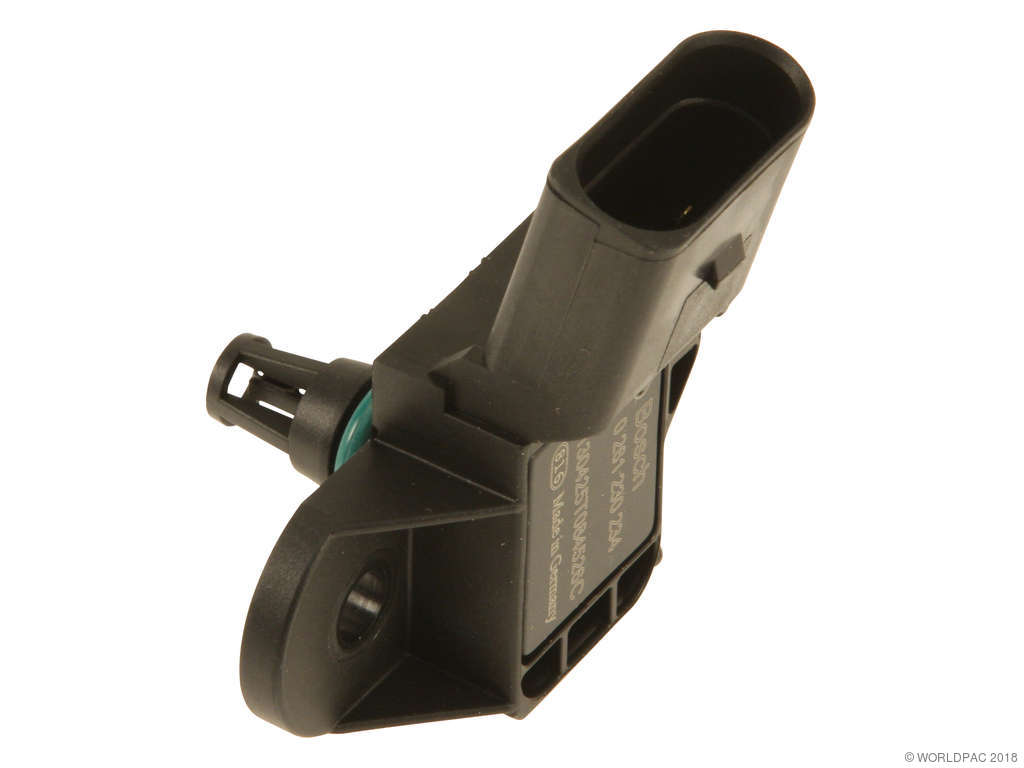
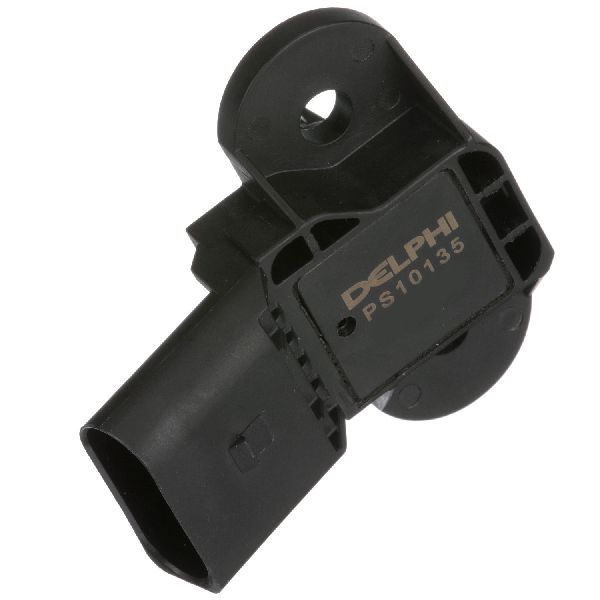
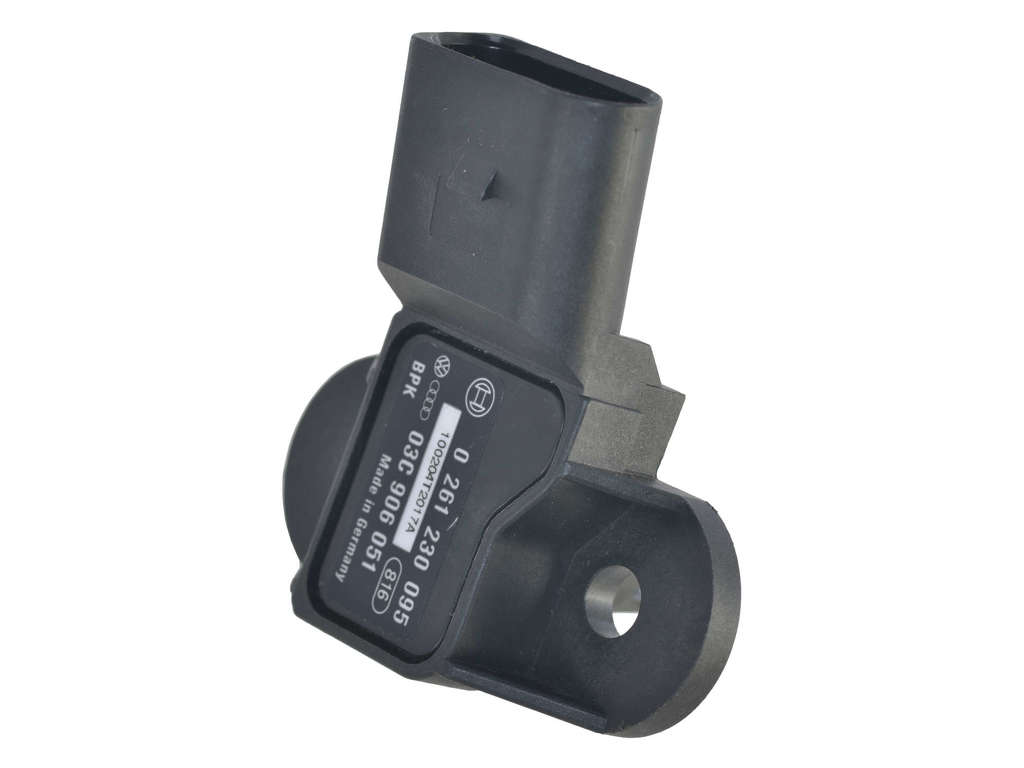
Est. part cost: $150-$250 - Faulty MAP / Boost Pressure Sensor 🟡 Medium Probability The 3.0T engine uses two of these sensors. They can become contaminated with oil and carbon over time or simply fail electronically, sending incorrect data to the ECU.
How to confirm: Use an OBD-II scanner with live data capability to monitor the voltage or pressure readings from both MAP sensors. Compare the readings to each other and to specified values at idle and under load. A sensor that is unresponsive or provides erratic readings is faulty. Inspect the sensor for oil contamination.
Typical fix: Replace the faulty sensor. First, try cleaning the sensor with dedicated electronics or MAF sensor cleaner, as contamination is a common issue. If cleaning does not resolve the issue, replacement is necessary. The sensors are located on the supercharger assembly.
Est. part cost: $40-$85 per sensor - Engine Control Module (ECM) Software Update Needed 🟡 Medium Probability Audi has issued TSBs for the 3.0T engine stating that the monitoring strategy for the MAP sensor can be too sensitive, causing P0106 to be stored incorrectly.
How to confirm: A dealership or a qualified shop with access to Audi's ODIS diagnostic software can check the current software version of the ECM and determine if an update is available. The TSB explicitly states not to replace any parts before checking for and performing the software update.
Typical fix: Update the ECM software using the SVM (Software Version Management) process. This must be done by a dealer or a specialist with the correct equipment.
Est. part cost: $0 (if under warranty) - $200 - Vacuum Leak (Other than PCV) ⚪ Low Probability The plastic PCV breather hoses that connect to the valve covers can become extremely brittle with age and heat, causing them to crack and create vacuum leaks. The brake booster vacuum hose is also a potential failure point.
How to confirm: Visually inspect all accessible vacuum lines and PCV hoses for cracks or breaks. A smoke test is the most effective way to find hard-to-see leaks.
Typical fix: Replace the cracked or broken vacuum hose.
Est. part cost: $20-$100 depending on the hose
Rare But Worth Checking
- Dirty Throttle Body: → Shop Fuel Injection Throttle Body Carbon buildup around the throttle plate can disrupt airflow at idle, which can sometimes contribute to an implausible MAP sensor reading. Cleaning it is a simple step to perform during diagnosis.
- Wiring or Connector Issue: Damage to the wiring harness or corrosion in the connector for one of the MAP sensors can cause a loss of signal. This is less common than sensor or PCV failure but should be checked, especially if the vehicle has a history of front-end damage.
- Clogged Catalytic Converters: Severely clogged catalytic converters can create significant backpressure, affecting manifold pressure and potentially triggering a P0106 code. This is usually accompanied by other codes and a more severe loss of power.
Diagnosis Steps
- Read all fault codes with an OBD-II scanner.
- Check with an Audi dealer or specialist if any TSBs (e.g., for an ECM software update) apply to your vehicle's VIN for code P0106.
- With the engine idling, attempt to remove the oil filler cap. If there is strong resistance from vacuum, suspect a failed PCV valve. This is the most important platform-specific test.
- If the oil cap test is inconclusive, use a scanner to view live data for both MAP/Boost pressure sensors. Check if their readings are plausible at idle (should be low) and when revving the engine (should increase).
- Visually inspect all vacuum lines and the plastic PCV breather tubes for obvious cracks or damage.
- If a specific MAP sensor is suspected, remove it and inspect for oil or carbon contamination. Clean it with MAF or electronics cleaner and reinstall to see if the code clears.
- If cleaning fails, replace the suspected MAP sensor.
- If a vacuum leak is suspected but not visible, perform a smoke test to pinpoint the source.
- If the PCV valve is confirmed as the cause, it must be replaced. This involves removing the supercharger for access. 🎬 Watch: Pro tips for removing the 3.0T supercharger It is highly recommended to replace the thermostat, water pump, and any brittle plastic coolant pipes 'while you're in there'.
Parts You'll Likely Need
- PCV Valve / Oil Separator
(OEM #06E103547AC (supercedes 06E103547Q, 06E103547F, 06E103547C))— This is the most common cause of code P0106 on the 3.0T engine due to a high failure rate of the internal diaphragm.
Trusted brands: Audi (Genuine), Vaico, URO Parts
OEM price range: $200-$280
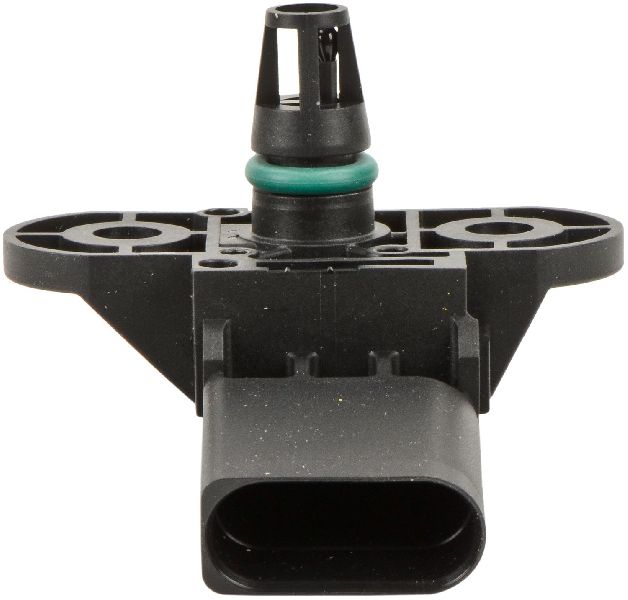
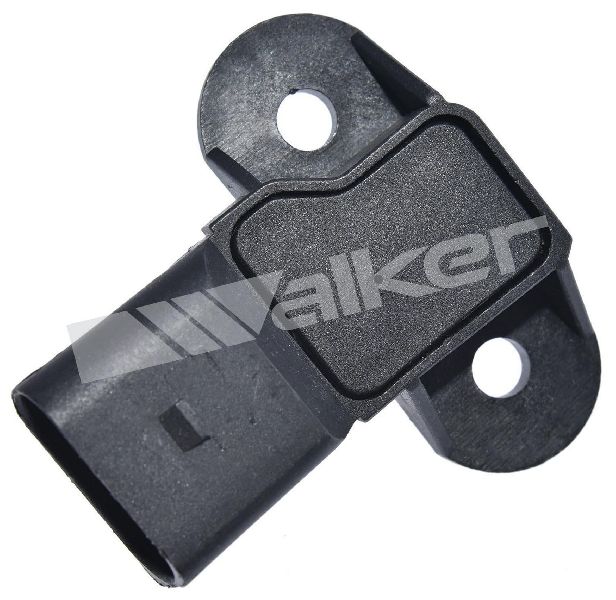
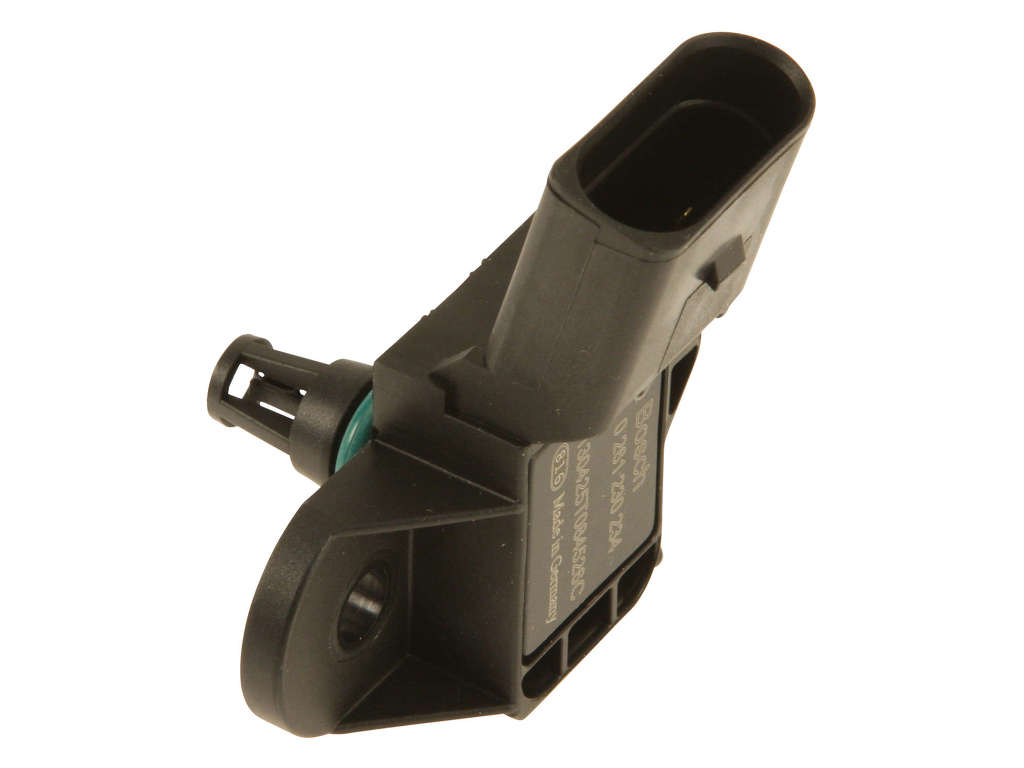
Aftermarket price range: $150-$220 - Manifold Absolute Pressure (MAP) Sensor
(OEM #06E906051K (verify by VIN))— This sensor can fail electronically or become contaminated, leading to incorrect readings. The 3.0T uses two of them. This part number is also described as a low-pressure fuel sensor in some catalogs, which can be confusing.
Trusted brands: Bosch, NTK, Genuine Audi/VW
OEM price range: $90-$140
Aftermarket price range: $40-$85 - Supercharger Gasket Kit — Required when removing the supercharger to access the PCV valve. Includes gaskets for the supercharger to intake manifold and throttle body.
Trusted brands: Victor Reinz, Elring, Genuine Audi
OEM price range: $80-$120
Aftermarket price range: $50-$90
Related Codes That Often Appear With This One
- P0171/P0174 — System Too Lean (Bank 1/2). These codes often accompany P0106 when it's caused by a vacuum leak from the PCV system or other hoses, as unmetered air is entering the engine.
- P030x (e.g., P0300, P0301) — Random or specific cylinder misfires. A lean condition or incorrect load calculation caused by a bad MAP signal or vacuum leak can lead to engine misfires.
- P0507 — Idle Control System RPM Higher Than Expected. This code can be set when a large vacuum leak (like a failed PCV) causes the engine's idle speed to be higher than the ECU can control.
Technical Service Bulletins (TSBs) & Recalls
- TSB 2040483 / V011423 (March 2014): 'Update Programming, MIL ON, DTC P0106... Stored in ECM'. States monitoring strategy is too sensitive and to update software, not replace parts.
- TSB 2036435 / V011317 (June 2013): Similar to the above, for an earlier software version, advising an update for P0106 without part replacement.
- TSB 2039995 / 15-15-26 (March 2015): While not for P0106, this TSB addresses replacing upper timing chain tensioners to fix a cold start rattle, a common issue owners may want to address while doing a PCV job.
Platform-Specific Known Issues
- The PCV valve on the 3.0T supercharged engine is located deep in the engine valley, underneath the supercharger. Its replacement is a significant job requiring several hours of labor.
- Failure of the PCV valve is so common that it should be the first suspicion for a P0106 code, especially if accompanied by a whistling noise or high vacuum in the crankcase.
- Audi has released TSBs (e.g., 2040483/7, 2036435) for some models/years indicating an ECM software update can fix an overly sensitive P0106 trigger. Always check for software updates before replacing hardware.
Mechanic-Grade Diagnostic Values
- MAP (G71) vs. Barometric (F96) Pressure Comparison — expected: With Key On, Engine Off (KOEO), the pressure readings from the manifold sensor (G71) and the ambient/barometric sensor (F96) should be nearly identical.. Failure: A difference greater than approximately 210-230 hPa (hectopascals) between the two sensors at KOEO will trigger the P0106 fault.
- MAP Sensor (G71) Harness to ECM Continuity — expected: The resistance between the sensor connector terminals and the corresponding terminals at the Engine Control Module (J623) should be a maximum of 1.5 ohms.. Failure: Resistance higher than 1.5 ohms indicates a break or high resistance in the wiring harness, which can cause an implausible signal.
- MAP Sensor Signal Voltage — expected: A typical 3-wire MAP sensor operates on a 5V reference signal from the ECU. The signal wire should return a voltage between approximately 1V (high vacuum at idle) and 4.5V (low vacuum/boost).. Failure: A signal that is stuck high, stuck low, or does not change with engine load/RPM indicates a failed sensor or wiring issue.
Hidden / Shadow Codes Worth Checking
- P113700 / P112700 / P113900 / P112900: Bank 1/2 Mixture Adaptation (additive/multiplicative) System Too Rich. These manufacturer-specific codes can sometimes appear when a PCV valve fails. The ECU initially tries to compensate for the vacuum changes by adjusting fuel trims, sometimes resulting in a rich condition before it sets lean codes or the P0106 fault. (see via An Audi-specific scanner like VCDS or ODIS is required to see these detailed fault codes.)
Scan Tool Commands That Help
- VCDS or ODIS: Advanced Measuring Blocks — To simultaneously view and graph the live data from the Manifold Absolute Pressure sensor (G71) and the ambient Barometric Pressure sensor (F96). This is the primary method to confirm the KOEO test and observe sensor behavior during idle and test drives.
- VCDS or ODIS: Basic Settings - Group 060 (Throttle Body Adaptation) — This function should be run after cleaning or replacing the throttle body. It resets the learned minimum and maximum positions of the throttle plate, ensuring the ECU's calculations for expected airflow are accurate, which can influence the plausibility check for the MAP sensor.
Wiring & Ground Locations
- Main Engine Harness Ground — There is a critical ground wire for the engine harness located on the vehicle's frame rail in the engine bay. Its exact position can vary slightly, but it's typically a brown wire bolted directly to the chassis.. A loose or corroded main engine ground can cause floating voltages and erratic readings across multiple sensors, including the MAP sensors. If sensor values are noisy or implausible and the sensors themselves test good, this ground connection should be disassembled, cleaned, and secured.
- MAP Sensor Connector (G71) — Located on the supercharger assembly. The 3.0T has multiple pressure sensors; G71 is typically integrated with an Intake Air Temp sensor (G42) before the throttle body.. The connector terminals are gold-plated for better conductivity. Service manuals specify using only gold-plated terminals for repairs to prevent signal degradation. The typical 4-pin connector will have a 5V supply, a signal wire, a ground, and a signal for the IAT.
Real Owner Repair Stories
- Compilation of multiple owner stories on Audizine & AudiWorld forums (2014 Audi A7 3.0T, ~95,000 miles) — P0106 code, EPC light, rough idle, and a high-pitched whistle from the engine bay.
❌ Tried (didn't work) Replaced the primary MAP sensor (G71)., Cleaned the throttle body., Performed a smoke test which did not reveal any leaks.
✅ What actually fixed it The owner performed the 'oil cap test' while the engine was idling and found it was held on by extreme vacuum. This confirmed a torn diaphragm in the PCV valve. Replacing the PCV valve assembly (a 5-hour job involving supercharger removal) and the related gaskets completely resolved the P0106 code and all symptoms.
"I Checked Everything" — The Actual Cause
- A very common scenario for the 3.0T engine is a smoke test that passes (shows no leaks), yet the P0106 code and vacuum leak symptoms persist. This happens because the failure is an internal tear in the PCV valve's diaphragm. A standard smoke test pressurizes the intake manifold but does not adequately test the crankcase side of the system where the failure occurs. The definitive test in this situation is not a smoke test, but checking for strong vacuum at the oil filler cap with the engine running, which directly indicates the diaphragm has failed and is sucking unmetered air from the crankcase into the supercharger.
OEM Part Supersession History
06E103547C, 06E103547F, 06E103547Q→06E103547AC— Multiple revisions were released to improve the material and design of the internal rubber diaphragm to prevent premature tearing, which is the primary failure mode causing a massive vacuum leak.
Heads up: All previous versions should be replaced with the latest available revision (06E103547AC or newer if applicable) to ensure the most durable design is used.
Model Year Variations Within This Range
- 2016-2018 (C7.5 Facelift): The updated CREC engine in the C7.5 models features a dual-injection system (both port and direct injection). This was primarily to combat the heavy intake valve carbon buildup seen on earlier direct-injection-only 3.0T engines. While the P0106 fault causes remain the same (PCV/MAP sensor), severe carbon buildup is a less likely contributing factor to airflow disruption on these later models compared to the 2012-2015 cars.
- 2012-2013: Early C7 models were more prone to thermostat and water pump failures. While not a direct cause of P0106, these parts are often replaced preventatively during the PCV valve replacement since the supercharger is already removed, making it a crucial consideration for owners of earlier models.
Diagnostic Flowchart
Other Known Issues on This Vehicle
Issues unrelated to this code that are worth knowing about as an owner of this generation:
- Timing Chain Tensioner Failure 🔴 High — Commonly presents as a 1-3 second 'death rattle' on cold starts, typically after 80k-120k miles. Failure can be catastrophic. (Ref: TSB 2039995/1 addresses replacing upper tensioners.)
- Water Pump & Thermostat Failure 🔴 High — Very common. Plastic components become brittle and leak or fail, often between 60k-100k miles. Can cause overheating. (Ref: Multiple part revisions exist. Early models (pre-2013) were more prone to failure.)
- Active Engine Mount Failure 🟠 Medium — Fluid-filled mounts are known to leak and fail, sometimes as early as 40k miles, causing vibrations.
- Catalytic Converter Failure 🔴 High — The catalyst material can break down, especially on 2012-2013 models, causing blockages, loss of power, and potential engine damage. Often occurs after 70k miles.
- Intake Valve Carbon Buildup 🟠 Medium — A consequence of Direct Injection engines. Causes rough idle and reduced performance. Typically requires cleaning every 60k-80k miles.
Used vs. New Parts: Buying Guide for This Vehicle
When a used part is the smart pick: For this specific repair, using used parts is strongly discouraged. The primary failure components, the PCV valve and MAP sensors, are wear items or sensitive electronics. A used PCV valve has an unknown remaining lifespan and could fail shortly after the labor-intensive installation. Structural components like the supercharger housing or intake manifolds could be sourced used if damaged, but not the active components related to this code.
Donor-vehicle mileage cap: roughly under 30000 miles for the part to have meaningful remaining life.
What to inspect on the donor part:
- For a PCV valve, there is no reliable way to inspect the internal diaphragm.
- For a MAP sensor, check for physical damage, but its electronic function cannot be verified visually.
- Verify the part number on a used component matches the latest revision; older parts are more prone to failure.
OEM-only on this vehicle (don't cheap out):
- PCV Valve / Oil Separator
Aftermarket brands forum-validated for this vehicle:
- Bosch (for MAP sensors, as they are often the OEM supplier)
- Hengst (for PCV valve, as they are a known OE supplier)
Brands owners have reported issues with on this vehicle:
- Generic, unbranded PCV valves from online marketplaces (e.g., Amazon, eBay)
- URO Parts (for the PCV valve, some owners report premature diaphragm failure compared to OEM/OES)
Real Owner Stories
Aggregated from forums and TSBs cited above. Mileages and costs reflect what owners reported in those sources.
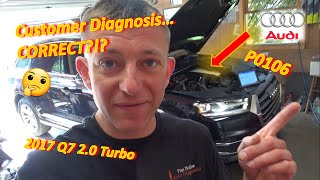
2017 Audi Q7 3.0T
Symptoms: MAP Performance code P0106; technician performed an 'oil cap test' confirming high crankcase vacuum.
What fixed it: Diagnosis confirmed the PCV valve was the culprit; also involved checking the throttle body for carbon.
Source hint: Pine Hollow Auto Diagnostics (YouTube) - 'Did Customer Diagnose His Audi...CORRECTLY?! ('17 Q7 Turbo: P0106 MAP Performance)'
2016 Audi A7 3.0T (C7.5)
Symptoms: Owner was advised by a shop to wait for the thermostat or PCV to fail before performing major labor.
What fixed it: Replacing both the PCV and thermostat simultaneously since the supercharger must be removed for either job.
Source hint: Reddit r/Audi - 'C7.5 3.0T - Waterpump & Thermostat replacement at same time worth it?'
2014 Audi A7 3.0T — ~100000 miles
Symptoms: P0106 code linked to PCV failure; whistling noise from the engine bay.
What fixed it: Replacement of the PCV valve assembly located under the supercharger.
Source hint: Audizine - Numerous threads discuss the P0106 code being linked to PCV failure.
Related OBD-II Codes
Frequently Asked Questions
Is there a specific Audi TSB for the P0106 code on the 3.0T engine?
How can I tell if my A7's P0106 code is caused by a failed PCV valve without taking the engine apart?
Where is the PCV valve located on the 2012-2018 Audi A7 3.0T?
Should I replace other parts while fixing a P0106 caused by the PCV valve?
Can a dirty sensor cause the P0106 code on this platform?
Why is my A7 in 'limp mode' with an EPC light and P0106?
Helpful Videos
We Have This Part in Stock

The information in this article is provided for general reference and educational purposes only. Vehicle specifications, procedures, and part compatibility can vary by production date, trim level, and region. Always consult your vehicle's factory service manual and verify part numbers before purchasing or performing repairs. Safety-critical components such as airbags, seat belts, and braking systems should be installed by a qualified professional.
- Audi A7:
- 🧭 Diagnostic Flowchart
- 🎬 Helpful Videos
- 🛍️ Shop This Part
- What's Unique About the 2012-2018 Audi A7
- Symptoms You May Notice
- Most Likely Causes
- Rare But Worth Checking
- Diagnosis Steps
- Parts You'll Likely Need
- Related Codes That Often Appear With This One
- Technical Service Bulletins (TSBs) & Recalls
- Platform-Specific Known Issues
- Mechanic-Grade Diagnostic Values
- Hidden / Shadow Codes Worth Checking
- Scan Tool Commands That Help
- Wiring & Ground Locations
- Real Owner Repair Stories
- "I Checked Everything" — The Actual Cause
- OEM Part Supersession History
- Model Year Variations Within This Range
- Other Known Issues on This Vehicle
- Used vs. New Parts: Buying Guide for This Vehicle
- Real Owner Stories
- 2017 Audi Q7 3.0T
- 2016 Audi A7 3.0T (C7.5)
- 2014 Audi A7 3.0T — ~100000 miles
- Related OBD-II Codes
- Frequently Asked Questions
- 🎟️ Get 5% Off