

P0106 on 2009-2017 Audi Q5 2.0T: PCV Valve and MAP Sensor Causes & Fixes
On a 2009-2017 Audi Q5 2.0T, code P0106 is almost always caused by a failed PCV valve (Oil Separator) creating a large vacuum leak. Before buying a MAP sensor, check for a loud whistle from the engine or strong suction at the oil cap. A new, revised PCV assembly (latest P/N 06H103495AK or newer) costs around $150-$220 and is a common DIY fix. Ignoring this can lead to a costly rear main seal failure.
- For a P0106 code on your Audi Q5 2.0T, always suspect a failed PCV valve first.
- A loud whistling sound from the engine or strong suction at the oil cap are definitive signs of a bad PCV valve.
- Do not replace the MAP sensor without first ruling out the PCV valve to avoid wasting money on the wrong part.
- Ignoring a failed PCV can lead to a very expensive rear main seal failure.
- Check if your vehicle's VIN has an open campaign for an ECM software update related to this code.
What's Unique About the 2009-2017 Audi Q5
The 2.0T EA888 engine used in this generation of Audi Q5 is notoriously prone to failure of the Positive Crankcase Ventilation (PCV) valve. The rubber diaphragm inside the valve assembly frequently tears due to heat and age, creating a significant, un-metered vacuum leak directly into the crankcase. This leak causes manifold pressure readings to drop to a level the ECU deems impossible compared to the throttle angle and engine RPM, directly triggering the P0106 code. As a result, P0106 on this specific vehicle is most often a symptom of PCV failure, not a primary fault of the MAP sensor itself.
Symptoms You May Notice
- Check Engine Light is on
- Loud whistling or squealing noise from the engine bay, especially at idle
- Rough or unstable idle, sometimes hunting up and down
- Hesitation during acceleration and general loss of power
- Strong suction at the oil filler cap, making it difficult to remove while the engine is running
- Reduced fuel economy
- Engine stalling at idle
- Black smoke from the exhaust
- Replacing the MAP sensor when the PCV valve is the actual cause of the problem. Always perform the oil cap suction test first, as it is a definitive and free diagnostic for the most common failure.
- Replacing the PCV diaphragm only. While cheaper, the plastic housing of the PCV assembly can also develop cracks or other check valves can fail. It is recommended to replace the entire assembly.
Most Likely Causes
- Failed PCV Valve / Oil Separator 🔴 High Probability The rubber diaphragm inside the PCV assembly is a well-documented weak point on the 2.0T EA888 engine; it tears easily, creating a massive unmetered vacuum leak which the ECU reads as a MAP sensor performance issue. This part has been revised multiple times by Audi to improve durability.
How to confirm: With the engine idling, listen for a loud whistle or squeal. Carefully try to remove the oil filler cap. If it is held on by strong vacuum and is difficult to remove, or if the engine stumbles badly/stalls when the cap is removed, the PCV assembly has failed. This is the most definitive test.
Typical fix: Replace the entire PCV valve / oil separator assembly. It is critical to use the latest revised OEM part number (e.g., 06H103495AK, 06H103495AN, or newer) to prevent premature failure and ensure correct crankcase pressure.
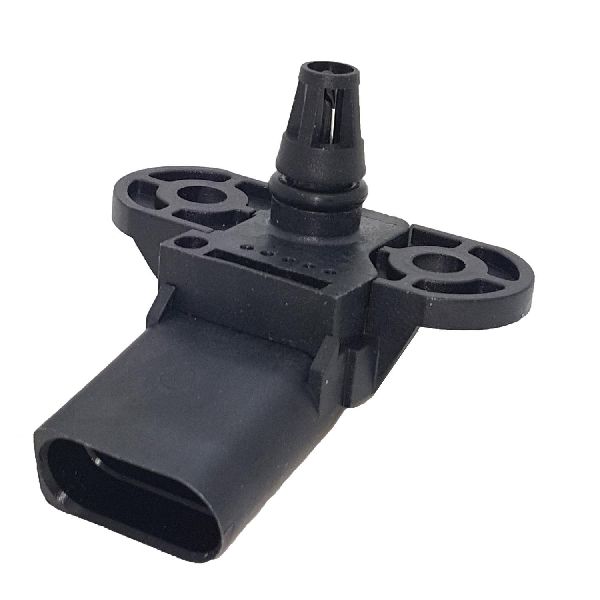
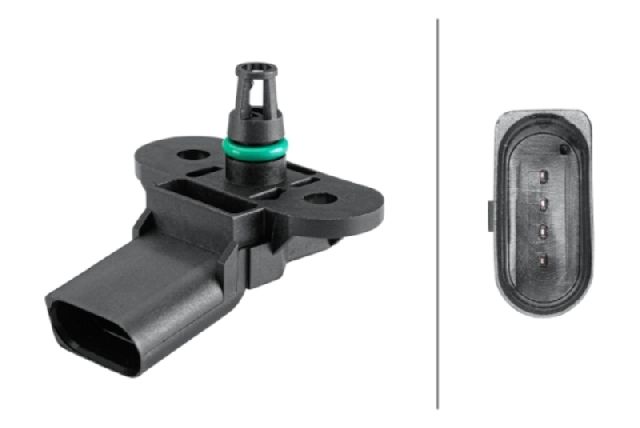
Est. part cost: $150-$220 - Faulty Manifold Absolute Pressure (MAP) Sensor 🟡 Medium Probability → Shop Manifold Absolute Pressure Sensor The sensor can become contaminated with oil blown into the intake by a failing PCV valve, or it can fail electronically on its own. It is often replaced unnecessarily when the PCV valve is the true culprit. Always test the PCV first.
How to confirm: After confirming the PCV system is working correctly, use a scan tool to compare the MAP sensor reading to the Barometric Pressure (BARO) reading with the key on, engine off. The values should be nearly identical. If they differ significantly, the sensor is likely bad. Visually inspect the sensor for oil contamination.
Typical fix: Replace the MAP sensor. It is located on the intake manifold and is typically held in by one or two Torx screws. The Bosch equivalent is a common replacement.
Est. part cost: $40-$100 - ECM Software Needs Update ⚪ Low Probability Audi/VW has issued Technical Service Bulletins (TSBs) for some models where the ECU's monitoring strategy for the MAP sensor is too sensitive, causing a false P0106 code, especially on the 2.5L engine but also noted for the 2.0T.
How to confirm: Contact an Audi dealership or a qualified independent shop with your VIN to see if TSB TPI 2034012 or a similar software update applies to your vehicle.
Typical fix: The Engine Control Module (ECM) needs to be reprogrammed with the updated software by a dealer or qualified shop.
Est. part cost: $0-$200
Rare But Worth Checking
- Damaged MAP Sensor Wiring: → Shop Manifold Absolute Pressure Sensor Audi has a TSB (2028609) mentioning that the engine wiring harness can be too tight, causing wires to break or pull out of the MAP sensor connector due to engine movement and vibration. Always inspect the connector and harness for tension or damage before replacing the sensor.
- Failed Rear Main Seal: This is typically a consequence of a bad PCV valve being ignored. The extreme crankcase vacuum created by the failed PCV can suck in and damage the rear main seal, creating a very large vacuum leak and a much more expensive repair requiring transmission removal. A YouTube user documented this exact failure on a 2013 Q5 2.0T.
- Intake Valve Carbon Buildup: As a direct-injection engine, the 2.0T is prone to heavy carbon deposits on the intake valves. In some cases, this can disrupt airflow patterns enough to contribute to or cause an implausible MAP sensor reading, triggering P0106. This is usually accompanied by misfire codes on cold starts.
- Failed Internal ECM Barometric Sensor: Extremely rare, but documented. The barometric pressure sensor (F96) is located inside the ECM itself. If it fails, it provides an incorrect baseline for the ECU to compare against the external MAP sensor (G71), triggering a persistent P0106. One owner on AudiWorld forums confirmed this required ECM replacement to fix.
Diagnosis Steps
- Read all fault codes with an OBD-II scanner. Note any other codes, especially P0171, P0507, or misfire codes.
- Perform a definitive check for a failed PCV valve. With the engine idling, listen for a loud whistle or squeal. Carefully attempt to remove the oil filler cap. If strong suction holds it in place or the engine note changes drastically, the PCV valve has failed and must be replaced.
- If the PCV test is positive, replace the PCV valve assembly with the latest revised part number. This is the most likely fix. Clear codes and re-test.
- If the PCV test is negative, inspect the MAP sensor wiring and connector. Check for loose pins, corrosion, or tension on the harness, as noted in TSB 2028609.
- With the Key On, Engine Off (KOEO), use a scan tool to check MAP sensor data. The MAP sensor pressure should closely match the Barometric Pressure (BARO) reading. A significant difference (e.g., >50 mbar) points to a faulty MAP sensor or, in rare cases, a faulty internal ECM barometer.
- Remove and visually inspect the MAP sensor for oil fouling. Oil presence is a strong indicator that the PCV system is failing or has recently failed.
- If all other tests are negative, check with an Audi dealer if any ECM software updates related to TSB TPI 2034012 are available for your VIN.
- If no other cause is found, perform a smoke test to check for other, less common vacuum leaks in hoses or gaskets.
Parts You'll Likely Need
- PCV Valve / Oil Separator Assembly
(OEM #06H103495AK (or latest revision like AN, etc.))— This is the most common cause of P0106 on the 2.0T engine due to a high failure rate of its internal diaphragm. The part has been revised many times; using the latest version is crucial for longevity.
Trusted brands: Audi Genuine, Hengst (OEM supplier), Vaico
OEM price range: $180-$220
Aftermarket price range: $120-$160 - Manifold Absolute Pressure (MAP) Sensor
(OEM #038906051D)— This is the sensor that reports the pressure reading. It can fail electronically or become contaminated by oil from a bad PCV, making it the second most likely cause after the PCV valve is ruled out.
Trusted brands: Bosch (OEM supplier, P/N 0261230234), Audi Genuine
OEM price range: $80-$110
Aftermarket price range: $40-$70
Related Codes That Often Appear With This One
- P0171 — System Too Lean (Bank 1). A vacuum leak from a failed PCV valve allows un-metered air into the engine, causing a lean air/fuel mixture.
- P0507 — Idle Control System RPM Higher Than Expected. The large vacuum leak forces the engine to idle high as the ECU struggles to compensate for the extra air.
- P0300-P0304 — Random/Multiple Cylinder Misfire. The lean condition or erratic sensor readings can cause misfires as the ECU struggles to maintain proper combustion.
- P2279 — Intake Air System Leak. This code is a more general confirmation of the large vacuum leak caused by the PCV failure.
Technical Service Bulletins (TSBs) & Recalls
- TPI 2034012 / VW TSB 01-14-23: Mentions an ECM software update for some VW/Audi engines to fix overly sensitive monitoring that falsely triggers P0106.
- Audi TSB 2028609: Notes that the engine wiring harness can be too tight, causing wires for the MAP sensor to break or pull from the connector.
Platform-Specific Known Issues
- The 2.0T EA888 engine has a high failure rate for the PCV valve diaphragm, making it the primary suspect for a P0106 code.
- Ignoring a failed PCV valve can lead to a failed rear main seal, a significantly more expensive repair.
Mechanic-Grade Diagnostic Values
- MAP (G71) vs. BARO (F96) Pressure at KOEO — expected: Readings should be nearly identical (within +/- 50 mbar).. Failure: A difference greater than ~78 mbar can trigger the fault, even with a new sensor. If G71 reads ambient pressure correctly but F96 is incorrect, suspect the ECU's internal sensor.
- MAP Sensor (G71) Signal Voltage - Key On, Engine Off (KOEO) — expected: ~4.5V - 4.8V at sea level, decreasing with altitude.. Failure: Voltage is stuck at 0V or 5V, or does not plausibly match the barometric pressure reading from the ECM's internal sensor (F96).
- MAP Sensor (G71) Signal Voltage - Engine Idling — expected: 1.0V to 2.0V (representing high manifold vacuum).. Failure: Voltage remains high (closer to the KOEO voltage), which suggests a large vacuum leak or a faulty sensor not responding to vacuum.
- MAP Sensor Connector Pin Voltages (KOEO) — expected: Pin 3: ~5.0V (Reference Voltage), Pin 1: < 0.1V (Ground), Pin 4: ~4.5-4.8V (Signal Voltage).. Failure: Missing 5V reference, high voltage on the ground pin, or signal voltage that is implausible for KOEO state.
Hidden / Shadow Codes Worth Checking
- 000262 - Manifold / Barometric Pressure Sensor (G71) / (F96): Implausible Signal: This is the VAG-specific fault description for P0106, which explicitly names the two sensors being compared: the external MAP sensor (G71) and the internal ECM barometric sensor (F96). (see via VCDS (VAG-COM) or other advanced VAG-specific scan tools.)
Scan Tool Commands That Help
- VCDS (VAG-COM): Measuring Value Blocks (MVB) / Advanced Measuring Values — This is the primary diagnostic step. Use it with Key On, Engine Off to directly compare the live pressure readings from the Manifold Pressure sensor (G71) and the Atmospheric Pressure sensor (F96). They must be nearly identical for the ECU to pass the plausibility check.
Wiring & Ground Locations
- MAP Sensor (G71) Connector — On the plastic intake manifold, typically held by a single Torx screw.. This is the 4-pin connector where all electrical tests (5V reference, ground, signal) for the sensor are performed. The pinout is typically: Pin 1: Ground, Pin 2: IAT Signal, Pin 3: 5V Power, Pin 4: MAP Signal.
- Ground Connection 15 — On the cylinder head, right side.. This is a primary engine ground point. A loose or corroded connection here can cause erratic voltage and signal issues for various engine sensors, including the MAP sensor, leading to false codes.
- Ground Connection 12 — In the engine compartment, on the left side.. Another key engine bay ground point that ensures sensor circuits have a stable reference. A poor connection can cause implausible readings.
Real Owner Repair Stories
- AudiWorld Forums user 'das60' (Audi Q5 (VIN provided suggests 2006 model year, but context implies a similar EA888 setup)) — Persistent P0106 code needed for emissions testing.
❌ Tried (didn't work) Fixed vacuum leaks., Replaced the MAP sensor with a new Bosch part (P/N 0 261 230 234)., Performed a continuity test on the wiring harness.
✅ What actually fixed it The issue was unresolved in the thread, but the user's diagnosis provided critical insight: with the engine off, the new MAP sensor and the ECU's internal barometer had a persistent difference of ~78 mbar (2.3 inHg). This small deviation was enough for the ECU to flag the P0106 'implausible signal' fault, proving the ECU's sensitivity and that simply replacing the MAP sensor does not always fix the code if the sensors don't perfectly agree.
"I Checked Everything" — The Actual Cause
- While not specific to P0106 on a Q5, a well-documented case on a similar Audi 2.0T engine with airflow codes (P0101, P0171) passed a smoke test, yet the problem persisted. The actual cause was a faulty N80 EVAP purge valve that was stuck partially open, creating a vacuum leak that a standard smoke test (performed with the engine off and valve de-energized) would not detect.
OEM Part Supersession History
06H103495A, E, J, etc. ('black cap')→06H103495AE, AK, AN, etc. ('white cap')— The original PCV diaphragms were highly prone to tearing. Revisions were made to improve durability and, critically, to change the crankcase pressure settings to address oil consumption concerns.
Heads up: The early 'black cap' versions were designed for ~20 mbar of crankcase vacuum, while later 'white cap' versions (like ...AE and ...AK) increased this to ~100 mbar. Using the wrong pressure spec PCV for your car's software can cause running issues or fail to address oil consumption. It is critical to match the replacement to what was originally equipped or ensure an associated ECU software update is performed.
Model Year Variations Within This Range
- 2009-2010: The 2.0T engine was not available in the US market Q5; the primary engine was a 3.2L V6. The 2.0T was introduced for the 2011 model year.
- 2011-2013: These early 2.0T (EA888 Gen 2) models are more susceptible to the known issues of oil consumption and timing chain tensioner failure. The PCV system also saw revisions during this time.
- 2013-2017: The Q5 received a facelift for the 2013 model year. Forum consensus suggests that models from 2014 onward are considered more reliable, likely incorporating improved parts like updated timing chain tensioners and revised PCV valves from the factory.
Diagnostic Flowchart
Other Known Issues on This Vehicle
Issues unrelated to this code that are worth knowing about as an owner of this generation:
- Excessive Oil Consumption 🔴 High — Very common, especially in 2009-2012 models with early EA888 Gen 2 engines. Caused by faulty piston ring design. (Ref: Subject of multiple class-action lawsuits (e.g., 'Audi Oil Consumption Class Action Settlement') leading to warranty extensions and repair reimbursements for affected owners.)
- Timing Chain Tensioner Failure 🔴 High — A critical issue primarily affecting pre-2013 models with the original tensioner design. Failure can happen without warning, often at startup, leading to catastrophic engine damage. (Ref: A class-action lawsuit ('TimingChainLitigation.com') was settled, providing reimbursements for repairs. An updated tensioner (P/N 06K109467K) resolves the issue.)
- Intake Valve Carbon Buildup 🟠 Medium — Inevitable on all direct-injection engines, including the 2.0T. Typically requires cleaning every 60,000-80,000 miles to prevent rough idle, misfires, and reduced power.
- Water Pump Failure 🟠 Medium — The water pump, often with a plastic housing, is prone to developing coolant leaks. Failure is common between 60,000 and 100,000 miles.
- Turbocharger Wastegate Rattle / Failure 🟠 Medium → Shop Turbocharger — The wastegate actuator arm can wear out, causing a rattling noise on deceleration or eventual boost control problems. Less common than other issues but still a known problem.
Used vs. New Parts: Buying Guide for This Vehicle
When a used part is the smart pick: For this specific repair, buying a used part is strongly discouraged. The primary failure parts (PCV valve, MAP sensor) are relatively inexpensive and are wear items or have known design flaws that were corrected in later revisions.
What to inspect on the donor part:
- Not applicable. Do not purchase a used PCV valve for this engine.
OEM-only on this vehicle (don't cheap out):
- PCV Valve / Oil Separator: Due to the extremely high failure rate of aftermarket units and the critical nature of crankcase pressure regulation, only a Genuine Audi part or one from a direct OEM supplier (e.g., Hengst) should be used.
Aftermarket brands forum-validated for this vehicle:
- MAP Sensor: Bosch (OEM supplier, P/N 0261230234) is a reliable alternative to the dealer part.
Brands owners have reported issues with on this vehicle:
- Anonymous/unbranded PCV valve assemblies: Forum and specialist consensus indicates that cheap, unbranded PCV assemblies from online marketplaces often fail within weeks or months, or are defective out of the box.
Real Owner Stories
Aggregated from forums and TSBs cited above. Mileages and costs reflect what owners reported in those sources.
2011 Audi Q5 2.0T
Symptoms: Loud whistling noise from the engine bay and a bad oil separator (PCV).
What fixed it: Replacement of the entire PCV valve / oil separator assembly rather than just the diaphragm to avoid common installation mistakes.
Source hint: YouTube: 2011-2025 AUDI Q5 - Bad Positive Crank Ventilation (PCV) Oil Separator
Audi Q5 2.0T
Symptoms: P0106 code with an 'implausible signal' error. Owner noted a difference between the external MAP sensor (G71) and the internal ECM barometric sensor (F96).
What fixed it: The issue was identified as a rare internal ECM fault causing the discrepancy between the MAP and BARO readings.
Source hint: AudiWorld: P0106 - Do I just have a bad MAP Sensor?
2012 Volkswagen Beetle 2.0T
Symptoms: MAP sensor (P0106) triggered by oil contamination.
What fixed it: The PCV valve had failed, blowing oil into the intake which fouled the MAP sensor. Replacing the PCV and cleaning/replacing the sensor resolved the issue.
Source hint: Reddit: FIX: MAP Sensor (DTC P0106) for VW 2.5L 5-Cylinder Engine
Related OBD-II Codes
Frequently Asked Questions
Why is my Audi Q5 making a loud whistling noise at idle along with the P0106 code?
Does TSB TPI 2034012 apply to my P0106 issue?
Can I just replace the MAP sensor to fix P0106 on my Q5?
Is there a specific part number I should use for the PCV replacement?
Could a wiring issue cause P0106 on my 2009-2017 Audi Q5?
What happens if I ignore the P0106 code and the whistling PCV valve?
Helpful Videos
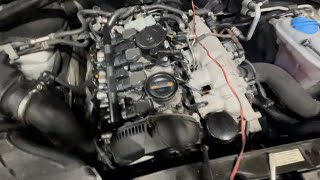

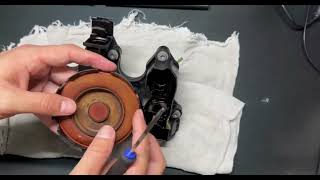
We Have This Part in Stock

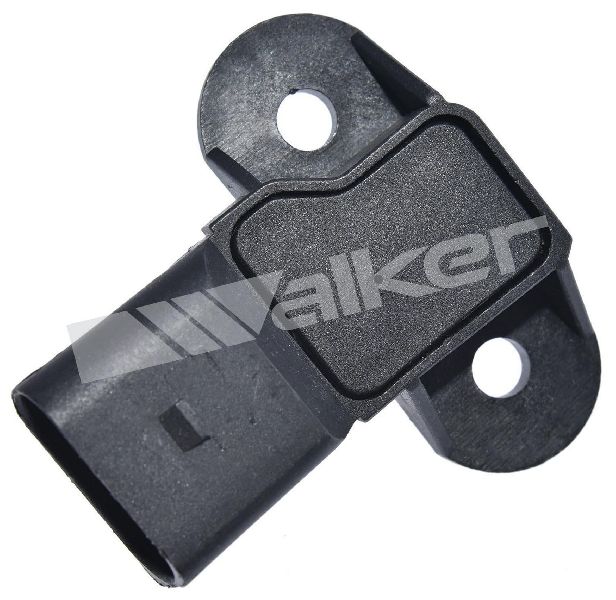
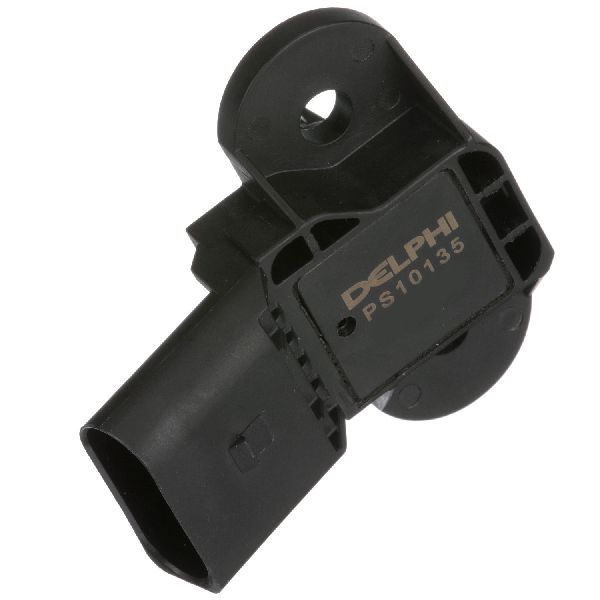

The information in this article is provided for general reference and educational purposes only. Vehicle specifications, procedures, and part compatibility can vary by production date, trim level, and region. Always consult your vehicle's factory service manual and verify part numbers before purchasing or performing repairs. Safety-critical components such as airbags, seat belts, and braking systems should be installed by a qualified professional.
- Audi Q5:
- 🧭 Diagnostic Flowchart
- 🎬 Helpful Videos
- 🛍️ Shop This Part
- What's Unique About the 2009-2017 Audi Q5
- Symptoms You May Notice
- Most Likely Causes
- Rare But Worth Checking
- Diagnosis Steps
- Parts You'll Likely Need
- Related Codes That Often Appear With This One
- Technical Service Bulletins (TSBs) & Recalls
- Platform-Specific Known Issues
- Mechanic-Grade Diagnostic Values
- Hidden / Shadow Codes Worth Checking
- Scan Tool Commands That Help
- Wiring & Ground Locations
- Real Owner Repair Stories
- "I Checked Everything" — The Actual Cause
- OEM Part Supersession History
- Model Year Variations Within This Range
- Other Known Issues on This Vehicle
- Used vs. New Parts: Buying Guide for This Vehicle
- Real Owner Stories
- 2011 Audi Q5 2.0T
- Audi Q5 2.0T
- 2012 Volkswagen Beetle 2.0T
- Related OBD-II Codes
- Frequently Asked Questions
- 🎟️ Get 5% Off