

P0106 on 2009-2017 Buick Enclave 3.6L: MAP Sensor Performance Causes and Fixes
On the 2009-2017 Buick Enclave, code P0106 is most often caused by a dirty throttle body restricting airflow and confusing the MAP sensor. Cleaning the throttle body (~$15 for cleaner, 1 hour of labor) is the most likely fix. Before replacing any parts, perform a thorough throttle body cleaning.
- For a P0106 code on a 2009-2017 Buick Enclave, start by cleaning the throttle body before replacing any parts.
- A dirty throttle body is the most common cause, often misleading owners into unnecessarily replacing the MAP sensor.
- The repair is DIY-friendly and typically costs less than $30 in materials (cleaner and a new gasket).
What's Unique About the 2009-2017 Buick Enclave
The GM 3.6L V6 engines (LLT and LFX) in this generation of Enclave are well-known for accumulating carbon and grime on the electronic throttle body's blade and bore. This buildup restricts airflow at idle and low speeds, causing the actual manifold pressure to differ from what the ECM expects, which commonly triggers a false P0106 code. While the MAP sensor gets blamed by the code, the root cause is often the dirty throttle body, not a failed sensor. GM acknowledged this tendency in service bulletins like PIP5162, which advises technicians to inspect and clean the throttle body before replacing sensors.
Symptoms You May Notice
- Check Engine Light is on
- Rough or unstable idle
- Engine stalling, especially when coming to a stop
- Hesitation or lack of power during acceleration
- Reduced fuel economy
- "Reduced Engine Power" message may appear on the driver information center
- Engine may be hard to start
- Replacing the MAP sensor when the actual problem is a dirty throttle body. Many owners replace the sensor first because the code points to it, only to have the code return. GM TSB PIP5162 specifically warns 🎬 Watch: How a dirty throttle body triggers the P0106 code technicians against this.
- Replacing the MAP sensor when the issue is a vacuum leak from a cracked PCV hose or intake gasket.
Most Likely Causes
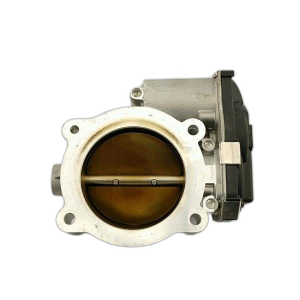
- Dirty or Carbon-Clogged Throttle Body 🔴 High Probability → Shop Fuel Injection Throttle Body The PCV (Positive Crankcase Ventilation) system routes oil vapors into the intake, which can bake onto the hot throttle body over time, restricting airflow. This is a very common issue on the GM 3.6L engine.
How to confirm: Remove the air intake duct connected to the throttle body and visually inspect for a thick black ring of carbon around the throttle plate and bore. The buildup is often worst on the back side of the plate.
Typical fix: Remove the throttle body (typically four 10mm bolts), clean it thoroughly with a dedicated throttle body cleaner and a soft brush or microfiber cloth, and replace the gasket. A throttle 🎬 See this walkthrough on cleaning the throttle body and intake relearn procedure is required after reinstallation.
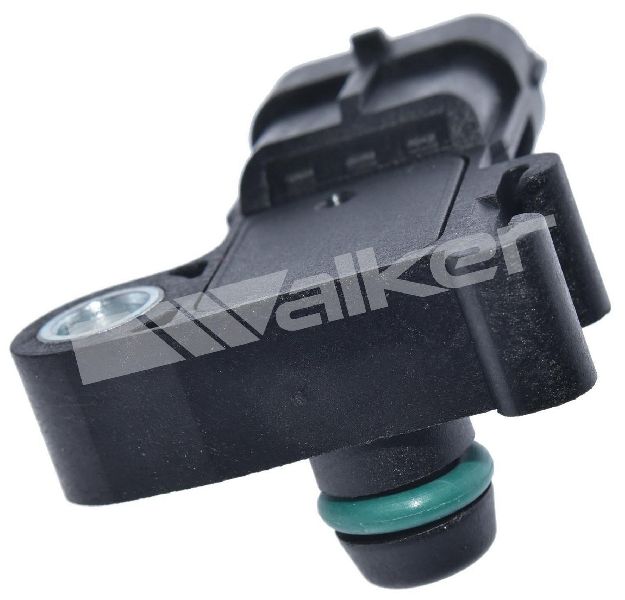
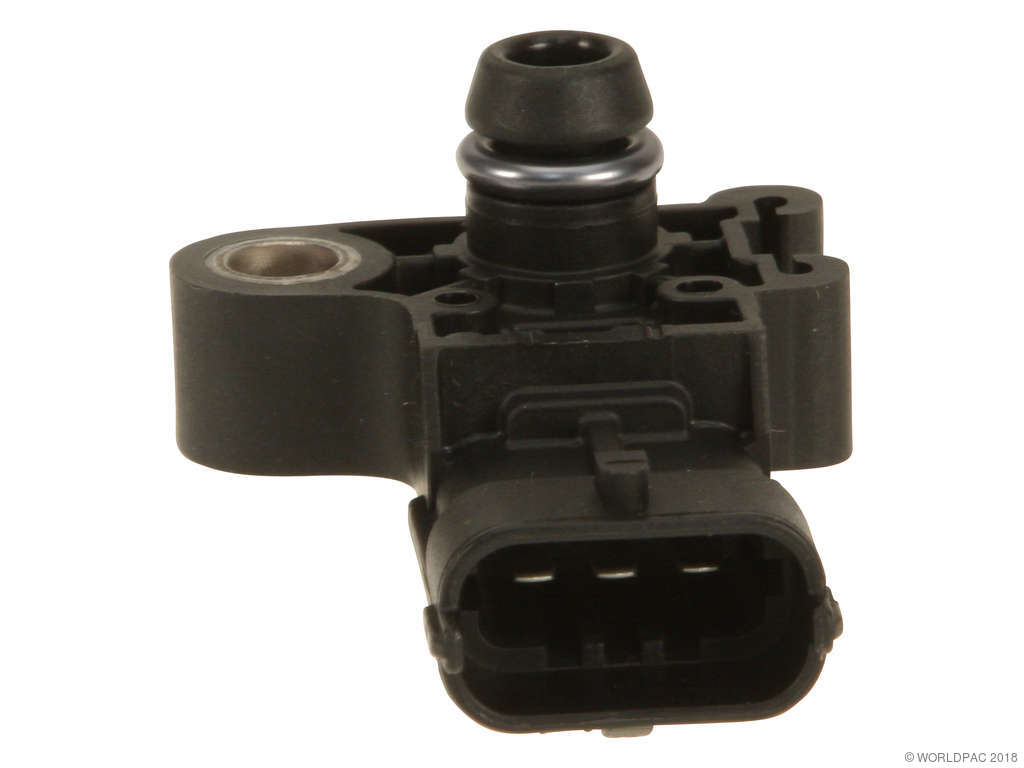
Est. part cost: $15-$30 (cleaner and new gasket) - Faulty Manifold Absolute Pressure (MAP) Sensor 🟡 Medium Probability → Shop Manifold Absolute Pressure Sensor
How to confirm: With a scan tool, monitor the MAP sensor voltage with the key on, engine off. It should read near barometric pressure (around 4.5-5.0V at sea level). At idle, it should drop to 1.0-1.5V. If the readings are stuck or don't change with engine RPM, the sensor is likely faulty.
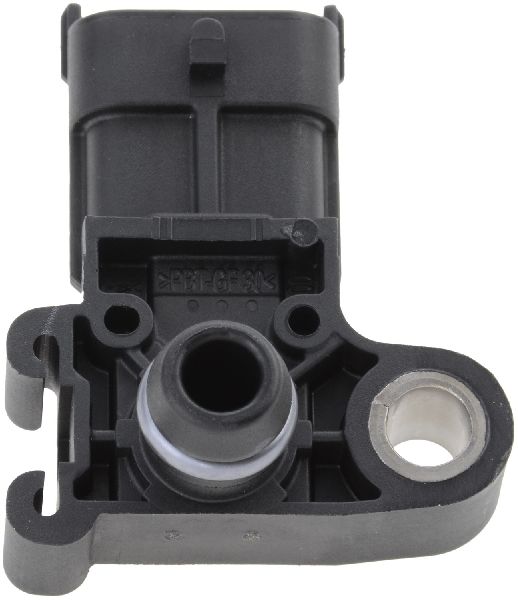
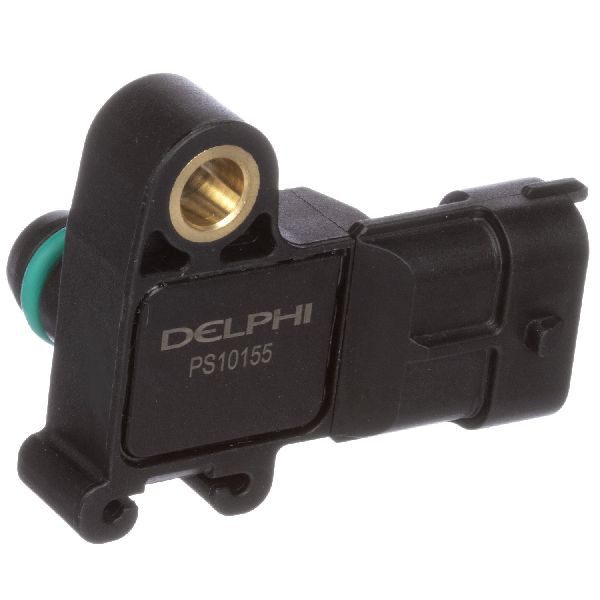
Typical fix: Replace the MAP sensor. It is located on top of the intake manifold and is typically held in by a single bolt. 🎬 Watch: How to locate and replace the MAP sensor Always clean the throttle body first, as this is a common misdiagnosis.
Est. part cost: $30-$80 - Vacuum Leak ⚪ Low Probability Hoses and gaskets can become brittle with age and heat cycling. The PCV hose connecting to the intake is a common point of failure.
How to confirm: Visually inspect all vacuum hoses connected to the intake manifold for cracks or loose fittings. A professional can perform a smoke test to find leaks that are not visible, such as a failed intake manifold gasket.
Typical fix: Replace the leaking hose or gasket.
Est. part cost: $5-$50
Rare But Worth Checking
- MAP Sensor Icing: → Shop Manifold Absolute Pressure Sensor In freezing temperatures, ice can form on the MAP sensor during long drives, causing a temporary P0106 code. GM issued TSB 20-NA-043 about this, noting the code will likely remain after the ice melts but drivability will return to normal on the next key cycle. The bulletin explicitly states NOT to replace the sensor for this condition.
- Clogged PCV Orifice/System: A clogged or stuck PCV valve or, more commonly on this engine, a clogged fixed orifice in the valve cover, can alter crankcase and intake manifold pressure, potentially contributing to a P0106 code. This can also cause oil leaks.
- Faulty Engine Control Module (ECM): This is extremely rare, and all other possibilities should be exhausted before considering the ECM as the cause.
Diagnosis Steps
- Read the code with an OBD-II scanner to confirm P0106 is the primary code.
- Inspect the air intake tube between the air filter and the throttle body for any cracks or loose connections.
- Remove the intake tube from the throttle body and inspect the throttle plate and bore for carbon buildup. This is the most common cause.
- If significant buildup is found, disconnect the negative battery terminal. Remove the throttle body (4 bolts) and clean it thoroughly on a bench with proper cleaner. Do not spray cleaner directly into the engine. Replace the throttle body gasket.
- Reinstall the throttle body and reconnect the battery. Perform an idle relearn procedure: Start the engine and let it idle in Park for 3 minutes. Then, turn the A/C on and let it idle for another 3 minutes. Drive the vehicle to complete the learning process.
- If the code returns, inspect the MAP sensor's electrical connector for a secure fit and any damage.
- Using a scan tool, monitor the MAP sensor's live data to check if its readings respond correctly to changes in engine RPM and load.
- If the sensor's readings are illogical or static, replace the MAP sensor.
- If the problem persists, check for a clogged PCV orifice in the valve cover, which can cause abnormal pressure. Also, perform a smoke test to check for hard-to-find vacuum leaks in the intake manifold or vacuum hoses.
Parts You'll Likely Need
- Throttle Body Cleaner
(OEM #ACDelco 10-4087 (X66A))— This is required to clean the carbon buildup from the throttle body, which is the most frequent cause of P0106 on this engine.
Trusted brands: CRC, Gumout, ACDelco
OEM price range: $15-$25
Aftermarket price range: $10-$20 - Throttle Body Gasket
(OEM #12607500 (ACDelco))— It is best practice to replace the gasket whenever the throttle body is removed to ensure a proper seal and prevent vacuum leaks.
Trusted brands: ACDelco, Fel-Pro
OEM price range: $8-$15
Aftermarket price range: $5-$10 - Manifold Absolute Pressure (MAP) Sensor
(OEM #12644228 (LFX Engines, 2013-2017) or 12591290 (LLT Engines, 2009-2012))— If cleaning the throttle body doesn't resolve the issue, the sensor itself may have failed. Note the different part numbers for LLT vs LFX engines.
Trusted brands: ACDelco, Bosch, Delphi
OEM price range: $50-$90
Aftermarket price range: $30-$60
Technical Service Bulletins (TSBs) & Recalls
- 20-NA-043: Addresses P0106 caused by ice forming on the TMAP sensor in below-freezing temperatures.
- PIP5162: Advises checking for and cleaning a dirty throttle body before replacing MAP sensor for P0106.
- Bulletin #PIP5529B: Provides diagnostics and repair assistance for resolving a malfunction indicator lamp illumination involving P0106 and other codes like P0171 and P0101 on Buick vehicles.
- Bulletin #PIP5529A: A manufacturer service bulletin that assists in resolving lamp illumination due to a combination of codes including P0106, P0068, and P0506.
Platform-Specific Known Issues
- GM TSB PIP5162: Directly addresses P0106 (and other codes) by advising technicians to inspect for a dirty throttle body causing a poor seal at idle before replacing the MAP sensor or performing other complex diagnostics.
- GM TSB 20-NA-043: Notes that P0106 can be set by ice forming on the MAP sensor during long drives in sub-freezing temperatures. The bulletin states that replacing the sensor is not necessary in this case and advises against cleaning it with chemicals.
- The prevalence of this code being caused by a dirty throttle body is so high on GM vehicles that it is the first recommended check by many experienced technicians and forum users.
Mechanic-Grade Diagnostic Values
- MAP Sensor Voltage (Key On, Engine Off) — expected: 4.5V - 5.0V (at sea level, should match BARO reading). Failure: Voltage is significantly lower than expected, or does not match the BARO reading on a scan tool.
- MAP Sensor Voltage (Engine at warm idle) — expected: 1.0V - 1.5V. Failure: Voltage is stuck high (e.g., above 2.0V), indicating a vacuum leak or faulty sensor. Voltage is stuck low or doesn't change with RPM.
- MAP Sensor 5V Reference Circuit (at sensor connector) — expected: 4.75V - 5.25V. Failure: Voltage is below 4.75V or above 5.25V, indicating a problem with the ECM or the wiring, not the sensor itself.
- MAP Sensor Ground Circuit Voltage Drop — expected: Less than 100mV (0.1V). Failure: A reading higher than 100mV indicates high resistance in the ground circuit, which can cause incorrect sensor readings.
Scan Tool Commands That Help
- GDS2 / Pro-level Scan Tool: Idle Learn / Throttle Relearn — This function must be performed after cleaning or replacing the throttle body. It resets the learned idle position in the ECM. Failure to do this will likely cause a high idle, unstable idle, or set other throttle-related codes.
- GDS2 / Pro-level Scan Tool: Clear DTCs — Required after any repair to turn off the check engine light. For some idle relearn procedures, clearing codes is a mandatory first step.
Wiring & Ground Locations
- G101 — On the left frame rail in the engine compartment.. This is a primary ground point for the Engine Control Module (ECM). A poor connection here can cause a wide range of erratic sensor readings and codes, including P0106.
- G103 — On the cowl at the left rear of the engine compartment, above the brake booster.. Provides a ground for the Body Control Module (BCM) and the Data Link Connector (DLC). A fault here can cause communication issues with scan tools.
- MAP Sensor Connector — On the MAP sensor, which is located on the top of the intake manifold.. This is the primary point for testing the sensor's 5V reference, ground, and signal wires. The pins are typically: Pin A (Ground), Pin B (Signal), Pin C (5V Reference).
Real Owner Repair Stories
- enclaveforum.net user (2011 Buick Enclave) — Check Engine Light with code P0106, rough idle, engine stalling when coming to a stop.
❌ Tried (didn't work) Replacing the MAP sensor
✅ What actually fixed it The owner was advised by other forum members to ignore the MAP sensor and clean the throttle body. After removing and thoroughly cleaning the carbon buildup from the throttle body, the code was cleared and did not return. The idle and stalling issues were also resolved.
OEM Part Supersession History
12644228→12711681— Standard part revision and supplier change.
Heads up: The new part number is a direct replacement for the old one for LFX engines (2013-2017).
Model Year Variations Within This Range
- 2009-2012 (LLT Engine): Uses MAP sensor part number 12591290. These earlier direct injection engines are known to be more susceptible to timing chain stretch, which can be an edge-case cause of P0106.
- 2013-2017 (LFX Engine): Uses MAP sensor part number 12644228 (or its successor 12711681). The LFX engine has an integrated cylinder head/exhaust manifold design and revised PCV system, but is still highly prone to the throttle body carbon buildup that causes P0106.
Diagnostic Flowchart
Other Known Issues on This Vehicle
Issues unrelated to this code that are worth knowing about as an owner of this generation:
- Premature Timing Chain Stretch (LLT Engine) 🔴 High — Very common, especially on 2009-2012 models. Often appears between 70,000-120,000 miles. Triggers codes P0008, P0017, P0018, P0019. (Ref: GM Special Coverage #11340C extended warranty for 2009 models.)
- 3-5-R Wave Plate Failure (6T75 Transmission) 🔴 High — Common on earlier models (approx. 2008-2012). Failure leads to loss of 3rd, 5th, and Reverse gears, often requiring a transmission rebuild. (Ref: GM Special Coverage #14404B for some 2007-2009 models.)
- Power Steering Pump/Rack Failure or Leaks 🟠 Medium — Frequent issue across all model years. Can cause whining noises, fluid leaks, or intermittent loss of power assist, especially at low speeds. (Ref: TSB 14329B provided special warranty coverage.)
- Water Pump Failure 🔴 High — A common failure point. On LFX engines, the pump is internal and driven by the timing chain; its failure can leak coolant into the oil, causing catastrophic engine damage. On LLT engines, the external pump is easier to service but still fails frequently.
- Clogged Rear PCV Orifice 🟠 Medium — The fixed orifice in the rear (firewall side) valve cover can clog, causing high crankcase pressure. This can lead to oil consumption and force oil past seals, most notably the rear main seal, causing a major oil leak.
Used vs. New Parts: Buying Guide for This Vehicle
When a used part is the smart pick: A used throttle body assembly from a low-mileage donor vehicle can be a cost-effective option if yours is physically damaged (e.g., cracked housing). For most P0106 fixes, cleaning the existing throttle body is sufficient and costs almost nothing.
Donor-vehicle mileage cap: roughly under 75000 miles for the part to have meaningful remaining life.
What to inspect on the donor part:
- Check for a clean throttle plate and bore; heavy carbon suggests the part wasn't well-maintained and may have wear.
- Ensure the electrical connector pins are straight and free of corrosion.
- Verify the throttle plate moves smoothly by hand (with the unit disconnected) and doesn't bind or stick.
OEM-only on this vehicle (don't cheap out):
- Manifold Absolute Pressure (MAP) Sensor: While aftermarket sensors are cheaper, they have a higher failure and incorrect reading rate. Given the sensor's critical role in fuel calculations, using an OEM ACDelco part is strongly recommended to avoid repeat issues.
Aftermarket brands forum-validated for this vehicle:
- Bosch (for MAP Sensor, if ACDelco is unavailable)
- Fel-Pro (for throttle body and intake gaskets)
Brands owners have reported issues with on this vehicle:
- Ultra-cheap, no-name MAP sensors and throttle bodies from online marketplaces are frequently reported as dead-on-arrival or failing shortly after installation.
Real Owner Stories
Aggregated from forums and TSBs cited above. Mileages and costs reflect what owners reported in those sources.
2009-2017 Buick Enclave 3.6L V6
Symptoms: The car keeps kicking out the P0106 code even after a battery death. The idle is rough because the ECM lost its ability to compensate for the intake conditions.
What fixed it: Cleaned the throttle body and performed an idle relearn procedure.
Source hint: Reddit r/MechanicAdvice thread on P0106 after battery death
2009-2017 Buick Enclave 3.6L V6
Symptoms: P0106 code present; owner replaced the MAP sensor but the code returned immediately.
What fixed it: Checking for vacuum leaks or cleaning the throttle body/MAF sensor (as replacing the MAP sensor alone is a common misdiagnosis).
Source hint: GM-Trucks Forum - Problems solving P0106 code
Related OBD-II Codes
Frequently Asked Questions
My 2012 Buick Enclave is showing P0106 and stalling at stops. Could this be related to the cold weather we're having?
I just replaced the battery in my Enclave and now I have a P0106 code and a rough idle. Why did this happen?
Is there a TSB for the P0106 code on the 3.6L engine regarding the throttle body?
How do I perform the idle relearn on my Enclave after cleaning the throttle body?
Could a clogged PCV system cause the P0106 code on my 3.6L V6?
The dealership wants to replace my MAP sensor for $80 plus labor. Should I do this first?
Helpful Videos
Used OEM Parts in Stock
New Aftermarket Parts Available


The information in this article is provided for general reference and educational purposes only. Vehicle specifications, procedures, and part compatibility can vary by production date, trim level, and region. Always consult your vehicle's factory service manual and verify part numbers before purchasing or performing repairs. Safety-critical components such as airbags, seat belts, and braking systems should be installed by a qualified professional.
- Buick Enclave:
- 🧭 Diagnostic Flowchart
- 🎬 Helpful Videos
- 🛍️ Shop This Part
- What's Unique About the 2009-2017 Buick Enclave
- Symptoms You May Notice
- Most Likely Causes
- Rare But Worth Checking
- Diagnosis Steps
- Parts You'll Likely Need
- Technical Service Bulletins (TSBs) & Recalls
- Platform-Specific Known Issues
- Mechanic-Grade Diagnostic Values
- Scan Tool Commands That Help
- Wiring & Ground Locations
- Real Owner Repair Stories
- OEM Part Supersession History
- Model Year Variations Within This Range
- Other Known Issues on This Vehicle
- Used vs. New Parts: Buying Guide for This Vehicle
- Real Owner Stories
- 2009-2017 Buick Enclave 3.6L V6
- 2009-2017 Buick Enclave 3.6L V6
- Related OBD-II Codes
- Frequently Asked Questions
- 🎟️ Get 5% Off