

P0106 on 2000-2005 Cadillac Deville: MAP Sensor and Vacuum Leak Guide
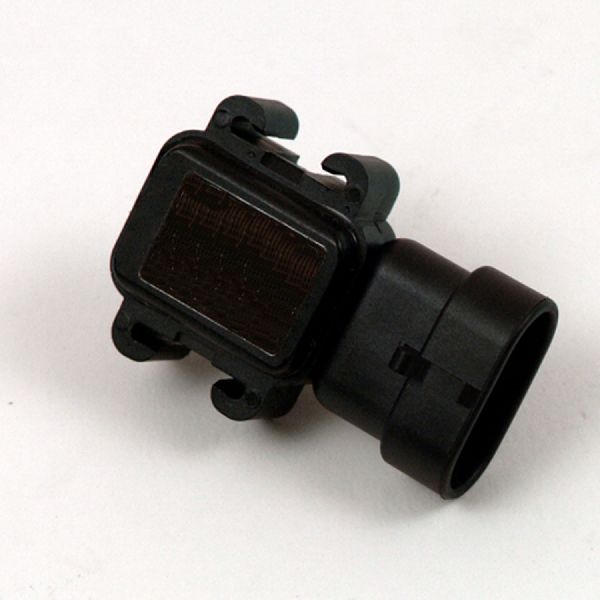
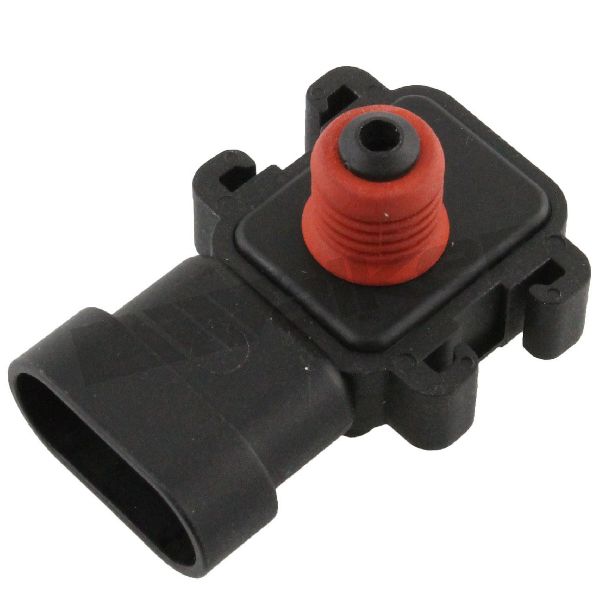
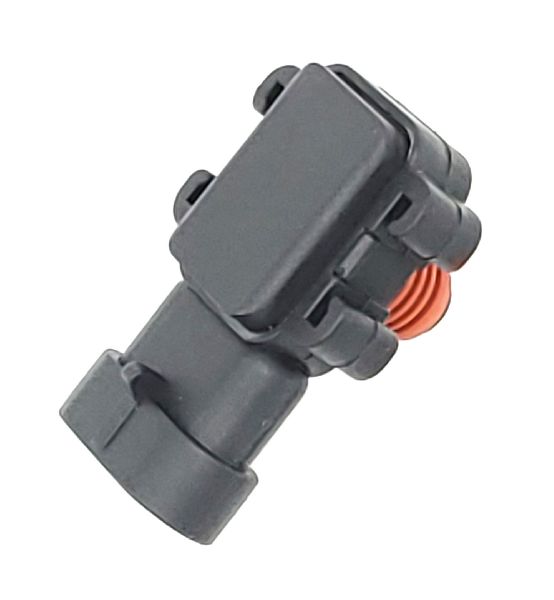
For a 2000-2005 Cadillac Deville, code P0106 is most often caused by a faulty Manifold Absolute Pressure (MAP) sensor or a vacuum leak. The correct OEM replacement part is ACDelco 213-796. Replacing the MAP sensor is a common, DIY-friendly fix costing around $25-$85, but a thorough diagnosis is crucial as the code can sometimes indicate more serious issues.
- P0106 on a 2000-2005 Deville most often points to a bad MAP sensor.
- Before buying parts, always check for obvious vacuum leaks from cracked hoses around the intake manifold.
- Replacing the MAP sensor is a beginner-friendly DIY job that can be done with basic hand tools in under an hour.
- If the code only appears in freezing weather, it may be due to temporary ice formation on the sensor and not a permanent fault.
What's Unique About the 2000-2005 Cadillac Deville
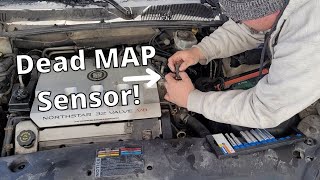
On the Northstar V8 engine, the MAP sensor is a very common failure point that leads to code P0106. While vacuum leaks are a possible cause on any engine, the MAP sensor itself is a frequent and simple fix for this specific Cadillac. The sensor is located directly on top of the intake manifold near the throttle body, making it relatively easy to access and replace compared to many other vehicles. However, access requires moving the throttle cable bracket, which is held by two 10mm bolts, to get to the sensor's retaining bolt.
Symptoms You May Notice
- Check Engine Light is on
- Rough or unstable idle
- Engine stalling, especially when coming to a stop
- Hesitation or stumbling during acceleration
- Poor fuel economy
- Difficulty starting the engine
- Engine may not start without throttle input
- Black smoke from the exhaust
- Replacing the throttle position sensor (TPS) when the issue is actually the MAP sensor. While they work together, P0106 specifically points to a MAP sensor performance issue.
- Immediately replacing the MAP sensor without checking for vacuum leaks, which are also a very common cause of this code.
Most Likely Causes
- Faulty Manifold Absolute Pressure (MAP) Sensor 🔴 High Probability → Shop Manifold Absolute Pressure Sensor The MAP sensor is a widely reported failure item on this platform, often due to age and heat cycles. It is the most common fix for an isolated P0106 code.
How to confirm: With a scan tool, observe the MAP sensor reading (usually in kPa or Volts) with the key on, engine off. It should match the BARO reading. At idle, the reading should drop significantly. If the reading is stuck or doesn't change with engine RPM, the sensor is likely bad.
Typical fix: Replace the MAP sensor. It is located on the intake manifold. The throttle cable bracket (held by two 10mm bolts) must be moved to access and remove the sensor. The OEM part is ACDelco 213-796.
Est. part cost: $25-$85 - Vacuum Leak 🟡 Medium Probability Aging rubber and brittle, hard plastic vacuum hoses can crack and create leaks. The small lines, such as the one going to the EGR valve, are a common failure point. Intake manifold gaskets can also fail.
How to confirm: Visually inspect all vacuum lines connected to the intake manifold for cracks or disconnections, paying close attention to the hard plastic lines that become brittle with age. A smoke test is the most effective method to find hard-to-see leaks from gaskets or hoses.
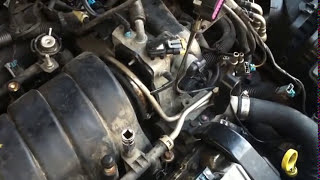
Typical fix: Replace the cracked vacuum hose or faulty gasket. Owners have had success replacing brittle factory hard plastic lines with more durable rubber vacuum tubing. 🎬 See this walkthrough on repairing Northstar engine vacuum leaks
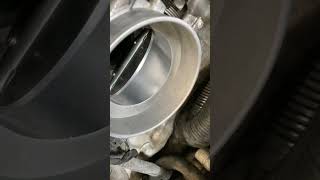
Est. part cost: $5-$150 - Dirty or Clogged Throttle Body ⚪ Low Probability → Shop Fuel Injection Throttle Body Carbon and oil residue can build up in the throttle body and around the Idle Air Control (IAC) valve, disrupting airflow at idle and causing erratic MAP sensor readings, which can trigger P0106.
How to confirm: Remove the intake tube from the throttle body and inspect for heavy carbon buildup on the throttle plate and bore, especially on the back side of the throttle plate.
Typical fix: Clean the throttle body and IAC valve passages with a dedicated throttle body cleaner and a soft brush.
Est. part cost: $5-$15
Rare But Worth Checking
- Severe Internal Engine Mechanical Failure: In rare cases, P0106 (often accompanied by P0300 - Random Misfire) can be a symptom of a major mechanical problem, not a sensor issue. One owner on CaddyInfo forums chased a P0106 on a 2004 Deville, replaced the MAP sensor with no change, and discovered zero compression on an entire bank of cylinders, likely from a jumped timing chain. This is a crucial reminder to perform a full diagnosis if a simple MAP sensor replacement doesn't work.
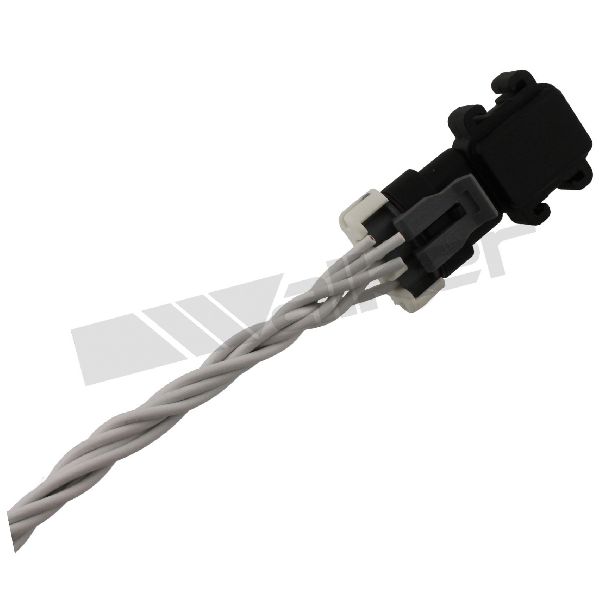
- Wiring Harness Damage: The wiring and connector for the MAP sensor can become brittle from engine heat, leading to a poor connection or broken wire. Check the connector for damage and test for proper 5-volt reference 🎬 Watch: How to test the MAP sensor circuit and symptoms, ground, and signal continuity at the sensor pigtail.
- Clogged Catalytic Converter: A severely restricted exhaust can cause excessive backpressure, which affects the intake manifold pressure and can trigger a P0106 code. This is usually accompanied by a significant loss of power and potentially a P0420 code.
- Faulty Powertrain Control Module (PCM): This is extremely rare, but the PCM can fail internally. All other possibilities, including wiring and mechanical faults, should be exhausted before considering PCM replacement.
Diagnosis Steps
- Scan for Codes: Use an OBD-II scanner to confirm P0106 is present and check for any other related codes like P0300, P0171, or P0174.
- Visual Inspection: Inspect the MAP sensor for any visible damage. Check all vacuum hoses connected to the intake manifold for cracks, brittleness, or loose connections. Pay special attention to the hard plastic lines that run to components like the EGR valve.
- Check Live Data: Use a scan tool to monitor the MAP sensor's live data. With the Key On, Engine Off (KOEO), the MAP reading should be close to the Barometric Pressure (BARO) reading. Start the engine; the MAP reading at idle should drop significantly. Rev the engine; the reading should change smoothly with RPMs.
- Test the Sensor Circuit: If the data is erratic or stuck, unplug the sensor. Using a multimeter, check for a 5-volt reference signal and a good ground at the connector. Test the signal wire for continuity back to the PCM.
- Perform a Smoke Test: If you suspect a vacuum leak but cannot find it visually, a smoke test is the most reliable method. This involves feeding pressurized smoke into the intake system to see where it escapes.
- Inspect the Throttle Body: Remove the intake ducting and check the throttle body bore and plate for heavy carbon buildup. If dirty, clean it thoroughly. 🎬 Watch: Step-by-step guide to cleaning your Deville throttle body
- Replace the MAP Sensor: If all tests point to a faulty sensor, replace it. It is held by one bolt on the intake manifold. You will need to move the throttle cable bracket (held by two 10mm bolts) to gain access.
Parts You'll Likely Need
- Manifold Absolute Pressure (MAP) Sensor
(OEM #ACDelco: 213-796 / GM: 12614973)— This is the most frequent cause of P0106 on the 2000-2005 Deville. It's a critical sensor that often fails with age.
Trusted brands: ACDelco, Delphi, Bosch, Standard Motor Products
OEM price range: $60-$100
Aftermarket price range: $25-$60
Related Codes That Often Appear With This One
- P0171 / P0174 — These 'System Too Lean' codes can be caused by a vacuum leak, which is also a common cause for P0106.
- P0300 — A random misfire code can result from the incorrect air-fuel mixture caused by a faulty MAP sensor or a significant vacuum leak. In rare, severe cases, it can be paired with P0106 due to a major mechanical engine failure.
- P0506 — This code for 'Idle Air Control System RPM Lower Than Expected' can appear alongside P0106 if a dirty throttle body or IAC valve is the root cause.
Platform-Specific Known Issues
- A known issue, referenced in GM Technical Service Bulletins for other models (e.g., TSB 20-NA-043), describes how ice can form on the MAP sensor during long drives in freezing temperatures. This can cause a temporary P0106 code that may resolve itself once the engine warms up and melts the ice. If this only occurs in winter, the sensor itself may not be faulty. GM sometimes recommends a winter grill cover to mitigate this.
Mechanic-Grade Diagnostic Values
- MAP Sensor Connector - 5V Reference — expected: ~5.0 Volts. Failure: Significantly lower or no voltage indicates a PCM or wiring issue.
- MAP Sensor Connector - Ground Circuit — expected: 0 Volts / < 1k ohms to chassis ground. Failure: Voltage present or high resistance indicates a bad ground connection.
- MAP Sensor Signal Voltage - Key On, Engine Off (KOEO) — expected: ~4.5 - 5.0 Volts (should correlate to Barometric Pressure). Failure: Voltage significantly different from BARO reading suggests a faulty sensor.
- MAP Sensor Signal Voltage - Engine Idling — expected: ~0.5 - 1.5 Volts. Failure: Voltage staying high (e.g., near 4.5V) at idle indicates no vacuum is being read, pointing to a bad sensor or a massive vacuum leak/mechanical issue.
Wiring & Ground Locations
- MAP Sensor Connector — On the MAP sensor itself, located on the intake manifold near the throttle body.. This 3-pin connector provides the 5V reference, ground, and signal return for the sensor. Corrosion, damage, or loose pins here are a direct cause of P0106. Pin A is ground, Pin B is signal, Pin C is +5V supply.
- G100 — Located on the left front of the engine compartment.. This is a primary engine and PCM ground. A poor connection at G100 can cause erratic voltage and unstable sensor readings across the engine management system, including the MAP sensor.
- Powertrain Control Module (PCM) — Located inside the air cleaner housing in the engine compartment.. This is the source of the 5V reference and the destination for the MAP signal wire. All wiring continuity checks for the MAP circuit terminate here.
Real Owner Repair Stories
- CaddyInfo Cadillac Forum user 'jwm_tech' (2004 Cadillac Deville DHS) — P0106 and P0300 codes, very low vacuum reading (stuck around 4.5V / 92-100 kPa) even at idle.
❌ Tried (didn't work) Replacing the MAP sensor, Checking for vacuum leaks (visual inspection, blocking brake booster, checking EGR)
✅ What actually fixed it The problem was a catastrophic internal engine failure. A compression test revealed 0 PSI on the entire front bank of cylinders (1, 3, 5, 7), likely due to a jumped or broken timing chain. This is a critical example of P0106 being a symptom of a major mechanical issue, not a sensor fault.
"I Checked Everything" — The Actual Cause
- In a documented case on a 2004 Deville, all vacuum leak checks (including blocking off potential sources) came back clean. The MAP sensor voltage remained high (~4.5V) indicating no vacuum. The actual cause was zero compression on one bank of cylinders due to a timing chain failure, which prevented the engine from creating intake manifold vacuum in the first place.
OEM Part Supersession History
GM 16249939→GM 12614973— Part has been updated and consolidated over time. 12614973 is the current service replacement.
Heads up: The original part number 16249939 has been superseded multiple times. While older stock may exist, using the latest GM number (12614973) or its ACDelco equivalent (213-796) is recommended for correct calibration and performance.GM 12614973→GM 19418808— Part number updated by GM.
Heads up: 19418808 is the latest supersession for 12614973. Both are considered correct service replacements for the 2000-2005 Deville.
Diagnostic Flowchart
Real Owner Stories
Aggregated from forums and TSBs cited above. Mileages and costs reflect what owners reported in those sources.
2000 Cadillac Deville
Symptoms: Service Engine Soon light with code P0106 was the only symptom. The owner explicitly noted there was no rough idle, drivability issues, or stalling, and no vacuum leaks were found during visual inspection.
What fixed it: Replaced the MAP sensor with a Duralast part from Autozone and cleared the code using a Bluetooth OBD2 dongle and the Torque app.
Source hint: YouTube - Snow Family Racing: 'When Good Maps Go Bad... P0106 Code fixed!'
2004 Cadillac Deville DHS
Symptoms: P0106 and P0300 codes with very low vacuum readings (92-100 kPa at idle). Replacing the MAP sensor did not change the readings or resolve the issue.
What fixed it: The P0106 was actually a symptom of catastrophic internal engine failure. A compression test revealed zero compression on cylinders 1, 3, 5, and 7.
Source hint: CaddyInfo Cadillac Forum: '2004 DHS - P0106 Code - Replaced MAP - Still not getting good vacuum'
Cadillac Northstar V8
Symptoms: P0106 code triggered by a vacuum leak in the engine bay.
What fixed it: Replaced a broken, brittle factory hard plastic vacuum line with more durable rubber vacuum tubing.
Source hint: Lincoln vs Cadillac Forums: 'P0106'
Related OBD-II Codes
Frequently Asked Questions
What is the correct OEM replacement MAP sensor for my 2000-2005 Cadillac Deville?
How do I access the MAP sensor on the Northstar V8 engine?
I only get the P0106 code during freezing winter drives. Is my MAP sensor actually bad?
Which vacuum lines are most likely to cause a P0106 on this platform?
Can a dirty throttle body cause a P0106 code on my Deville?
Are there other GM vehicles that share this exact P0106 issue?
Helpful Videos
We Have This Part in Stock


The information in this article is provided for general reference and educational purposes only. Vehicle specifications, procedures, and part compatibility can vary by production date, trim level, and region. Always consult your vehicle's factory service manual and verify part numbers before purchasing or performing repairs. Safety-critical components such as airbags, seat belts, and braking systems should be installed by a qualified professional.
- Cadillac Deville:
- 🧭 Diagnostic Flowchart
- 🎬 Helpful Videos
- 🛍️ Shop This Part
- What's Unique About the 2000-2005 Cadillac Deville
- Symptoms You May Notice
- Most Likely Causes
- Rare But Worth Checking
- Diagnosis Steps
- Parts You'll Likely Need
- Related Codes That Often Appear With This One
- Platform-Specific Known Issues
- Mechanic-Grade Diagnostic Values
- Wiring & Ground Locations
- Real Owner Repair Stories
- "I Checked Everything" — The Actual Cause
- OEM Part Supersession History
- Real Owner Stories
- 2000 Cadillac Deville
- 2004 Cadillac Deville DHS
- Cadillac Northstar V8
- Related OBD-II Codes
- Frequently Asked Questions
- 🎟️ Get 5% Off