

P0106 on 2015-2019 Cadillac Escalade: MAP Sensor or Broken Valve Spring?
On a 2015-2019 Escalade, P0106 is often a faulty MAP sensor, an easy DIY fix. However, a GM Technical Service Bulletin (TSB) warns this code can also point to a more serious issue: a broken engine valve spring. A professional diagnosis is recommended to rule out mechanical damage, as this is a known issue on the 6.2L L86 engine family.
- P0106 on a 2015-2019 Escalade indicates a problem with the MAP sensor's performance.
- The most common fix is replacing the MAP sensor, but do not stop there.
- A GM service bulletin (PIP5423B) specifically warns that a broken engine valve spring is a known cause for this code on your vehicle's engine.
- Always check for related codes like P0300 (misfire) or P0506 (low idle), as they strongly point towards the more serious valve spring issue.
- Due to the risk of severe engine damage, a professional diagnosis is highly recommended to differentiate between a simple sensor fault and a mechanical failure.
What's Unique About the 2015-2019 Cadillac ESCALADE

For the 2015-2019 Escalade with the 6.2L V8 engine, P0106 is not just a simple sensor code. While a faulty MAP sensor is a common cause, General Motors has issued specific Technical Service Bulletins (including PIP5423B and PIP5752M) linking this code directly to a broken engine valve spring. This issue is part of a wider, documented pattern of valvetrain problems in GM's EcoTec3 engines, often related to the complexity of the Active Fuel Management (AFM) system. This makes diagnosis more critical, as what seems like a minor sensor issue could be a symptom of a significant mechanical failure requiring immediate attention.
Diagnostic Flowchart

Tap your situation to follow the diagnostic path that matches what you're seeing on this vehicle.
Symptoms You May Notice

- Check Engine Light is on
- Rough or unstable idle
- Poor acceleration or hesitation
- Reduced engine power message on the dash
- Increased fuel consumption
- Black smoke from the exhaust
- Engine stalling
- Audible ticking or popping noise from the engine bay
- Replacing the Mass Airflow (MAF) sensor. P0106 is a MAP sensor code, not a MAF sensor code.
- Assuming it's only the MAP sensor without checking for mechanical issues. Due to TSBs #PIP5423B and #PIP5752M, ignoring the possibility of a broken valve spring can lead to a misdiagnosis and potential catastrophic engine damage.
Most Likely Causes

- Faulty Manifold Absolute Pressure (MAP) Sensor 🔴 High Probability → Shop Manifold Absolute Pressure Sensor The MAP sensor is a common failure point on many modern vehicles due to constant heat cycles and vibration. It can also become contaminated over time.
How to confirm: Use a scan tool to monitor MAP sensor voltage with the key on, engine off. The reading should match the barometric pressure (BARO) reading. With the engine running, voltage should be low at idle (1-1.5V) and increase with throttle (up to 4.5V). If readings are stuck, erratic, or don't respond, the sensor is likely bad.
Typical fix: Replace the MAP sensor. It is typically mounted on the front of the intake manifold.
Est. part cost: $30-$90 - Broken Engine Valve Spring 🟡 Medium Probability → Shop Engine Valve Spring GM issued TSBs #PIP5423B and #PIP5752M specifically for this issue on the 6.2L L86 engine, indicating it's a known failure pattern. A broken spring allows the valve to operate incorrectly, causing erratic pressure pulses in the intake manifold that confuse the MAP sensor. This is often linked to the engine's Active Fuel Management (AFM) system.
How to confirm: This requires a physical inspection. Remove the valve covers and visually inspect each valve spring for breaks. This is often accompanied by a ticking noise from the engine and a P0300 (random misfile) and/or P0506 (low idle) code. A forum user with a 2016 Yukon Denali confirmed finding a broken valve spring on cylinder #4 after getting P0300 and P0106 codes.
Typical fix: Replace the broken valve spring. Per TSBs, if the failure occurs at very low mileage, replacing all springs may be recommended. If the valve has dropped, more extensive cylinder head repair is necessary.
Est. part cost: $10-$30 for a spring, but labor is significant, often exceeding $1,000. - Vacuum Leak 🟡 Medium Probability Intake manifold gaskets and various vacuum hoses can degrade over time. A specific known issue on some GM V8s is the engine cover rubbing a hole in the PCV tube located at the left rear of the intake manifold, causing a significant vacuum leak.
How to confirm: Perform a smoke test on the intake system to visually identify leaks from gaskets, hoses, or the throttle body. A hissing sound near the engine at idle can also indicate a leak. Pay close attention to the PCV hoses.
Typical fix: Replace the leaking gasket or hose. If the PCV tube is damaged, it should be replaced and protected with a conduit to prevent recurrence.
Est. part cost: $20-$150 depending on the specific gasket or hose. - Damaged MAP Sensor Wiring or Connector ⚪ Low Probability → Shop Manifold Absolute Pressure Sensor
How to confirm: Visually inspect the wiring harness and connector for the MAP sensor for any signs of corrosion, damage, or loose pins. Use a multimeter to check for the correct 5-volt reference signal and a good ground at the connector.
Typical fix: Repair the damaged wire or replace the connector pigtail.
Est. part cost: $15-$40
Rare But Worth Checking
- Clogged Catalytic Converter: A severely restricted exhaust can create backpressure that affects intake manifold pressure, triggering P0106. This is usually accompanied by a severe loss of power and other exhaust-related codes.
- Icing on MAP/TMAP Sensor: → Shop Manifold Absolute Pressure Sensor In very cold climates (below 24°F / -5°C), GM TSB 20-NA-043 notes that ice can form on the MAP sensor during long drives, causing P0106 and a reduced power message. The issue may resolve itself after the engine warms up at idle.
- Faulty Powertrain Control Module (PCM): This is very rare. The PCM should only be considered after all other possibilities, including sensors, wiring, and mechanical issues, have been exhaustively ruled out.
Diagnosis Steps
- Check for other DTCs. Codes like P0300 or P0506 strongly suggest a mechanical issue like a broken valve spring and warrant immediate mechanical inspection.
- Listen for an audible ticking or popping noise from the top of the engine, which is a strong indicator of a broken valve spring.
- With a scan tool, observe live data. Compare the MAP sensor reading to the BARO reading with the Key On, Engine Off. They should be nearly identical.
- Start the engine and monitor the MAP sensor voltage at idle (should be 1.0-1.5V) and while snapping the throttle (should rise to ~4.5V). If the signal is stuck or doesn't respond, the sensor or its circuit is suspect.
- Inspect all vacuum hoses connected to the intake manifold for cracks or disconnections. Pay special attention to the PCV tube for signs of rubbing against the engine cover.
- Perform a smoke test to check for leaks from the intake manifold gaskets or other sealed areas.
- Inspect the MAP sensor connector and wiring for damage, corrosion, or loose connections. Verify the 5V reference and ground signals.
- If all electronic and vacuum tests pass, remove the valve covers to perform a visual inspection for a broken valve spring, as indicated by TSBs #PIP5423B and #PIP5752M.
Parts You'll Likely Need
- Manifold Absolute Pressure (MAP) Sensor
(OEM #12644228 (or 12711681))— This is the most common electrical component to fail and cause a P0106 code.
Trusted brands: ACDelco, Bosch, Delphi, Standard Motor Products
OEM price range: $50-$90
Aftermarket price range: $30-$60 - Engine Valve Spring
(OEM #12691120)— A known mechanical failure on this engine that directly causes code P0106, as documented in multiple GM TSBs. Part number 12691120 supersedes previous versions for the L86 engine.
Trusted brands: ACDelco (GM Genuine), Melling, Brian Tooley Racing
OEM price range: $15-$30
Aftermarket price range: $10-$25 - Intake Manifold Gasket Set
(OEM #12679529)— These gaskets can fail and cause vacuum leaks, which is a common cause for MAP sensor performance codes.
Trusted brands: ACDelco, Fel-Pro, Mahle
OEM price range: $60-$100
Aftermarket price range: $40-$70
Related Codes That Often Appear With This One
- P0300 — A broken valve spring will cause the cylinder to misfire, leading to a P0300 (Random/Multiple Cylinder Misfire Detected) code. TSB #PIP5752M explicitly groups these codes together as pointing to a valve spring failure.
- P0506 — TSB #PIP5423B and #PIP5752M explicitly link P0106 and P0506 (Idle Air Control System RPM Lower Than Expected) to a broken valve spring.
- P0107 — This code for 'MAP Sensor Circuit Low Voltage' can appear with P0106 if there is an electrical fault or a severe vacuum leak.
Technical Service Bulletins (TSBs) & Recalls
- PIP5423B: Warns that DTCs P0106 and P0506 can be caused by a broken valve spring and advises technicians to inspect for this.
Platform-Specific Known Issues
- A known issue, documented in TSB #PIP5423B and #PIP5752M, is a broken valve spring causing P0106, often accompanied by P0300 and P0506. This is a mechanical failure, not a sensor failure.
- TSB #PIP5344 notes that P0106 can appear with a 'reduced power' message and a cluster of other electrical codes, suggesting a possible wiring or reference voltage problem.
- TSB #20-NA-043 describes a condition where P0106 can be set by ice forming on the MAP sensor during long drives in sub-freezing temperatures.
Mechanic-Grade Diagnostic Values
- MAP Sensor 5V Reference Voltage (KOEO) — expected: 4.8 - 5.2 Volts. Failure: Voltage is significantly lower than 4.8V or absent, indicating a wiring or ECM issue.
- MAP Sensor Signal Voltage at Idle — expected: 1.0 - 1.5 Volts (high vacuum). Failure: Voltage is significantly higher (e.g., >2.0V), stuck, or erratic, suggesting a vacuum leak, mechanical issue, or bad sensor.
- MAP Sensor Signal Voltage at Wide Open Throttle (WOT) — expected: ~4.5 Volts. Failure: Voltage does not rise to near 4.5V when the throttle is fully opened.
- MAP Sensor vs. BARO Reading (KOEO) — expected: The MAP sensor pressure reading should be nearly identical to the Barometric Pressure (BARO) sensor reading.. Failure: A significant difference between the two readings points to a faulty MAP sensor.
- MAP Sensor Ground Circuit Resistance — expected: Less than 5 ohms to a known good chassis ground.. Failure: High resistance indicates a poor ground connection, which can cause erratic sensor readings.
Hidden / Shadow Codes Worth Checking
- P0106 + P0300 + P0506 Combination: This specific combination of codes is a strong indicator of a mechanical failure, specifically a broken valve spring. GM TSBs #PIP5423B and #PIP5752M explicitly group these codes together, instructing technicians to perform a mechanical inspection rather than focusing on the MAP sensor itself. (see via Any standard OBD-II scanner will show these codes. The key is interpreting their combined presence as a single diagnostic message pointing to a known valvetrain issue.)
Scan Tool Commands That Help
- GDS2 / Tech2 or equivalent professional scan tool: ECM Reprogramming — In some cases involving intermittent electrical faults or after certain hardware replacements, the Engine Control Module (ECM) may require a software update to the latest calibration to resolve underlying issues, as noted in related GM service bulletins.
- Professional scan tool: Throttle Relearn / Idle Learn Procedure — This function is necessary after cleaning or replacing the throttle body. If a dirty throttle body was contributing to idle instability and affecting MAP readings, this procedure resets the learned idle position.
Wiring & Ground Locations
- MAP Sensor Connector — On the front of the intake manifold, plugged into the MAP sensor.. This is the primary connection to test for 5V reference, ground, and the signal wire. Damage or corrosion here will directly cause MAP sensor codes.
- G103 — Typically located on the cowl at the left rear of the engine compartment, often above the brake booster.. This is a major ground point for multiple engine management components, including the Body Control Module (BCM) and Instrument Panel Cluster (IPC). A poor connection here can cause a variety of seemingly unrelated electrical issues and codes.
- G102 — Typically located at the left rear of the engine.. This ground is primarily for the ignition coils. While not directly tied to the MAP sensor, a poor ground here can contribute to misfires (P0300) which often accompany P0106 in the case of a valve spring failure.
Real Owner Repair Stories
- YouTube user 'Ghetto Fab' (2015+ GM SUV (implied similar platform to Escalade)) — P0106 code, misfire. Owner notes that people often mistakenly blame the MAP sensor.
❌ Tried (didn't work) The owner did not replace other parts, immediately suspecting a mechanical issue based on common knowledge of these engines.
✅ What actually fixed it The owner removed the valve cover and visually identified a broken valve spring. The video shows the broken spring clearly. The final fix was replacing the broken valve spring using the compressed air method to hold the valve in place during the repair.
"I Checked Everything" — The Actual Cause
- The entire diagnostic pattern described in TSB #PIP5423B follows this logic. If a smoke test for vacuum leaks is clean and electrical tests on the MAP sensor circuit pass, the root cause is often the mechanical failure of a broken valve spring, which will not be found by a smoke test.
- In one documented case on a similar GM vehicle, after replacing the MAP sensor, MAF sensor, intake gaskets, and throttle body gasket with no success, the final root cause was a clogged catalytic converter. The resulting backpressure affected intake manifold pressure, triggering P0106.
OEM Part Supersession History
12644228→12711681— Updated part from manufacturer. Often indicates minor improvements in design or materials.12629515, 12661339, 12678635→12691120— Consolidation of previous part numbers into a single, updated design for Gen V V8 engines.
Model Year Variations Within This Range
- 2019: For the 2019 model year, GM began introducing the L87 6.2L V8 as a successor to the L86. The L87 features Dynamic Fuel Management (DFM) with 17 cylinder firing patterns, replacing the L86's Active Fuel Management (AFM) which only had V4/V8 modes. While mechanically similar, the valvetrain and control systems are more complex.
- 2015-2018 (L86 with AFM): These models use the Active Fuel Management (AFM) system, which is frequently cited as a contributing factor in valvetrain issues, including lifter failure that can lead to valve spring problems.
We Have This Part in Stock
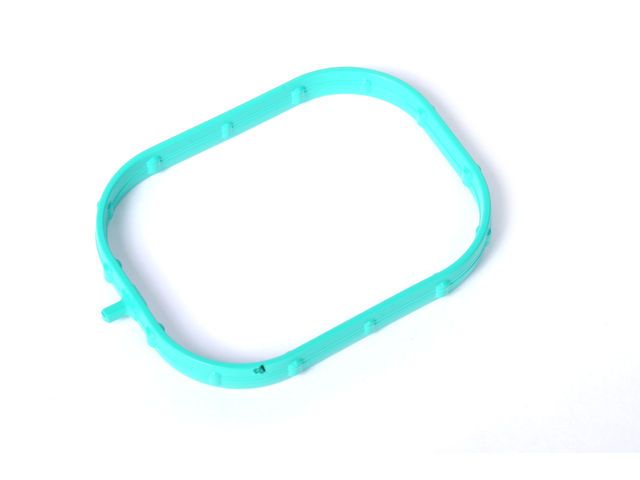
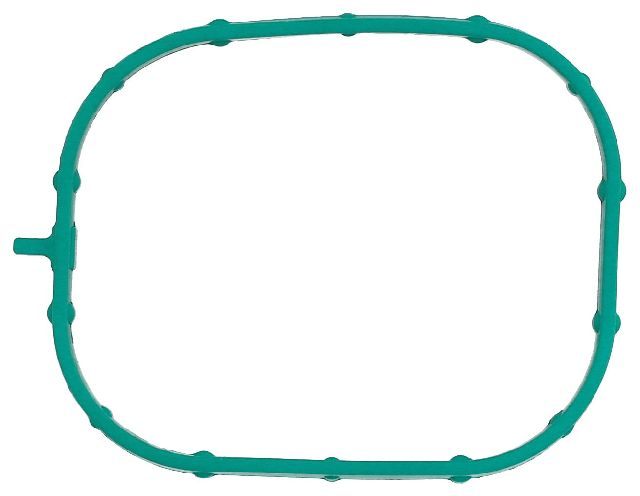

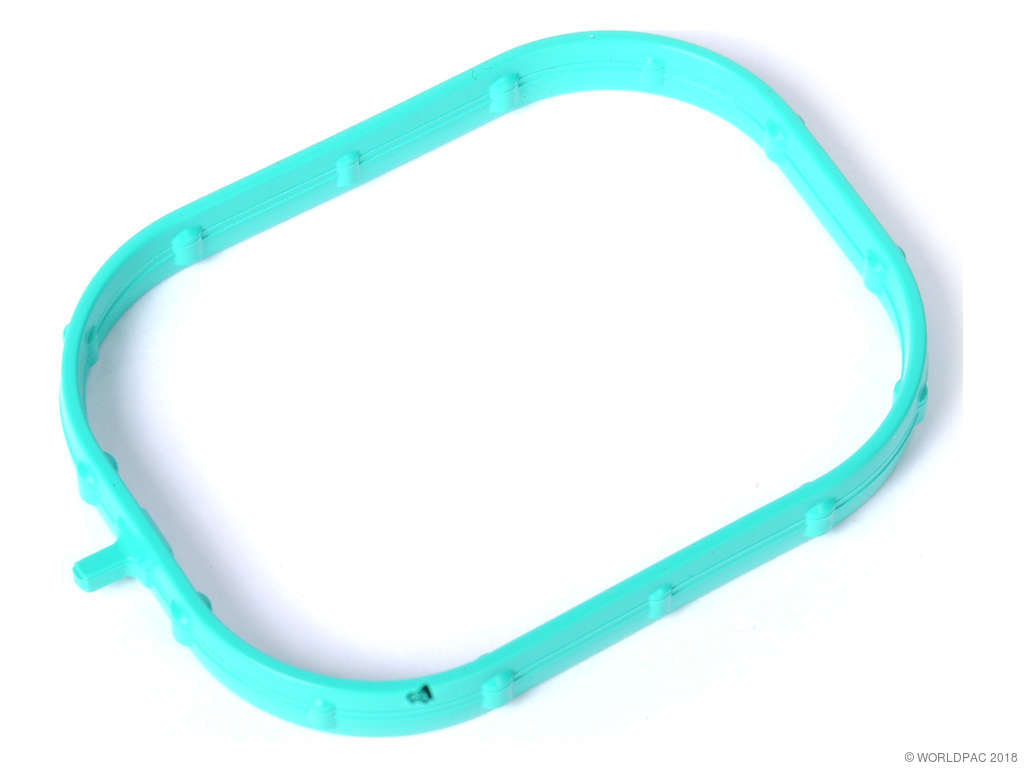

The information in this article is provided for general reference and educational purposes only. Vehicle specifications, procedures, and part compatibility can vary by production date, trim level, and region. Always consult your vehicle's factory service manual and verify part numbers before purchasing or performing repairs. Safety-critical components such as airbags, seat belts, and braking systems should be installed by a qualified professional.
- Cadillac ESCALADE:
- 🧭 Diagnostic Flowchart
- 🛍️ Shop This Part
- What's Unique About the 2015-2019 Cadillac ESCALADE
- Symptoms You May Notice
- Most Likely Causes
- Rare But Worth Checking
- Diagnosis Steps
- Parts You'll Likely Need
- Related Codes That Often Appear With This One
- Technical Service Bulletins (TSBs) & Recalls
- Platform-Specific Known Issues
- Mechanic-Grade Diagnostic Values
- Hidden / Shadow Codes Worth Checking
- Scan Tool Commands That Help
- Wiring & Ground Locations
- Real Owner Repair Stories
- "I Checked Everything" — The Actual Cause
- OEM Part Supersession History
- Model Year Variations Within This Range
- 🎟️ Get 5% Off