

P0106 on 2010-2017 Chevrolet Equinox 2.4L: MAP Sensor and Throttle Body Guide
On the 2.4L Equinox, code P0106 is most often caused by a dirty throttle body or a faulty MAP sensor. Carbon buildup causes the throttle plate to open wider at idle, creating a data mismatch that the ECM incorrectly blames on the MAP sensor. Cleaning the throttle body and MAP sensor is a common, low-cost first step. If that fails, a new OEM MAP sensor is an easy DIY fix, typically costing $30-$60.
- Before buying any parts for a P0106 code, first clean the throttle body.
- If cleaning the throttle body doesn't work, try cleaning the MAP sensor itself before replacing it.
- The MAP sensor is located on top of the intake manifold and is held by one screw, making replacement a very simple 15-minute job for a DIYer.
- If you have other codes related to timing (P0016, P0017) or fuel pressure (P0089, P228D), the problem may be more complex, such as a stretched timing chain.
What's Unique About the 2010-2017 Chevrolet Equinox
For the 2.4L Ecotec engine, P0106 is frequently a 'false' code triggered by a dirty electronic throttle body, not a bad MAP sensor. Carbon buildup from the PCV system restricts airflow at idle, forcing the ECM to command a wider throttle plate angle to maintain idle speed. This creates a mismatch between the throttle position sensor (TPS) reading and the actual manifold pressure, which the ECM interprets as a MAP sensor fault. Additionally, this engine is known for timing chain issues, which can sometimes manifest with a variety of codes, so it's important to rule out simpler causes like the throttle body first before suspecting more complex mechanical problems.
Symptoms You May Notice
- Check Engine Light illuminated
- Rough or unstable idle
- Hesitation or lack of power during acceleration
- Noticeably worse fuel economy
- Engine stalling, sometimes shortly after starting
- Black smoke from the exhaust
- Difficulty starting the engine
- Squealing or whirring noises from under the hood (reported in NHTSA ODI #11266552)
- Vehicle slowing nearly to a stop while driving (reported in NHTSA ODI #11098674)
- Replacing the MAP sensor when the root cause is a dirty throttle body.
- Confusing the MAP (Manifold Absolute Pressure) sensor with the MAF (Mass Airflow) sensor.
Most Likely Causes
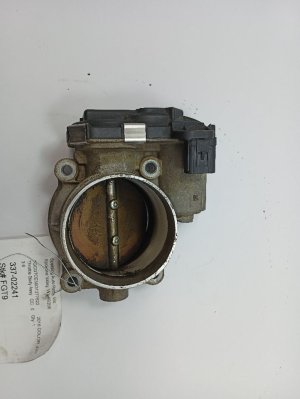
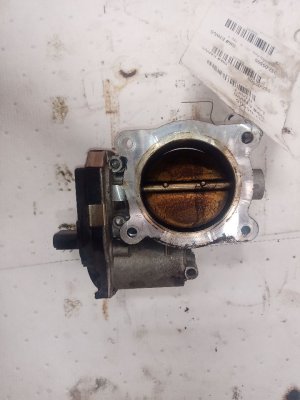
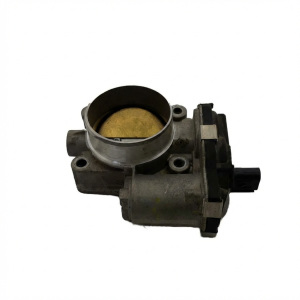
- Dirty Throttle Body 🔴 High Probability → Shop Fuel Injection Throttle Body Carbon from the PCV system builds up on the throttle plate, restricting airflow. The ECM compensates by opening the throttle wider at idle, creating a conflict between the TPS and MAP sensor readings that falsely triggers a P0106 code. This is a very common issue on GM vehicles with electronic throttle control.
How to confirm: Visually inspect the throttle body bore and plate for a ring of black carbon buildup. With the engine off, the throttle plate should be completely closed. A scan tool may show a higher than expected throttle angle percentage at idle.
Typical fix: Clean the throttle body thoroughly with a dedicated throttle body cleaner and a soft cloth or brush. An idle relearn procedure may be required afterward. This is the most common fix. 🎬 Watch: How a dirty throttle body triggers a false P0106 code.
Est. part cost: $5-$15 for cleaner - Faulty or Dirty MAP Sensor 🔴 High Probability → Shop Manifold Absolute Pressure Sensor The sensor's sensing element can become contaminated with oil or carbon from the PCV system over time, leading to inaccurate readings. Its location on the intake manifold exposes it to engine heat and vibration.
How to confirm: After ruling out a dirty throttle body, the sensor can be removed and cleaned. If the problem persists, test the sensor's output voltage with a scan tool or multimeter; it should change smoothly with vacuum. On the 2.4L Equinox, the sensor is extremely easy to access on top of the intake manifold.
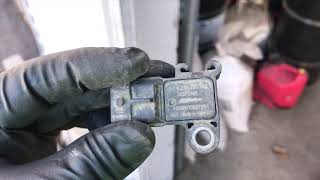
Typical fix: First, try cleaning the sensor with electronics or MAF sensor cleaner. If that doesn't work, replace the sensor. It is held by a single T-25 Torx screw. 🎬 See this quick walkthrough for replacing the MAP sensor. Using an OEM/ACDelco or premium aftermarket (e.g., Bosch) sensor is highly recommended to avoid compatibility issues.
Est. part cost: $30-$80 - Vacuum Leak 🟡 Medium Probability Plastic and rubber components in the engine bay can become brittle over time. A common source is a cracked air intake tube between the air filter and the throttle body. A less common but documented issue on similar GM engines is loose intake manifold bolts (TSB PIP5529B).
How to confirm: Visually inspect all vacuum hoses connected to the intake manifold for cracks or loose connections. Listen for a hissing sound at idle. A smoke test is the most effective way to find a leak. Physically try to wiggle the intake manifold to check for looseness.
Typical fix: Replace the cracked or leaking hose or gasket. Tighten intake manifold bolts if loose.
Est. part cost: $10-$50 - Damaged MAP Sensor Wiring or Connector ⚪ Low Probability → Shop Manifold Absolute Pressure Sensor
How to confirm: Visually inspect the MAP sensor's electrical pigtail and harness for signs of corrosion, loose pins, or frayed wires. Wiggle the connector with the engine running to see if it affects the idle.
Typical fix: Repair the damaged section of wiring or replace the connector pigtail.
Est. part cost: $15-$40 for a new pigtail
Rare But Worth Checking
- Clogged Catalytic Converter: An exhaust restriction can create backpressure that affects intake manifold pressure, potentially triggering P0106. This is usually a secondary failure caused by a long-term rich fuel condition or oil burning, another known issue with the 2.4L Ecotec. One owner with P0106 and P2227 on a similar GM vehicle found a clogged cat was the ultimate cause. Additionally, Bulletin #21-NA-214 notes that exhaust-related issues can sometimes be associated with P0106.
- Stretched Timing Chain: A known issue on the 2.4L Ecotec. While it typically sets timing correlation codes (P0016/P0017), the resulting poor engine performance and erratic vacuum could theoretically contribute to an implausible MAP sensor reading. This should only be considered if timing codes are also present or other symptoms like startup rattle are noted. 🎬 Watch: Diagnosing and fixing common 2.4L timing chain issues.
- Broken Valve Spring: → Shop Engine Valve Spring In a documented case on a similar GM engine, a P0106 code accompanied by a very rough idle was ultimately caused by a broken valve spring on cylinder #5, which drastically altered manifold vacuum. This is a mechanical failure, not a sensor failure. Manufacturer TSB #PIP5752M confirms that a vehicle may have a service engine light, misfire, and engine noise with P0106 due to a possible valve spring concern.
Diagnosis Steps
- Read all stored fault codes with an OBD-II scanner. Note any codes that accompany P0106.
- Visually inspect the air intake tube between the air filter box and the throttle body for any cracks or loose clamps.
- Remove the air intake tube from the throttle body. Inspect the throttle plate and bore for significant carbon buildup.
- If carbon is present, clean the throttle body thoroughly using a dedicated throttle body cleaner and a soft rag. This is the most common fix.
- Locate the MAP sensor on the top of the intake manifold. Inspect its electrical connector for a secure fit, corrosion, or damage.
- Remove the single T-25 Torx screw and pull the MAP sensor out. Inspect its tip for oil or carbon fouling and clean it gently with electronics or MAF sensor cleaner.
- Reinstall all components, clear the codes, and perform a test drive to see if the code returns.
- If the code returns, use a scan tool to monitor live data from the MAP sensor and throttle position sensor. The MAP sensor reading (in kPa or Volts) should change smoothly and logically as you open and close the throttle.
- If the MAP sensor signal is stuck, erratic, or does not change, and the wiring is confirmed to be good, the sensor is likely faulty and should be replaced. Opt for an OEM or high-quality aftermarket part.
- If timing-related codes are present, further diagnosis of the timing chain system is necessary.
Parts You'll Likely Need
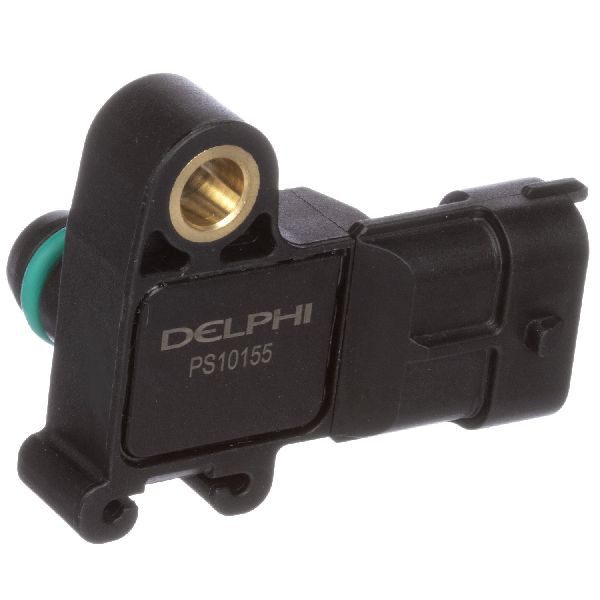
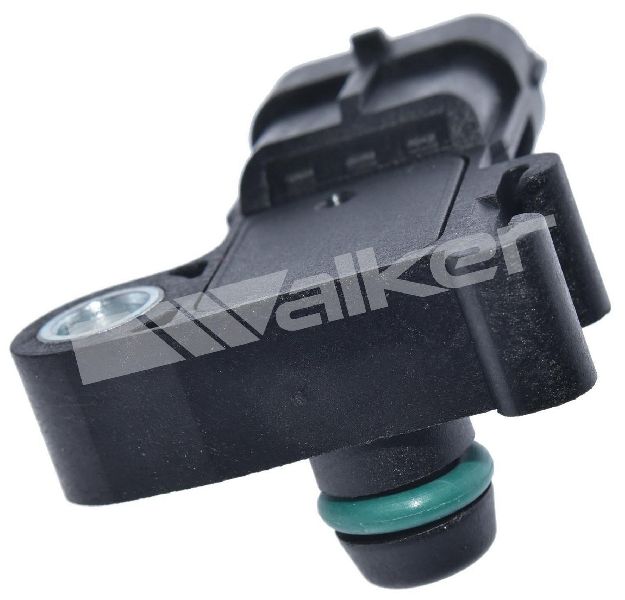
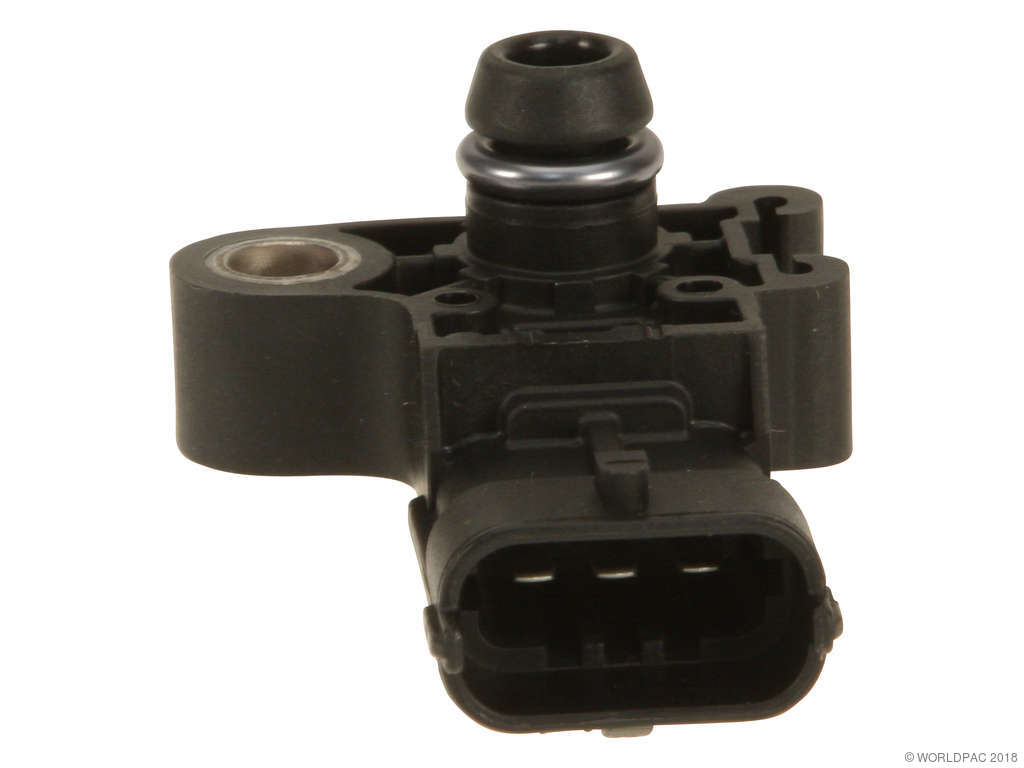
- Manifold Absolute Pressure (MAP) Sensor
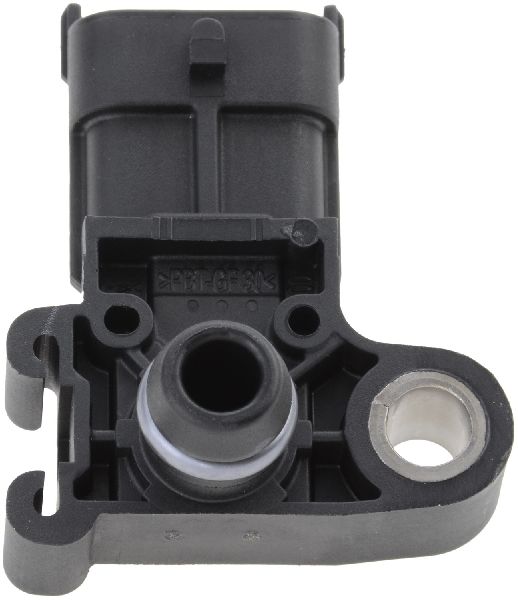
(OEM #12644228)— This sensor is the most common part to fail or become contaminated, directly causing the P0106 code when cleaning doesn't resolve the issue. The Bosch aftermarket equivalent is part number 0261230289.
Trusted brands: ACDelco (GM Genuine), Bosch, Delphi
OEM price range: $50-$80
Aftermarket price range: $30-$60 - Throttle Body Cleaner — A dirty throttle body is a primary cause of a 'false' P0106 code on this specific engine. Cleaning is a required diagnostic step.
Trusted brands: CRC, Gumout
Aftermarket price range: $5-$15
Related Codes That Often Appear With This One
- P0107 — This code for 'MAP/BARO Circuit Low Input' points directly to a problem with the same sensor or its circuit.
- P2227 / P2228 — These codes relate to the Barometric Pressure (BARO) sensor, which is often integrated into the same physical MAP sensor unit on this vehicle. A YouTube repair video showed P2228 being fixed by replacing the MAP sensor.
- P0016 / P0017 — These camshaft/crankshaft correlation codes indicate a timing issue. If you see these with P0106, suspect a stretched timing chain, a known problem on the 2.4L Ecotec.
- P0171 / P1101 — These codes for lean conditions and intake airflow performance are frequently reported alongside P0106 in owner complaints such as NHTSA ODI #11165031 and #11266552.
Technical Service Bulletins (TSBs) & Recalls
- GM TSB PIP5529B: While for the 2.5L LCV engine, it addresses loose intake manifold bolts causing vacuum leaks and codes like P0106, a principle that can apply to the 2.4L as well.
- GM TSB 14882: Address
- Bulletin #PIP5752M: Notes that P0106 may be triggered by a valve spring concern, which can also cause misfires and engine noise.
- Bulletin #21-NA-214: Mentions P0106 in relation to exhaust system performance and vibration issues.
Platform-Specific Known Issues
- A dirty throttle body is a very common cause of a false P0106 code on this platform.
- The 2.4L Ecotec engine is known for premature timing chain stretching, which can cause a variety of engine performance codes. While not the most common cause for an isolated P0106, it's a critical issue to be aware of if other codes are present.
- In cold climates, the PCV system can freeze, leading to a buildup of crankcase pressure that can blow out the rear main seal, causing a massive oil leak. This is a separate, but critical, issue for 2.4L Ecotec owners.
Mechanic-Grade Diagnostic Values
- MAP Sensor 5V Reference Wire — expected: ~5 Volts DC. Failure: Voltage significantly lower than 5V indicates a problem with the ECM or wiring.
- MAP Sensor Ground Wire — expected: Less than 100 millivolts (0.1V). Failure: Higher voltage indicates a poor ground connection, which can cause inaccurate sensor readings.
- MAP Sensor Signal Wire (Key On, Engine Off) — expected: ~4.5 - 4.7 Volts DC (at sea level). Failure: Voltage stuck low or not matching this approximate value suggests a sensor or wiring fault.
- MAP Sensor Signal Wire (Engine Idling) — expected: 1.0 - 1.5 Volts DC. Failure: Voltage stuck high (near 4.5V) or not responding to throttle changes indicates a problem.
Scan Tool Commands That Help
- N/A (Manual Procedure): Throttle Body Idle Relearn Procedure — Required after cleaning or replacing the electronic throttle body to prevent high or erratic idle. The procedure involves specific idle periods and drive cycles.
Wiring & Ground Locations
- G107 — A critical ECM ground is located on the engine block, under the alternator and above the A/C compressor, mounted on a stud.. This ground is for the ECM. A corroded or broken connection at this point can cause a wide range of sensor-related fault codes, including P0106, and can mimic a failed ECM or MAP sensor.
- MAP Sensor Connector — On top of the intake manifold, easily accessible.. This 3-pin connector provides power, ground, and signal return for the MAP sensor. The pins can be back-probed for voltage testing. Pin 1: Signal, Pin 2: Ground, Pin 3: 5V Reference.
Real Owner Repair Stories
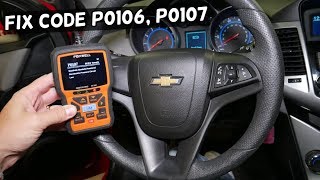
- YouTube video 'FIX CODE P0107 P0106 ENGINE LIGHT ON CHEVY...' (Chevrolet Cruze (similar GM platform and sensor)) — Check Engine Light with codes P0106 and P0107.
❌ Tried (didn't work) The video directly diagnoses the issue using a scan tool, observing that the MAP sensor reading was stuck at zero and unresponsive to engine RPM changes.
✅ What actually fixed it Replacing the MAP sensor. After installation, live data on the scan tool immediately showed responsive pressure readings, and the problem was resolved.
OEM Part Supersession History
12644228→12711681— Standard part evolution by the manufacturer.
Heads up: The new part number (12711681) is the current direct replacement for the original (12644228) and is fully compatible.
Model Year Variations Within This Range
- 2010-2011 vs 2012-2017: The 2.4L Ecotec engine used in this generation of Equinox includes the LAF and LEA variants. The LEA, introduced around 2012, is the FlexFuel (E85 compatible) version of the LAF. For the purposes of diagnosing P0106, the MAP sensor, throttle body, and common causes are functionally identical between these two engine codes.
Diagnostic Flowchart
Other Known Issues on This Vehicle
Issues unrelated to this code that are worth knowing about as an owner of this generation:
- Excessive Oil Consumption 🔴 High — Extremely common, especially on 2010-2013 models. Caused by faulty piston ring design. Can lead to engine damage if oil level is not checked frequently (e.g., every 1,000 miles). (Ref: Special Coverage Adjustments 14159, 15285C, 16118, N192291100 extended warranty for piston ring replacement on various model years.)
- Stretched Timing Chain 🔴 High — Common, typically occurring between 80,000 and 120,000 miles. Often preceded by a rattling noise on cold starts. Failure can cause catastrophic engine damage.
- High-Pressure Fuel Pump (HPFP) Failure 🔴 High — Common on 2010-2011 models. The pump's internal seal fails, causing fuel to leak into the engine oil, diluting it and accelerating wear on other components like the timing chain. (Ref: GM Voluntary Emission Recall 43180 for 2010-2011 models to replace the HPFP (P/N 12641847).)
- Frozen PCV Orifice / Blown Rear Main Seal 🟠 Medium — Occurs in sub-freezing temperatures. Moisture in the PCV system freezes, blocking the orifice and causing crankcase pressure to build until it blows out the rear main crankshaft seal, resulting in a sudden, major oil leak. (Ref: GM TSB 14882)
- Faulty A/C Compressor 🟡 Low — A common complaint is the A/C system failing to blow cold air, often traced back to a failed A/C compressor or leaks in the system.
Used vs. New Parts: Buying Guide for This Vehicle
When a used part is the smart pick: A used throttle body from a low-mileage donor vehicle can be a cost-effective option if the original is physically damaged (e.g., cracked housing). For a simple P0106 code, cleaning the existing throttle body is almost always the better first step.
Donor-vehicle mileage cap: roughly under 75000 miles for the part to have meaningful remaining life.
What to inspect on the donor part:
- For a throttle body, inspect the bore for deep scratches or scoring; light carbon is normal and can be cleaned.
- For a MAP sensor, avoid used parts. The failure mode is electronic/contamination, which is not visible, and the cost of a new, reliable aftermarket sensor is low.
- Check for any physical damage to the plastic housing or electrical connector.
OEM-only on this vehicle (don't cheap out):
- While not strictly 'OEM-only', using a GM Genuine (ACDelco) or a reputable OEM supplier like Bosch or Delphi for the MAP sensor is strongly recommended. Cheap, no-name electronic sensors have a high failure and incompatibility rate.
Aftermarket brands forum-validated for this vehicle:
- MAP Sensor: ACDelco, Bosch, Delphi
- Throttle Body Cleaner: CRC, Gumout
Brands owners have reported issues with on this vehicle:
- Generic, unbranded electronic sensors from online marketplaces are frequently cited in forums as being dead-on-arrival or failing shortly after installation.
Real Owner Stories
Aggregated from forums and TSBs cited above. Mileages and costs reflect what owners reported in those sources.
2013 Chevrolet Equinox 2.4L
Symptoms: PCV system froze in cold weather, leading to moisture buildup in the fresh air tube and concerns about blowing out seals.
What fixed it: Installing a vented oil fill cap (ACDelco FC219).
Source hint: BobIsTheOilGuy.com - '2013 Equinox 2.4 PCV Frozen'
2010-2017 Chevrolet Equinox 2.4L
Symptoms: Severe running issues and a P0106 code that left the vehicle 'dead in the parking lot.'
What fixed it: Repairing a broken valve spring.
Source hint: GM-Trucks.com - 'Need help dead in the parking lot P0106 code'
Documented NHTSA Reports
NHTSA ODI #11165031
Symptoms: An owner reported the check engine light appearing while driving or idling. Diagnostic codes included P0106, P0171, P0131, and P1101.
NHTSA ODI #11266552
Symptoms: After an oil change and air filter check, an owner noticed squealing or whirring under the hood while coming to a stop. Diagnostics revealed codes P0106, P1101, P0299, and P0171.
NHTSA ODI #11098674
Symptoms: A vehicle was reported to slow to nearly a stop while traveling down the road. A scan tool identified several codes including P0106, P0017, P0018, P0019, P0068, P0089, and P228C.
Related OBD-II Codes
Frequently Asked Questions
Is there a TSB for the 2.4L Equinox regarding vacuum leaks that might cause a P0106?
My 2013 Equinox has a P0106 and I live in a very cold climate; could this be related to the PCV system?
What is the most common fix for a P0106 on a 2010-2017 Chevy Equinox?
I'm replacing my MAP sensor to fix P0106; what tools do I need and which part should I buy?
Could a timing chain issue cause a P0106 on my 2.4L Ecotec?
Is there any special coverage for the high oil consumption I'm seeing alongside my engine codes?
Helpful Videos
Used OEM Parts in Stock
New Aftermarket Parts Available


The information in this article is provided for general reference and educational purposes only. Vehicle specifications, procedures, and part compatibility can vary by production date, trim level, and region. Always consult your vehicle's factory service manual and verify part numbers before purchasing or performing repairs. Safety-critical components such as airbags, seat belts, and braking systems should be installed by a qualified professional.
- Chevrolet Equinox:
- 🧭 Diagnostic Flowchart
- 🎬 Helpful Videos
- 🛍️ Shop This Part
- What's Unique About the 2010-2017 Chevrolet Equinox
- Symptoms You May Notice
- Most Likely Causes
- Rare But Worth Checking
- Diagnosis Steps
- Parts You'll Likely Need
- Related Codes That Often Appear With This One
- Technical Service Bulletins (TSBs) & Recalls
- Platform-Specific Known Issues
- Mechanic-Grade Diagnostic Values
- Scan Tool Commands That Help
- Wiring & Ground Locations
- Real Owner Repair Stories
- OEM Part Supersession History
- Model Year Variations Within This Range
- Other Known Issues on This Vehicle
- Used vs. New Parts: Buying Guide for This Vehicle
- Real Owner Stories
- 2013 Chevrolet Equinox 2.4L
- 2010-2017 Chevrolet Equinox 2.4L
- Documented NHTSA Reports
- NHTSA ODI #11165031
- NHTSA ODI #11266552
- NHTSA ODI #11098674
- Related OBD-II Codes
- Frequently Asked Questions
- 🎟️ Get 5% Off