

P0106 on 2014-2019 Chevy Silverado 5.3L: MAP Sensor or Broken Valve Spring?
P0106 on a 2014-2019 Silverado 5.3L can be a simple MAP sensor replacement (~$40-$80), but it could also indicate a serious broken valve spring. If the code is paired with P0300 (misfire) or P0506 (low idle), the valve spring is highly likely and requires immediate professional diagnosis to prevent engine damage. A real-world owner fixed this for about $65 in parts after identifying the specific misfiring cylinder.
- P0106 on this truck has two very different primary causes: a simple faulty MAP sensor or a severe broken valve spring.
- Before replacing any parts, check for other codes. P0300 (misfire) or P0506 (low idle) alongside P0106 strongly points to a broken valve spring.
- Listen for engine noises. Any ticking or tapping is a major red flag for a mechanical valvetrain issue.
- Do not continue driving if you suspect a broken valve spring, as it can lead to catastrophic and expensive engine failure.
- In very cold climates, consider that sensor icing (TSB #20-NA-043) could be the cause if the problem is intermittent and weather-dependent.
What's Unique About the 2014-2019 Chevrolet Silverado
While P0106 often points to a simple sensor failure on many vehicles, on this specific generation of Silverado with the 5.3L L83 engine, it is a well-documented indicator of two very different issues. The first is a faulty MAP sensor, a simple fix. The second, more critical issue, is a broken engine valve spring, a known mechanical problem on this engine family. GM has issued multiple Technical Service Bulletins (TSBs), such as PIP5423B, that explicitly link P0106 to this mechanical failure, making proper diagnosis essential to avoid catastrophic engine damage. In some cases, a broken exhaust valve spring can even push hot gas back into the plastic intake manifold, melting an intake runner and causing a massive internal vacuum leak.
Generation note: The 2014-2019 range covers the third generation (K2XX, 2014-2019) and the start of the fourth generation (T1XX, 2019). The 2019 model year is a transition, with the older K2XX platform sold as the 'Silverado 1500 LD'. The key issues of faulty MAP sensors and broken valve springs are common to the EcoTec3 engine family used across this entire period, affecting not just the Silverado but also the GMC Sierra, Tahoe, and Yukon.
Symptoms You May Notice
- Rough or unstable idle
- Hesitation or lack of power during acceleration
- Engine stalling, especially at stops
- Increased fuel consumption
- Black smoke from the exhaust
- Difficulty starting the engine
- Engine sounds like an 'old steam engine tractor' if a valve spring has failed
- Flashing Check Engine Light (CEL) during acceleration
- Vibration or the exhaust brake not working as expected, as noted in TSB Bulletin #21-NA-214
- Vehicle slowing to nearly a stop while driving, as described in NHTSA ODI #11098674
- Replacing the MAP sensor without checking for a broken valve spring, especially when codes P0300 or P0506 are also present.
- Replacing the Mass Airflow (MAF) sensor. P0106 is specific to the MAP sensor circuit.
- Replacing the throttle body when the issue is a simple vacuum leak or a dirty MAP sensor.
Most Likely Causes
- Broken Engine Valve Spring 🔴 High Probability → Shop Engine Valve Spring This is a documented weak point in the valvetrain of some Gen V GM engines of this era, as noted in multiple TSBs (#PIP5752M, #PIP5423B). A broken spring allows the valve to hang open, causing erratic pressure in the intake manifold that confuses the MAP sensor. TSB Bulletin #PIP5752M confirms that a vehicle may have a service engine light, misfire, and engine noise associated with DTCs P0106, P0300, and P0506 due to a valve spring concern. This issue is so prevalent that it has been the subject of class-action lawsuits.
How to confirm: Check for accompanying codes P0300 (Random Misfire) or P0506 (Low Idle). Listen for ticking or tapping noises. A definitive diagnosis requires removing the valve covers for visual inspection. One owner with P0106 and P0300 found a broken spring on cylinder #4 after removing the passenger side valve cover. Another owner identified a misfire on cylinder #5 using an HP Tuner scanner before visually confirming the broken spring.
Typical fix: Replace the broken valve spring. It is often recommended to replace all 16 valve springs at the same time with an upgraded set. The pushrod should also be inspected for straightness. The repair can be 🎬 Watch: Step-by-step guide to installing new valve springs. done with the cylinder head on the engine using a special spring compressor tool and compressed air to hold the valve up.
Est. part cost: $10-$150 for springs - Faulty Manifold Absolute Pressure (MAP) Sensor 🔴 High Probability → Shop Manifold Absolute Pressure Sensor GM issued TSB #N212330660 for faulty MAP sensors on some models, indicating a known quality issue. The sensor can fail internally, sending incorrect voltage signals. An owner on a forum replaced the sensor for P0106 only to find the new part fit loosely and did not solve the no-start issue, which was ultimately a broken valve spring.
How to confirm: If no other codes (especially P0300/P0506) are present and there is no engine noise, the sensor is the likely culprit. Test the sensor's voltage with a multimeter at Key-On-Engine-Off; it should be close to 5V and correlate with barometric pressure. At idle, voltage should be between 1.0-2.0V. The sensor is located on the front of the intake manifold, to the driver's side of the throttle body.
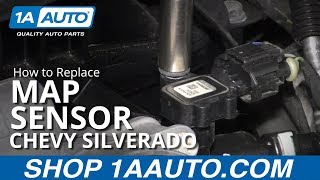
Typical fix: Replace the MAP sensor and ensure the new O-ring seal is properly seated. Using an OEM 🎬 Watch: How to replace the MAP sensor on your Silverado. ACDelco part is recommended for reliability.
Est. part cost: $40-$80 - Vacuum Leak 🟡 Medium Probability Intake manifold gaskets and PCV hoses can degrade over time, causing unmetered air to enter the engine, which disrupts manifold pressure readings. A unique and severe cause documented in TSB PIP5423B is a melted intake manifold runner, which happens when a broken exhaust valve spring allows hot gas to flow back and melt the plastic intake, creating a large internal vacuum leak. NHTSA ODI #11165031 describes a scenario where P0106 appeared alongside P0171 (System Too Lean), which often indicates such a leak.
How to confirm: Perform a visual inspection of all vacuum hoses connected to the intake manifold for cracks or loose connections. A smoke test is the most effective way to find hard-to-see leaks.
Typical fix: Replace the cracked hose or leaking gasket. If an intake runner has melted, the entire intake manifold must be replaced.
Est. part cost: $10-$150
Rare But Worth Checking
- MAP Sensor Icing in Cold Climates: → Shop Manifold Absolute Pressure Sensor Per GM TSB #20-NA-043, during long drives in freezing temperatures (below 24°F / -5°C), ice can form on the sensor, causing P0106 and a 'Reduced Engine Power' message. The issue often resolves after the engine warms up. The recommended fix is installing a winter grille cover, not replacing the sensor. The TSB explicitly states not to clean the sensor with chemicals or compressed air.
- Clogged Catalytic Converter: In some cases, a clogged catalytic converter can create excessive exhaust backpressure, which affects manifold pressure and triggers a P0106 code. This should be considered if other diagnoses don't solve the issue. One owner diagnosed this by disconnecting the exhaust Y-pipe, which allowed the engine to idle without stalling.
- Damaged Wiring or Connectors: Check the wiring harness and connector going to the MAP sensor for any signs of damage, corrosion, or loose pins. Heat and vibration in the engine bay can cause wiring to fail over time. The circuit consists of a 5V reference, a low reference (ground), and the signal wire.
Diagnosis Steps
- Scan for Codes: Use an OBD-II scanner to confirm P0106. Check for any other codes, especially P0300 or P0506. The presence of these codes makes a broken valve spring highly probable.
- Listen to the Engine: Start the engine and listen for any ticking, tapping, or unusually rough running sounds that would indicate a mechanical problem. A 'steam engine' sound is a classic symptom reported by owners 🎬 See how to diagnose a P0300 misfire on these engines. with a broken spring. NHTSA ODI #11266552 also mentions hearing squealing or whirring under the hood when P0106 was present.
- Inspect for Vacuum Leaks: Visually inspect all vacuum hoses and the intake area for obvious cracks or damage. If possible, perform a smoke test to find hidden leaks.
- If P0300/P0506 are present: Professional diagnosis is strongly recommended. This involves removing the valve covers to inspect for a broken valve spring. Do not proceed with replacing other parts. One owner found a broken spring on cylinder #4 this way.
- If only P0106 is present: Inspect the MAP sensor wiring and connector for damage. If the wiring is good, the MAP sensor itself is the most likely culprit.
- Test the MAP Sensor: With the key on and engine off, check the sensor's signal voltage. It should be close to 5V and correlate with local barometric pressure. At idle, it should be 1.0-2.0V. If the reading is irrational, the sensor is faulty.
- Consider Climate: If the issue only occurs during long drives in freezing weather, investigate TSB #20-NA-043 regarding sensor icing before replacing parts. The fix is a winter grille cover, not a new sensor.
Parts You'll Likely Need
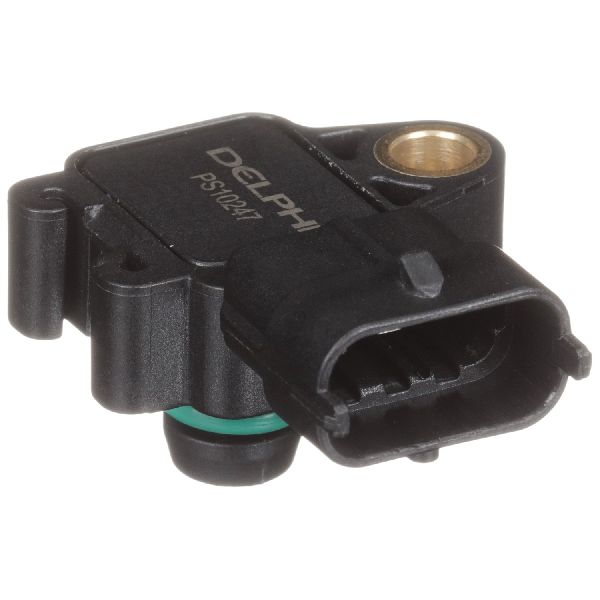
- Manifold Absolute Pressure (MAP) Sensor
(OEM #12644228)— This is a common failure point and the simplest cause of a standalone P0106 code. TSB #N212330660 was issued for faulty sensors.
Trusted brands: ACDelco, Delphi, Bosch
OEM price range: $60-$90
Aftermarket price range: $40-$70 - Engine Valve Spring — A known mechanical failure point on the L83 engine that directly causes P0106, often accompanied by P0300 and P0506, as documented in GM TSBs.
Trusted brands: Brian Tooley Racing (BTR), Texas Speed (TSP), Michigan Motorsports
OEM price range: $15-$25 per spring
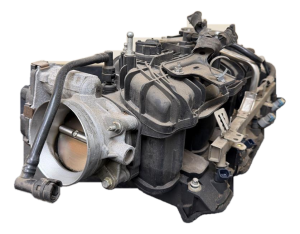
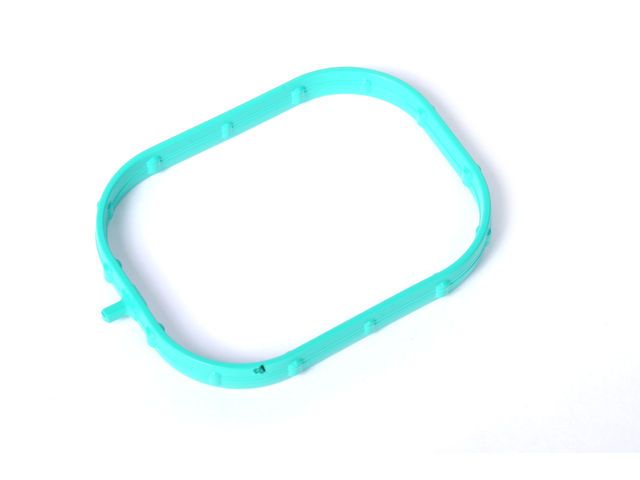
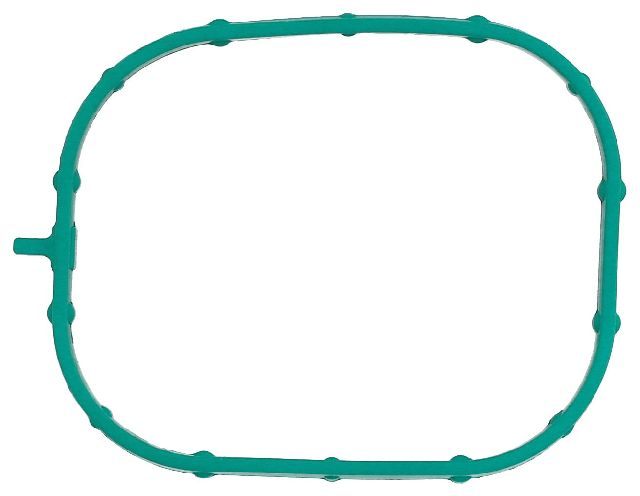
Aftermarket price range: $90-$180 for a full set - Intake Manifold Gasket — Can degrade over time, causing a vacuum leak that triggers P0106. Must be replaced if the intake manifold is removed for other service, like a valve spring replacement.
Trusted brands: ACDelco, Fel-Pro
OEM price range: $30-$50
Aftermarket price range: $20-$40
Related Codes That Often Appear With This One
- P0300 — Random/Multiple Cylinder Misfire. This is a strong indicator that a broken valve spring is the root cause, as the unseated valve leads directly to misfires. TSBs #PIP5752M and #PIP5423B explicitly group these codes.
- P0506 — Idle Air Control System RPM Lower Than Expected. A broken valve spring or a large vacuum leak can cause the engine's idle speed to be unstable and lower than the target RPM. TSBs #PIP5752M and #PIP5423B link this code with P0106.
- P1101 — Intake Air Flow System Performance. This code often appears alongside P0106 during engine performance issues, as noted in NHTSA ODI #11266552.
Technical Service Bulletins (TSBs) & Recalls
- PIP5423B: Links P0106 and P0506 to broken valve springs and advises inspection of intake manifold for collapsed runners.
- PIP5752M: Also links P0106, P0300, and P0506 to broken valve springs and notes potential engine noise.
- 20-NA-043: Details MAP sensor icing in cold weather and recommends a winter grille cover.
- N212330660: Addresses faulty MAP sensors requiring replacement.
- 21-NA-214: Notes that P0106 may be found in conjunction with vibration and exhaust brake concerns.
Platform-Specific Known Issues
- Broken Valve Spring: As detailed in TSBs PIP5423B and PIP5752M, a broken valve spring is a primary cause of P0106 on this platform, especially when P0300 and P0506 are also present.
- Melted Intake Runner: A secondary effect of a broken exhaust valve spring can be hot exhaust gas melting the plastic intake manifold runner for that cylinder, creating a severe vacuum leak. TSB PIP5423B advises inspecting for this if a broken spring is found.
- MAP Sensor Icing: TSB 20-NA-043 describes a condition where ice forms on the MAP sensor during long drives in sub-freezing temperatures, causing P0106. The fix is a winter grille cover.
Mechanic-Grade Diagnostic Values
- MAP Sensor Signal Voltage (Key On, Engine Off) — expected: 4.0V - 5.0V, should correlate with barometric pressure. Failure: Voltage is significantly lower or higher, or does not match local atmospheric pressure.
- MAP Sensor Signal Voltage (Engine at Idle) — expected: 1.0V - 2.0V. Failure: Voltage is stuck high (near 5V) or does not respond when the throttle is snapped.
- MAP Sensor 5V Reference Wire Voltage — expected: ~5.0V. Failure: Voltage is significantly below 5V, indicating a wiring issue or a problem with the ECM.
- MAP Sensor Ground Circuit Test — expected: Full battery voltage (~12.6V) when testing between the battery positive terminal and the sensor's ground wire.. Failure: Low or no voltage indicates a poor ground connection, which can cause erratic sensor readings.
Wiring & Ground Locations
- MAP Sensor Connector — On the front of the intake manifold, to the driver's side of the throttle body.. This is the primary connection point for testing the sensor's 5V reference, ground, and signal wires. Corrosion or damage here is a common cause of failure.
- G102 — Located at the left rear of the engine.. This ground point serves the 8 ignition coils. While not directly for the MAP sensor, a poor ground here can cause misfires (P0300) that often accompany P0106 in valve spring failure cases.
- G103 — Located at the left rear of the engine compartment on the cowl, above the brake booster.. This is a major ground point for the Body Control Module (BCM), Instrument Panel Cluster (IPC), and Data Link Connector (DLC). A fault here can cause widespread, confusing electrical issues.
Real Owner Repair Stories
- Reddit user in r/Justrolledintotheshop (2016 Silverado 5.3L) — Hesitation in throttle, poor gas mileage, P0106 code, and eventually codes for catalytic converters (running rich). No misfire codes initially.
❌ Tried (didn't work) Replaced MAP sensor, Replaced MAP sensor connector/harness, Cleaned throttle body, Shop replaced MAP sensor again, Shop replaced MAF sensor, Shop performed a smoke test which came back clean
✅ What actually fixed it The user did not post the final fix, but the shop's next recommended step after all else failed was to inspect the valve springs, strongly implying this was the suspected root cause after ruling out all sensor and vacuum leak possibilities. - GM-Trucks.com forum user (2014-2018 Silverado) — Truck stumbled, sputtered, shook, and sounded like an 'old steam engine tractor'. Stalled in a parking lot and set code P0106.
❌ Tried (didn't work) Replaced the MAP sensor. The user noted the new aftermarket sensor fit loosely compared to the original OEM sensor and did not resolve the no-start/rough run condition.
✅ What actually fixed it The thread discussion pointed heavily toward a failed AFM lifter or broken valve spring, as the symptoms were mechanical in nature and a simple sensor swap did not work. The 'steam engine' sound is a classic sign of a valve not seating correctly.
"I Checked Everything" — The Actual Cause
- A 2016 Silverado 5.3L owner reported having a P0106 code with hesitation and poor mileage. After replacing the MAP sensor, connector, and cleaning the throttle body himself, he took it to a shop. The shop also replaced the MAP and MAF sensors and performed a smoke test for vacuum leaks, which passed with no issues. The code remained. The shop's final diagnosis pointed towards checking the engine valve springs as the next logical step, indicating a mechanical failure can be the root cause even when no vacuum leaks are present.
Documented NHTSA Reports
- An owner reported in NHTSA ODI #11098674 that their vehicle would slow to nearly a stop while driving, with P0106 appearing alongside several other codes including P0017 and P0068.
- NHTSA ODI #11165031 describes a vehicle that experienced issues while driving or idling; a diagnosis revealed P0106 along with P0171 (System Too Lean) and P0131 (O2 Circuit Low Voltage).
- In NHTSA ODI #11266552, an owner noticed squealing or whirring under the hood after an oil change and air filter check, with subsequent diagnosis showing P0106 and P1101.
OEM Part Supersession History
12644228→12711681— Standard part update/revision by GM.
Heads up: The new part number (12711681) is the direct replacement for the original (12644228) and should be fully compatible. Some aftermarket versions of this sensor have been reported to have a loose fit, so using a genuine GM or ACDelco part is recommended.
Diagnostic Flowchart
Other Known Issues on This Vehicle
Issues unrelated to this code that are worth knowing about as an owner of this generation:
- AFM/DFM Lifter Failure 🔴 High — Common, especially over 80,000 miles. Can lead to misfires, ticking noises, and eventually camshaft damage. (Ref: Multiple TSBs exist, including PIP5752L, addressing misfires caused by lifter issues.)
- Torque Converter Shudder (8-Speed Transmission) 🟠 Medium — Widespread issue on 2015-2019 models with 8-speed transmissions, often feels like driving over rumble strips at steady speeds (40-50 mph). (Ref: TSB 18-NA-355 recommends a transmission fluid flush with an updated fluid (Mobil 1 LV ATF HP).)
- A/C Condenser Failure 🟠 Medium — Very common on 2014-2016 models. The condenser is prone to cracking and leaking refrigerant. (Ref: Multiple owner complaints, though no single recall covers all vehicles.)
- Carbon Buildup on Intake Valves 🟡 Low — A known side effect of the direct injection system. Can cause rough idle and reduced performance over high mileage (100k+ miles).
- High-Pressure Fuel Pump Failure 🟠 Medium — The direct injection high-pressure fuel pump can fail, leading to starting issues and loss of power.
Used vs. New Parts: Buying Guide for This Vehicle
When a used part is the smart pick: A used intake manifold from a reputable salvage yard (like LKQ) can be a cost-effective option if yours has been damaged (e.g., melted by a broken exhaust valve spring). Ensure it comes from a low-mileage, non-wrecked donor vehicle.
Donor-vehicle mileage cap: roughly under 80000 miles for the part to have meaningful remaining life.
What to inspect on the donor part:
- For an intake manifold, check for cracks, especially around mounting points.
- Ensure no signs of melting or warping on the runners or gasket surfaces.
- Verify all threaded inserts for sensors and bolts are intact and not stripped.
- If it includes fuel rails or injectors, inspect them for damage or corrosion.
OEM-only on this vehicle (don't cheap out):
- Manifold Absolute Pressure (MAP) Sensor: While aftermarket is available, forum users have reported fitment issues with non-OEM sensors. Given the low cost and high importance of this part, an ACDelco sensor is strongly recommended to avoid diagnostic headaches.
- Engine Valve Springs: Never use used valve springs. They are a wear item and a known failure point. Always replace with a new set.
Aftermarket brands forum-validated for this vehicle:
- Valve Springs: Brian Tooley Racing (BTR), Texas Speed & Performance (TSP), and Michigan Motorsports are highly regarded in the GM truck community for providing quality, upgraded valve spring kits that are often considered more durable than the stock springs.
Brands owners have reported issues with on this vehicle:
- Unbranded/generic MAP sensors from online marketplaces have been reported to have poor fitment (loose O-ring seal), leading to persistent vacuum leaks and fault codes.
Real Owner Stories
Aggregated from forums and TSBs cited above. Mileages and costs reflect what owners reported in those sources.
2015 Chevrolet Silverado 5.3L L83
Symptoms: Owner found a P0106 and P0300 code. Upon inspection, they discovered a mechanical failure on the passenger side of the engine.
What fixed it: Replaced a broken valve spring on cylinder #4.
Source hint: forum_citations: https://www.gm-trucks.com/forums/topic/220867-need-help-dead-in-the-parking-lot-p0106-code/
2016 GMC Yukon Denali 5.3L L83
Symptoms: Vehicle threw codes P0300 and P0106. The owner used an HP Tuner scanner to identify a specific misfire on cylinder #5.
What fixed it: Visually confirmed and replaced a broken valve spring.
Source hint: forum_citations: https://www.tahoeyukonforum.com/threads/2016-yukon-denali-p0300-p0106.130108/
2014-2019 Chevrolet Silverado 5.3L L83
Symptoms: Owner replaced the MAP sensor to fix a P0106 code, but the new part fit loosely and the engine still would not start.
What fixed it: The issue was ultimately diagnosed as a broken valve spring, not the sensor itself.
Source hint: forum_citations: https://www.gm-trucks.com/forums/topic/258900-valve-spring-woes/
Related OBD-II Codes
Frequently Asked Questions
My 5.3L Silverado sounds like an 'old steam engine tractor' and has code P0106. Is this just a sensor?
Does TSB #20-NA-043 apply to my Silverado if I only see P0106 in the winter?
I have P0106 and P0300 together on my 2015 Silverado. What should I check first?
Can a broken valve spring damage my intake manifold?
Is there a specific MAP sensor I should use for the N212330660 quality issue?
Should I replace just the one broken valve spring or all of them?
Helpful Videos
Used OEM Parts in Stock
New Aftermarket Parts Available


The information in this article is provided for general reference and educational purposes only. Vehicle specifications, procedures, and part compatibility can vary by production date, trim level, and region. Always consult your vehicle's factory service manual and verify part numbers before purchasing or performing repairs. Safety-critical components such as airbags, seat belts, and braking systems should be installed by a qualified professional.
- Chevrolet Silverado:
- 🧭 Diagnostic Flowchart
- 🎬 Helpful Videos
- 🛍️ Shop This Part
- What's Unique About the 2014-2019 Chevrolet Silverado
- Symptoms You May Notice
- Most Likely Causes
- Rare But Worth Checking
- Diagnosis Steps
- Parts You'll Likely Need
- Related Codes That Often Appear With This One
- Technical Service Bulletins (TSBs) & Recalls
- Platform-Specific Known Issues
- Mechanic-Grade Diagnostic Values
- Wiring & Ground Locations
- Real Owner Repair Stories
- "I Checked Everything" — The Actual Cause
- Documented NHTSA Reports
- OEM Part Supersession History
- Other Known Issues on This Vehicle
- Used vs. New Parts: Buying Guide for This Vehicle
- Real Owner Stories
- 2015 Chevrolet Silverado 5.3L L83
- 2016 GMC Yukon Denali 5.3L L83
- 2014-2019 Chevrolet Silverado 5.3L L83
- Related OBD-II Codes
- Frequently Asked Questions
- 🎟️ Get 5% Off