

P0106 on 2016-2019 Chevrolet Volt: Causes and Fixes for MAP Sensor/PCV Issues
On a 2016-2019 Chevy Volt, code P0106 is most often caused by a clogged PCV orifice inside the valve cover, a known issue documented in GM Technical Service Bulletin #PIP5603. This blockage creates abnormal crankcase pressure, which confuses the MAP sensor. The fix is to replace the entire valve cover assembly, which costs between $150-$250 for the part. Investigating this TSB is critical before replacing the MAP sensor itself.
- For a 2016-2019 Chevy Volt, P0106 is most likely caused by a clogged PCV system within the valve cover, not a bad MAP sensor.
- Always check for Technical Service Bulletin #PIP5603 before buying any parts; it directly addresses this common failure.
- The correct repair for the common PCV issue is to replace the entire valve cover assembly (Part No. 12677329).
- If the code appears with P00C7, it further strengthens the diagnosis of a clogged PCV orifice.
- A simple check for a clogged PCV is to listen for a sucking/whistling noise at the oil cap while the engine is idling.
- While you can drive with this code, performance and fuel economy will be poor, so a timely repair is recommended to prevent further issues like seal damage.
What's Unique About the 2016-2019 Chevrolet VOLT

For the second-generation Chevrolet Volt, the P0106 code is uniquely and strongly tied to a specific mechanical failure rather than a simple sensor fault. General Motors issued Technical Service Bulletin (TSB) #PIP5603 identifying that a plugged Positive Crankcase Ventilation (PCV) orifice within the valve cover is a primary cause. This tiny passage becomes clogged with carbon and oil deposits, a condition exacerbated by the nature of direct injection engines. The blockage prevents the crankcase from ventilating properly, creating abnormal pressure in the crankcase and intake manifold. This abnormal pressure leads the MAP sensor to report illogical data, even though the sensor itself is likely working correctly. This issue is so prevalent that another TSB, #20-NA-047, addresses the same clogged PCV orifice for the related code P1101 on the same engine. Owners should always investigate this TSB-related issue before replacing the MAP sensor.
Diagnostic Flowchart

Tap your situation to follow the diagnostic path that matches what you're seeing on this vehicle.
Symptoms You May Notice
- Check Engine Light is on
- Rough or unstable idle
- Hesitation or poor acceleration
- Reduced fuel economy
- Engine may stall, especially at idle
- Black smoke from the exhaust
- Whistling or hissing noise from the engine bay, indicating a vacuum leak from the failed PCV system
- Oil consumption or oil found in the air intake system
- Replacing the MAP sensor without first investigating the PCV system. Due to TSB #PIP5603, the valve cover/PCV system should be the primary suspect on this vehicle. Many owners and shops replace the sensor only to have the code return.
Most Likely Causes


- Plugged PCV Orifice in Valve Cover 🔴 High Probability → Shop Engine Valve Cover This is a well-documented design issue in GM TSB #PIP5603 for the 2016-2019 Volt. The small, integrated PCV orifice is prone to clogging with carbon and oil sludge, a common byproduct in modern direct-injection engines. This prevents proper crankcase ventilation.
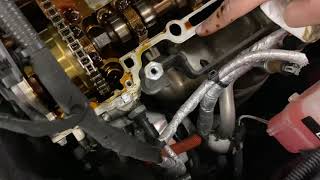
How to confirm: A technician can test for excessive crankcase pressure with a manometer. A simple DIY check is to run the engine at idle and slightly lift the oil filler cap or dipstick; a hissing or puffing sound indicates positive crankcase pressure, pointing to a clog. The definitive diagnosis is to follow the TSB, which leads to replacing the valve cover. 🎬 Watch: A quick look at the Volt valve cover design.
Typical fix: Replace the entire valve cover assembly. 🎬 See this step-by-step DIY valve cover replacement walkthrough. The PCV orifice is integrated into the plastic cover and is not serviced separately.
Est. part cost: $150-$250 - Faulty Manifold Absolute Pressure (MAP) Sensor ⚪ Low Probability → Shop Manifold Absolute Pressure Sensor While MAP sensors can fail on any vehicle, on the Gen 2 Volt this is a far less common cause for P0106 than the PCV issue. The sensor may become contaminated with oil pushed into the intake due to the failed PCV system, or it can fail electronically.
How to confirm: Use a scan tool to monitor the MAP sensor voltage with the key on, engine off, and then at idle. The voltage should change smoothly with engine vacuum. You can also test the sensor with a hand-held vacuum pump. However, this should only be done after confirming the PCV system is functioning correctly.
Typical fix: Replace the MAP sensor. Ensure the o-ring seal is properly installed to prevent a vacuum leak.
Est. part cost: $30-$80 - Vacuum Leak ⚪ Low Probability While possible, widespread vacuum leaks from hoses or gaskets are less common on this platform than the specific PCV failure. A leak would have to be significant to trigger the code.
How to confirm: Perform a smoke test on the intake system to find any leaks from hoses, gaskets, or the intake manifold itself. A visual inspection of all vacuum lines connected to the intake manifold is a good first step.
Typical fix: Replace the cracked hose or faulty gasket that is causing the leak.
Est. part cost: $10-$50
Rare But Worth Checking
- Wiring or Connector Issue: A damaged wire or corroded connector for the MAP sensor can cause an erratic signal. This should be checked before replacing the sensor, especially if the sensor tests good.
- Clogged Air Filter: A severely restricted engine air filter can starve the engine of air, affecting manifold pressure and potentially triggering a P0106 code.
- Dirty Throttle Body: → Shop Fuel Injection Throttle Body In some cases, especially after a battery disconnect, a dirty throttle body can cause idle instability and trigger a P0106 code as the computer struggles to relearn idle parameters.
Diagnosis Steps
- Check for Technical Service Bulletins (TSBs). For this vehicle, TSB #PIP5603 is the most critical first step.
- Perform a crankcase pressure check. With the engine idling, carefully loosen the oil filler cap. If you hear a distinct sucking or whistling sound, or if the idle stumbles, it's a strong sign of a clogged PCV orifice in the valve cover.
- If the PCV system appears to be the cause, the recommended repair is to replace the entire valve cover assembly.
- If the PCV system checks out, inspect all vacuum hoses connected to the intake manifold for cracks, brittleness, or loose connections.
- Perform a smoke test on the intake system to identify any hard-to-see vacuum leaks.
- If no leaks are found, connect a scan tool and observe the MAP sensor's live data. Check the reading with the Key On, Engine Off (KOEO) and compare it to the BARO reading; they should be nearly identical. Start the engine and note the reading at idle (it should be low, indicating high vacuum).
- Inspect the MAP sensor's electrical connector for corrosion or damage. Check the wiring for any signs of fraying or breaks.
- If all other steps fail to identify the issue, the MAP sensor itself may be faulty and should be replaced.
Parts You'll Likely Need
- Valve Cover Assembly
(OEM #12691020)— This is the most common fix for P0106 on the 2016-2019 Volt, as the problematic PCV orifice is integrated into the cover and is not serviced separately, per TSB #PIP5603. The current OEM part number is 12691020, which supersedes several previous versions (e.g., 12685415, 12681368, 12677792).
Trusted brands: ACDelco (GM Genuine)
OEM price range: $180-$250
Aftermarket price range: $150-$200 - Manifold Absolute Pressure (MAP) Sensor
(OEM #12644228 (superseded by 12711681))— If the PCV system is confirmed to be working correctly and no vacuum leaks are present, the MAP sensor is the next most likely component to have failed. The original part number 12644228 has been replaced by GM part number 12711681.
Trusted brands: ACDelco, Bosch, Delphi
OEM price range: $50-$80
Aftermarket price range: $30-$60
Related Codes That Often Appear With This One
- P00C7 — This code for Intake Air Pressure Measurement System Correlation is specifically mentioned alongside P0106 in TSB #PIP5603, as both can be caused by the plugged PCV orifice.
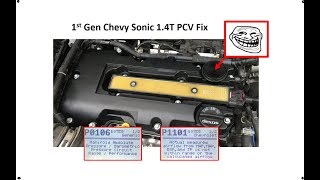
- P1101 — This code for Intake Airflow System Performance is also commonly caused by the same clogged PCV orifice issue, as documented in TSB #20-NA-047 🎬 Watch: How this PCV clog affects P0106 and P1101 codes. for this engine.
- P0171 — System Too Lean. A failed PCV system can create a vacuum leak, allowing unmetered air into the intake and causing a lean condition.
Technical Service Bulletins (TSBs) & Recalls
- PIP5603: Communicates the possibility of the PCV orifice in the valve cover being plugged, causing the check engine lamp to illuminate and set DTC P00C7 and P0106. This is the primary TSB for this issue.
- 20-NA-047: While written for code P1101, this TSB also identifies the same root cause for the 1.5L L3A engine: a clogged PCV orifice in the camshaft cover, confirming the known issue with this engine's ventilation system.
- PIC6409A: A newer preliminary bulletin that also mentions P0106 and P00C7, pointing towards a potential issue with the MAP sensor itself in some cases, but TSB PIP5603 remains the most common cause for
Platform-Specific Known Issues
- TSB #PIP5603: The Primary Culprit: TSB #PIP5603 explicitly states that a plugged PCV orifice in the valve cover can cause DTCs P0106 and P00C7. The recommended fix is to replace the valve cover. This is not a generic MAP sensor issue; it's a specific, known mechanical failure on this platform.
- Owner Experience: Valve Cover Replacement Fix: → Shop Engine Valve Cover On the gm-volt.com forums, multiple owners of 2017 Volts report experiencing the P0106 code, sometimes accompanied by P00C7. After dealership diagnosis, the universal solution was the replacement of the valve cover assembly under warranty, which permanently resolved the check engine light and drivability issues.
- Reddit Confirmation: A Reddit user with a 2017 Volt reported getting codes P00C7 & P0106. The initial guess from an auto parts store was a bad MAP sensor, but this aligns perfectly with the symptoms described in TSB #PIP5603, where the valve cover is the actual root cause.
Mechanic-Grade Diagnostic Values
- MAP Sensor 5V Reference — expected: Approximately 5.0V with key on, engine off or running.. Failure: Voltage significantly lower than 5.0V indicates a wiring or ECM issue.
- MAP Sensor Ground Circuit — expected: Close to 0V (typically under 0.05V).. Failure: Voltage significantly above 0V indicates a bad ground connection.
- MAP Sensor Signal Voltage (Key On, Engine Off) — expected: Approximately 4.5V. This should be very close to the BARO sensor reading on a scan tool.. Failure: A reading that is not close to 4.5V or does not match the BARO sensor suggests a faulty sensor.
- MAP Sensor Signal Voltage (Engine at Idle) — expected: 1.0V to 1.5V, indicating high engine vacuum.. Failure: Voltage that is high (e.g., over 2.0V) at idle, or does not change smoothly as the throttle is applied, points to a sensor, vacuum, or pressure problem.
Wiring & Ground Locations
- MAP Sensor — Mounted on the plastic intake manifold, after the throttle body.. Physical access is required to test the sensor's connector for power, ground, and signal, or to replace the sensor itself. Its location makes it susceptible to oil contamination if the PCV system fails.
Real Owner Repair Stories
- General consensus from gm-volt.com and /r/volt subreddit (2016-2019 Chevrolet Volt (primarily 2017 models reported)) — Check Engine Light with code P0106, often accompanied by P00C7 or P1101. Rough idle and hesitation.
❌ Tried (didn't work) Replacing the MAP sensor alone often did not fix the issue; the code would return.
✅ What actually fixed it Replacing the entire valve cover assembly (camshaft cover), which contains the integrated PCV orifice, as recommended by TSB #PIP5603. This permanently resolved the codes and drivability symptoms for numerous owners.
When the Usual Fixes Don't Work
- The Pass 2 data correctly identified the valve cover as the primary culprit but listed an incorrect part number (12677329) that is widely cataloged as a high-pressure fuel pump. The correct OEM part number for the valve cover assembly is 12691020. This is a critical distinction, as ordering the wrong part would not resolve the issue. This highlights the importance of verifying part numbers through multiple sources before purchase.
OEM Part Supersession History
12665643, 12669418, 12677792, 12681368, 12685415→12691020— Part consolidation and potential design revisions for the Valve Cover Assembly.12644228→12711681— Standard part evolution and consolidation by GM for the MAP sensor.
Model Year Variations Within This Range
- 2016-2019: No significant variations have been noted regarding the cause of P0106. The clogged PCV orifice in the valve cover is the dominant cause across the entire second generation of the Volt.
Helpful Videos

We Have This Part in Stock


The information in this article is provided for general reference and educational purposes only. Vehicle specifications, procedures, and part compatibility can vary by production date, trim level, and region. Always consult your vehicle's factory service manual and verify part numbers before purchasing or performing repairs. Safety-critical components such as airbags, seat belts, and braking systems should be installed by a qualified professional.
- Chevrolet VOLT:
- 🧭 Diagnostic Flowchart
- 🎬 Helpful Videos
- 🛍️ Shop This Part
- What's Unique About the 2016-2019 Chevrolet VOLT
- Symptoms You May Notice
- Most Likely Causes
- Rare But Worth Checking
- Diagnosis Steps
- Parts You'll Likely Need
- Related Codes That Often Appear With This One
- Technical Service Bulletins (TSBs) & Recalls
- Platform-Specific Known Issues
- Mechanic-Grade Diagnostic Values
- Wiring & Ground Locations
- Real Owner Repair Stories
- When the Usual Fixes Don't Work
- OEM Part Supersession History
- Model Year Variations Within This Range
- 🎟️ Get 5% Off